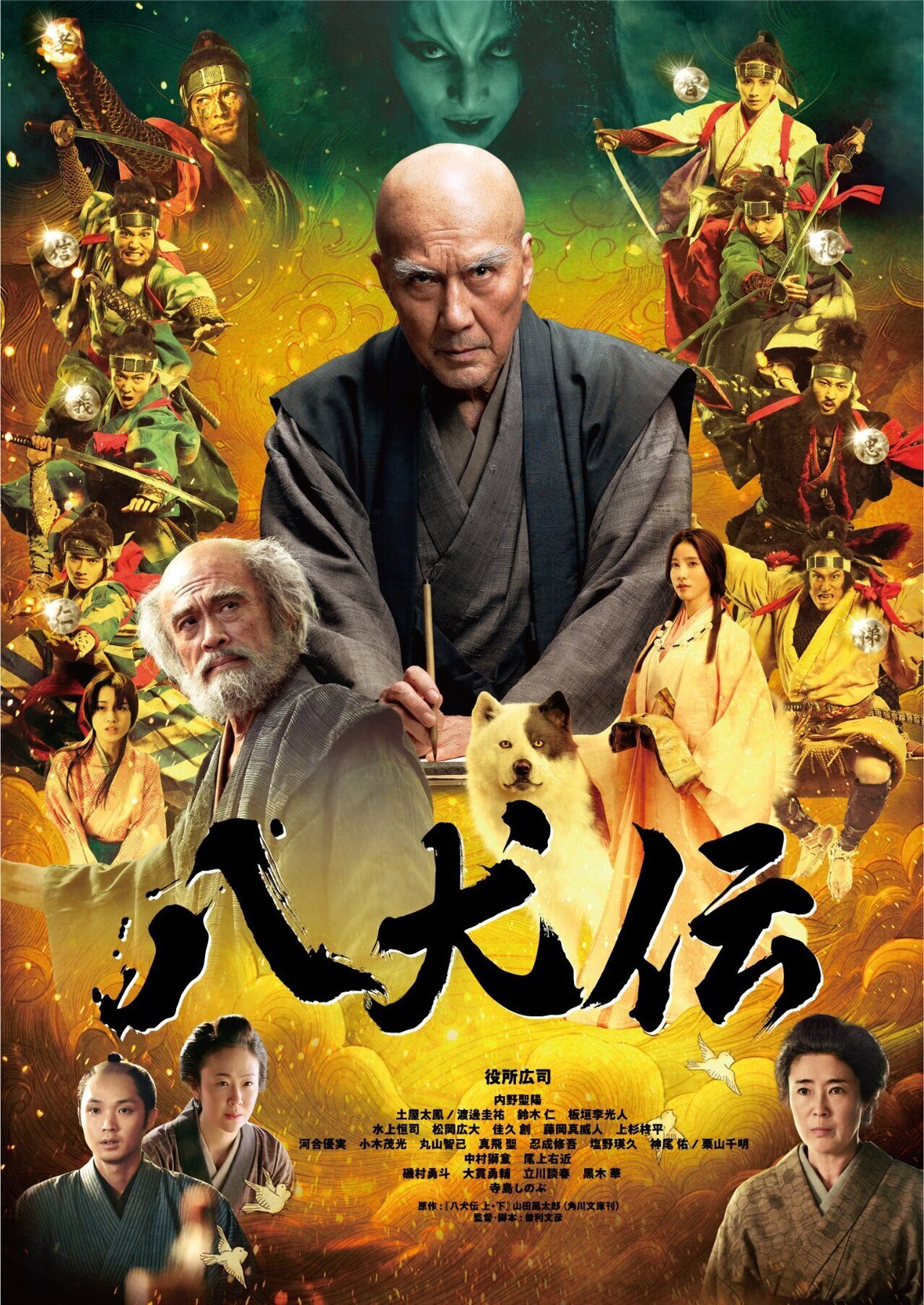
Hakkenden (八犬伝, Fumihiko Sori, 2024)

Kyokutei Bakin thinks he’s a hack who writes inconsequential pulp that will be forgotten faster than yesterday’s headlines. He’d never believe that people hundreds of years later would still be talking about his work. Yet he may have a point in his conviction that people crave simple stories where good triumphs over evil specifically because the real world is not really like that and a lot of the time the bad guys end up winning. But does that mean then that all his stories are “lies” and he’s irresponsible for depicting the world not the way that it is but the way he wants it to be? 

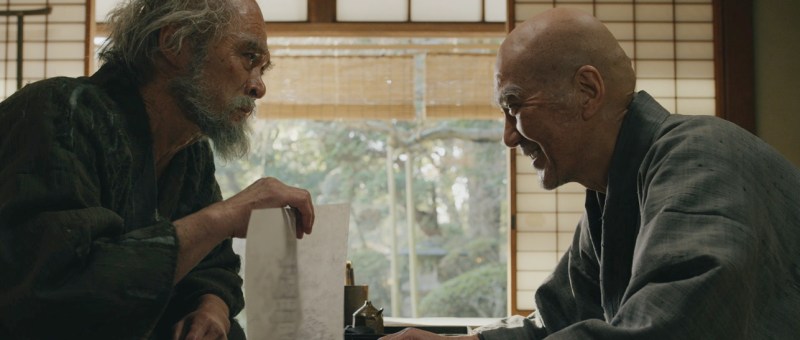
Fumihiko Sori’s Hakkenden (八犬伝) is on one level an adaptation of the famous tale probably most familiar to international audiences as The Legend of the Eight Samurai, and also a story of its writing and the private doubts and fears of its author. In dramatising the tale, Sori plays fantasy to the max and revels in Bakin’s outlandishness. An unusually picky Hokusai (Seiyo Uchino), Bakin’s best and he claims only friend and unwilling collaborator, points out that his use of guns is anachronistic because they didn’t come to Japan until 60 or 70 years after the story takes place but Bakin doesn’t care. He says people don’t notice things like that and all they really care about is that good triumphs in the end, so he’ll throw in whatever he feels like to make a better story. In any case, the tale revolves around magical orbs, evil witches, dog gods and good fairies, so if you’re worrying about there being guns before there should be, this isn’t the story for you. 

Hokusai is also shocked that Bakin has never been to the place where the story is set, but as he tells him it all happened long ago and far away so going there now would be pointless. Even so, Hokusai needs to see what he draws which is why he spends half his life on the road costing him relationships with his family. Whatever else anyone might say about him, and he admits himself to being a “difficult” person, Bakin is very close to his family even if his wife yells at him all the time for being rude to influential people and not making any money when he could have just taken over her family’s clog-making business rather than carry on with this writing malarkey. His biggest ambition is that his son become a doctor to a feudal lord and thereby restore their samurai status which on one level points to a kind of conservatism that doesn’t matter to Hokusai and singles Bakin out as a tragic figure because the age of the samurai is nearing its end anyway. 

In his fantasy, however, he hints at and undoes, up to a point, injustices inflicted on women in the romance between Shino (Keisuke Watanabe) and Hamaji (Yuumi Kawai) who is almost forced into a marriage with a wealthy man because of her adoptive parents’ greed but is finally revealed to be a displaced princess and returned to her father who is thereby redeemed for having accidentally killing his other daughter in a mistaken attempt to control her after accidentally promising her in marriage to a dog god without really thinking about what he was saying. A neat parallel is drawn in a brief mention of Hokusai’s artist daughter Oi and Bakin’s daughter-in-law Omichi (Haru Kuroki) who did not receive an education and is almost illiterate but finally helps him to complete the story by transcribing it in Chinese characters he teaches her as they go after he loses his sight.

As his literary success increases, Bakin’s own fortunes both improve and decline. He becomes wealthier and moves to nicer houses in samurai neighbourhoods, but his son Shizugoro’s (Hayato Isomura) health declines and he never opens his own clinic like he planned while remaining committed to the idea that his father is actually a great, unappreciated artist. In a way, completing the story gives Bakin a way to say the world could be kind and just even if it has not always been so to him. He needs to maintain the belief in a better world in order to go living even if he feels it to be inauthentic while his life itself is a kind of fiction. On a trip to the theatre, he ends up seeing Yotsuya Kaidan and is at once hugely impressed and incredibly angry. The world that Nanboku sees is the opposite of his own. People are selfish and greedy. The bad are rewarded and the innocent are punished. Yet perhaps this is the “reality” of the way the world really is, where as his work is a wishful fantasy. All he’s doing is running away from the truth. But then, as his son’s friend tells him, if a man devotes himself to the ideal of justice and believes in it all his life, then it becomes a reality and ceases to be fiction. There is something quite poignant about the dog soldiers coming to take Bakin to the better world he dreamed of where bad things happen but good always triumphs in the end, which has now indeed become a reality if only for him.


Hakkenden screens 13th June as part of this year’s Toronto Japanese Film Festival.

Original trailer (no subtitles)
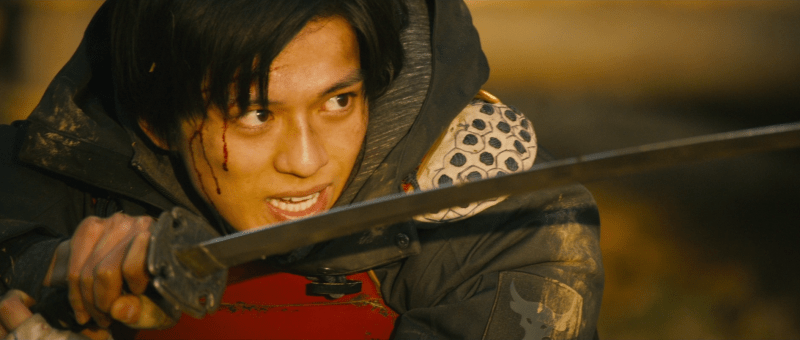
Brave: Gunjo Senki (ブレイブ -群青戦記-, Katsuyuki Motohiro, 2021)

A young man with a total lack of confidence in himself begins discover his inner strength after being sent back to the Sengoku era in Katsuyuki Motohiro’s timeslip drama adapted from the manga by Masaki Kasahara, Brave: Gunjo Senki (ブレイブ -群青戦記-). Fighting a battle for the future, the kids finds themselves at a moment of historical change and caught between the titanic forces of clashing armies but paradoxically discover that they want the same thing, something the kids have always taken for granted, an age of peace in which all are free to live together happily. 

For all those reasons it’s a just as well that Aoi (Mackenyu), a diffident member of the archery club, is a keen history buff even if he declares himself uninterested in winning competitions or becoming a champion. When warriors in 16th century armour begin assaulting the school, he’s well placed to guess what might be going on inferring from some of the names involved that they must have been thrown back to the year 1560 which was something of a turning point in Japanese history marked by the battle of Okehazama in which the outnumbered forces of Oda Nobunaga (Kenichi Matsuyama) scored a significant victory against those of Imagawa Yoshimoto setting Nobunaga on a path towards the unification of Japan. 

Though armed with foreknowledge, the kids are obviously ill-equipped to cope with the demands of life in the Sengoku era having no combat experience yet this institution happens to be one of the most prominent sporting schools in the nation boasting a host of national champions all of whom discover that their athletic skills can easily be repurposed for warfare from the archers and kendo enthusiasts to the baseball and American football players while those in the various science clubs set about investigating how they got here and how they might get back. 

Despite being thrust into a leadership role after impressing warlord Motoyasu (Haruma Miura) who will one day become Tokugawa Ieyasu and oust Nobunaga as ruler of a unified Japan, Aoi remains diffident and fearful unable to fire his bow often walking away from the fight despite his friends’ encouragement. His problem, as is repeatedly pointed out, is that he has no self-confidence and cannot believe in himself sufficiently to act when the occasion calls. Yet through his gentle mentoring at the hands of Motoyasu, he begins to come into his own as a Sengoku era strategist realising that he has something to spur him on in the desire to protect those close to him.

This is not, however, a wholly positive thing. Despite introducing Aoi’s childhood friend Haruka (Hirona Yamazaki) as a talented archer who is much more willing to step up to the fight, the film quickly relegates her to the role of damsel in distress as it does the majority of female students many of whom are also top athletes with useful skills while the assault squad venturing to rescue students taken hostage by evil retainer Yanada Matsuna is, aside from Haruka, exclusively male. Conversely, the guys are given an opportunity to express their fear and sadness each thinking of their mothers as they prepare to risk their lives to save their friends. 

For Aoi, his friends become the light that show him the way while he remains preoccupied with history realising that nefarious forces are trying to manipulate it so that their age of peace will never arrive and Japan will exist in a state of darkness for all eternity. Though often depicted as cruel dictator this Nobunaga seems to want end the darkness by bringing about an age of peace through the unification of Japan taking solace in the idea that these strange people in their weird castle wearing bizarre clothes are from an age in which war is a distant memory meaning at least that his dream came to pass. At heart, it’s a battle between an emo teen who wants to paint the world with the darkness inside him, and a diffident young man turning away from hate and violence while finding strength in the presence and support of his friends. Boasting some impressive effects and high octane battle sequences imbued with a quirky humour as the kids use their sport skills, kicking footballs armed with bombs or throwing fiery baseballs at the confused retainers, Brave: Gunjo Senki sees its diffident hero not only taking charge of his personal destiny but the national in believing that the best way to support his friends is to make sure the world of peace they’ve always enjoyed will again come to pass. 


Original trailer (no subtitles)

Black Night Parade (ブラックナイトパレード, Yuichi Fukuda, 2022)

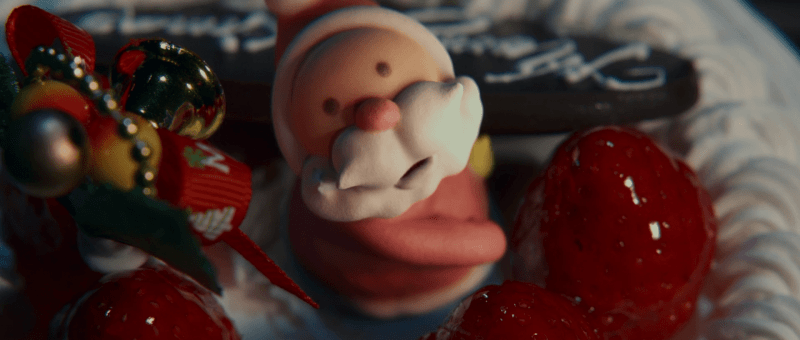
According to the opening voiceover of Yuichi Fukuda’s seasonal comedy Black Night Parade (ブラックナイトパレード), we’ve all got Christmas wrong. It’s not completely true that Santa only gives presents to the nice kids for there are in fact two Santas, the other one, the anti-Santa, making sure that bad children have a very unhappy Christmas receiving gifts ranging from the traditional lump of coal to offal. The Santa dressed in black is described as being a little more egalitarian, but does indeed pedal in disappointment and the opposite of the holiday spirit though in another way perhaps he’s just an embodiment of a sense of resentment towards to the unfairness of the contemporary society. 

Miharu (Ryo Yoshizawa) is very definitely grown up and a good example of someone who regards themselves as earnest but is becoming fed up with seeing those he regards as acting inconsiderately prosper. Still working part-time at a convenience store having repeatedly failed to get into university or find a full-time job, he’s irritated by his loudmouth slacker colleague Kaiser (Taishi Nakagawa) who just seems to constantly fall up in life while Miharu ends up being the responsible one doing most of his work for him. When Kaiser asks him to cover his shift Christmas Eve so he can go on a date with his pretty girlfriend seconds after telling him he’s actually had a full-time job offer, it obviously stings more than a little. But when Miharu takes a leaf out of his book and tries to take home one of the expired Christmas cakes, he’s immediately caught and threatened by his boss not to mention being deemed a bad boy by the Santa in black. 

Though in his case, it results in an ironic job officer to become one of Santa’s helpers at a gloomy Santa centre where they run a virtual surveillance state to figure out whether the kids that send in letters to Santa have really been as good as they claim to have been. Surveillance queen Shino (Kanna Hashimoto) decides one little lad hasn’t on catching him cheating on a test despite having emphasised how hard he’d been studying in his letter. Cheating on a test is obviously not “good”, but perhaps it’s not innards in your stocking bad either and Miharu’s moral compass is going haywire trying to understand the strange world he finds himself in while participating in a contest to join the elite Reindeer division of Christmas shock troops. Meanwhile, he’s also confronted by a conspiracy in which the red Santa has already been murdered by rats controlled by a mysterious group who hate Christmas and are trying to eradicate it. If they don’t find a new red Santa soon, the magic will be broken forever.

Despite the zaniness of the concept, the humour is a little less grating than the broad variety style generally employed by Fukuda in his other films even if several of the performances are on the larger side. Rather than rediscovering the true meaning of Christmas or coming to an accommodation with the unfairness of the contemporary society, Miharu is guided towards dealing with his own unresolved childhood trauma which repurposes the empty consumerism of a contrived holiday tradition as a means of signalling of a lack of something or the roots of unhappiness. Even if most most kids are asking for the latest toys it may be because they want others to play with with them, while some just want company because their parents have to work long hours and they’re lonely at home. 

Despite making the astute observation that the best way to disappoint a naughty child is to get them what they asked for but not quite right, Miharu eventually discovers a calling in making sure no child is left empty-handed on Christmas Day spreading the spirit of the season wherever he goes even while being chased by packs of evil rats out to destroy the joy of Christmas forever. Then again, there is some mildly satirical humour in the likening of Santa Claus House to a “black company” ruthlessly exploiting its employees while engaging in some very dubious corporate shenanigans in its use of customer data and clear invasion of privacy in its all-seeing surveillance network. In any case, it does appear that Christmas is safe from the rat race for the moment and children good or bad will wake up to a surprise equally so on Christmas morning for years to come.


Original trailer (no subtitles)

As Long As We Both Shall Live (わたしの幸せな結婚, Ayuko Tsukahara, 2023) [Fantasia 2023]

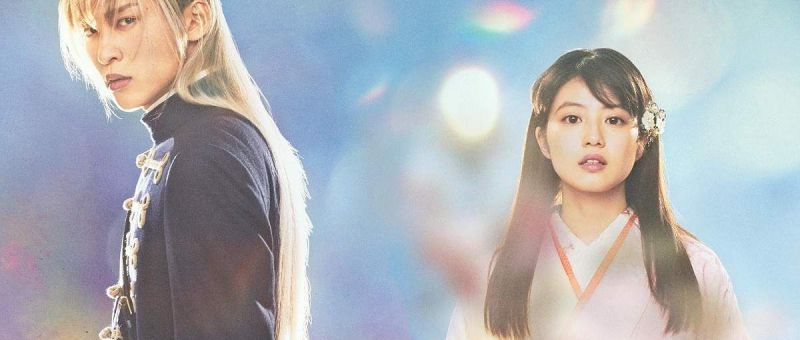
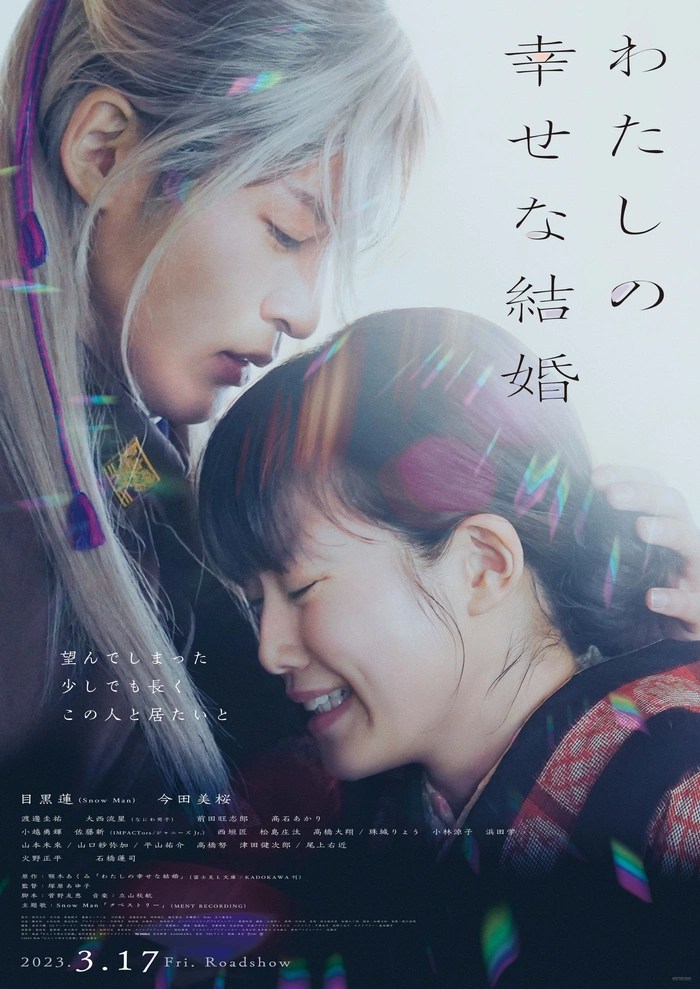
A young woman with chronically low self-esteem learns to love herself after bonding with a taciturn nobleman in Ayuko Tsukahara’s adaptation of the fantasy romance light novel series by Akumi Agitogi, As Long As We Both Shall Live (わたしの幸せな結婚, Watashi no Shiawasena Kekkon). Set in an alternate version of the late 19th/early 20th century in which the nation is ruled by an emperor who has the ability to foresee the future and leads a series of prominent clans of superpowered soldiers against “aberrations” who wreak havoc in the lives ordinary people, the film is effectively a kind of Cinderella story only the fairy godmothers are a kindly housekeeper a shady underground sect with the power to manipulate people’s minds. 

In any case, Miyo (Mio Imada) was born into a noble house the members of which have the ability to manipulate the wind though sadly she appears to have been born “powerless” and is bullied by her step-mother and step-sister who treat her as a servant. At 19, she learns she’s to be married off and is excited about finally escaping her abusive family home but also wary that it might not make much difference because her potential husband, Kiyoka Kudo (Ren Meguro), is said to be cruel and violent. All three of his matches have fled the house in under three days though being so used to mistreatment Miyo is sure that it will just be a matter of adjusting to her new circumstances. 

What she discovers is that Kiyoka doesn’t seem all that bad just a bit aloof and direct in his manner of speech. Nevertheless, she continues to believe that she isn’t good enough to marry him because she doesn’t have any magical powers and is convinced he will call off the engagement when he finds out. Meanwhile, she bonds with housekeeper Yurie (Mirai Yamamoto) after breaking protocol by helping out around the house for something to do though it is perhaps a bit odd that someone from such an apparently wealthy family has only one servant and seems to lead an incredibly simple life devoted to his role as a soldier helping to keep the aberrations in check especially now that the emperor is dying and someone has apparently released the pent up souls of fellow aberration fighters who died horribly and are filled with dangerous resentment.

Many of Miyo’s self-esteem issues are down to the way she was treated by her family and having lost her mother at two years old though there is obviously parallel in her literal “powerlessness” and the lack of agency that is afforded to her in having been kept a prisoner in the family estate only to be traded off in marriage by a father apparently out for whatever he can get for such a “mistake” of a daughter. It’s perhaps a slight failing in the narrative that she turns out to have powers after all rather than simply beginning to accept herself in the comparatively warmer environment of Kiyoka’s home even if it might also be a little awkward that her self-love is born of feeling loved by Kiyoka and to a lesser extent Yurie and immediately has her pledging to give her life for him if only he should ask it. 

For his part, Kiyoka is also undergoing something of a transformation in that it turns out he also felt estranged from his mother and is actually kind at heart just incredibly awkward and taciturn. The reason he didn’t bond with any of his previous suitors seems to be that he objected to their insincerity and the nonsense that goes along with being a member of the aristocracy like the concept of arranged marriage in itself, later taking Miyo’s family to task for their treatment of her claiming that he doesn’t really care about her social status or whether or not she has any powers. In any case, it’s love that helps her overcome her “powerlessness” even if she uses her newfound inner strength for someone else rather than herself, taking control over and her life regaining self-confidence as someone worthy of love, respect, and basic human decency not to mention happiness. A post-credits trail hints at a potential sequel or even series expanding on the franchise’s rich world building but for now at least it seems as if Miyo has found her happy ending, finally able to embrace life on her own terms rather than feeling as if she needs to make a mends for her existence.


As Long As We Both Shall Live screened as part of this year’s Fantasia International Film Festival.

Original trailer (no subtitles)
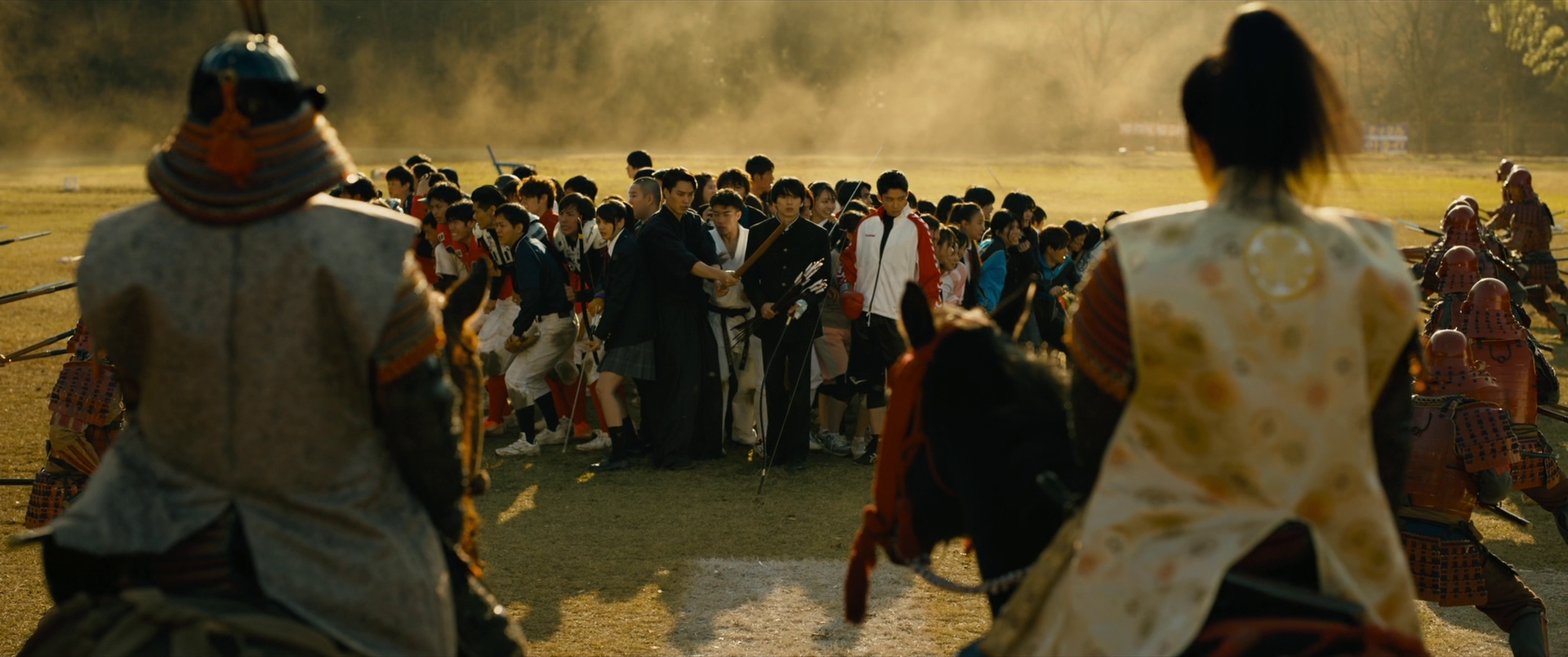
Thorns Of Beauty (恋のいばら, Hideo Jojo, 2023)

“Can two women who like the same guy become best friends?” A loose remake of Pang Ho-Cheung’s 2004 Hong Kong comedy Beyond our Ken, Hideo Jojo’s Thorns of Beauty (恋のいばら, Koi no Ibara) finds a jilted ex teaming up with the current squeeze against a no good guy who has compromising photos of each of them he could potentially expose online anytime he feels like it. Not quite everything is as it first appears, yet as they plot revenge against the caddish Kentaro (Keisuke Watanabe) the pair begin to discover a bond that runs deeper than their shared quest for validation.

Momo (Honoka Matsumoto), a mousy librarian, first accosts Riko (Tina Tamashiro), an aspiring dancer who works at a nightclub, on a bus, staring at her intensely until she finally removes her earphones. In truth, Momo never quite shakes an edge of possibly dangerous eccentricity and there is always an underlying doubt that she is telling the truth when she explains to Riko that she and Kentaro were previously an item and he has private photographs of her she fears he may intend to post online. For whatever reason, Riko decides to hear her out and though insisting that Kentaro’s not that sort of guy seems to think there may be something in it. A photographer by trade, Kentaro has in the past photographed her without her consent claiming that he spends all day photographing things other people find beautiful and wanted capture something for himself in his free time. 

Much of the story is filtered through a version of Sleeping Beauty that Momo finds at the library where she works. As the two women bond in their shared quest for revenge, Jojo often plays with the image of them as “witches” lighting them in an eerie green while they dress in black with hats that cast shadows over their faces. Yet we also find ourselves wondering who the sleeping beauty is in this scenario, an unexpected candidate turning out to be Kentaro’s elderly grandmother who has dementia and spends her days collecting shiny things to build a vast fairytale castle. Momo comes to see herself as hoping to wake Riko from a moment of romantic fantasy with a man who in the end doesn’t really care for her which she likely knows but has allowed the relationship to continue mainly out of a sense of inertia. 

But in teaming up with Riko, Momo also begins to awaken from her own low self-esteem in believing herself to be inferior to someone like her. There are times when we wonder if this is going to turn into a Single White Female-style bid at identity theft as Momo seems to idolise her new friend possibly planning to eliminate her and reclaim her place in Kentaro’s life. In the end, however, both women are throughly awakened from their romantic illusions in realising that Kentaro is indeed that sort of person with a hard disk full of pictures of other women just like them while their friendship also begins to take on a distinctly homoerotic quality that clearly runs beyond simple friendship or female solidarity. 

As Momo reflects, Sleeping Beauty is a passive heroine who is asleep for the entirety of her own story. When she’s born, the fairies give her various gifts that turn her into a stereotypical figure of idealised femininity and leave her with nothing to want or strive for. Momo wonders if that doesn’t make her a little boring and if Sleeping Beauty actually wanted any of those things or in the end they were just burden to her. Momo would only be grateful for things she actually wanted like the ability to totally become herself, while Riko reflects on a “past life” as a woman living happily with her two sons by a lake in Switzerland. Cutting through the thorns of their illusions, they awaken each other to a sense of possibility each of them may long have forgotten. Strangely poignant in the touching quality of its central romance along with fairytale allusions, the film in the end allows both women to reclaim an image of themselves from a man who tried to take it from them without ever really bothering to look at it. 


Thorns Of Beauty screened as part of this year’s Nippon Connection.

International trailer (English subtitles)