Classmates (あゝ同期の桜, Sadao Nakajima, 1967)

There had been films that dealt with the war before, but it was really with the generational shift that occurred among filmmakers in the mid-1960s that there was a greater willingness to reckon with the wartime past. Sadao Nakajima’s Classmates (あゝ同期の桜, Aa Doki no Sakura) was the first in a planned trilogy of war films at Toei, which was in other ways a studio that often leaned towards the right with its steady output of yakuza films, and most likely for that reason struggled to gain approval from studio heads. Taking its name from the military academy song, the film was inspired by a collection of essays put together from the letters and diaries kamikaze pilots had left behind. Nakajima had seen some of the letters sent back by the brother of a school friend, and reading them again on publication was determined to turn them into the film.

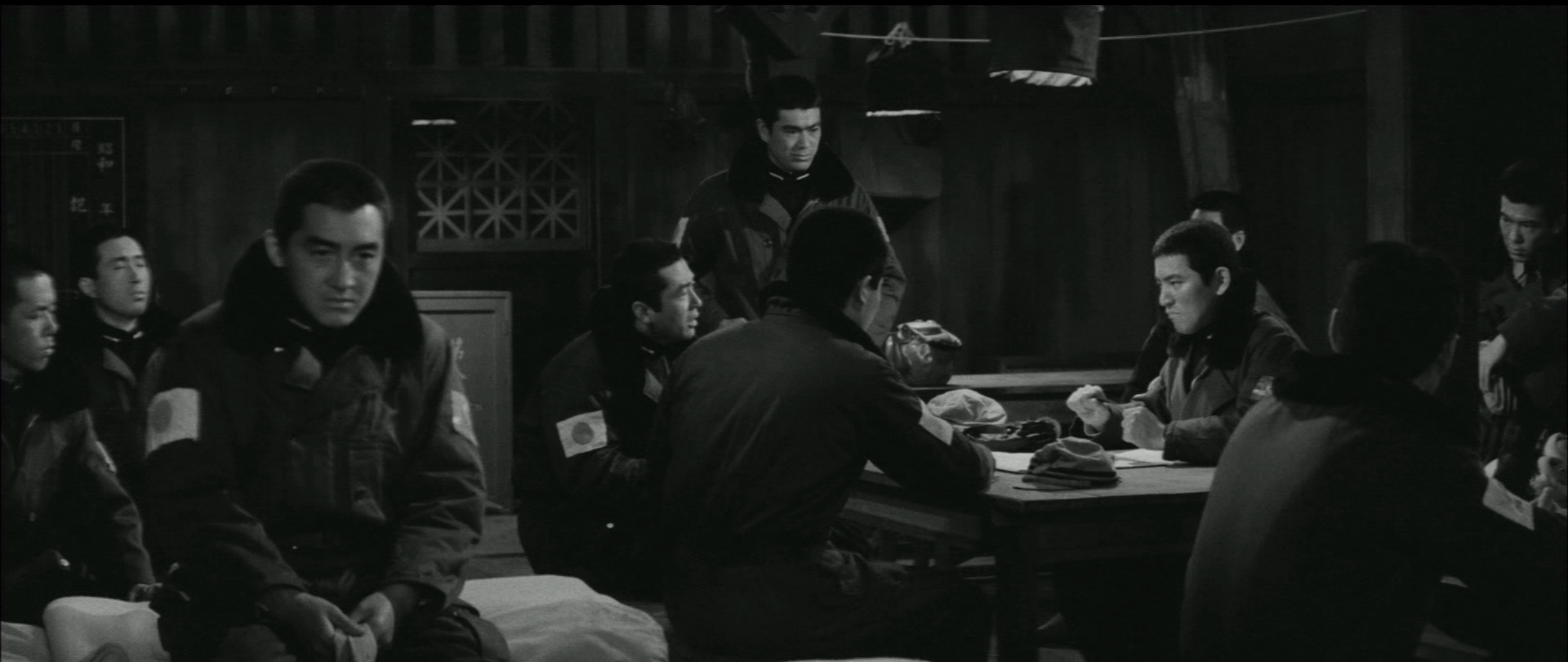
Nevertheless, only 25 years on from the end of the war it remained a sensitive topic. The film follows the men of the 14th class of reserve students who had previously had their draft notices deferred until they finished university but were now called up early because the war was going so badly. The majority of these men were allocated to kamikaze units and subsequently died in suicide attacks on US warships, though they received little in the way of training and mostly failed to hit their targets due to having limited fight experience. 

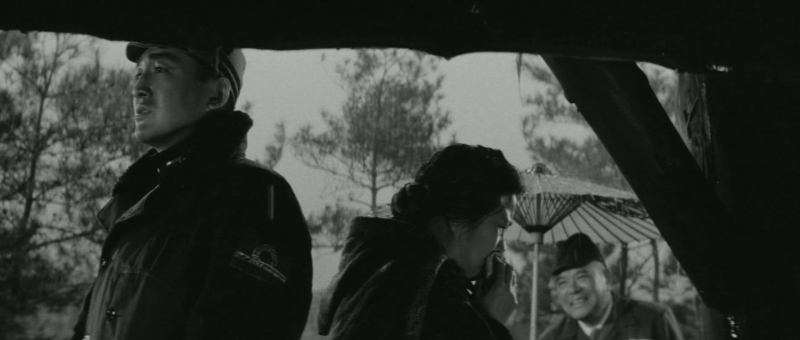
What might seem most surprising is that several of the men voice their opposition to the war along with the realisation that Japan is going to lose. Early on in training, one man deserts but the others are reminded that to do so amounts to treason and once caught, deserters will be executed by firing squad. This turns out not quite to be the case. Shiratori (Hiroki Matsukata), the resigned hero, encounters Taki (Mitsuki Kanemitsu) in Okinawa. where he’s working as ground staff. He’s insensible and appears to have lost his mind. The man working with him suggests that he was tortured so badly that it’s left him in a vacant state, though he’s still deployed for mindless tasks because they just don’t have the manpower.

Part of the reason for that is that they keep ordering people to die in a validation of the death cult that is militarism. On their arrival, the instructor tells the men he will have them all die, because dying for the emperor is their duty and destiny. The top brass insist this is the only way to win the war even though it’s counterproductive in that they’re running out of aircraft and skilled pilots even if one officer callously remarks that they have an endless supply of bodies. There’s also no real reason to send the planes up with two pilots as opposed to one, but they leave fully manned. The suicide missions are supposedly “voluntary”, but the men can’t really refuse due to a combination of peer pressure and military order.

When one pilot, Nanjo (Isao Natsuyagi), returns to base having been unable to reach his target, he’s immediately set upon by the others as a coward and a traitor. They accuse him of being afraid to die, leaving him feeling ashamed and frustrated by a sense of injustice while admitting that he didn’t want to die like a dog. He knows that he would not be able to go on living afterwards if he simply didn’t go through with it because the stigma of being a coward who let other men die so he could live would always be upon him. Eventually, he becomes so determined to prove himself that he insists on getting right back in his plane once it’s repaired and then blows himself up on the runway to prove a point.

Nanjo’s case is all the more poignant because he was a new father whose son was born after he was called up. He appears to have married quickly against his parents’ wishes and is now anxious that his family won’t accept his wife and child who will be left alone when he dies. His wife (Yoshiko Sakuma) desperately tries to see him to show him the baby, but manages only a few seconds before he’s forced to return to the barracks. Given a little more time, she brings a wedding dress for the impromptu ceremony they presumably skipped before, but ends up tearing it and giving Nanjo a strip as a kind of good-luck charm though like everything else it’s a gesture filled with futility.

It’s this sense of futility and resignation that seems to overtake Shiratori who knows he cannot escape his fate. To desert to is be killed anyway or to experience a spiritual death like Taki. He had introduced a friend, Hanzawa (Shinichi Chiba), to his sister and the two had become close, but he is forced to abruptly break up with her because he knows it’s unfair to string her along when he’s been sentenced to death. Reiko (Sumiko Fuji) will lose her brother and her boyfriend on the same day. Hanzawa and the other men visit a brothel on the night before their mission where they are treated as “gods”, though he sees only irony in the situation in which they are more like human sacrifices offered in prayer for an impossible victory. Their deaths will have no real meaning and are really only intended to instil fear in the enemy and weaken their morale rather than cause actual material damage to their fighting capability. Making use of stock footage, Nakajima freeze frames a plane in flight and points out at that point the men inside were still alive before cutting to a title card confirming the war ended just four months later. The title card at the beginning dedicated the film to the souls of those who died in the Pacific War, though it’s perhaps as quietly angry as it was permitted to be in 1967 in the senseless sacrifice of these men’s lives who were shamed, tricked, or forced at gunpoint into their cockpits and told they were disposable while those who stayed on the ground cheered and whooped at the grim spectacle of death.
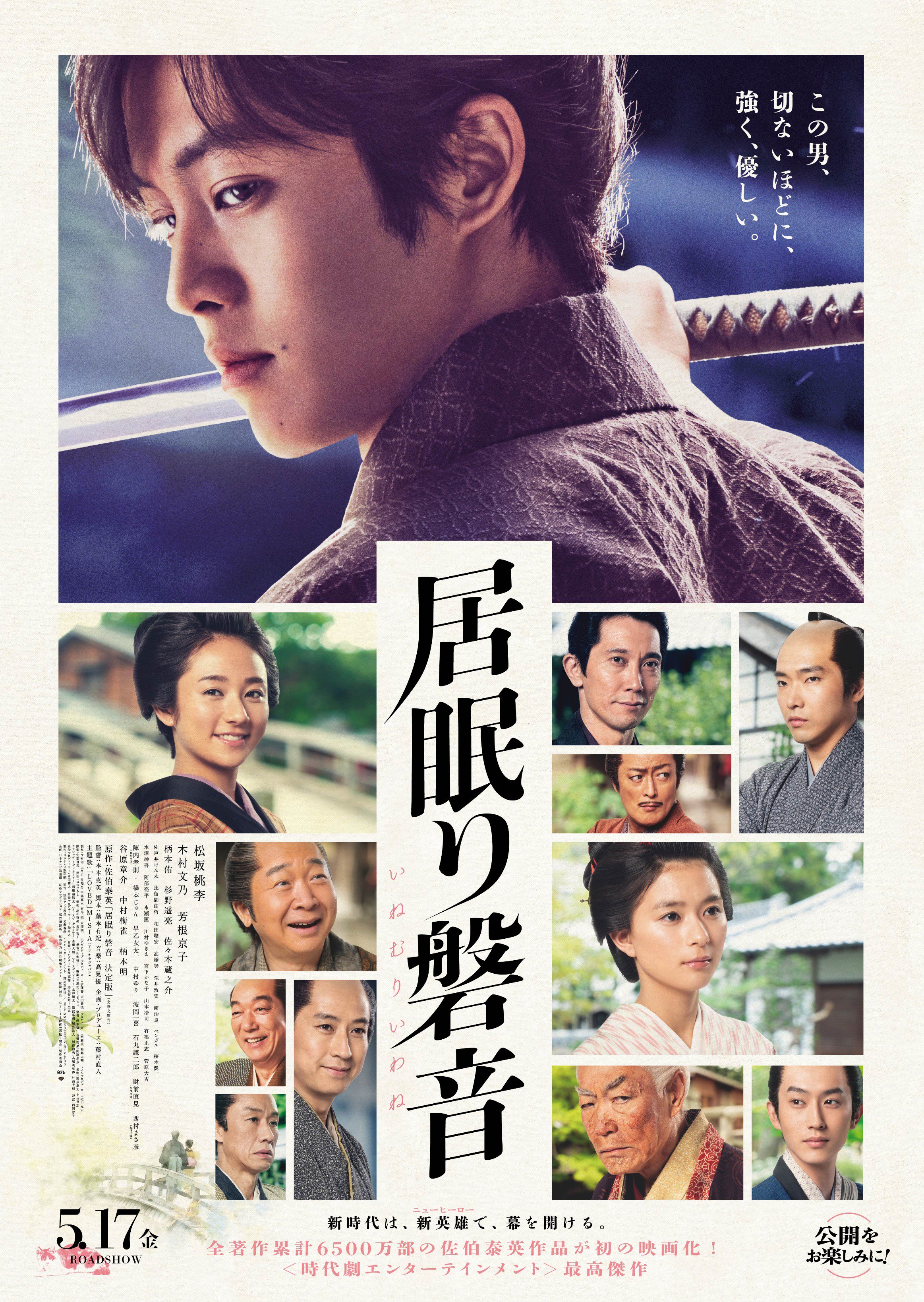
Iwane: Sword of Serenity (居眠り磐音, Katsuhide Motoki, 2019)

The contradictions of the samurai code conspire against one noble-hearted young man in Katsuhide Motoki’s adaptation of the long running series of historical novels by Saeki Yasuhide, Iwane: Sword of Serenity (居眠り磐音, Inemuri Iwane). Yet this truly serene samurai is a stoical sort, learning to bear his pain with fortitude while standing up for justice in an increasingly corrupt Edo where money rules all while an ascendent merchant class continues to challenge the fiercely hierarchical social order. 

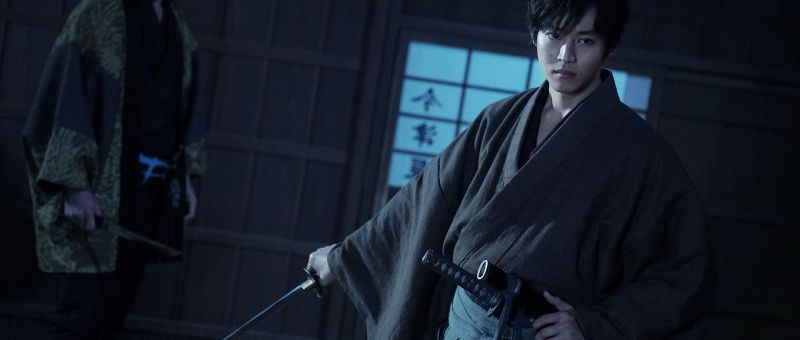
Beginning in 1772 which turned out to be a disastrous year, the tale opens as hero Iwane (Tori Matsuzaka) prepares to return home after completing his three year rotation in Edo in the company of childhood friends Kinpei (Tasuku Emoto) and Shinnosuke (Yosuke Sugino). Shinnosuke is in fact married to Kinpei’s sister Mai, while Iwane will himself be married to Kinpei’s other sister Nao immediately on his return so close are they. As Iwane’s father tells him, there are great hopes for these young men that they can “turn our outdated clan around”, but events will conspire against them. Spoiling the happy homecoming, Shinnosuke is accosted by a drunken uncle who convinces him Mai has been unfaithful in his absence with the consequence that he kills her immediately on his return home. Unable to understand this turn of events, Kinpei confronts his friend but eventually kills him, while Iwane is then forced to kill Kinpei after he goes on murderous rampage in revenge for the wrong done to his sister. 

In trying to mediate the case, the argument is put forward that Shinnosuke acted rashly and should have brought his suspicion to the authorities rather than opting for summary execution. The lord however disagrees, condoning Shinnosuke’s actions under the rationale that to do so would have been considered “weak minded” while as Shinnosuke himself had claimed he acted in accordance with the samurai code in which female adultery is illegal and punishable by death. By contrast, he finds Kinpei’s rashness offensive, insisting that he also should have recognised the legitimacy of his sister’s murder and simply left quietly with her body. Having learned the truth in which his childhood friends became victims of clan intrigue, romantic jealousy, and tragic misunderstandings in this Othello-like plot, Shinnosuke and childhood sweetheart Nao are also consumed by the rashness of samurai law each exiled from their clan and cast adrift in Edo-era society. 

Edo-era society is however also itself corrupt. Some months later, Iwane has returned to Edo as a lowly ronin lodging with a kindly old man, Kinbei, who helps him find a job firstly gutting eel then as a bodyguard at a money exchange which has been receiving anonymous threats they assume are from rival broker Awaya who has hatched a nefarious plan to manipulate the currency market to stop the current Shogun introducing a new unit which can be used in both Edo and Kyoto which would understandably cut into his already corrupt business model. Luckily, Imazuya is an honourable man who backs the new currency plan and wants to do the right thing which makes him a perfect fit for Iwane’s innate sense of justice. “You don’t know the way of the merchant” Awaya snaps at him, suggesting both that the samurai are already on their way down as the merchants rise and that his unwillingness to play dirty will be his downfall. Nevertheless, Iwane is the type to adapt quickly, instantly coming up with a way to play Awaya at his own game and kick his destructive amoral capitalism to the curb. 

Meanwhile, he continues to pine for Nao while drawing closer to Kinbei’s earnest daughter Okon (Fumino Kimura). As we discover Nao is also a victim of an intensely patriarchal social order but through the tragedy that befalls them also finds strength and agency making a life changing decision that allows her to become independent while looking after her family if in the knowledge that the childhood romance she shared with Iwane is a thing of the past. Iwane too agrees that he is trapped in a living hell of guilt and grief, yet choosing to go on living anyway as calm and cheerful as he’d ever been while standing up to Edo-era corruption though uncomfortably enough this time against the destabilising influence of the rising merchant class and therefore in contrast to most jidaigeki reinforcing the legitimacy of the samurai order which has paradoxically also ruined his life with its rigid and implacable social codes. In any case, Motoki’s classic chanbara melodrama has a serenity of its own as the cheerfully laidback hero resolves to live his life by a code of his own free of samurai constraint. 


Trailer (no subtitles)

Father of the Kamikaze (ゝ決戦航空隊, Kosaku Yamashita, 1974)

By the mid-1970s, Japanese cinema at least had become much more comfortable with critiquing the wartime past, considering it from a greater distance than the often raw depictions of war in the films from the previous two decades. 1974’s Father of the Kamikaze (ゝ決戦航空隊, A Kessen Kokutai), however, is among the few to skew towards the nationalist rather than the ambivalence or simple anti-war messages of other similarly themed films of its era. 

Starring ninkyo icon Koji Tsuruta who served in the air force himself, the film is a kind of biopic dedicated to Admiral Onishi who oversaw the kamikaze operations at the end of the war. As is pointed out, Onishi had been against the war in general terms even before its inception and is originally against the philosophy behind the kamikaze squadrons but as Japan’s fortunes continue to decline he becomes its biggest advocate citing a kind of sunk cost fallacy that it would be in someway unfair to the men that have already died to surrender while insisting that suicide missions are the only feasible way to turn the tide because one kamikaze could take out a hundred men by destroying battleships singlehandedly. 

The film in part attributes this extreme solution to the prevailing with your shield or on it philosophy of the contemporary society which placed extreme shame on the act of being taken prisoner. In the prologue that opens the film, a squadron of downed pilots whose heroic deaths have already been recorded is discovered alive in an American prisoner of war camp but as being a prisoner of war is so shameful and would reflect badly on the military, the decision is taken to fix the books by sending the men on a mission from which they are not intended to return. Onishi is opposed to the plan, he asks why they can’t find a way for the men to live, but the decision is already made. In any case, he describes the action of a suicide mission as a “beautiful ideal” even when insisting that a war cannot be fought in that way not least for purely practical reasons in that they do not have the resources to be wilfully sacrificing skilled pilots and their planes. 

Having come round to the idea, however, Onishi is a crazed zealot who cannot accept the idea of surrender and even goes so far as to barge into a cabinet meeting to urge ministers against a truce even though the war is clearly lost. To his mind, the only way to honour the sacrifices of those who’ve died is to fight to the last man. Kozono (Bunta Sugawara), another officer opposed to the kamikaze, eventually meets a similar fate in refusing to obey the order to lay down his arms and ending up in a psychiatric hospital. His objection had partly been that it’s wrong to turn men into ammunition, but also that the kamikaze project is itself defeatist and self-defeating when there are men such as himself who are committed to fighting on.  

In this the film leans into the image of militarism as a death cult in which dying for the emperor is the only noble goal of the whole imperial expansion. In its eventual lionising of Onishi’s image, his bloody suicide atop a white cloth resembling the flag of Japan while his parting words scroll across the screen in text, it does not shy away from his more problematic aspects in which he fails to object to a request from a junior officer that soldiers should be allowed to test their swords on American prisoners of war, roundly telling a subordinate who breaks protocol to insist that such a thing is not only morally wrong but will ruin their international reputation that he has no need to think of consequences because Japan will win this war. He claims to want to find a way of defeat that will satisfy the living and the dead, but in reality cannot accept it not least in that it would entail admitting that he sent 2600 young men to their deaths for nothing. 

Tsuruta brings the same level of pathos to his performance as he did in playing conflicted yakuza stoically committed to a destructive code, but there’s no getting away from the fact that the film focuses mainly on Onishi’s personal suffering as a man who sent other men to die for a mistaken ideal and then could not admit his mistake offering an apology only in his death in which he urged the young people of Japan to work to rebuild the nation in the name of peace. In switching to the present day and showing us Onishi’s dilapidated former residence and in fact the room in which he died with its tattered shoji and peeling paintwork, he veers towards the nationalistic in uncomfortably reinforcing the nobility of his death rather than the folly of war or absurdist tragedy of the kamikaze programme. Adopting a quasi-jitsuroku approach with frequent use of onscreen text, a narratorial voiceover, and stock footage of kamikaze in action Yamashita may portray war as madness in Onishi’s crazed devotion but cannot help depicting it as a “beautiful ideal” even in the undignified violence of Onishi’s ritual suicide. 


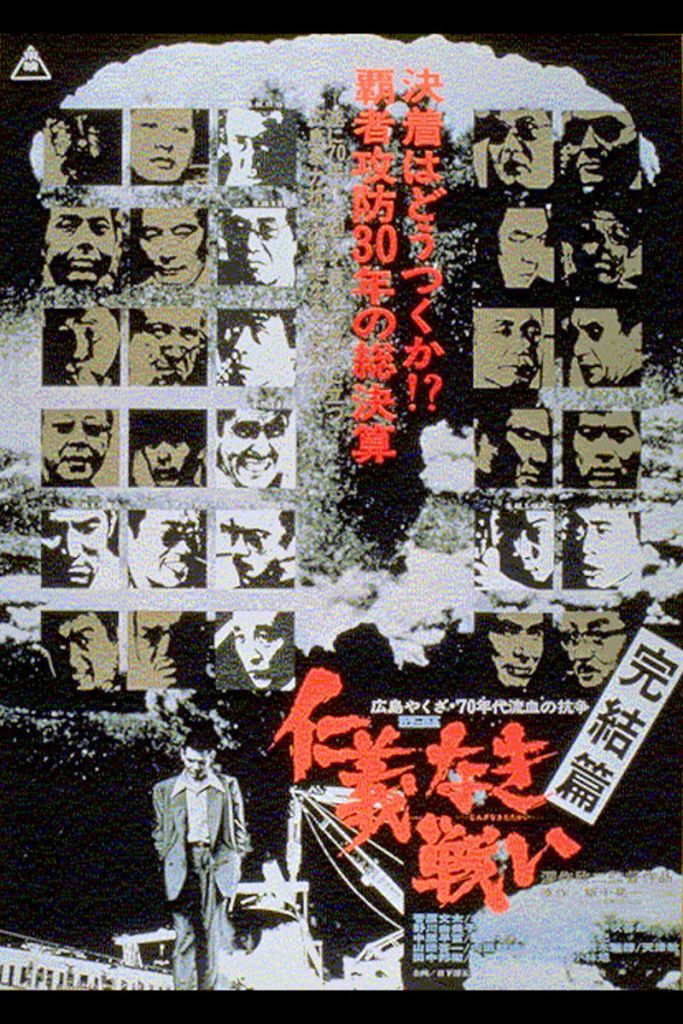
The Yakuza Papers Vol. 5: Final Episode ( 仁義なき戦い: 完結篇, Kinji Fukasaku, 1974)

800x1200srAnd so, the saga finally reaches its conclusion. Final Episode (仁義なき戦い: 完結篇, Jingi Naki Tatakai: Kanketsu-hen) brings us ever closer to the contemporary era and picks up in the mid ‘60s where Hirono is still in prison and Takeda, released on a technicality, has decided to move the yakuza into the legit arena. The surviving gangs have united and rebranded themselves as a political group known as the Tensei Coalition. However, not everyone has joined the new gangsters’ union and the enterprise is fragile at best.

Hirono’s sworn brother, Ichioka, is one such antagonist and after the Coalition’s accountant is clumsily gunned down in the street, tempers start to flair. Though the Coalition is nominally headed by Takeda, an up and coming youngster, Matsumura, is winning a lot of respect for his level headed judgement and ability to form long term plans. He wants to move away from the image of the traditional yakuza with their missing fingers and bad attitudes to something a little more media friendly. However, the old guard including the veteran, Otomo (now played by Jo Shishido), aren’t willing to see the bigger picture and continue to behave in the old ways requiring swift and bloody justice for their fallen comrade. The older generation maybe on their way out, but that doesn’t mean they can’t cause a little trouble on their way. Despite the best efforts of the younger guys the cycle of violence seems set to continue, will anything ever change at all?

According to Fukasaku, almost certainly not. Though Matsumura is accounted to be a good guy by both of our “heroes” Hirono and Takeda, his yakuza revolution seems doomed to fail. This kind of coalition is completely pointless if not everybody joins and obviously not everybody is going to. Following the public outcry and subsequent police crackdown in the previous film, the yakuza feel the need to reform their image, keep the violence off the streets and appear generally less scary than the image they’ve hitherto cultivated. Now it suits them to conduct themselves in a more dignified manner, more like regular businessmen than thugs in flashy suits.

Meeting at the prison in the end of Police Tactics, Hirono and Takeda both agree that their era has passed. They still aren’t quite old men, but they aren’t young and this violent world isn’t for them anymore. Their resolutions are both that the general environment has changed making the way they’ve lived so far untenable, but also that if they attempted to live that way again they simply wouldn’t survive any longer (perhaps they are “better off” in jail). Hirono spends most of the movie off screen again, in prison, writing his memoirs. Before coming out he seems set on “retirement” but once released he decides to return to the yakuza world. It’s not until the end of the film when once again confronted by the senseless violence of gang warfare that he finally decides to retire. Matsumura may have been trying to change things, but more young guys are dying so fast there’s barely any point learning their names and what really does it get you in the end? Can you live freely, has the world really changed at all? From Hirono’s late middle age viewpoint, the answer is no.

Final Episode follows the same basic formula as the other films in the series with the narrative voice over, frenetic handheld camera work, captions and freeze frames. The violence may be a little less frequent but appears bolder in its execution. These youngsters are messier than their forebears – the gunning down of the Tensei accountant is a clumsy affair carried out by two amateurs in the middle of a crowded street. Random weapons are constructed with pretty much anything that’s lying around during a street fight. These young guys are a different kind of desperate and have no idea how to conduct themselves in a subdued way.

We’re almost up to the the contemporary era of the film. It’s getting on for 25 years since Hirono came home from the war and joined a different kind of battlefront. Japan’s development has been startlingly rapid – from post-war rubble to hosting the olympic games and a newly burgeoning prosperity. Hirono and those like him have found themselves riding the wrong wave as their fortunes continue to dwindle just as the legitimate world is coming into its own. When Hirono and Takeda were talking at the prison at the end of part four they knew something had come to an end. They had no place in this world anymore – unless you become a ruthless boss like the hated Yamamori (still harbouring dreams of domination well into his dotage), the yakuza life is a young man’s game. Once again we finish on a shot of the ruined dome and a reminder that the strong will always prey on the weak. Fukasaku’s prognosis for the future is grim but, it has to be said, accurate.


Final Episode is available on blu-ray in the UK as part of Arrow Video’s Battles Without Honour and Humanity: The Complete Collection box set.