Yadang: The Snitch (야당, Hwang Byeng-gug, 2025)

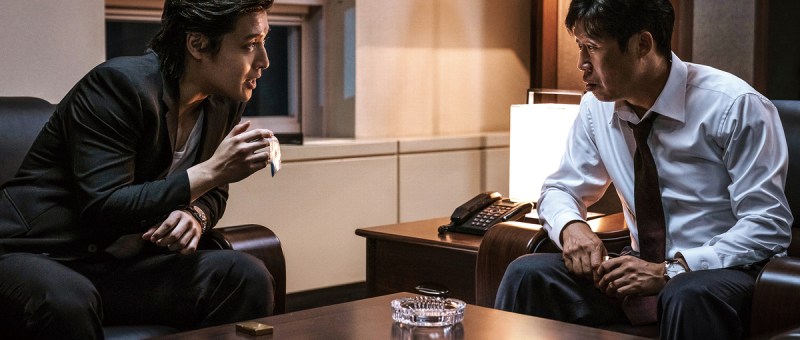
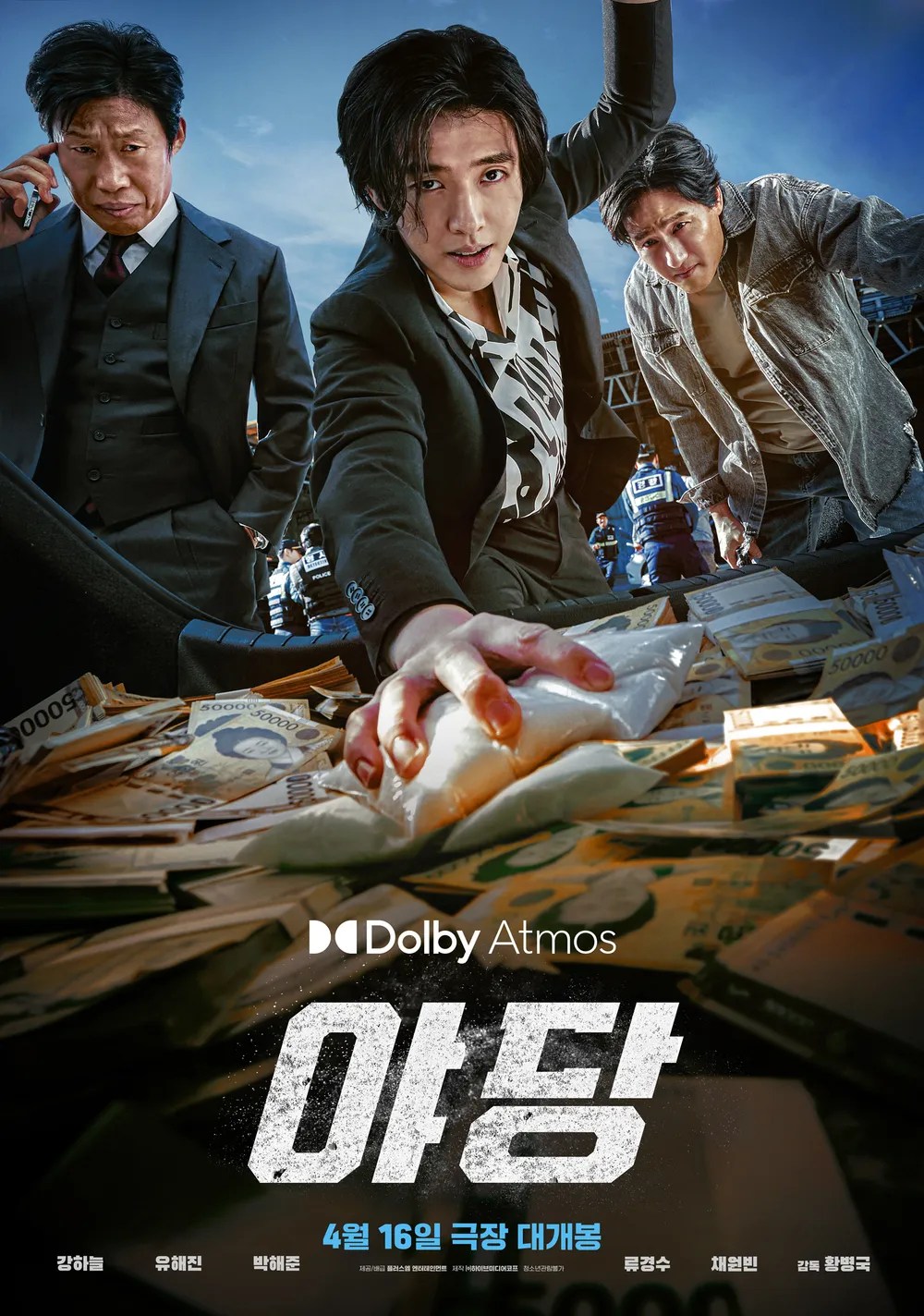
A Korean prosecutor can make or break a president, according to the ambitious Ku (Yoo Hae-jin) making a final power play to put an arrogant chaebol son in his place. But Ku isn’t trying to make a stand for the rule of law so much as bend it to his own will while securing his position, because in the world of Yadang: The Snitch (야당) justice is largely illusionary while mediated through the complex interplay between the social and political elite, crime, and law enforcement.

The hero, Kang-su (Kang Ha-neul), makes this plain in explaining that the big drug busts that get the police into the papers are largely all orchestrated through the snitchery of yadang like himself, a set up in which low-level drug users are encouraged to become police informants in return for lenient sentences allowing the detectives to take care of the dealers. Perhaps that’s all very well, as detective Sang-jae (Park Hae-joon) says, there’s no point locking up hundreds of users because the supply is endless and it makes no difference to the business. Kang-su’s likening of them cockroaches is a little problematic, even if he has a point that if you want to get rid of the infestation you have to go in for the nest.

But it turns out the nest is in an unexpected place because the nexus of corruption is in the government and political system which has been infiltrated by wealthy businessmen looking to further their own ambitions through politics while their feckless children behave like princelings knowing they can do whatever they want and then ring their fathers to make whatever consequences might occur go away. Though the film doesn’t go too deeply into it, there is something in the fact that both Ku and Kang-su come from poor, single-parent families though the direction of their ambitions might be quite different. Ku has studied hard to become a prosecutor and escape his poverty, but has only 10 years to make it into the top ranks or be forced to resign. He exploits Kang-su’s desire for wealth and agency to help him achieve his ambitions but though he describes him as a brother, is all too ready to throw him under the bus once he’s no longer useful to him. 

For his part, Kang-su relishes his role within this ironic system as someone on the fringes of crime but also facilitating law enforcement without being manipulated by the police in the same way that their informants often are. Sang-jae swears to protect a young actress after picking her up in a bust if she helps him catch the kingpins but in the end he can’t do it, partly because of Ku, but also because at the end of the day his fellow officers have the same opinion of their snitches as Ku does his and aren’t terribly invested in their safety or wellbeing. After getting caught up in Ku’s showboating raid on a hotel where chaebol son Hoon is partying with yakuza drug dealers, Su-jin’s (Chae Won-bin) career is ruined and on her release she has only the drug scene to rely on with the consequence that she becomes an addict and a dealer herself.

But it was Hoon (Ryu Kyung-soo) that made her a user in the first place by spiking a drink and then went on to use his privilege to control her and make sure that she stayed within his orbit. Ambitious men like Ku make their deals and let the chaebol sons get away with their crimes, though his late in the game attempt to remind Hoon that he could ruin his father’s chances of becoming Korea’s next president if he chose to implies his own sense of worthiness that he is actually above this illusionary elite though he may be overestimating his reach. These three branches of branches of power operate in a symbiotic system and need each other to survive. Ku is only really a kind of Yadang himself, mediating between a social and political elite while enjoying only the illusion of power and independence. Hwang ups the action stakes with some high impact set pieces including that in which Kang-su uses the brute force of his Hummer to literally bulldoze a car full of drug dealers while the police chase after them with metal poles, but seems to suggest the real violence stems from the system if ultimately opting for an ironic buddy cop conclusion in which Kang-su uses his considerable skills in a more legitimate fashion.


Trailer (English subtitles)
Jeong-sun (정순, Jeong Ji-hye, 2022)

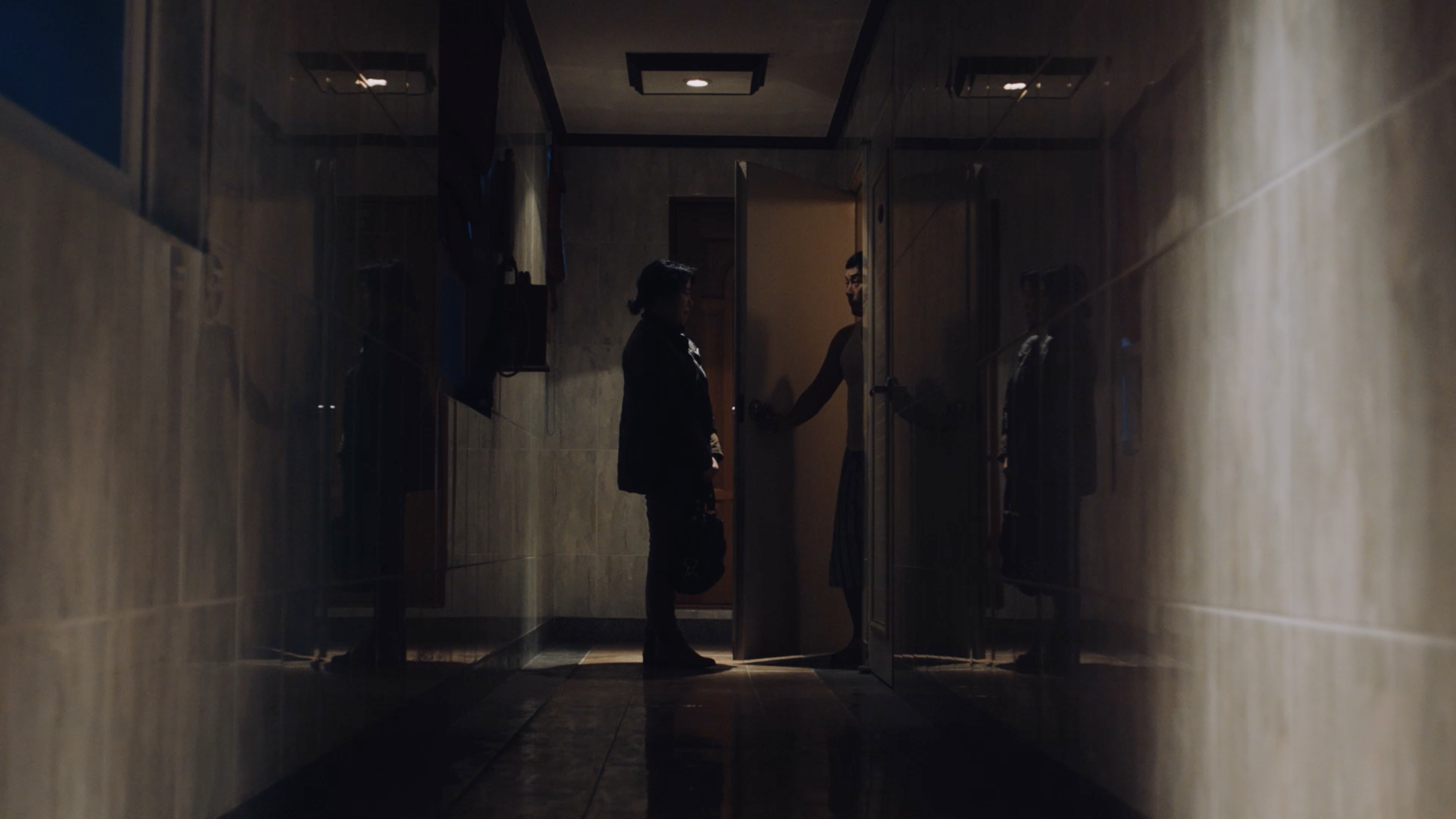
“Is it a crime to be old?” a middle-aged woman asks after finding herself the centre of scandal in Jeong Ji-hye’s timely drama, Jeong-sun (정순). Surrounded by an ageist and misogynistic society, Jeong-sun has always bided her time and played by the rules but is acutely aware of her predicament as an older woman knowing that if she loses her factory job no one else will hire her and therefore submits herself to all the petty microaggressions of life on the margins. 

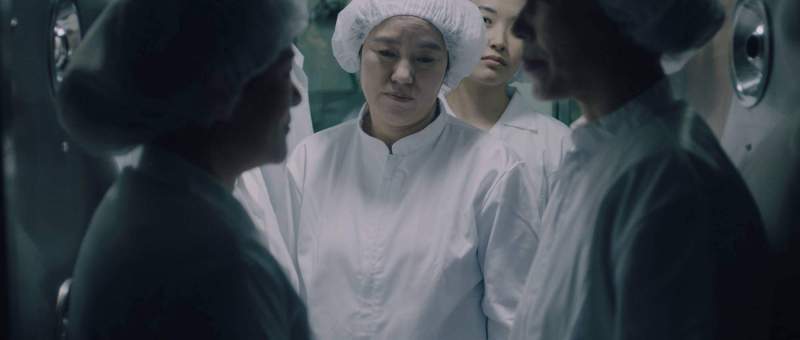
Chief among them would be her obnoxious floor manager Do-yun, little more than a teenager with a clipboard and an inflated sense of his own importance. She and the other women gossip about Do-yun’s dubious love life which partially relies on abusing his authority to date factory girls whom he gives preferential treatment and then discards once he’s bored. There’s also a rumour going around that the managers plan to fire some of the older workers like Jeong-sun after hiring permanent employees while a generational divide is developing between the full timers and the college students who turn up for the summer and secretly think they’re better than this. Jeong-sun accidentally offends one of them by playfully making fun of her putting on makeup in the changing room given that they’re all about to put on identical white uniforms and go through decontamination to head to the factory floor. 

The irony is that she begins to bond with new employee Yeong-su out of their shared sense of alienation as marginalised middle-aged people. Around her age, Yeong-su previously worked casual jobs in construction but has switched to the factory because of knee damage caused by years of manual labour. His physical injury has further damaged his sense of masculinity leaving him deeply insecure and desperate for approval from other men including that from the continually obnoxious Do-yun. When Do-yun asks him if he has a girlfriend, Yeong-su sheepishly replies that he’s too old for all that only for Do-yun to insultingly add that he doubts he has the time or money considering he just works on the shop floor. When Jeong-su’s daughter Yu-jin (Yoon Geumseona) and her fiancé ask her if she might have a boyfriend, Jeong-sun gives a similar reply seemingly feeling a degree of shame about being an older woman daring to date. She tells Yeong-su that they should slow down because she’s embarrassed to hear the other workers gossiping about them, but Yeong-su takes it the wrong away assuming that she too looks down on him for being a penniless factory worker with not much to his name.  

It’s this combination of ageism and sexism that gradually destroys their relationship. Mocked by Do-yun who calls him a “naive” man, Yeong-su shows him a video Jeong-sun had allowed him to take of her singing in her underwear in a moment of empowerment. Soon, it’s leaked online and Jeong-sun becomes the talk of the town, a figure of fun just for being a middle-aged woman embracing her sexuality. While the younger women laugh at her, Jeong-sun’s daughter and friends are universally sympathetic as is the policeman Yu-jin reports the incident to, but she later finds that not even the police really take the case seriously despite Jeong-sun’s increasingly precarious mental state. “I’m sorry to say this, but younger females are usually the victim” the policeman adds as they push Jeong-sun to settle, implying that no one’s all that interested in Jeong-su’s video and the taboo incident is somewhat embarrassing even to him. Yeong-su meanwhile offers a pleading “apology” before trying to convince Jeong-sun not to press charges because he’ll never work again with bad knees and a criminal record. 

Yeong-su said he’d move away and that it would all blow over, but Jeong-sun later catches sight of him laughing and joking with Do-yun and the other guys from the factory very much one of the boys. Her life has been ruined, but they’ve got off scot free. “Why should I stay put?” Jeong-sun finally asks in directly standing up to Do-yun who is after all a cowardly boy who bullies other men to bolster his fragile sense of masculinity. He responds by calling her a “crazy bitch” while she destroys his false authority and plays him at his own game, somehow taking something back if only in a moment of self-destruction. Where she finds herself is literally in the driving seat of her own life, seizing the opportunity for freedom and independence that comes with age but also the breaking of a spell that had been designed to keep her in her place. 


Jeong-sun screened as part of this year’s Red Lotus Asian Film Festival.

International trailer (English subtitles)

The Slug (태어나길 잘했어, Choi Jin-young, 2020)

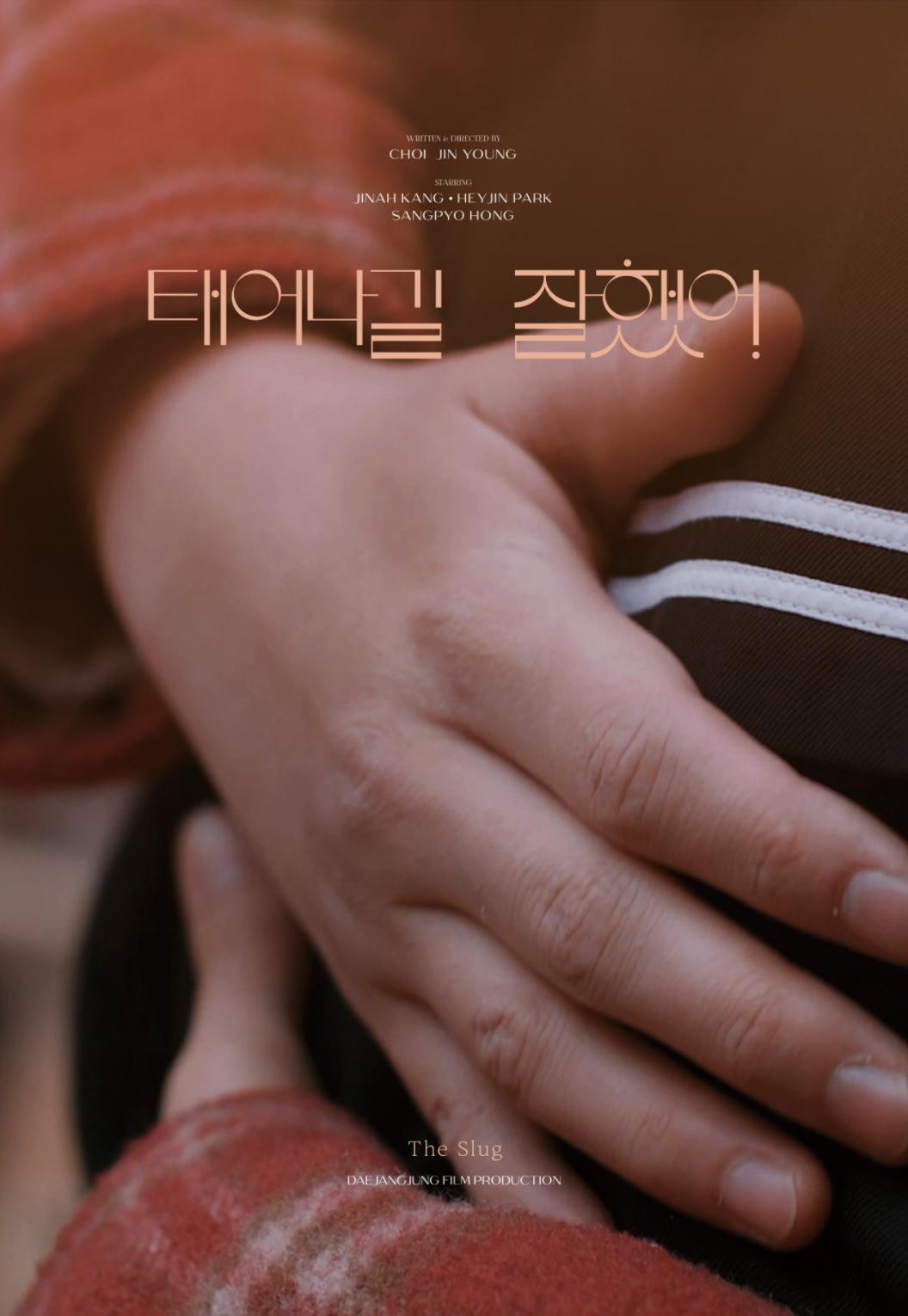
“My name is Park Chunhee. I’m a little…drenched.” “From the weight of life?” asks a fellow sufferer a little too excitedly. “In sweat” she flatly replies, though in her case less from existential anxiety than a persistent medical condition she finds so embarrassing it prevents her leading a fulfilling life. Although, it seems, that’s not the only reason that Park Chunhee has found herself arrested since the age of 15. A whimsical tale of growing self-acceptance, Choi Jin-young’s The Slug (태어나길 잘했어, Taeeonagil Jalhaesseo) reconnects its lonely, defeated soon-to-be middle aged heroine with her teenage counterpart to make both sense of and peace with the past in order to “find purpose and meaning somewhere in this world”.

We first meet Chunhee (Kang Jin-a / Park Hye-jin) in 1998, shortly after the Asian Financial Crisis, entering the home of her uncle (Ko Jo-yeong) and aunt (Kim Geum-sun) following the funeral of her parents. It seems although the family has agreed to take her in, little thought has been given to her place within the household. Her cousin Yura (Kim Yeon-woo) flat out refuses to share her room while her aunt is reluctant to allow her to use the room of her son Wonseok (Lim Ho-jun / Yoo Gyeong-san) who is away at university in case he should come back. Slightly exasperated, grandma (Byeon Joong-hee) agrees she can come in with her, but her uncle has another idea – the attic crawlspace, according her aunt freezing and rat infested and though he offers to fix it up it’s clear he won’t be doing it himself and doesn’t want to pay. Nevertheless, it’s where she ends up staying, hidden away and treated quite literally as a poor relation with no one but grandma showing her the slightest bit of affection. 

20 years later, Chunhee is still living in the house though apparently alone. Her attic room is more or less unchanged, pinups of a teenage Prince William still affixed to her windowsill along with a family photo. She finds strange companionship in an errant slug crawling on the wall, partly in the trail she leaves after herself because of her excessive sweating that caused her aunt to be forever berating her to mop the floor after she passed through in socks. These days she makes ends meet by pealing copious amounts of garlic for a local restaurant while saving up for an operation to cure her sweating. After being mysteriously struck by lightning, however, her life becomes even stranger as she’s haunted by the younger version of herself and plagued with flashbacks to her teenage trauma.

Besides the sweating, Chunhee’s problem seems to lie in the conviction that her life is worthless and it would have been better if she had died along with her parents but best if she were never born at all. After accidentally wandering into a weird support group under the name of “Time to Face Myself” she ends up bonding with a similarly dejected man who has developed a stammer after being beaten by his father and regrets that his life has been a series of missed opportunities as a consequence. Yet she still doubts that she has a right to love or happiness, convinced that people don’t like her and that she is a toxic person destined to make others unhappy. Only by reconnecting with the younger Chunhee and bonding with the kind yet awkward Juhwang (Hong Sang-pyo) does she begin to see that it was never her fault, she was not in the wrong, and has as much right to life as anyone else.

Originally changing the locks because it’s her house and she doesn’t want anyone else inside, Chunhee finally manages to escape her strange limbo land even as her feckless family members flounder, Wonseok apparently ruined by his failed revolution while her uncle died a failed poet and Yura apparently became an unsuccessful film director. “Life is cold” Chunhee is reminded by a new friend engineered by her innate kindness, realising that though she feared being alone alone is all she’s ever been. Nevertheless, her new connections have perhaps in a sense liberated her, given her courage to face herself and rediscover a sense of self worth that gives her the confidence to venture out into the world in search of answers walking towards a large heart comprised of several smaller ones as she embarks on an existential quest for meaning open to whatever it is that awaits her.


The Slug screened as part of the 2021 Osaka Asian Film Festival

Original trailer (no subtitles)

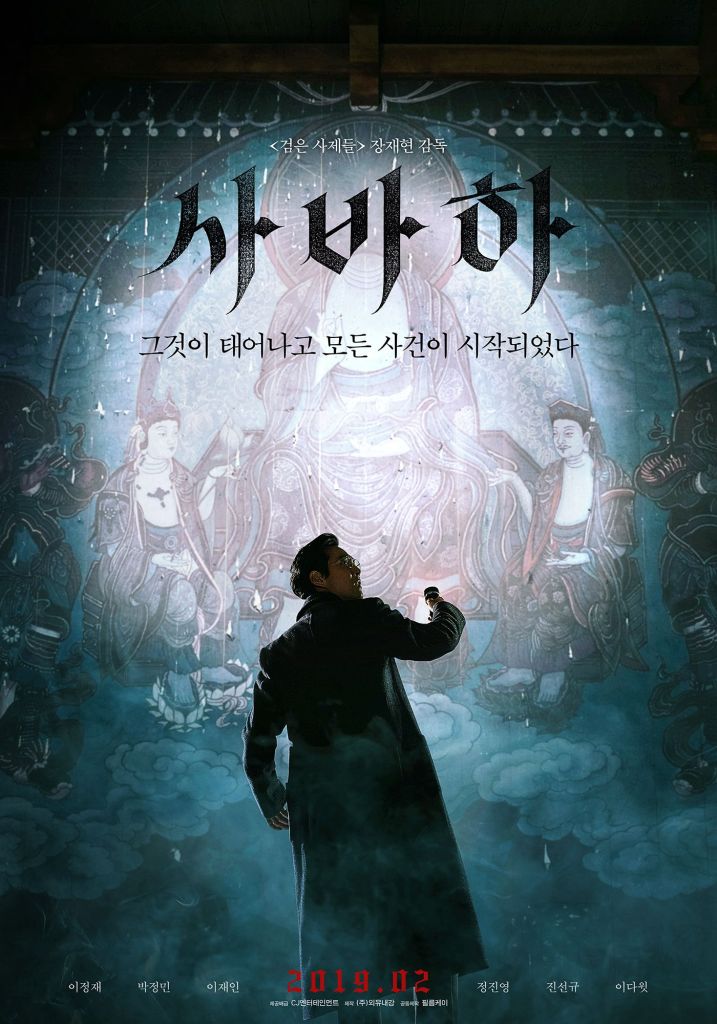
Svaha: The Sixth Finger (사바하, Jang Jae-hyun, 2019)

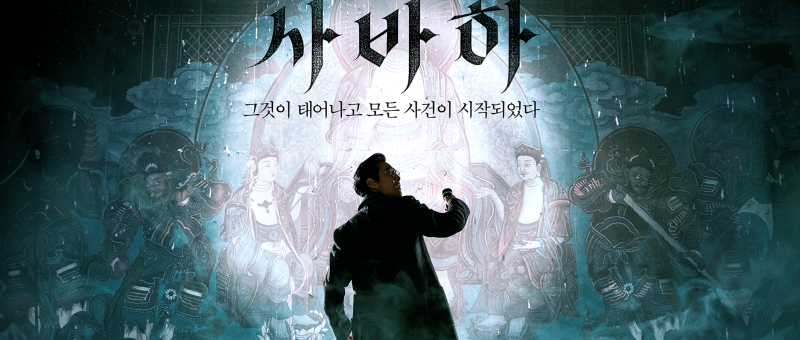
The thing about prophesies and the prophets who proclaim them, is that they only have power if people choose to believe in them. “Faith” can become a convenient cover for those who’d rather not explain themselves, a mechanism for manipulating sometimes vulnerable people looking for a greater truth or a purpose in their lives. Svaha: The Sixth Finger’s (사바하) dogged pastor is intent on investigating religious crimes and exploiting spiritual charlatans but he of course has his own agenda, that mostly being that he’s keen to get money off his clients who are in turn hoping to bolster their authority by rooting out “heresies”.

Leader of the Far Eastern Religious Research Institute, a kind of religious detective agency employing only himself, an undercover assistant, and a “deaconess” secretary, Pastor Park (Lee Jung-jae) makes his money flagging up dodgy and/or exploitative practices connected with organised religion. According to him, freedom of religion is “overly” protected, and he is alone on the frontlines of a spiritual war against unscrupulous cultists. Though some kind of protestant, he often works for/against the Catholic Church and is good friends with a Buddhist monk who gives him a tip off about a weird sect he can’t get a handle on, Deer Hill. 

Meanwhile, a young girl, Geum-hwa (Lee Jae-in), explains to us that she was born with an “evil” twin clamped to her leg. The twin wasn’t expected to survive, but is still living with Geum-hwa and her family who keep her locked up in a shed like a beast. Rightly or wrongly, Geum-hwa connects her sister with the deaths of her parents which occurred fairly soon after the children were born. Her grandfather, with whom Geum-hwa now lives, never even registered the birth of a second child out of fear and shame, never expecting her to survive this long. When a truck hits a bridge and exposes the hidden body of a murdered teenager, the police start investigating too, eventually leading them to two young men loosely connected with the shady Buddhist cult. 

“This world is one big muddy mess”, according to the cultists at Deer Hill. It’s not difficult to see why people might be looking for spiritual reassurance in such a chaotic world, but it’s exactly that need that places like Deer Hill may be seeking to exploit. Nevertheless, the only thing that Park’s undercover agent turns up is that there doesn’t appear to be anything untoward. Deer Hill doesn’t accept offerings from its members and even gives money away to the needy. Tellingly, the real nitty gritty to Park’s clients is in doctrinal deviation, they only really want to know what kind of Buddhism it is that they do and if it’s in line with broader teachings of the faith. 

A further tip off leads them to the mysterious Je-seok (Jung Dong-hwan), a legendary Buddhist priest who studied in Japan but apparently devoted himself to the Independence movement and is said to have achieved enlightenment. Je-seok’s teachings are dark in the extreme, “Pain is the fruit of faith” goes his mantra, “pain purifies your blood”. He believes that he is the “light” that will conquer the “darkness” by snuffing out “snakes”. One of his disciples, brainwashed as a vulnerable young man and encouraged to do terrible things in the name of good, begins to doubt his teachings when confronted with a possible hole in his logic and the very real human cost of his strategy. 

Not quite as cynical as he seems, Park retains his faith. It’s ironic that all this is taking place at Christmas and centres on the prophesied birth of a child that threatens someone’s sense of personal power. Unlike most, Park has always regarded Christmas as a “sad” holiday, unable to forget that Jesus’ birth was accompanied by the mass murder of innocent baby boys. He wonders where God is now and why he permits these things to happen. Park has faith that God sent Jesus into the world for the greater good, but Je-seok has convinced his followers that the same is true of him, that he has come to banish the darkness and that all their pain and suffering is fuel in a holy war. Their faith has been redirected and misused for the benefit of a false prophet, while his opposite number has been made to live a life of bestial misery solely because of superstitious prejudice. The police is a fairly irrelevant presence in this series of spiritual transgressions, but there is much less clarity to be had in “truth” than one might hope with “faith” the only solution in an increasingly uncertain world.


Svaha: The Sixth Finger is currently available to stream on Netflix in the UK (and possibly other territories).

International trailer (English subtitles)