The Noisy Mansion (백수아파트, Lee Lu-da, 2024)

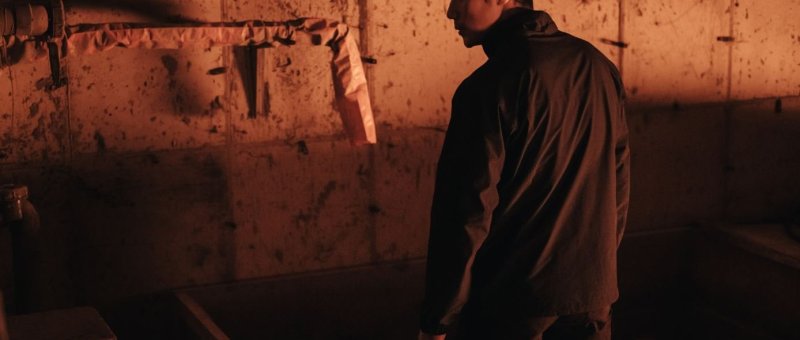
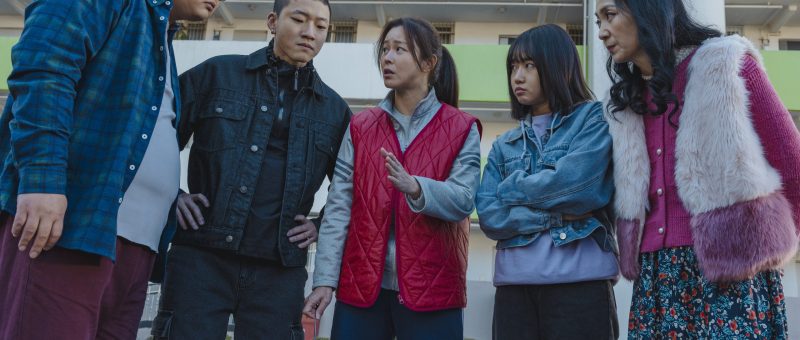
Could the neighbourhood busybody actually be a force for good? The Noisy Mansion (백수아파트, Baeksu Apateu) at the centre of Lee Lu-da’s goodhearted comedy is a metaphor for the nation itself and also a kind of purgatorial space inhabited by the heroine as she attempts to repair herself by enforcing justice and improving the lives of others though it brings her no other real benefits. Some may brand her an inconvenient troublemaker, a nosy parker poking her nose where it doesn’t belong, but Geo-ul is really trying to do good if in an unconventional way.

It’s this tendency to rock the boat that’s finally started to annoy her brother Duon who fears her problematic do-gooding is going to have an adverse effect on his children while he is also fed up with fending off animosity from the neighbours regarding Geo-ul’s frequent attempts to police them. In many ways, this is a society in which minding your own business is considered a virtue and speaking up is a breach of social etiquette but then if nobody says anything, then nothing will ever change and those who abuse their power will be able to go on doing so unchallanged. 

Of course, Geo-ul’s determination to enforce justice it also her way of overcoming her sense of guilt and resentment towards a world in which a small mistake, the overlooking of something that should have been important, can have tragic consequences. She is quite literally haunted by what she feels was a lapse of responsibility, something she will never allow to happen again. Yet the apartment complex she moves into after her brother kicks her out assuming it will only be a matter of days before he asks her back is also a haunted space inhabited by lonely souls like herself who are being driven slowly mad by ominous banging noises at 4am. Geo-ul becomes determined to discover the culprit behind the maddening noise if only to vindicate herself in the eyes of her brother that she really can accomplish something through her busy-bodying.

But she finds herself at the nexus of the nation’s problematic capitalism as it becomes clear the banging is likely a tactic employed by gangsters trying to get people to move out so the building can be demolished. In fact, most of the units are empty and the building itself is in a possibly wilful state of disrepair which is why Geo-ul was able to move in so easily despite the discouragement of the estate agent who introduced her to it. The people she meets there are also all struggling with their own problems aside from those exacerbated by their exhaustion and while previous attempts to unite to oppose the plans for redevelopment had largely failed, her quest to unmask the noisy neighbour does indeed provoke a sense of solidarity in the community and the conviction that they really could change their circumstances if they work together.

As some say, the most dangerous person is one with too much time on their hands. What some might call nosy, Geo-ul might term taking an interest in her community. Though some may originally be irritated by her desire to root out injustice, they later come to respect her when she starts getting results. Aside from a sense of vindication, her actions have a positive effect on the community liberating the apartment block from the oppressive shadows haunting it which in this case would be corruption, organised crime, violence, and ultimately hopelessness. Above all else, Geo-ul’s dedication proves that it is possible to change the world, to restore peace, order and self-respect by exorcising the evil spirits of contemporary capitalism. The residents even get over Geo-ul’s status as a “renter” who has no place in their struggle as homeowners and affectionally refer to her as “captain” as she leads their accidental revolution. Filled with a cast zany characters and undercut with a sense of tragic melancholy, the film is an advocation for the power of community but also for the concerned citizen standing up for fairness and justice even when it has no real relevance or benefit to them personally and may actually do them harm but less so than living in an unfair society which allows tragedy to occur simply through indifference.


The Noisy Mansion screened as part of this year’s London Korean Film Festival.
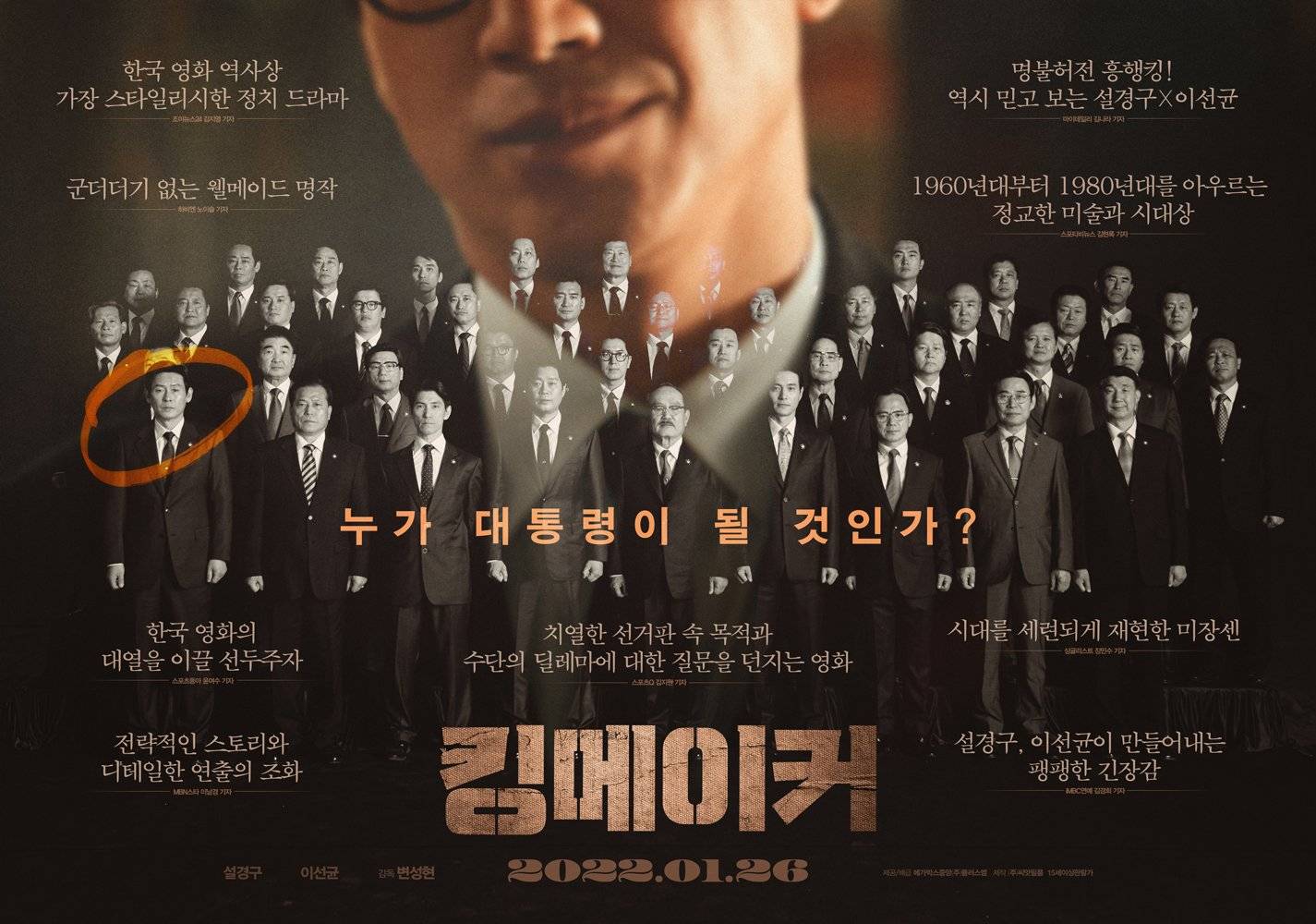
Kingmaker (킹메이커, Byun Sung-hyun, 2022)

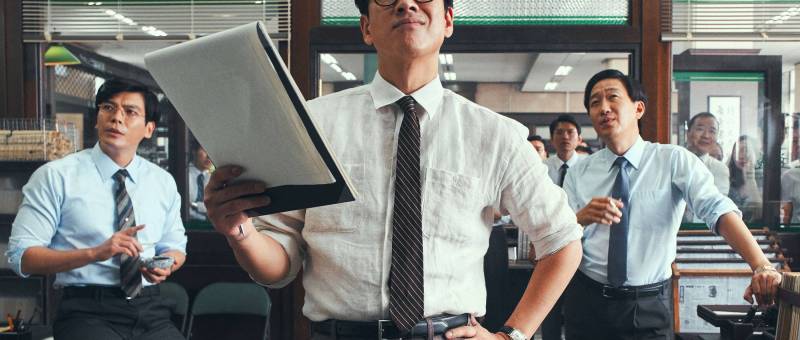
It’s the political paradox. You can’t do anything without getting elected but to get elected you might have to abandon whatever it was you wanted to do in the first place. Loosely based on the real life figures of Kim Dae-jung and his political strategist Eom Chang-rok, the heroes of Byun Sung-hyun’s Kingmaker (킹메이커) are obsessed with the question of whether the ends justify the means and if it’s possible to maintain integrity in politics when the game itself is crooked while the film suggests that in the end you will have to live with your choices and your compromises either way and if it’s a better world you want to build perhaps you can’t get there by cheating your way to paradise.

The son of a North Korean migrant, Seo Chang-dae (Lee Sun-kyun) is an embittered and frustrated pharmacist with a talent for spin. When his friend complains about a neighbour stealing his eggs from his chicken coop and denying all knowledge because he’s well connected and knows he can get away with it, Chang-dae’s advice is to plant one of his own chickens in the other guy’s coop and catch him red handed. Impressed by the impassioned political speechmaking of labour activist Kim Woon-bum (Sol Kyung-gu), he writes him a letter offering his services and then marches down to his office to convince him that he is the guy to break his losing streak and finally get him elected so they can “change the damned world”. 

The problem is that all of Chang-dae’s ideas are like the chicken scam, built on the manipulation of the truth, but you can’t deny that they work. He plays the other side, the increasingly authoritarian regime of Park Chung-hee, at their own game, getting some of their guys to dress up as the opposing party and then set about offending a bunch of farmers by being generally condescending and entitled. They stage fights and perform thuggish violence to leave the impression that Park’s guys are oppressive fascists while asking for the “gifts” the Park regime had given out to curry favour back to further infuriate potential voters. Later some of their own guys turn up with the same gifts to send the message that they’re making up for all Park’s mistakes. At one point, Chang-dae even suggests staging an attack on Woon-bum’s person to gain voter sympathy, an idea which is met with total disdain by Woon-bum and his team many of whom are at least conflicted with Chang-dae’s underhanded tactics. 

But then as he points out, if they want to create a better, freer Korea in which people can speak their minds without fear then they have to get elected first. It may be naive to assume that you can behave like this and then give it all up when finally in office, but Chang-dae at least is committed to the idea that the ends justify the means. Woon-bum meanwhile is worried that Chang-dae has lost sight of what the ends are and is solely focussed on winning at any cost. He has an opposing number in slimy intelligence agent Lee (Jo Woo-Jin) who serves Park in much the same way Chang-dae serves Woon-bum, but Chang-dae fatally misunderstands him, failing to appreciate that for Lee Park’s “revolution” is also a just cause for which he is fighting just as Chang-dae is fighting for freedom and democracy. In an uncomfortable touch, Lee seems to be coded as gay with his slightly effeminate manner and tendency towards intimate physical contact adding an additional layer to his gradual seduction of Chang-dae whose friendship with Woon-bum also has its homoerotoic qualities in its quiet intensity. 

The final dilemma lies in asking whether or not Woon-bum could have won the pivotal election of 1971, preventing Park from further altering the constitution to cement his dictatorship and eventually declaring himself president for life, if he had not parted ways with Chang-dae and tried to win more “honestly”. If so, would they have set Korea on a path towards the better world they envisaged or would they have proved little different, their integrity already compromised by everything they did to get there poisoning their vision for the future? The fact that history repeats itself, Woon-bum and his former rival Young-ho (Yoo Jae-myung) splitting the vote during the first “democratic” presidential election and allowing Chun Doo-hwan’s chosen successor to win, perhaps suggests the latter. In any case, it’s Chang-dae who has to live with his choices in having betrayed himself, as Woon-bum had feared too obsessed with winning to remember why he was playing in the first place. “All my ideas about justice were brought down by my own hand” he’s forced to admit, left only with self-loathing defeat in his supposed victory. Some things don’t change, there is intrigue in the court, but “putting ambition before integrity will get you nowhere” as Chang-dae learns to his cost. 


Kingmaker screened as part of this year’s London Korean Film Festival.
International trailer (English subtitles)

Recalled (내일의 기억, Seo Yu-min, 2021)

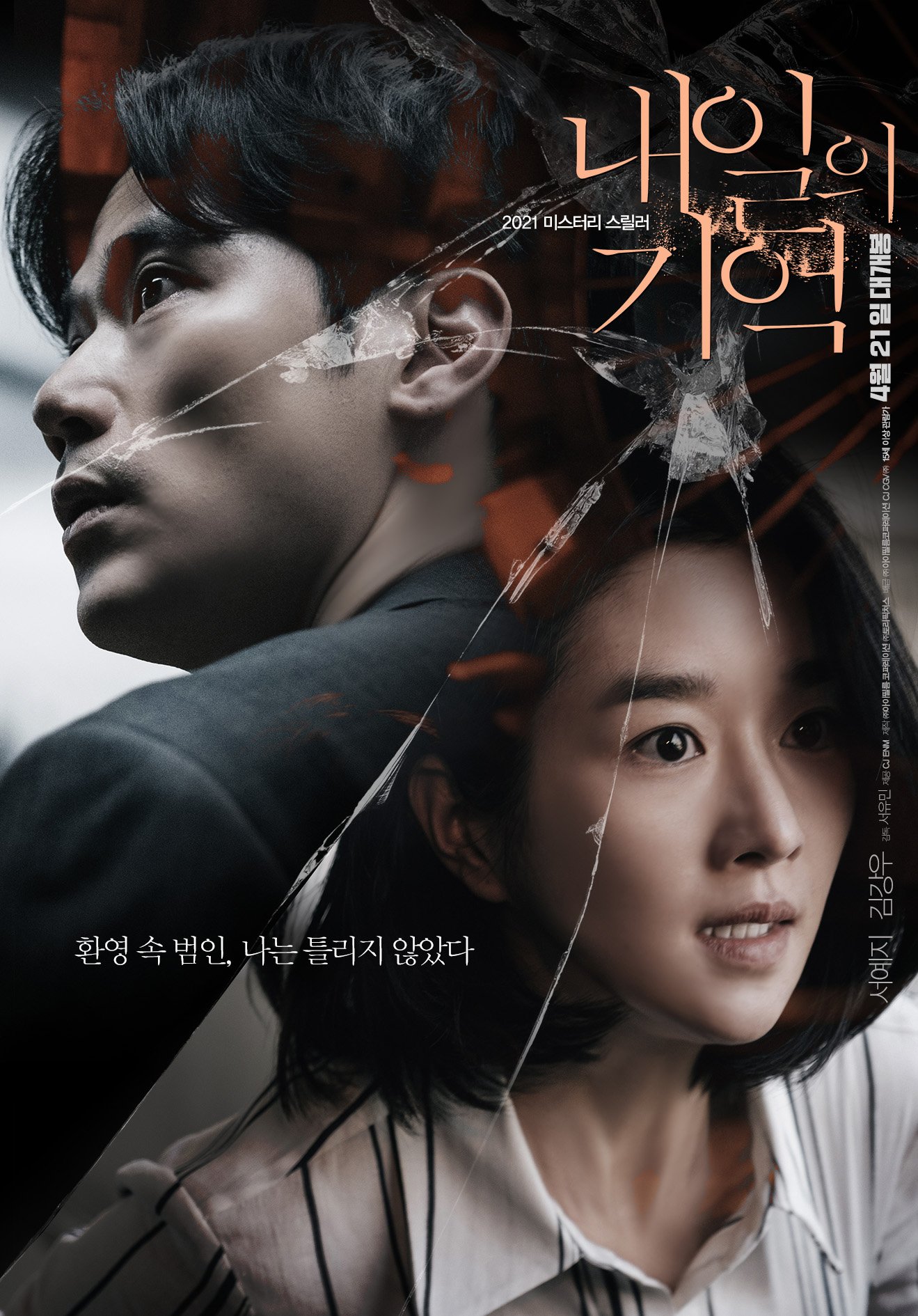
A traumatised woman finds herself trapped in an uncertain reality in Seo Yu-min’s puzzle box neo noir, Recalled (내일의 기억, Naeileui Gieok). Situating itself in a world of future ruins, Seo’s tragic tragic tale of existential mistrust is as its sci-fi-inflected Korean title “Memories of Tomorrow” might imply also a paradoxical exploration of the importance of dreams and the belief that other lives are possible while the heroine struggles to piece together the shards of her fractured identity only to realise there are some truths it may be better never to learn. 

30-something Soo-Jin (Seo Yea-ji) wakes up in hospital after an accident she has no memory of to realise that she has no idea who the extremely upset man at her bedside could be, or who she herself is for that matter. The nurses ask her if she recognises her husband, Ji-hoon (Kim Kang-woo), which she doesn’t but evidently does feel some degree of closeness to him as he continues to care for her with the utmost devotion. On leaving the hospital, he takes her home to a well-appointed flat in an affluent area and though she tries to restart her life from zero she can’t escape her sense of anxiety and begins having what she regards as premonitions of impending disaster centring on two other apartments one with two small children and the other a teenage girl and an intense middle-age man. Her doctor tells her that she is most likely hallucinating because of her brain injury, while even Ji-Hoon snaps at her that she’s obviously unwell and ought to take things easy. Nevertheless, Soo-Jin can’t simply ignore the increasing uncanniness of the world around her especially when she begins to discover discrepancies in the backstory she’s been fed by Ji-Hoon and the evidence presenting itself about her former life. 

Perceptive policeman Ki-sang (Park Sang-wook) himself hints that there might be something not quite right with Soo-jin’s life in remarking that her apartment looks like a model home seconds after walking in and then noticing a few other details that set off alarm bells in his admittedly suspicious mind. Meanwhile, he’s investigating the theft of materials from a nearby abandoned building site for a never completed block of luxury condos suggestively titled “Dream Town”, a project cancelled when the architecture firm Ji-hoon worked for went bust. The foreman who reported the theft remarks that the apartments pre-sold like hotcakes, but even in the building where Soo-jin lives a banner outside advertises a “big sale on unsold units” hinting at a kind of economic hubris or perhaps suggesting that the “dream” they’re offering of luxury living is either unrealisable for most or simply undesirable. According to Ji-hoon, Soo-jin wanted to emigrate to Canada for a quiet life surrounded by nature hoping to escape the unsatisfying present for an ironic return to the pastoral past. 

Soo-jin meanwhile struggles to orient herself having only Ji-hoon as an arbiter of truth but unable to trust him, doubting not just his identity but her own, while burdened by prophetic visions which may be less missives from the future than intrusions from the traumatic past. As she later puts it, her Canadian dream became a memory which sustained, both beacon of hope and escapist fantasy in its promise of idyllic peace and happiness. There is however a cruel irony in the suggestion that good and bad all this is happening to her because of love and its competing desires for salvation and destruction, while she only blames herself consumed with misplaced guilt and confused by an imperfect grip on objective reality. “Our memories await us there” she’s ironically advised of her Canadian dream, urged to abandon this failing reality for a new one exchanging her traumatic memories for those not yet made which in a sense already exist and have only to be attained. The final revelations may therefore be somewhat cruel as Soo-jin gathers the shards of her broken past to come to a long delayed understanding of herself, but Seo’s finely crafted puzzle box mystery does at least afford her the opportunity of reclaiming her identity while resolving the multi-layered trauma of her life in a patriarchal society ruled by personal greed. 


Original trailer (no subtitles)