Invisible 2: Chasing The Ghost Sound (귀신소리 찾기, Yoo Jun-suk, 2011)

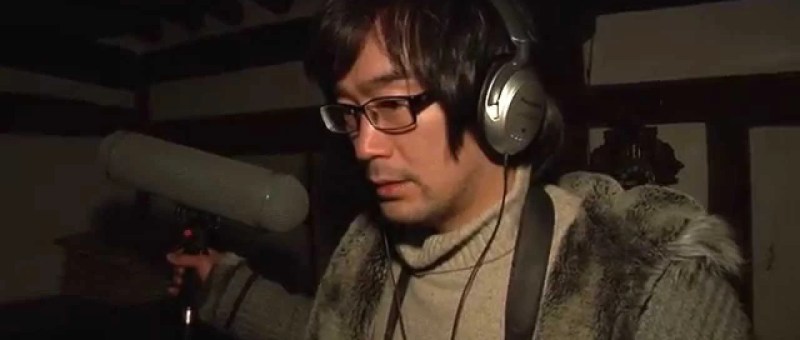
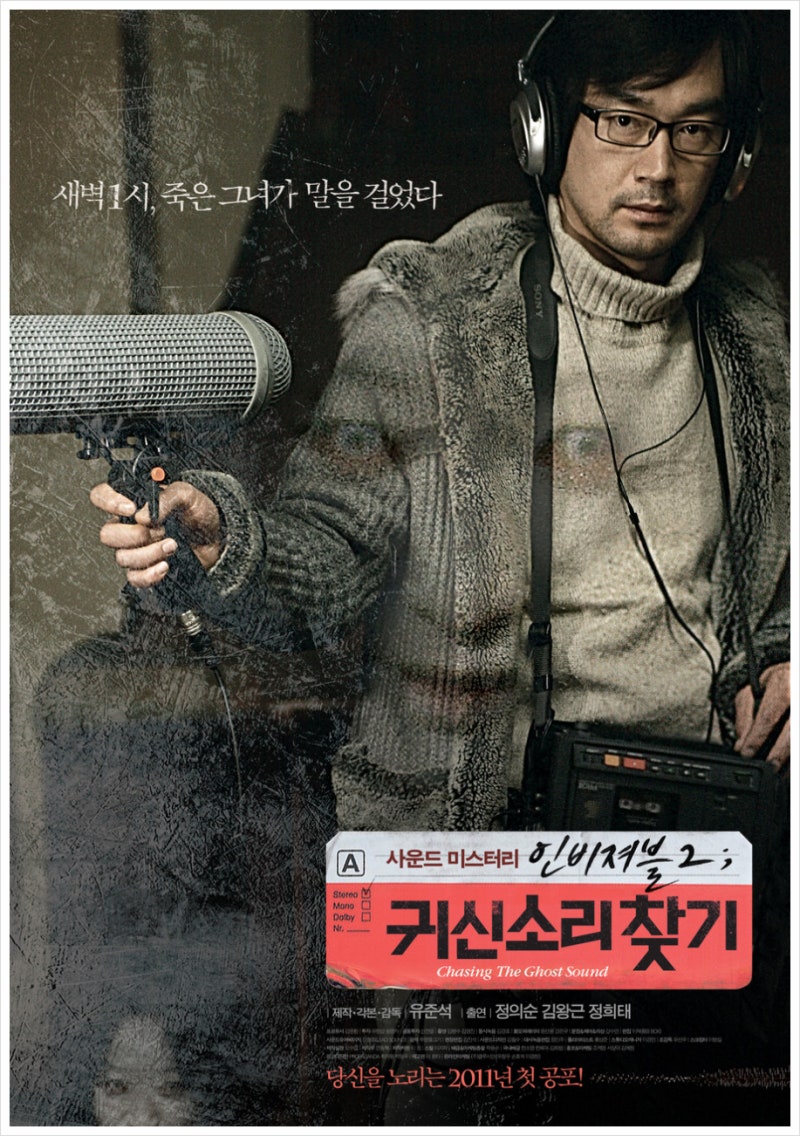
After hearing ghostly voices in her guest house, a middle-aged woman calls in a famous paranormal investigator but is put out when he arrives with a film crew in tow in Yoo Jun-suk’s eerie fake documentary footage horror movie, Invisible 2: Chasing The Ghost Sound (귀신소리 찾기, Gwisin Soli Chajgi). As might be assumed, nothing is quite as it seems, but as the relations between Geum-ja (Jeong Eui-soon), ghost hunter Pil-woo, and the few crew begin to  decline, the ghost may be the least of their worries.

Geum-ja’s guest house is a traditional-style villa out in the country and at this time of year all but cut off by snow which is why it proves so hard for the team to reach. However, if the place is haunted, it’s by someone much more recently deceased than the Joseon-era past. Geum-ja suspects it may be her late sister and that she may have a message for her. That’s apparently why she contacted Pil-woo, hoping he would be able to record the ghostly voices and tell her what they say. 

Pil-woo, however, is suspicious of Geum-ja and suspects she may have been somehow involved with her sister’s death. Unable to find any sings of the paranormal activity, he thinks the ghost is probably a manifestation of Geum-ja’s guilt. He’s not particularly bothered about the potential crime, but is quite irritated that she’s wasted his time. She had indeed been reluctant to key him in on the facts of the case and may also have misled him. It seems Geum-ja’s sister Geum-seon may have been having an affair with Geum-ja’s husband, who has apparently not returned to haunt Geum-ja, or at least not in this form. 

But just as the crew are leaving, Geum-ja begins screaming and claims she can hear a voice that no one else can. Pil-woo too picks up five fragments of a ghostly voice from around the villa but struggles to assemble them into a coherent whole. This sudden reversal, however, only raises suspicion with the director of the TV crew who find Pil-woo’s discovery a little too convenient. He suggests that Pil-woo and Geum-ja may be in it together to cook up a ghost show. Pil-woo sees himself a genuine investigator and seems unhappy about working with the TV crew in the first place. He thinks of them as charlatans who regularly stage paranormal investigations to make the show entertaining. 

Geum-ja didn’t want to be on TV, either, though perhaps as Pil-woo suspects that she doesn’t really want to draw attention to herself or risk other things she might not want exposed coming to light. Pil-woo had suggested it was all a manifestation of her guilt, but never stopped to consider that both things could be true. Geum-ja and Geum-seon were twins, which means she is essentially haunted and confronting herself as expressed through the lengthy mirror shot in which Geum-ja converses with Geum-seon though her own reflection. Geum-seon plays a kind of game with her as if they were children, turning the sounds into a puzzle that must be solved in order to unlock the truth of her message. 

Yoo finally returns to make ionic usage of the eerie shot through a glass coffee table that opened the film as the malevolent presence eventually makes itself known.The villa becomes a more literal kind of haunted space, but as Pil-woo discovers its melancholy secret may be of a more ordinary kind, Geum-ja seeks a kind of reverse retribution, comforting the ghost of her sister but also asking for an apology as if she had the upper hand in this situation while wandering around in the team’s “stupid helmet” trying to root Geum-seon out. The dread only deepens as she comes closer to solving the puzzle and receiving its chilling message. Then again, perhaps the message is that Geum-ja should have just ignored the nagging voices in her head rather than chasing after ghostly echoes or seeking absolution from spirits rather than reckon with a painful reality. Though Geum-ja may see herself as the victim, so too may Geum-seon as the pair chase each other through the eerie space of the darkened villa with seemingly no escape for either.


The Noisy Mansion (백수아파트, Lee Lu-da, 2024)

Could the neighbourhood busybody actually be a force for good? The Noisy Mansion (백수아파트, Baeksu Apateu) at the centre of Lee Lu-da’s goodhearted comedy is a metaphor for the nation itself and also a kind of purgatorial space inhabited by the heroine as she attempts to repair herself by enforcing justice and improving the lives of others though it brings her no other real benefits. Some may brand her an inconvenient troublemaker, a nosy parker poking her nose where it doesn’t belong, but Geo-ul is really trying to do good if in an unconventional way.

It’s this tendency to rock the boat that’s finally started to annoy her brother Duon who fears her problematic do-gooding is going to have an adverse effect on his children while he is also fed up with fending off animosity from the neighbours regarding Geo-ul’s frequent attempts to police them. In many ways, this is a society in which minding your own business is considered a virtue and speaking up is a breach of social etiquette but then if nobody says anything, then nothing will ever change and those who abuse their power will be able to go on doing so unchallanged. 

Of course, Geo-ul’s determination to enforce justice it also her way of overcoming her sense of guilt and resentment towards a world in which a small mistake, the overlooking of something that should have been important, can have tragic consequences. She is quite literally haunted by what she feels was a lapse of responsibility, something she will never allow to happen again. Yet the apartment complex she moves into after her brother kicks her out assuming it will only be a matter of days before he asks her back is also a haunted space inhabited by lonely souls like herself who are being driven slowly mad by ominous banging noises at 4am. Geo-ul becomes determined to discover the culprit behind the maddening noise if only to vindicate herself in the eyes of her brother that she really can accomplish something through her busy-bodying.

But she finds herself at the nexus of the nation’s problematic capitalism as it becomes clear the banging is likely a tactic employed by gangsters trying to get people to move out so the building can be demolished. In fact, most of the units are empty and the building itself is in a possibly wilful state of disrepair which is why Geo-ul was able to move in so easily despite the discouragement of the estate agent who introduced her to it. The people she meets there are also all struggling with their own problems aside from those exacerbated by their exhaustion and while previous attempts to unite to oppose the plans for redevelopment had largely failed, her quest to unmask the noisy neighbour does indeed provoke a sense of solidarity in the community and the conviction that they really could change their circumstances if they work together.

As some say, the most dangerous person is one with too much time on their hands. What some might call nosy, Geo-ul might term taking an interest in her community. Though some may originally be irritated by her desire to root out injustice, they later come to respect her when she starts getting results. Aside from a sense of vindication, her actions have a positive effect on the community liberating the apartment block from the oppressive shadows haunting it which in this case would be corruption, organised crime, violence, and ultimately hopelessness. Above all else, Geo-ul’s dedication proves that it is possible to change the world, to restore peace, order and self-respect by exorcising the evil spirits of contemporary capitalism. The residents even get over Geo-ul’s status as a “renter” who has no place in their struggle as homeowners and affectionally refer to her as “captain” as she leads their accidental revolution. Filled with a cast zany characters and undercut with a sense of tragic melancholy, the film is an advocation for the power of community but also for the concerned citizen standing up for fairness and justice even when it has no real relevance or benefit to them personally and may actually do them harm but less so than living in an unfair society which allows tragedy to occur simply through indifference.


The Noisy Mansion screened as part of this year’s London Korean Film Festival.