April Story (四月物語, Shunji Iwai, 1998)

Shunji Iwai’s wistfully nostalgic coming-of-age drama April Story (四月物語, Shigatsu Monogatari) opens with a POV shot as its heroine awkwardly waits for her train to depart while her family, assembled on the platform, look back at her anxiously before the train door closes and the carriage begins to move. The girl says nothing but places a hand on the glass, freezing amid the snows of Hokkaido, as if bidding a silent goodbye now all alone as she makes her way towards her new life in the capital. 

Shot with the breezy soft focus associated with Iwai’s early work, the film positions its heroine’s growth alongside the blossoming of the cherry trees which in contrast to many other nations in Japan mark the beginning and end of a school year. Shy and somewhat reserved, Uzuki (Takako Matsu) does her best to seem grown up, managing the removals men while insisting on helping but mostly just getting in the way of their work until they finally tell her that, like many students, she’s brought far too much stuff and there’s no way it’s all going to fit in her modest two-room flat. She makes sure to introduce herself politely to her new neighbours bearing gifts, but is met with a wary indifference from the woman across the hall perhaps more accustomed to city living and less likely to be instantly trusting of a stranger. 

At the university some of her fellow students treat her like a country bumpkin asking stupid questions like whether it’s cold in Hokkaido and making fun of her snazzy jumper which is a little too heavy for Tokyo at the start of spring. In the cafeteria she takes it off and hangs it around her waist, embarrassed by her early fashion faux pas. One of the other girls, Saeko (Rumi), attempts to befriend her but as it turns out Uzuki has other things on her mind except for study and in fact Saeko may have an ulterior motive too that neatly reflects her own in looking for fresh recruits for the fly fishing club. 

In any case it’s as if the world gradually opens itself up to her, Uzuki riding the wide streets of the city on her bicycle through parks and under cherry trees before making her way to a particular bookshop. She discovers the dangers of city life while stopping in to watch a classic samurai movie, a beautifully realised historical fantasy homage to golden age cinema and old-fashioned serials in which Oda Nobunaga (Yosuke Eguchi) has managed to escape death at Honnoji Temple and is out for ironic revenge. A late arriving salaryman (Ken Mitsuishi) sits himself down a few seats away from her and surreptitiously tries to edge closer until she’s forced to flee the cinema leaving some of her belongings behind. Even so it doesn’t seem to dampen her enthusiasm for life nor for her unofficial mission and the the reason that’s brought her to Tokyo in the first place. 

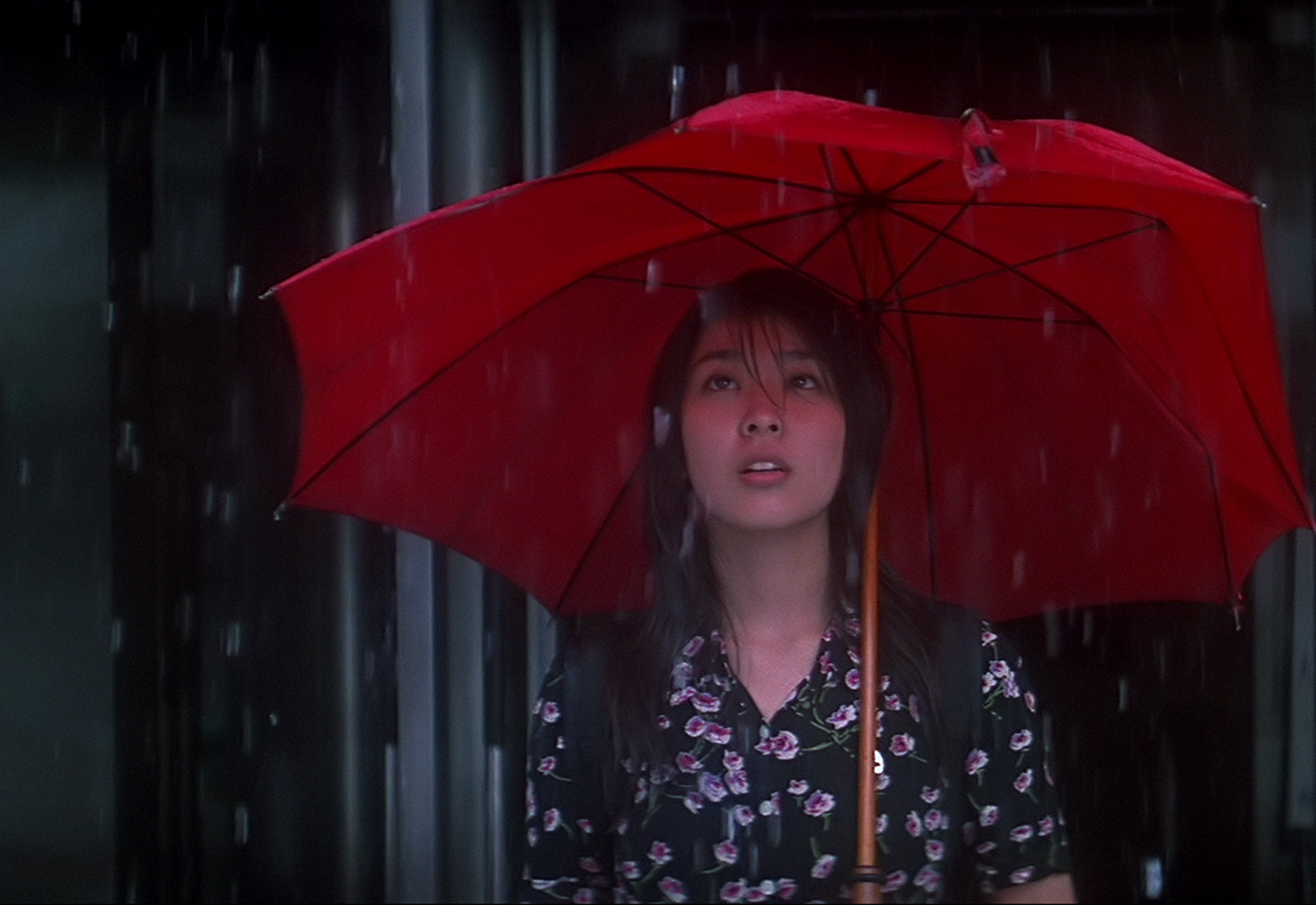
Iwai focusses on the domesticity of her newly independent existence, building a cosy nest in her tiny flat and attempting to cook for herself but finding her invitation to her neighbour for dinner politely rebuffed while uncertain if the fly fishing club is really for her given that the guy who runs it is condescending and incredibly full of himself. But then as she tells her mother on the phone she just wanted to try something new and there is something comfortable in the gentle rhythms of casting the fly especially as no one seems to do any actual fishing only practice in the park. She makes friends with the equally awkward Saeko and even finds her neighbour gradually opening up to the idea of friendship. Her world continues to expand until she’s finally ready to reconnect with the unrequited high school crush she followed to the city if admittedly in another slightly awkward meet cute involving a series of umbrellas, torrential rain, and a very patient gallery director. 

A self-declared “nice film”,  Iwai’s heartwarming drama is an innocent tale of first love and romantic obsession that is nothing other than sweetness and light. “A miracle of love” is how Uzuki chooses to describe her arrival in Tokyo and subsequent reunion with her romantic destiny, but it’s in the pursuit of love that she finally begins to come into herself and embrace the possibilities of life blossoming under the cherry trees of an unseasonably warm Tokyo.


April Story screens at Japan Society New York on Dec. 10 and will be available to stream online in the US from Dec. 9 – 23 as part of Love Letters: Four Films by Shunji Iwai

Original trailer (English subtitles)
Complicity (コンプリシティ, Kei Chikaura, 2018)

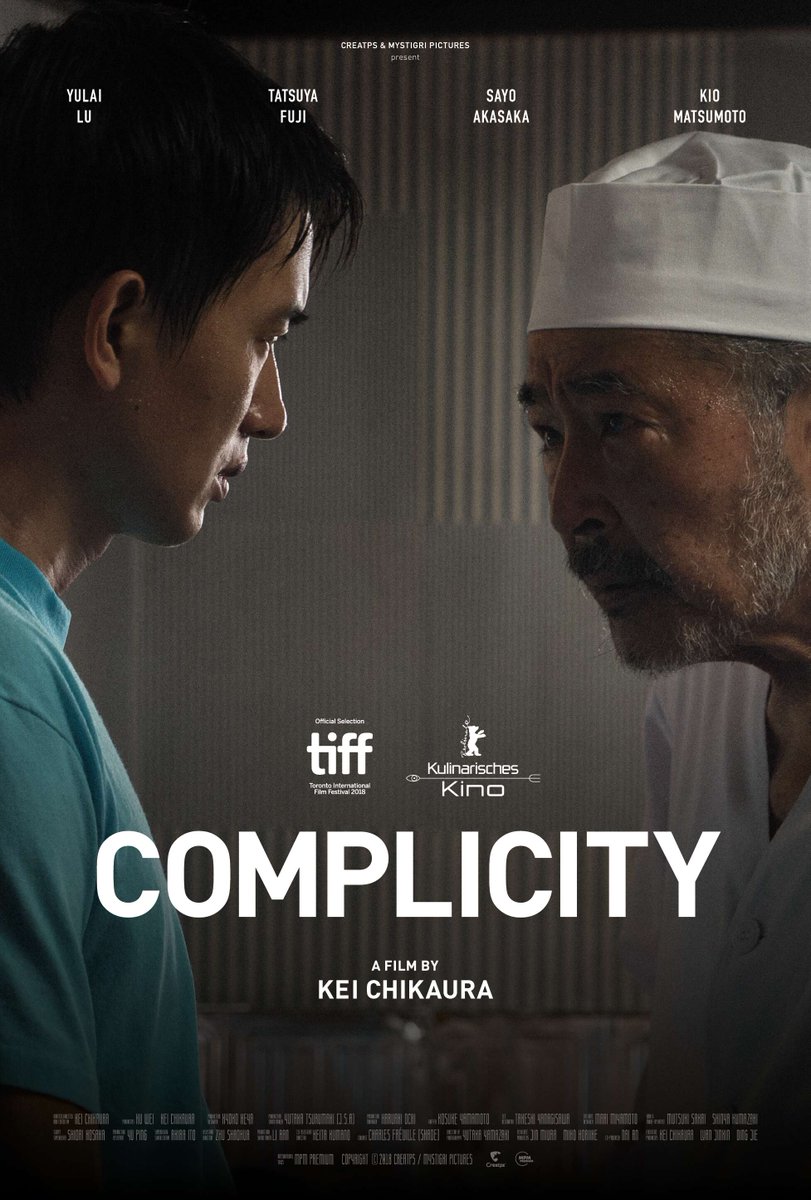
Complicity posterWith an ageing population and an economy trapped in a long period of stagnation, Japan has found itself in an awkward moment of possible crisis as it begins to realise it will need to embrace immigration or face a serious labour shortage. Like many nations, unfortunately, much of Japan remains uncomfortable with the idea of overseas labour especially when it comes to “low skilled” work in construction, manufacturing, and casual jobs such those in restaurants and convenience stores. Given government intransigence and pressing need, workers from other areas of Asia are often employed illegally and subject to exploitation by gangs or unscrupulous employers.

The hero of Kei Chikaura’s Complicty (コンプリシテ), Chen Liang (Lu Yulai), finds himself in just this position as he leaves his sickly mother and feisty grandma alone in rural China in the hope of making enough money in Japan to come home and restart the family business. What he discovers, however, is that he’s essentially been trafficked as cheap labour and is already in hock for an ID card he was conned into paying three times the going rate for on the pretext it was “safer”. Now living under the name Liu Wei, Chen Liang is disturbed to receive calls on his new phone intended for his namesake but is tempted when Liu Wei receives a job offer from an employment agency. Passing himself off as his cover identity, Chen Liang takes the job only latterly realising it’s the rather incongruous position of a trainee chef in a family-owned soba restaurant.

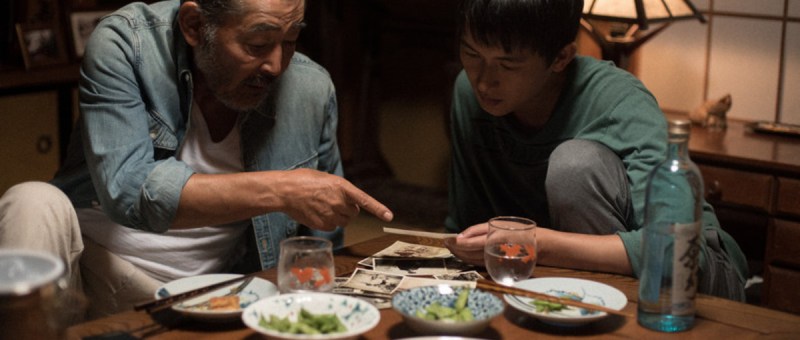
Against expectation, ageing soba chef Hiroshi (Tatsuya Fuji) and his daughter Kaori (Kio Matsumoto) are warm and welcoming people who are actually a little bit excited that someone from China wants to learn about soba. Taken in almost as a member of the family, Chen Liang begins to feel conflicted – he is after all lying to them, at least about his name and circumstances, and his presence in their home might cause them trouble if he is ever found out. Meanwhile, he also strikes up a friendship with an artist who is learning Mandarin but has to lie to her too, pretending they may one day meet up in Beijing when in reality he has never even been there.

His burgeoning romance with Hazuki (Sayo Akasaka) is what precipitates his downfall as she, unaware he is undocumented, reports his stolen wallet to the police. The lies do not stop there – Chen Liang is also lying to his worried mother back at home who thinks he’s working in an office, while she is simultaneously lying to him in pretending everything’s fine in order to facilitate his “happy” life in Japan where he is supposed to make lots of money and come back a wealthy man. In order to make his dream succeed, Chen Liang must become Liu Wei at the exclusion of all else, forsaking his life as Chen Liang and living carefully as if he has nothing to fear.

Chen Liang is onto a good thing and has fared much better than some of his friends who either got themselves picked up by the police for doing the gang’s dirty work or found themselves out in the cold with no feasible way to get back “home”. Hiroshi’s son, with whom he seems to have some kind of bad family history, looks down on Chen Liang unable to understand why his father employed someone from China when the business is on the rocks. His attitude seems to be one shared by many (though not the universally supportive customers in Hiroshi’s soba shop) who see only difference rather than commonality. Despite the language barrier, Hiroshi and Chen Liang are often able to communicate through written characters, while another poignant moment of bonding sees Chen Liang sing the Mandarin lyrics over the top of Hazuki’s cheerful refrain of a popular Japanese song by Teresa Teng beloved all across Asia. Hiroshi himself was born in Beijing at the end of the war – a painful reminder of the complicated history between the two nations, but also one of how much they are interconnected and how little place of birth has to do with cultural identity.

Emphasising how much they have in common rather than the various ways in which Chen Liang differs from the world around him, Chikaura paints a much more sympathetic portrait of a migrant worker than the one usually found in the media. Filling the void left behind by Hiroshi’s own resentful son, Chen Liang becomes a valued and trusted member of the family who are in a sense “harbouring” him but to protect rather than exploit. Pushed to go to Japan despite his misgivings and drifting into the soba shop job through accidental opportunism, Chen Liang had in a sense abandoned his identity in avoiding making concrete decisions. Being Liu Wei was also a way to hide from his insecurities and fears for the future, but only through the unconditional love he received under false pretences is he finally able to reclaim his name, fugitive but free at last. A powerful plea for empathy and cross cultural connection, Complicity is a beautifully drawn character study in which kindness and compassion eventually open new paths for a conflicted young man trying to find his place in an often hostile world.


Complicity was screened as part of the 2019 Nippon Connection Film Festival.

Original trailer (English subtitles)

Teresa Teng’s – Toki no Nagare ni Mi wo Makase

Mandarin version – I Only Care About You