Ten Months (십개월의 미래, Sun Namkoong, 2020)

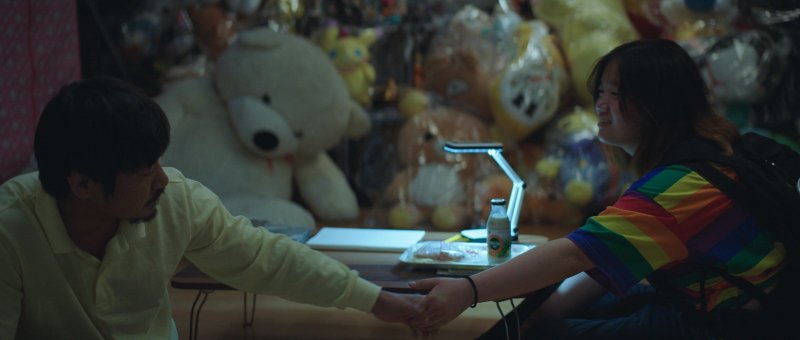
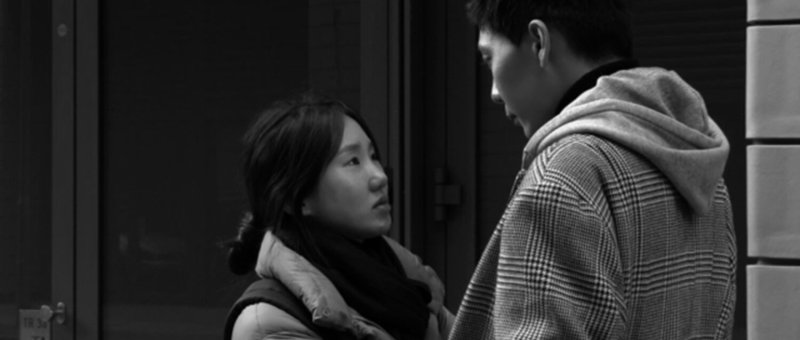
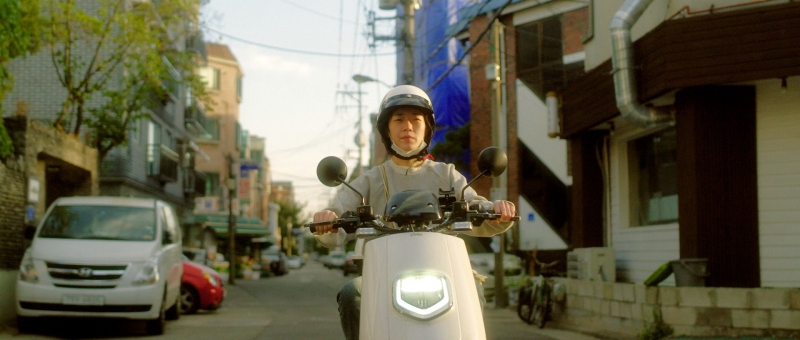
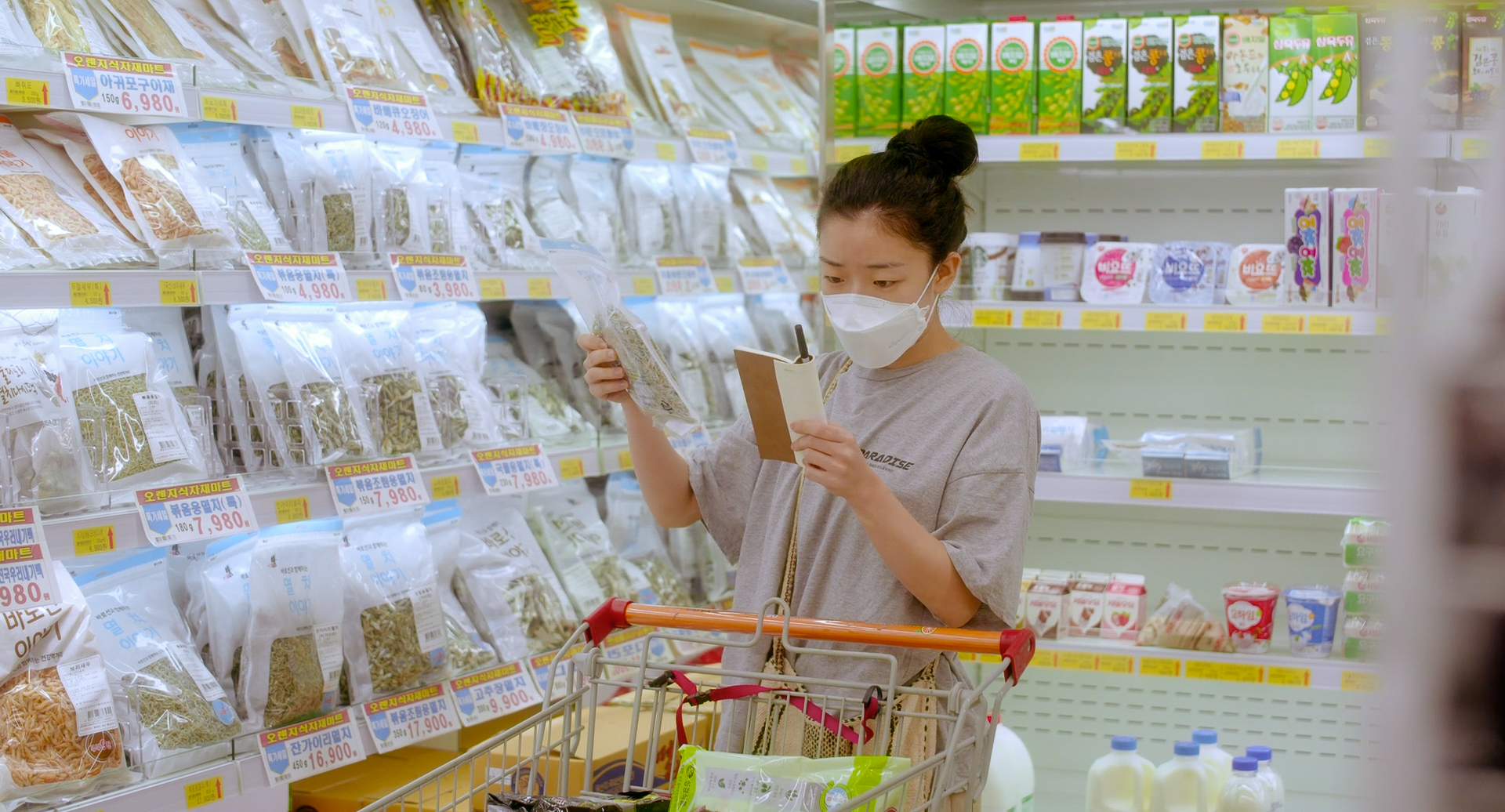
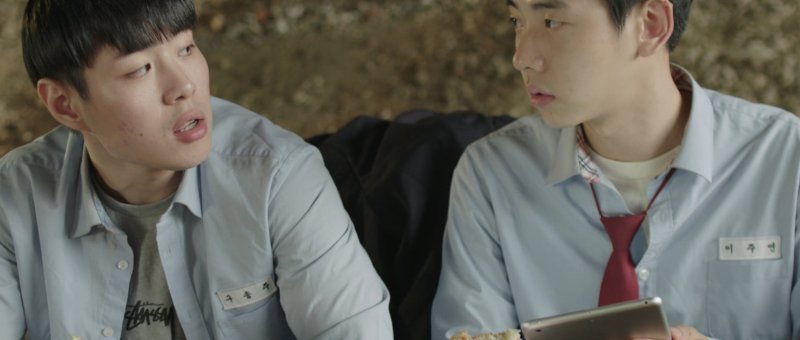
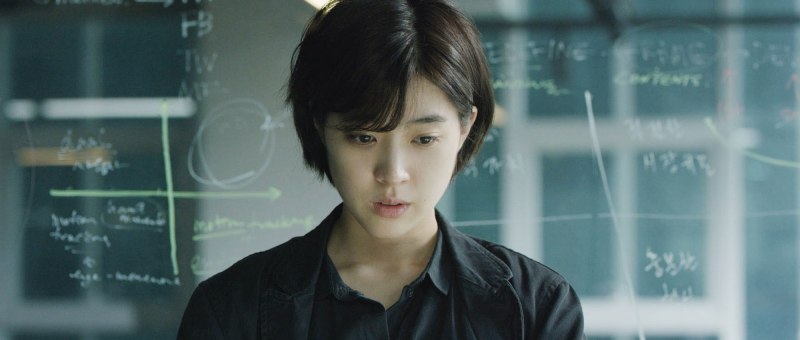
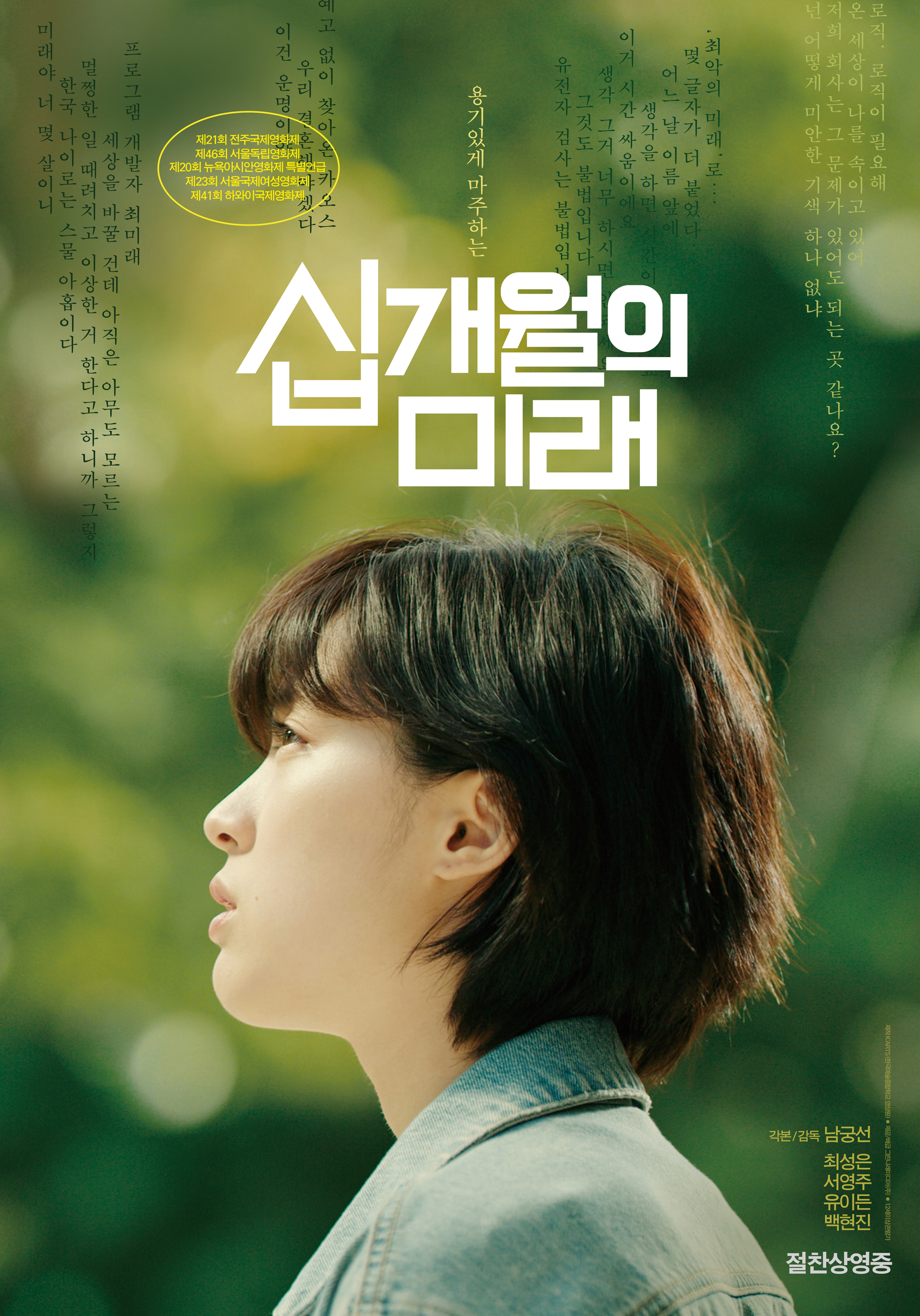
“I’m still the same person, exactly the same one as a few months ago, and everyone’s suddenly mad at me like something’s wrong” the heroine of Sun Namkoong’s Ten Months (십개월의 미래, Sib Gaewolui Milae) complains as an unexpected pregnancy sees fit to cause untold “chaos” in her personal and professional lives. Mirae’s (Choi Sung-eun) predicament exposes a host of double standards in a still conservative, patriarchal society in which both giving birth and not is somehow “selfish” while a pregnant woman, especially an unmarried one, is almost a taboo expected to hide herself away until she emerges from her chrysalis as a “mother” having entirely shed her old identity. 

The reason Mirae’s pregnancy comes as such a surprise to her is that, presumably in part in order to avoid exactly this sort of situation, she can’t remember having been intimate with her diffident boyfriend Yoonho (Seo Young-joo) for the past few months. After a little thinking he realises it probably happened during a drunken fumble after a friend’s birthday party Mirae had clean forgotten. In any case, Mirae is not the sort of woman who’d ever harboured an intense desire to become a mother, it just wasn’t something particularly on her radar, and in many ways it couldn’t have come at worse time. While Yoonho is unexpectedly excited by the news of his impending fatherhood and immediately proposes, Mirae isn’t so sure. 

The problem is, in the Korea of 2018, she doesn’t have a lot of options. In shock at the doctor’s office she asks about an abortion but is reminded it’s illegal outside of a few mitigating circumstances such as rape or incest (abortion was finally decriminalised only in 2021), and while there are apparently “safe” places where it’s possible to have the procedure done illicitly they are extortionately expensive not to mention carrying a hefty fine if you get caught. Mirae is unconvinced she wants to keep the baby, but she’s not the sort of person who finds it easy to contemplate breaking the law and continues to vacillate even while reminded that even the illegal clinics have a cut off point at which it would become unethical to perform a termination. 

Meanwhile, she’s also worrying what effect her pregnancy may have on her career. Her father, who somewhat stereotypically opened a friend chicken shop after retiring, didn’t approve of her decision to leave a well-paying job at a major company to join a start up even if Mirae believes they’re “going to change the world”. It doesn’t help that Yoonho is technically unemployed as an aspiring entrepreneur trying to sell his prototype handsfree smartphone accessory in the shape of a cute dragon meaning her income is all they have to live on. When she’s told the company is relocating to Shanghai it throws her dilemma into stark relief while also exposing Yoonho’s latent conservatism as he reacts with extreme negativity to the idea of going with her, pathetically attacking Mirae for not supporting his project while eventually reminding her she’s about to be a “mother” as if implying she no longer has the right to make such subjective decisions. By the look on his face he knows he’s gone too far and said the wrong thing, but it’s too late. 

When she tells her boss that she’d like to take the job but also needs him to be aware she’s pregnant, he too becomes indignant. Firstly confused because Mirae is not married, her boss then withdraws the offer and declares himself hurt, “betrayed”, seemingly annoyed that Mirae doesn’t even seem “sorry” for all the inconvenience she’s causing him. When she calls him on his sexism, he blames her for making him out to be the bad guy when he’s doing nothing illegal because shockingly it’s not illegal in Korea to fire someone for being pregnant even if he seems to know it’s not a good look. She begins to feel foolish that she invested so much emotionally in what she saw as a shared endeavour only to be pushed out as if she’s being punished for some kind of transgression just for the audacity of having a child sending a clear signal that motherhood is still deemed incompatible with the workplace.  

Yoonho’s overbearing father seems to be of much the same opinion, her soon-to-be mother-in-law unironically gifting her a frumpy apron while the conservative couple begin to pressure her to move in with them at their pig farm where they’ve already managed to pressgang the largely emasculated and previously vegetarian Yoonho into working. Unsure about the baby, Mirae was even less convinced by the necessity of a shotgun marriage especially as the emotionally immature Yoonho for all of his latching on to the idea of fatherhood to escape the reach of his own father grows ever more resentful towards his overbearing parents while entirely unable to stand up to them. 

And then, there’s all the other stuff that no one really wants to talk about like the possibility of dying in childbirth which is not so much a thing of the past as most people assume even if much less likely, while Mirae’s previously 100% together friend seems to be displaying the signs of post-natal depression or at least infinite exhaustion with her husband apparently having skipped town on a business trip leaving her all alone with their newborn baby. Mirae couldn’t see why some people were so desperate to have children, but gradually comes round to the idea transgressively choosing to raise her child alone no matter the “chaos” the unplanned pregnancy has caused to her life as she knew it. She may have feared being “erased”, instructed by Yoonho’s father that her life is no longer her own and she now exists solely in service of her child, but chooses to see the birth as a new beginning not least for herself as she embarks on this new phase of her life very much on her own terms and of her own free will. 


Ten Months screened as part of this year’s New York Asian Film Festival.

Original trailer (no subtitles)
The Foul King (반칙왕, Kim Jee-woon, 2000)

A dejected office worker seeks release from a mundane life of constant degradation as a masked wrestler but finds himself ultimately unable to escape the headlock of the corporate society in Kim Jee-woon’s pro wrestling farce The Foul King (반칙왕, Banchikwang). As the title may suggest, you might have to play a little dirty in order to claw back some dignity but then perhaps everyone’s struggling to free themselves from something be it old debts, middle-aged disappointment, or complicity with the dubious business practices of turn of the century capitalism. 

Even before he enters the ring, Dae-ho (Song Kang-ho) is wrestling, fighting his way onto and out of a packed rush hour train only to arrive at work a few minutes late to be given a passive aggressive dressing down from his boss (Song Young-chang) during the morning pep talk. His boss then in absurd fashion corners him in the gents and places him in a headlock while telling him off some more just to ram the message home. Poor Dae-ho finds this so humiliating that all he really thinks of is a short term solution of learning how to evade his boss’ control while mooning over his attractive desk mate Miss Jo and further berating himself for being too shy to ask her out. His other problem is that he’s not very good at his job as a low-level bank cashier. He and his work friend Doo-sik (Jung Woong-in) are bottom in the office rankings for failing to secure any new accounts.

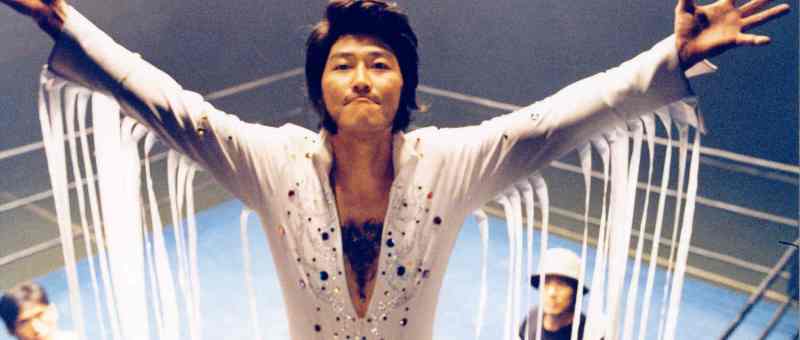
Trapped between his abusive boss and dismissive father (Shin Goo) with whom he still lives, Dae-ho finds himself both emasculated and infantilised while continuing to indulge childhood fantasies drifting off into a dream sequence in which he is Elvis in the wrestling ring trying to impress Miss Jo but still defeated by his giant bug of a boss. He first turns to a friend who teaches Taekwondo to children but he tells him Taekwondo is a “mental discipline” while a real martial artist would never end up in a headlock anyway. But then as if by magic he wanders past a moribund wrestling gym and ventures inside only for the coach, Jang (Jang Jin-young), to throw him out for being a bit odd. Threatened by a gangster into training up a comic relief character specialising in cheating to bolster the profile of another wrestler, Yubiho (Kim Su-ro), hoping to drum up publicity for a Japan tour, Jang relents remembering Dae-ho’s manic rank about his love for classic heel Ultra Tiger Mask as seen on TV decades earlier. 

Being a heel is not quite what Dae-ho had in mind, after all what he wants is to figure out how to escape a headlock yet he finds himself bizarrely in his element if a little clumsily rejoicing in moustache twirling villainy, cartoonish pranks, and comic pratfalls. He begins to grow in confidence but also overreaches, managing to teach a gang of youths (amusingly standing under a huge mural ironically reading “Korea! Fighting!”) a lesson and redeeming his sense of masculine pride after a defeat while making a total drunken fool of himself in his unrequited love for Miss Jo at the office karaoke party once again getting pummelled by his boss. While Dae-ho turns to wrestling in search of freedom and personal fulfilment, Doo-sik tries to regain his self-respect by doing the right thing refusing to be a part of his boss’ obviously dodgy business practices while threatening to blow the whistle if like Dae-ho perhaps realising that there is no way to beat this system while remaining inside it. 

Dae-ho discovers that he gains confidence by putting on a mask, specially the Ultra Tiger Mask worn by his childhood hero, while “winning” in the ring through “cheating” getting audience laughs with zany cartoon stunts. Only when the mask is torn by an unnecessarily aggressive Yubiho does he enter full on rage mode attempting to take revenge for his constant belittlement by ignoring the script to teach Yubiho a lesson as the pair of them brawl all over the stadium making weapons of random chairs and even at one point the session bell itself. Yet in a real sense Dae-ho never really achieves much of anything, scoring a symbolic victory in provoking a tie but never figuring out how to escape the corporate headlock while continuing to be bullied by his boss, rendered entirely powerless within the hierarchal corporatised society of early 2000s Korea. A darkly comic take on existential futility, Foul King meditates on the compromises inherent in playing the game Dae-ho ironically finding confidence in wilful humiliation as a dishonourable heel while unable to escape his constant degradation wrestling for agency within the confines of his regular office worker life. 


The Foul King streams in Poland until Nov. 29 as part of the 15th Five Flavours Film Festival.

Trailer (English subtitles)

Not in This World (이 세상에 없는, Park Jung-bum, 2019)

“What is love? Have you seen it?” a dejected young man asks, wondering how if he can’t even afford a ticket to the movies he’s supposed to find the energy to feel love. Love may be the substance the title of Park Jung-bum’s nearly three hour epic of human misery Not in this World (이 세상에 없는, I Sesange Oebsneun) refers to, each of its wandering youngsters deprived of a sense of hope or of emotional fulfilment by the cruelties of contemporary capitalism. Unable to feel their own pain, they inflict it on others, their despair leading to nothing other than violence and cruelty in a mistaken effort to exert control over their lives. 

Despair colours the lyrics that aspiring rapper Ji-su (Moon Ye-ji) performs in a courtyard by day detailing her insecurity and longing for “a warm spring to melt my frozen heart”. Seemingly no one is very interested in listening to her, least of all her father in whose tiny workshop she also toils. With his business strained, Ji-su’s father is an exploitative employer berating his daughter for not working hard enough while otherwise telling her that she is free to do something else with her life but only if it makes money. After smashing her microphone in a mistaken attempt to make her come around, he later burns her sheet music and recklessly tells her to find somewhere else to live while she in turn points out that he unfairly projects his resentment onto her knowing that his dream of owning a family home will never become a reality seeing as the business barely makes enough money to pay the interest on the mortgage he will never be able to pay off. 

This sense of despair born of failure passing from one generation to the next leaves Ji-su and her similarly troubled friends with an even greater sense of futility. She discovers a temporary source of hope after accidentally bonding with a strange middle-aged man, a kind of holy fool living all alone in the forest in a house he calls a “spaceship” seeing as it’s surrounded by complete darkness with only he aboard as if existing in an entirely different dimension. Jeong-cheol (Park Jung-bum) is Ji-su’s only “fan”, encouraging her with her music but also infinitely naive advising her to share it with her friends and family in the conviction that they would then begin to understand her but the result is quite the reverse. Ji-su’s few friends, all of whom have become sex workers, simply laugh at her while apparently offended by what they perceive as “hypocrisy”, an attempt to exploit their pain for her gain. 

Forced at knife point to witness the reality of sex work, Ji-su’s illusions are shattered while her only other source of hope in her relationship with intense childhood friend Won-ho (Park Young-Duk) also begins to crumble. Won-ho too had a dream, working as a delivery driver while saving up to buy a taxi license he hopes will enable him to earn a steady living leading to a traditional middle-class sense of stability with a wife and family home. Yet he too is eventually forced to acknowledge his dream won’t come true, again projecting his sense of resentment onto Ji-su in unfairly blaming her for a bike accident that brought them both into contact with a source of infinite corruption that is a remote sex work campsite hidden in the woods where a gang of obnoxious rich kid students get their kicks humiliating those they perceive as their social inferiors. 

Pushed to breaking point, Ji-su commits a transgression of her own and embarks on a path of self-destruction aiming to become what she hates and burn her world to the ground. Becoming the campsite’s bookkeeper she terrorises the former friends who laughed at her song and left her with lasting trauma while taking an indirect revenge against Won-ho for his indifference towards her. While she decides to become an oppressor in order not to be oppressed, Jeong-cheol wrestles with himself believing that he cannot abandon Ji-su because to do so would mean she had been abandoned by the world, while also realising that the world has many Ji-sus and he can’t help them all. Jeong-cheol believes himself alone, conversing only with the ghost of his late father who seems to represent his inner goodness something which he alternately feels he should bury along with his father’s ashes yet is unwilling to part with. 

Unlike Park’s previous films of similar length and bleakness, Not in This World swaps crushing naturalism for a touch of magical realist imagery as Park’s holy fool tries to repair the world around him armed only with his own inner goodness which simultaneously makes him an exile of contemporary society. Even as Ji-su continues to destroy herself, Jeong-cheol continues to believe she can be saved, his conviction perhaps borne out as the traumatic events of the film’s conclusion appear to break the spell she’s cast over herself though whether she will ever be able to accept everything that led her there is far less easy to discern. Once again an attack on an inhuman, ultra capitalist society defined by class conflict and petty humiliation, Park’s latest epic of human misery is also in its closing minutes at least quietly hopeful in the innocent power of a newborn baby’s cries. 


Not in This World streams in Poland until Nov. 29 as part of the 15th Five Flavours Film Festival.

Trailer (English subtitles)

Finding Angel (천사는 바이러스, Kim Seong-joon, 2021)

Every Christmas, a box full of money is left in a small village in Jeonju by a well-wishing philanthropist the villagers have taken to calling the “faceless angel”. The phenomenon is in someways a double-edged sword seeing as the anticipation often attracts the attention of the press with various reporters descending on the village hoping to unmask the unknown benefactor’s identity while the villagers have their own ideas who it might be though in practice perhaps it doesn’t really matter. 

As Kim Seong-joon’s warmhearted seasonal comedy Finding Angel (천사는 바이러스, Cheonjaneun Baileosu) makes plain, however, motives are not always pure when there’s money involved and so to some the Angel’s identify matters a great deal. Jihoon (Park Sung-Il) arrives claiming to be a reporter charged with unmasking the mysterious benefactor but on discovering no one is keen to help him, makes up another cover story that he’s a writer researching a novel about small town life while drawing inspiration from the fascinating local legend. As junkyard owner Cheon-ji (Lee Young-ah) instantly realises, there is something a little suspicious about Jihoon that suggests neither of his cover stories is genuine while his true motives remain obscure as he sets about investigating the townspeople trying to figure out if one of them may be the mystery donor. 

As might be expected, the majority of the local residents are elderly though most of them are still working earning a mere pittance at the junkyard despite as Jihoon discovers being fairly well off. Though severe and aloof, many regard Cheonji, who shares the first syllable of her name with the word, as a kind of angel herself having adopted a little boy she’s raising as a single mother while generally being around to settle minor neighbourhood disputes and providing a place for the community to gather which they don’t currently have because the local council leader still hasn’t got round to building the promised old persons’ community centre though he apparently has time to show up for unarranged photo-ops delivering charcoal briquettes to the needy. A running gag sees Jihoon, having got a job at the junkyard to better investigate, struggle with the physical nature of the work while the elderly villagers just seem to get on with it if engaging in the occasional spat along the way. 

Shifting from one “suspect” to another, Jihoon begins to uncover the small secrets of village life learning something new about each of his new friends from bitter regrets to frustrated hopes for the future but his past soon catches up with him threatening to blow his cover as the timer counts down to the Angel’s arrival. What remains is a sad story of perpetual orphanhood and the healing power of the community, the villagers somehow believing that the Angel must be a boy they took in for a brief period 25 years previously who has since made good and wants to give something back though as they later discover the boy was largely betrayed by the world he returned to, encountering only indifference and exploitation away from the kind and watchful eyes of the villagers. 

The identity of the Angel may be beside the point, but what Jihoon discovers is a path back towards redemption through bonding with the villagers if feeling increasingly guilty in not having been entirely honest about his intentions. He is sometimes tempted to betray his new friends, but in the end also helps them to sort out various community problems such as the long held grudge between two elderly former lovers or the inner conflict of Cheonji’s young son who has been secretly siphoning off the best bits of junk while saving money to become “independent” because the junkyard is not an altogether cheerful environment. A warmhearted seasonal mystery, Finding Angel is full of the Christmas spirit as the community come together to protect their local legend aided by Jihoon who becomes ironically enough the fiercest believer in Faceless Angels as he too begins to deal with his childhood traumas, experiencing a Christmas miracle of his own as he learns to let go of his cynicism thanks to the gentle support of the Jeonju villagers. 


Finding Angel is released in UK cinemas on 26th November courtesy of The Media Pioneers.

Original trailer (English subtitles)

Kim Min-young of the Report Card (성적표의 김민영, Lee Jae-eun & Lim Ji-sun, 2021)

Does surviving in the modern society necessarily mean sacrificing your essential self? The eponymous Kim Min-young of the Report Card (성적표의 김민영, Seongjeongpyoui Kim Min-young) says she wants to transfer from her regional uni to one in Seoul because her classmates are “too Korean” and she finds them tedious, but is simultaneously mean to and dismissive of the film’s heroine, Junghee (Kim Ju-a), who has defiantly decided to follow her own path rather than the one society lays in front of her. 

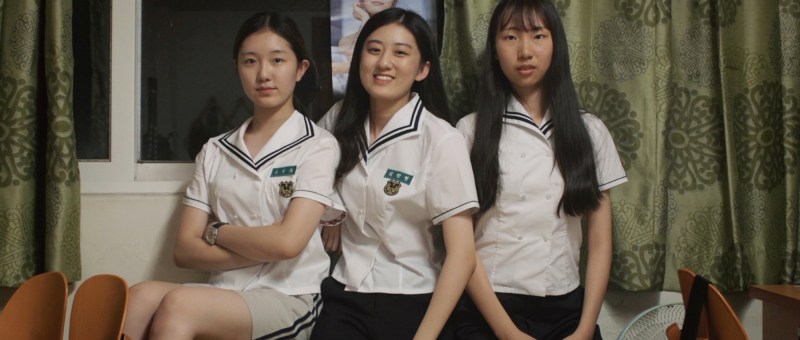
As the film opens, Junghee is one of three members of the “acrostic poetry club” along with her high school roommate Min-young (Yoon Seo-young), and a girl from down the hall Sanna (Son Da-hyun). Sadly, they’ve decided to wind the club up because they’re only 100 days out from the college entrance exams and need the extra time to study. We never find out exactly how well Junghee fared or whether her decision to lend her watch to an anxious boy (who does not pass) affected her grade, but in any case she does not attend university deciding instead to look for work while Min-young leaves to study nursing in Daegu. 

The third girl, Sanna, as we later discover did the best of the three and went all the way to Harvard. The trio had vowed to carry on the poetry club via Skype, Sanna making time for her friends even though the time difference makes it inconvenient while Min-young seemingly can’t be bothered to turn up. Nor can she really take time out for Junghee’s calls, her friend a little put out to hear loud party music in the background while trying to share important news. Even so, she’s delighted when Min-young suddenly invites her to visit her staying at her brother’s vacant apartment in Seoul during the summer holidays especially as she’d just been let go from the random job she’d managed to get manning the desk at a moribund tennis club. 

It’s in the Seoul apartment, a messy and chaotic place, that the differences between the two formerly close friends come to the surface. Despite having expressly invited her friend to come, Min-young isn’t really interested hanging out and is in the middle of some kind of crisis obsessing over a single bad grade on her end of term report card. Together they try to formulate a letter of complaint to the professor, Junghee doing her best to be supportive while privately wondering if Min-young isn’t being a little childish and that if she wanted a better grade she should have studied harder. Meanwhile, Min-young runs down all of Junghee’s life choices, constantly telling her she needs to be “realistic” and that she probably won’t get anywhere with her artwork in terms of financial viability. 

Junghee is visibly hurt by Min-young’s superior attitude, but in the interests of having a pleasant day chooses to let it go even while Min-young continues to ignore her. Even so the difference between them is perhaps at the heart of Min-young’s ironic “too Korean” comment about her new uni friends, criticising them for the conventionality to which she too aspires, singing the praises of Seoul but most particularly for its three floor claw game emporiums. A quick look at Min-young’s diary when she abruptly takes off leaving Junghee alone in the apartment reveals that in actuality she envies Junghee for her boundless imagination and willingness to be her true self rather than blindly trying to fit in while finding herself out of place among her new friends. Her opening poem hinted at low self-esteem and an insecurity about the future that perhaps leaves her a little self-involved, projecting her anxieties onto Junghee who is eventually forced to defend herself by pointing out that she has her own reality which is important to her no matter what those like Min-young may have to say about it. 

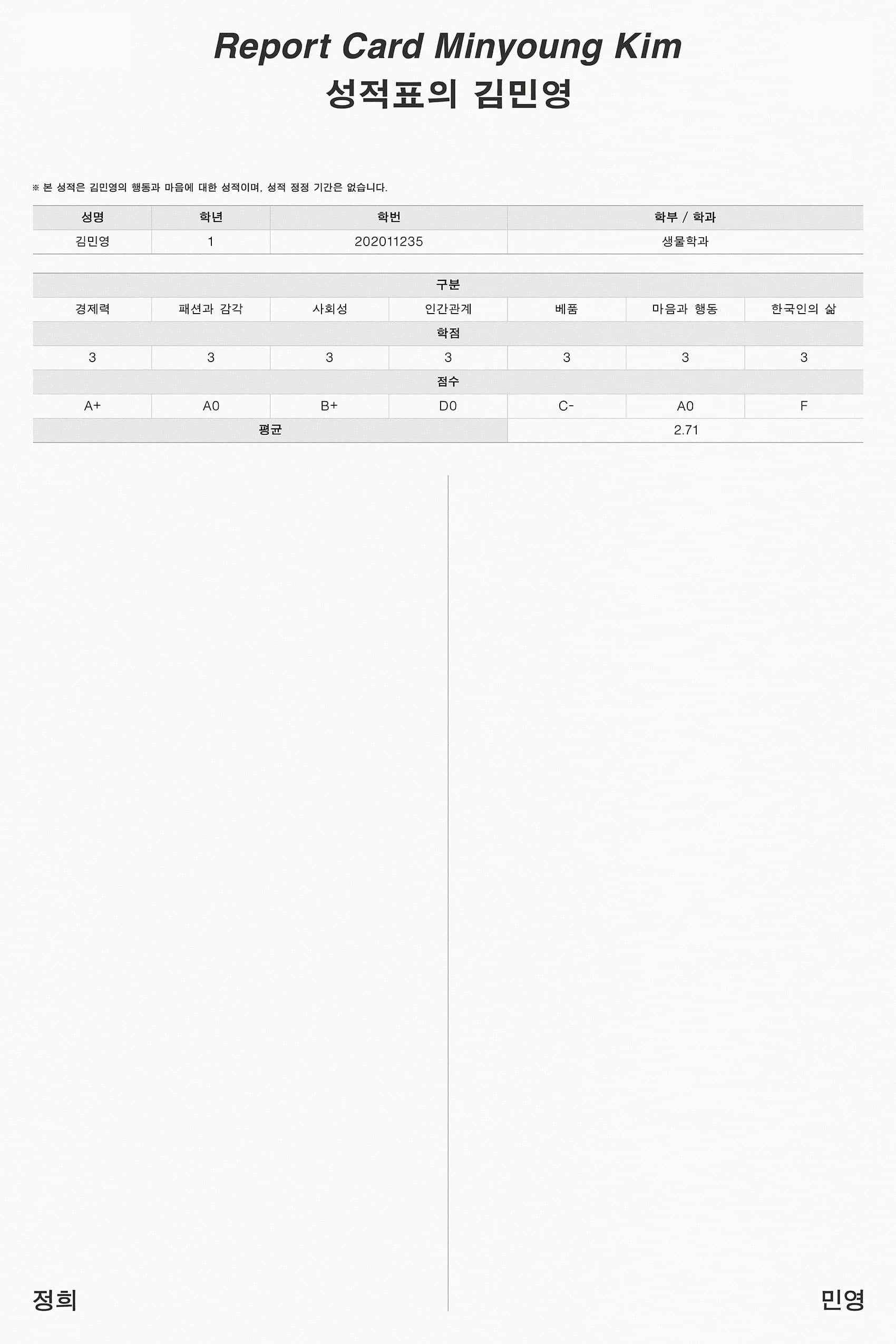
In the kindest of ways and with true generosity of spirit, Junghee writes the report card of the title praising her friend for her better qualities while pointing out her faults as supportively as she can. Giving her an “F” for “Koreanness” she advises her that she’s the one who is suffering because she worries too much about what other people think, searching for conventional “stability” rather than embracing her true self and ought to become “less Korean” in order to ease some of her anxiety. Offering a mild critique of a socially oppressive culture, Lee & Lim’s quirky drama with its random asides and flights of fancy makes a case for the right to dream positing the quiet yet free spirited Junghee as the more mature of the two women having embraced her true self and decided to follow her own path while being kind to those still trying to find their way. 


Kim Min-young of the Report Card screened as part of this year’s San Diego Asian Film Festival

Original trailer (English subtitles)

Introduction (인트로덕션, Hong Sang-soo, 2021)

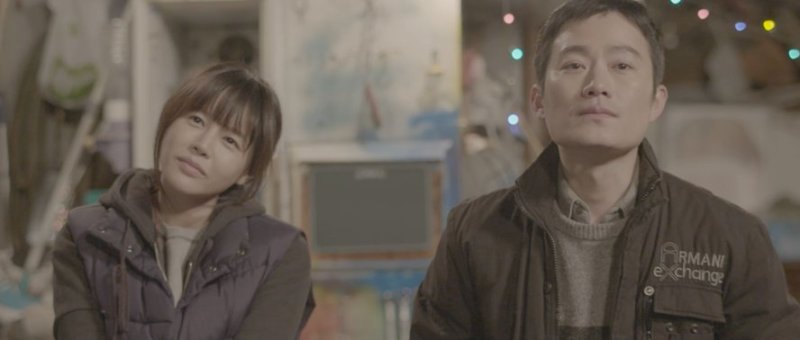
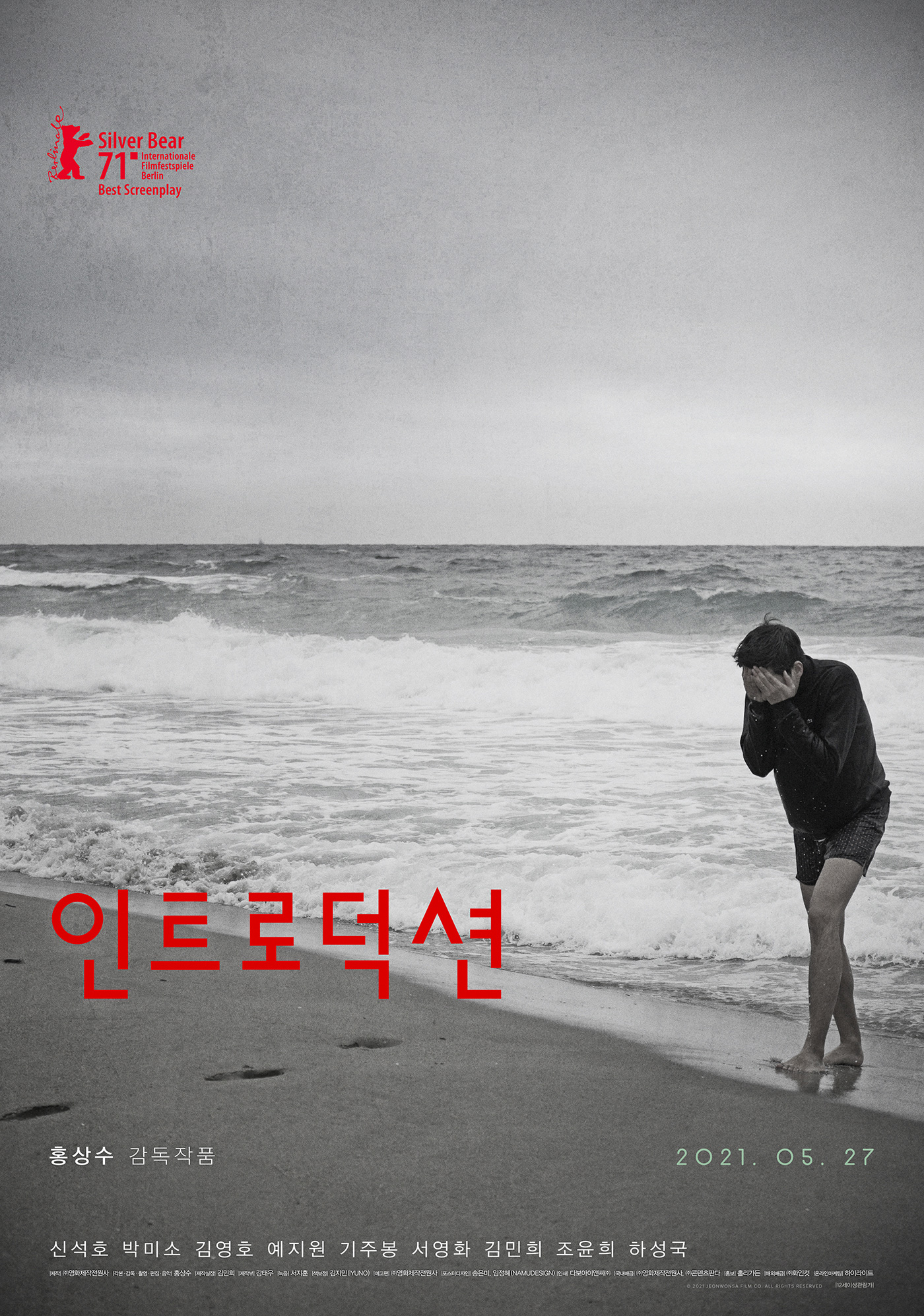
A young man struggles to define himself in the shadow of parental expectation in a minor departure from Hong Sang-soo, somehow warmhearted even its icy exteriors and wilful melancholia. As the title perhaps implies, the hero of Introduction (인트로덕션) finds himself in the midst of his life’s prologue while receiving sometimes unwelcome “introductions” from each of his parental figures including one to a prominent but ultimately pompous actor (Ki Joo-bong) apparently a family friend to his divorced parents though adopting only the unsympathetic authoritarianism of the traditional father rather than the empathy the young man seems to seek. 

Divided into three loose episodes in the life of Youngho (Shin Seokho), Hong’s tripartite tale opens with an almost comic scene of a middle-aged acupuncturist (Kim Young-ho) bargaining with God promising to become a better person if only He helps him get out of some kind of fix. This moment of crisis might be why he’s suddenly asked Youngho, his son with whom he seems to be semi-estranged, to visit him though in a repeated motif we never find out quite what it is he wanted to say because in this case an old friend and famous actor suddenly turns up. Youngho is kept waiting in the waiting room while his girlfriend ironically waits for him at another location. Meanwhile he’s fussed over by his father’s doting receptionist who gives him the sense of familial comfort he lacks with either his mother or father. Suddenly he hugs her, a moment bringing new import to his later argument with the actor in which he rejects the inauthenticity of acting claiming that when he embraces someone it ought to mean something because it would be “morally wrong” to fake that kind of connection. 

The old actor, however, assumes his discomfort is some kind of young person’s puritanism sure that it doesn’t matter if it’s just “acting” or playing around, when a man embraces a woman it’s all “love”. Youngho implies his decision to abandon acting because of its essential inauthenticity is partly romantic jealously on the part of his girlfriend, yet in reality we realise that he is no longer with the woman who waited for him outside the acupuncturist, Juwon (Park Miso), despite having made an impulsive and possibly ill-advised decision to follow her to Berlin after she left to study abroad. Just as Youngho has a series of unsatisfactory “introductions” from mum and dad, Juwon struggles to assert herself in the company of her mother (Seo Young-hwa) despite having travelled to another country where she will it seems be staying with her mother’s close friend (Kim Min-hee). Juwon’s mother fears her friend has changed with age, now in someway younger, immediately asking Juwon to drop the honorifics that instantly divide them as members of different generations while apparently having abandoned conventionality by divorcing to become a bohemian artist. 

During their brief meeting, Youngho also remarks that he thinks his father has “changed” while musing on the idea of asking him for money to come to Berlin as a foreign student to be with Juwon, unwittingly trampling on this small step of freedom Juwon has been able to take away from her mother if only towards an aunt. Hong structures each of his sequences around groups of three people that begin and end with two, the last somehow awkward in its evenness as Youngho invites a male friend (Ha Seong-guk) to dine with his mother (Cho Yoon-hee) and the actor, perhaps sensing that he may need some kind of moral support. He is always, in one sense or another, left out in the cold not quite alone but in his own way lonely, hugging the receptionist but only gazing up at his mother on her hotel balcony literally unreachable in their unbridgeable emotional distance. He waits for her to wave, but she does not. On the beach on an overcast afternoon and not quite alone except perhaps in spirit, Youngho begins to realise that he’ll have to make his own introduction, his parents can’t help him even if they wanted to because they are are also a little lost, confused, and filled with anxiety. “Don’t worry too much” Youngho tells a similarly troubled soul in what turns out to be a dream, but it’s advice he might as well be giving himself looking out over a boundless ocean in contemplation of his life still to come. 


Introduction screened as part of this year’s San Diego Asian Film Festival

Trailer (Korean subtitles only)

Climbing (클라이밍, Kim Hye-mi, 2020)

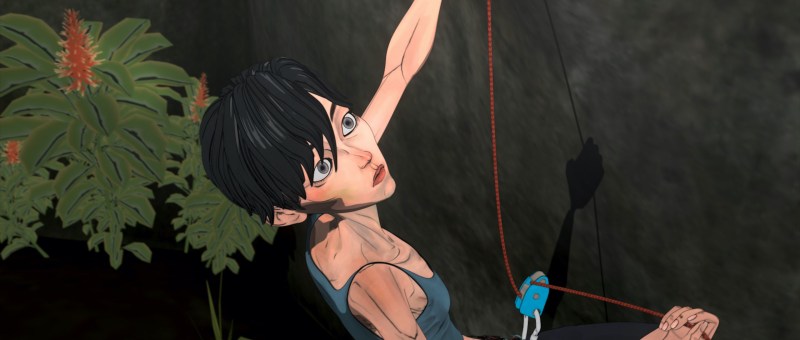
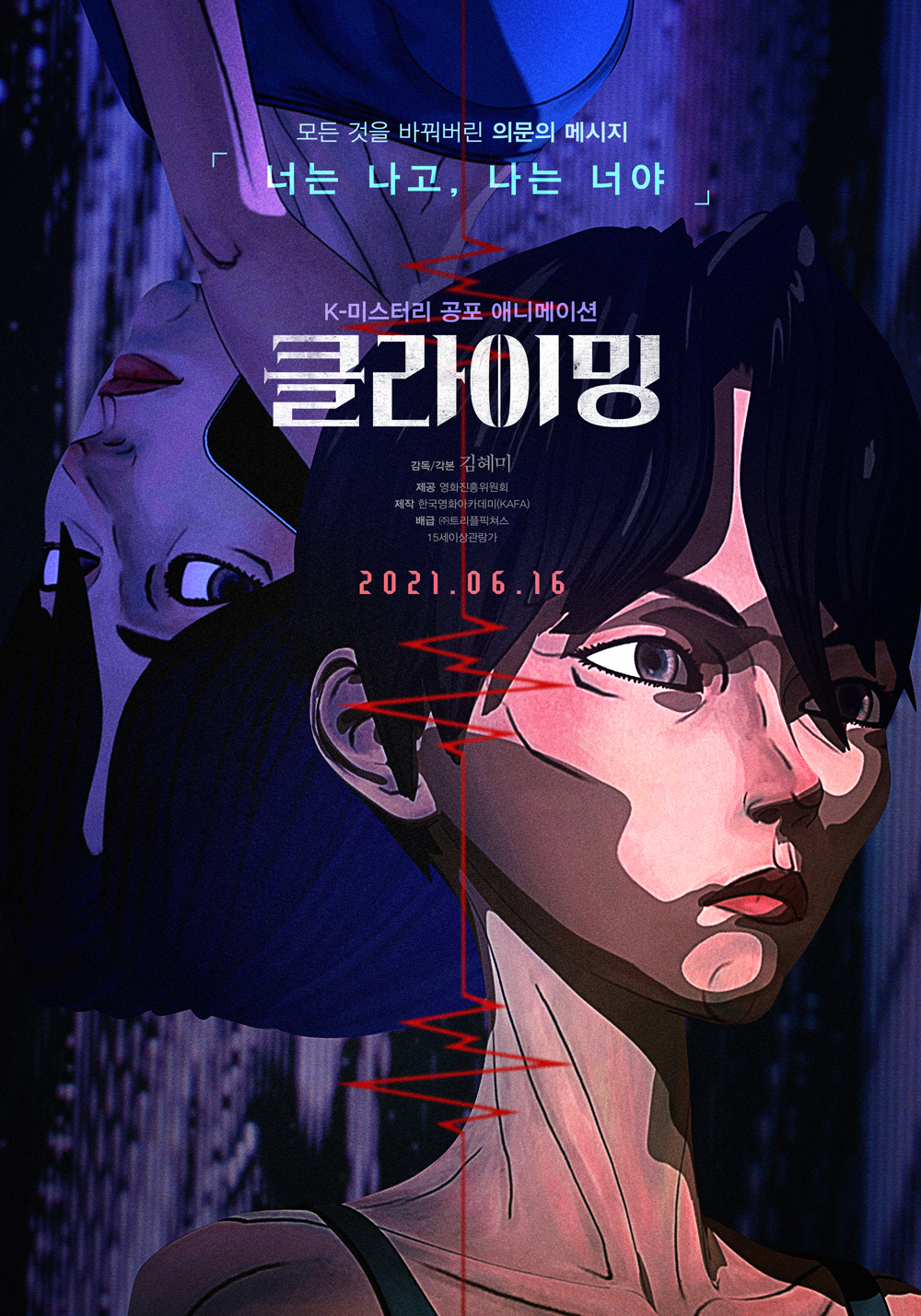
Maternal anxiety destabilises a young woman’s sense of reality in Kim Hye-mi’s animated psychological horror, Climbing (클라이밍). Impending motherhood has it seems forced Kim’s heroine to confront a series of uncomfortable questions about the direction of her life, the ways in which it must inevitably change over time, and what it is she really wants all the while contending with a loss of control over her physical body mastery over which has in a sense been her life’s work. 

Professional indoor climber Se-hyeon (Kim Min-ji) has begun having strange dreams that her sympathetic boyfriend Woo-in (Goo Ji-won) attributes to possible PTSD following a nasty car accident some months previously which left her in a lengthy coma and led to a miscarriage after which Se-hyeon was cared for by Woo-in’s mother (Park Song-yi). Hearing of the dreams Woo-in is excited to think they may have another child on the way, only for Se-hyeon to coldly snap at him that the only “accident” was getting pregnant in the first place because she never wanted the baby. 

This is partly as we discover because of her determination to succeed as a professional climber which of course requires intense mastery over her physicality. The one reality she cannot dispute, however, is that she is ageing and that her body will necessarily change in ways over which she does not exercise full control. This is brought home to her by the perky presence of a slightly younger rival, Ah-in (also Park Song-yi), who pips her to the top spot in a minor competition. Greeted by Woo-in, it’s clear they’ve both known the young woman for some years, Woo-in’s talk of taking her out for pizza or hamburgers suggesting he still thinks of her as a child, implying that Se-hyeon has become acutely aware of the age difference between them while also jealous sensing danger in their accidentally flirtatious banter. Woo-in may be supportive of her career, but he too is perhaps feeling that it’s time to move on from competitive sports, presenting a ring over dinner and suggesting they finally get married while Se-hyeon could take up a steady job as a coach. Again she finds it hard to discern if this is genuine solicitous care or potentially abusive controlling behaviour, he petulantly suggesting they go home after she expresses reluctance to drink the expensive wine he’s ordered with their celebratory meal.

Meanwhile, she’s begun receiving mysterious text messages apparently from “herself” via a phone broken during in the accident. Her alter ego is still under the care of Woo-in’s mother, but unlike herself is a much more conventional figure of traditional femininity continually pining for Woo-in and apparently still carrying their child. As implied by the rather gothic family photo in Se-hyeon’s flat, just as she has begun to resent Woo-in, her other self suspects his mother, convinced that Woo-in is dead and that she is keeping it from her because she wants to take the baby as her own. Her two selves reflect her sense of ambivalence in response to motherhood, the other Se-hyeon literally forced into a frumpy maternity dress by her mother-in-law but determined to keep her baby, while Se-hyeon is intensely uncomfortable about the idea of a “foreign body” inside her own. Suspecting that the other Se-hyeon’s desires are beginning to bleed into her reality she takes drastic action in order to regain bodily control, but also finds herself fighting an uphill battle just to be allowed to continue competing on an international level while fearing literal and symbolic displacement by the next generation. 

There is perhaps a slight discomfort in the insistence that Se-hyeon is wrong to reject motherhood or that she has lost the right to an active choice over whether or not to bear a child even as she appears to tear herself apart internally attempting to accept not only the idea of maternity and the weight of the new responsibilities it brings, but also that of transition, that she must necessarily become something new through this process of bodily transformation. Kim’s body horror psychodrama plays out entirely within the confines of Se-hyeon’s mind, the heavily stylised quality of the animation perhaps reflecting the inner alienation and intense anxiety which undermine her sense of reality while she struggles to reorient herself in a world changing all around her.


Climbing screens 18th November as part of this year’s London Korean Film Festival.

Trailer (English subtitles)

Rolling (말아, Kwak Min-seung, 2021)

A young woman begins to find new purpose in the wake of global pandemic and unrelated familial loss in Kwak Min-seung’s charming indie debut, Rolling (말아, Mala). Trapped in an arrested adolescence of snack food and video games, Kwak’s heroine drifts along without direction still dependent on her ageing mother while reluctant to move forward or accept responsibility, yet after some gentle prodding perhaps begins to realise that different doesn’t necessarily mean wrong and that there are things she she may be good at if only she gave herself the chance. 

25-year-old Juri (Shim Dal-gi) dropped out of college and doesn’t seem to be doing much of anything at all which is perhaps understandable given it’s the middle of a global pandemic. Her mother Young-shim (Jung Eun-kyung), meanwhile is in something of a fix seeing as her kimbap cafe is already struggling with customers preferring to stay at home while the bills continue to climb just as she needs to take some time off to look after her own mother who has recently been taken ill. Seeing as Juri never answers her text messages, Young-shim takes the drastic step of putting Juri’s flat, on which she co-signed, on the market in order to get her attention, presenting her with the ultimatum that she either watch the store while she’s away or prepare to move out. Though reluctant, Juri agrees going through something of a baptism of fire not only learning how to make kimbap from scratch, but trying to mimic her mother’s cooking to cause as little disruption as possible to their regular customers. 

The kimbap conundrum exposes some of Juri’s insecurity as she worries she can’t measure up to her mum and the customers will be angry or disappointed that their favourite dishes aren’t quite the same. Nevertheless, she takes pride in her work and buckles down to run the cafe as best she can albeit with a slightly reduced menu even if slightly disappointed not to be making as much as her mother usually would. As the friendly auntie from the bakery, Chun-ja (Jung Eui-Soon), points out, however, times are hard for everyone and no one’s really doing the kind of business they’d been doing the year before. Many businesses have already closed while others wonder if it’s really worth trying to carry on when no one knows when or if the situation will improve. 

The weighty responsibility of saving her mother’s store begins to give Juri a new sense of confidence as do her interactions with her customers including a good looking if nervous young man, Won (Park Hyo-won), for whom she makes a note to remove the yellow radish noticing that he always picks them out, and with whom she later ends up on an accidental date delivering a bulk order for a hiking club. A bored little boy meanwhile sick of being cooped up inside asks her some very direct questions but later concedes her kimbap are “OK” which is all things considered high praise. The experience gives her the motivation to start looking for a regular job, but the world of employment is not always kind to those who take a little time to find their way, a rather rude interviewer pointing out that if she quit college she could quit the company while condescendingly asking if there’s anything she’s good at aside from word processing and driving only for her to suddenly realise there actually might be (though it won’t be very helpful in terms of this particular opportunity). 

Her isolated, studenty lifestyle and recent business experience provide Juri with the means to turn the situation to her advantage, thinking outside of the box to expand her mother’s business while making use of all of her skills old and new to take control over her life no longer “dependent” on her mother but working alongside her. Originating from a web drama, Kwak’s gently humorous drama makes the most of the uncanniness of everyday life during the pandemic as Juri’s world ironically expands through working in the cafe dealing with quirky customers and even potential romance while also contending with anxiety over her grandmother’s health and her mother’s business but finally stepping into herself with a new sense of confidence and possibility for the future.


Rolling screens 16th November as part of this year’s London Korean Film Festival.

International trailer (English subtitles)

Limecrime (라임크라임, Lee Seung-hwan & Yoo Jae-wook, 2020)

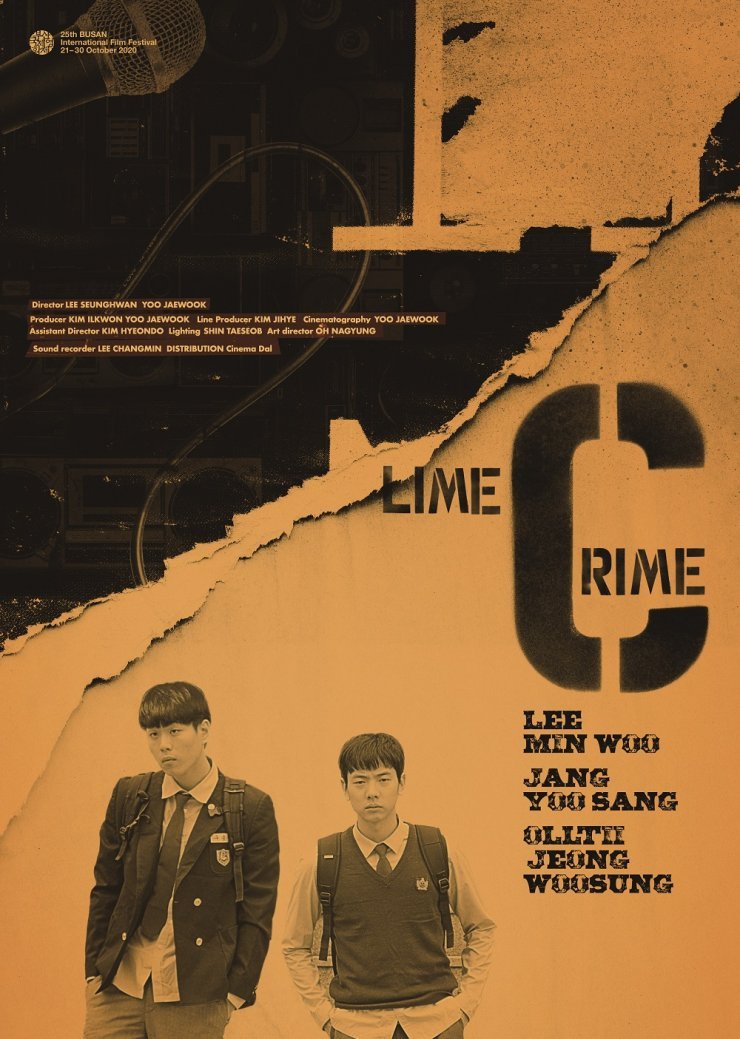
Two teens from across the class divide form an awkward friendship through a shared love of hip hop but find their connection undermined by their differing circumstances and opportunities in Lee Seung-hwan and Yoo Jae-wook’s indie coming-of-age drama Limecrime (라임크라임). Loosely inspired by their own life experiences, Lee and Yoo once performed as a rap duo under the name Limecrime, the directors eventually find unexpected positivity in the boys’ life trajectory as they each reach a point of understanding and thereafter overcome their differences while pursuing their musical aspirations. 

16-year-old Songju (Lee Min-woo) is a struggling middle school student with hip hop dreams currently working part-time in his father’s auto repair shop. He attracts the attention of the well-off, academically successful Jooyeon (Jang Yoo-sang) when performing a classic rap during a vocal evaluation underneath a sign stating that hip hop is forbidden. Being something of a hip hop geek, Jooyeon immediately makes contact lending a mystified Songju a retro discman and some of his favourite tracks before suggesting they team up as a hip hop duo and enter an online competition. 

The duo’s name, Limecrime, is taken from an accidental misreading of “rhyme crime” which eventually sticks and becomes in a way ironic. Nevertheless, it demonstrates an early divide between the boys, Jooyeon mocking Songju for his rookie mistake while insisting that the art of rhyme is central to rap, demanding precision while Songju prefers the anarchy of freeform improvisation. To begin with they bond over their shared love of music, but over time the differences between them become increasingly obvious with Songju often uncomfortable among Jooyeon’s wealthier friends. Though they are mocked by some of their classmates at an early performance, a graduating hip hop club from a local high school offers to befriend them, but their rappers are much more intellectual than either of the boys sitting down to discuss philosophy while Songju feels left behind having no real idea what’s going on. He gets up to fix a broken mic stand, only for Jooyeon to tell him off insisting the repairman will take care of it while rolling his eyes as if implying he thinks Songju has shown himself up in front of their new friends. 

Jooyeon is indeed the sort used to having everything done for him, regarding it as somehow inappropriate to fix something yourself. His parents do not appear to be physically present in his life, heard only via infrequent telephone calls, while leaving the housekeeper to watch over him though she later quits abruptly having reached her limit when Jooyeon and Songju thoughtlessly trash the kitchen and leave the mess for her to clean up. Cleaning up after himself is not something Jooyeon has ever been taught to do and given his family’s wealth he’s also got the idea that all problems can be solved with money. Wanting Songju to attend the high school with the best hip hop club he crassly offers to pay for cram school classes, little realising how his suggestion makes Songju feel or how he’s effectively using and manipulating him to achieve his own aims. Irritated by his practicality, he finally relegates Songju to the space recently vacated by the housekeeper after he kindly fixes up his bike for him. 

Songju meanwhile is both attracted and repelled by Jooyeon’s upperclass world while finding his existing friendships strained when his buddies fall in with a local petty gangster and are pulled towards small scale street crime ironically selling counterfeit fashion from hip hop brands. Given Songju’s example some of the other boys dare to dream of different futures, even the most delinquent revealing he’d like to become an actor, but each is later forced to face the crushing reality that no matter their ambition they do not have the same opportunities as boys like Jooyeon whose family can afford to pay for fancy schools and private tuition. 

Matters finally come to a head when Songju ends up in trouble with the law and Jooyeon gets his father to pull strings on his behalf only to abruptly abandon him when he expresses anxiety over his less well-connected friends. There is something quite ironic in Jooyeon’s love of hip hop, declaring that he wants to “change what’s absurd in this world” through the power of music but later having no answer when asked if he wouldn’t be better to become a politician or activist than an indie musician reliant on being able to generate a platform. After deciding to give up, Songju nevertheless comes into his own and finds his voice but at the same time refuses to leave Jooyeon behind even when discovering solo success. Though the leads may be a little past convincingly passing for 16 (Jang Yoo-sang is 30, Lee Min-woo is 28), Lee and Yoo nevertheless craft a refreshingly positive coming-of-age tale which allows the boys to salvage their friendship and their musical dreams even if perhaps only by sidestepping the issues which initially divided them. 


Limecrime screens 15th November as part of this year’s London Korean Film Festival.

Trailer (no subtitles)

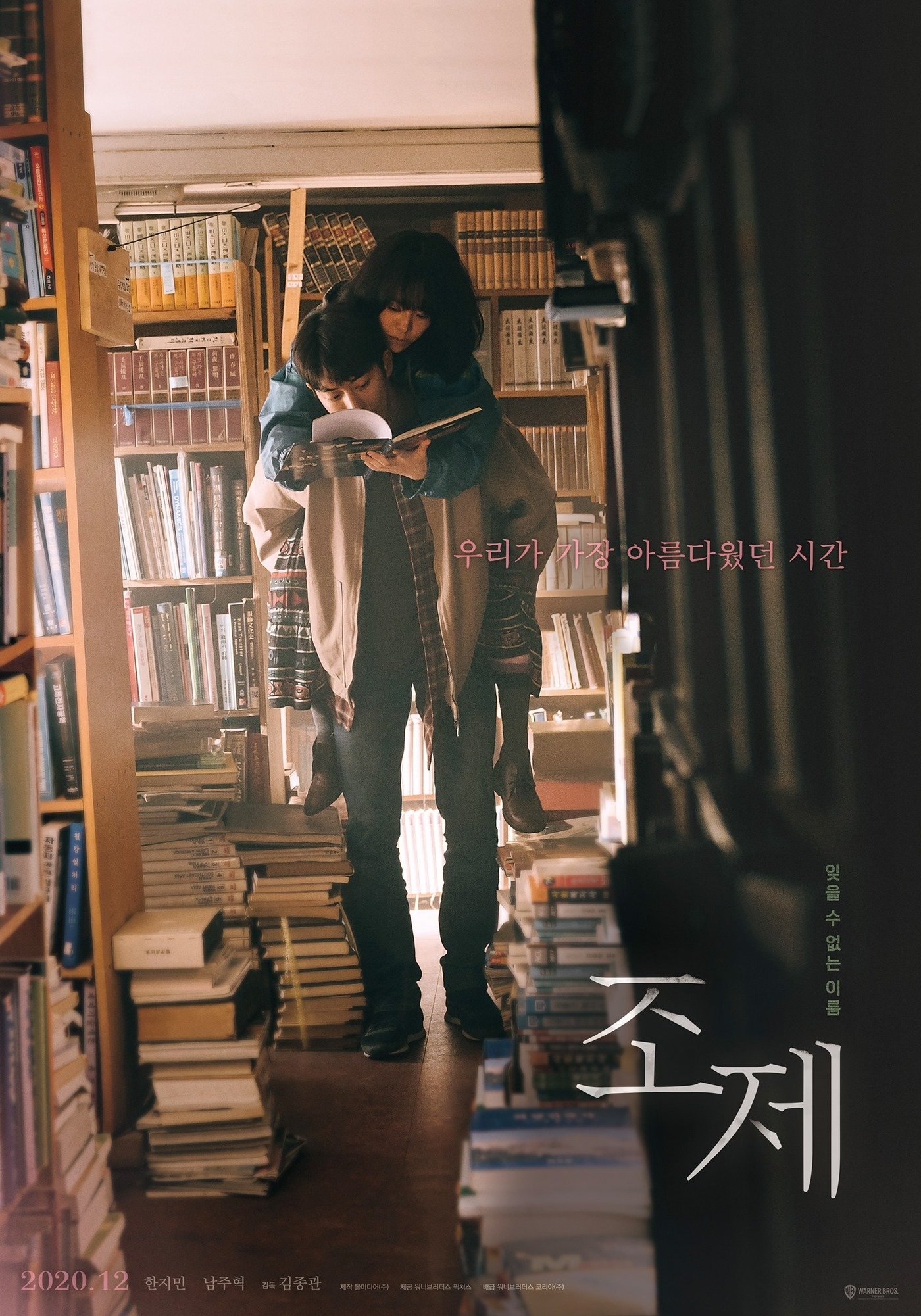
Josée (조제, Kim Jong-kwan, 2020)

When Isshin Inudo’s adaptation of the 1984 short story by Seiko Tanabe Josée, The Tiger and The Fish was released back in 2003, it quickly gained popularity across Asia and is fondly remembered by many as a melancholy love story neatly anticipating the junai boom that would arrive a year later. Nevertheless, almost 20 years on the film’s depiction of disability might seem very of its time while its heavy focus on the male hero’s internal conflict realising that in the end he wasn’t strong enough to fight for love may also seem misplaced. Very loosely inspired by the same short story, Kim Jong-kwan’s Josée (조제) while still largely told from the hero’s point of view does its best to redress the balance in returning agency to the heroine as she resolves to live a freer and more independent life if still to a degree confined by an internal sense of ableism. 

As the film opens, Josée (Han Ji-min) is lying in the road having been thrown out of her electric wheelchair. Student Young-seok (Nam Joo-hyuk) comes to her rescue, grabbing a nearby stool while inspecting the chair only to discover the wheel is broken and the power is out. Thinking quickly he borrows a wheelbarrow from a storeowner and takes both her and the wheelchair back to her home where he’s treated to a meal but also endures Josée’s scorn, she feeling quite ambivalent thinking that she should repay his kindness but also not really wanting to engage with him. Young-seok meanwhile is somewhat captivated by her mystery, later helping her grandmother out after spotting her struggling with a heavy cabinet in the street and thereafter becoming a regular fixture in the young woman’s home. 

Unlike the earlier version, the reasons for Joseé’s largely self-imposed isolation are internal rather than to do with social stigma towards disability or a history of abuse. Nevertheless she harbours a degree of trauma owing to having been abandoned as a child and is reluctant to form close relationships with others which is one reason why she rebuffs Young-seok’s attempts at friendship believing he too would one day leave her while there is also a rather large age gap between them, Young-seok still a student in his early 20s while it appears Josée is at least 10 – 15 years older. Through Young-seok’s intervention Josée discovers that there are systems in place she could go to for support along with community organisations that are keen to help her live independently as an integrated member of society the only reason she had not found them before being her desire for isolation partly caused by the mistaken belief she is wanted by the police. 

Young-seok meanwhile despite his earnest desire to help her is still somewhat immature, naively asking his sometime college girlfriend insensitive questions about her rent and living arrangements while unable to understand the consequences of his actions in carrying on an affair with one of his professors and being exploited by another. Josée accuses him of pitying her which he perhaps does but is also drawn to her because of her sense of mystery discovering that little of what she says of herself is true, merely the expression of the escapist fantasies she uses to overcome the inertia of her life. The irony is that Young-seok is attracted to her precisely because of this quality of otherness and unknowability, while through forming a relationship with him she grows to know and love herself, finally accepting that she is worthy of love if also perhaps viewing herself as a burden as if she would trap Young-seok with her in world of isolation unfairly denying him the right to the fullness of the life. 

Because of her isolation Josée experiences the world differently, living vicariously through books travelling the world in spirit if not in body. Her marginalisation is compounded by her poverty, unable to afford the things that would make her life easier and unaware that there is help available because of her distrust of of authority figures born of her previous experiences which contributes to her desire for solitude. Yet through her relationship with Young-seok she begins to develop a sense of possibility, embracing her independence in driving an adapted car at the film’s conclusion while reconnecting with a childhood friend and his partner not to mention having a little cat to take care of at home. “I’m OK now, I’m not lonely” she offers, if a little sadly, romanticising the memory of love if not its actuality. Imbued with a deep sense of romantic melancholy, Kim’s richly textured drama nevertheless hands agency back to Josée who finally comes to love and accept herself through loving and being loved by another person seizing her independence to live a full and active life but ready to accept the help and support of others as she does so. 


Josée screens 14th November as part of this year’s London Korean Film Festival.

International trailer (English subtitles)