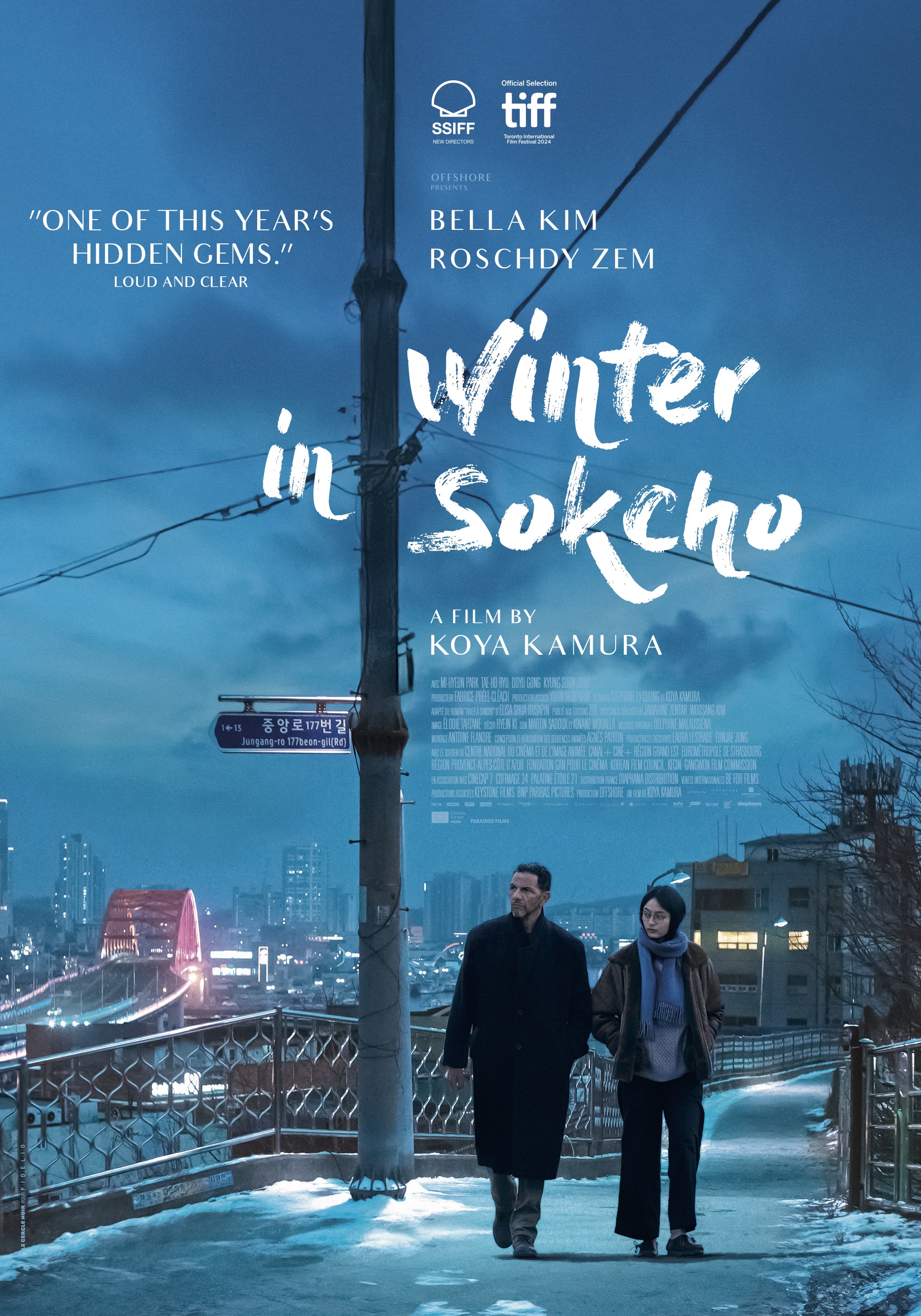
Winter in Sokcho (Hiver à Sokcho, Koya Kamura, 2024)

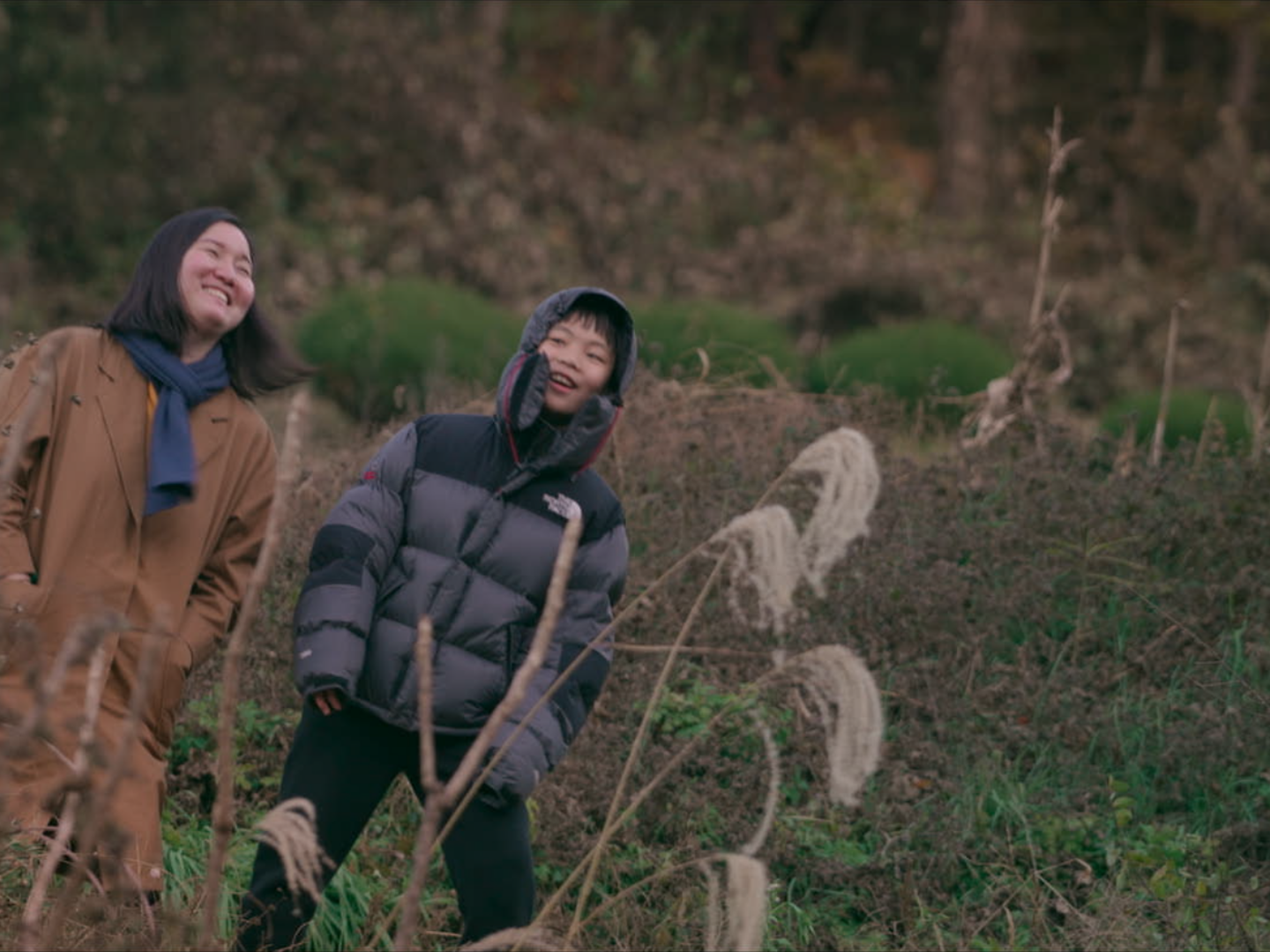
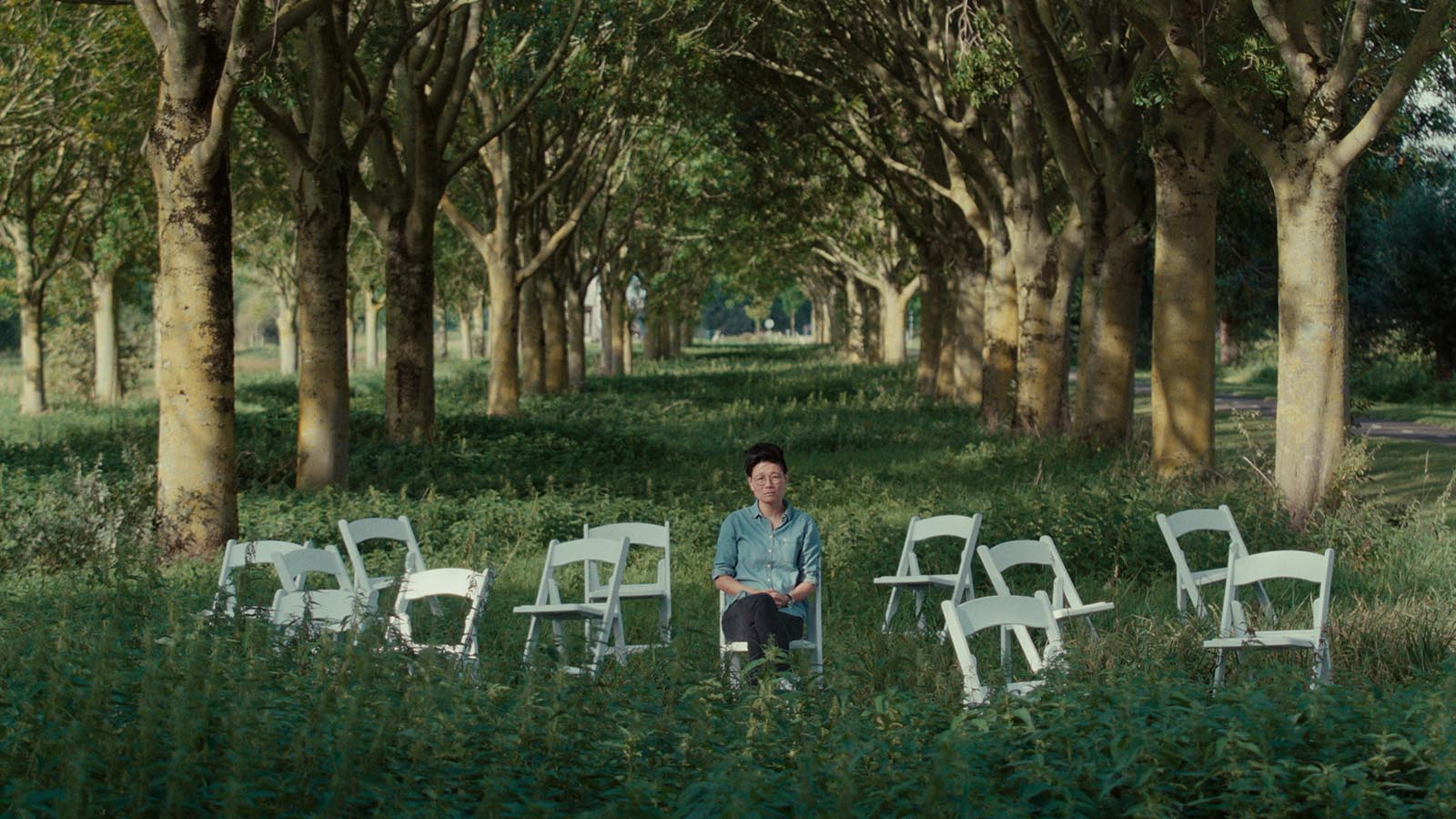
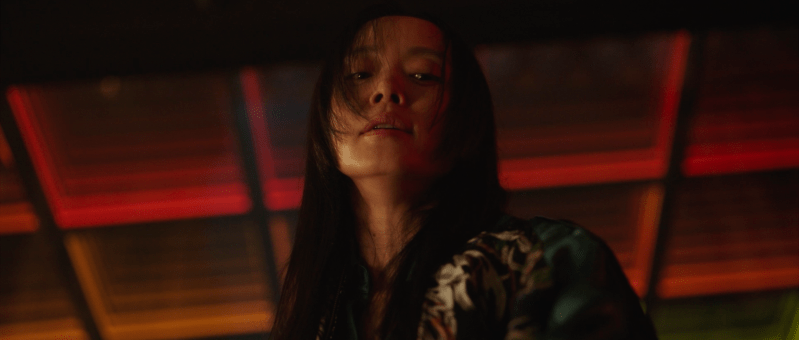
A young woman is awakened from a kind of spiritual hibernation by the unlikely arrival of an incredibly brusque French artist in Koya Kamura’s adaptation of the Elisa Shua Dusapin novel, Winter in Sokcho. Like many, Soo-ha (Bella Kim) is waiting for spring, though it’s less this place that has her feeling trapped than an inability to find her place within it, or indeed anywhere, as she struggles with her own identity and the unanswered questions about the father she never knew.

In any case, it seems clear that Soo-ha as begun to resent herself on some level and is unhappy in her long-term relationship with a high school boyfriend, Joon-ho (Gong Do-yu), an aspiring model. It’s not clear why shy returned to Sokcho after studying French and Korean literature in Seoul, but she otherwise lives her life in peaceful monotony working at a small boarding house where the owner, Mr Park (Ryu Tae-ho), has recently lost his wife and is therefore in need to practical and emotional support. One night a week she spends with her mother (Park Mi-hyeon), a fishmonger specialising in fugu, though there’s a frostiness and frustration to their relationship in which neither seems quite satisfied with the other’s life choices. 

Soo-ha repeatedly asks her mother why she never attempted to look for her father, a Frenchman who worked in the fishing industry, though her mother doesn’t really want to talk about, it leaving Soo-ha with unresolved doubts and questions about her past. Her interest in French literature may be a way of trying to explore this side of herself in the absence of a guide, though the attempts at connection a frustratingly one-sided. When a Frenchman suddenly turns up at the boarding house, Mr Park encourages her to use her skills “the one time they’re useful”, though she herself is reluctant, giving Yan (Roschdy Zem) the smallest room in the adjacent annexe like a thought paused for later.

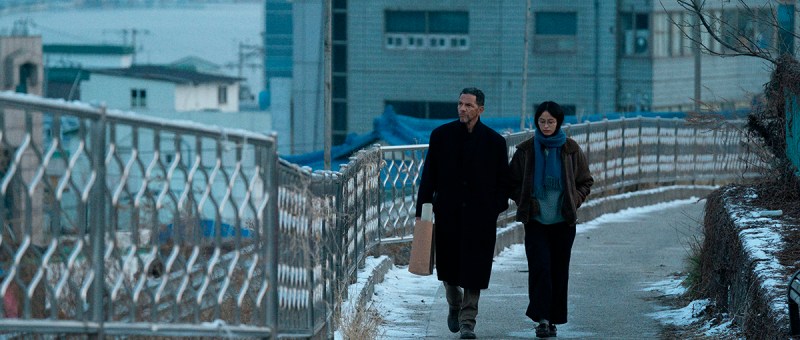
Yan asks her to show him her Sokcho, but as he later says, he’s just a tourist and like the father she never met is just passing through. There may be something a little exploitative in his working visit for though he’s come to draw inspiration from this place, he is willing to give almost nothing to it. He refuses to eat the food that Soo-ha cooks at the boarding house and instead badgers her to take him to restaurants while finding little to like there either. As his incredibly outdated, paper driving licence isn’t valid in Korea, he talks her into taking him to the DMZ which seems to echo the liminal space that exists between them. Soo-ha talks about how sad it is that people still yearn to be reunited with their relatives all these years later, though Yan is indifferent and later mentions a son that it seems he may rarely see. But as he tells her, she may be looking in the wrong place if it’s a deeper connection that she’s seeking or searching for something that will unlock the secrets of herself.

There are reasons for her to feel displaced even in Sokcho given that her unusual height makes her stand out as the nickname “beanpole,” makes plain. Her mother nags her for never eating properly or enjoying her food which may be another expression of her listlessness, but also reminds her not to eat too much and get fat. Joon-ho tells her get plastic surgery, as do a few other people, and though it’s even more insensitive and troubling given that Soo-ha’s father was French. It’s as if they’re telling her to erase these parts of herself, as if she were not “fully” Korean and should become so by adjusting her jawline and the shape of her eyes. Soo-ha’s internal questioning is expressed in brief animated sequences in the style of Yan’s ink paintings as she tries to conjure the image of herself.

There’s a woman at the guest house who’s there recovering from extensive plastic surgery that will give her a whole new face. She sits in the dining area, simultaneously anonymous and instantly identifiable by her bandaged face. Her story is never revealed, so it’s impossible to say whether her decision was motivated by a desire for conformity and conventional beauty or to become more herself and have her outside reflect the person she feels herself to be. Sokcho is also undergoing a process of renewal, as high-rise office blocks spring up everywhere and the traditional quality of the streets disappears as if this urbanisation were creeping up on Soo-ha and taking from her even the anchor of this place which no longer quite exists. 

Joon-ho assumes they will move back to Seoul together when his career takes off because “who doesn’t want to get out of Sokcho?” But Soo-ha may be beginning to feel that perhaps this place might suit her after all. A few cosmetic upgrades could breathe new life into the old-fashioned boarding house and brighten an otherwise gloomy existence. While showing Yan around town she describes a local legend, or perhaps concocts one for the occasion, about a bird who wanted to fly above the clouds but couldn’t. She, meanwhile, may have begun to soar amid the arrival of spring, finally ready to break out of her self-imposed winter in having discovered a way to become more herself rather than what others perceive her be.


Trailer (English subtitles)
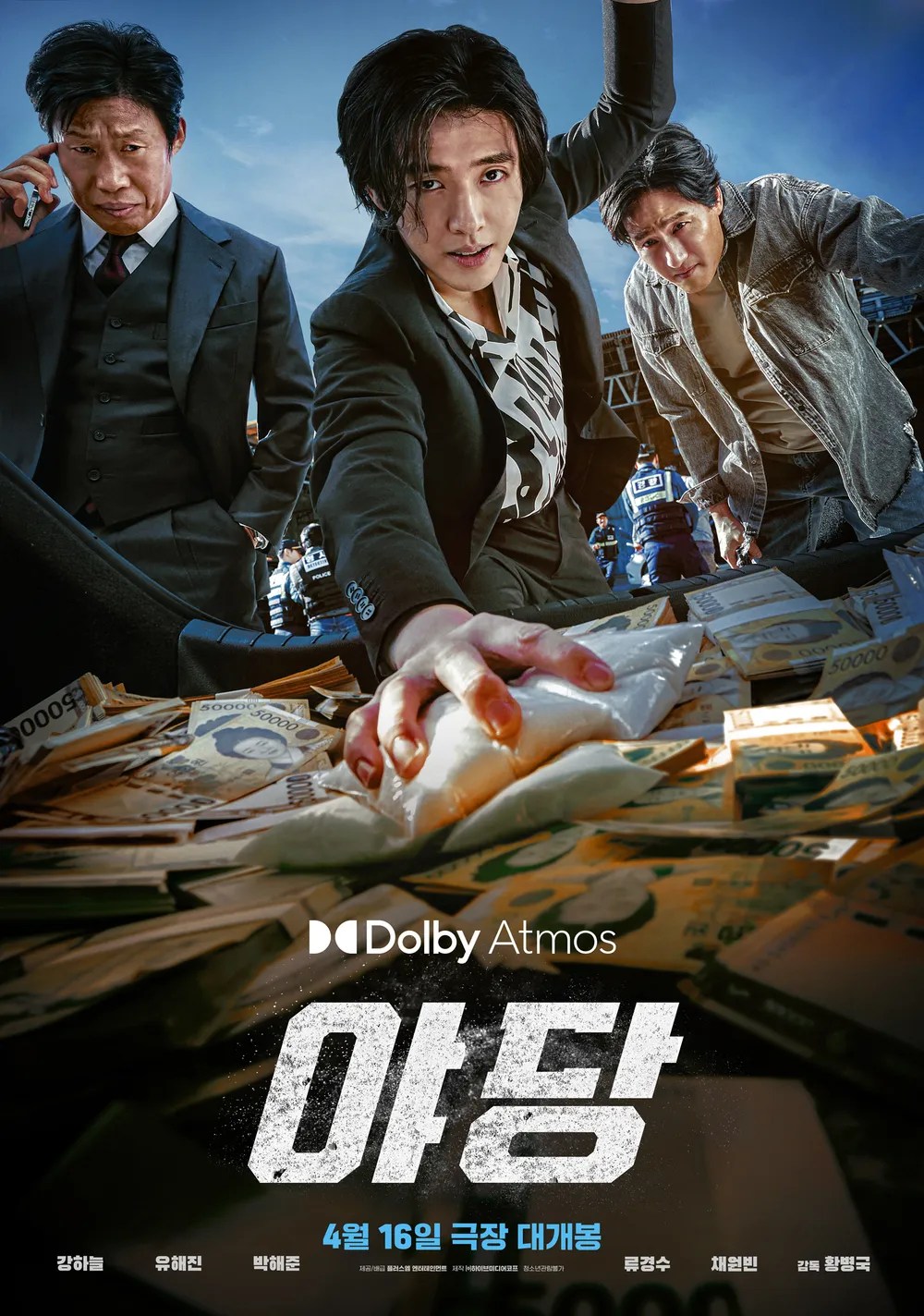
Yadang: The Snitch (야당, Hwang Byeng-gug, 2025)

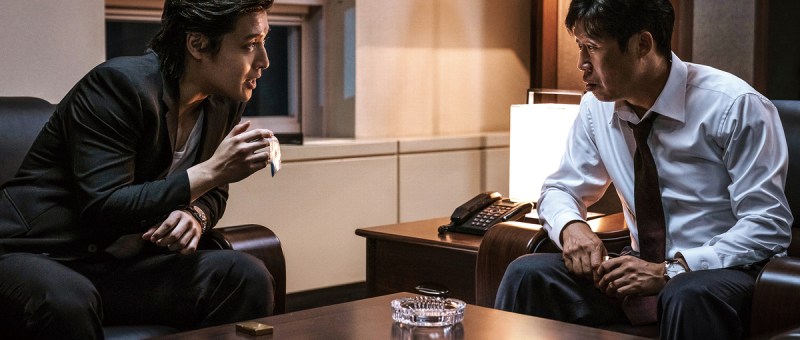
A Korean prosecutor can make or break a president, according to the ambitious Ku (Yoo Hae-jin) making a final power play to put an arrogant chaebol son in his place. But Ku isn’t trying to make a stand for the rule of law so much as bend it to his own will while securing his position, because in the world of Yadang: The Snitch (야당) justice is largely illusionary while mediated through the complex interplay between the social and political elite, crime, and law enforcement.

The hero, Kang-su (Kang Ha-neul), makes this plain in explaining that the big drug busts that get the police into the papers are largely all orchestrated through the snitchery of yadang like himself, a set up in which low-level drug users are encouraged to become police informants in return for lenient sentences allowing the detectives to take care of the dealers. Perhaps that’s all very well, as detective Sang-jae (Park Hae-joon) says, there’s no point locking up hundreds of users because the supply is endless and it makes no difference to the business. Kang-su’s likening of them cockroaches is a little problematic, even if he has a point that if you want to get rid of the infestation you have to go in for the nest.

But it turns out the nest is in an unexpected place because the nexus of corruption is in the government and political system which has been infiltrated by wealthy businessmen looking to further their own ambitions through politics while their feckless children behave like princelings knowing they can do whatever they want and then ring their fathers to make whatever consequences might occur go away. Though the film doesn’t go too deeply into it, there is something in the fact that both Ku and Kang-su come from poor, single-parent families though the direction of their ambitions might be quite different. Ku has studied hard to become a prosecutor and escape his poverty, but has only 10 years to make it into the top ranks or be forced to resign. He exploits Kang-su’s desire for wealth and agency to help him achieve his ambitions but though he describes him as a brother, is all too ready to throw him under the bus once he’s no longer useful to him. 

For his part, Kang-su relishes his role within this ironic system as someone on the fringes of crime but also facilitating law enforcement without being manipulated by the police in the same way that their informants often are. Sang-jae swears to protect a young actress after picking her up in a bust if she helps him catch the kingpins but in the end he can’t do it, partly because of Ku, but also because at the end of the day his fellow officers have the same opinion of their snitches as Ku does his and aren’t terribly invested in their safety or wellbeing. After getting caught up in Ku’s showboating raid on a hotel where chaebol son Hoon is partying with yakuza drug dealers, Su-jin’s (Chae Won-bin) career is ruined and on her release she has only the drug scene to rely on with the consequence that she becomes an addict and a dealer herself.

But it was Hoon (Ryu Kyung-soo) that made her a user in the first place by spiking a drink and then went on to use his privilege to control her and make sure that she stayed within his orbit. Ambitious men like Ku make their deals and let the chaebol sons get away with their crimes, though his late in the game attempt to remind Hoon that he could ruin his father’s chances of becoming Korea’s next president if he chose to implies his own sense of worthiness that he is actually above this illusionary elite though he may be overestimating his reach. These three branches of branches of power operate in a symbiotic system and need each other to survive. Ku is only really a kind of Yadang himself, mediating between a social and political elite while enjoying only the illusion of power and independence. Hwang ups the action stakes with some high impact set pieces including that in which Kang-su uses the brute force of his Hummer to literally bulldoze a car full of drug dealers while the police chase after them with metal poles, but seems to suggest the real violence stems from the system if ultimately opting for an ironic buddy cop conclusion in which Kang-su uses his considerable skills in a more legitimate fashion.


Trailer (English subtitles)
Edhi Alice (에디 앨리스: 리버스, Kim Il-ran, 2024)

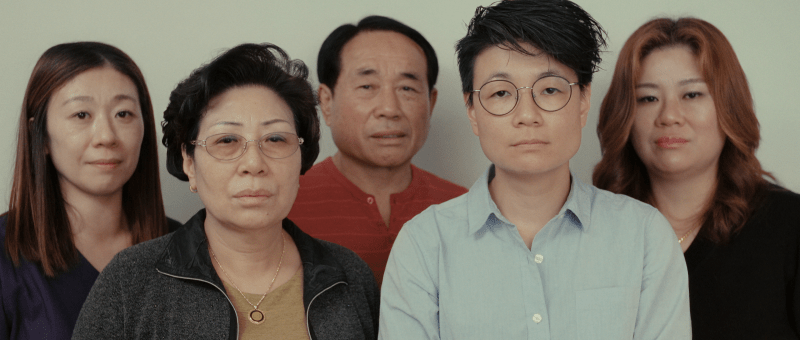
“I’m Alice, who is living in the present,” one of the two protagonists of Kim Il-ran’s documentary Edhi Alice tells the camera when asked to introduce herself. A transwoman in her 40s, Alice got her name from film director Lee Joon-ik while working on Dong-ju: The Portrait of a Poet, a film inspired by the life of a poet who died as a political prisoner yearning for freedom and authenticity in a Japanese jail during the colonial era. 

Freedom and authenticity are both things that Alice has found in her transition and is continuing to seek. As a child, she had a consciousness of herself as female until her sister remarked in a phone call that she was becoming a man after noticing that her voice was breaking. Surrounded by an intensely patriarchal society, Alice convinced herself to conform to common notions of masculinity, even getting married in an attempt to live as a man and prove herself as one by having a child. Only after the marriage ended did she begin to embrace her authentic self by undergoing surgery which, she points out, is somewhat unusual in that she chose to remove her genitals right away because she couldn’t bear to live with the reminder of her masculinity. However, she has avoided other kinds of medical interventions such as plastic surgery stating that she doesn’t see the point now that she is already in her 40s and has no plans to date. 

She does, however, live in a more liminal space in which her transness is not immediately apparent while working in a stereotypically masculine industry as a lighting director for film and TV in which, as she points out, her height and strength are definite advantages. Though she says she has not experienced much prejudice and discrimination while working on films, she reveals that she was dismissed from a TV project because the producers were “ultra-conservative” and did not want to work with her. Meanwhile, there’s a genuine poignancy in the crew’s visit to a public bath as Alice reflects that she probably won’t ever have the opportunity to visit one again, suggesting that she most likely won’t be admitted to the women’s bath given her gender presentation and fears may make people uncomfortable if she were. 

Edhi doesn’t have the same trouble, but has not yet completed her transition having visited a fortune teller and been advised to wait until a more auspicious time. Working as a councillor for LGBTQ+ youth, she assumed she must have been gay because she liked men but only later came to realise after joining an LGBTQ+ choir that the gay men around her did not experience the same kind of discomfort in their bodies and that she must be trans. But like Alice, she originally tried to conform to what it means to be a man in Korean society. When she tried to explain her identity to her mother, she had dismissed it by saying that it was only because she didn’t want to serve in the military. Trans people are not welcomed in the armed forces and Edhi reflects on the death of Byun Hui-su who fought for her right to serve by beginning her transition while on leave from military service. Her desire to continue being a member of the armed forces was denied and she was dismissed. She later took her own life.

While affected by the deaths of so many people around her who could not find a way to survive amid the intensely conformist pressures of Korean society, Edhi does her best to live her life while taking care of her parents and nephews. Though her father might use male pronouns and continue to refer to her as his son and her mother, though supportive, worries that she might regret her choices later, Edhi was surprised by the ease with which her nephews simply accepted her explanation of her transness and agreed that “Edhi is just Edhi,” agreeing to call her by her name rather than uncle or aunt. She fears being forgotten and regrets having thrown away photos of her other life but continues to pursue her dream of living in a house with her mother and opening a cafe. While never shying away from the physical pain involved in transitioning, the film reinforces the sense of liberation it can bring if tempered by the realities of life in contemporary Korea.


Edhi Alice screens at the ICA 18th May as part of this year’s Queer East.

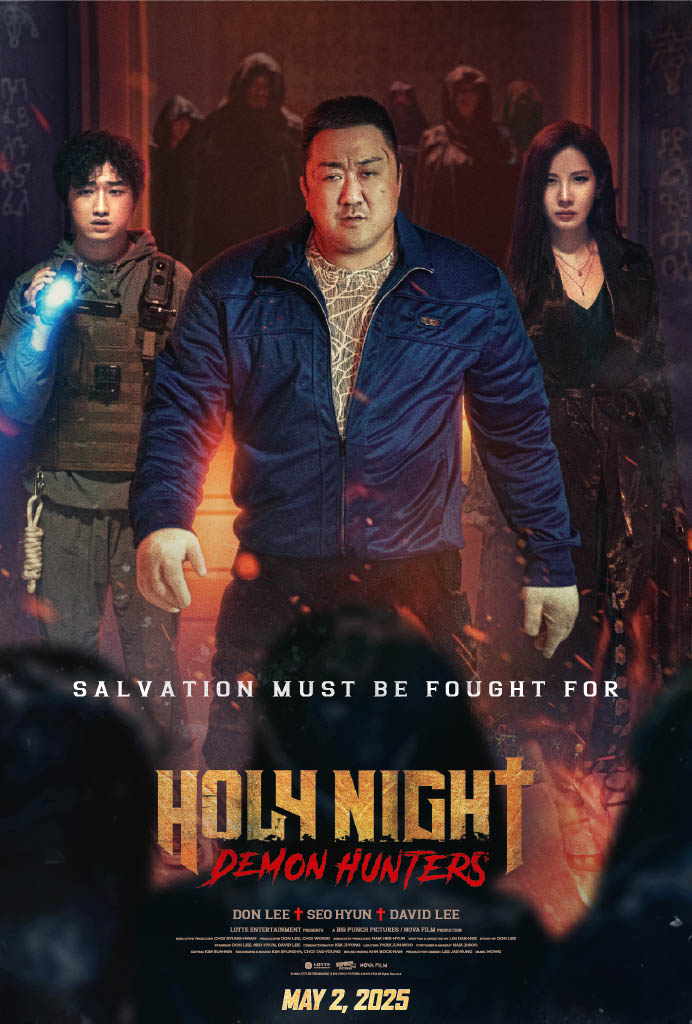
Holy Night: Demon Hunters (거룩한 밤: 데몬 헌터스, Lim Dae-hee, 2025)

The mighty fists of Ma Dong-seok punch the Devil right back to hell in Lim Dae-hee’s supernatural action drama, Holy Night: Demon Hunters (거룩한 밤: 데몬 헌터스, Geolughan Bam: Demon Hunters). The latest in the long line of vehicles for the much loved star, the film is as much about its hero’s own demons as the more literal kind as he finds himself confronted by the past and his unresolved trauma while trying to save a young woman who seems to have been possessed by a powerful and malevolent supernatural entity.

Bow (Ma Dong-seok) runs a detective agency that specialises in supernatural crime and is often called in when the police run out of other options. He and his two assistants, Sharon (Seohyun), the exorcist, and Kim Gun (Lee David), the cameraman, are charged with a missing persons case that has links to a series of ongoing violent crimes apparently committed by “Worshippers,” or those who have chosen the dark side and are in league with the demons to “cause harm to people and spread evil”. Meanwhile, the team is also approached by a doctor, Jung-won (Kyung Soo-jin), who is at her wit’s end trying to treat her younger sister Eun-seo (Jung Ji-so). Eun-seo is currently being treated for schizophrenia but, Jung-won now suspects after taking advice from fellow doctor and Catholic priest Father Marco, she may actually be possessed.

The film’s worldview is indeed steeped in religion and though it doesn’t really get into it, there’s something a little discomforting in its positioning of Jung-won as a woman of science eventually forced to accept that her sister’s illness is demonic. Not only is the implication that those living with schizophrenia are inherently dangerous and, in fact “evil”, but also that they pose an ongoing threat as Bow fights off a corridor full of otherwise zombified patients who’ve been released from their cell-like rooms by the demonically empowered Eun-seo. 

Meanwhile, in contrast to other similarly themed Korean supernatural thrillers, the Catholic Church is presented uncritically as a source of infinite good and the only means of fighting the darkness the demons represent. The only note of uncertainty lies in Bow’s feud with Father Marco because he unwittingly appeased the demons after realising that Bow’s childhood friend Joseph, with whom he grew up in the same orphanage, is actually the incarnation of Lucifer. He chose not to say anything because he didn’t want to believe that Joseph could be “evil”. In any case, Bow’s trauma flows from the same source. He blames himself for being unable to stop Joseph when he attacked the orphanage, killing several children along with their shared maternal figure Sister Angela. Working with another nun, Sister Catalina, Bow is saving to open a new Catholic orphanage as a means of atonement while otherwise vanquishing other demons with his God-given gift, his fists.

It’s only in confronting his trauma that Bow is able to unlock his full power, which actually comes from the Devil, though he, like Sharon, has elected to use it for “good” rather than evil. Thus they are both in some sense fighting their darker impulses in rejecting the “evil” view of the world presented by the Worshippers who, the film suggests, very much walk among us in the guise of “good neighbours.” The film sets this cosmology up as a kind of comic book-esque universe and even slips into webtoon-style animation in the closing scenes as Bow takes on yet more ungodly forces and smacks them straight back to hell.

That said, there’s less of Ma Dong-seok punching bad guys than might be expected from this type of film, though there’s certainly room for his brand of deadpan, wisecracking humour that gives the team a lived-in feel even if they otherwise seem slightly underwritten as if this were the big-screen adaptation of a television series the viewer hasn’t seen. It also has less in common with previous exorcism dramas such as The Priests, The Divine Fury, or Devil’s Stay and seems to be influenced more by Hollywood films about demonic possession while otherwise taking visual inspiration from the Paranormal Activity series and ghost shows along with the odd J-horror jump scare. It also borrows J-horror’s technological anxiety in Eun-seo’s ability to make the digital signal twitch, though the film never particularly does very much with it. Nevertheless, it’s all carried along by Ma’s winning charm as an action star along with the committed performances of the cast even when not particularly well served by the material. 


Holy Night: Demon Hunters is in US cinemas now courtesy of Capelight Pictures.

International trailer (English subtitles)
Between Goodbyes (Jota Mun, 2024)

There’s a small irony at the centre of Jota Mun’s documentary Between Goodbyes in that she often cuts back to  contemporary stock footage of television items covering the subject of adoptions in Korea. Pundits are full of panic about the rapidly expanding baby boom of the post-war era and concerned about a growing lack of resources to care for them. Fast-forward 50 years and the problem has reversed as the news items are full of panic about the ageing population and record low birth rate. Still, it’s clear that the nation has not yet fully reckoned with its history of international adoptions which employed dubious practices to separate parents from children and essentially sold babies abroad in a business model more akin to human trafficking. 

Mieke’s mother Okgyun is wracked with guilt about the decision she made to give her up, which was motivated mostly by her poverty, but also a series of social stigmas including that towards large families. With three children already, they simply couldn’t afford another and Okgyun had planned on an abortion though was talked out of it and advised to put the baby up for adoption on the promise that it would have a much better quality of life in America. Of course, the reality was not always so rosy and Okgyun and her husband have spent every moment of their lives since thinking about their missing daughter. Twenty years later, Mieke’s father became determined to find her and eventually discovered she had been sent to the Netherlands. 

For Mieke, the knowledge that her parents had wanted to find her was a source of comfort but also awkward and as she puts it “overwhelming”. Though to them she was their long-lost daughter, to her they were strangers and as she had been raised abroad, she could not even speak their language. Mieke had also experienced a series of other losses including that of her adoptive parents. An uncle and aunt had taken her in, but it didn’t work out leading to a further sense of rejection and abandonment. She describes finding a surrogate family in community but also hints at a constant sense of displacement, never quite feeling at home anywhere.

For these reasons, she found it difficult to relate to her birth parents when they first approached her and struggled to accept the intensity of their emotion. Later, her partner along with the film’s director, ask Mieke if she isn’t afraid of losing them too, as if she’s trying to stave off another abandonment by keeping them at arms’ length while also struggling to balance her own sense of identity caught between an interest in her Korean heritage and sense of belonging, and her Dutch upbringing and life in the Netherlands. There’s an also an additional sense of poignancy in that had Mieke been raised by her birth parents in Korea, she may not have been as free to live as her authentic self in a much more conservative social culture. A secondary reason that she’d avoided keeping in touch with her parents when they first contacted her was that she knew she would have to come out to them and was unsure as to how they’d react. 

Her birth family have, however, fully accepted her wife Marit, and though some of them may say they don’t quite understand, are fully supportive and just happy that she’s happy. On the other hand, it’s true enough that every reunion entails another goodbye with a concurrent sense of abandonment on each side. Another woman from a society supporting parents who gave their children up for adoption remarks that it’s only really with the reunion that the grieving process begins with the intense sense of loss for all missing years, the time and memories that have been stolen for each of them. Incomplete family portraits coloured by a sense of absence symbolise the longing for something that cannot be restored, while Mieke and her mother seem to be divided by an invisible wall. Still in overcoming the language barrier and learning to communicate in a much more direct way, the relationship begins to reforge itself. Perhaps as Okgyun says, there’s no such thing as complete happiness, but there is perhaps warmth and forgiveness and new beginnings that might not quite make up for lost time but do perhaps have the potential to become something else.


Between Goodbyes screens May 1 as part of this year’s San Diego Asian Film Festival Spring Showcase.

Trailer

Hijack 1971 (하이재킹, Kim Sung-han, 2024)

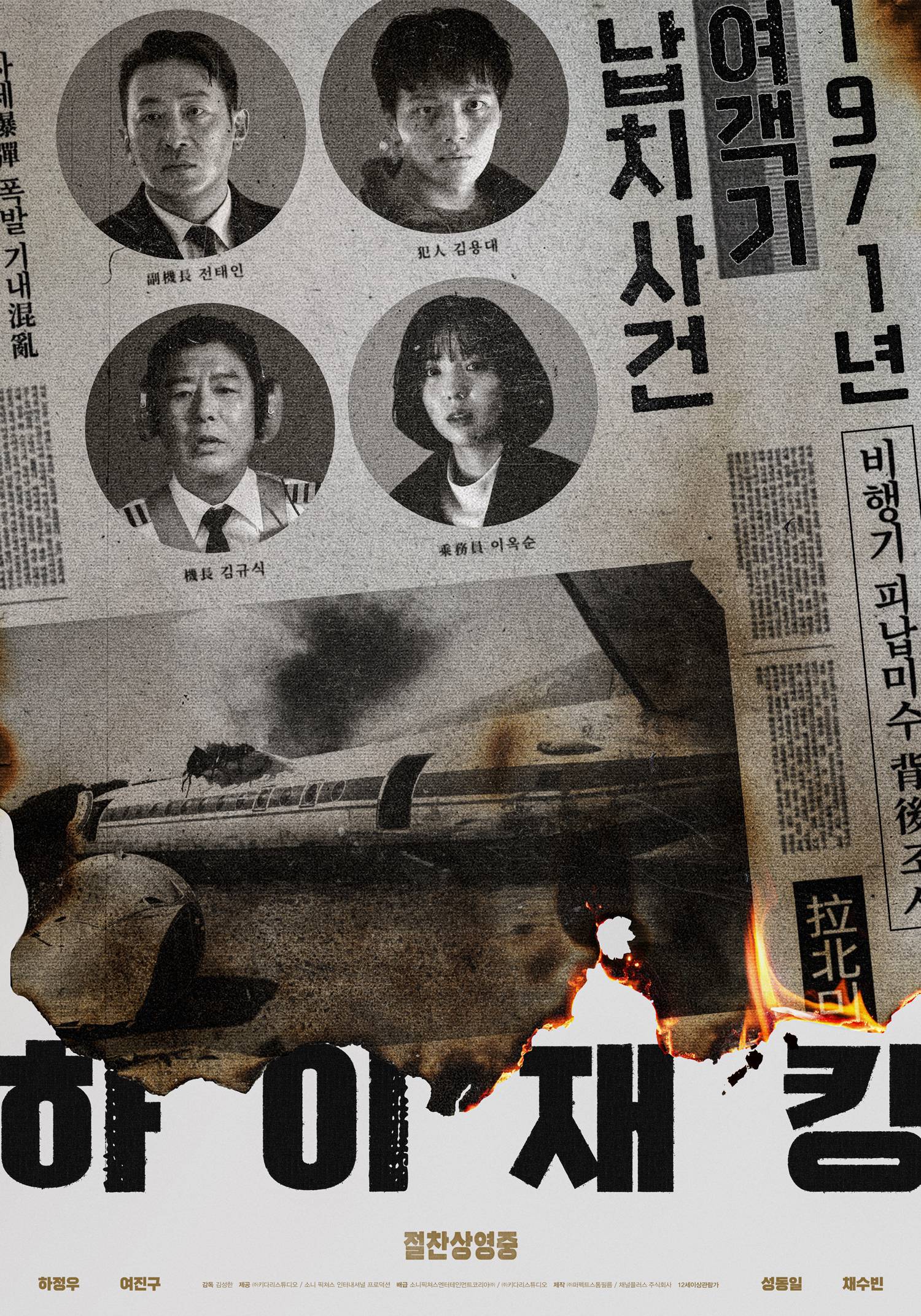
Newspaper-style Korean-language poster featuring a stock photo of a burning place and circular photos of the cast members in black and white.

When a passenger plane is hijacked and forced to fly to North Korea in 1969, the Korean Air Force pilot ordered to fire on it refuses. He recognises the pilot and realises there is something wrong. If there is a hijacker on board, he fears that that he may kill the pilot and crash the plane, killing everyone on board, and while his commanders remind him that the plane should be able to land on just one engine, he knows that if he hits the fuselage instead, the plane could blow up. Even if they land in North Korea, isn’t it better everyone survives?

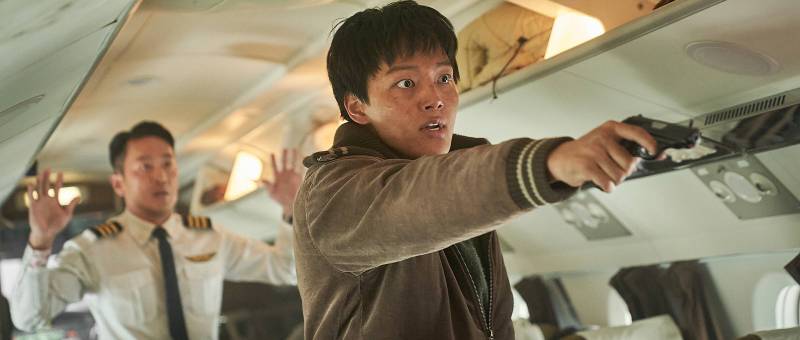
Not according to some in Kim Sung-han’s Hijack, 1971 (하이재킹, Hijacking), inspired by a real life incident. Tae-in (Ha Jung-woo) is summarily dismissed from the air force for his insubordination while otherwise ostracised as the man who allowed the plane to reach North Korea. As he predicted, most of the passengers are returned home shortly afterwards, but 11 never see the South again including his friend the pilot, Min-su (Choi Kwang-il). Meanwhile, Min-su’s wife (Kim Sun-young) continues to face harassment for supposedly being a communist sympathiser. Now working for a commercial airliner, Tae-in also faces discrimination from his new colleagues who, ironically, don’t trust him to properly protect passengers. All their assumptions are tested, however, when a young man sneaks a bomb on board and threatens them to fly to the North apparently inspired by the previous case in which the hijacker was given a hero’s welcome for successfully kidnapping so many useful people.

What’s immediately obvious is how easy it still was to get a bomb on a plane. Yong-dae (Yeo Jin-goo) simply packs them into some tin cans and wraps them up like a picnic. When boarding opens, the passengers literally sprint past each other to get the best seats because they weren’t yet reserved, and when we see a passenger start smoking, we assume the stewardess will tell him not to yet she simply points out the ash tray in the arm of the seat and asks him not to drop ash on the floor or woman sitting next to him. One woman also delays the flight because she’s brought a live chicken with her to make a soup for her daughter whom she’s travelling to see because she’s ill. Tae-in scores an early win and the goodwill of (most of) the passengers by defusing the chicken situation and allowing the woman to keep it on the condition she has it on her lap for the duration of the flight. 

Letting the old lady keep the chicken signals Tae-in’s consideration for his passengers’ welfare and happiness, while the air marshal becomes so preoccupied with this minor breach of the rules that he fails to notice the suspicious behaviour of the hijacker. The presence of the air marshal, a precaution taken after the previous incident, also proves counterproductive when he’s injured when the first bomb goes off, allowing Yong-dae to steal his gun. Granted, this is a fairly minor flight from a provincial airport to Seoul so maybe no one really thought there was much need for advanced security, but they really are woefully underprepared for this kind of incident, especially after the pilot is seriously injured and can’t see well enough to fly alone, meaning Tae-in also cannot do very much to respond to the hijacker’s threats. 

But what we come to realise is that it’s really society that’s been hijacked by the extreme prejudice directed towards “communists” and the North. The passengers from the first plane were returned, but spent time in interrogation to make sure they hadn’t been turned. A newlywed passenger also remarks that a fisherman friend of his was abducted and the police haven’t stopped hassling him about being a spy ever since he got back. Yeong-do’s motive is that he faced constant and unwarranted harassment, including being scalded with boiling water as a child, because his older brother defected to North Korea. His mother later died when he was carted off to prison for being a supposed sympathiser, while other passengers on the plane are similarly worried that their families will starve if they end up in North Korea or are detained when they return. 

A minor subplot, meanwhile, explores the prejudice faced by an older woman travelling to Seoul with her son, who has become a prosecutor. She is deaf and unable to speak, but her son tells her to stop signing because it’s embarrassing him after noticing disapproving looks from another woman in hanbok across the aisle. The old lady had also taken her shoes off after getting on the plane as if she were entering someone else’s home signalling both her politeness and lack of familiarity with modern customs. Her son had repeated the stewardess’ instructions to put them back on, but addresses her like stranger when telling her not to sign. In a way, this casual prejudice is the same and directed at someone simply for being different. Even so, there’s something quite tragic about her son being ordered to tear up the prosecutor ID card she was so proud of. Eventually she swallows it herself to make sure no trace of it remains, telling her son not to worry she will always protect him even in North Korea though he has not done very much to protect her here.

Tae-in later does something similar when he encourages Yong-dae that they should all go on living to ensure no one else endures the mistreatment he has and we don’t end up with any more incidents like this. Though his behaviour is increasingly deranged, it becomes easy to sympathise with Yong-dae for enduring so much suffering for something that was really nothing to do with him while we’re constantly reminded that if the plane lands in North Korea everyone on the plane and all their relatives will also suffer the same fate. At least facing this disaster together eventually forces the passengers to set aside their petty prejudices and pitch in to save the plane so they can get home to their families even if it’ll take them a bit longer to get to Seoul. Though the outcome is already known to the home audience, Kim Sung-han keeps the tension high and defines heroism largely as compassion and selflessness in Tae-in’s continued efforts to ensure the safety of his passengers rather than playing politics or allowing himself to be swayed by those who think landing in North Korea is a fate worse than death.


International trailer (English subtitles)
The Beetle Project (숙제, Jin Kwang-kyo, 2025)

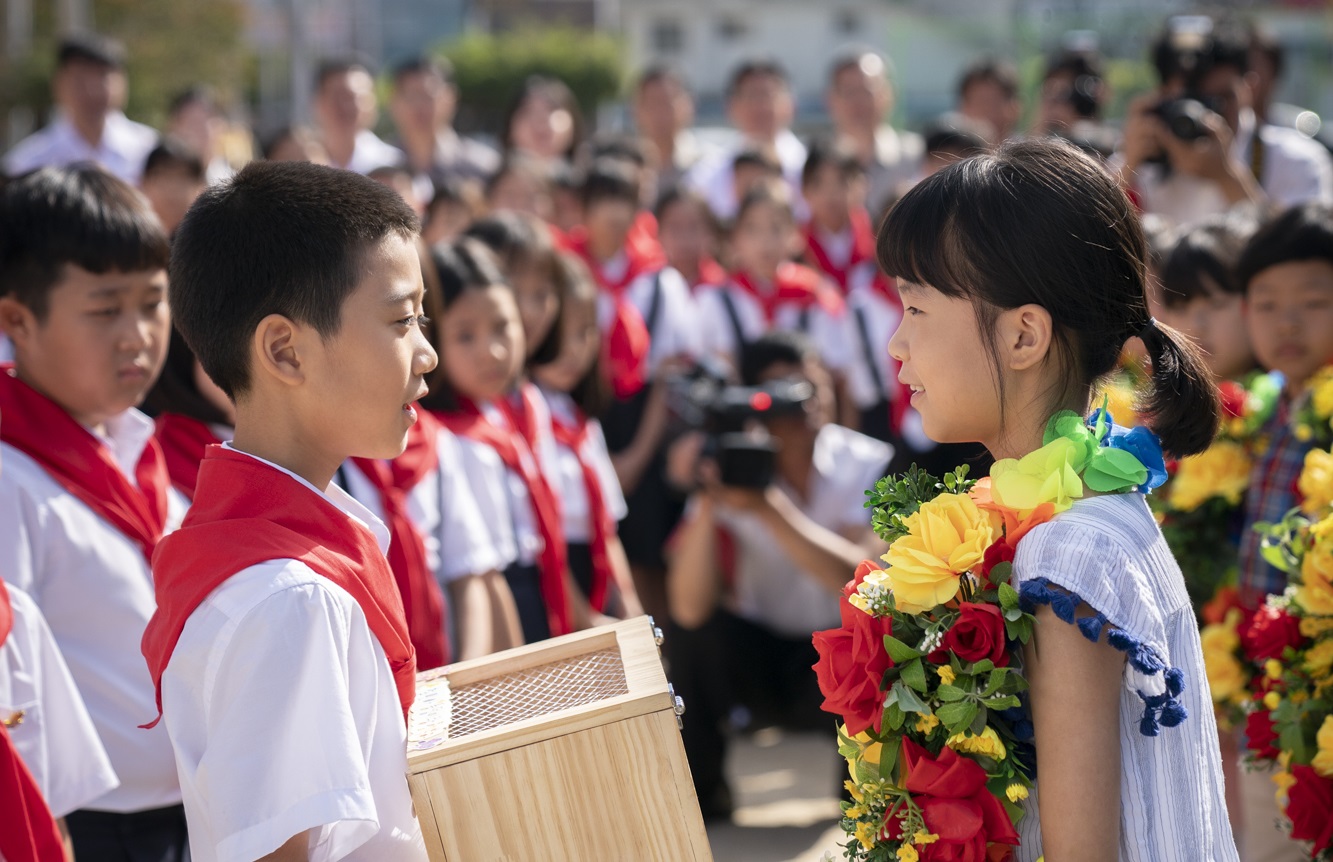
“Cousins should get along,” according to a North Korean soldier who’s just found out his son has been bullying his nephew, ironically by drawing a red line down the middle of their bedroom to make it clear that this interloper isn’t wanted in his territory. Red lines become a theme in Jim Kwang-kyo’s charming childhood drama The Beetle Project (숙제, Sugje) in which the pure-hearted goodness of a series of children knows no borders and sees only common ground between themselves and a North Korean boy who’s lost his pet beetle that he was keeping as a homework project.

Luckily, the beetle is discovered by best friends Ah-ram and Jae-hoon who decide to finish the boy’s homework for him in the hope that they will somehow be able to get the beetle back to him. Of course, that’s easier said than done given that Lee Chul-min lives in the North so it’s not like they can they just pay him a visit to give it back. The irony is that the beetle only came to them because of a flood that was partly caused by the North’s sudden opening of its floodgates prompting calls for greater co-operation across borders to prevent potential tragedies such as these. 

Meanwhile, we discover that Lee Chul-min is experiencing a degree of familial discord as his younger brother Chul-kyu is resentful of the fact he’s been sent to the city to study in a better school while he’s been kept at home and is forced to work in the fields with his mother. The film’s depiction of North Korea is largely utopian in which the repressiveness of the regime is barely felt aside from the occasional presence of soldiers and a degree of foreboding in the threat that the growing feud between the boys poses to a carefully balanced order. Chul-min’s cousin Chul-ju is also resentful that he now has to share everything including his room and has been bullying Chul-min because of it, though Chul-min is a stereotypically good boy who puts up with everything without making a fuss and makes sure to tell his mother what a good time he’s been having in the city where they get to eat ice cream every day when it’s hot.

Both sets of children deeply care about the fate of the beetle and what’s best for it, only to become a political football that’s picked up by a shady conglomerate Ah-ram’s journalist father Jin-kyu tried to expose for a food contamination scandal only to have to make a humiliating retraction on air when the station is ordered to back off. Hooked on the PR potential, they try to use the beetle, and Ah-ram, for their own ends, while the family simultaneously becomes the target of scammers promising they can help return the beetle for a small fee, and rightwing trolls who harass them for being North Korean collaborators. When one of the other kids damages the beetle’s enclosure. Ah-ram and Jae-hoon find themselves drawing another red line to keep them out only to later think better of it.

Disappointed by the adults around them, including Jin-kyu who is still struggling to deal with the death of his wife and his changed relationship with Ah-ram whom he sent to live with her grandmother in the country, the kids decide they want to send the beetle back by themselves and hand it straight to Chul-min. Jin-kyu ends up getting involved with an online insect enthusiast group who unbeknownst to him are all children and strangely led by a little girl who for some reason talks like a middle-aged farmer’s wife. In any case, it’s very much children doing it for themselves and realising that they have a lot in common despite the border between them. Ah-ram is worried that Chul-min will get into trouble for losing his homework and probably misses his beetle while she herself is also still processing her mother’s death for which she blames herself and adjusting to her new life in the country where she’s supported by her forthright schoolteacher who can’t resist resorting to colourful language whenever she encounters “injustice”. In its way, the beetle becomes a kind of symbol for Korea itself with the children promising to meet again as adults so they can find out what happened to it while wishing the best for “Beety” and vowing to look after it together. Charming and wholesome, the film is a gentle advocation for a spiritual, if not necessarily literal, reunification and a sense of solidarity among the younger generation dedicated to doing the right thing in a world in which adults call lies “flexibility” and think one beetle is no better than another.


The Beetle Project screened in Chicago as part of the 19th edition of Asian Pop-Up Cinema.

Revolver (리볼버, Oh Seung-uk, 2024)

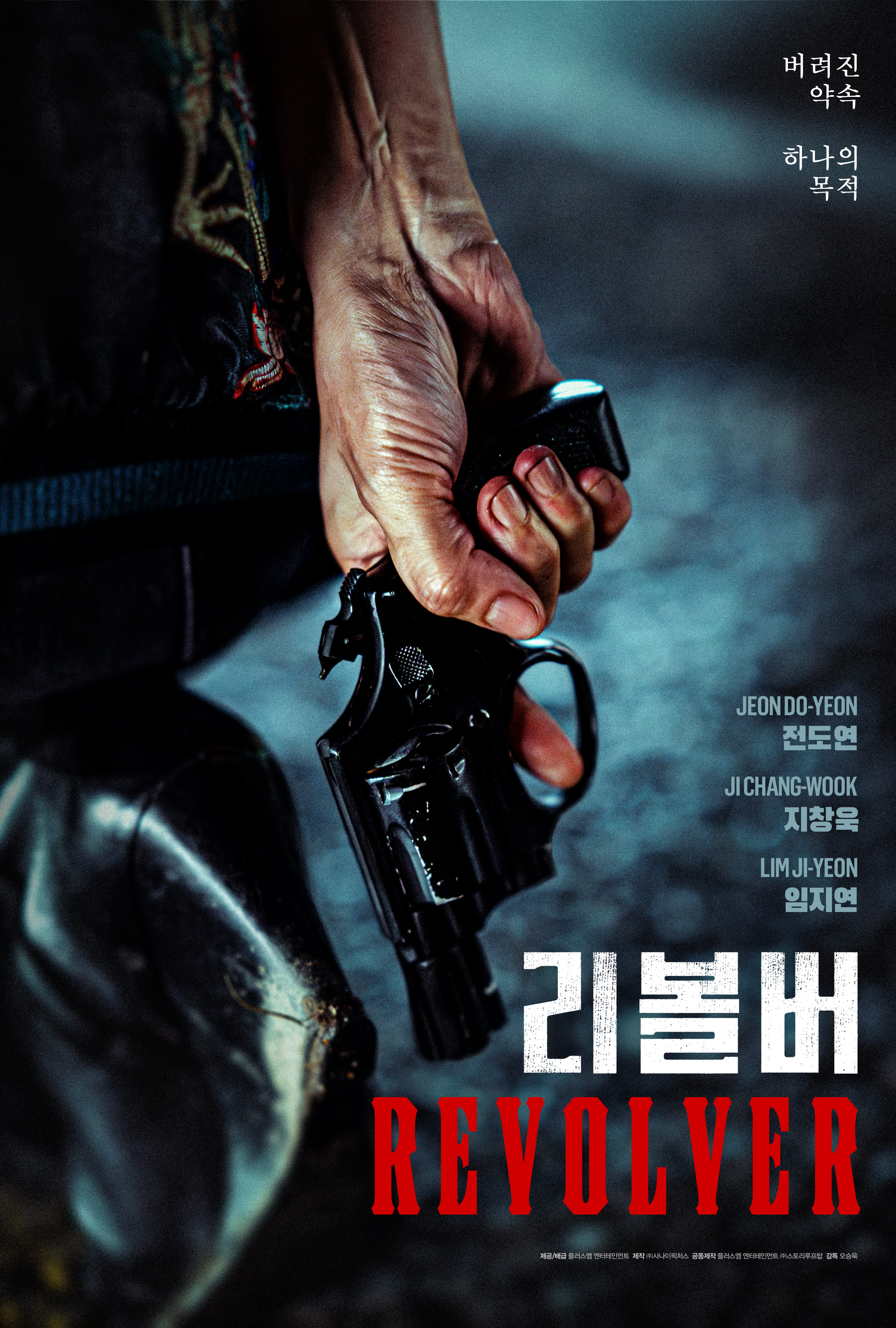
Everyone is always making promises to Su-yeong, but promises don’t count for very much in this world of infinite duplicity. Reuniting director Oh Seung-uk with The Shameless star Jeon Do-yeon, Revolver (리볼버) takes place in a world of corrupt cops and criminal gangs where no one can be trusted and every relationship is transactional. Like the barrel of a revolver, allegiances shift and rotate as Su-yeong attempts to navigate these turbulent waters while well aware that she is completely alone and has only her quest for vengeance and justice to sustain.

It’s by a broken promise that’s she’s been betrayed. After having become lowkey involved in police corruption to help her lover Captain Lim (Lee Jung-jae), former policewoman Su-yeong agreed to take the fall for the squad. They promised her that she’d only lose her job rather than go to prison and that she’d be allowed to keep the apartment she’d just bought, get a 700,000-dollar payout, and a new job working for Eastern Promises security division. Only in the police station does she realise she’s been tricked as they slap a drug trafficking charge on her and hand down a two-year sentence. Predictably, once she gets out, no one’s there to meet her except a gloating prosecutor and a random woman she’s never met before, Yoon-sun (Lim Ji-yeon), who says she was a friend of Lim’s. He’s since been found dead in a suspected suicide, though that matters less to Su-yeong than the fact he gifted her apartment to someone else and has since died in mysterious circumstances. 

The funny thing is that Yoon-sun, who is working both with corrupt cop Dong-ho (Kim Jun-han) and the gang led by Grace (Jeon Hye-jin), actually has some sympathy with Su-yeong and disproves of the way she’s been treated. After all, they could have just paid her her money like they said they would. Well used to navigating these waters, Yoon-sun appears to be playing her own game and keeping her options open yet it seems genuine when she tries to help Su-yeong which isn’t to say she wouldn’t betray her if she absolutely had to but right now she doesn’t. There is something quite poignant about the sense of female solidarity that arises between them, even though they are romantic rivals, as women who’ve both been let down by this patriarchal society. Su-yeong is rightly fed up with it and she’s going to get her money and her apartment no matter what if only to make sure they don’t win. Yoon-sun has chosen complicity as her chosen means of survival, but may be silently rooting for Su-yeon to break the both of them out of this repressive system.

To that extent it’s ironic that the former detective’s main weapon is a retractable baton, as if she were trying to enact justice though she herself is a compromised figure having at least been on the fringes of the corruption if perhaps not at the heart of it. Then again, all of the police appear to be corrupt so perhaps it’s more that she’s no better than the world that surrounds her and well aware that promises mean nothing and no one can be trusted. Lim seemingly broke a number of promises to her but may have tried to make it right in the end, while she’s also the victim of a vendetta by grudge-bearing cop Dong-ho (Kim Jun-han) whose romantic overtures she once turned down leaving him with a desire to destroy her completely. Top bad guy Andy (Andy) also appears to be a figure of compromised masculinity, playing the rabid dog but having no other backing than his ambiguous relationship with Grace who may have offed a female rival to solidify her grasp over the criminal enterprise. Violently beaten by Su-yeong, he too vows revenge to reclaim his masculinity but is ill equipped to achieve it. 

Despite being disregarded as not a proper detective, Su-yeong patiently follows all the clues and plays a long game to track down the source of all her misery while really her dreams had been small, owning a nice apartment and sharing it with Lim. On her release from prison, she tells the guard that her parents are dead and she has no friends or relatives signalling her aloneness in a vast world of betrayal but also her resilience and refusal to back down in her ironic fight for “justice” which is simply making sure those who’ve wronged her honour their promises and she gets what she’s owed. The occasional bouts of dark humour such as the absurdity of the final confrontation scene lend a touch of surreality to Oh’s purgatorial world of constant mistrust. “Live as if you were already dead,” a defeated Andy ineffectually screams as he vows vengeance and insists Su-yeong hasn’t heard the last of this. But Su-yeong has been living like she’s dead all along and now, finally, might be alive once again. 


Revolver is available digitally in the US courtesy of Well Go USA.

International trailer (English subtitles)
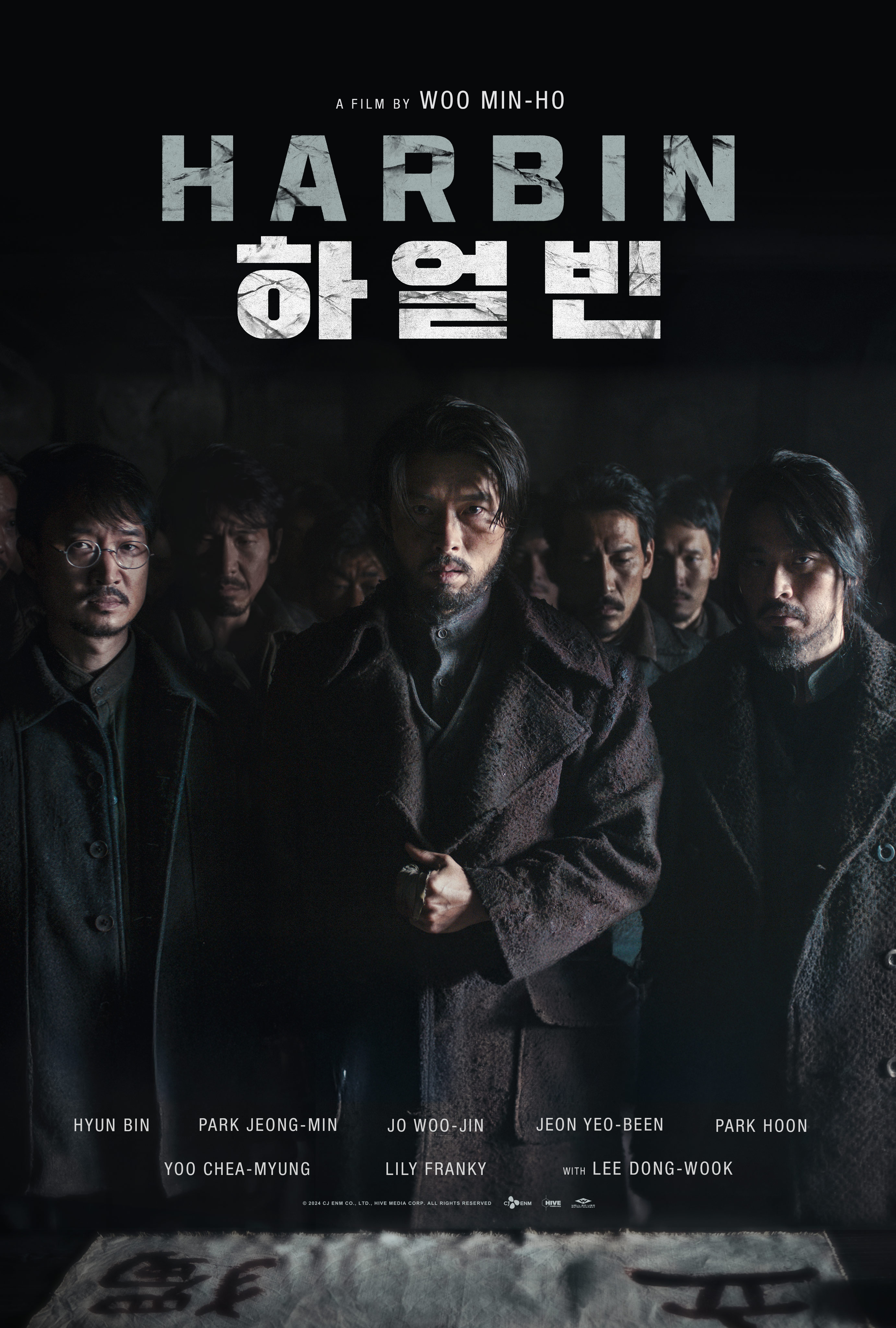
Harbin (하얼빈, Woo Min-ho, 2024)

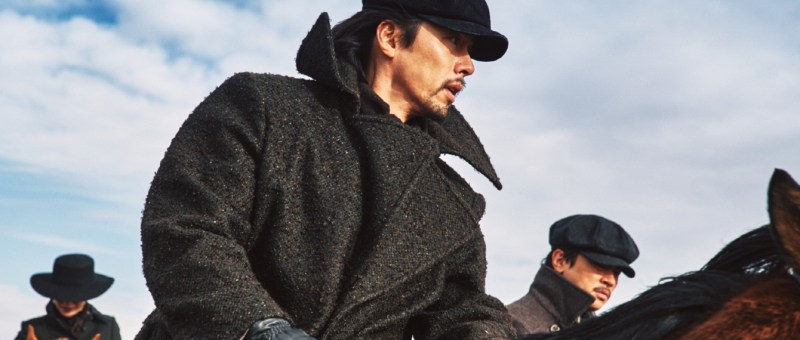
Ahn Jung-geun is one of the most well-known figures of modern Korean history and his story has indeed been dramatised several times before, but what’s unusual about Woo Min-ho’s espionage thriller Harbin (하얼빈) is the way it tries to sublimate Jung-geun the individual in favour of making him an emblem of the common man. As such, the film is more egalitarian than might be assumed and ultimately praises the integrity and resilience of the Korean people who save their country and their culture in a more spiritual than literal sense.

Indeed, Ito Hirobumi (played by Japanese actor Lily Franky), former prime minister of Japan and the first Resident General of Korea after it became a Japanese protectorate, remarks that he has always been sceptical of the annexation because though they have been ruled by “foolish kings and corrupt officials” the Korean people will continue to be a thorn in his side. Toyotomi Hideyoshi’s attempt to invade Korea was defeated by a volunteer army and a charismatic admiral, Yi Sun-sin. Then again, a Japanese soldier remarks that it will be difficult to find such a hero in the Korea of today, a pointed comment that implies Ahn Jung-geun is just such a hero through the film skirts around the fact his assassination of Ito did not in the end prevent Korea’s annexation which was completed in 1910, while the Independence Movement did not succeed in liberating in Korea which regained its independence when the Japanese Empire collapsed at the end of the war and even then was subjected to a period of occupation by US forces before its sovereignty was restored. 

What Jung-geun becomes is a kind of torch bearer for another Korea serving as a moral compass and preventing those around him from becoming just as bad as the Japanese whose cruelty they resist. As the film opens, Jung-geun’s comrades are awaiting his return after going missing following a disastrous encounter with Japanese forces. Despite having won the initial battle while heavily outnumbered, Jung-geun’s decision to release the Japanese commander, Mori (Park Hoon), as a prisoner of war results in a counterstrike in which his forces are all but wiped out. His comrades had been against the decision and now doubt his abilities and judgement along with a new suspicion that should he return he may have been captured and turned by the Japanese to spy on them. But Jung-geun’s decision signals his righteousness and refusal to give in to the cruelties of war. He releases Mori because it is the right thing to do. Executing prisoners of war is immoral by commonly held standards of war, and he pities Mori as a husband and father. He perhaps also hopes that it is a gesture of good will that shows him the Independence fighters are just and reasonable. 

But just and reasonable the Japanese are not, and so Mori betrays his trust. Deluded by the death cult of militarism, Mori is humiliated by Jung-geun’s magnanimity which is after all a show of power and that he has overturned the dynamics by granting Mori his life. Mori asks to die as as loyal soldier of Japan by committing ritual suicide but is denied in this both by Jung-geun who tells him he must live and by Chang-sup (Lee Dong-wook) who wants to execute him. This deep sense of humiliation and shame in remaining alive after defeat spurs Mori into a personal vendetta against Jung-geun to reclaim his honour and that of Japan which leaves him almost indifferent to Ito’s fate though nominally in charge of preventing his assassination at the hands of Jung-geun. Jung-geun is also trying to redeem himself for the loss of his men’s lives and has in a sense declared himself already dead in that he lives only for the souls of dead men and has embarked on what is in effect a suicide mission to kill “the old wolf” as a means of atonement and the eventual liberation of his country. 

But then his comrades are already weary and some are already beginning to ask themselves if it’s really worth it. How many more men will have to die before they win their freedom? Sang-hyun (Lee Dong-wook) laments that if the Japanese write their history, his name will be forgotten and he will have left no mark upon the world. They are grieving what they’ve lost in more personal terms aside from their lost nation. In order to get the dynamite to blow up Ito as a backup plan, the gang have to make contact with a former comrade who has since abandoned the cause to become a bandit (Jung Woo-sung). Having lost his eye and his brother, who was also the husband of another committed revolutionary Ms. Gong (Jeon Yeo-been), he decided it wasn’t worth it anymore and chose a different kind of freedom. “If we all die like dogs, no one will remember us,” Sang-hyun later laments. But Jung-geun, who will be remembered, is less concerned with his legacy insisting that even those who may have betrayed them should be given a second chance for they will eventually see the light. Like Ito, he believes in the Korean people and that they will come together to carry the light into the darkness. 

What he does is light the way, and as the closing scenes imply pass the torch to others who will each keep it alight until the dawn of liberation. Nevertheless, Jung-geun does have an unfortunate habit of getting those around him killed while the horror of the battle scenes, the grimness of decapitated and limbless bodies along with the constant sense of loss and defeat seem to imply that perhaps it isn’t worth fighting in this way lending further justification to Jung-geun’s conviction that taking out the leadership is the only way to turn the tide of this war of attrition. In sacrificing his own life, he becomes a kind of martyr, wearing traditional Korean white clothing as he goes to his death knowing that others will come after him. Rich with period detail and tense in its sense of intrigue, the film ultimately argues for a more compassionate sense of revolution governed by righteousness in opposition to the rather cynical justifications made by Ito for the cruelties of Japanese imperialism.


Harbin is released in the US on on 4K Ultra HD, Blu-ray™ and DVD courtesy of Well Go USA.

International trailer (English subtitles)
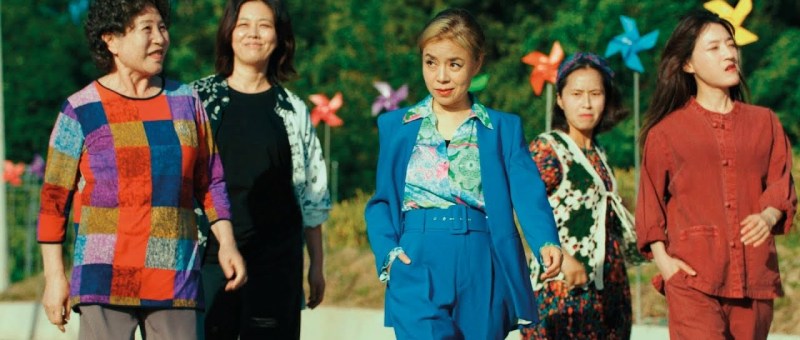
Manok (이반리 장만옥, Lee Yu-jin, 2025)

When Manok returns to her rural hometown in the wake of her mother’s death, the irony is that some accuse her of running away from the humiliation of the implosion of her life in Seoul, but in other ways she has unfinished business in Iban-ri and this time she isn’t going to let them drive her away. Lee Yu-jin’s warmhearted dramedy is at heart about a love of community, or rather communities that might not at first seem compatible or even mutually exclusive but are then integrated by the sheer force of Manok’s determination.

Now in her 50s, Manok (Yang Mal-bok) had owned a popular lesbian bar in Seoul and was at the forefront of queer activism in the city hosting the annual after party for the Pride parade for the last 20 years. But times have changed and the young queer community has begun to find new places to root itself while Manok struggles to adjust to the generational shift taking place. Finding out on the same day that her mother has died and her brothers don’t really want her at the funeral, she’s losing the parade after party and without it her bar will probably go out of business, and her long-term partner Geum-ja (Kim Jung-young) knew all along but didn’t say anything out of fear of her reaction, sends her into frenetic spiral in which she abruptly leaves town and decamps to the house her mother inexplicably left her back in Iban-ri.

Manok had left town to live a more authentic life having tried to accommodate herself to conventionality through marriage but finding it unbearable. She is not exactly welcomed back with open arms as her brothers repeatedly blame her for being a “nasty lesbian,” and using it as a justification for increasing their share of the inheritance to cut her out. Her ex-husband, meanwhile, has become the city chief and rules the local area with an iron hand while misusing his position to exploit the local community. Manok ends up coming to the rescue of his child, Jae-yeon, whose transgender identity he repeatedly rejects while Jae-yeon faces discrimination and harassment from his schoolmates.

Jae-yeon is in many ways the reason that Manok can’t simply leave again and try to reconstruct her life in Seoul because nothing’s really changed in Iban-ri and Jae-yeon is facing all the same problems she once did but without the well-earned armour the middle-aged Manok has managed to forge for herself that allows her to stare down injustice with a steely gaze. Then again, back in Seoul, younger members of the community had accused her of being self-aggrandising, that she was overfond of justifying her actions as being for their benefit when really she simply enjoyed the status of being a community leader. In Iban-ri, however, she gains some time to reflect and truly becomes a part of this community that she again wants to save, this time by challenging her ex to win the position of city chief herself and enact change through kindness and solidarity. While the young leave for the cities, many left behind are elderly and are in their way just as exiled as Manok with the city chief failing in his obligations to look after them.

Later Manok says that her ambition is to make Iban-ri a place where no one is lonely or feels the kind of isolation she once felt through being rejected by those around her because of her sexuality. As her ex pathetically tries to cling on to his patriarchal authority, Manok decides to do things the Iban-ri way by winning hearts and minds and eventually showing them that there’s nothing to fear as she too reoccupies her mother’s house with her partner in tow finally claiming her claiming her space in this place that had no place for her. As Geum-ja had said, Manok really does love her community and sets about making Iban-ri a happier and healthier town where people care for and about each other and no one is left behind. A warm and quirky exploration of small-town life and the power of authenticity the film’s infectious spirit is difficult to deny as the joy it finds in the queer identity even amid so much fear and hostility brokered by one woman’s determination not to back down because there are kids who need protecting in Iban-ri and they all they deserve a Manok in their lives.


Manok screened as part of this year’s BFI Flare.

Trailer (English subtitles)