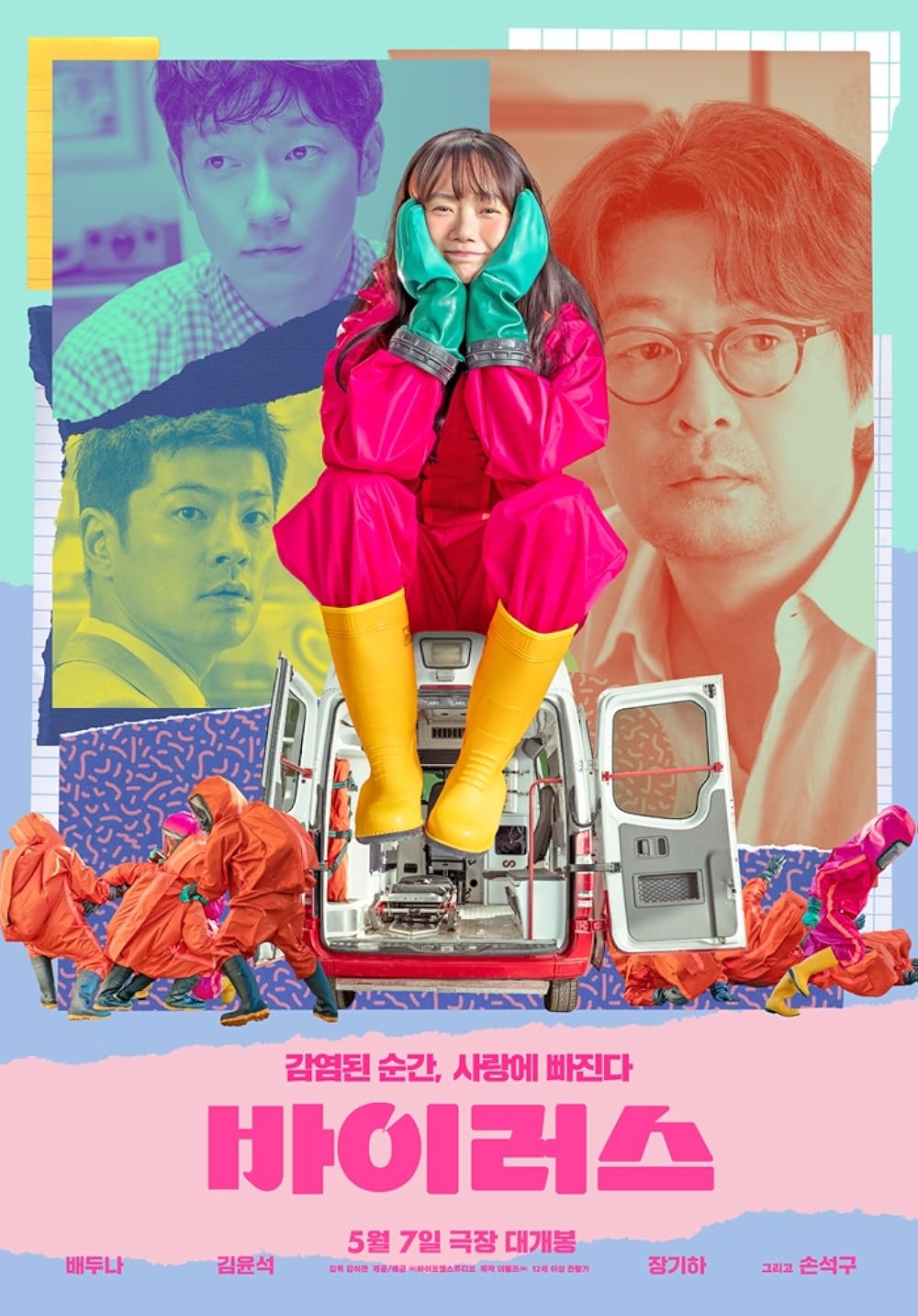
Virus (바이러스, Kang Yi-kwan, 2025)

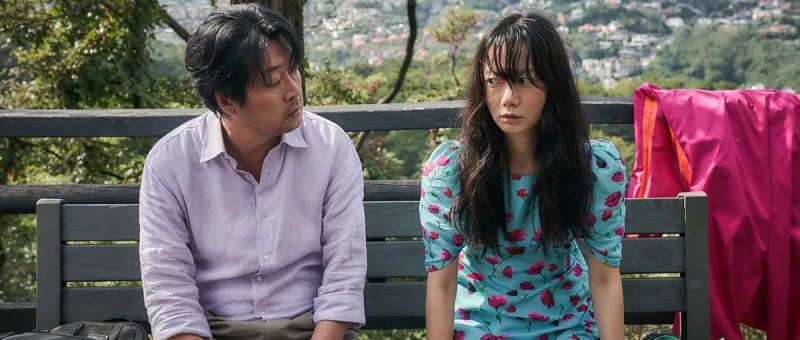
Falling in love is like catching a virus, according to lonely scientist Gyun (Kim Yoon-seok), but how can you know if your feelings are “real” or just part of a crazy fever dream you won’t even remember as soon as the infection leaves your system? “There are no fake feelings,” lovelorn translator Taek-seon (Bae Doona) counters, which is true, but sometimes people do things they don’t recognise or later understand because they weren’t in their right mind, whether because of the sickness called love or a more literal kind of contagion. 

Anyway, this particular virus makes people incredibly happy for the short period time before they die and was developed as part of a project to create an anti-depressant with no side effects. Taek-Seon gets infected after a disastrous date her sister forces her to go on with socially awkward scientist Su-pil (Son Suk-ku). Su-pil is overly attached to the mice in his lab and is still mourning the death of Masako who appeared to him in a dream and told him to make sure her death wasn’t in vain. In retrospect, perhaps these are symptoms of the infection bubbling away in his body as much as they are of his loneliness, but it’s understandable that Taek-seon wasn’t really considering seeing him again only she’s forced into it when her mother and sister invite Taek-seon over to her apartment as a kind of enforced date. The mother and sister’s insistence on Taek-seon meeting someone and getting married is itself a reflection of a patriarchal society in which being unattached is taboo, while Taek-seon’s sister snaps back that translators won’t be needed soon because of AI implying she should find a husband to support her financially.

But then again, though she might claim to be, it does seem that Taek-Seon isn’t all that happy with her life and later confesses to being “always depressed”. She rarely leaves her apartment and lives a dull and unstimulating existence. Infected with the virus, she suddenly becomes sunnier, more confident, and independent, while chasing romance by approaching a childhood crush she seemingly never had the courage to pursue before. Yeon-u (Chang Kiha) is now a car salesman, and Taek-seon now suddenly has the urge to buy a Mini though she’s never actually driven outside the test centre despite having a license. In one sense, yes, it’s Yeon-u she’s after but the car also represents her latent desires for freedom and a more active life. 

Nevertheless, the corrupting aspects of the virus are all too present as Taek-seon begins to act in ways she may be embarrassed by if she could remember them once she’s better. Her memories seem to have remade themselves more to her liking. She’s forgotten that Yeon-u wasn’t quite the hero she thought he was in her overly idealised vision of the innocent childhood sweetheart that she never had the courage to pursue. On the run from “evil” scientists from the lab where Su-pil worked, she starts to fall for Gyun, the expert that’s helping her, but who’s to say whether her feelings are just a product of the virus, an attachment born of their relationship as doctor and patient, or something deeper. 

For his part, Gyun starts to fall in love with her seemingly before he himself is infected while knowing that she likely won’t remember any of this once she’s been cured. He too is still dealing with the romantic fallout of an improperly ended relationship in which he apparently stepped back because one of his friends liked his girlfriend more. The now-divorced girlfriend seems resentful that he didn’t put up more of a fight for her, and perhaps it’s true that he’s just a romantic coward and it’s a combination of the virus, a sense of responsibility, and the fact that Taek-seon’s natural immunity could hold the key to unlocking his own research that pushes him to try so hard to find a cure for her.

But his research goals are at least altruistic in his desire to find a depression cure without side effects to help people like his brother who took his own life. Dr Seong’s (Moon Sung-keun) lab, however, is entirely focussed on profit and protecting its own reputation. They’re mostly interested in Taek-seon because of her usefulness to them and are prepared to endanger her life if necessary. Even Gyun admits he acted unethically in agreeing to bypass animal testing but otherwise draws the line at anything that puts lives additionally at risk. Taek-seon, meanwhile, later signs over her antibodies so they can be used for free worldwide for the good of all. Even after the fever has cooled, the virus does seem to have made her a happier, more outgoing person who has the courage to pursue her dreams rather than living in lonely defeat. Whether her feelings were ”real” or merely part of her “sickness” and if the distinction really matters either way is up for debate, but that’s not to say she might not catch the love bug again from a less compromised position and actively in the driving seat of her own life.


Trailer (Korean subtitles only)
Bear Man (웅남이, Park Sung-kwang, 2023)

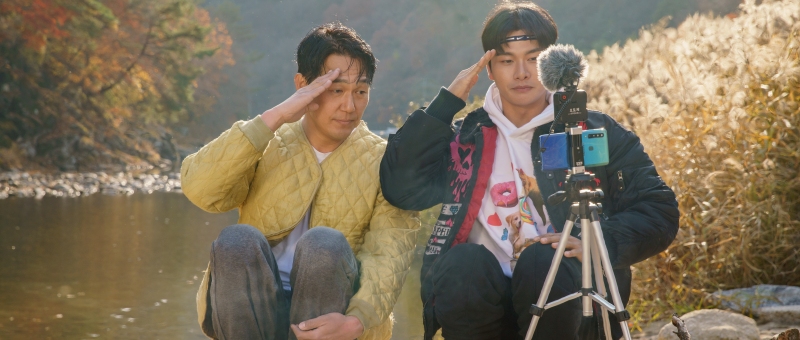
According to an ancient legend, bears who eat garlic and mugwort can become human though it’s not exactly clear why they’d want to. The debut film from Park Sung-kwang, Bear Man (웅남이, Woongnami) as its name suggests follows a pair of bear cubs who decide to give things a go in the human world but with wildly differing results as one is adopted by the researcher who allowed them to escape and the other by a vicious gangster who exploits him for his violent capabilities and shows him little love. 

Love is something Woongnam (Park Sung-woong) got a lot of thanks to his devoted mother and though not exactly the sharpest knife in the drawer had forged a promising career as a local policeman before he was let go after falling into a kind of funk on overhearing his father on the phone suggesting that the life expectancy for a regular bear is only 25 so he might not have much time left. Thanks to his nature as a bear man, Woongnam ages much faster than everyone else and already appears to be middle-aged though he is also blessed with immense strength and agility. After agreeing to bend the law by helping his feckless friend Malbong (Lee Yi-kyung) win in at illegal gambling Woognam comes to the attention of a group of police detectives investigating a shady gangster who notice a man looking just like Woongnam taking out a host of bad guys at the harbour. 

There is something quite poignant in the puppy-like existence of Woongbok (also Park Sung-woong) who keeps looking up to his boss as a father figure with a mixture of fear and longing. He gazes enviously at a family crossing the road in front of him and later visits Woognam’s home where Woongnam’s mother thinks that he’s Woognam and tries to feed him his favourite foods while he just looks on silently without expression. Where Woongnam is basically good, not too bright but heart in the right place, Woongbok has been raised as creature of violence by his intimidating father figure and carries a threatening aura with his slick haircut and tailored suit. 

The police want Woongnam to pose as Woongbok so they can take down the gangsters who have not only been trafficking drugs but also dabble in scientific research into viruses and their cures apparently about to unleash an epidemic in China to profit off the drug sales. It’s not all that clear what the scientists who released the bears were actually researching though there is a kind of parallel in the fact the other pair seemingly settled down, adjusted to their new environment and had a few cubs while Woongnam and Woongbok ended up becoming humans with bear-like abilities. Woongnam has to be prevented from entering hibernation and sleeps flat out like a bear but otherwise keeps his true nature secret even while covertly helping the townspeople out getting rid of beehives and freeing trucks stuck in the mud. 

That would be about the extent of “policing” in this kind of small-town where there’s nothing much to do but catch fish in the river and chat to wild boar. Park builds on the surreality of everyday rural life with mounting absurdities such as the parade of teenagers who troop through the convenience store where Woongnam’s live-streaming friend Malbong works each of whom he is largely able to unmask thanks to his keen sense of smell, and the polytunnel that doubles as a gambling den for down on their luck farmers. Woongnam’s biggest regret is losing his position as a police officer and it’s his desire to get it back to make things up to the people who raised him that encourages him to go along with the detectives’ crazy plan even if means he has to undergo weird martial arts training inspired by Drunken Master and take lessons from a strange movement coach in how to walk like a gangster. Yet in the end it’s Woongbok’s innocent desire for familial love that becomes a source of salvation, turning against his gangster brethren to protect the warmth of Woongnam’s family home. Quirky in the extreme and defiantly absurd, the film nevertheless has genuine heart in otherwise strange tale of wandering sons and bears of men.


Bear Man screened as part of this year’s New York Asian Film Festival

Images: © 2023 KIMCHI PICTURES PRODUCTION. ALL Rights Reserved.

A Bittersweet Life (달콤한 인생, Kim Jee-woon, 2005)

bitterweet life posterAs Boss Kang (Kim Young-chul) tells the hero of Kim Jee-woon’s A Bittersweet Life (달콤한 인생, Dalkomhan Insaeng), no matter how well things are going, it only takes one mistake to make it all float away. Like any good film noir, the forces which conspire to ruin the quiet, orderly life of cooler than thou gangster Sun-woo (Lee Byung-hun) are those of desire as they come in conflict with codes of loyalty and decency. Sun-woo, like many a lonely hitman before him, finally wakes up to the emptiness of his life only to find no point of escape except the one he has often provided for others in precisely the same situation.

Smartly suited, Sun-woo is the trusted manager of the casino bar, Dolce Vita. Taken away from his elegant dessert in the upstairs restaurant, Sun-woo deals with a group of rowdy customers in true gangster fashion by launching in with a series of jump kicks and quickly thrown punches that reveal just why it is Sun-woo rules the roost. Sun-woo’s boss, Kang, has a special mission for his most trusted minion – keep an eye on his much younger girlfriend, Hee-soo (Shin Min-a), while he travels to Shanghai for three days. Kang thinks Hee-soo is having an affair. If she is, Sun-woo’s options are either to call Kang right away or take affirmative action on his own initiative.

Sun-woo investigates, but much to his surprise finds himself taken with Hee-soo. She is indeed having an affair, something which Sun-woo tries to ignore but finally has to be dealt with. A sudden pang of sympathy stops him from contacting Kang or pulling the trigger. Instead he decides to let the pair go on the condition they never see each other again. Thinking it’s all behind him, Sun-woo tries to go back to his regular job but he’s still dealing with the fallout from playing whistleblower on a high ranking gangster’s son.

Kim opens with an arty black and white sequence of tree branches swaying. In the story offered in voice over a disciple asks whether it is the trees or the wind which are moving, but the master replies that is is neither – it is the heart and mind which move. Like the branches, Sun-woo’s heart has begun to stir. Not love exactly, or lust, but movement. Sun-woo gazes at the way Hee-soo’s hair brushes her shoulder, at the way she walks and smiles at him. Listening to her cello rehearsal, his own emotional symphony begins, dangerously unbalancing his previously one-note existence with its identical suits and minimalist apartments.

Yet if Sun-woo’s downfall is Hee-soo and her alluring vitality, it was Kang’s first. An ageing gangster, Kang feels foolish taking up with a young girl but just can’t help himself. He loves the way Hee-soo couldn’t care less about what other people think, but that also worries him because she’ll never care what he thinks. Kang’s childishly romantic gift of a kitschy lamp with two owls huddling together on the base is the perfect symbol of his misplaced hopes – oddly innocent yet ultimately redundant. Notably, the lamp is one of many things shattered when Sun-woo takes Hee-soo’s lover to task.

Realising he has been betrayed, though not quite for the reasons he thinks, Sun-woo vows revenge. Everything has gone wrong, and he no longer believes in any kind of future which has him in it. Pausing only to send a more mature romantic gift to Hee-soo, an elegant lamp she’d admired on one of their shopping trips, he marches off towards certain death no longer caring for own life in his quest for vengeance and retribution. Repeating Kang’s questions back to him, asking for the real reason any of this happened, doesn’t get him very far but even if these two men have shared the same folly, they fail to understand each other even in death.

Returning to the master and his pupil, the closing coda recounts another story in which the pupil wakes up from a dream, weeping. The master asks him if he’s had a nightmare but the pupil says no, he’s had the sweetest of dreams. He’s crying because he’s awake and knows his dream can never come true. Sun-woo too has woken up, he knows there’s nothing for him now except to accept his fate. He has but been asleep, dreaming a sweet dream, and now he must wake and taste life’s bitterness just as he prepares to leave it.


Screened at London Korean Film Festival 2017.

Original trailer (English subtitles)

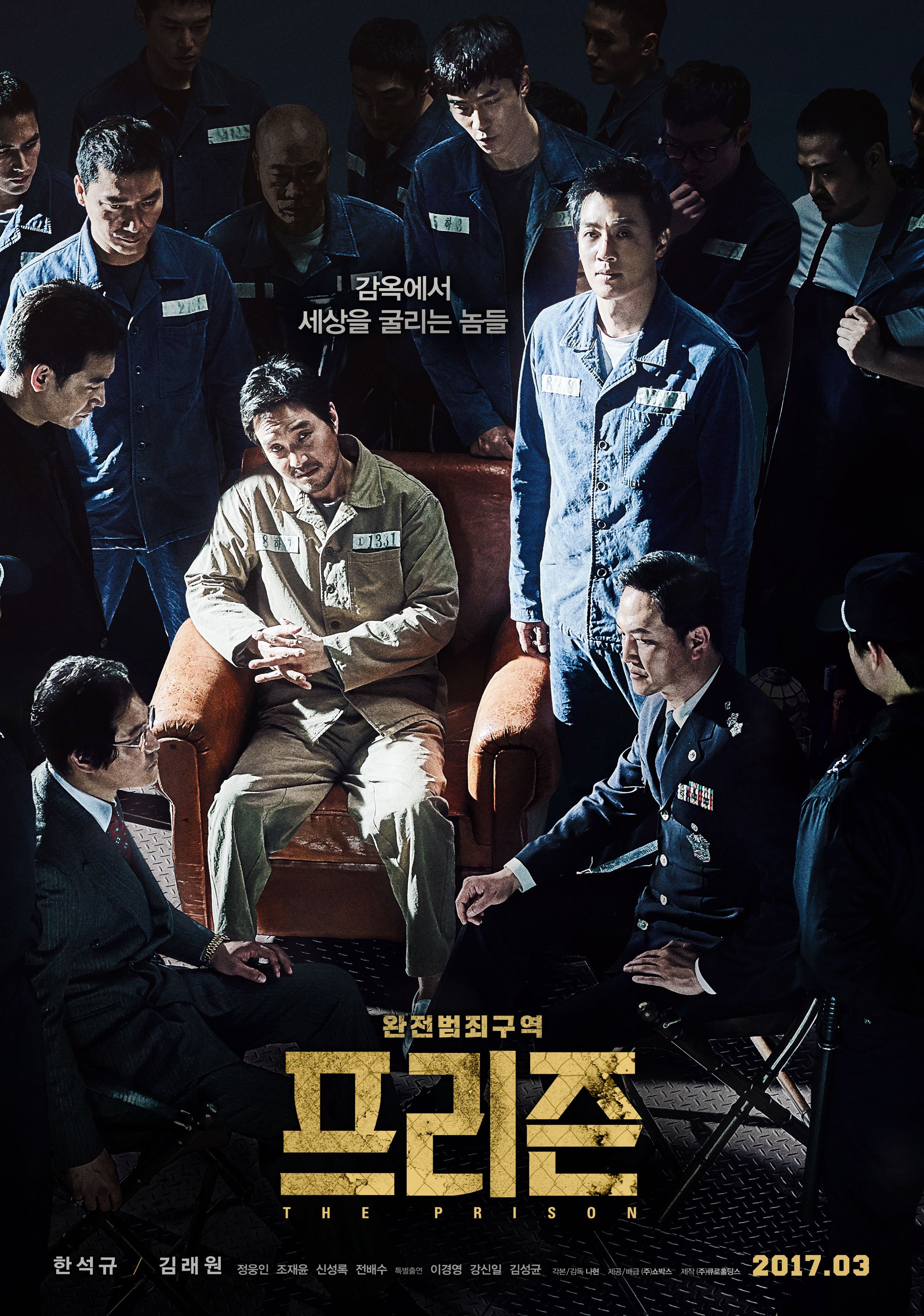
The Prison (프리즌, Na Hyun, 2017)

prison poster bigPrison can be a paradise if you’re doing it right, at least if you’re a top gangster in the movies. Na Hyun’s The Prison (프리즌) paints an interesting picture of incarceration and the way it links into his nation’s infinitely corrupt power structures. When investigators wonder why a crime spree suddenly came to an end, one of the frequently offered explanations is that the perpetrator was most likely arrested for another crime but what if you could turn this obviously solid alibi to your advantage and get those already behind bars to do your dirty work for you?
Disgraced policeman Song Yoo-gun (Kim Rae-Won) has wound up imprisoned alongside several of the men he himself helped put away. Like many cops who suddenly find themselves on the other side of the bars, Yoo-gun’s life is not easy. Badly beaten, tortured, and threatened with amputation Yoo-gun eventually starts fighting back and seizes the most likely path to prison survival – allying himself with the inside’s big guy, Jung Ik-ho (Han Suk-Kyu). Ik-ho, a notorious gangster famous for eating the eyeballs of his enemies, is the one who’s really in charge around here, not least because he’s the one running the gang of prison based hitmen trotted out to take care of the bad guys’ hit list.

What starts out as an intriguing idea quickly descends into predictability as Yoo-gun and Ik-ho face off against each other, finding common ground and camaraderie but ultimately existing on the plains of good and evil. Yoo-gun has his own reasons for landing himself in prison but his policeman’s heart still loves truth and justice even if he’s forced to become a prisoner whilst in prison. While he goes along with Ik-ho’s crimes, joining in the violence and intimidation he practices, he also wants to take Ik-ho down even if it means becoming him in the process.

While the interplay between the two men forms the central axis of the film as they develop an odd kind of grudging friendship which may still end on the point of a knife at any moment, Na tries his best to recreate the world of the grim ‘80s action thriller. Technically speaking, The Prison is set in the ‘90s (not that viewers outside of Korea would notice aside from the external lack of mobile phones, computers, internet etc) but wants to be the kind of tough, bruisy, fight heavy action movie they don’t make any more in which a righteous hero defeats a large-scale conspiracy by jump kicking hoodlums. He almost succeeds in this aim, but never quite manages to anchor the ongoing background conspiracy elements with the intense pugilism of the prison environment.

Yoo-gun and Ik-ho are obviously a special case but aside from their efforts, prison life in Korea is not too bad – the guards are OK, the warden is ineffectual, and the inmates are running the show. Nevertheless the prison is the centre of the conspiracy as elite bad guys take advantage of put upon poor ones who’ve found themselves thrown inside thanks to ongoing social inequality, trading cushy conditions to guys who’re never getting out in return for committing state sponsored crimes. Needless to say, someone is trying to expose the conspiracy which would be very bad news for everyone but rubbing them out might prove counter productive in the extreme.

Na lets the in-house shenanigans drag on far too long, pitching fight after fight but failing to make any of his punches land with the satisfaction they seem to expect. Flirting with the interplay between Yoo-gun and Ik-ho in wondering how far Yoo-gun is prepared to go or whether he is destined to become his criminal mentor rather than destroy him, Na never fully engages with the central idea preferring to focus on the action at the expense of character, psychology, or the corruption which underlines the rest of the film. Nevertheless The Prison does have the requisite levels of high-octane fights and impressive set pieces including the fiery if predictable prison riot finale. Life behind bars isn’t all it’s cracked up to be after all, the corrupt elites of Korea will have to actually pay people to off their enemies. Predictable and poorly paced, The Prison is best when it sticks to throwing punches but might be more fun if it placed them a little better.


The Prison was screened at the 19th Udine Far East Film Festival.

International trailer (English subtitles)

Gangnam Blues (강남 1970, Yoo Ha, 2015)

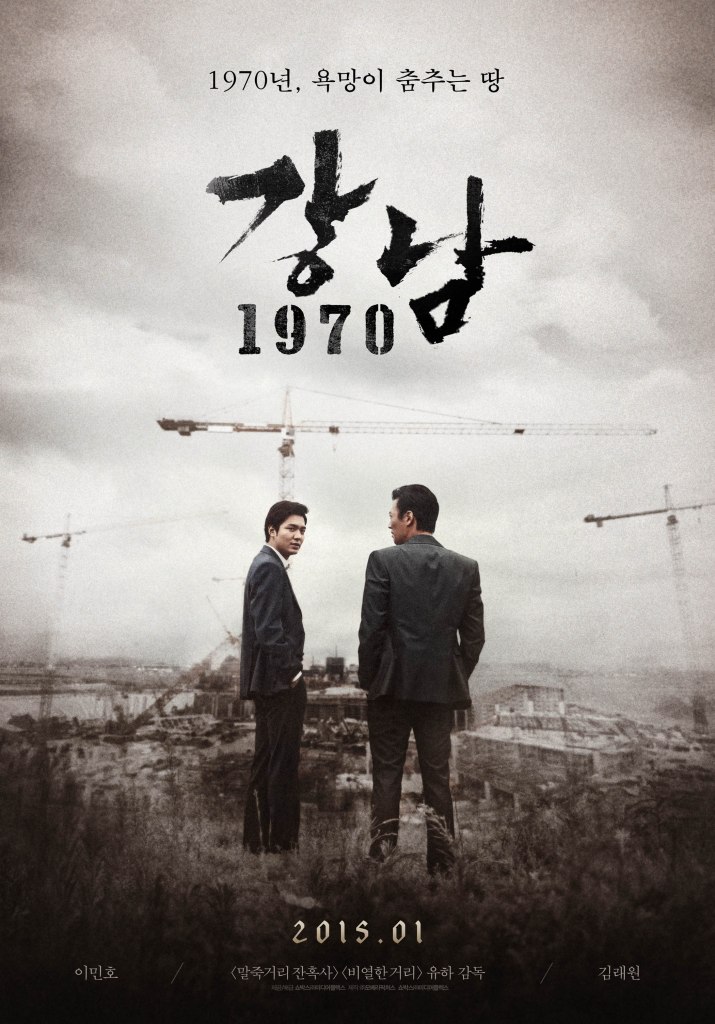
gangnam-bluesYoo ha takes us back to the 1970s for some Gangnam Blues (강남 1970, Gangnam 1970) in a sorry tale of fatherless men caught up in dangerous times of ambition and avarice, very much at the bottom of the heap and about to be eclipsed by the “new world” currently under construction. Back then, Gangnam really was all just fields, owned by farmers soon to be cheated out of their ancestral lands by enterprising gangsters engaged in a complicated series of land grab manoeuvres, anticipating the eventual expansion of the bursting at the seams capital. Far from the shining city of today, Gangnam was a wasteland frontier town, the sort of place where a man can make a name for himself trading on his wits and his fists alone.
In 1970, Jong-dae (Lee Min-ho) and Yong-ki (Kim Rae-won), sworn brothers from the same orphanage, are two street rats trying to survive in straightened times. When the shack they were squatting in is demolished and they come in to contact with a petty gangster, Kang (Jung Jin-young), the pair end up getting a one off job as thugs sent to smash up a political rally but get separated when the police arrive. Jong-dae finds himself taken in by Kang and his daughter Seon-hye (Kim Seol-hyun AKA Seolhyun) as a surrogate son and brother, repaying their affection by saving Kang’s life during an assassination attempt which later prompts his decision to retire from the criminal world altogether. Yong-ki joins the rival gang instead and seems to be making a success of himself but both find themselves at the mercy of an increasingly corrupt, dishonourable system hellbent on progress but only for the few.

Gangnam Blues has an overly complex, intricate narrative overlaying the generic brotherhood and betrayal theme that runs through the film. Dipping into a particularly dark period of history, Yoo is not afraid to step back into those difficult days marked by both rapid progress and increasing inequality furthered by complicated systems of interconnected corruption. The gangsters are at the service of the politicians but it’s always debatable who is running the show. Jong-dae’s participation in the land grab scheme is painted as amusing cleverness (at least at first) but little attention is paid to the farmers who are being “convinced” to sell their land off cheaply to gangsters who are each competing for the prime sections. Modern day Gangnam was built on blood and extortion, by men like Jong-dae and Yong-ki, even in the knowledge that they will be discarded as soon as their usefulness has been exhausted.

Jong-dae and Yong-ki are the bottom of the pile, orphaned and without family connections they have only each other to rely on yet their brotherly bond is repeatedly tested. The ‘70s Philippine folk song, Anak by Freddie Aguilar, which forms the film’s major musical motif has some very poignant lyrics about parents and their children but neither Jong-dae nor Yong-ki are able to find the kind of family they’re looking for. Both end up opting for the fraternal bond of a crime syndicate to replicate the kind of support usually offered by the family unit with Jong-dae finding a father figure in Kang who eventually takes him into his household as a son outside of the criminal world, and Yong-ki eventually marrying and soon to become a father himself. Forced into crime by their poverty, each becomes an outcast, permanently shut out from the thing they most want even whilst living a life of material comfort.

Yoo opts for a highly stylised approach filled with beautifully photographed, expertly choreographed scenes of violence including the traditional mass brawl in the rain, and a sequence of intercut killings each artfully sprayed with blood. Lee Min-ho acquits himself well enough in his first leading role as the noble hearted gangster Jong-dae with quality support from Kim Rae-won as the much less noble Yong-ki though the superfluity of secondary characters leads to an avoidable lack of depth. Relative newcomer Kim Seoul-hyun also does well with her underwritten role of the film’s most tragic character even if her domestic violence themed subplot seems like one too many. Another classic slice of gangster action from Korea, Gangnam Blues is an unflinching look back at a difficult era with uncanny echoes of the present day, and a suitably period tinged tale of melancholy ‘70s bleakness in which brotherhood and honour are merely words misused by men trying to justify their own ambitions.


International trailer (English subtitles)

Freddie Aguilar’s Anak as featured in the film:

The Age of Shadows (밀정, Kim Jee-woon, 2016)

age-of-shadowsWhen the country of your birth has been occupied by another nation, what do you do? Do you fight back, insist on your independence and expel the tyrants, or quickly bow to your new overlords and resign yourself to no longer being what you once were? Kim Jee-woon becomes the latest director to take a look at Korea’s colonial past with the Resistance based thriller Age of Shadows (밀정, Miljung) which owes more than a little to Melville’s similarly titled Army of Shadows, as well as classic cold war spy dramas The Third Man and The Spy Who Came in From the Cold.

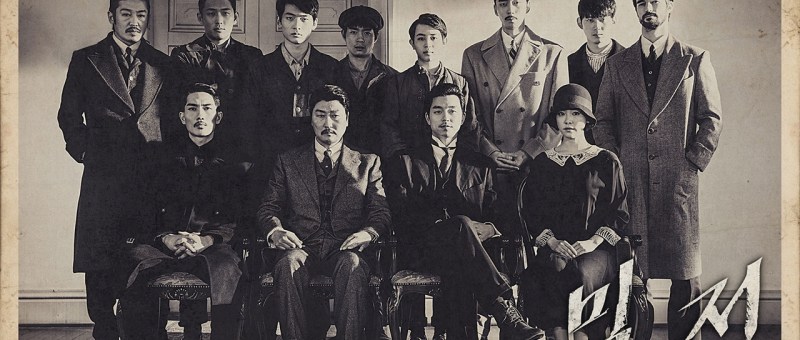
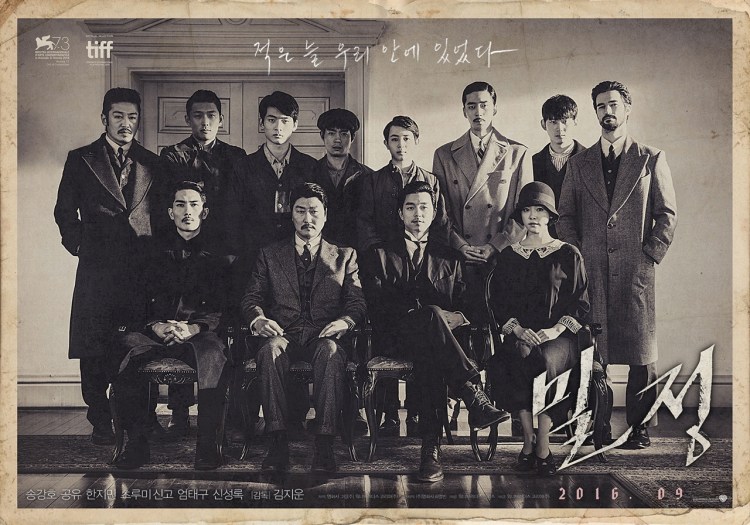
The film opens with an impressive set piece in which two Resistance members, Jang-ok (Park Hee-soon), and Joo (Seo Young-joo) are betrayed whilst trying to sell a Buddhist statue. Joo is captured but Jang-ok makes a run for it as what looks like the entire Japanese garrison of Seoul chases him, running gallantly over the picturesque Korean rooftops. Cornered, Jang-ok is confronted by Korean born Japanese policeman Jung-chool (Song Kang-ho), once a Resistance member himself and a former comrade in arms of Jang-ok. This is the point Jung-chool’s carefully crafted collaboration beings to fracture – his friend, rather than allow himelf to be captured, shouts “Long Live Korea” and blows his own brains out.

His mission a failure, Jung-chool is then moved onto the next investigation which aims to dig out the Resistance top brass in the city. Jung-chool’s Japanese boss Higashi (Shingo Tsurumi) wants him to infiltrate the cell headed by antique dealer and photographer Woo-jin (Gong Yoo) in the hope that it will lead them to head honcho, Jung (Lee Byung-hun). However, Higashi also saddles him with a very young but high ranking Japanese official, Hashimoto (Um Tae-goo), to “help” him bring in Woo-jin.

In Jung-chool’s final conversation with Jang-ok, his friend berates him for the decision to turn traitor and work for the Japanese rather than against them. Jung-chool asks him if he thinks independence is a credible aim, implying he’s long since given up believing in the idea of the Japanese ever being overthrown. Jang-ok evidently believed in it enough to sacrifice his own life, but other comrades have also abanoned the cause and actively betrayed the movement in much more serious ways than Jung-chool’s pragmatic side swapping.

Even if Jung-chool has decided that if you can’t beat the Japanese you may as well join them, he’s coming to the realisation that his superiors, even if they’ve previously treated him warmly, will never regard him as equal to the Japanese personnel. Hashimoto’s sudden arrival undercuts Jung-Chool’s career progress and reminds him that he serves a very distinct purpose which may soon run out of currency. Higashi, having seduced Jung-chool with promises of a comfortable life and praise for his skills, does not trust his Korean underling enough to send him out on his own. This personal wound may do more to send him reeling back to the other side than anything else, especially as his “replacement” Hashimoto is a crazy eyed psychopath who has half a mind to burn the entire city just to be sure of getting his man.

A man who’s been turned once can be turned again and so mastermind Jung decides to prod Jung-chool in the hope that he’ll become an asset rather than a threat. As he puts it, what’s more frightening than feeling your heart move and Jung-chool’s certainty has already been shaken. Song Kang-ho perfectly inhabits Jung-chool’s conflicted soul as his old patriotic feelings start to surface just as he begins to truly see his masters for what they are. Always keeping his intentions unclear, Jung-chool is the ideal double agent, playing both sides or maybe neither with no clear affiliation.

Like Army of Shadows, the final nail in the coffin is delivered by a sentimental photograph. In this chaotic world of betrayals and counter betrayals, there can be no room for love or compassion other than loyalty to one’s comrades and to the movement. Yet against the odds Woo-jin comes to trust Jung-chool implicitly, certain that he will finally choose the side of freedom rather than that of the oppressor. The relationship between the two men provides the only real moments of comic relief, though others members of the group are less well defined including an underwritten part for Woo-jin’s Chinese love interest (Han Ji-min) who isn’t permitted to do very much other than model some elegant twenties outfits.

Maintaining tension throughout, Kim intersperses psychological drama as betrayal piles on betrayal, with intense action sequences including a particularly claustrophobic train based game of hide and seek. Inspired by real historical events, Kim does not claim any level of authenticity but sets out to tell the story of the double dealing inside a man’s heart as he weighs up duty and self interest and asks himself how far he’s willing to go for the sake of either. The age of “shadows” indeed, these are hollow men whose identities have been eroded, living only for today but in certainty of the bright tomorrow. Kim’s examination of this turbulent period is both a big budget prestige picture with striking production values, and a tense, noir-inflected thriller in the mould of Melville, but also a nuanced human drama unafraid to ask the difficult questions which lie at the heart of every spy story.


Reviewed at the 2016 London East Asia Film Festival.

Original trailer (English subtitles)