The Scoop! (新米記者トロッ子 私がやらねば誰がやる!, Keiichi Kobayashi, 2024)

The print media industry in Japan has often come in for criticism because of its perceived toothlessness in which it is often afraid of speaking truth to power lest it lose its access. Of course, as we’ve seen all too well just recently, that’s not a problem limited to Japan, but it’s something that’s preoccupied the students at the centre of Keiichi Kobayashi’s teen drama The Scoop! (新米記者トロッ子 私がやらねば誰がやる!, Shinmai Kisha Torokko: Watashi ga Yaraneba Dareka ga Yaru) whose unofficial newspaper club is threatened by the school because of its tendency to expose scandal and oppose the elitism which has otherwise taken over the institution.

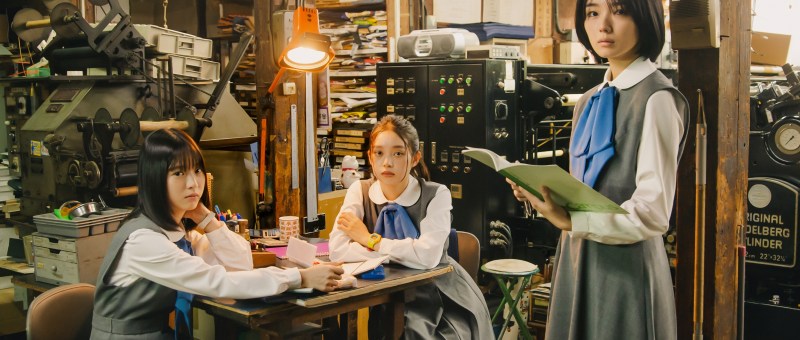
Yui (Karin Fujiyoshi) only enrolled here because of the famous literature club and the possibility of meeting her idol, Konoha Midorimachi, the winner of a prestigious student writing competition. But as she quickly finds out, the Literature Club is pretty high up in the school hierarchy and only really open to those in the “advanced” class. All of its members wear red scarves to distinguish them from the other students who wear blue. You have to take a test to get in, but Yui’s dreams end before they’ve even started when she’s hit by a rogue drone and knocked out. They won’t let her retake the test because they say it would be unfair to the other students, but the club president, Mari (Rinka Kumada), has another proposition for her. It turns out that Konoha Midorimachi isn’t a member after all but a mysterious person using a pen name. Mari wants to know who it is too so she suggests they team up to find out. Following a lead to the unofficial Newspaper Club, Mari advises Yui to sign up there and win their trust to find out Konoha’s true identity on the promise of being admitted to the Literature Club once she’s solved the mystery.

Yui isn’t really happy with this plan in part because the Newspaper Club has a bad reputation for being a bunch of cranks and nerds. The Newspaper Club isn’t really all that keen on talking about Konoha either but is glad to have Yui on board while she also begins to embrace the opportunity to hone a different side to her writing skills. While there, she’s confused by the tactics employed the editor, Kasane (Akari Takaishi), whom she describes as more like a con-artist than a journalist as she employs some unorthodox methods to get to the truth, but also wakes up to the myriad problems at the school and comes to understand that the newspaper is necessary for exposing them. 

This does not, however, endear them to the headmaster, Numahara (Masahiro Takashima), who is a fascistic elitist intent on ruling the school with an iron fist. Backed into a corner, he agrees to make the Newspaper Club “official” with funding from the school but only as a gambit to control it. If Kasane accepts his offer, they will have to abide by his rules which means puff pieces and propaganda only. “Submit to me,” he snarls, inappropriately pinning the teenage Kasane to a wall while making her an ultimatum to join his side or get the hell out. “Women should be compliant,” he advises shortly before Kasane socks him on the jaw. What happens after that is a neutering of the paper while Numahara strengthens the elitism of the school by deepening the privileges held by the so-called “advanced” class represented by the Literature Club. 

The Japanese title of the film is the more evocative “Rookie Reporter “Trolley”: If I don’t do it, who will?” As Kasane had said to Numahara, silence changes nothing. Kasane later claims that she started the Newspaper Club because she lost faith in the power of fiction, but also wanted to bring about real change and expose Numahara’s corruption. Though their paper is suppressed, they do eventually manage to bring about something like a more egalitarian revolution and expose Numahara for what he really is by using the same tactics he used against them. In some ways, it’s an allegory for the wider society and an advocation for the power of journalism to bring about real change by refusing to shrink from the truth or be cowed by those in power, as much it is a coming-of-age tale in which the heroine learns that things aren’t always what they seem and a club that’s founded on the principle of excluding others isn’t one you want to join.


The Scoop! screens as part of this year’s Japan Foundation Touring Film Programme.

Trailer (English subtitles)

Tea Friends (茶飲友達, Bunji Sotoyama, 2023)

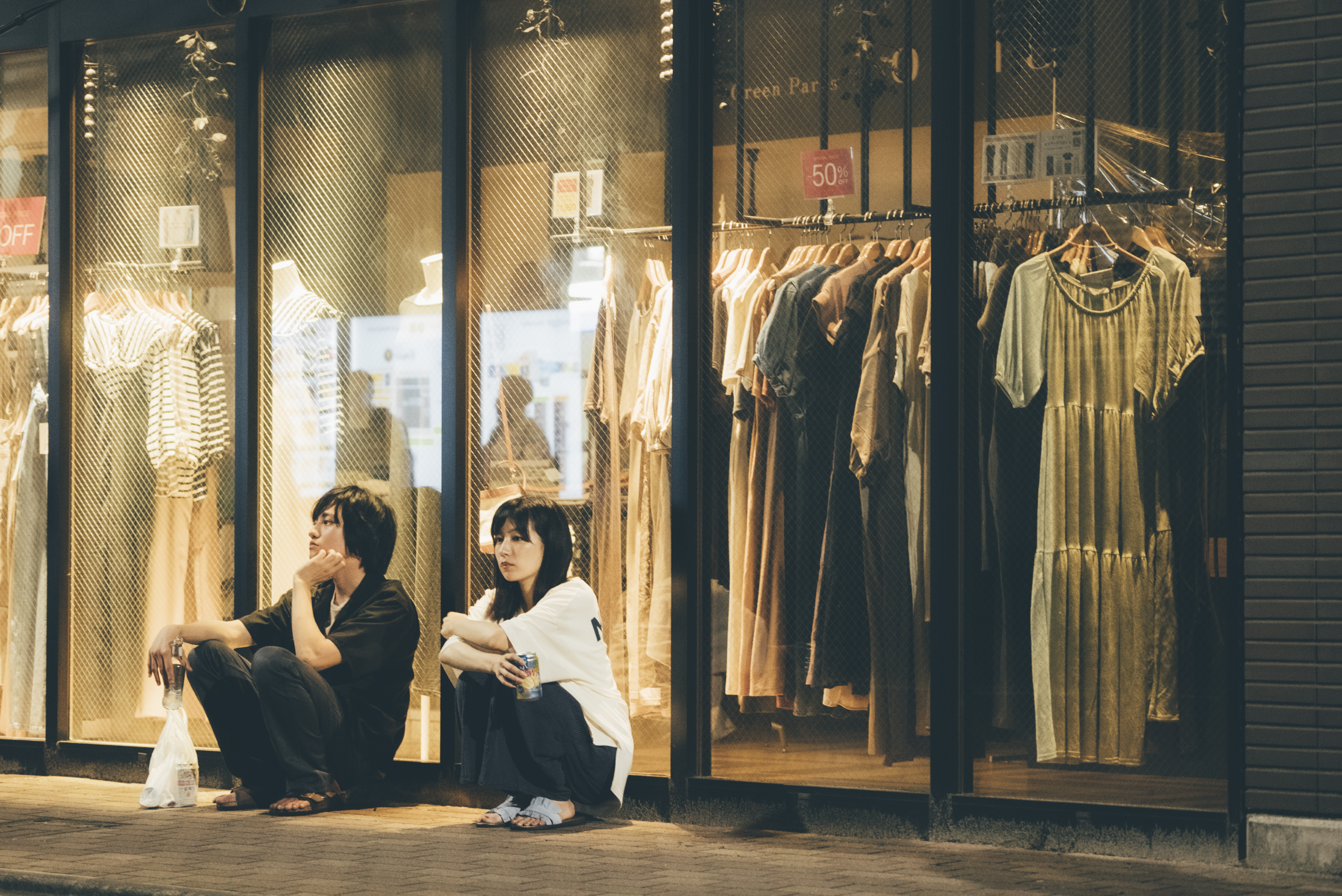
Japan’s rapidly ageing society has provoked an epidemic of loneliness but also perhaps new business opportunities in Bunji Sotoyama’s empathetic social drama Tea Friends (茶飲友達, Chanomi Tomodachi). The phrase may sound innocuous enough, but given some potentially outdated cultural connotations the men who spot the advert cunningly placed in a newspaper to catch the eyes of older readers may have reason to assume that it’s more than just tea and chat on offer. Though as it turns out, it’s not just the old who are lonely as a younger generation in turn often in conflict with their parents also attempt to seek security and comfort in found family.

That said, there’s something a little cult-like about the way that Mana (Rei Okamoto), a former sex worker, talks about her organisation which aims to cure late life loneliness through what others might describe as an elderly sex ring. Employing a collection of older women, she accompanies them to meet new clients where they silently slide viagra over the table. The gentleman caller subscribes to a plan to purchase “tea” and anything that happens inside the hotel room they subsequently go to is just “free love” rather than “prostitution”. Mana sees herself as running a “community safety net” and helping elderly people who might otherwise have become isolated and depressed keep active as part of one big happy family along with the other members of staff who have, like her, become estranged from their parents and relatives. 

For Yoshiki, one of the men who escorts the ladies around, it’s that he views his father as a failure for leaving a well-paid corporate job to open a bakery which subsequently went bankrupt and has led to him living in his car. He thinks that in the end it’s better not to try at all than be left with the humiliation of things not working out. But then for Mana herself it’s more a sense of parental rejection. After a difficult childhood, her now terminally ill mother continues to reject her on the grounds of her history of sex work while she continues to crave the unconditional love of a family. Like a mother hen, she nestles those around her into the Tea Friends organisation which operates out of her own home and strives to create a place where everyone can feel they belong. 

Which is all to say she’s the loneliest one of all, but as someone else later cautions her you can’t cure your own loneliness with the loneliness of others. What she sees as a social enterprise others may see as a deliberate attempt to take advantage of vulnerable people who have admittedly been let down by an indifferent society and are in need of the money even more so than comfort or validation. At the other end of the spectrum, a young woman working at Tea Friends discovers that she is pregnant but her boyfriend immediately rejects her, insisting that he refuses to take responsibility and revealing that he is already married. Chika wants to have her baby, but everyone seems to be telling her that she shouldn’t. The doctors seem to look down on her after realising she isn’t married and the father most likely not in the picture, while an attempt to inquire about benefits at the town hall leads only to judgement as the clerk pithily tells her that they’re there for when you need them but she shouldn’t “depend” on them too much virtually calling her a scrounger and implying she’s been irresponsible in becoming a single mother. 

As another of the older women admits, being used was better than being ignored and at least being part of Tea Friends gave her a sense of purpose and acceptance if only for a time. In any case, Mana’s attempt to find unconditional love from her new “family” largely flounders as even those she’d come to believe herself close to desert her when the threat of legal proceedings enters the picture leaving her to face the music alone while she continues to protect them insisting that they’ve done nothing wrong even if it it was technically against the law. An old man’s devastation on picking up the phone and getting no answer suggests that Mana might have had a point when she said it was a social service seeing as no one else seems keen to tackle the problem of late life loneliness even if she did go about it in a problematic way. As Mana often says, righteousness does not equal happiness and it is often outdated social brainwashing that keeps people unhappy and not least herself as she struggles to find the unconditional love lacking in her life that would enable her to cure her own loneliness even in the prime of her youth.


Tea Friends screened as part of this year’s Camera Japan.

Original trailer (English subtitles)

Grown-ups (わたし達はおとな, Takuya Kato, 2022)

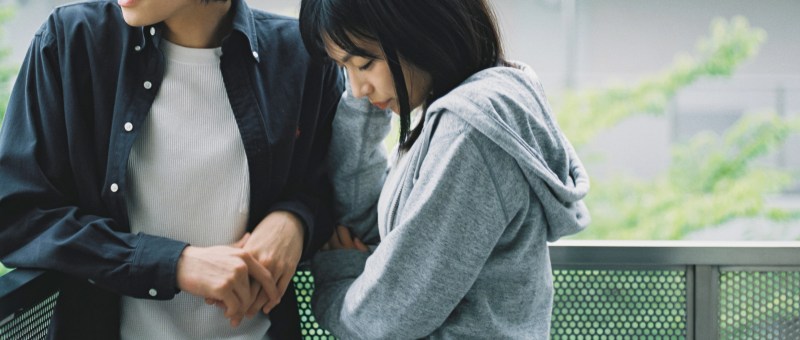
“You’re a grown-up. If something’s wrong you gotta handle it” the passive aggressively condescending hero of Takuya Kato’s Grown-ups (わたし達はおとな, Watashitachi wa Otona) chastises, but what even really is being “grown-up” when you find yourself in a situation which is emotionally difficult and will define the future course of your life. Shot in a claustrophobic 4:3 and told in a non-linear fashion, Kato’s intense drama lays bare the inequalities of a patriarchal society in which in a sense there are no real grown-ups because no one is ever comfortable enough with anyone else to be able to speak their real feelings honestly. 

This becomes a particular problem for college student Yumi (Mai Kiryu) who discovers that she is pregnant but is uncertain as to who the father might be having had a one night stand during the time her live-in boyfriend Naoya (Kisetsu Fujiwara) had broken up with her. Yumi immediately tells Naoya that there’s a chance the baby isn’t his, but remains otherwise reticent unwilling to talk about what might have happened while filled with an internal panic. Naoya thinks he’s being grown-up about the situation by deciding to accept responsibility given the probability that he is the father but despite pledging that he would accept the baby even if it turned out he wasn’t can’t stop trying to pressure Yumi into a DNA test for peace of mind. 

The irony is that even Naoya, who was Yumi’s first sexual partner, refused to wear a condom and joked about contraception before making her go on the pill when he moved in with her. Later we learn that the one night stand violated her consent by again refusing to wear a condom and ignoring her objections, later joking about it that the chances of conception are incredibly small while making it clear that men in general don’t consider pregnancy as something that happens to them and because, as one of Yumi’s friends puts it, they only chase “innocent” girls they don’t seem to worry about the possibility of contracting an STI. Meanwhile, Yumi is constantly stalked by a fellow student she briefly dated who presents her with a memory book of their relationship and is always creepily hanging around waiting to give her gifts, but all her friends can seem to talk about is boyfriends implying that a bad boyfriend might be better than none. 

Yet Yumi seems to have intimacy issues that run even deeper, for some reason not even telling Naoya that her mother has passed away leaving him to think she has run away from their problems by returning home just when he’s ready to tell her his decision about their future. When her father asks about boyfriends she brushes the question off though perhaps partly because she’s not quite sure about her relationship status with Naoya or what she’s going to do about the baby. She calls her friend to hear a friendly voice after hearing her mother has died but gets little sympathy, the same friend later abruptly hanging up on her after getting a boyfriend of her own while knowing of Yumi’s romantic troubles. 

Then again, it’s hard to know whether Naoya was really interested in her or in her lovely duplex apartment. When they started dating he was still living with his ex and it’s obvious that Yumi fully conforms to the feminine ideal taking care of all the domestic tasks while it isn’t even clear if Naoya is contributing in any way to the household. The film both begins and ends with Yumi making breakfast, firstly toasting the last slice of bread for Naoya while suffering with what turns out to be morning sickness, and finally making herself something to eat in the early light of dawn. Naoya says he’s give up on his dreams of working in theatre to get a regular job, again conforming to an outdated patriarchal ideal, but of course resents it particularly because he doubts the child is his while Yumi isn’t really sure she wants to go through with it either for some of the same reasons but is swayed by Naoya’s determination to make all their decisions for them unable to say out loud that she might not be ready to become a mother. 

Naoya is always trying to be grown-up about everything, but more often than not his understanding approach is partway towards passive aggressive control in insisting that Yumi is being childish in her anxiety and confusion while simultaneously avoiding having to admit that he isn’t really ready either. Early in their relationship he breaks up with her by simply returning her apartment key and refusing to elaborate, failing to treat her with respect or maturity and once again leaving her to deal with the fallout of their relationship all alone. Then again, Yumi’s determination to convince him that green peas are good may signal that the relationship was always doomed when they couldn’t even reach a grown-up understanding over something as trivial as taste in veg. A raw examination of what it is to be young and faced with a decision that will define the rest of your life, Kato’s naturalistic drama perhaps suggests that it never really gets any easier to say how you really feel when you feel that someone is judging you all the way. 


Grown-ups screens at Lincoln Center 23d July as part of this year’s New York Asian Film Festival.

Original trailer (no subtitles)

Images: ©2022“Grown-ups” Production Committee

Minori, On The Brink (お嬢ちゃん, Ryutaro Ninomiya, 2019)

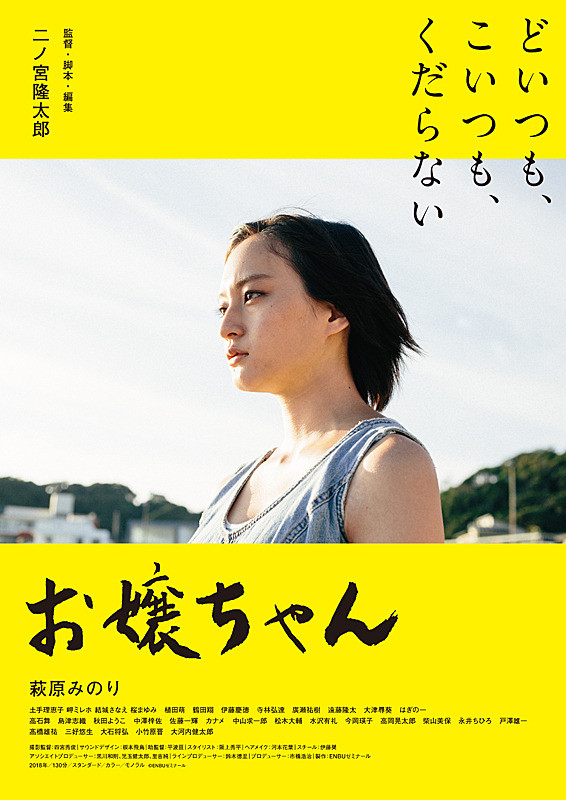
“Days like this make me feel I’m wasting my life” sighs just another dejected youngster in Ryutaro Ninomiya’s quietly enraged takedown of millennial malaise in a fiercely patriarchal society, Minori, On The Brink (お嬢ちゃん, Ojochan). In a culture which often favours politeness and avoids confrontation, Minori is a rare young woman determined to speak her mind though always with patience and grace and in turn a willingness to apologise if she feels that she has acted less than ideally, but her words often fall on deaf ears while those around her stumble through their lives chasing conventional illusions of happiness to mask a creeping despair. 

We first meet 20-something Minori (Minori Hagiwara) as she challenges a man who tried to force himself on her friend, Rieko, cowering quietly behind her. Minori wants an apology, but predictably he denies everything and quickly becomes angry, held back by his equally skeevy friend who advises him to apologise if only to defuse the situation. In the end Minori doesn’t get her apology and has to settle for having made a stand, retreating to avoid causing her friend more harm, but on exit the third man chases after her to ask for her contact information. Really, you couldn’t make it up. 

Part of Minori’s anger is bound up with being a so-called “cute girl” and everything that comes with it in a society still defined by male desire. Parades of idiotic young men, for some reason always in threes, come through the cafe where she works part-time expressly because a “cute girl” works there, while she’s forever being invited out by female friends who want to bring a “cute girl” to the party. Somewhat insecure, Minori worries that people are only interested in her cuteness and might otherwise reject her if, say, she were badly disfigured in some kind of accident. But what she resents most is that it’s other women who enable this primacy of the cute, the way her bashful, “homely” friend Rieko is always apologising for herself, while the other women who self-identify as “ugly” willingly cede their space to the conventionally attractive. 

In short, they submit themselves totally to pandering to male desire while men feel themselves entitled to female attention whether they want to give it or not. Dining in a local restaurant, Minori and Rieko are invited to a party by the proprietress which neither of them seem keen to go to but Rieko is too shy to refuse even when Minori reminds her of the traumatic incident at the last party with the guy who forced himself into the ladies bathroom and tried to kiss her against her will. The older woman laughs it off, affirming that he “meant no harm”, he was just drunk. This is exactly what Minori can’t stand. She keeps telling people she isn’t angry, but is she is irritated by Rieko’s need to apologise for something that isn’t her fault, seeing it as enabling the culture that allows men to do as they please while women have to obey a set of arbitrary rules of which remaining quiet is only one. 

In her own quiet way, Minori refuses to toe the line but is constantly plagued by unwanted male attention. Getting into an altercation with a creepy guy who waited outside her place of work to find out why she didn’t reply to his texts, she explains that he was just a casual hookup and that she finds his overly possessive behaviour frightening even as he continues not to take no for an answer, eventually branding her a “slut” for daring to embrace her sexuality. She demands an apology, not for what he called her but for the use of such misogynistic language. Earlier, in the trio of friends which contained Rieko’s attacker, another man had claimed he remembered Minori from a previous gathering, branding her as a “pigheaded mood wrecker” for daring to take them to task for their bad behaviour. The men talk about women only in terms of their desirability, the same man insisting that he has no interest in “strong willed women”, probably for obvious reasons. Another recounts having bullied a girl he fancied in middle-school, unable to understand why she avoided him despite bragging about having terrorised her and organising her ostracisation by the other girls (supposedly, he could do this because he was “popular”) until she finally transferred out (whether or not this actually had anything to with him remains uncertain). 

Perhaps to their credit, the other two guys immediately declare him uncool and are mildly horrified that he sold this to them as a funny story from his youth with absolutely no sense of repentance or self awareness. But their response is also problematic and born more of their boredom than their outrage, engaging in a bet over who can make him cry first as they “bully” him so that he’ll develop empathy for people who are “bullied”, never actually explaining to him why he’s being “punished”. Minori questions the problematic attitudes around her with straightforward candour, taking her cafe friend to task for her hypocrisy in taking against older men while expressing an uncomfortable preference for the very young.  

Nevertheless, Minori remains exhausted by the hypocrisies of the world around her. She declares herself “happy” with her ordinary life, a 4-day part-time job, low rent thanks to living with grandma, and spare time spent playing games. To that extent she has no desire to change her life, but the very fact of her “happiness” also depresses her in its banal ordinariness. “It’s all worthless” she suddenly cries, stunned by the inescapability of her ennui. On the brink of despair, Minori finds herself sustained only by rage not only towards an oppressive society but her own inability to resist it.


Minori, On The Brink was streamed as part of this year’s online Nippon Connection Film Festival. It will also be available to stream worldwide (excl. Japan) as part of this year’s Udine Far East Film Festival.

Original trailer (no subtitles)