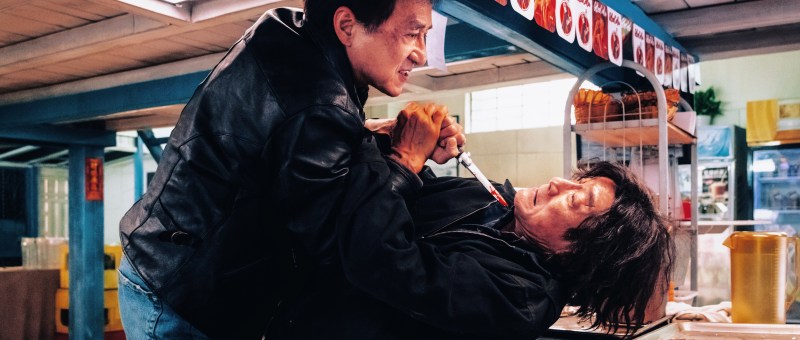
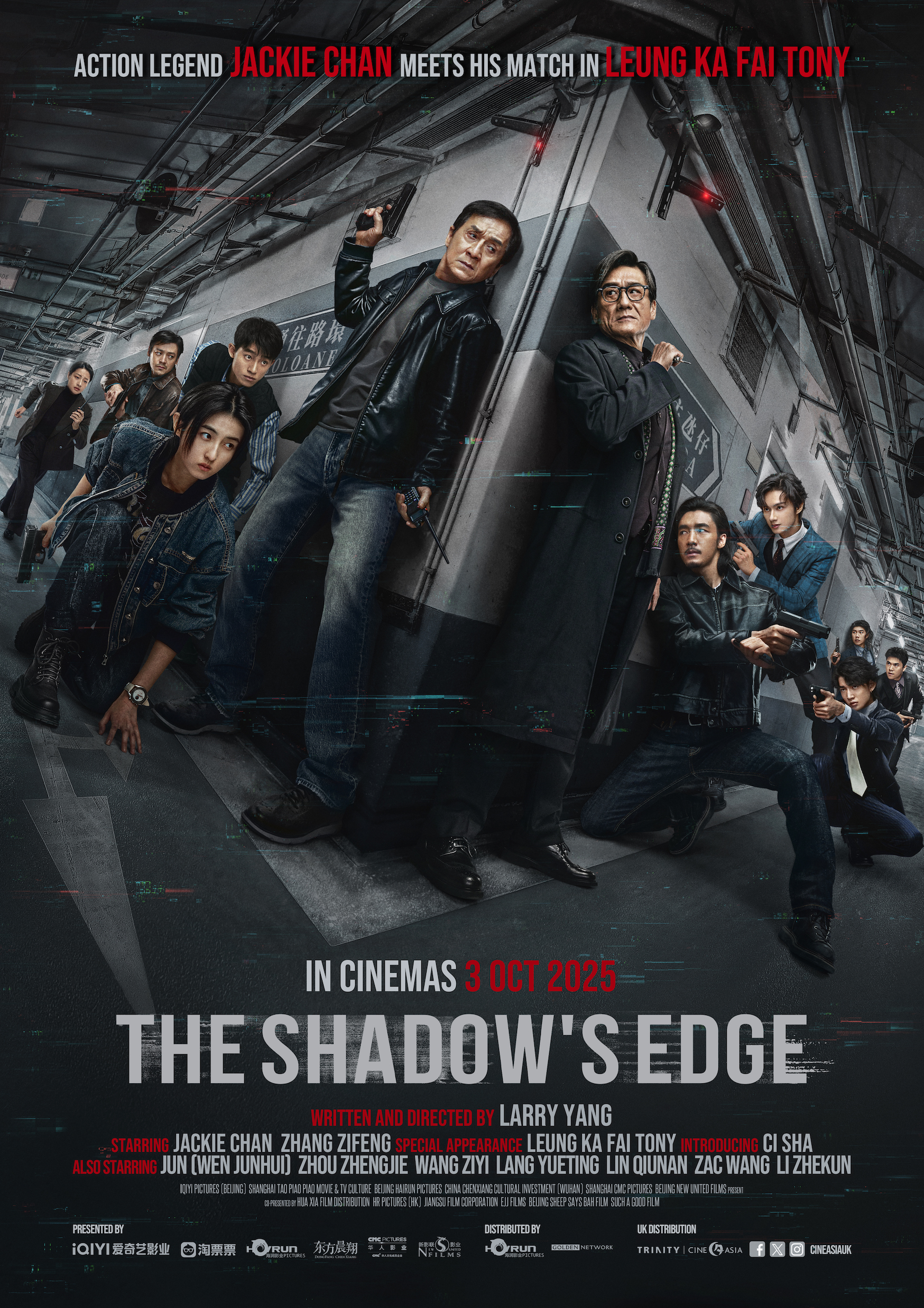
The Shadow’s Edge (捕风追影, Larry Yang, 2025)

China’s mass surveillance system has come to the rescue in many a recent action film, as if it were saying that China will always find you if you’re in trouble but perhaps also if you’re the one making it. A loose Mandarin-language remake of 2007’s Eye in the Sky, The Shadow’s Edge (捕风追影, Bǔfēng zhuīyǐng) takes a slightly different tack in being somewhat wary of AI-based technology and the way it’s already embedded itself so deeply in our lives as to have engendered a rapid deskilling of the younger generation. 

The Macau police force rarely conducts on the ground surveillance anymore and is heavily reliant on its network of video cameras along with facial recognition software. Madame Wang (Lang Yueting), however, the officer in charge ends up disabling the AI system because it’s proving unhelpful and undermining her authority. In any case, it leaves them vulnerable to interference and unbeknownst to them they’ve been hacked. A talented group of thieves have managed to throw them off the scent by manipulating the footage so it looks like their vehicle is in a completely different place while they’re busy committing the crime. The hackers have managed to combine new technologies and old in a much more successful way than the police as they use a mixture of traditional disguise techniques and well-honed spycraft along with video manipulation to evade detection. 

It’s at this point that the police decide they need to bring back someone who still remembers how to do analogue police work to teach them how to combat this new digital threat. The irony is that the hackers are also being led by a veteran espionage expert now in his 70s and known only as “The Shadow” (Tony Leung Ka-fai). Though it’s true enough that he knows the evil that lurks in the hearts of men, The Shadow has surrounded himself with a group of former orphans whom he has trained in the arts of surveillance and infiltration while they take care of all the new technological stuff. But it’s also a slight degree of hubris and a mishandling of the digital side that leads to a slip-up in which the Shadow’s face may have been captured on camera for the first time in decades. As he ages out, there is conflict between father and sons as the boys begin to resent the Shadow’s paranoia and over cautiousness, wondering why they don’t simply take the bigger prize without considering that it may be more difficult to claim and leave them vulnerable to retribution.

Wong (Jackie Chan), the former special forces veteran officer they bring in to train the youngsters experiences something similar in the awkwardness of his relationship with Guoguo (Zhang Zifeng), the daughter of his former partner who was killed on the job because of an error in judgement made by Wong. Guoguo has been consistently sidelined by the police team where she’s surrounded by incredibly sexist men who doubt her ability to do the job because of her gender and short stature, and now has conflicting feelings about Wong that are bound up with her father’s death and a fear of being patronised convinced that Wong too is reluctant to let her do her job out of a problematic sense of overprotection.

Nevertheless, she proves a natural at the old-fashioned art of surveillance and develops a more positive kind of paternal relationship with Wong than that the Shadow has with his band of orphans. In essence, Guoguo learns both how to be part of a team and how to lead it, while Shadow’s boys don’t really learn much of anything beyond ruthlessness and generational conflict. In any case, the answer seems to be that’s what’s needed is both old and new, and that an over-reliance on technology isn’t helpful while AI isn’t necessarily faster than a finely tuned mind like the Shadow’s or merely someone who knows the backstreets well enough to anticipate an exit route. Drawing impressive performances from both his veteran leads, Yang succeeds in blending expertly crafted action sequences with interpersonal drama and giving the film a slick retro feel through the use of split screens and impressive editing. A post-credits sequence also hints at a wider conspiracy in play and the potential of a sequel, which would certainly be a welcome development given the strength and ambition of this opening instalment.


The Shadow’s Edge is in UK cinemas from 3rd October courtesy of CineAsia.

UK trailer (English subtitles)
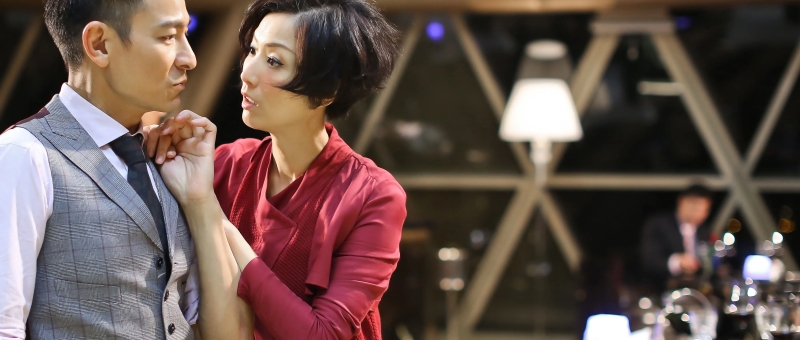
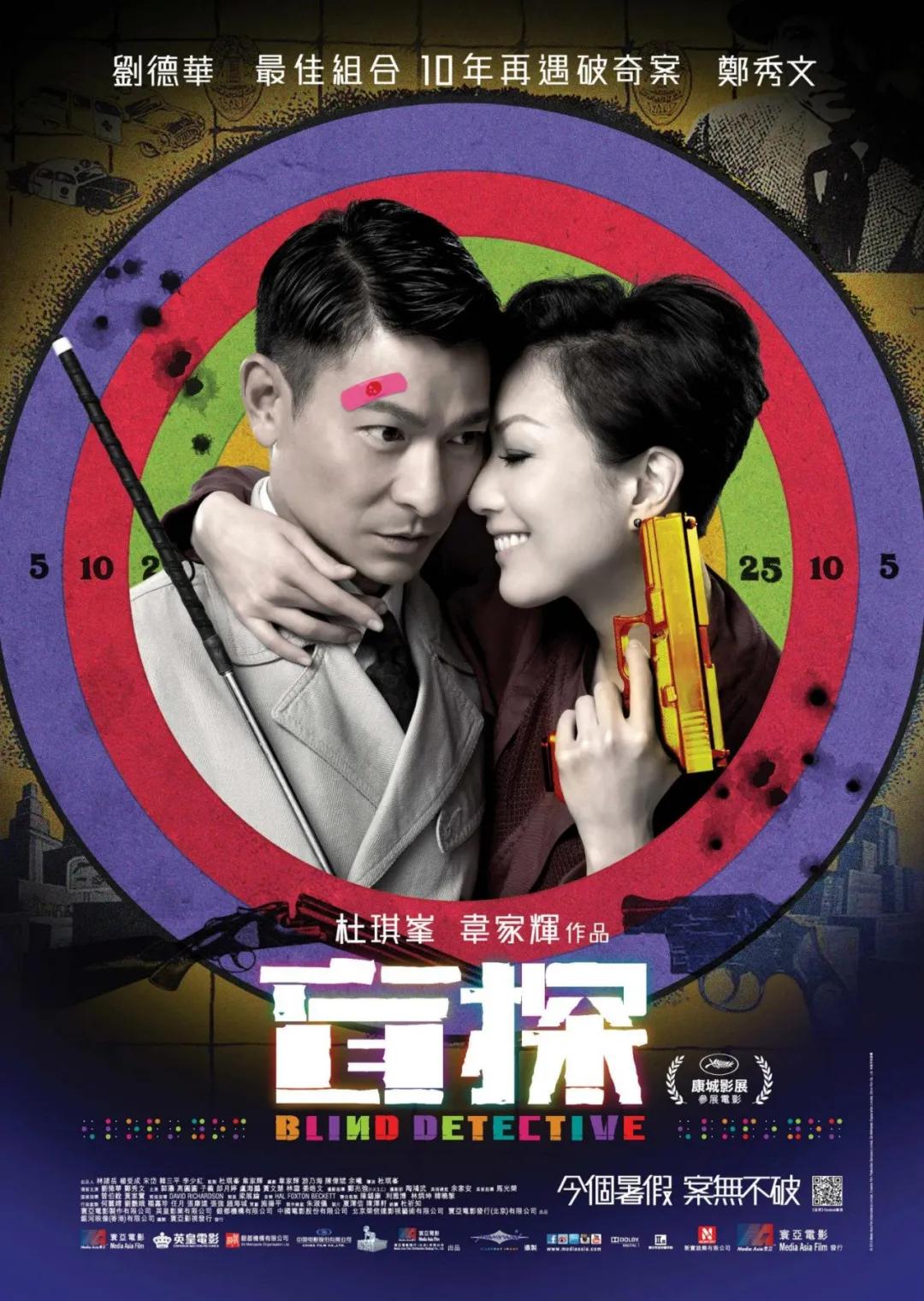
Blind Detective (盲探, Johnnie To, 2013)

Ever get that feeling someone is looking at you, but actually they were looking at someone else? The mismatched cops at the centre of Jonnie To’s black comedy love farce Blind Detective (盲探) seem to encounter this phenomenon more often than most as To and screenwriter Wong Ka-Fai delight in waltzing the audience towards an unexpected conclusion filled with ironic symmetries and persistent doubling as the detectives role-play their way towards truths literal and emotional. 

Former policeman Johnston (Andrew Lau Tak-wah) lost his sight after ignoring an eye problem in order to solve his case and has been working as a kind of private detective ever since, looking into cold cases with reward money attached. His old buddies, however, have a habit of exploiting him as they do while trying to stop a series of sulphuric acid attacks unfairly denying him his payout by following him and then technically arresting the criminal “first” so his work doesn’t count. That is however how he first meets agile yet clueless heiress/struggling investigator Ho (Sammi Cheng Sau-man) who lives in a palatial flat left to her by her parents. Regarding him as the god of solving crime, Ho asks Johnston to help her solve a mystery which has plagued her since childhood in the disappearance of Minnie (Lang Yueting), an “unsociable” young girl with no friends who confessed to her that she was worried about becoming the kind of person who could kill for love as her mother and grandmother had done. Little Ho was frightened and stopped hanging out with Minnie even though she stood outside her apartment block just staring up at her in loneliness. Adult Ho feels guilty and ashamed, hoping she can make amends by finding out what happened to her friend. 

Like the earlier Mad Detective, Johnston has a special gift and unconventional investigational style which involves a lot of method acting and physical role-play even going to far as to force Ho into getting the same tattoo as one of the victims in a case he’s pursuing. His sightlessness at times allows him to see what others do not, but even his gaze is occasionally misdirected. Ironically enough he’d put off asking out his crush until after he finished his case only to then go blind, while she in turn had put off seeking out hers until after her competition only to lose sight of him, Johnston never realising that when he thought she was looking at him she was actually looking at someone else. The same thing happens with Ho and Minnie, Ho unaware of all the facts never realising there might have been another reason for Minnie’s behaviour. Frequently they look for one thing and find something else, accidentally uncovering a prolific cross-dressing cannibal caveman serial killer living alone in the woods surrounded by skeletons which turns out to have little relationship to their original case save for its tangential link in the killer’s preference for brokenhearted women. 

Everything is disguised as something else, the killer of the first case setting up the crime scene to look like his victims killed each other with no one else present while two brokenhearted souls stowaway in wardrobes hoping to reunite with lovers who have rejected them, the second later changing their appearance in order to get a second chance. Love does indeed make you do strange things, the sulphuric acid thrower apparently taking some kind of indirect revenge for his wife’s infidelity as he reveals through a manic phone call first berating and then forgiving her while randomly buying a big bottle helpfully marked “sulphuric acid” from a local supermarket. Yet in this screwball comedy throwback it takes a little while for the oblivious Johnston to realise that he’s fallen for his infatuated new partner who can’t quite be sure he hasn’t fallen for her bank balance instead. 

Despite the persistent darkness of serial killings and crimes of passions, Blind Detective is at heart a romantic comedy filled with absurdist, slapstick humour in which the heroes literally tango their way to emotional authenticity, a dance which in part at least requires each partner to look away from the other. To’s delightfully arch comical mystery romance is a tale of misdirected glances and buried truths but eventually allows its equally burdened detectives to step away from their personal baggage and embrace a happier future. 


Original trailer (English subtitles)

Good Autumn, Mommy (尋她, Chen Shizhong, 2023)

A family tragedy forces a grieving mother to confront the sexism and hypocrisy of mid-90s China in Chen Shizhong’s biting rural drama, Good Autumn, Mommy (尋她, xún tā). Quietly simmering with an internal rage her society convinces her she must repress, Fong-tai (Shu Qi) finds herself constrained by the intensely traditional atmosphere of her small-town home and more than that by her husband’s eternally passive attitude in which he resolutely refuses to rock the boat or make any attempt to stand up for himself. 

Fong-tai is warned by her brother, in a nice way, that her personality may make it difficult to live somewhere like this where a woman is clearly intended to know her place and keep her peace. Not that she particularly blames him for it, but Fong-tai is resentful towards her birth family who fostered her out and saved their money to send her brother to university. For this reason she remains an outsider in the village (a sentiment rammed home by the casting of Taiwanese actress Shu Qi whose accent quite clearly stands out in Cantonese-speaking Guangdong) and not least because of her feisty temperament and tendency to speak her mind. 

Often, however, it does her little good. Pregnant with her second child she begs her mother-in-law to take her to a modern hospital but she insists on doing everything the old fashioned way taking both her and her similarly pregnant friend Lam San to a disused clinic only to be trapped there by an encroaching storm. Both babies are born healthy, but battered by the high winds the dilapidated clinic collapses plunging them into the lake. Fong-tai manages to save one but the other disappears without trace. As she had put a bangle on her newborn child and the rescued baby doesn’t have one, she assumes it’s Lam San’s but later comes to doubt herself. 

Part of the problem is that Fong-tai assumes no one is really looking for her baby because it is a girl and if it had been a son they’d have left no stone unturned. As her desperation mounts, many of those around her imply that the loss of her daughter is a kind a kind of blessing for, as the couple have one daughter already, it frees them up to try again for a son given the restrictions of the One Child Policy which allowed a second child if the first had been a girl. One even tells them that a second daughter kills off the family name given that Fong-tai’s husband Yiu-cho was also an only son, and that they should simply have another child as soon as possible to produce a male heir. 

Ironically this might also be why Kong-yan, Lam San’s husband, is prepared to accept the rescued baby as his own and reluctant to submit to a DNA test given that in that sense it doesn’t matter as much whether or not he is the biological father because this child is not expected to continue his line in the same way a son would be. Yet Kong-yan also embodies another side of a changing China in that he has become rich under the new economic reforms but largely by exploiting local sugar cane farmers. Kong-yan leverages his wealth in insisting Fong-tai pay for the DNA test knowing full well she can’t and then refusing to buy any of her sugarcane out of pettiness thereby destroying her livelihood. 

While looking for her daughter and frightened enough to take note of an urban legend about wild men living in an old banana plantation, Fong-tai is confronted with the borders of her world after venturing to the edge of it and discovering a construction site she had no idea existed because she doesn’t venture out of the village. She begins to wonder what the outside world is like and if she’s been trapped here by outdated notions of filiality and patriarchal social codes that conspire to keep women in their place while becoming sick of Yiu-cho’s complicity and refusal stand up for their family even when it’s their child that is missing. 

When she decides to drain the supposedly sacred lake herself by destroying the dam it’s as if she’s pulling down the borders of that world and removing the source of her oppression in breaking free of “tradition”. The villagers that were hostile to her just minutes before, begin to reflect that it’s just a lake and sympathise with Fong-tai as a bereaved mother rather than a troublemaker who didn’t know her place. Highly critical of ingrained sexism and the hubristic behaviour of the nouveau riche elite in changing 90s China the film’s haunting yet hopeful ending suggests at least that Fong-tai was able to ensure that her older daughter was freer than she had ever been even if she can never escape the wounds of the past or regain what was taken from her.


Good Autumn, Mommy screens in Chicago April 13 as part of the 18th Season of Asian Pop-Up Cinema.

Original trailer (Simplified Chineses & English subtitles)

Adoring (宠爱, Larry Yang, 2019)

Adoring poster 1Pets can often be a point of contention in your average romance. As often as they bring people together, they can also drive them apart which is perhaps why the tug of war over an unexpectedly orphaned dog has become such a trope in bitter divorce narratives. Cheerful New Year movie Adoring (宠爱, chǒngài), however, is 100% pet positive, showing us that shared love for an adorable little critter only brings people closer even if it takes a little while to get there.

Each of our animal loving heroes is connected through a network of friendship or simply by using the same, very cheerful, vet’s. Teenager Nan (Zhang Zifeng) uses her pet golden retriever Zha as an aid while looking after her best friend, Leyun (Leo Wu Lei), who has recently lost his sight through illness. Illustrator An Ying (Kan Qingzi) has a crush on a handsome reporter who lives in her building but is both extremely shy and incredibly germaphobic which poses a small problem for her when he suggests co-parenting a little kitten they rescue from under a car. An Ying’s boss Zhao Le (William Chan Wai-ting) has just married beautiful air hostess Fang Xin (Zhong Chuxi), but her beloved dog Seven is both extremely jealous and aggressively territorial making the start of their married life somewhat stressful. Fang Xin’s friend Fay (Yang Zishan) has been dating smartly turned out fund manager Li Xiang (Wallace Chung Hon-leung), but is concerned that they always meet in hotels. Fearing he has another woman at home, she barges into his swanky townhouse but is surprised to discover that his big secret is a pampered pretty pink pig called Bell that occupies his basement in the height of luxury. Meanwhile, divorced dad Gao Ming (Yu Hewei) has become overly attached to the family cat and fears his daughter Mengmeng (Li Landi) will take it back to the US with her, and rookie delivery driver Ah De (Guo Qilin) bonds with a stray dog who helps him navigate a complex housing estate.

Much as everyone loves their pets, the animals are in some way also conduits for love between people. Leyun has been struggling to accept the loss of his sight and the feeling that the world he’s always known is slipping away from him, which is why he takes it so badly hearing that Nan’s parents are thinking of moving to be closer to her new high school. Nan wants to help him, and chooses to do so by training Zha to be a guide dog, but Leyun only sees the ways in which his friend is trying to fob him off with a dog rather than embrace the warmth that was meant by her gesture. Likewise, Gao Ming, has become so attached to the cat, Hulu, because he sees it as the last remnant of his family, his wife having left him and taken their teenage daughter to the US. Mengmeng Skypes him to talk to the cat, and he worries about losing touch with her if she no longer needs to, but misses the fact that perhaps she merely lets him use the cat as an excuse because she knows he’s an awkward man who doesn’t know how to talk to her. Zhan Le, meanwhile, is understandably irritated by Seven’s jealously, but does his best to make friends with him because he loves his wife and she loves her dog. An Ying too begins to become less afraid of human contact thanks to unexpectedly bonding with the kitten, allowing her to grow closer to her crush.

Bell, however, continues to be a problem for Fay who can’t get her head around why her handsome, stylish boyfriend keeps a “dirty” farmyard animal in the basement, let alone why he lavishes so much luxury on her. Jealous of the pig, she misses all the ways that Bell is actually rooting her human’s love story and just trying to make friends with her while protecting the household like any good pet should, leading her to make a potentially disastrous decision only to realise her mistake just in the nick of time. Darkness also invades the tale of delivery driver Ah De who finds out his new friend is under threat from vicious gangs who apparently round up stray dogs and sell them to restaurants (!). Somewhat uncomfortably, the “gangsters” following Ah De have Korean names, but ultimately turn out to be the good guys and part of the rescue team when all the pet lovers come together to save the independent pup and convince him that it’s OK to love again. As Ah De said, people think they take care of their pets, but sometimes it’s them taking care of you.


Currently on limited release in UK/US/Canadian/Australian/New Zealand cinemas courtesy of CMC Pictures.

International trailer (English subtitles)

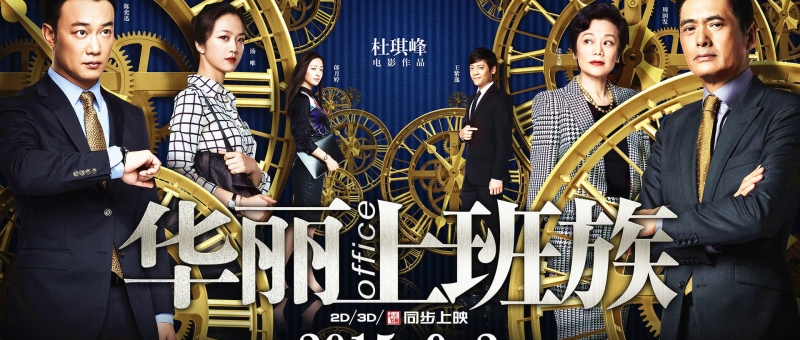
Office (華麗上班族, Johnnie To, 2015)

Johnnie To office poster 1Can love and capitalism walk hand in hand? Perhaps not, at least in Johnnie To’s beautifully choreographed musical exploration of high stakes finance and moral bankruptcy, Office (華麗上班族). Adapted from Sylvia Chang’s stage play, Office situates itself on the edge of an abyss as the 2008 financial crisis edges its way towards Hong Kong while enterprising businessmen try to figure out how to ride the waves even if that means standing on someone else’s shoulders as they sink deeper into the moral morass that is the modern economy.

Top Hong Kong trading company Jones & Sunn is about to go public. CEO Winnie Chang (Sylvia Chang) has long been running the show for her boss and lover, Chairman Ho (Chow Yun-fat), who has promised her a sizeable dividend once the floatation is complete. Meanwhile, two new interns have just joined the company, eager to make their marks in the corporate world and ensure they survive their three month probation. Bright-eyed and bushy-tailed Li Xiang (Wang Ziyi), “Lee like Ang Lee, Xiang like dream”, just wants to work hard and get rich so he can live a nice life, while his colleague Kat Ho (Lang Yueting) has just returned from studying economics at Harvard and appears to be slumming it in a lowly internship while (unconvincingly) pretending to be from a humble background. The funny thing is no one seems to pick up on the fact Kat has the same surname as the company’s owner, or they might have figured out she’s the boss’ daughter either forced to learn the trade from the ground up or working as a spy among the regular employees. In any case, Li Xiang is smitten.

Love, it seems, is the destabilising force at the centre of this great machine. CEO Chang, an all powerful woman in a male dominated industry, rules the office with a will of iron but allows herself to be manipulated by Ho with whom she has been having a longstanding affair. Ho has a wife in a coma, but neither of the pair object to the office gossip which brands Chang as “Mrs. Ho”, seeing it only as cutely romantic rather than a slight on Chang’s very real authority. Meanwhile, lonely in Ho’s lack of serious commitment, Chang has also been sleeping with her favourite underling, the feted David (Eason Chan), who in turn is getting fed up with feeling like a spare part who’s hit the peak of his career. Unbeknownst to Chang who may have taken her all-seeing eye off the ball, David has started playing with fire in gambling with company money and losing badly. As a counter measure, he’s begun romancing lovelorn accountant Sophie (Tang Wei), who unlike Chang, is still facing the work/home dilemma in that her fiancé back on the Mainland is pressuring her to give up work and settle down.

Li Xiang is very keen on following his “dreams” which in the beginning are charmingly naive – he wants a nice life for himself and the ability to pay off his friends’ debts (seemingly for entirely altruistic reasons, not as an excuse to show off). Slowly, however, his new world begins to corrupt him. He’s irritated that he’s not allowed to ride the executive elevator and badly wants in, but is still green enough to chivalrously cover up for Kat’s mistakes, while Kat is so clueless that she forgets turning up to work in designer outfits and in a chauffeur driven car is going to blow her cover. Li Xiang sees through her, but only to the nice part – it never really occurs to him she’s a mole or planning to betray Mrs. Chang who is kind of her step-mother. Chang isn’t blind to office politics. She sees Li Xiang take the blame for Kat and even likes him for it. She also likes his “originality” and plans to take him under her wing for her new expansionist plans but finds herself once again blindsided by all the difficult romantic drama bubbling under the surface of coldhearted capitalism.

David and Sophie decide they want to start a “love revolution”, but David has already gone to a dark place and his romantic confession is immediately followed by a manipulative request to get Sophie to help him with his nefarious plans. Meanwhile, Li Xiang’s gradual descent into corporatism begins to sour Kat who’d taken a liking to him because he wasn’t like everyone else. They didn’t mean to do it, but they’ve betrayed themselves and others in their relentless pursuit of conventional success. Drunken salarymen at a local bar ask themselves what all of this is for when their kids don’t recognise them and they barely recognise themselves, yet no one quite has the guts to get off the corporate train and go do something else.

In To’s elaborate set design, no one is ever truly able to leave the office. An elegant construction of neon and steel, the abstract theatricality of To’s artificial universe only underlines its essential meaninglessness – something the Office’s denizens eventually come to understand whether they choose to stay or not. As Chang quips, smart guys control money and stupid ones are controlled by it, but she herself is wise enough to know when the game is up and it’s time to move on. Did love destroy the system or did the system destroy love? Beautiful melodies telling us terrible things, To’s anti-capitalist musical crushes its earnest heroes under the wheel of progress while they dance blithely all the way over the edge.


Office screens in Chicago on Oct. 5 as part of Asian Pop-Up Cinema.

Original trailer (English subtitles)

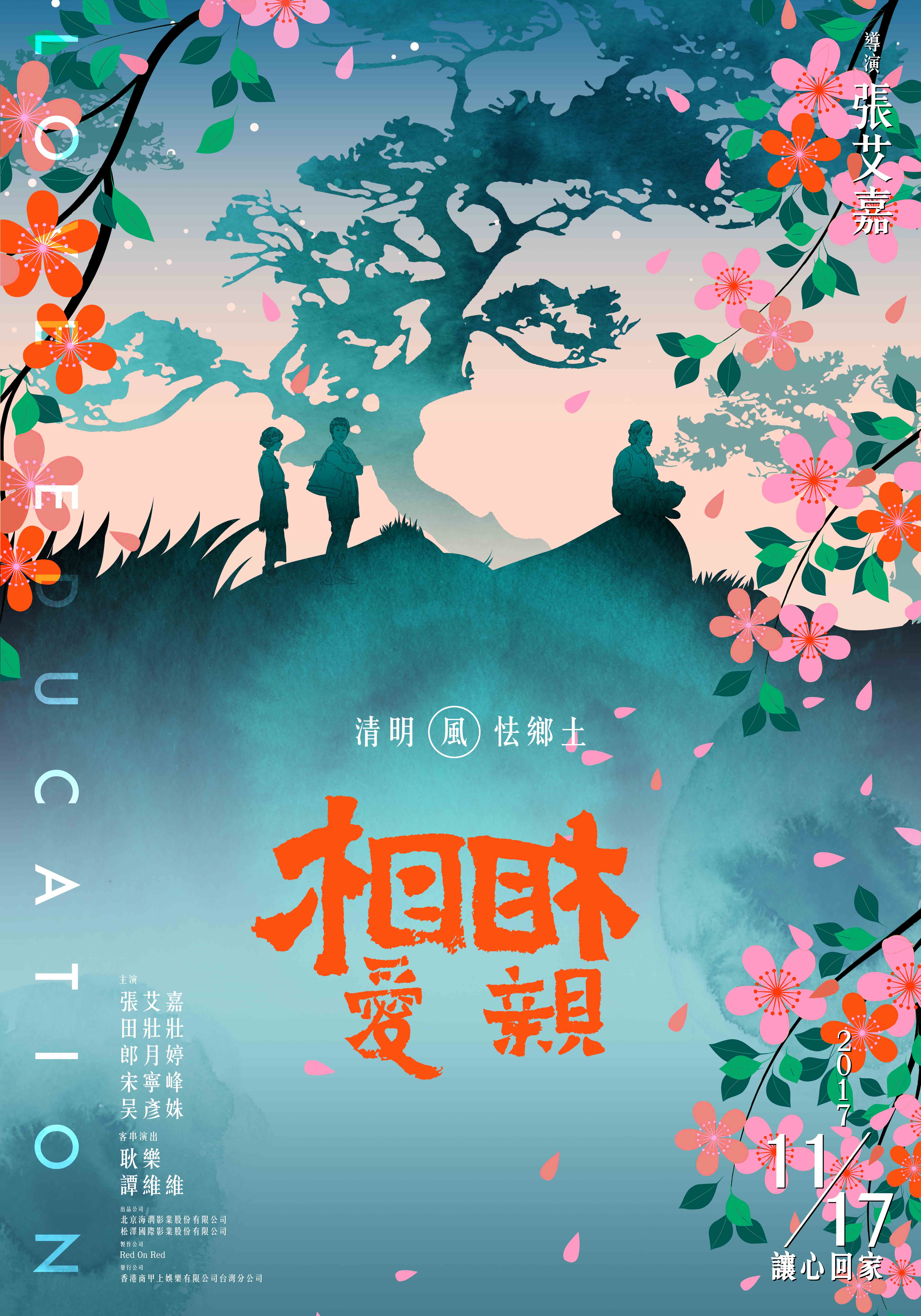
Love Education (相愛相親, Sylvia Chang, 2017)

Love Education posterWhat is love? Who gets to define it, and should it be a force of liberation or constraint? Sylvia Chang attempts to find out in looking at the complicated, unexpectedly interconnected romantic lives of three generations of women who discover that nothing and everything has changed in the decades that divide them. While a bereaved daughter channels her own anxieties of impending mortality into a petty and hopeless quest to validate the true love history of her parents, a daughter battles an oddly familiar problem with her musician boyfriend, and an elderly village woman is forced to realise she wasted her life waiting for the return of a man who had so carelessly abandoned her. Mediated by a culturally specific argument over burial rites, Love Education (相愛相親, Xiāng ài xiāng qīn) is a meditation on the demands and obligations of love, both familial and romantic, as they inevitably change and mature across the arc of lifetimes.

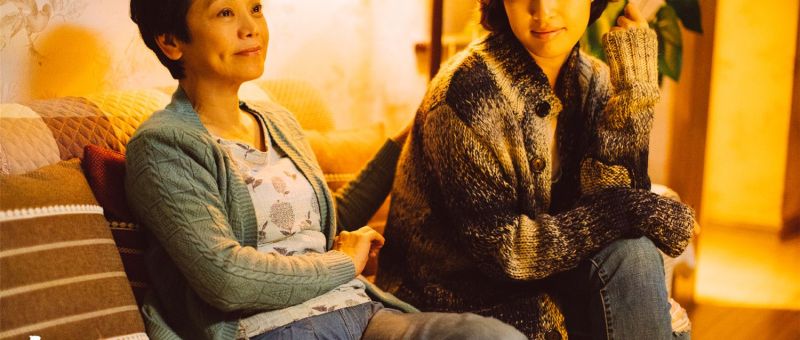
As Huiying’s (Sylvia Chang) elderly mother lies dying, she sinks into a vision of a bright summer’s day spent with her one true love who is already waiting for her in a better place. Huiying, a middle-aged school teacher facing semi-enforced retirement, is thrown into a tail spin of grief and anxiety in losing her mother, realising that it won’t belong before her daughter will in turn lose her. Weiwei (Lang Yueting), an aspiring TV journalist, remains unmarried and still lives at home though, unbeknownst to Huiying, is planning to move out and live with her aspiring rockstar boyfriend, Da (Song Ning). The plan is, however, thrown into confusion by the resurfacing of his ex, in the city with her son to compete in a cheesy TV singing contest. Meanwhile, Huiying has become obsessed with the idea of burying her mother alongside her father, only his body was sent back to his rural hometown, as is the custom, and so will need to exhumed and brought to the city. Unfortunately, Huiying’s father was technically a bigamist – he left an arranged marriage in the country to look for work in the city, “married” Huiying’s mother and never looked back. Huiying, determined to prove the “legitimacy” of her parents’ love seeks to reunite them in death, but Nana (Wu Yanshu) – the abandoned country wife, is hellbent on retaining the body, at least, of the man she married and thereby legitimising herself as a “true” wife.

Huiying’s grief-stricken descent into desperate obsession is a thinly veiled attempt to work through her own feelings of middle-aged dissatisfaction and anxiety on being violently confronted by her transition from a position of authority into a potentially powerless old-age. Her decades long marriage to Xiaoping (Tian Zhuangzhuang), a mild-mannered former teacher turned driving instructor, is comfortable enough but perhaps floundering as the couple contemplate their retirement and impending dotage. Huiying, mildly jealous of a elegant pupil who seems to have taken a liking to her husband, is also entertaining a mild crush on the father of one her own pupils while quietly feeling the distance that has inevitably grown between herself and her husband throughout the years. And so, she sets about “proving” that her parents’ romance was good and true, not only morally recognised but blessed by the state and legally approved.

This, however, proves more difficult than expected due to China’s rapid modernisation, series of political changes, high levels of bureaucracy and idiosyncratic way of issuing documentation. As her parents were “married” in the ‘50s, their union was approved by the local Communist authorities whose approach to record keeping was not perhaps as serious as might be assumed. The receipt for their license should be at the local block office, but they knocked that down. The papers were supposed to be moved to the town hall, but lacking resources they simply threw away all the documents from 1978 and before. Huiying’s parents belong to a past which has literally been thrown away, erased from history and regarded as an irrelevance by the current generation who think only of the future.

Meanwhile, Nana has been patiently waiting in her home town – a “good wife” by the standards of her rural society. Marrying Huiying’s father in an arranged marriage she has done all expected of her – looked after his family and then lovingly tended his grave despite the fact that he abandoned her after only a few months of marriage, not even bothering to tell her that he met someone else and wasn’t coming back. Nana, like Huiying, is desperate to legitimise her position to avoid the inevitable realisation that she has sacrificed her life for a set of outdated ideals.

Weiwei feels this most of all. Unlike her mother, she can’t forgive her grandfather’s moral cowardice in treating his first wife so cruelly. Building up an unexpected bond with the ironically named “Nana”, Weiwei is also forced to think about her own stalling relationship with Da who put his rockstar dreams on hold to stay with her rather than proceeding on to Beijing to try his luck there. Da, like her grandfather, has a past – in this case a childhood sweetheart with a young son and possibly territorial ambitions over a kind young man she has wounded through abandoning. Should Weiwei wait for Da, and risk ending up all alone like Nana, or should she end things now and give up on youthful romanticism for grown up practicality?

So bound up with the “legitimisation” of love, there’s an inevitable degree of possessiveness which creeps into each of the relationships – even that of Huiying and her daughter as she attempts to clip her wings to keep her close, but there’s also a kind of generosity in Chang’s direction which eventually allows them all to break away (to an extent) from an insecure need for validation to something bigger, warmer, and with more capacity for empathy and understanding. Quite literally a Love Education, Chang’s exploration of the romantic lives of three generations of women finds that though the times may have become more permissive nothing has become any easier. Nevertheless, there is comfort to be found in learning to appreciate the feelings of others, offering support where needed, and making the most of what you have while you have it in the acceptance that nothing is forever.


Screened at the 20th Udine Far East Film Festival.

Original trailer (English subtitles)