The Noisy Mansion (백수아파트, Lee Lu-da, 2024)

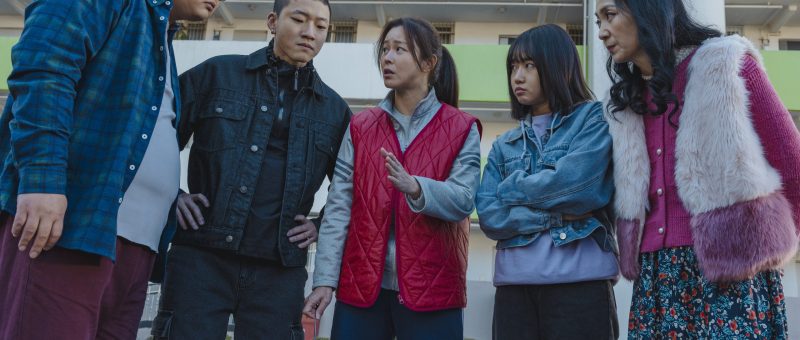
Could the neighbourhood busybody actually be a force for good? The Noisy Mansion (백수아파트, Baeksu Apateu) at the centre of Lee Lu-da’s goodhearted comedy is a metaphor for the nation itself and also a kind of purgatorial space inhabited by the heroine as she attempts to repair herself by enforcing justice and improving the lives of others though it brings her no other real benefits. Some may brand her an inconvenient troublemaker, a nosy parker poking her nose where it doesn’t belong, but Geo-ul is really trying to do good if in an unconventional way.

It’s this tendency to rock the boat that’s finally started to annoy her brother Duon who fears her problematic do-gooding is going to have an adverse effect on his children while he is also fed up with fending off animosity from the neighbours regarding Geo-ul’s frequent attempts to police them. In many ways, this is a society in which minding your own business is considered a virtue and speaking up is a breach of social etiquette but then if nobody says anything, then nothing will ever change and those who abuse their power will be able to go on doing so unchallanged. 

Of course, Geo-ul’s determination to enforce justice it also her way of overcoming her sense of guilt and resentment towards a world in which a small mistake, the overlooking of something that should have been important, can have tragic consequences. She is quite literally haunted by what she feels was a lapse of responsibility, something she will never allow to happen again. Yet the apartment complex she moves into after her brother kicks her out assuming it will only be a matter of days before he asks her back is also a haunted space inhabited by lonely souls like herself who are being driven slowly mad by ominous banging noises at 4am. Geo-ul becomes determined to discover the culprit behind the maddening noise if only to vindicate herself in the eyes of her brother that she really can accomplish something through her busy-bodying.

But she finds herself at the nexus of the nation’s problematic capitalism as it becomes clear the banging is likely a tactic employed by gangsters trying to get people to move out so the building can be demolished. In fact, most of the units are empty and the building itself is in a possibly wilful state of disrepair which is why Geo-ul was able to move in so easily despite the discouragement of the estate agent who introduced her to it. The people she meets there are also all struggling with their own problems aside from those exacerbated by their exhaustion and while previous attempts to unite to oppose the plans for redevelopment had largely failed, her quest to unmask the noisy neighbour does indeed provoke a sense of solidarity in the community and the conviction that they really could change their circumstances if they work together.

As some say, the most dangerous person is one with too much time on their hands. What some might call nosy, Geo-ul might term taking an interest in her community. Though some may originally be irritated by her desire to root out injustice, they later come to respect her when she starts getting results. Aside from a sense of vindication, her actions have a positive effect on the community liberating the apartment block from the oppressive shadows haunting it which in this case would be corruption, organised crime, violence, and ultimately hopelessness. Above all else, Geo-ul’s dedication proves that it is possible to change the world, to restore peace, order and self-respect by exorcising the evil spirits of contemporary capitalism. The residents even get over Geo-ul’s status as a “renter” who has no place in their struggle as homeowners and affectionally refer to her as “captain” as she leads their accidental revolution. Filled with a cast zany characters and undercut with a sense of tragic melancholy, the film is an advocation for the power of community but also for the concerned citizen standing up for fairness and justice even when it has no real relevance or benefit to them personally and may actually do them harm but less so than living in an unfair society which allows tragedy to occur simply through indifference.


The Noisy Mansion screened as part of this year’s London Korean Film Festival.
Yaksha: Ruthless Operations (야차, Na Hyeon, 2022)

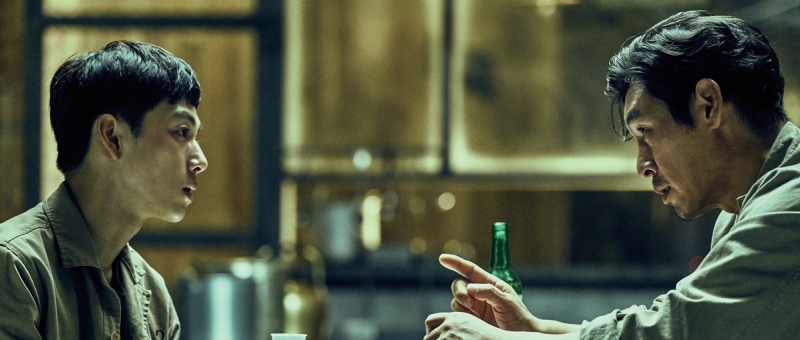
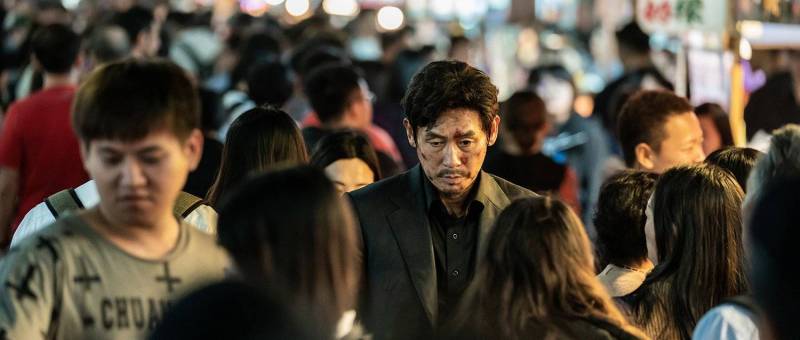
“Justice is preserved by being just” according to the idealistic hero at the centre of Na Hyeon’s Yaksha: Ruthless Operations (야차, Yacha) , though he’ll eventually come round to his sometime mentor’s belief that “Justice must be preserved by any means necessary”. Any means necessary is indeed the motto of the titular hero named for the unpredictable Buddhist deity and regarded by his superiors as a dangerous maverick though as it turns out he does indeed have justice in mind even if his idea of justice might not fully align with those whom he is intended to serve. 

The failure of the regular justice system is signalled in the film’s opening as idealistic prosecutor Ji-hoon (Park Hae-soo) finds his case against a corrupt CEO falling apart because of procedural mistakes by his own rookie team. Humiliated on the courthouse steps, Ji-hoon is given a punitive transfer to the NIS where he is kept out of trouble, told to draw a salary but given very little work. He and his jaded colleague who was once known as the “bulldozer of justice” but has been ruined by this bizarre form of punishment and no longer has the will do to anything much at all mostly spend their time doing jigsaw puzzles stave off boredom. When his colleague admits there’s no more hope for him and turns down an offer of reinstatement, Ji-hoon agrees to travel to Shengyang, a hotbed of international spies in China, to find out what’s going on with a series of false reports from their agents on the ground led by maverick black ops officer Yakska. 

What he soon discovers is that he’s been dragged into some murky geopolitical shenanigans between North Korean spies, his target’s possibly corrupt team, and the Japanese who are once again up to no good trying to prevent a possible alliance between North and South believing such a union would present too much of a threat to their economic position in North East Asia. His problem is that Yaksha’s field craft does not measure up to what he regards as appropriate conduct. He engages in firefights and commits what seem to be summary executions while later threatening to torture a hostage to force her to reveal the location of their missing asset, a North Korean financial kingpin, Moon (Nam Kyung-eup), who had been acting as a double agent for the Japanese but had become disillusioned with their imperialist outlook and decided to defect to the South bringing valuable information with him. 

It has to be said that however uncountable it may be to see a Japanese spy who behaves like a gangster committing acts of torture in a well appointed lab on a Chinese woman in China, Yaksha cannot exactly claim the moral high ground having attempted to do something similar only in his filthy hideout in an abandoned mine. Ji-hoon’s dilemma is that he doesn’t know whose side, if any, Yaksha is on or if he’s after the North Korean trillions Moon had been managing rather than a hugely beneficial national asset. Exposed to this morally grey world, however, Ji-hoon’s idealist edges begin to soften as shifts towards Yaksa’s “by any means possible” philosophy while trying to stop evil Japanese spy turned lobbyist from recovering the valuable data Moon had to sell and going on to do even more nefarious deeds undermining the possibilities for reunification along with the Koreas’ economic potential. 

Somewhat uncomfortably, the film does then more or less condone torture, betrayal, and summary execution if conducted in the pursuit of “justice” even while simultaneously approving of Ji-hoon’s idealistic pursuit of the rich and powerful who continue to misuse their position and cause pain to ordinary people. It comes to something when the safest ally is a gang of human organ traffickers with whom Yaksha seems to be suspiciously familiar. Nevertheless, what Yaksha eventually asks Ji-hoon to do is to “clean things up” hinting at the duo’s complementary qualities as they pursue “justice” in both the legal and more immediate senses. Filled with some quite literally explosive action sequences along with some admittedly broad comic book antics as the guys face off against Hideki Ikeuchi’s Japanese arch villain Yaksha is certainly a good looking film if one with a dark heart beating at its centre. 


Original trailer (English subtitles)

The Roundup: Punishment (범죄도시 4, Heo Myeong-haeng, 2024)

There’s a moment in the fourth instalment of the Roundup series when monster cop Seok-do’s boss asks him what good his fists are in the age of cyber crime. More so than in previous episodes, Punishment (범죄도시 4, Beomjoedosi 4) seems to lean hard into the idea that Seok-do iMa Dong-seok) is a dinosaur stuck in the 1970s and unable to understand the modern world. He’s a bruiser cop in an era of supposedly compassionate policing, a thug sent to catch a thug. Yet he’s also presented, as is actually said by his superior officer, as everything a good cop should be in his determination to nail the bad guys to keep a promise to a murder victim’s devastated mother.

But as in the previous films, the victim largely gets forgotten until the very end when Seok-do and his colleagues pay a visit to his grave. Set in 2018, the film is apparently inspired by a real life case and in an echo of the kinds of explanatory title cards seen at the end of Chinese films, ends with a reminder that the government began cracking down on cybercrime in that year. Reminiscent of anti-gambling drama No More Bets, the victim here is also a computer programmer effectively enslaved after being lured to the Philippines on a promising job offer only to be forced to work on casino websites by organised crime. Seok-do is mostly concerned with catching the bad guys rather than exposing this nefarious practice or its effects on those who fall victim to its addictive gambling scam. 

In any case, a running joke sees Seok-do once again cast as a dinosaur apparently unable to grasp simple concepts of modern technology. “Right, we’ll go get it before it closes, then,” he replies when informed the villains used “open source software”. He thinks syncing to the cloud means a crowd of people will come help you set up your phone and he never replaces his because it’s a bother to put in all those numbers into your contacts again. The team end up having to recruit a new team member from cybercrime, the only woman in the room which comes in handy when they need her to pose as the girlfriend of familiar comic foil Jang Yi-soo (Park Ji-hwan) who is tricked into thinking he’s been deputised with a shiny badge that looks like it fell out of a serial packet and has the telltale letters FDA at the top which Seok-do convinces him stands for Police Dark Army.

Despite all the thuggery, there’s something essentially childlike about Seok-do’s roguishness that sees him delight in playing a trick on Jang Yi-soo. After wrecking the first class cabin of a soon to depart plane, he walks off sheepishly like naughty little boy ignoring his boss’ frantic calls to come back and explain himself. In this instalment, we get less of the overt references to police brutality with one brief scene of Seok-do putting a motorbike helmet on a suspect and beating him over the head while his colleague keeps watch outside as we peek in through the widow. To remind us he’s still the good neighbourhood cop, we see several scenes of him visiting a restaurant run by the widow of a colleague killed in the line of duty and secretly slip his teenage daughter wads of cash to buy something nice for herself. 

What it all amounts to is a slightly awkward advocation for the police who are directly stated to be always there to protect the citizens and catch criminals who harm them even if they do It abroad. To this extent, Seok-do is a good cop literally smacking some sense into bad guys because it turns out his giant fists can fight “digital” crime after all and there’s no denying that it does feel good to see Ma Dong-seok smack bad guys. The action scenes this time around are visceral and surprisingly bloody not to mention loud with the sound of Ma’s thunderous fists flailing around. The film’s distinctly retro sensibility is echoed in the ‘70s score which seems to hark back to an era of maverick cop movies about men like Seok-do who keep order on the streets while Seok-do himself seems increasingly like a man out of time, a throwback to a bygone era perhaps uncomfortably romanticised in the quasi-authoritarian sensibility which seems to underpin it.


Festival trailer (English subtitles)

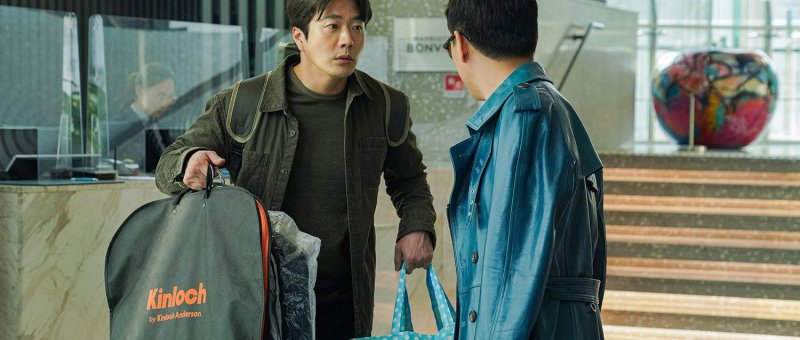
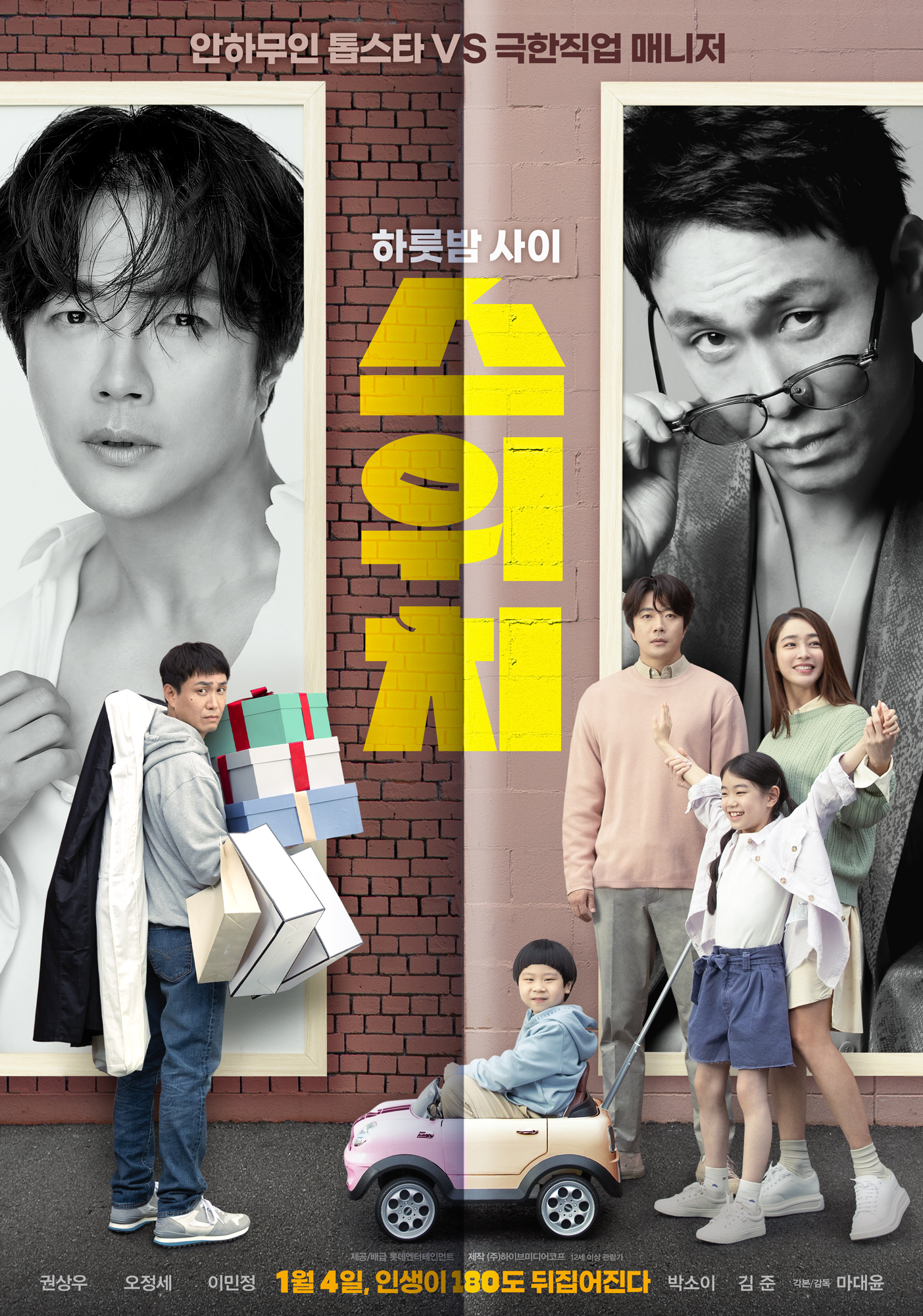
Switch (스위치, Ma Dae-yun, 2023)

An egotistical actor is given an unexpected lesson in what it is that makes life worth living when he’s suddenly transported to a parallel world in Ma Dae-yun’s charming Christmas dramedy, Switch (스위치). Rather than the body swap comedy the title might suggest, Ma’s warmhearted morality tale is a more a meditation on what might have been and may be again while contemplating the emptiness of a life of fame and riches when there’s no one to share it with. 

“What matters more than money?” top star Park Kang (Kwon Sang-Woo) chuckles after telling his manager he’ll accept a job he just described in quite insulting terms after being informed it comes with a hefty paycheque. Kang is currently riding high. He’s become enormously successful and even a recent sex scandal involving his co-star in a TV drama has only boosted his profile. Yet he tells his analyst that he can’t sleep and attributes it to “depression and anxiety”. He treats those around him poorly and most particularly his long suffering best friend from his fringe theatre days, Joe Yoon (Oh Jung-Se) who now works as his manager, while struggling to accept his loneliness and meditating on lost love in the memory of the woman he broke up with in order to chase stardom. 

After getting into a weird taxi one Christmas Eve, he’s suddenly granted the “wish” of getting to find out what would have happened if he’d made a different choice. After waking up in an unfamiliar house he discovers that he’s married with two children and slumming it fringe theatre while Joe Yoon is now the superstar having aced the audition Kang ran out on to chase Soo-hyun (Lee Min-Jung) to the airport and convince her not to leave. Of course, Kang is originally quite unhappy about all of this. He doesn’t understand why no one recognises him anymore and resents that he’s suddenly subject to the rules of “ordinary” people again after a decade as a pampered star. In his acceptance speech after winning an award, he’d stated his intention to “forget” his roots as a humble actor and embrace his new role as a member of the showbiz elite fully demonstrating his sense of alienation and insecurity along with his intense loneliness. As the taxi driver had said, Kang has “everything”. He’s achieved his dreams and lives the high life he’d always dreamed of, yet he’s deeply unhappy.

But his “new” life immediately challenges his sense of masculinity in realising that he has little power without money and is in fact financially dependent on Soo-hyun whom he may also have robbed of a bright future by preventing her from studying abroad and achieving success as an artist. Meanwhile he looks down on himself for continuing to follow his artistic dreams in fringe theatre when his plays attract few audiences members and make little money. Just as Joe Yoon had become his manager, so he ends up getting a taste of what it’s like trying to manage a “star” while coming to appreciate that Joe Yoon may be feeling just as lonely and unfulfilled as he once had. 

Yet even as Kang settles into his new life as a husband and father while slowly rebuilding his acting career though a combination of talent, supportive friendship, and good luck, he fails to learn the right lessons continuing to yearn for external validation through material success. He spends money on fancy dinners and tries to move the family into a swanky apartment in Seoul without realising that he’s already got a “home” in the quaint little provincial house he and Soo-hyun set up together filled with memories (that admittedly he doesn’t actually have) of the children when they were small. Slowly, he begins to look beyond himself while developing a new sense of security that means he doesn’t need to chase status-based affirmation in empty materialism but now has a new sense of what’s really important. A charming season morality tale with a little more than a hint of A Christmas Carol, Ma’s gentle drama never suggests that success itself is wrong or that Kang must give up his movie star persona to become a happy everyman but only insists that true happiness is brokered by treating others well and being treated well in return much more than it is by consumerist success.


Switch screens at UltraStar Cinemas Mission Valley April 22/24 as part of this year’s San Diego Asian Film Festival Spring Showcase.

International trailer (English subtitles)

The Vanished (사라진 밤, Lee Chang-hee, 2018) [Fantasia 2018]

The Vanished posterThe past refuses to die in The Vanished (사라진 밤, Sarajin Bam) – Lee Chang-hee’s remake of the 2012 Spanish thriller, The Body. Ghosts, of one sort or another, torment both of our male leads – a dogged policeman and increasingly unhinged husband, as they try to solve the mystery of a disappearing corpse whilst each battling a degree of latent resentment towards various forces of social oppression. A tale of conflicting bids for vengeance, The Vanished pits an emasculated trophy husband against a controlling career woman wife while the forces of order look on in disapproval but then all is not quite as it seems and perhaps this is not the story we first assumed it to be.

The horror-inflected tale begins in a morgue on a rainy night as a disinterested security guard becomes unexpectedly spooked by his surroundings. Discovering one of the trays open and a body missing, the guard panics and feels himself stalked by something undead before being clubbed on the back of the head and knocked out. Maverick cop with a traumatic past Woo Joong-sik (Kim Sang-Kyung) arrives on the scene and discovers the missing cadaver belonged to prominent businesswoman Yoon Seol-hee (Kim Hee-Ae). The cause of death is thought to have been a heart attack brought on by her workaholic lifestyle but Joong-sik isn’t so sure. He hauls in the “trophy husband” – improbably good-looking university professor and sometime employee of Seol-hee’s pharmaceuticals company, Jin-han (Kim Kang-Woo). Jin-han has come straight from the flat of his pregnant mistress and is understandably on edge as every move he makes only further incriminates him in the “death” of his wife.

Increasingly unhinged, Jin-han is certain that Seol-hee is not really dead and has embarked on an elaborate plan of revenge for his affair with a student, Hye-jin (Han Ji-An). Lee wastes no time in confirming that Jin-han had at least intended to do away with his wife. Jin-han was apparently no longer interested in her money and would have wanted a divorce but believed his wife to be a ruthless woman who would never willingly let him go. Using an experimental anaesthesia drug, he hoped to get rid of her undetected but now fears that she has somehow woken up and wants her revenge. What Jin-han wanted, he claims, was his freedom – Seol-hee, an older career woman, bought him with trinkets, belittles his work, and refuses him all agency. He was tired of playing the toy boy and wanted his life back and so he chose to reassert his manhood through murder.

Of course, all is not quite as it seems. Through Joon-sik’s investigations, Jin-han comes to believe that perhaps Seol-hee planned the whole thing – anticipating that he would try to use the drug against her and engineering a situation in which she would fake her own death just to get back at him. Whether a ghost or not, Seol-hee haunts him, threatens his happy future with the sweet and innocent Hye-jin who calls him professor and respects him as a learned man, and seems set to achieve her goal if only by driving Jin-han out of his mind with worry and confusion.

Meanwhile, Joon-sik is battling another series of oppressive presences in the form a grudge against “the wealthy” possibly relating to a mysterious traumatic incident from his past, and a boss who wants him to find the missing body as quickly as possible and then forget the whole thing given the fact that Seol-hee and Jin-han had been a “celebrity couple” which makes all of this quite embarrassing for everyone. The two men end up engaged in a cat and mouse game as Jin-han becomes convinced that he’s the real victim in all this and is at the centre of an elaborate conspiracy leaving his pregnant girlfriend alone and vulnerable, while Joon-sik continues to push him towards confessing that he took the body and hid it possibly in some kind of fugue state.

“The body” is perhaps a better title as the concept itself comes in for constant reappraisal and we gradually understand that not everyone is talking about the same thing, leaving aside the complete erasure of Seol-hee as a woman with a name who may have been murdered by a vengeful husband (as unpleasant as she is later shown to be) in favour of viewing her simply as a nameless corpse or grudge bearing ghost. Twists pile on twists and history rewrites itself, but the buried past will someday be unearthed and justice served, if with a side order of irony.


The Vanished was screened as part of Fantasia International Film Festival 2018.

Original trailer (Korean subtitles only)

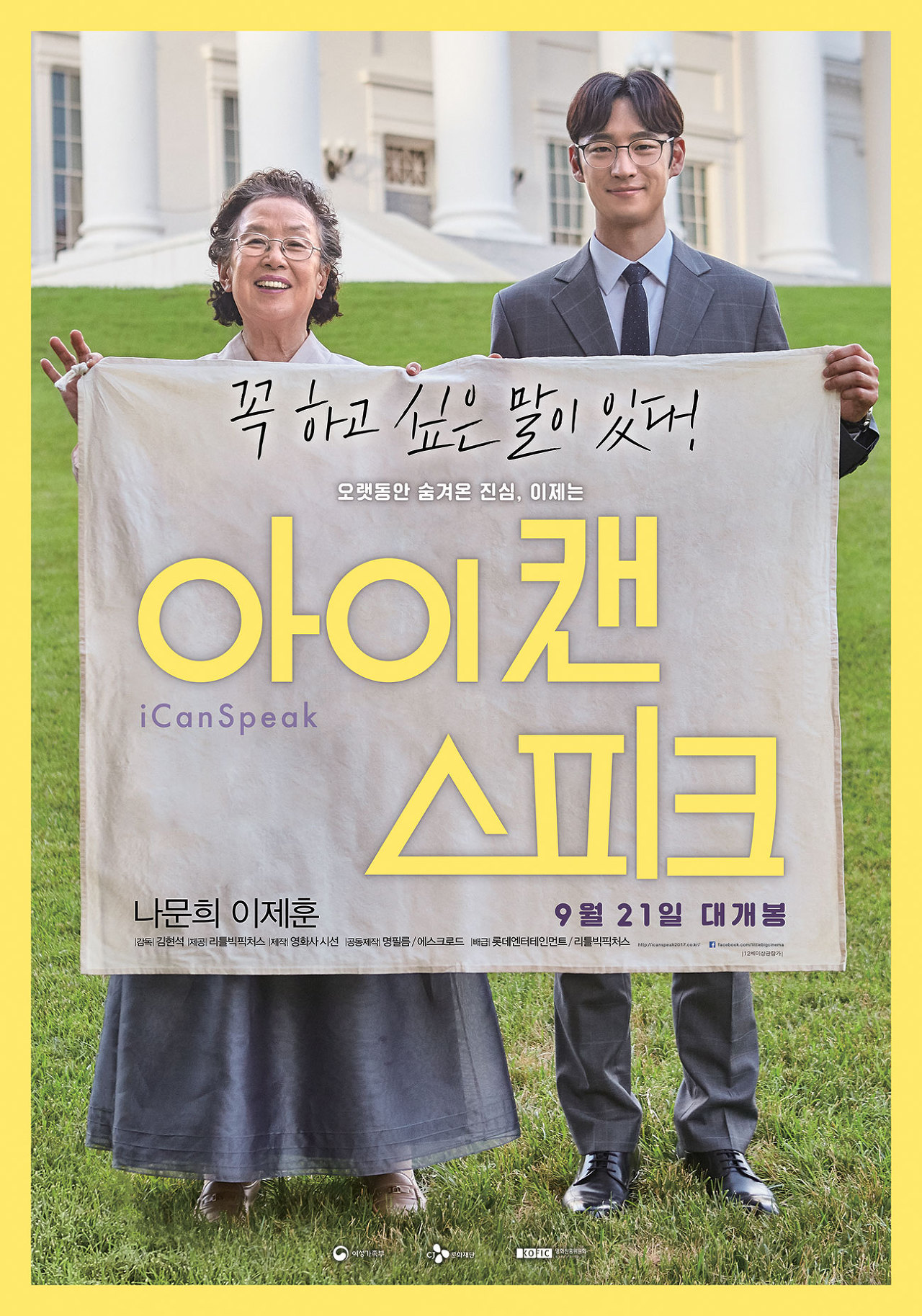
I Can Speak (아이 캔 스피크, Kim Hyun-seok, 2017)

I Can Speak posterGenre in Korean cinema has always been a more fluid affair than it might be elsewhere, but careering from zany generational comedy to affecting historical drama is perhaps a bold choice. I Can Speak (아이 캔 스피크) is, in many ways, the story of an old woman’s personal revolution as she finds herself repurposing her “Goblin Granny” credentials to pursue justice for a great evil she spent a lifetime hiding from, but it’s also an unabashedly political attack on a legacy of unresolved national trauma. Nevertheless, despite its slightly awkward straddling of cheeky comedy and heartrending melodrama, I Can Speak does at least manage to lay bare a series of entrenched social problems affecting all areas of modern Korean society while also making a fairly uncontroversial (at home at least) political point.

Park Min-jae (Lee Je-hoon) has just transferred to the local council offices in a rundown area of Seoul. Seeing as he’s new and very by the book, he doesn’t know that everyone in the office is terrified of “Goblin Granny” (Na Moon-hee)  – an old woman who turns up every single day with a list of complaints and things around the neighbourhood that could do with being fixed. Min-jae, unaware of Goblin Granny’s fortitude, attempts to deal with her complaints in a bureaucratic manner. He is no match for Ok-boon’s bloodymindedness, but his straightforward approach eventually earns her respect.

Ok-boon is the sort of old woman familiar to many municipal offices in that she is essentially lonely and comes in to complain about things just to make her presence felt. She does have a few friends, however – one being the lady who runs the local convenience store, and the other a woman of around her own age who can speak fluent English. Ok-boon decides she ought to learn English too and enrols in an expensive cram school but is abruptly kicked out of the class which is almost entirely filled with youngsters because of her old lady ways. On the way out, however, she runs into Min-jae who was there to check that his extremely high TOEIC scores were still valid. Ok-boon manages to talk Min-jae into giving her English lessons in return for decreasing the burden on the municipal offices by making fewer complaints.

I Can Speak begins firmly in the realms of bureaucratic comedy as the council workers find themselves cowering in front of Goblin Granny while simultaneously enjoying their cushy jobs for life which require almost no effort in their daily activities. Some in the community assume Ok-boon is a horrible old busybody who likes making trouble and pulling other people up on their various social failings but her community patrols come from a good place. The woman who runs a small stall in the market assumes Ok-boon reported her to the police for selling alcohol to a minor but that’s not the sort of thing that Ok-boon would think worth reporting, which is why she doesn’t think much of breaking city regulations to enjoy a drink outside her friend’s shop. Everything she reports is because she genuinely worries someone may get hurt and her main area of concern is with the strange goings on around the market which is earmarked for “regeneration”. Her concerns are not unfounded as she discovers when she overhears some of the council workers talking about taking backhanders to push the redevelopment through while making use of “external labour” in the form of shady gangsters tasked with clearing the area so the ordinary people who live in the old fashioned neighbourhood will consent to quietly move away. Perhaps because no one ever stood up for her, or because she’s sick of being pushed around, Ok-boon is not going to go quietly nor is she going to allow any of her friends to be taken away without a fight.

Ok-boon is perhaps attempting to fight something else, something she has been afraid to revisit for most of her life. The fact is that Ok-boon was one of many Korean women forcibly abducted by the Japanese army at the end of the Second World War and subjected to heinous, inhuman treatment as sex slave in one of the many “comfort woman stations” which existed throughout Japanese occupied territory. After the war, she was disowned by her family who saw only shame in her suffering and insisted she tell no one what had happened in fear of damaging her family’s reputation. One of the reasons Ok-boon wants to learn English is to be able to talk to her little brother again who she has not seen since they were children and has apparently forgotten how to speak Korean after spending a lifetime in the US.

English does however give her back something that she’d lost in the form of a familial relationship with the otherwise closed off Min-jae who is also raising a teenage brother (Sung Yoo-bin) following the death of their parents. It is true enough that it is sometimes easier to talk about painful things in a second language – something Min-jae demonstrates when he shifts into English to talk about his mother’s death. Abandoning Korean allows Ok-boon to begin dismantling the internalised shaming which has kept her a prisoner all these years, too afraid to talk about what happened in the war in case she be rejected all over again. Her worst fears seem to have come true when her old friends learn about her past, but what they feel for her is empathy rather than shame, hurt that Ok-boon was never able to confide in them and unsure what it is they should say to her now.

Ok-boon learns that she “can speak” – not only English but that she has the right to talk about all the things that happened to her and the long-lasting effect they have had on her life, that she has nothing to be ashamed of and has a responsibility to ensure nothing like this ever happens again. English becomes a bridge not only between her past and future, but across cultures and eras as she finds herself bonding with a Dutch woman giving a testimony much similar to her own and receiving the same kind of ignorant, offensive questions from the American law makers as well as cruel taunts from a very undiplomatic Japanese delegation. Undoubtedly, the final sequence is a very pointed, almost propagandistic attack on persistent Japanese intransigence but then its central tenet is hard to argue with. Tonally uneven, and perhaps guilty of exploiting such a sensitive issue for what is otherwise a standard old lady regains her mojo comedy, I Can Speak is an affecting, if strange affair, which nevertheless makes a virtue of learning to find the strength to stand up for others even if it causes personal pain.


I Can Speak screens at the New York Asian Film Festival on 12th July, 6.30pm.

Original trailer (English subtitles/captions)

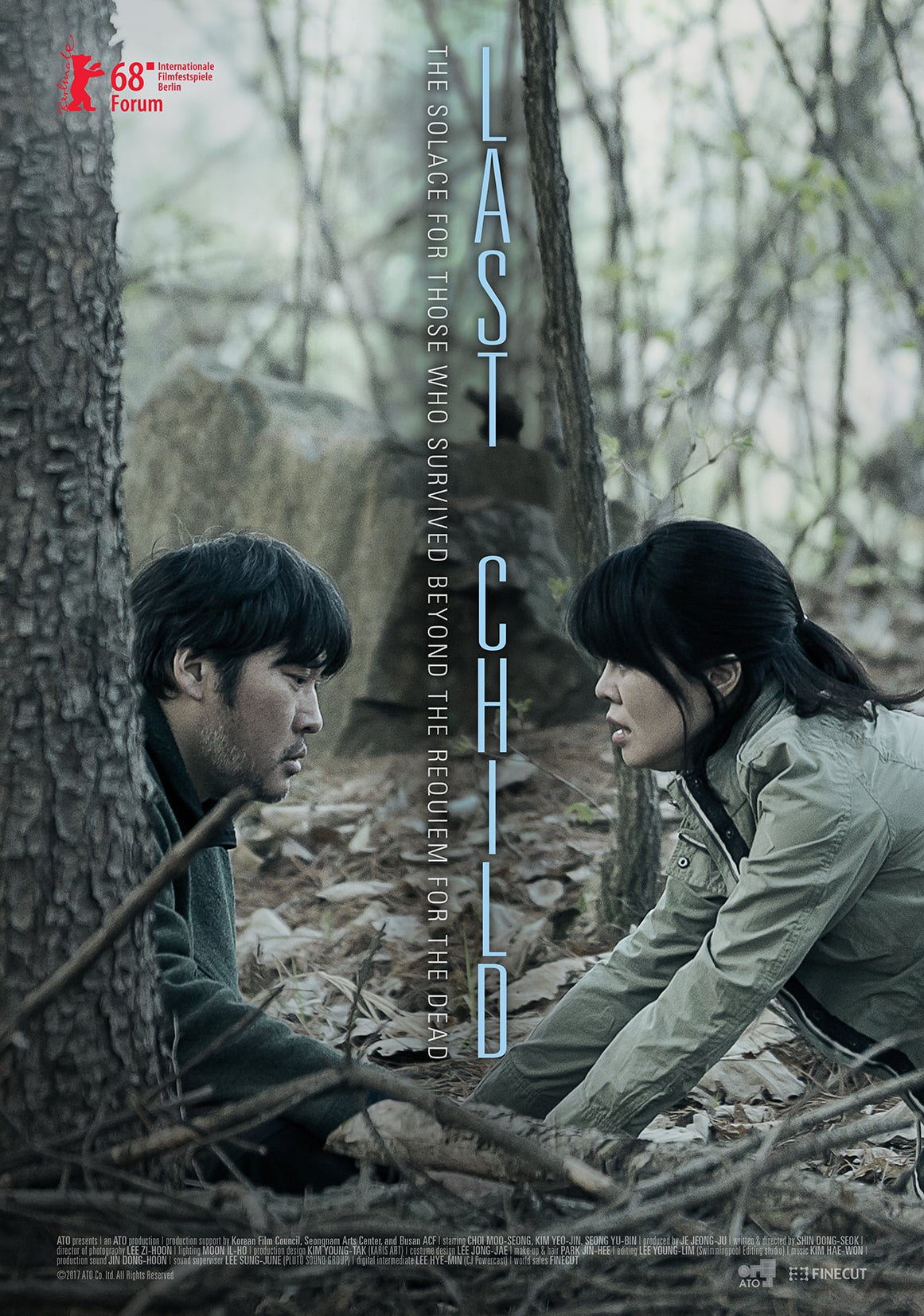
Last Child (살아남은 아이, Shin Dong-seok, 2017)

Last Child posterPeople grieve in different ways. Some stop altogether, lost in a fog of confusion and regret, while others try to keep themselves busy or at least feel as if they are doing “something” to try and find whatever positivity they can in the midst of such terrible tragedy. The parents at the centre of Shin Dong-seok’s extraordinarily accomplished debut feature Last Child (살아남은 아이, Salanameun Ayi) find themselves on opposite sides of a grief divide after their son is killed trying to save another boy from drowning. While the mother is angry and resentful, the father finds strength in pride for his son’s act of heroism, nominating him for a local heroes award and donating the compensation money they have been awarded to their son’s school to fund a new scholarship place in his name.

Eunchan, the teenage son of Misook (Kim Yeo-jin) and Sungcheol (Choi Moo-seong), passed away some months ago leaving his parents numb and grief stricken. As far as they’re aware, Eunchan lost his life while valiantly trying to save that of another boy – Kihyun (Seong Yu-bin). Asking after the boy whom his son sacrificed his life to save, Sungcheol is dismayed to learn that he’s dropped out of school, possibly as a consequence of bullying and social stigma because of the well publicised incident he has been involved in.

Spotting Kihyun around town riding his delivery scooter, Sungcheol later decides to intervene when he catches sight of some other boys harassing him. Sungcheol buys the boy dinner and tells him to call if he ever needs anything. Kihyun, despite his obvious discomfort calls when the manager of the fast food restaurant he had been delivering for accuses him of lying about his bike being stolen. As Kihyun is a minor, he needs a responsible adult to talk to the police but his mother abandoned him years ago and though his father used to send money for his upkeep, he has now remarried and severed all connection with his son. Feeling sorry for the boy and not wanting Eunchan’s sacrifice to go to “waste”, Sungcheol offers Kihyun a job in his interior construction company as a trainee apprentice.

Though originally shy and afraid, Kihyun begins to blossom under the gentle, positive parental input of Sungcheol as he picks up the paternal reins, not only teaching him a trade but investing in him the confidence to succeed. Misook, horrified at first by her husband’s decision, begins to come around to this wounded young man who perhaps reminds her a little of her own son. Despite his lingering feelings of shame and guilt in accepting such kindness from the people he feels may continue to suffer solely because of his continued existence, Kihyun slowly starts to look on Misook and Sungcheol  as surrogate parents as they provide the love and care he has never really known from Sungcheol’s down to earth fatherly pep talks to Misook’s home cooked dinners.

Kihyun does, however, have a secret he has been withholding from Misook and Sungcheol which becomes increasingly difficult for him to keep the nicer they are to him and the more he comes to respect them. Though he might have been able to push it to the back of his mind, an unexpected meeting with another friend of Eunchan’s who was also there that fateful day convinces him he has to speak the truth no matter how much more pain it may to cause to all concerned (including himself).

Sungcheol had invested heavily in the heroic nature of his son’s death and finding out it might not have been quite so straightforwardly noble as originally described is a crushing blow for him. The reopening of a wound which had begun to scar pushes Misook and Sungcheol back into their respective corners as they each attempt to process the situation in their own particular way, beginning to mildly resent each other in the process. Meanwhile, having considered the matter closed, there is little appetite to reopen the investigation into Eunchan’s death. The other parents club together to keep their kids out of it while the school sends a polite message asking Misook and Sungcheol to leave it alone to avoid damaging the school’s reputation. Sungcheol, filled with a righteous anger and a need to find out what really happened to his son, is advised to drop the matter, that it’s better to be remembered as a “hero” rather than a “victim”, implying that Sungcheol ’s quest for “truth” is in someway sullying his son’s memory.

Kihyun, meanwhile, is a mess of conflicted emotions. Grieving himself for the family he’d begun to form with Misook and Sungcheol , he tries to move on with his life whilst hoping to somehow repair what has been broken. Kihyun is not a bad kid at heart, whether changed by his experiences or simply freed from a destructive environment, but he has done bad things which fill him with guilt and remorse compounded by the faith and kindness Misook and Sungcheol have tried to show him.

Yet good as they are, the intensity of their rage and pain threatens to consume the bereaved parents who begin to turn their thoughts towards poetic justice and exacting their own revenge even if they also know it will only bring them more suffering. Isolated by their grief, ostracised for the need for truth, and torn apart by their ambivalent emotions towards each other, the trio walk headlong into a spiralling abyss of nihilistic violence and despair, rejecting the idea of a future in which the concept of family continues to exist. Shin’s drama is bleak in the extreme but strangely hopeful in its clear hearted determination to believe in human goodness which just might be the only way back from the brink.


Screened at the 20th Udine Far East Film Festival.

Original trailer (English subtitles)

Interview with director Shin Dong-seok from the 2017 Busan International Film Festival. (scenes from the film not subtitled, interview subtitled in English)

The Merciless (불한당: 나쁜 놈들의 세상, Byun Sung-hyun, 2017)

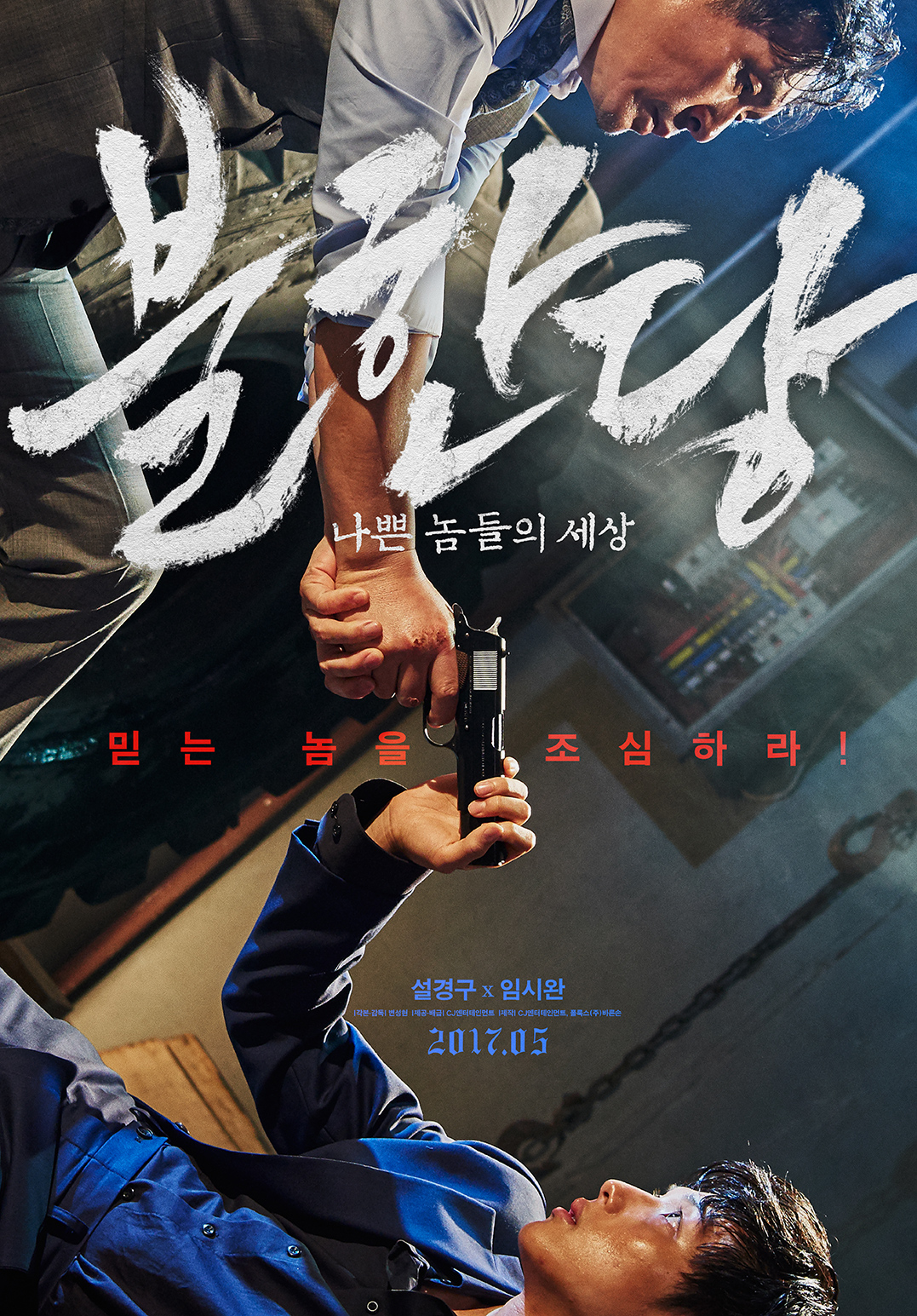
merciless posterHeroic bloodshed is alive and well and living in Korea. The strange love child of Na Hyun’s The Prison, and Park Hoon-jung’s New World, the first gangster action drama from Byun Sung-hyun (previously known for light comedies), The Merciless (불한당: 나쁜 놈들의 세상, Boolhandang: Nabbeun Nomdeului Sesang) more than lives up to its name in its noirish depiction of genuine connection undercut by the inevitability of betrayal. Inspired as much by ‘80s Hong Kong cinema with its ambitious, posturing tough guys and dodgy cops as by the more immediate influence of the seminal Infernal Affairs, Byun’s brutal tale of chivalry is, as he freely admits, an exercise in style, but its aesthetics do, at least, help to elevate the otherwise generic narrative.

That would be – the complicated relationship between young rookie Hyun-su (Im Siwan) and grizzled veteran Jae-ho (Sol Kyung-gu). Hyun-su proves himself in prison by besting current champions bringing him to the attention of Jae-ho – the de facto prison king. Sharing similar aspirations, the pair form a tight, brotherly bond as they hatch a not so secret plan to take out Jae-ho’s boss, Ko (Lee Kyoung-young), leaving Jae-ho a clear path to the top spot of a gang engaged in a lucrative smuggling operation run in co-operation with the Russian mob and using the area’s fishing industry as an unlikely cover.

We’re first introduced to Jae-ho through reputation in the film’s darkly comic opening scene in which Ko’s resentful, cowardly nephew Byung-gab (Kim Hee-won), has a strange conversation with a soon to be eliminated colleague. Byung-gab says he finds it hard to eat fish with their tiny eyes staring back at you in judgement. He admires Jae-ho for his ice cold approach to killing, meeting his targets’ gaze and pulling the trigger without a second thought.

Jae-ho is, indeed, merciless, and willing to stop at nothing to ensure his own rise through the criminal underworld. He will, however, not find it so easy to pull that trigger when he’s staring into the eyes of sometime partner Hyun-su. Neither of the two men has been entirely honest with the other, each playing a different angle than it might at first seem but then caught by a genuine feeling of brotherhood and trapped in storm of existential confusion when it comes to their individual end goals. Offering some fatherly advice to Hyun-su, Jae-ho recites a traumatic childhood story and cautions him to trust not the man but the circumstances. Yet there is “trust” of a kind existing between the two men even if it’s only trust in the fact they will surely be betrayed.

Byun rejoices in the abundance of reversals and backstabbings, piling flashbacks on flashbacks to reveal deeper layers and hidden details offering a series of clues as to where Jae-ho and Hyun-su’s difficult path may take them. Truth be told, some of these minor twists are overly signposted and disappointingly obvious given the way they are eventually revealed, but perhaps when the central narrative is so fiendishly convoluted a degree of predictability is necessary.

The Merciless has no real political intentions, but does offer a minor comment on political necessity in its bizarre obsession with the fishing industry. The police know the Russians are involved in drug smuggling and using the local fishing harbour as a front, but as fishing rights are important and the economy of primary importance they’d rather not risk causing a diplomatic incident by rocking the boat, so to speak. The sole female presence in the film (aside from Hyun-su’s sickly mother), determined yet compromised police chief Cheon (Jeon Hye-jin), is the only one not willing to bow to political concerns but her methods are anything other than clean as she plants seemingly vast numbers of undercover cops in Jae-ho’s outfit, only to find herself at the “mercy” of vacillating loyalties.

Heavily stylised, Byun’s action debut does not quite achieve the level of pathos it strives for in an underwhelming emotional finale but still manages to draw out the painful connection between the two anti-heroes as they each experience a final epiphany. An atmosphere of mistrust pervades, as it does in all good film noir, but the central tragedy is not in trust misplaced but trust manifesting as a kind of love between two men engulfed by a web of confusion, betrayal, and corrupted identities.


Screening as part of the London Korean Film Festival 2017 at Regent Street Cinema on 3rd November, 6.30pm. The Merciless will also screen at:

and will be released by StudioCanal on 13th November.

International trailer (English subtitles)


A Man and a Woman (남과 여, Lee Yoon-ki, 2016)

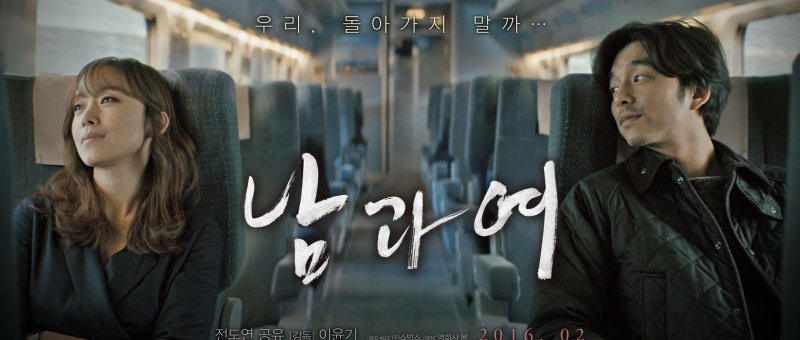
A man and a woman postetSome memories are better when forgotten, according to the heroine of A Man and a Woman (남과 여, Namgwa Yeo) – the latest romantic melodrama from Lee Yoon-ki. The title, deceptively simple as it is, makes plain Lee’s intention to reduce this melancholy love story to a universal level in which two people who share a deep and genuine connection choose to sever it rather than break with social convention and/or incur the additional risks of ongoing entanglement. An elongated Brief Encounter, the ballad of Sang-min and Ki-hong is a strangely old fashioned one in which unhappiness appears to be the ideal choice and a satisfied life an indulgent luxury.

Sang-min (Jeon Do-yeon) has brought her almost teenage son to Finland for treatment at a special needs school. Dropping him off for a school trip, Sang-min gets cold feet and tries to insist on accompanying the boy, only to be roundly refused by the carers. In the car park she runs into another Korean – Ki-hong (Gong Yoo) has been living in Finland for a couple of years and his young daughter attends the school to help with depression. Sang-min presses Ki-hong for information about where the camp is and eventually he offers to drive her. Predictably, they get caught in a snowstorm and have to stay overnight. A visit to a woodland sauna the next day leads to an intimate encounter but as soon as they arrive back in the city, the pair part ways without even exchanging names.

So begins the sad ballad of Sang-min and Ki-hong which eventually takes them back to Seoul where they resume their affair, putting each of their families at risk. Both parties are married already but each desperately lonely in very ordinary ways. Sang-min is a highflying CEO of a small fashion line but also shoulders most of the responsibility of looking after her son who needs a lot of extra help to cope with his autism. Her husband is rational and distant; the marriage is not unhappy but perhaps emotionally unfulfilling. Ki-hong’s marriage is also under strain as his wife has ongoing mental health issues leaving him to look after their equally distressed daughter whilst also pursing a career as an architect. 

The snowbound, silent forests of Finland are an appropriate point for the start of the affair, echoing the couple’s frozen, interior blankness. Sang-min has a pre-occupation with time in Helsinki which she abandons in Seoul, less because of a literal return to the alternation of light and darkness than a inner feeling of it passing at a more predictable rate. In Finland she wanted to know everything, in Seoul she decides perhaps it’s better not to know. Ki-hong, by contrast, is a vague sort of person in both places. Yet their instant connection is real and deep. They echo each other, repeating their shared phrases and sharing something to which they cannot give a name.

Though living in more permissive times, the love of Sang-min and Ki-hong remains impossible despite the ongoing unhappiness of their married lives. Sang-min looks on enviously at her younger sister who is dallying in marrying her American boyfriend. Her sister tells her she wants what Sang-min has – to be “happily” married, entirely unaware of Sang-min’s loneliness and dissatisfaction. Ki-hong’s moribund marriage is difficult enough but the spark has already gone – his wife tells him she feels like a patient, the subject of Ki-hong’s dutiful devotion rather than a woman who is loved by the man with whom she shares her life. Despite all of this the idea of leaving their unhappy situations to find happiness in each other is never a real possibility for either Sang-min or Ki-hong who each remain trapped both by adherence to social conventions and a lingering reluctance to fully commit.

The forces which keep them apart are less societal than personal, an unwillingness to embrace the possibility of happiness or perhaps a sense that it is not something which is permitted to them. Times have moved on since Alec and Laura said goodbye to each other in a station cafe, unspoken emotion filling the room as a busybody inserts herself into a private world about to end. There is no particular reason why Sang-min and Ki-hong cannot be happy, yet they each eventually choose not to be. Frosty indeed, this is a love which is apparently best relegated to memory, untainted by time and eternally pure. Beautifully photographed and heartbreakingly bleak, A Man and a Woman is a sad story of refused connection in which love is a risk too great for two lonely souls.


Original trailer (English subtitles)