Handsome Guys (핸섬가이즈, Nam Dong-hyub, 2024)

The malicious inequalities of the contemporary society are manifested in an angry goat demon who wants to burn the world in Nam Dong-Hyub’s zany horror comedy, Handsome Guys (핸섬가이즈). Adapted from the American film Tucker & Dale vs. Evil, the film plays with prejudice and superficiality along with the pernicious snobbishness of a society founded on status in which, as a would-be-exorcist later says, some have lost the ability to distinguish good from evil.

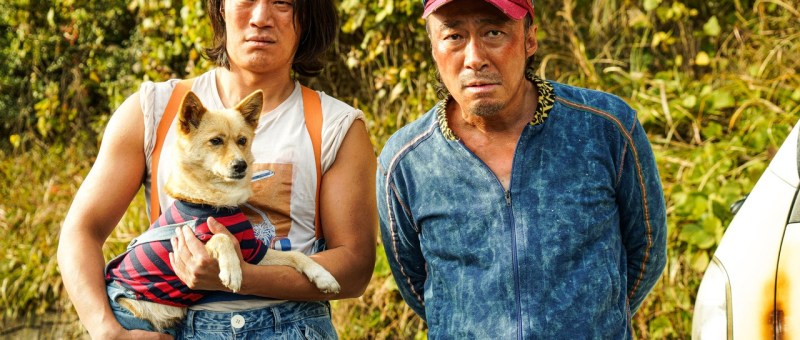
Step-brothers Sanggu (Lee Hee-joon) and Jaepil (Lee Sung-min) often suffer precisely because of this inability. They are actually nice, sweet guys who are always trying to do the right thing but somehow their behaviour always comes off as creepy giving rise to a series of misunderstandings. That might be why they’ve decided to buy a cottage in the woods in order to live a rustic life, only the house they’ve purchased is a little more rundown than the estate agent implied and was previously home to a Catholic priest which doesn’t altogether explain the goat-themed pentagram in the basement. 

Like the brothers, Mina (Gong Seung-yeon) is also a nice person as we can tell because she’s the only one of her friends who wanted to give the goat they hit with their car a proper burial while the others decide to just leave it in the road and drive off. She too thought the brothers were creepy, but is also awakening to the fact that Sungbin (Jang Dong-joo), a rising star of the golf world, is a bit of a twit who wields his privilege like a weapon and has essentially invited her on this country weekend as entertainment. He also bullies his friend/minion Byung-jo (Kang Ki-doong) whom they regard as a loser and is evidently willing to bear humiliation merely to be in the same orbit as a man like Sungbin who with his good looks, refined manners and modern manliness projects an idealised image of contemporary masculinity that is the exact opposite of the brothers. 

In many ways, he is the demonic presence of privileged youth damaging the hopes and prospects of ordinary youngsters like Mina. Believing that she has been kidnapped by the brothers, the three guys set out to “rescue” her but Sungbin doesn’t care about Mina at all and in fact only wants to retrieve his phone which contains evidence of his sordid lifestyle which would destroy his prospects of becoming a celebrity through achieving success in his golfing career. Nevertheless, they decide to attack the brothers with mostly disastrous results believing them to be nothing other than idiotic hillbillies if also depraved backwoods serial killers living an animalistic, uncivilised existence that is far too close to the land for city slickers like Sungbin. 

Once again, the brothers are plagued by a series of bizarre misunderstandings based on the perception of their “ugliness” which aligns them with “evil” and demands they be exiled from a society that equates physical “beauty” with moral goodness. To that extent, having been rescued from falling in a pond, Mina becomes a kind of Snow White ensconced in the home of the brothers and coming to understand that they are actually nice, if a bit strange, and merely have difficulty expressing themselves while their down-to-earth homeliness only seems suspicious to those who are a little less honest with emotions.

Their niceness, however, seems to be perfectly primed to face off against the Goat Demon as they become determined to protect their homestead from the likes of Sungbin who has only contempt for them and thinks they’re merely fodder for his heroic fantasy of retrieving his phone and proving his manliness at the same time. In essence, it’s Sungbin who embodies the ugliness of the contemporary society with its hypocrisy and superficiality, its casual misogyny and petty prejudice, while the brothers later vindicated as angelic presences of altruistic goodness. Slapstick humour mingles with a sense of malevolence and an inescapable cosmic irony that plagues the brother’s with misunderstandings and has kept them isolated, “handsome guys” too beautiful for a profane world and attempting to find refuge in their remote homestead and homoerotic relationship but eventually discovering unexpected solidarity with the equally exiled Mina as she delivers a silver bullet to privilege and patriarchy, sending ancient evil back to whence it came.


Handsome Guys screened as part of this year’s London Korean Film Festival.

International trailer (English subtitles)
Noryang: Deadly Sea (노량: 죽음의 바다, Kim Han-min, 2023)

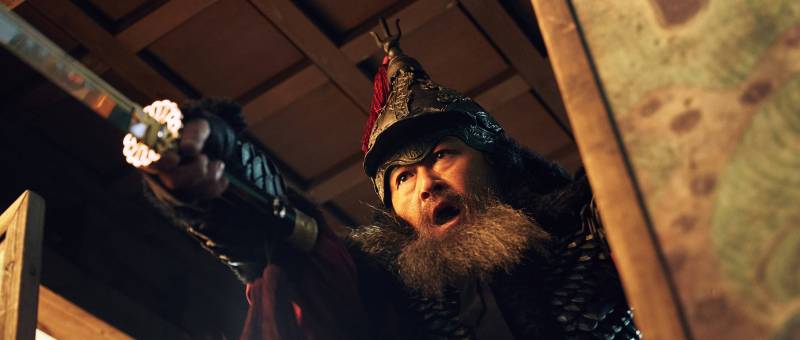
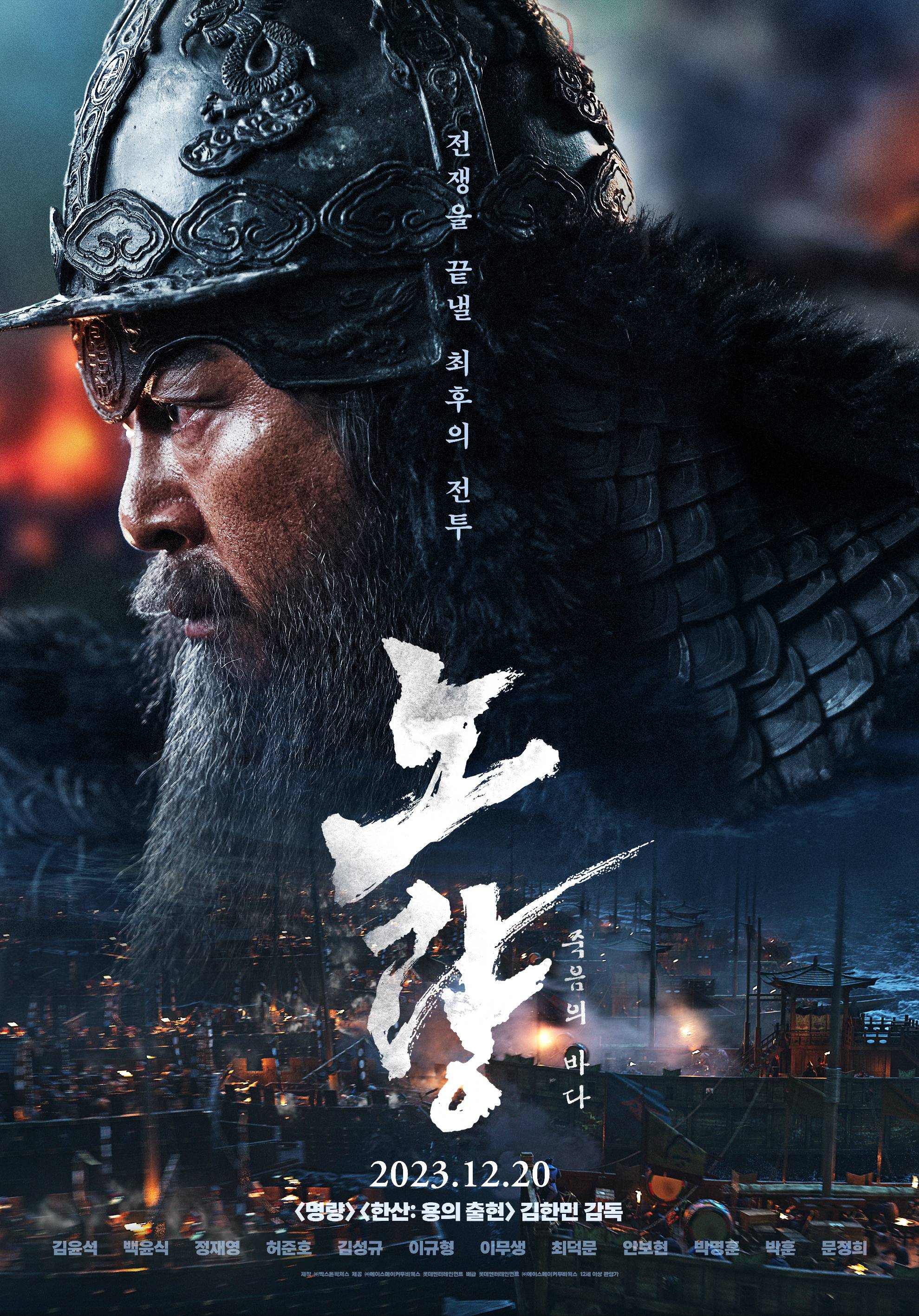
The strange thing about Noryang: The Deadly Sea (노량: 죽음의 바다, Noryang: Jugeumui Bada), the third and final instalment in Kim Han-min’s trilogy about 16th century admiral Yi Sun-sin is that everyone wants to end the war but they all want to end it definitively and so are unable to simply let it run its course. Then again, there is a little more complexity involved in the depiction of Yi in asking whether his desire to repel the Japanese once and for all is really about the national good or personal vengeance for the death of one of his sons at the hands of Japanese raiders.

The opening scenes taking place in 1598 witness the death of Toyotomi Hideyoshi who had launched two invasions of Korea in the previous decade which were in themselves precursors to an invasion of Ming China in an attempt to disrupt the Chinese Tributary System that prevented Japan from trading with China without agreeing to pay them taxes and recognise their political superiority. In the film at least, his deathbed order is to withdraw troops from Korea where they had been unsuccessfully fighting for the previous year. The leader of the Japanese forces, Konishi Yukinaga (Lee Kyu-hyung), is however prevented from leaving by a naval blockade placed by Admiral Yi around their fort on Suncheon Island. With Hideyoshi dead, Yukinaga is keen to return to Japan as quickly as possible in order to defend Hideyoshi’s young son, Hideyori, from Tokugawa Ieyasu who makes a very sinister appearance at Hideyoshi’s deathbed.

One might wonder why Yi does not allow Yukinaga to simply leave and return to Japan now that the war is technically over yet he insists that without a full surrender nothing is guaranteed and the Japanese may simply regroup and return as they had done before. Then again, he’s haunted by nightmares of his son’s death in which he witnesses him cut down by Japanese pirates while unable to intervene dragged back by shadowy figures rising from the water. Yi also later makes clear that his motivation is coloured by a desire for revenge to the extent that he is willing to sacrifice his life for it, which is one thing but it also necessarily means he’s willing to risk the lives of his men over what is partly a personal vendetta. 

Yukinaga, meanwhile, and the Japanese in general are depicted as cruel, ruthless, and cowardly. Shimazu (Baek Yoon-sik), the admiral leading the reinforcements sent to help spring Yukinaga, wilfully fires on his own men in order to cut his way through to the enemy and then threatens to execute sailors who tried to desert. In the end Yukinaga breaks his promise and declines to come to the assistance of Shimazu’s fleet as arranged, turning away and sailing back to Japan (he is subsequently beheaded after being on the losing side of the battle of Sekigahara as he was unable to commit ritual suicide because he was a Christian). They had originally been let down by a Chinese general they’d bribed to assist them but had decided not to turn up given the war was already over, making a secondary agreement with Admiral Chen (Jung Jae-young) who also desires a peaceful end to the disruption but vacillates between each side while not really wanting to get involved before making a fairly disastrous intervention in the final battle. 

There is something a little a uncomfortable in the film’s framing and most particularly in its post-credits scene which reinforces Yi’s conviction that the war isn’t really over without a complete surrender from Japan. In any case, Yi becomes a literal beating heart of the battle banging the drums of war to encourage weary fighters that it isn’t over yet and to keep going to the last man buoyed by the spirits who appear to him of his son and allies who lost their lives fighting similar battles in the previous films. That aside, Deadly Sea is mostly standalone though some knowledge of Japanese and Korean history in the late 16th century is undoubtedly helpful. Kim devotes the second half of the film to a lengthy series of naval battles as Yi tries to lure Shimazu to a vulnerable position, eventually shooting a harrowing long take from the perspective of an ordinary sailor trying to cut his way through after boarding a series of enemy boats. The senseless futility of the violence is the point, but it’s one that’s continually lost on Yi who continues to insist that this war will never really be over until they chase the invaders all the way back to their own islands and into total capitulation even as his quarry sails away towards his own unhappy destiny in an equally turbulent Japan.


International trailer (English subtitles)
Stellar: A Magical Ride (스텔라, Kwon Soo-kyung, 2022) [Fantasia 2022]

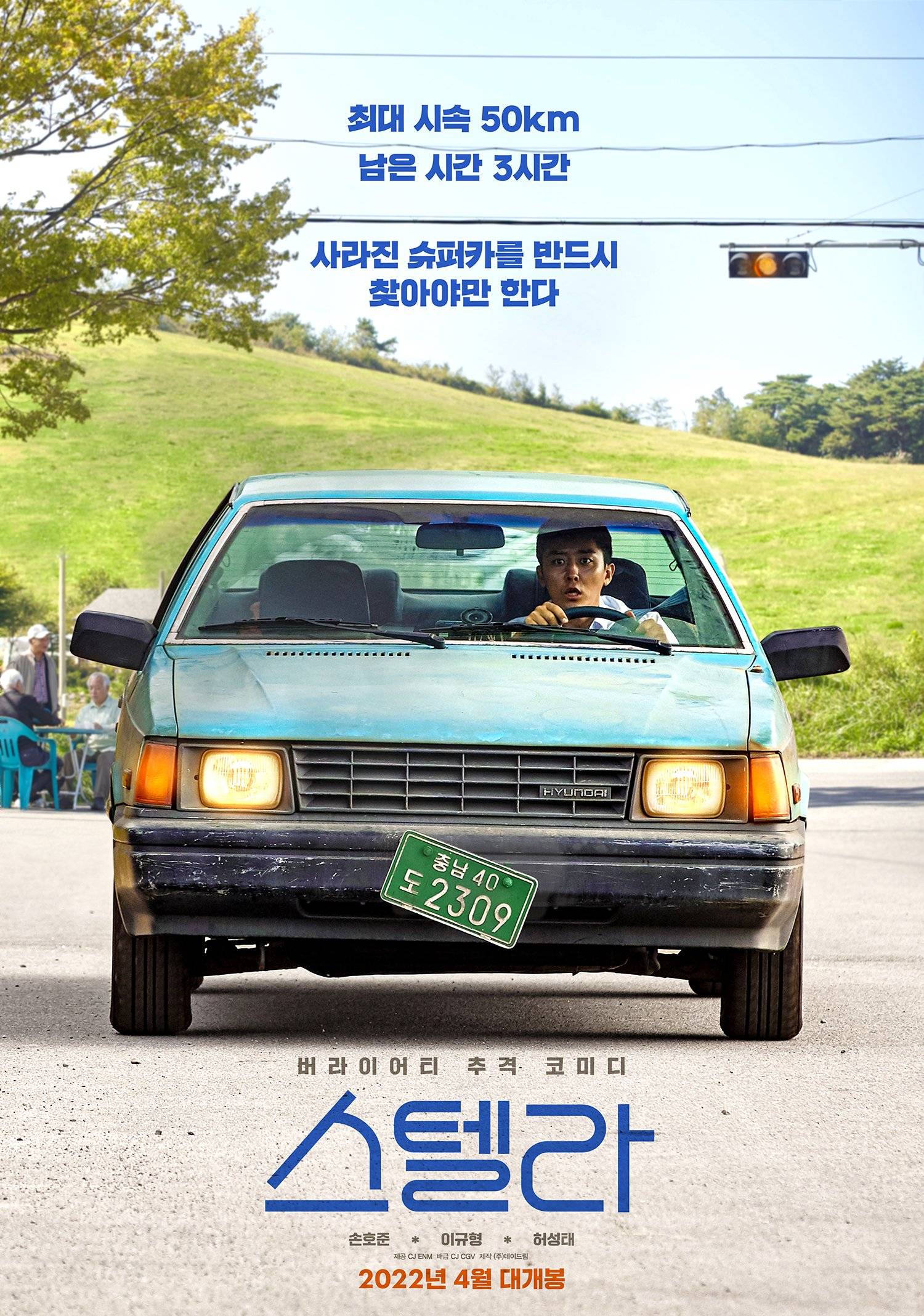
A cynical man learns to forgive the father he resented for abandoning him while on a road trip in his banged up ‘80s Hyundai Stellar in Kwon Soo-kyung’s quirky dramedy, Stellar: A Magical Ride (스텔라, Stellar). Not everyone is suited to being a parent, as he’s fond of saying not incorrectly, but even if his father’s love was imperfect it doesn’t mean it wasn’t there and just because he feels his own father failed him it doesn’t mean he’d do the same to his own child.

Young-bae (Son Ho-jun) makes a living repossessing luxury cars on behalf of shady gangsters. After unwisely entrusting a Lamborghini to his childhood friend Dong-sik (Lee Kyu-hyung) who now runs a logistics company, Young-bae’s life is derailed when he goes awol leaving him to deal with his violent boss. Meanwhile, he’s just found out his wife might be pregnant after stumbling on a pregnancy test in their bathroom and his sister has been in contact to let him know their estranged father has passed away. After the gangsters track him down to the funeral, he manages to make a daring escape by taking off in his father’s old Hyundai Stellar which is not exactly the most ideal getaway vehicle seeing as Young-bae struggles to get it over 30 and the driver’s side door doesn’t open anymore. 

In a way there might be a reason for that, Young-bae both driver and passenger as he shifts over into his father’s old seat at the wheel. For some reason he finds himself talking to the car without really understanding why while the car itself always seems to come to his rescue just at the right moment as a magical twinkling plays in the background. It’s difficult to avoid the interpretation that the car is possessed by his father’s spirit, though it may equally be the manifestations of Young-bae’s childhood memories as he remembers a happier time in his life when he spent time with his father in the car which he described as his family’s “star”. 

“Becoming a father is easy, but living as one is hard” Dong-sik laments having been somewhat humiliated in front of his own kids little knowing that Young-bae is facing just this dilemma as he tries to come to terms with impending fatherhood. As an older man looking back on traumatic childhood memories, he gains a new perspective if perhaps still struggling to forgive his father for abandoning him only later coming to the realisation that he may have shown his love in a different way in thinking that the best thing for his family might be to remove himself from it. 

The root cause of all these problems is however debt. Young-bae resents his father for getting into trouble with loansharks after a traffic accident disrupted his taxi business, while the reason Dong-sik double-crossed him with the car is because he is deeply in debt himself. Even a farmer’s wife he meets explains that they’re alive because they can’t die, now in masses of debt following several poor harvests and the onset of her husband’s lumbago. Young-bae technically makes a living off debt given that the reason most of these cars are being repossessed is that their owners have fallen into financial difficulty. One such man Young-bae targets is currently living in the car when he tries to repossess it having lost his life savings and everything he owned trying to pay for medical treatment for his wife. Young-bae unsympathetically tells him that he hates irresponsible and incompetent fathers projecting memories of his own onto him while unable to show any kind of compassion or mercy for the difficulties he is facing. As the film opens, he helps save a man who was planning to take his own life but only so he can get his signature on the repossession papers before he passes away. 

Literally having to take his father’s perspective by sitting in the driving seat of his car while interrupted by nostalgic songs from the tape deck which seems to have a mind of its own, Young-bae comes to an acceptance of paternity while making peace with his father’s memory. A quirky road trip movie with a series of strange characters who all have important lessons for Young-bae about the nature of friendship and family, Stellar is certainly a magical ride through frustrated grief and paternal anxiety finally arriving at a place of warmth and safety free of past trauma and resentment in the driving seat of a beaten up family car. 


Stellar: A Magical Ride screened as part of this year’s Fantasia International Film Festival.

International trailer (English subtitles)

Romang (로망, Lee Chang-geun, 2019)

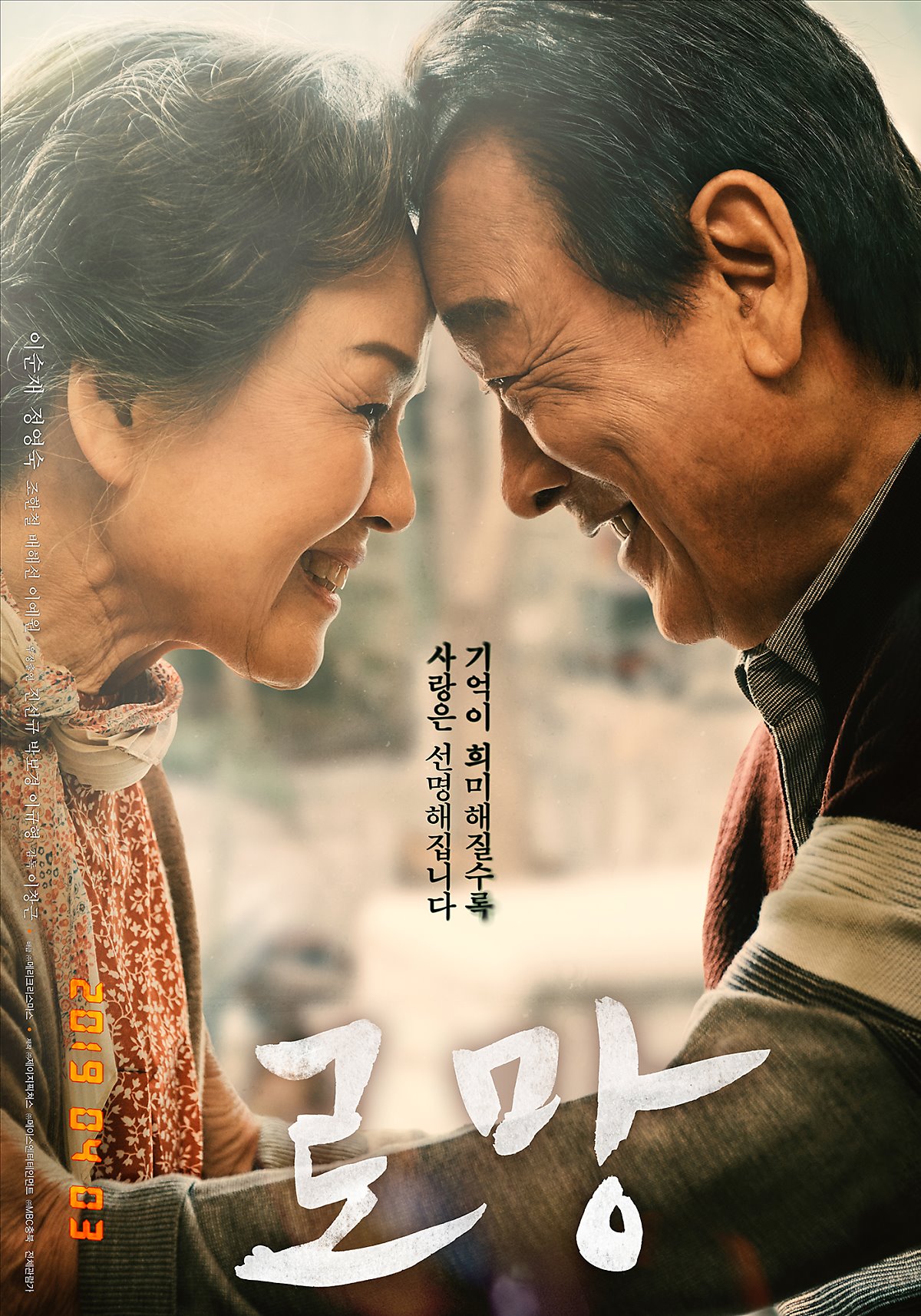
romang posterKorea, like many developed nations, is facing a demographic crisis as society continues to age at an unprecedented pace. While cultural norms demand deference to older people, the many problems they face in a society where welfare provisions are still minimal have often gone unaddressed in the assumption that family members have a duty to look after their relatives in their old age. This is, however, not always possible and there are occasions where considering opting for outside help becomes unavoidable.

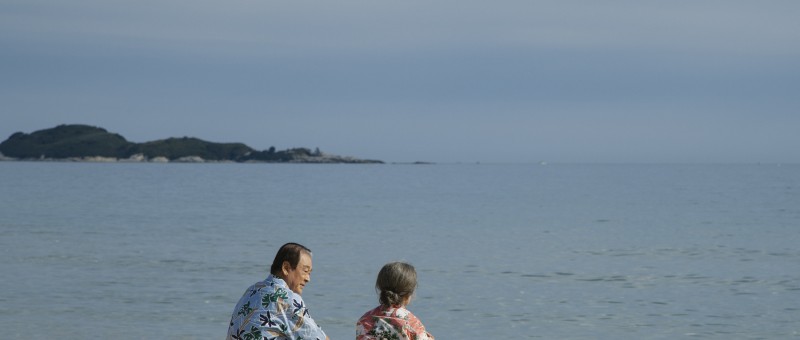
This is the dilemma faced by elderly taxi driver Nam-bong (Lee Soon-jae) as he gradually comes to the conclusion that his wife, Mae-ja (Jung Young-sook), is suffering from dementia. The couple share their house with grown-up son Jin-soo (Jo Han-Chul), his wife Jeong-hee (Bae Hae-sun), and their young daughter Eun-ji who had mostly been cared for by Mae-ja while Jeong-hee was the family’s only breadwinner seeing as Jin-soo is an out of work academic (not particularly actively) looking for a new position. Mae-ja’s condition gradually declines to the point at which she begins to pose a danger to her remaining family members causing Jeong-hee to leave Jin-soo and take Eun-ji to her parents’ out of the way.

Gruff and insensitive, Nam-bong decides to send Mae-ja away to a hospice despite Jin-soo’s pleas but eventually reconsiders and brings Mae-ja home where he is committed to care for her himself. However, he too begins to experience the early signs of dementia and is at a loss as to how to proceed in the knowledge that it will become increasingly difficult for him to look after his wife or she him.

The onset of dementia, the film seems to imply, perhaps allows the troubled couple to begin to move past a central moment of trauma in their relationship which has left a lasting thread of resentment between them. Nam-bong, a chauvinistic, difficult husband is not well liked by his family members and most particularly by his son while Mae-ja had, maybe reluctantly, stood by him physically at least if not emotionally. His decision to send Mae-ja away is then a double betrayal in his abnegation of his duties as a husband and in his spurning of all Mae-ja has had to put up with over the last 40 years.

The distance between the couple has also had an effect on Jin-soo who always felt himself pushed out as an accidental victim of his parents’ emotional pain. It is clear that Nam-bong, a traditionally minded patriarch, has little respect for his son who, in his view, is a failure for not having secured a steady career which can support a wife and child, “allowing” his wife to work in his stead. For Nam-bong, being a man is all about “supporting” a family but not actually having to be around very much. For Jin-soo, a modern man, it’s very different. He wants to be there for his wife and daughter so that they have good memories of him hanging out and having fun rather than being that guy who turns up at dinnertime to shout at everyone and then leaves again.

Nevertheless, Nam-bong is eventually forced to accept his emotional duty to his family when he decides to care for Mae-ja. While their mutual condition begins to bring old, negative emotions never fully dealt with to the surface, it also allows them to rediscover the innocent love they had for each other as a young married couple. When Jin-soo eventually leaves the family home to return to his wife and child, the couple decide to isolate themselves, holing up in the living room and communicating via a series of poignant post-its which remind them to care for each other as the darkness intensifies.

Yet it’s not quite all sweetness and light as the elderly romantics rediscover a sense of warmth and connection they assumed long lost. Despite the support shown for Jin-soo’s modern parenting, there is a notably conservative spin placed on the story of Mae-ja and Nam-bong which may very well mark them out as simply being of their time but a late poignant scene in which the young Mae-ja declares her dream to be having a good husband while Nam-bong’s is to support a family sits uncomfortably in its unsubtle defence of traditional gender roles. To make matters worse, the final moments seem to suggest that there is no place for the elderly couple in contemporary society in allowing them (well, Nam-bong) to take control of their destinies only in the most final of ways. Maudlin and sentimental, Romang sparkles when embracing the unexpected cuteness of the late life love story but too often opts for easy melodrama over emotional nuance in its refusal to address its darker elements and eagerness to romanticise the business of ageing.


Romang (로망) was screened as part of the 2019 Udine Far East Film Festival.

International trailer (English subtitles)
Innocent Witness (증인, Lee Han, 2019)

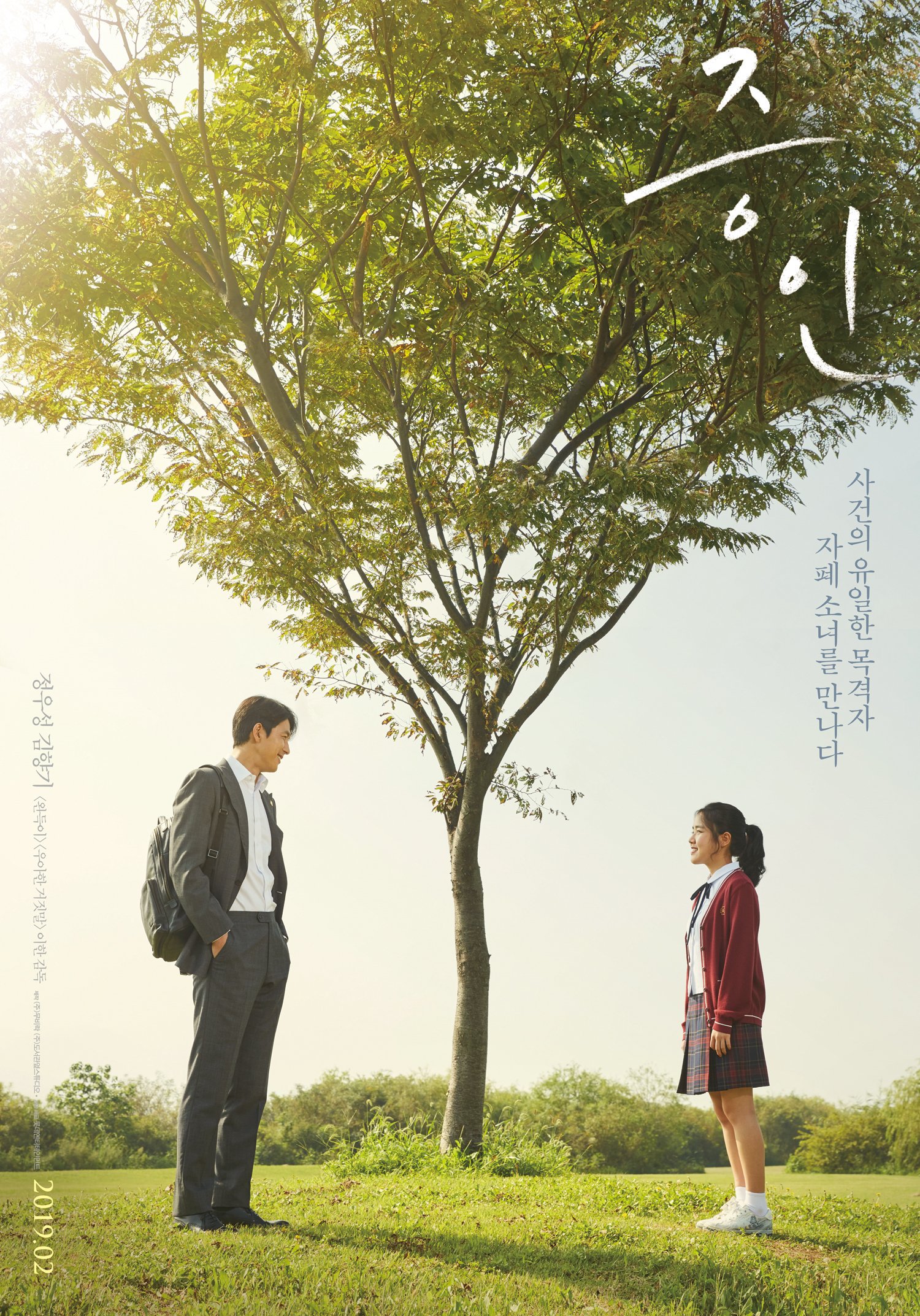
Innocent Witness poster“Are you a good person?” asks the confused girl at the centre of Lee Han’s Innocent Witness (증인, Jeungin). Her question comes after a series of surprising revelations which have left her questioning all of her relationships and the nature of the world itself, yet it’s one that’s largely impossible to answer. Formerly idealistic lawyer Soon-ho (Jung Woo-sung) thinks he’s been given the kind of case he can get behind, but as usual nothing is quite as it seems and if he wants to get to the truth of the matter he’ll have to learn to think differently.

Soon-ho began his career as an activist lawyer working for NGOs, but now he’s “sold out” to join an elite law firm with a dodgy reputation in order to pay back debts his father unwisely guaranteed for a friend. Because of his precarious financial status, Soon-ho has put-off marriage and relationships, despite his father’s nagging, believing them to be out of his reach and is conflicted by his recent career choices which leave him on the opposite side from old friends. When he’s handed a pro-bono case to defend a housekeeper (Yum Hye-ran) accused of murdering her employer he thinks it’s the best of both worlds. All the evidence points to suicide, but there’s a witness testimony which suggests otherwise. Seeing as the testimony is from a 15-year-old autistic girl who witnessed the crime from across the street, Soon-ho feels he can easily have it discounted.

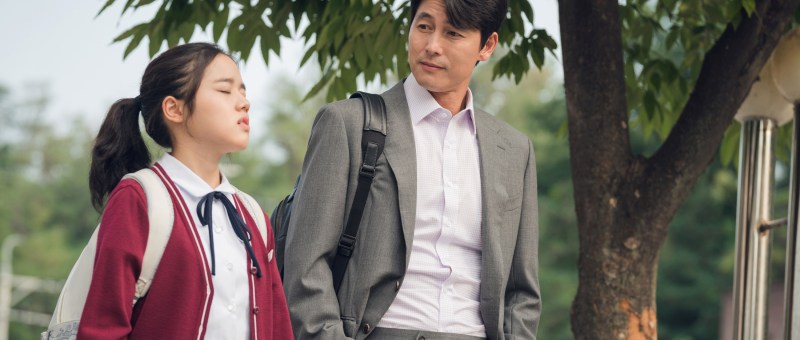
Like many in the film, Soon-ho doesn’t know much about autism and writes Ji-woo (Kim Hyang-gi) off as “mentally impaired”, believing that will be enough for the jury to disregard her testimony especially as it so strongly conflicts with the rest of the evidence. Refused permission to meet with her in person, Soon-ho begins trying to befriend Ji-woo on the way home from school and eventually comes to realise that she is highly intelligent if easily distracted and uneasy in social situations. What he discovers is not that Ji-woo is unable to communicate with the world, but that the world is unwilling to communicate with her. If he wants to bond, he will need to learn her language and earn her trust.

Trust maybe he hard to come by as he witnesses the minor aggressions she goes through every day like the horrible boys at school who taunt her mercilessly and the supposed friend bullying her in secret, not to mention a world full of barking dogs and ringing telephones. When he finally puts her on the stand, his own co-defence chair reads out passages from a book about autism which describe it as a “mental disability” before painting her as a deranged idiot who probably half-imagined what she saw from things she’d seen on television – an act which has profound ethical implications in eroding Ji-woo’s sense of self. Ji-woo told Soon-ho she wanted to be a lawyer because lawyers are good people who help those in need, but Soon-ho has to ask himself whose interest destroying a 15-year-old girl on the stand is really serving.

The law firm Soon-ho joined does seem to be a sleazy one. Despite hiring him to improve their image, Soon-ho’s boss tells him that his new clients won’t be comfortable with him unless he gets himself a little “dirty” while inviting him to awkward parties with call girls in high class hotels. Meanwhile, Soon-ho remains conflicted – especially after potentially losing a 20-year friendship through saying the wrong thing to a still idealistic lawyer and passing it off as an attempt to be “realistic”. Realism is one thing, but Soon-ho seems to have given up and decided if you can’t beat them join them. His dad, sensing his son’s unease, writes him an impassioned letter in which he tells him that the most important thing in life is to be happy with yourself, everything else you can figure out later.

Realising his mistake, Soon-ho begins to see the light. Through bonding with Ji-woo, he learns that seeing things differently can be advantage and that society should have a place for everyone where they shouldn’t have to worry about being themselves. Tellingly, no one ever bothered to ask Ji-woo about the most important part of evidence in her testimony because they all had too many prejudices about her delivery. Only Soon-ho, having bothered to get to know her, was able see what it was that she wasn’t saying. The film perhaps missteps when it has Ji-woo come to the conclusion that she can’t be a lawyer because of her autism, but otherwise presents a sensitive portrayal of a society trying to be better in accommodating difference and doing it with empathetic positivity while subtly waving a finger at the self-serving forces of conservative corruption.


Innocent Witness was screened as part of the 2019 Udine Far East Film Festival.

International trailer (English subtitles)