Cold War 1994 (寒戰1994, Leung Lok-Man, 2026)

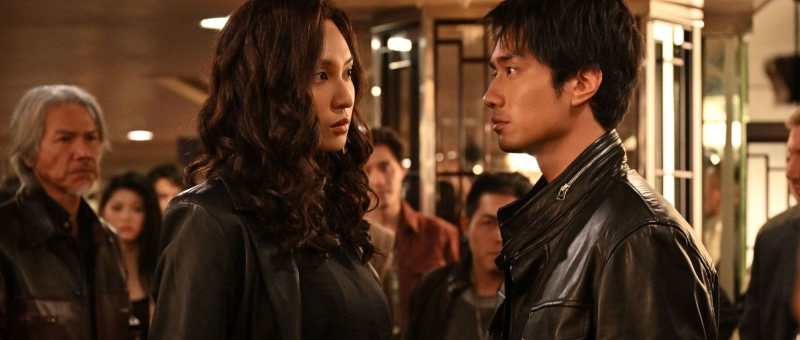
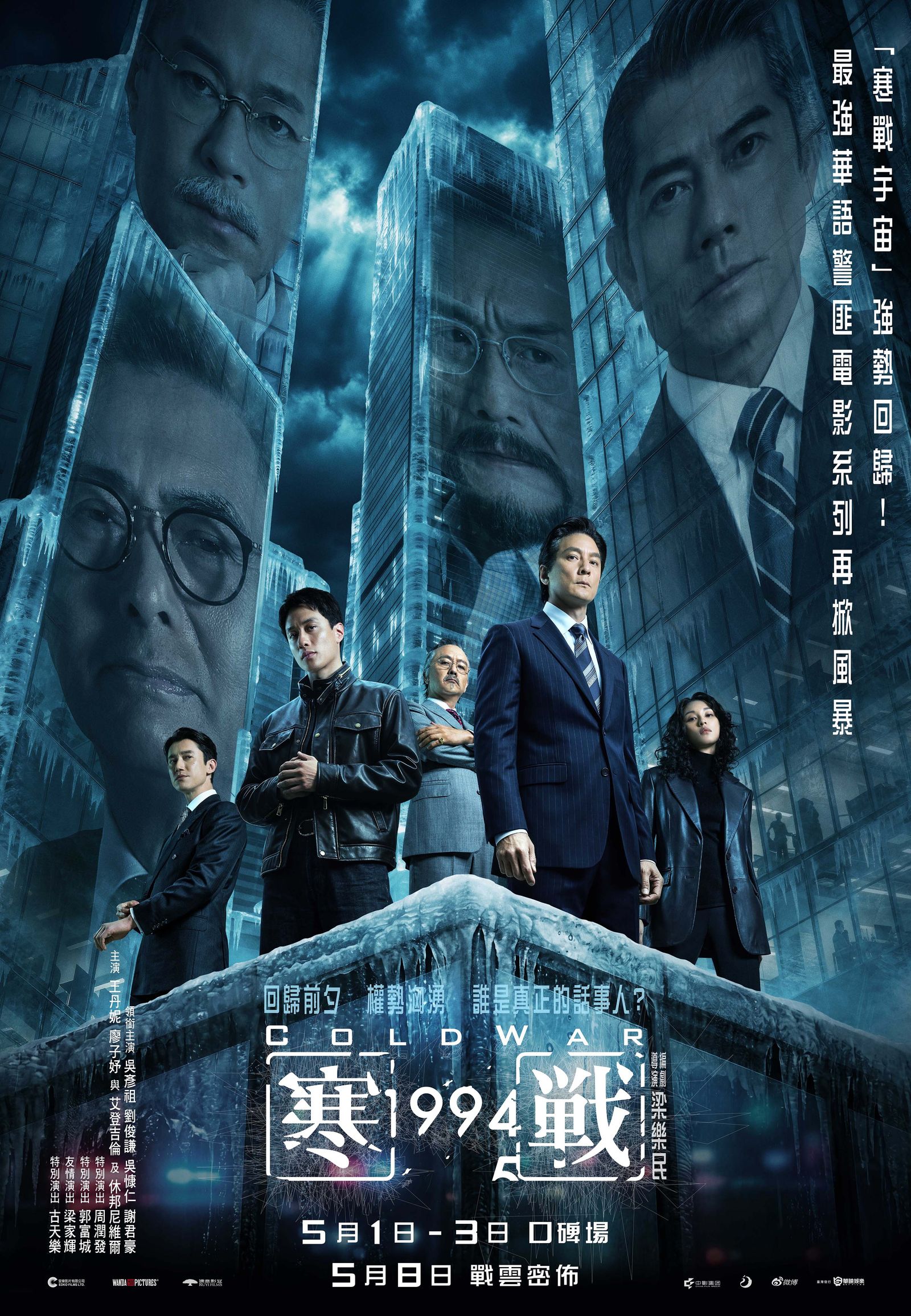
A compromised policeman finds himself caught between conflicting sources of authority in Leung Lok-Man’s action thriller Cold War 1994 (寒戰1994). A kind of prequel to Leung’s Cold War series, the film opens shortly after the events of the second films in 2017 with MB Lee (Tony Leung Ka-fai) being kidnapped amid a possible return to power under a new government. The events echo a case from 20 years earlier in which a prominent industrialist was kidnapped by Triads at the behest of arch kingpin Peter Choi (Daniel Wu).

The irony is the MB Lee (Terrance Lau) of 1994 finds himself in the same position as his nation as the Handover inches ever closer. Caught between the police force, colonial authorities, and Choi, MB begins to look for new ways to protect his men in  the new post-Handover reality, which makes him an awkward stand-in for Hong Kong itself as something distinct from the twin colonial powers of Britain and China. Just the Handover has produced a power imbalance allowing Choi to rise, a change of leadership at the Lo Yuen Triad society has provided an excuse for Tiger to pursue “independence”, which he largely seems to have done through an ill-advised involvement with Choi. 

Tiger is responsible for the kidnapping of KF Wong, the brother-in-law of the influential businessman William Poon (Tse Kwan-ho). The Poons are old an old money family who may have made their fortune doing things not so differently from Triads, but have maintained their privilege through loyalty to the British. All of the Poons have distinctively British Western names and apparently frequent visitors to Downing Street. Now times are changing, however, William Poon no longer wants to do business with the colonial authorities, while KF Wong’s Victoria Redux plan essentially attempts to maintain the conditions of the colonial era. Though he saw him as a successor, perhaps KF Wong’s kidnapping works out pretty well for Poon.

Just as Tiger and MB Lee attempt to break free from parental legacies, William’s son Simon (Wu Kang-ren) burns with resentment that KF Wong has replaced him as the heir to the Poon group while it seems that Wong also married the woman that Simon had been in love with. He then is also looking for a kind of “independence” in escaping his father’s control and taking the family business for himself. Meanwhile, others assume that kidnapping Wong was a means of destabilising the Poon’s economic empire while they attempt to shore up their power in the post-Handover society. MB wants to find Wong not only because it was his case, but as a means of reclaiming a kind of order and clearing his name after the botched operation raises questions about his loyalty.

Loyalty is a question for everyone with the implication that there may be rewards for those “loyal” to the colonial authorities even after the Handover. The film positions the UK as an antagonist then and in the present day as evidenced by a giant spy satellite trained on the island. MB Lee is pursued and constrained by Special Branch and its British investigators who later take his entire team into custody. After the Wong operation ends in failure, MB is courted by British authorities who tell him that they see him as a possible future commissioner if he agrees to remain loyal to the British and advance UK interests even after the Handover. The British actors deliver their lines with docudrama-style realism otherwise at odds with the rest of the film, but adding to a sense of historical veracity to their machinations. Despite his later actions, MB apparently refuses but uses his leverage to free his men and carve out a niche for himself at the OCTB which is, presumably, the third way he intends to pursue in limited complicity as a means of protecting the people of Hong Kong. 

Back in 2017, police commissioner Lau (Aaron Kwok) and lawyer Kan (Chow Yun-fat) remain unconvinced fearing that MB’s file has been tampered with in an attempt to rewrite history while the contemporary city remains shrouded in fog. Much of the film is seemingly a set up for its sequel, but succeeds in sowing the seeds of mystery in probing the complex relationships between local elites and colonial authorities along with the shifting balances of power in the pre-Handover society while providing the impressive, high-octane action sequences the series is known for.


Trailer (Traditional Chinese / English subtitles)

Anita (梅艷芳, Longman Leung Lok-man, 2021)

“I have the spirit of Hong Kong in me, I won’t resign to fate so easily” insists Anita Mui in a television interview following a year-long career break after a slap in a karaoke bar earned by standing up to a drunken gangster sparked a turf war and sent her into a temporary exile in Thailand. Running away wasn’t something Anita Mui was used to, though she had been it seems humbled by the experience and in Longman Leung Lok-man’s perhaps at times overly reverential biopic of the star who passed away of cancer at 40 in 2003, primed to rise stronger than before with greater focus and determination to serve the people of her home nation. 

Leung does indeed paint Anita (Louise Wong) as a daughter of Hong Kong, opening with her childhood as a vaudeville double act with self-sacrificing sister Ann (Fish Lew) in 1969. Jumping forward to 1982, the pair enter a TV talent competition but only Anita makes through to the final and then eventually wins launching herself into superstardom and path to success that later seems to her to have been too easy. Indeed, Leung frequently cuts to montage sequences featuring stock footage of the real Anita Mui receiving a series of awards and eventually moving into a successful film career with her appearance in Stanley Kwan’s Rouge bringing her best friend Leslie Cheung (Terrance Lau Chun-him) with her as she goes. 

If there’s a defining quality beyond her defiance that Leung is keen to capture, it’s Anita’s generosity and kindheartness. In the opening sequence, the 6-year-old Anita goes to great pains to rescue a balloon trapped in a tree for a little boy who then runs off happily forgetting to say thank you. Ann tells her off for going to trouble for someone who couldn’t even be bothered to say thanks but as she said it makes no difference she’d just just have told him it was no bother and the whole thing would be a waste of time. Her path to fame is not one of ruthless, she is keen to pay it forward and to help others where she can. She is obviously pained when her sister is cut from the competition and mindful of her feelings while bonding with life-long friend Leslie Cheung after his performance at a nightclub bombs while hers is a hit thanks in part to her ability to charm her audience in three different languages switching from Cantonese to Mandarin for a contingent of Taiwanese guests and Japanese for a gaggle of businessmen sitting at the back during a rendition of classic unifier Teresa Teng’s Tsugunai. 

Then again, though we see much of Anita Mui’s post-comeback charity work including that to raise money for flood victims in Taiwan, we obviously do not see any of her pro-democracy political activism or role in assisting those fleeing the Mainland after Tiananmen Square. Such controversial aspects of her life may be taboo for the contemporary Hong Kong or indeed Mainland censor, as perhaps are any overt references to Leslie Cheung’s sexuality even if Anita’s other key relationship, her stylist Eddie, is played with a degree of camp by a fatherly Louis Koo. For similar reasons, despite the emphasis on supporting other artists her major protege Denise Ho, who was recently arrested for her support of Hong Kong independence, is also absent. 

Meanwhile, the film is otherwise preoccupied with a more literal kind of maternity in directly contrasting the course of Anita’s life with that of her sister Ann who married and had children but later passed away of the same disease that would claim Anita just a few years later. The film presents her life as one of romantic sacrifice, that she was forced to choose between love and career and never found true romantic fulfilment. The love of her life, according to the film, was Japanese idol Yuki Godo (Ayumu Nakajima) who was more or less ordered to break up with her because the Japanese idol industry is much more controlling of its stars than that of Hong Kong, only his real life counterpart Masahiko Kondo was actually involved in a fair amount of scandal a short time later having become engaged to a Japanese idol who broke into his apartment and attempted to take her own life after he broke up with her and began dating another pop star. Anita is often described as the Hong Kong Momoe Yamaguchi with whom she shares her low and husky voice as well as rebellious energy, though Momoe Yamaguchi in fact retired quite abruptly after marrying her on-screen co-star and devoted herself to becoming the perfect housewife and mother in an echo of the romantic destiny the film implies continually eluded Anita culminating in her decision to marry the stage during her final concert. 

At the end, however, the film returns to her as a daughter of Hong Kong embodying a spirit of rebellion it subversively hints is now in danger of being lost. Yet Anita refused to resign herself to fate, ignoring her doctor’s advice to stop singing after developing polyps in her vocal chords and again when told to stop working during her treatment for cancer. Her defiance and resilience along with the conviction that anything is possible if you want it enough echo the spirit of Hong Kong in 2003 though later wounded by her loss and that of Leslie Cheung who tragically took his own life a few months before Anita too passed away. Featuring a star-making turn from model Louise Wong in her first acting role, Leung’s brassy drama capturing the fervent energy of Hong Kong in its pre-Handover heyday is a fitting tribute to the enduring spirit of its defiant heroine. 


Anita screens at the Soho Hotel, London on 8th July as part of Focus Hong Kong’s Making Waves – Navigators of Hong Kong Cinema.

International trailer (English subtitles)

Teresa Teng’s Tsugunai

Momoe Yamaguchi – 曼珠沙華 (Manjushaka)

Anita Mui – 曼珠沙華