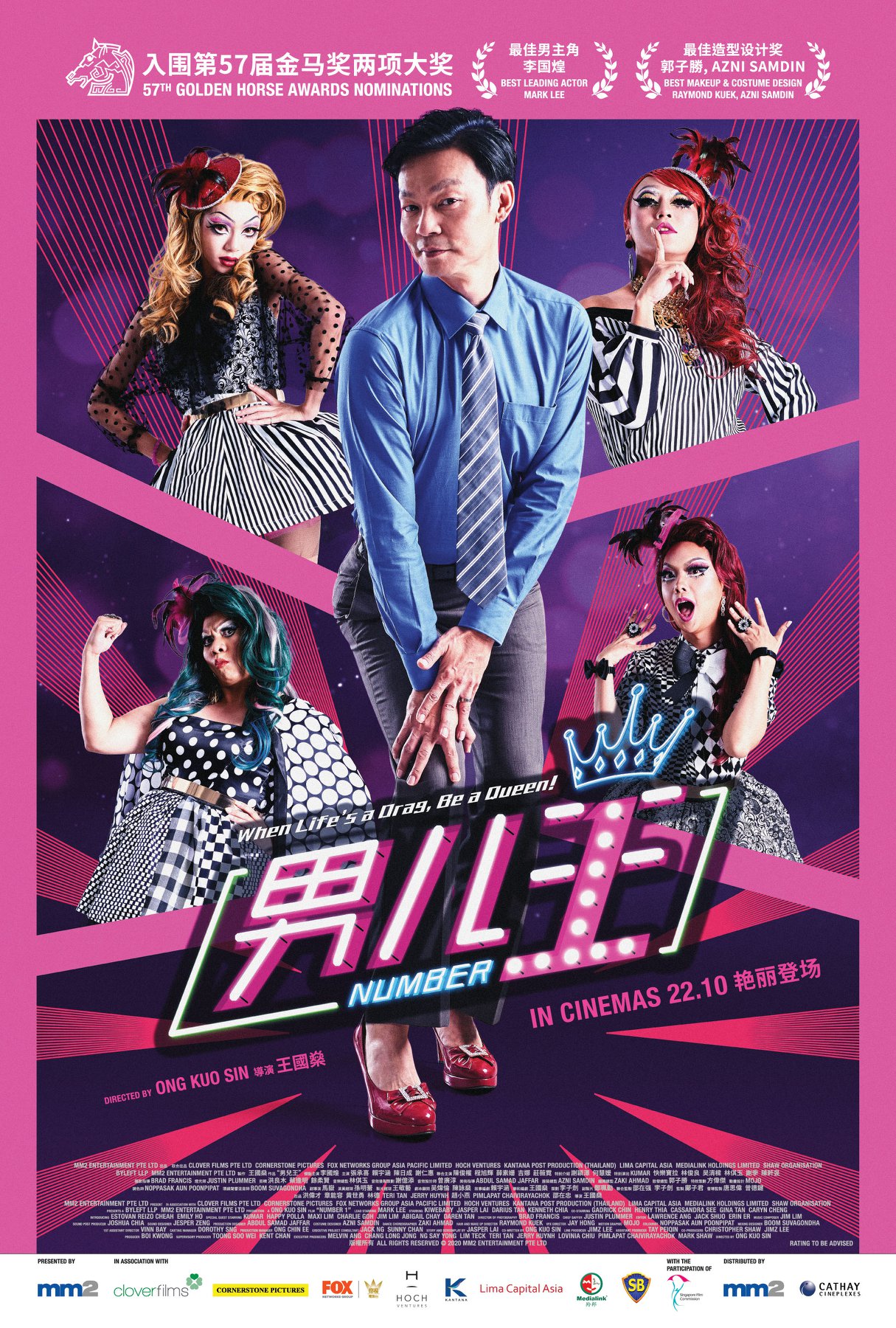
Number 1 (男儿王, Ong Kuo Sin, 2020)

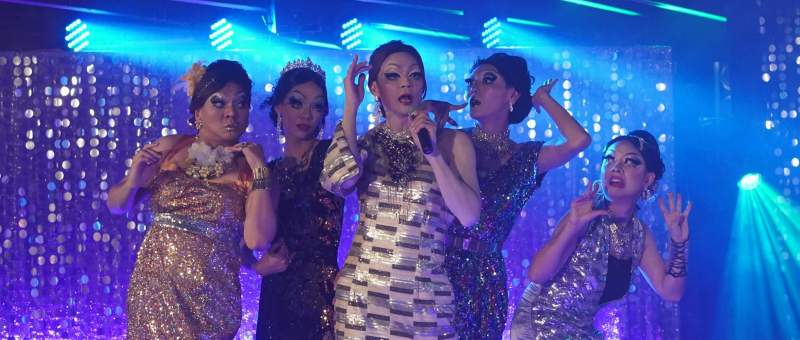
“What I don’t understand is your so-called rules and traditions. Just what good does it do?” a newcomer ironically asks of a veteran drag artist, having perhaps shed but not yet quite acknowledged his original prejudice towards those different from himself. Ong Kuo Sin’s cheerful drag dramedy Number 1 (男儿王, Nán’ér Wàng) examines attitudes to the LGBTQ+ community in the comparatively conservative nation of Singapore where sexual activity between men remains illegal even if the law is not heavily enforced, while subtly undermining oppressive group think as to what constitutes a “successful”, “normal” life. 

44-year-old Chow Chee Beng (Mark Lee Kok Huang) is a successful general manager at a construction firm where he’s worked for the last 17 years which is the entirety of his working life. It comes as quite a shock to him therefore when he’s unceremoniously let go, passed a letter of termination seconds after entertaining everyone with a song at the office New Year party. Given his experience, he perhaps feels that getting another job won’t be too difficult, but as various employers tell him he’s either “too old” or “too expensive” for the competitive Singapore job market. Faced with the prospect of telling his wife they’ll have to sell their luxury detached home because he can’t make the mortgage payments, Chee Beng is forced to accept the last resort offer from his recruitment advisor which happens to be as an AGM at local drag bar Number 1. 

Like many men of his age, Chee Beng has a rather conservative mindset and had been living a very conventional life of suburban, middle-class success. His wife Marie (Gina Tan) even complains to her sister-in-law that their new swimming pool is a little on the small side and she’s thinking of swapping it for a bigger one. Yet as his performance stint at the company party implies, he is perhaps holding a part of himself back thinking that his love of singing is frivolous or even a little taboo given his wife’s mild embarrassment. The drag bar is therefore firmly outside his comfort zone. Not only does he lack experience managing an entertainment venue, but finds it difficult to overcome his sense of discomfort with those living lives so different from his own. When one of the drag artists turns out to be a deserter from the army and is carted off by the military police, Chee Beng finds himself press-ganged into performing and discovers that he is something of a natural though he doesn’t understand why they have to lip-sync to pre-recorded tracks rather than singing live. 

Chee Beng’s point seems to hint at a concern about the ability to completely embody the performance and fully express himself, yet he’s also a straight man wading into a predominantly LGBTQ+ community he knows nothing about and insisting on having his own way. That brings him into an additional conflict with former number one Pearly (Kiwebaby Chang) who dragged him on stage in the first place because with only four performers she wouldn’t be able to stand in the middle. Pearly might feel that lip-syncing completes her performance because she lacks the ability to sing in a feminine register, yet Chee Beng ironically accuses her of mandating a no singing rule in order to mask her own weakness while simultaneously attempting to mandate live singing in order showcase his strength as a performer. 

But even if he’s come to feel at home in the drag community, Chee Beng continues to keep his new life a secret from his socially conservative wife. When a video of him singing at the club goes viral, Chee Beng’s wife and sister-in-law react by taking the children’s phones away as if seeing it is in some way harmful. Later on seeing a poster for the Queens she irritatedly tells Chee Beng they should be banned by the government for giving children “wrong ideas”. Meanwhile their son Mason is conflicted in being a boy asked to play the part of Mulan in the school play, claiming he dislikes the character of Mulan because she “lies” about who she is while his father can only sympathise offering the justification that sometimes people have to lie in order to protect those they love. When Chee Beng’s identity is exposed, little Mason begins receiving vile hate mail online and all his friends stop playing with him. Yet he doesn’t see anything wrong in “wearing a dress” and can’t understand why everyone, including his mother, seems so upset. Marie complains that Chee Beng’s new life is “confusing” for Mason, but he doesn’t seem confused at all because he hasn’t yet had time to absorb the “wrong ideas” from the conservative world around him. 

That conservative world has been a very dark place for some of the Queens, Pearly revealing that she believes her coming out drove her parents in Taiwan into an early grave, while bar owner Fa’s brother took his own life, and the gang experience homophobic harassment from a man who turns out to be the high school bully who made one of their live’s a misery. Nevertheless, the sudden and otherwise unexplained reversal in the attitudes of some seems more than a little contrived for an otherwise uncomplicated happy ending despite Chee Beng’s defiant message that he wants his son to grow up “different” in that he learns early on not to be prejudiced against those different from himself and goes on to be happy with whoever he is rather than blindly following the rules of social conformity. Drag is for everyone, and becoming a member of the supportive drag queen community even helping out fundraising for a local LGBTQ+ friendly nursing home, Chee Beng begins to see a different way life that opens his eyes to the constraints of the way he lived before swapping the trappings of extreme consumerism for personal fulfilment and compassion for others. 


Number 1 screens at London’s Genesis Cinema on 18th September as part of this year’s Queer East.

Original trailer (English subtitles)

My Sorry Life (愛のくだらない, Kozue Nomoto, 2020)

A dejected, self-involved TV producer is forced into a moment of introspection when dealing with relationship breakdown and career setback in Kozue Nomoto’s ironic character study My Sorry Life (愛のくだらない, Ai no Kudaranai). Examining a number of social issues from women in the workplace to attitudes to LGBTQ+ people in contemporary Japan, Nomoto’s unflinching drama never lets its abrasive heroine off the hook even as she begins to realise that her own less than admirable behaviour has contributed to her present sense of despair and impossibility. 

Kei (Maki Fujiwara) has been in a relationship with former comedian Yoshi (Akiyoshi Okayasu) for the last five years, but it’s clear that she is beginning to tire of him. The couple are supposedly trying for a baby, but Kei has been taking contraceptive medicine behind Yoshi’s back while complaining that she doesn’t understand why he insists on getting pregnant before getting married when he hasn’t even met her parents. At work meanwhile she’s beginning to feel left behind, secretly jealous when a slightly younger female colleague reveals she’s been promoted to become the lead producer on a variety show and a little resentful when her idea for a programme focusing on the lives of ordinary people as opposed to celebrities is turned down by her bosses. The idea does however bring her to the attention of indie exec Kinjo (Takuma Nagao) who wants to bring her on board to produce a web series he’s about to launch along the same lines. And then, Yoshi drops the bombshell that he thinks he’s pregnant which is, to say the least, unexpected. 

Yoshi’s surprise announcement signals in a sense a reversal of traditional gender roles within their relationship with the man the nester and woman reluctant commitmentphobe. Kei is also the main financial provider, but on some level both resents and looks down on Yoshi for his lack of conventional masculinity having given up his comedy career to work part-time in a supermarket, obsessing over discount produce like the pettiest of housewives but often indulging in false economies such as reduced price yet still extravagant sake. Strangely, Kei goes along with Yoshi’s delusion taking him to a fertility clinic where she assumes they’ll set him straight but thereafter begins staying with a friend who ironically has an infant child and may be experiencing some difficulties in her marriage to which Kei remains entirely oblivious. 

Despite her journalistic desire to witness everyday stories, Kei is often blind to those around her never stopping to wonder if Yoshi is trying to tell her something through his bizarre pregnancy delusion or if her friend might need someone to talk to. She does something similar on spotting the office courier (Yukino Murakami) whom many of the ladies have a crush on using the ladies’ bathroom. Assuming the delivery guy is a lesbian she asks him about coming on the webshow, becoming even more excited when he explains that he’s a transman after inviting Kei to an LGBTQ+ friendly bar where he works part-time. Kei doesn’t realise that her throwaway comment that “that sort of thing is popular now” hurts Shiori’s feelings and leaves him feeling exploited as much as he would like to appear on the programme to raise awareness about LGBTQ+ issues. 

For her part, Kei is obviously not homophobic but does undoubtedly treat Shiori and his friends with a degree of exoticism, declaring that she’s never met anyone like them before while staring wide eyed in wonder as if these concepts are entirely new to her. Kinjo, the producer of the web series, is squeamish when Kei raises the idea, introducing her to a male scriptwriter who obviously already has his own concepts in mind, rudely ignoring Kei’s input while dismissively allowing his drink to drip on her proposal. The studio turn the idea down on the grounds that LGBTQ+ topics are “inappropriate” because there may be children watching and parents won’t want to explain words like “gay” or “lesbian” to their kids. Kei is rightly outraged, but she’s also a hypocrite because her intentions were essentially exploitative and self-interested. She wasn’t interested in furthering LGBTQ+ rights, she just wanted to chase ratings. 

Kinjo dresses up his personal distaste as a dictate from above but it’s clear that he doesn’t really value Kei’s input and continues to treat her poorly for the entirety of the project, blaming her for everything that goes wrong and expecting her to fix it on her own. There’s even an awful moment when Kei’s friend Tsubaki (Sayaka Hashimoto) shows up with her baby and one suspects they may be about to rope her in as a replacement guest, but the result is even worse as Kinjo stares into the pushchair and then throws the pair out while embarrassing Kei in the process. 

“Being busy’s no excuse for being unreliable” Tsubaki sympathetically tells her though it takes a few more setbacks before Kei begins to realise that she’s been unfair and to be honest generally unpleasant to those those around her. Feeling inferior, she makes a point of bumping into an elderly male janitor, treating him with contempt even when he stops to try and help her after she collapses in the office. Only through an ironic moment of emotional honesty which allows her to come to an understanding of her relationships does Kei begin to piece things together, reflect on her own mistakes and anxieties, and realise what it is she really wants. A contemplative reconsideration of accepted gender norms, Nomoto’s gently humorous drama never lets its heroine off the hook but does allow her to find new direction if only through confronting herself and the world in which she lives. 


My Sorry Life streams in the US until Sept. 2 as part of this year’s Japan Cuts.

Original trailer (English subtitles)

The Two Lives of Li Ermao (他她:李二毛的双重人生, Jia Yuchuan, 2019)

“The only thing I’ve ever wanted is someone with whom to live a normal life” Li Ermao explains thinking she’s found it only to have it slip through her fingers once again. Photographer Jia Yuchuan first met Ermao while working on a project with the LGBT community becoming as she describes it something like a big brother. Following her over 17 years, Jia’s documentary The Two Lives of Li Ermao (他她:李二毛的双重人生, Tā Tā: Lǐ Èrmáo de Shuāngchóng Rénshēng) witnesses her constant search for acceptance in a rigid and conservative society the pressures of which also contribute to her sometimes self-destructive behaviour. 

As Ermao explains in an opening onstage monologue, she is not a man dressing as a woman though once thought of herself as crossdressing before living as a “ladyboy” and now identifying as a transgender woman. Jia begins in a sense with her high point at which she has achieved a degree of success as a cabaret performer despite having no formal training in singing and is in what seems to be a positive and loving relationship with a young man, Jiang. Things start to go wrong when Ermao fails to capitalise on the possibility of recording an album while her self-destructive gambling habit begins to eat away at her relationship with Jiang who eventually leaves her. 

As Jia explains, Ermao would often drop out of contact with him for unexplained periods of time despite describing him as an indispensable big brother. After another self-destructive episode renting out her spare room to randomers from the internet to escape her loneliness, Ermao next calls Jia to introduce him to her new boyfriend, Long, over whom she has apparently just attempted to take her own life prompting him to call the police which ends both with her being evicted by her fed up landlady and arrested for the possession of illegal drugs. 

Worried about her elderly mother, Ermao takes Long with back to her hometown but quickly finds herself conflicted in this even more conservative environment where she’s “Li Guomin’s son”, the villagers by turns bemused and scandalised by her feminine appearance. Ermao ran away to live on the city streets following the death of her father who, we learn, was a notorious people trafficker who kidnapped and sold women and children including Ermao’s younger brother who he sent away to Hainan while rumoured to have eaten the corpse of the stillborn baby who would have been Ermao’s elder. This might go someway to explaining the animosity with which she is held in the village, along with the fact that as she’s been away so long and was not expected to return other farmers have long since colonised her land and are not minded to return it. Stubborn, Ermao pitches a tent and tries to make a living chicken farming on the tiny patch that remains in the hope of funding the completion of her confirmation surgery but is finally forced out by the local mayor who describes her as an “unwelcome stranger” in their community and asks her leave. 

Falling still further, Ermao finds it impossible to gain steady employment as a transgender woman eventually when getting back touch with Jia having made the decision to essentially detransition, preparing to have her implants removed while presenting as male in order to continue working at a factory producing components for iPhones. She fears her coworkers finding out that she is transgender and for good reason as she’s later brutally beaten by a male middle-aged colleague. Despite this she seems in a sense happier to have been reaccepted by her hometown, but soon finds herself rejected once again on learning that she is HIV+ and coming to the conclusion that she is “harmful to others” and should choose self-isolation. 

Despite their long years of friendship, Jia is not always sympathetic to Ermao’s plight nor does he condone her sometimes self-destructive behaviour or tendency to overdramatise while uncomfortably asking where a woman like Ermao belongs in the contemporary society before finding that it may have no real place for her. Rejected in the city and finding no refuge in her hometown, Ermao’s reversion to a male persona cannot help but feel like a defeat, her gradual decline from brassy cabaret star to melancholy recluse a result of her battering at the hands of an unwelcoming society unprepared to accept those who do not conform to its rigid ideas of gender and sexuality.


The Two Lives of Li Ermao screens at Genesis Cinema on 19th July as part of this year’s Chinese Visual Festival in partnership with Queer East.

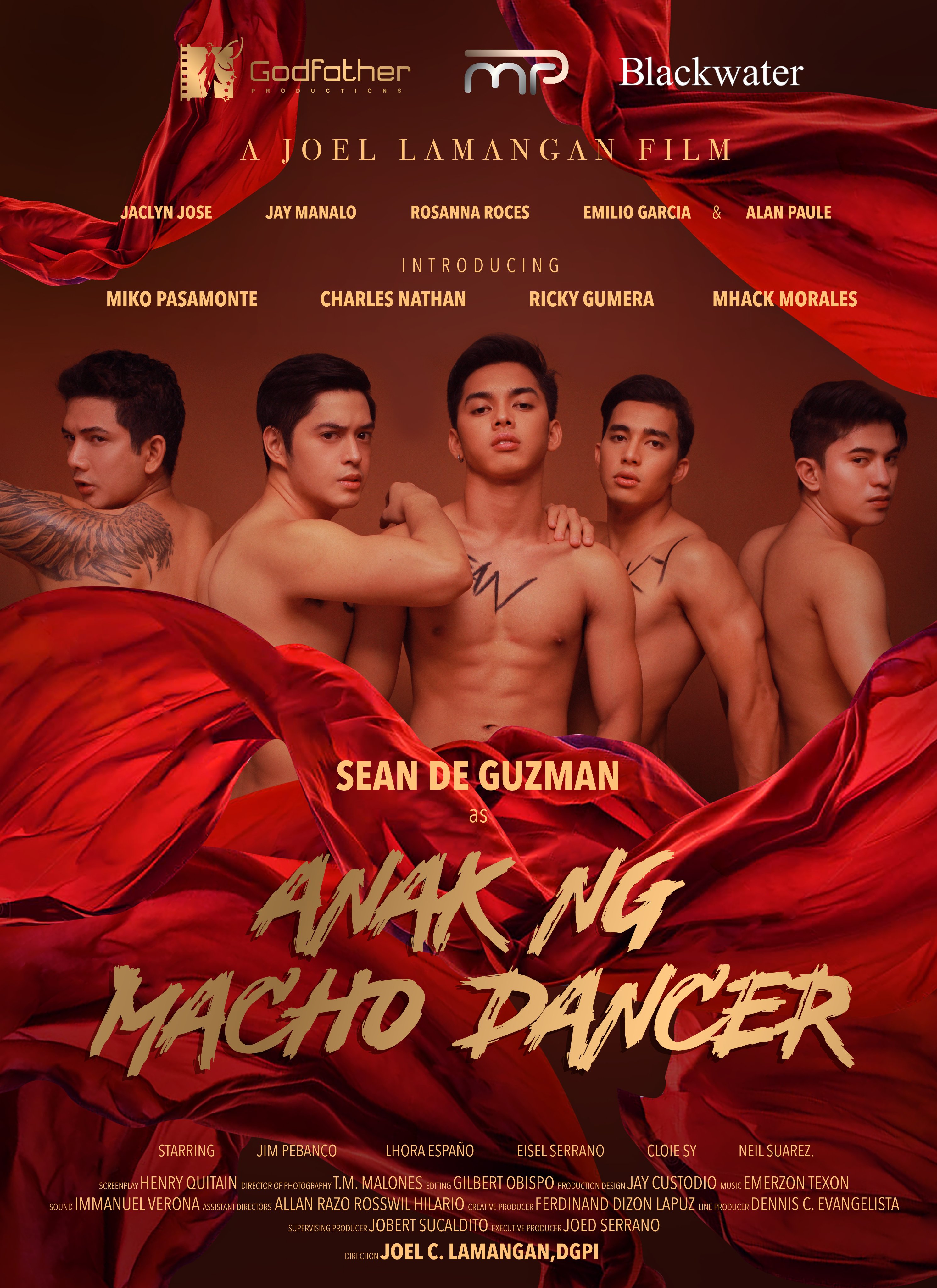
Son of the Macho Dancer (Anak ng macho dancer, Joel Lamangan, 2021)

“How many have you buried? Why?!” asks the hero of Joel Lamangan’s Son of the Macho Dancer (Anak ng macho dancer), a quasi sequel to the 1988 Lino Brocka classic. Set during the early days of the pandemic, Lamangan’s salty drama hints at the radiating effects of an authoritarian culture for those living on the margins of the contemporary society but does so with a dose of trashy telenovela camp in its eventually redemptive tale of frustrated futures, sexual exploitation, drugs and murder in a time of increasing sickness. 

19-year-old Inno (Sean De Guzman) is in a casual relationship with a woman whose tendency to refer to herself as his girlfriend clearly irritates him, especially as their sex life seems to be frustrated by her fear of his apparently giant penis. When his father Pol (Allan Paule) who has become addicted to drugs after a car accident is arrested by the police and he needs money to bail him out, Inno’s mother (Rosanna Roces) seizes on his oversize appendage as a means of saving the family by dragging him straight to a local gay club to become a go-go dancer. While reluctant at first, Inno soon takes to his new life and decides to milk it for all its worth, latching on to VIP procurer Bambi (Jaclyn Jose) and her sidekick Roldan (Emilio Garcia) in the hope of being invited to one of their elite parties all of which later drags him into the orbit of sadistic gay drug dealer Jun (Jay Manalo). 

All the while, we see Duterte on TV giving updates in the corona virus crisis and the various measures to mitigate it which threaten the survival of gay bar Mankind as well as the illicit business enterprises operated by Jun, Bambi, and Roldan. A police officer reconfirms his warning to drug dealers that they shouldn’t expect an easy ride during the pandemic because they will “destroy all of you”. The police force is shown to be resolutely corrupt, firstly in its refusal to investigate the causes of the car crash which caused Pol’s descent into addiction because, he believes, the driver was a judge and the cops have been paid off, and lastly in its complicity with criminal activity as evidenced in their cooperation with Roldan to cover up his crimes. 

Obsessed with social media clout, Inno constantly documents and uploads his existence online marvelling at his new circumstances as a kept man of Jun only latterly reflecting on the ironies of his life in discovering that his father was once also a “macho dancer” while his mother was forced to turn to sex work to feed the family after Pol’s accident. Seduced by the lifestyle of the rich and powerful that Jun can give him he doesn’t stop to consider its wider implications even when warned by predecessor Kyle (Ricky Gumera) of the dangerously oppressive regime within the house. It’s not until he finds himself burying the body of a friend murdered by Jun after unwittingly failing to play along with his voyeuristic sexual fantasies that he begins to ask why, not only why he’s living this life but why Bambi has been living it all this time enabling Jun’s predatory violence in burying the bodies of unlucky young men who fell foul of his sadistic desires. 

For Kyle at least the answer may be a lifetime of violent abuse which which has left him too traumatised to believe escape is possible. Inno vacillates between resentment towards his father for his irresponsible drug use and mistreatment of his long-suffering mother, and the filial desire to protect him which led him to become a macho dancer in the first place. Bambi and Pol, meanwhile, the heroes of Brocka’s film have been consistently brutalised by an oppressive society apparently only awakened to the possibility of changing course by Inno’s corrective questioning. 

In any case, there’s a minor irony even in the wilful subversion of positioning the young hero as a sex object valued only for the size of his penis while the frequent full frontal male nudity often feels gratuitous and the final swing towards heteronormativity can’t help but align homosexuality with the psychopathic cruelty of Jun as something dark and perverse even while ending on a joyous if tempered moment of resilience in returning to Mankind with the house full of masked clubbers continuing to shove their notes into the dancers’ briefs. Though the final resolution may in a sense be too neat, a family restoring or remaking itself in the wake of trauma, Lamangan allows the sense of unease to continue in the callback to societal corruption as the ongoing pandemic seems to stand in for other kinds of increasing sickness. 


Son of the Macho Dancer streams worldwide until 2nd July as part of this year’s hybrid edition Udine Far East Film Festival.

Original trailer (English subtitles)
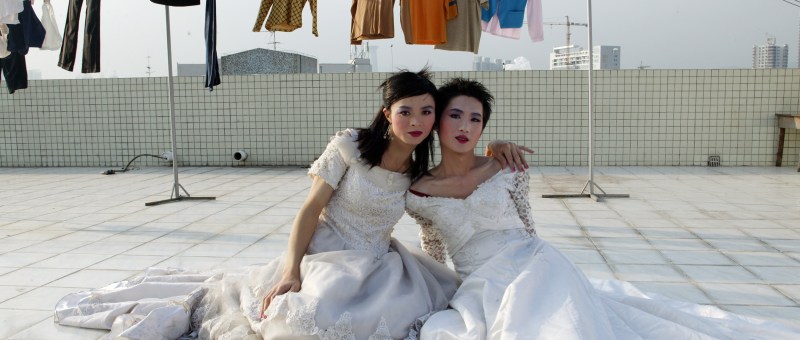
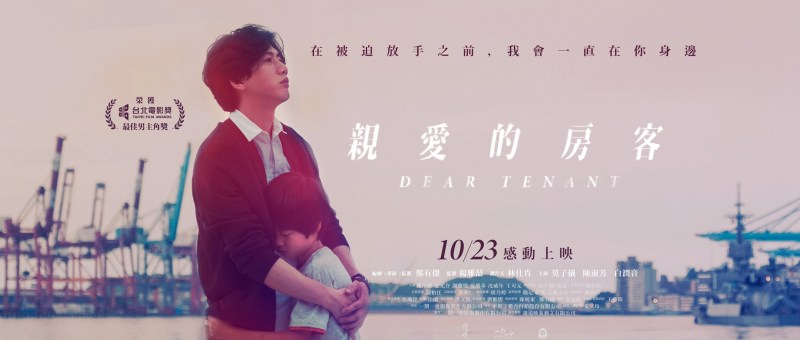
Dear Tenant (親愛的房客, Cheng Yu-Chieh, 2020)

Taiwan introduced marriage equality in 2019 and is often regarded as the most liberal of Asian nations but that does not necessarily mean that it’s free of prejudice or homophobia whether internalised or otherwise. Cheng Yu-Chieh’s melancholy family drama Dear Tenant (親愛的房客, Qīn’ài de Fángkè) begins in fog, mirroring it seems the hero’s sense of numb confusion consumed as he is with guilt and grief but also perhaps reflecting the miasma of his life in which he is forced to remain silent, prevented from fully expressing himself by a persistent sense of shame and anxiety. 

Chien-yi (Mo Tzu-yi) has been caring for his mother-in-law Mrs. Chou (Chen Shu-fang) and Yo-yu (Bai Run-yin), the son of his late partner Li-wei (Yao Chun-yao), for the past five years, but is described by them merely as a “tenant”, a lodger occupying the upstairs annex not really part of the family. His liminal status is fully brought home during the New Year dinner which he cooks and serves but, as Li-Wei’s brother Li-gang (Jay Shih) has decided to make a rare visit home from an extended stay in China, later excuses himself from as if he were the help not entitled to sit at the family table. Mrs. Chou, meanwhile, grumpily invites him to stay low-key resentful of Li-gang suspecting he’s only come to ask for more money, suspicions which are deepened after he starts talking about retirement apartments. When Mrs. Chou passes away suddenly a few months later Li-gang returns again and is both annoyed to learn that Chien-yi has already adopted Yo-yu and distressed to realise that his mother put the house in Yo-yu’s name which means he’s not getting the inheritance he assumed would be his. Consequently, he accuses Chien-yi of killing his mother to get his hands on the house, a series of events complicated by the autopsy report which suggests Mrs Chou’s death may have been hastened by over medication. 

A shy and reticent man, Chien-yi perhaps has reasons for his silence and his reluctance to speak openly with the police, who are needlessly aggressive and belligerent in their treatment of him, is easily understandable. Questioned by the relatively sympathetic prosecutor he is pressed about his “relationship” with the family and remains somewhat coy, later explaining that Mrs Chou had asked him not to tell Yo-yu that he and his father were lovers continuing to refer to him only as her “tenant” even as he took care of the household. The prosecutor asks him why he didn’t leave after his lover died, a question Chien-yi rightly feels to be absurd asking her if she’d ask the same question of a woman who stayed to look after her husband’s family after her husband died. Of course she wouldn’t, it would be ridiculous and insensitive.

It’s impossible to escape the sense that Chien-yi falls under greater suspicion solely because of his sexuality, the lead police officer quite clearly getting a bee in his bonnet about this particular case. They find him evasive and uncooperative, insensitive to the reasons he may have not to trust them that are later justified by their treatment of him as they again make moral judgements about his use of a dating app they likely would not make if he were picking up women though they might perhaps make of a woman in the same situation. Incongruously hanging out in a gay bar they hassle a former hookup who happens to be a drug user, blackmailing him into incriminating Chien-yi while Li-gang has Yo-yu taken to a psychiatrist in the suggestion that he may have been abused, explaining that he doesn’t want him raised in an “abnormal” environment. Chien-yi finds himself in handcuffs less for the alleged crime than for being a “suspicious” person who must surely be guilty of something even if it’s only his existence. 

It doesn’t seem to matter that Chien-yi tenderly cared for Mrs Chou even while she rejected him, angrily sniping that no matter how good he is to her it won’t bring her son back, or that he’s the only father the nine-year-old Yo-yu has ever really known having lost Li-wei when he was only four, he is condemned for his silence and his “secrets” ostracised by the previously warm parents at the piano school where he teaches after being outed by the insensitive police investigation. Consumed by grief and guilt he does his best to care for Li-wei’s family in his place, but is continually othered by a society which recognises him only as a “tenant” denying him his rightful place as bereaved spouse and step-father. As the melancholy ending perhaps implies, justice and equality are still very much works in progress even a rapidly liberalising society. 


Dear Tenant streams California until May 2 as part of San Diego Asian Film Festival’s Spring Showcase.

Original trailer (English / Traditional Chinese subtitles)

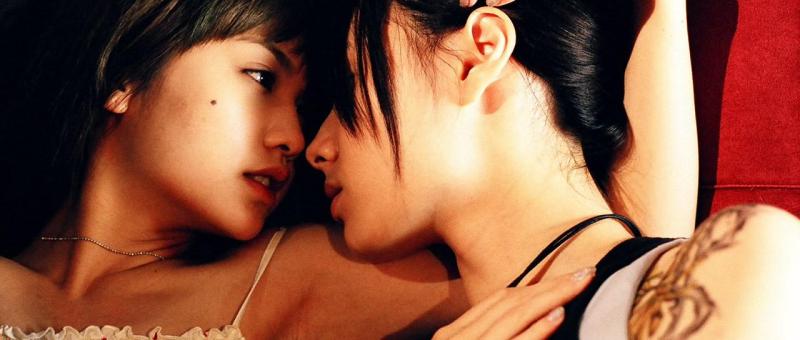
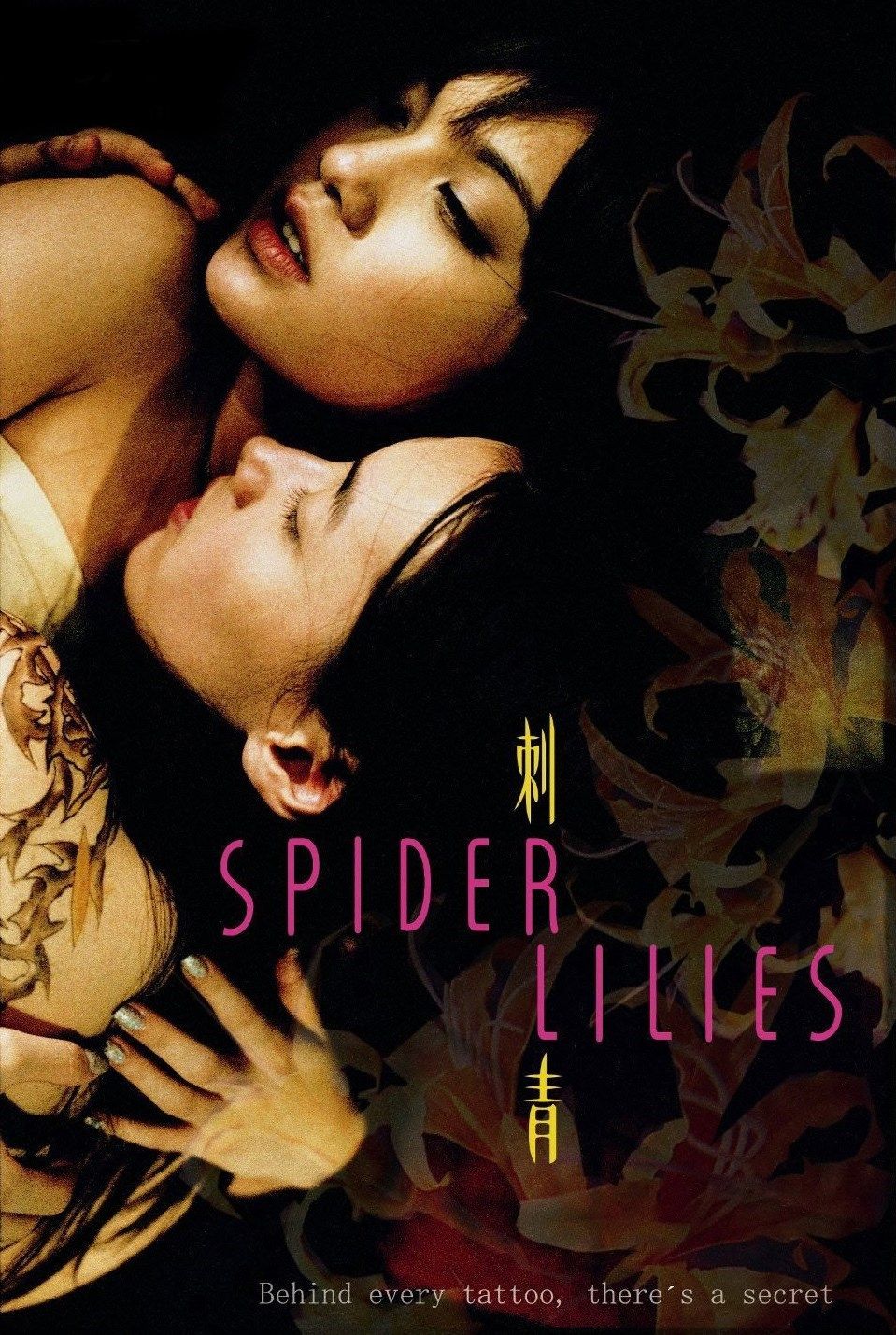
Spider Lilies (刺青, Zero Chou, 2007)

“I have no choice but to live in a virtual world” according to the lovelorn heroine of Zero Chou’s ethereal reflection on love and the legacy of trauma, Spider Lilies (刺青, Cìqīng). Two women connected by childhood tragedy struggle to overcome their respective anxieties in order to progress towards romantic fulfilment, eventually freeing themselves only by destroying the image of that which traps them. 

In the present day, Jade (Rainie Yang) is an unsuccessful camgirl with a habit of shutting down her clients on a whim which doesn’t play well with her boss. In an effort to spice up her live show, she decides to get a raunchy tattoo only to realise that the tattooist, Takeko (Isabella Leong), is in fact her long lost first love, a neighbour she took a fancy to at the tender age of nine. For her part, Takeko appears not to remember Jade but cannot deny the presence of her unusual spider lily tattoo, a version of which hangs prominently on her wall. Hoping to maintain contact, Jade decides to get the spider lily tattoo herself but Takeko is reluctant, explaining that the spider lily is a flower that leads only to hell. 

According to Takeko’s master, there is a secret behind every tattoo and the responsibility of the tattooist is to figure out what it is but never reveal it. Thus Takeko crafts bespoke tattoo designs for each of her clients designed to heal whatever wound the tattoo is intended to cover up, such as the ghost head and flaming blades she tattoos on a would-be gangster who secretly desires them in order to feel a strength he does not really have. Her tattoo, however, is intended as a bridge to the past, a literal way of assuming her late father’s legacy in order to maintain connection with her younger brother (Kris Shen) who has learning difficulties and memory loss unable to remember anything past the traumatic death of their father in an earthquake which occurred while she was busy with her own first love, a girl from school. Feeding into her internalised shame, the tattoo is also is a means of masking the guilt that has seen her forswear romance in a mistaken sense of atonement as if her sole transgression really did cause the earth to shake and destroy the foundations of her home. 

Then again, every time Takeko seems to get close to another woman something awful seems to happen. Jade, meanwhile, affected and not by the same earthquake is burdened by the legacy of abandonment and the fear of being forgotten. Living with her grandmother who now has dementia the anxiety of being unremembered has become acute even aside from the absence of the mother who left her behind and the father last seen in jail. “Childhood memories are unreliable” she’s repeatedly told, firstly by Takeko trying to refuse their connection, and secondly by a mysterious online presence she misidentifies as her lost love but is actually a melancholy policeman with a stammer charged with bringing down her illicit camgirl ring. The policeman judgementally instructs her to stop degrading herself, having taken a liking to her because he says he can tell that she seems lonely. 

A kind of illusionary world of its own, Jade’s camgirl existence is an attempt at frustrated connection, necessarily one sided given that her fans are not visible to her and communicate mainly in text. It’s easy for her to project the image of Takeko onto the figure of the mystery messenger because they are both in a sense illusionary, figments of her own creation arising from her “unreliable” memories. Jade wants the tattoo to preserve the memory of love as a bulwark against its corruption, at once a connection to Takeko and a link to the past, but the tattoo she eventually gets is of another flower echoing the melancholy folksong she is often heard singing in which the lovelorn protagonist begs not to be forgotten. 

“I am a phantom in your dream and you too live in mine” Jade’s mystery messenger types, hinting at the ethereality of romance and fantasy of love. Caught somewhere between dream and memory the women struggle to free themselves from the legacy of past trauma and internalised shame, but eventually begin to find their way towards the centre in making peace with the past in a sprit of self-acceptance and mutual forward motion.


Spider Lilies streams in the UK 26th April to 2nd May courtesy of Queer East

Original trailer (English subtitles)
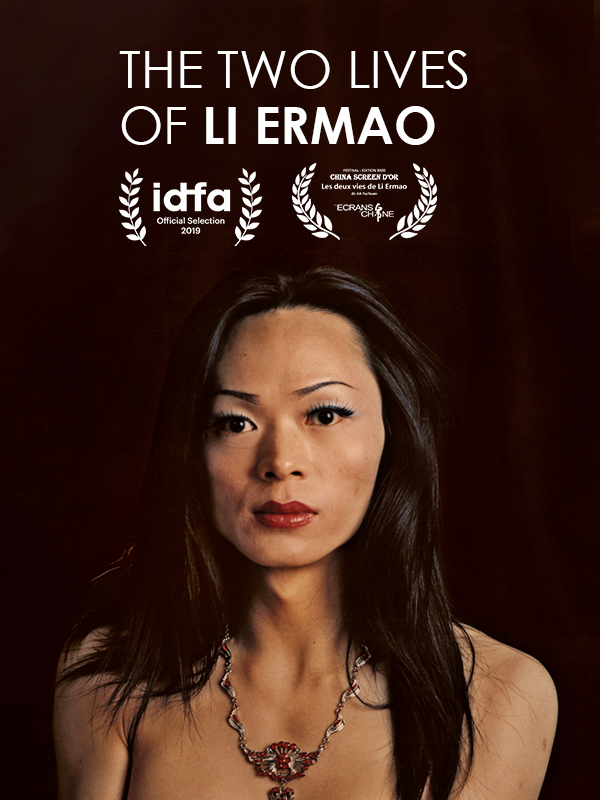
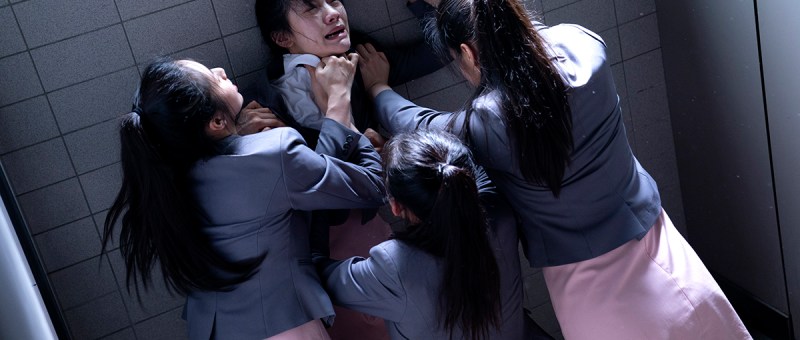
Born to be Human (生而為人, Lily Ni, 2021)

Taiwan is often regarded as among the more liberal of Asian nations, but it is certainly not free of outdated ideas of gender and sexuality as Lily Ni’s powerful sci-fi-inflected drama Born to Be Human (生而為人, Shēng ér Wèirén) makes clear. Like the similarly themed Metamorphosis from the Philippines which also made much of butterfly imagery, Born to Be Human finds a teenager’s ordinary existence upended by the sudden discovery that they are intersex along with the realisation that they have almost no agency over their medical decisions, but is ultimately more concerned with undermining the fallacy of the gender binary along with the sometimes duplicitous actions of the medical profession than with exploring the intersex identity. 

Unpopular at school 14-year-old Shi-nan (Lily Lee) is a regular teenage boy who secretly buys porn mags from the old man on the corner and enjoys playing online video games. Still embarrassed about his body, he is deeply worried on noticing blood in his urine after experiencing painful stomach cramps and half-convinces himself he has bladder cancer while too anxious to tell his parents or seek medical help. When his parents eventually find out they take him straight to the hospital but are fobbed off by an overworked doctor who diagnoses him with a urinary tract infection caused by an infected foreskin, something which they assume can be fixed by circumcision. Returning to school after some time off to recover, however, the problem recurs with Shi-nan collapsing during a sports lesson his shorts stained with blood. A more comprehensive medical exam reveals that Shi-nan is in fact intersex and has a functioning womb directly connected to external male genitalia. 

This unfortunately brings Shi-nan into the orbit of Dr. Lee (Yin Jau-Der), apparently a specialist in urology with an improbably futuristic office, who immediately latches on to Shi-nan’s case as a means of advancing his own career. He recommends to Shi-nan’s parents that they “correct” his physical body according to his chromosomal makeup, explaining that he may be at increased risk of cancer maintaining both sets of sex characteristics. On discovering the analysis has come back female, Shi-nan’s father’s first question is how he can carry on the family name if his son is now a daughter while his mother and the doctor fixate on Shi-nan’s viable womb and the all important ability to procreate. Feeling he will not understand, the parents decide not to share his medical diagnosis with Shi-nan even while he continues to believe that he is dying from bladder cancer, telling him only that he will undergo circumcision signing the consent forms for his gender confirmation surgery without ever consulting him. 

Already 14 years old and having lived all his life as a boy, this forced gender transition provokes a secondary sense of dysphoria as Shi-nan becomes Shi-lan and moves to the capital to attend an elite school presumably offered some kind of financial incentive from Dr. Lee who continues to monitor her progress. Removed from her previous environment, Shi-lan is plunged into hyper femininity as if the entirety of her previous personality had been erased. On her birthday she is given a pink cake with frills and a selection of dolls, while her bedroom is similarly pink and frilly, apparently part of Dr. Lee’s treatment programme to acclimatise Shi-lan to her new identity. Even her mother laments that she’s behind on her feminine education, unable to cook or do chores which she fears will interfere with her ability to get married. Shi-lan says she doesn’t intend to marry, but her refusal is met only with confusion as if a woman’s entire purpose lies in marriage and childbirth. Of course, the secondary issue is that Shi-lan is sexually attracted to women, upset and embarrassed to receive a love letter from a boy at school while pining for her sympathetic deskmate who later becomes her first friend. 

Meanwhile, she is forced to adopt a female personality more or less against her will, later explaining an old photo of herself as one of a younger brother who has unfortunately passed away but will remain always in her heart. Having been bullied at her last school, Shi-lan fears discovery but is subject to a secondary prejudice after a nosy girl goes through her bag and finds a bottle of pills she identifies as being for the treatment of depression later getting her parents to complain to the school that they shouldn’t be forced to share a class with a “mental patient”. 

In fact, Shi-lan has been lied to again, the pills aren’t for depression and she is in fact being tricked to take them against her will as part of her forced transition. She describes herself as a “monster”, neither male nor female, and is acutely compelled to feel that those are her only two options. Her new friend, Tian Qi (Bonnie Liang Ru-Xuan), takes her to a Taiwanese opera performance starring her mother in which a female scholar poses as a man in order to get her education only to fall for a classmate making it clear that an idea of gender fluidity has cultural currency yet Shi-lan has been denied the right to define her own identity, told that what she is is wrong or incomplete, and ultimately reduced to a subject for experimentation by an unethical doctor. Confronting him to be told he has turned her into a “normal person”, she later insists that she can ruin his work just as he has ruined her life, walking through a market witnessing flesh being butchered and fish gutted, before buying a bouquet of sunflowers echoing those on the doctor’s jigsaw puzzle. Whatever her intentions, Shi-lan perhaps comes into herself even if with a dark purpose in mind, actively claiming an identity that is defiantly her own in rebellion against a conservative society that refuses to accept her for all that she is.


Born to be Human screened as part of the 2021 Osaka Asian Film Festival

Original trailer (dialogue free)

Wrath of Desire (愛・殺, Zero Chou, 2021)

“Desire is the only truth. The body never lies” according to the prison missives penned by the heroine of Zero Chou’s latest meditation on sex, death, guilt, and repression, Wrath of Desire (愛・殺, Ài・Shā). As the title perhaps implies, Chou frames her epic tale in the extremes of Greek tragedy, opening with an ethereal desert scene and cryptic Butoh dance that equates desire with death as the victim later laments “it was I myself who pointed the knife at my heart”. 

The dreamlike opening gives way to a prophetic scene of violence as an androgynous young woman fends off an attack from a “burglar” who is later discovered to be part of a conspiracy sent to steal evidence that could be used against her father, a political candidate anxious that her existence as his love child not affect his chances of election. Visibly shaking from her traumatic encounter, Phoenix Du (Peace Yang) is comforted by the sympathetic female prosecutor in charge of her case, Jade Liu (Weng Chia-Wei), who finds herself somehow captivated by the intense tattoo artist. Witnessing her capacity for violence after they are attacked by more of the mayor’s thugs when she perhaps inappropriately offers her a ride home from the courthouse, Jade takes Phoenix back to her flat to tend to her wounds only to find herself overcome by desire when Phoenix playfully kisses her as if to test her naive hypocrisy. The two women share a single night of intense passion, but Jade is a pastor’s daughter and failure to resist her “blasphemous” desires leaves her only with shame and fear. In retaliation she has Phoenix sentenced to three years in prison hoping to forget her, while Phoenix spends her time inside writing 372 extremely intense love letters insistent that the body doesn’t lie and convinced that Jade has in fact imprisoned herself in her wilful repression. 

God is always between them, a cross hanging from the rear mirror in Jade’s car as they make their high speed getaway while it’s the Lord’s name that Jade cries out during their night of passion but out of guilt more than ecstasy as Phoenix urges her to let herself go, aware it seems that she continues to struggle against herself. While Phoenix is inside, Jade finds herself drawn to an androgynous young man, Meng Ye (Hsu Yu-Ting), who is accused of stabbing a cousin (Huang Shang-Ho) who had become his legal guardian and thereafter molested him. Referring to her as “sister’ Meng Ye reminds Jade of the younger brother who took his own life after being rejected by their religious family because of his homosexuality, something which undoubtedly contributes to her ongoing inability to accept her same sex desires describing her feelings for Phoenix as lust rather than love, something dirty and sinful to be rejected. After becoming aware of her inner conflict, Meng Ye suggests a platonic marriage to create a “family free from desire”, offering Jade the “stable family” she’s been looking for while he gains “social acceptance”. Yet on Phoenix’s release it’s Meng Ye who determines on bringing her into their life as a “friend” only to find himself consumed by jealousy while questioning the nature of desire. 

Chou intercuts the non-linear action with a series of black and white intertitles featuring Phoenix’s charred letters along with noirish, Rashomon-esque testimony from a handcuffed Jade and Meng Ye along with a third woman, Chrys (Chen Yu-Chun), who had apparently fallen for Phoenix in prison only to remain frustrated by her lack of interest in anyone outside of Jade. “Sex without love is as empty as violence without hate” Phoenix writes in one of her letters, repeating that the body does not lie and Jade is only harming herself in her continued denial. Phoenix is indeed correct, though 372 letters is rather excessive as is her stalkerish insistence in the face of Jade’s refusal. Nevertheless the ménage à trois eventually turns dark as Meng Ye determines to exorcise his resentment by making Phoenix betray herself in unmasking the hypocritical repression of her own desires. Meng Ye claims he’s a “pet” to his cousin and brother to Jade, what he wants from Phoenix is a love she might not choose to give him, but is also bound for a dark and nihilistic destination.

Though the mayoral conspiracy angle is an outlandish detail strangely forgotten in the ongoing narrative, all three are in a sense wounded orphans betrayed by parental failure and left adrift without firm anchor in a hostile society each looking for safe harbour whether in the certainty of bodily desire, its rejection, or subversion. Apparently the “first” in a six film series each set in different Asian cities (though the “second” The Substitute set in Beijing and filmed in 2017 is currently streaming via Gagaoolala, as is the reported third We Are Gamily set in Chengdu now streaming as a five-part webseries while the feature edit is also streaming via Amazon Prime US), Chou’s latest more than lives up to its name as the trio find themselves consumed by the fire of desire while unable to extricate themselves from a complex spiral of shame and repression.


Wrath of Desire screened as part of the 2021 Osaka Asian Film Festival

Original trailer (English subtitles)
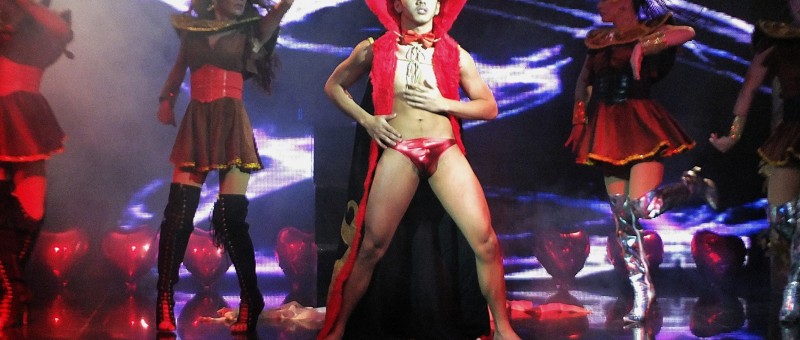
his (Rikiya Imaizumi, 2020)

Though Japanese society is often regarded as comparatively liberal, that liberality can sometimes reflect a superficial politeness and respect of discretion more than true acceptance. Though several prefectures have now made local provision for same sex unions, Japan lacks a basic anti-discrimination law at the national level protecting the rights of LGBTQ+ people and has often been slow to accommodate social change especially when it comes to the organisation of the family unit. The journey of the two men at the centre of Rikiya Imaizumi’s his, a sequel to the TV drama of the same name set some years earlier, perhaps travels at a rapid pace from internalised homophobia to the acceptance of identity and foundation of a home but mirrors the path of society at large as it edges its way towards the truly liberal in which all are free to live in the way they choose. 

Beginning with an ending, Imaizumi opens in the “past” as Shun (Hio Miyazawa), now an isolated young man living alone in the country, dwells on ancient heartbreak as his first love Nagisa (Kisetsu Fujiwara) abruptly breaks up with him as they prepare to graduate from university. We subsequently discover that Shun got a regular salaryman job but remained in the closet only for rumours to circulate around him at work forcing him to endure the casual homophobia of his co-workers at the compulsory nomikai all the while denying his true identity. This seems to be the reason that he’s taken up the offer of cheap rural housing designed to bring the young back to the depopulated countryside and has been largely keeping himself to himself, growing his own produce and deliberately keeping the locals at arms’ length. All that starts to change, however, when Nagisa suddenly turns up on his doorstep with his six-year-old daughter Sora (Sakura Sotomura) in tow. 

Though not exactly overjoyed, Shun allows the pair to stay but remains conflicted unsure what it is Nagisa wants from him and also fearful of his new life being derailed should the local community discover what it is that he’s so obviously in hiding from. Nagisa, meanwhile, apparently broke up with him for the same reasons, afraid to continue into his adult life as an openly gay man eventually travelling to Australia where he drifted into a relationship with a Japanese woman, Rena (Wakana Matsumoto), working as an interpreter with whom he later conceived a child and formed a conventional family. Struggling with himself he tried to maintain the facade through casual relationships with men, but discovered that he couldn’t make it work and unlike Shun decided the only way out of his predicament was to embrace his sexuality and attempt to live a more authentic life with the man he never stopped loving. 

Having pursued contradictory solutions to the same problem, the two men find themselves still in some senses at odds even as they reunite in their obvious love for each other. Nagisa envisages for them a family life raising Sora together and with the help of his sympathetic, supportive lawyer intends to have his conviction vindicated by a verdict in law but his former wife, while not openly hostile if obviously hurt and feeling humiliated in having been deceived, wishes to retain custody of her daughter even though she was not the primary caregiver. The court battle opens a veritable can of worms in a fiercely patriarchal, conformist society, Nagisa’s lawyer reminding him that he has an uphill battle because society inherently believes that women are better suited to childrearing. Rena’s lawyer throws the homophobic book at them, describing the relationship between the two men as “eccentric”, implying it cannot be other than harmful to Sora not least because of the bullying and social stigma she may face as a daughter raised by two fathers. Even the judge agrees that the situation is “not exactly normal”, though in this he may have a point in the fact that Nagisa had been a househusband and his wife the breadwinner, still an extraordinarily unusual family setup in a society in which women are expected to shoulder the domestic burden sacrificing their careers in the process. 

Indeed, it’s this same paradox that Nagisa’s female lawyer eventually throws back at Rena, that she cannot claim to adequately care for her daughter while working especially as she is a freelancer whose hours are often unpredictable. Rena had been reluctant to involve her family because of the shame of admitting her marriage has failed and for the reason it has but is later forced to ask her mother for childcare assistance only to receive a curt “I told you so” which speaks volumes as to the quality of their relationship. Meeting in a coffeeshop Rena looks at her mother looking askance with mild though unvoiced disgust at two men holding hands, reflecting both on her unforgiving austerity and her relationship with her granddaughter. The two women obviously differ when it comes to childrearing philosophy, Rena not wanting her daughter to suffer in the same way she has suffered because of her mother’s unforgiving conservatism and is extremely worried on being called to the school and told that Sora, who had previously been so cheerful and outgoing, has become sullen and withdrawn. 

Yet Sora is perhaps the force which allows each of her parents to accept themselves for who they are and embrace their true identities. Worried that she might be a burden to her mother who often drinks and appears to resent her for interfering with her work, Sora wonders why everyone can’t just get along and live together happily. She sees nothing “weird” in her father’s new relationship, though perhaps fails to understand why the four of them might not be able to live together as a family. Supported by Sora, Shun begins accept himself for himself, eventually coming out to the community and finding them entirely unbothered by his revelation bearing out the commonly held belief that small rural communities are often far more liberal than the famously conservative capital. Filled with a sense of love and mutual support, his presents a perhaps idealistic view of the modern society but an infinitely hopeful one as the three adults resolve to be kinder to themselves and others as they move forward together into a happier, more authentic existence. 


his streamed as part of the 2021 Japan Foundation Touring Film Programme.

Original trailer (English subtitles)
Love and Death in Montmartre (蒙馬特之愛與死, Evans Chan, 2019)

It’s difficult to believe, in some ways, that the world could have changed so much in just a couple of decades. Qiu Miaojin gained a cult following and widespread acclaim as an openly gay defiantly lesbian writer in the early ‘90s, but sadly took her own life in Paris at the age of 26 in 1995. Hong Kong director Evans Chan’s Love and Death in Montmartre (蒙馬特之愛與死) expands his 2017 documentary which aired as part of TV series celebrating Sinophone writers and though he claimed not to have been much interested in Qiu as a personality, explores her life, love, and legacy from the perspective of a Taiwan which has now become the first Asian nation to legalise same sex marriage. 

The film’s title is inspired by Qiu’s final novel completed shortly before her death in exile in Paris. Though she became well known as an out lesbian writer publishing under her own name as a woman who loved women, Qiu, the documentary implies, never actually came out to her family and eventually fled a Taiwan which had recently entered into democratic freedom but was nevertheless still conservative and socially oppressive. In Paris she looked for freedom artistic and personal, but continued to struggle with herself in her internal contradictions which were also in a sense provoked by a hostile society. 

Interviewed 25 years later, many of Qiu’s friends and contemporaries point out that she preceded rather than participated in the burgeoning LGBTQ+ movement which only began to gain ground after her death, but that her work nevertheless helped to raise visibility and acceptance of lesbianism in Taiwan and beyond. Lacking a language to describe herself, her slightly ironic adoption of the term “Lazi” for lesbian was adopted by women who love women in Taiwan, in turn inspiring the Mainland’s “Lala”. As another interviewee suggests, Qiu’s work was also ahead of its time in giving voice to the author’s anxiety in the impossibility of defining gender, at times longing to be made entirely male or entirely female while evidently feeling neither term entirely fitted only later claiming to have discovered an integrated self in the depths of her heartbreak. 

An actor Qiu met university who subsequently starred in one of her short films excerpts of which are included in the documentary recalls her anxiety that repressed emotions once unleashed have the capacity to consume, and in her case at least this may have been the truth. Close friends recall the self harm scars on her arms where she burned herself with cigarettes following the end of a relationship, consumed by her own need for all encompassing passion yet also filled with self-loathing. Perhaps tellingly and presumably for reasons of privacy, her lover at the time of her death does not appear in the documentary which goes out of its way to avoid naming her beyond the “Xu” which appears in her letters, Qiu attributing their breakup to her “intensity” which had unfortunately turned violent further contributing to her sense of shame and instability. 

Yet the translator of Last Words from Montmartre advances that Qiu’s suicide was also in a sense a literary act, the culmination of an artistic life in the tradition of tragic authors she had admired such as Osamu Dazai or Yukio Mishima. Another friend wonders if she might have been suffering from bipolar disorder, while her former professor reflects on her decision to adopt the name “Zoe” while in Paris, a name which itself means “life”. In Taiwan Qiu had worked for a suicide hotline, yet eventually took the decision to die. Qiu’s work cannot indeed be divorced from the manner of her death, but nor can its legacy be denied in contributing to the birth of a movement that she sadly did not live to see.

Including clips from Qiu’s short films and excepts from a short inspired by Qiu’s life directed by bisexual Shanghainese filmmaker Lotte Yue, as well as reenactments featuring Qiu dressed alternately as a crocodile as in her famous novel or as a veiled ghost, Chan charts her artistic legacy through Asia and beyond with recent translations of her novels into French and English, but also juxtaposes the oppressive society she struggled to escape with the comparatively more liberal world of today which she perhaps even in the tragedy of her life and death helped to bring about. 


Love and Death in Montmartre streamed as part of this year’s San Diego Asian Film Festival.

Original trailer (English subtitles)