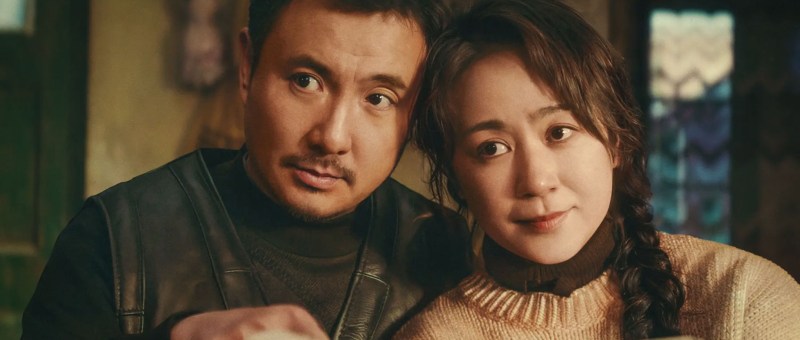
Successor (抓娃娃, Yan Fei & Peng Damo, 2024)

Embodying the contradictions of the modern China, Successor (抓娃娃, zhuā wáwa), the latest from the FunAge team sees a billionaire father recreate a utopian vision of crushing poverty amid the socialist values of China pre the 90s reforms but only so that his son can develop a desire to become a capitalist fat cat. For all that, however, it’s also a reaction against micromanaging parents, life under oppressive state control, and a high pressure, conformist society obsessed with very narrowly defined visions of success that are increasingly at odds with what a younger generation might want.

The surprising thing is how easily the young boy, Jiye, is able to straddle these two worlds while only gradually beginning to realise that it’s odd his neighbours keep asking him complex maths questions and he’s always running into foreigners who conveniently want to know the way to the local post office. Ostensibly, the Ma family live in an old-fashioned courtyard that according to the sign over the front entrance was constructed in 1958. As the film opens, Jiye’s teacher has brought a wealthy man to their home, in fact the father of one of Jiye’s classmates, who offers to sponsor his education while each of them look mystified around the flat which seems to exist in a kind of time warp. Jiye’s father, Chenggang (Shen Teng), sends them the packing explaining that they live exactly as they want to and don’t need anyone’s help. 

Yet Jiye is fascinated by his friend’s iPad and aware of the world outside works even as his parents try live like it’s the 1960s, sitting round reading good socialist literature which is also recommend to Jiye by the man who owns the bookshop downstairs and is actually one of Changgang’s many hidden “teachers”. But unbeknownst to him, there’s a lift behind his parents’ closet door that leads to a huge control centre where his every move is being monitored. Chenggang is actually a fantastically wealthy businessman who wants Jiye to develop good character so that he can take over his business after getting into a prestigious university.

In a very high tech and invasive way, it’s a reflection of the confused ideology being forced on Jiye by unseen external forces. Once he’s a little older and able to see that his world is definitely not normal, he begins to feel as if some mysterious force is indeed controlling his life but attributes it to vague notions of fate or cosmos rather than wider authoritarianism or parental manipulation. Chenggang is convinced this is the proper way to educate his son, to give him both old-fashioned socialist values and a heathy desire to overcome his poverty and live in a fancy mansion. He feels this way in part due to his dissatisfaction with a grown-up son from a previous relationship who failed his exams and was sent to America in disgrace. Somewhat uncomfortably, one of the reasons Chenggang is so disappointed in Dajun (Zhang Zidong) who continues to crave his approval is that he’s gay and in a committed relationship with an American man who probably should have given more thought to his Chinese name. 

In order to keep up the pretence, Chenggang never tells Jiye that he has a half-brother though he does allow him to see his maternal grandparents on occasion though they, evidently very wealthy themselves, do not approve of Chenngang’s parenting and resent being unable to spoil their grandson in the way they’d like. Chenngang may have a point here, though his chief objection being that the little Jiye was already quite chubby from being relentlessly pampered lands in the realms of fat shaming rather than a serious questioning of indulgent parenting in the wake of the One Child Policy.. He didn’t want him to grow up to be selfish and entitled or to have a distorted sense of the value of money but also seems to have a conviction that the boy will just laugh and say thank you when he finds out his entire life has been a lie and his parents made him suffer needlessly when they were in reality vastly wealthy. 

But what Jiye emerges with is, perhaps surprisingly, a more wholesome sense of rebellion, stepping out from the cosseted false reality his parents had given him and prepared to chart his own course. In an undercutting of the apparent homophobia which surrounds Dajun, the film also refreshingly, and perhaps subversively given the usual treatment of LGBTQ+ themes in mainstream Chinese cinema, suggests that he has done the same and was right to do so validating his relationship with Peter while a kind of solidarity emerges between the brothers in the shared defiance of the path their parents had set down for them. Often hilarious in its surreal humour and penetrating in its satire, the film echoes a sense of dissatisfaction amid contemporary youth no longer so hung up on outdated ideology and craving more individual freedom in a society in which lives can ultimately feel oppressively micromanaged by shady, unseen forces.


International trailer (Simplified Chinese / English subtitles)
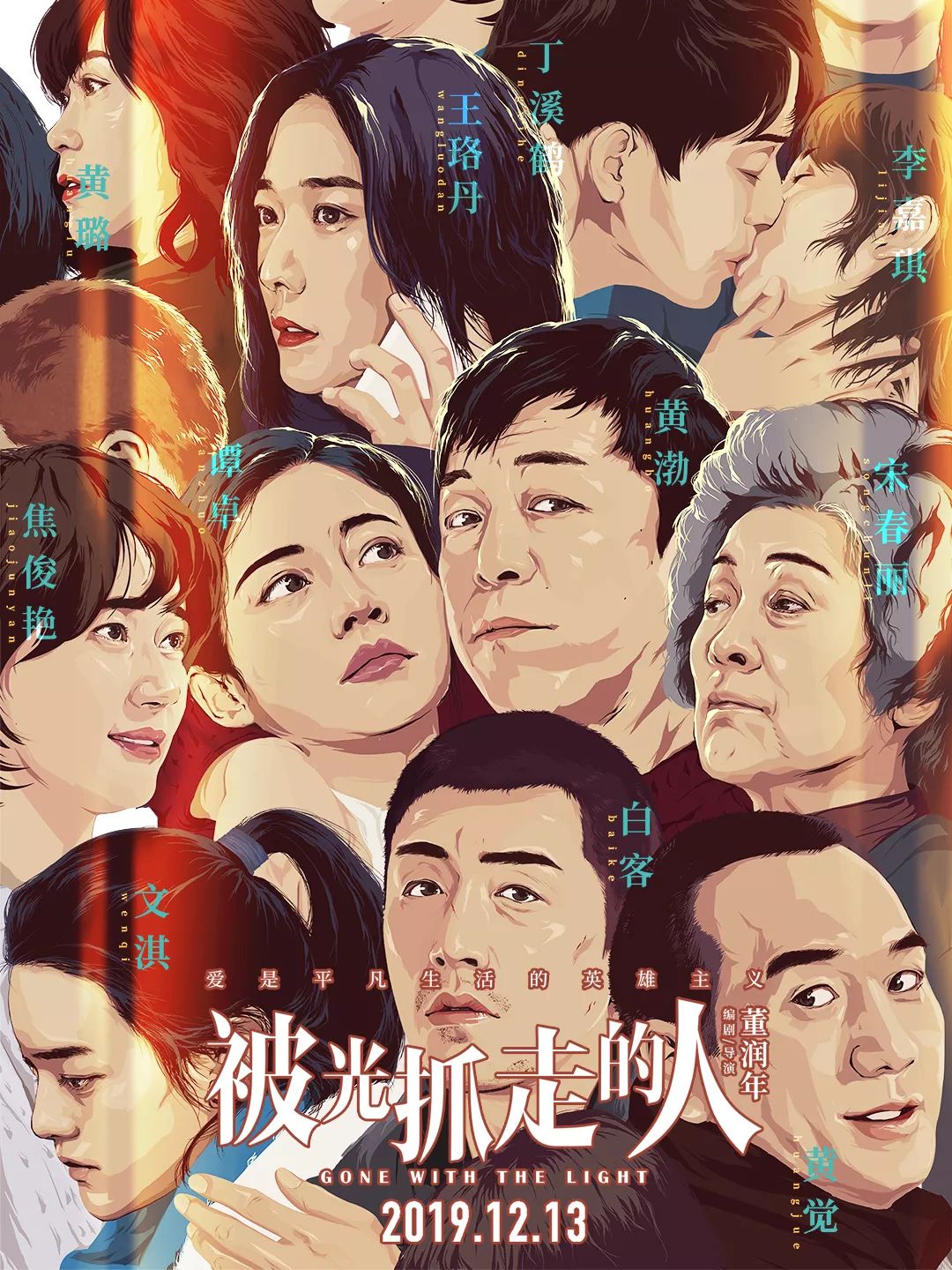
Gone with the Light (被光抓走的人, Dong Runnian, 2019)

What is love, and in the end does it really matter? It’s a question the mostly middle-aged couples of Gone with the Light (被光抓走的人, Bèi Guāng Zhuāzǒu de Rén) who perhaps assumed they were past such existential questioning find themselves contemplating after an unprecedented event causes the disappearance of seemingly random people from all over the world giving rise to the rumour that those taken were those truly in love. But if that’s so, what does it mean for the overwhelming majority left behind, suddenly lonely and uncertain wondering if they’ve been spared or judged and found wanting for their lack of emotional fulfilment. 

At 10am one spring morning, a brief flash of light creates a slight temporal disturbance causing a small percentage of the population to simply vanish. No one knows what happened or where they’ve gone, but the connection is later made that many seem to have been taken in pairs giving rise to the theory that the disappeared are the only true lovers. This is a minor problem for some of the left behind who have lost spouses twice over, not only literally but emotionally in realising that their loved one was in real, deep love with someone else. Meanwhile, those not taken begin to wonder why, questioning the validity of their relationships, doubting that their loved ones really love them but not quite daring to ask the same question in reverse. 

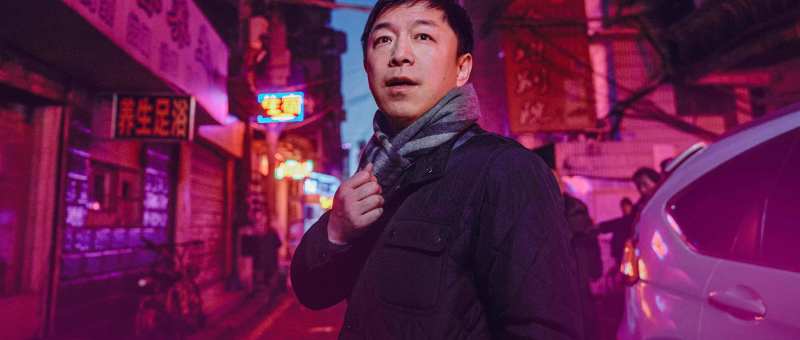
Dong opens the film with a vox pop session questioning several people about the nature of love, some of whom we’ll get to know better and others not. Our hero, school teacher, Wenxue (Huang Bo), unconvincingly claims that he does not put any stock in the admittedly unscientific theory that only true lovers were taken and that the rumours have not affected him or his wife but as we later see they have profoundly unsettled his unexceptional, middle-class family life which was at least superficially happy or perhaps merely unhappy in the most ordinary of ways. Before the light, we see him annoy his wife by waking her up smoking in bed before they have perfunctory, routine sex over which they discuss Wenxue’s hopes for promotion and whether or not it’s appropriate to schmooze with the headmaster to smooth the path. The fact they weren’t chosen eventually becomes a kind of embarrassment, the promotion going to a man whose wife disappeared on him for the slightly strange reason that being betrayed in love somehow grants him the moral high ground. Wenxue, like many, goes to great lengths to excuse himself, getting a fixer to photoshop pictures of his wife along with train tickets to make out she was in another town when the light descended.

Meanwhile, Li Nan (Wang Luodan), a woman who was in the middle of trying to divorce her husband when the light struck finds herself accosted by his mistress (Huang Lu) demanding to know where he is seeing as he did not ascend with her. The obvious conclusion is that he had another woman, but the quest forces each of them to reassess their true feelings towards the missing man, the mistress desperate to prove she wasn’t just an “adulteress” but a woman in love, and the wife that she really is ready to let him go. A young woman (Li Jiaqi) who threatened to commit suicide by jumping off a roof when her parents tried to stop her marrying her boyfriend (Ding Xihe) suddenly doubts her feelings when her parents disappear together while she and the man she thought she loved are left behind. A petty thug (Bai-ke), in the only subtle implication of a same sex love, becomes obsessed with the idea that his friend has been murdered by a TV presenter who had been bothering him and his death has been covered up to look like one of the disappearances, perhaps again hoping to find evidence against a romantic rejection. 

Talking to another man in a similar situation Wenxue is given a dressing-down, reminded that he’s been extremely self-involved and that the problems he’s now able to see in his marriage thanks to the light were there all along, only now he’s refusing to face them in a much more direct way. He couldn’t or chose not to see that his wife was lonely and filled with despair while flirting with an equally lonely woman at work. His confrontation with her provokes his only real moment of emotional reckoning as they each reflect on the fantasy of romance and its capacity to dissipate when realised. Walking in on his teenage daughter getting dumped for the first time he’s perhaps in the best position to offer advice, even if it’s of the fairly prosaic kind to the effect that she’ll get over it in time. “Your lies make me ashamed” she’d fired back at her parents’ middle-aged hypocrisy, a very ordinary marriage in which perhaps the “love” has gone, in one sense, but equally might be succeeded by something else. “It’s alright, you will know it in the future” Wenxue tells his heartbroken daughter but might as well be talking to himself, beginning to feel the love after love in conceding that perhaps this is what “love” is rather than any kind of “rapture” literal or otherwise. A beautifully pitched meditation on the consequences of love, the madness, violence, and loss, Gone with the Light finds its release in stillness and a gentle contemplation of that which remains when everything else is burned away. 


Gone with the Light streamed as part of this year’s New York Asian Film Festival.

Original trailer (Simplified Chinese subtitles only)

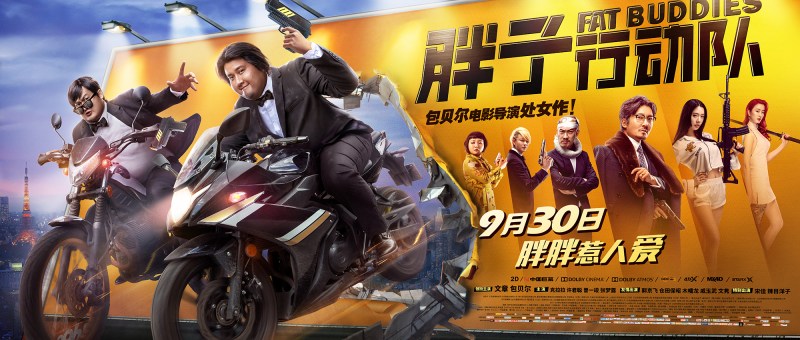
Fat Buddies (胖子行动队, Bao Bei’er, 2018)

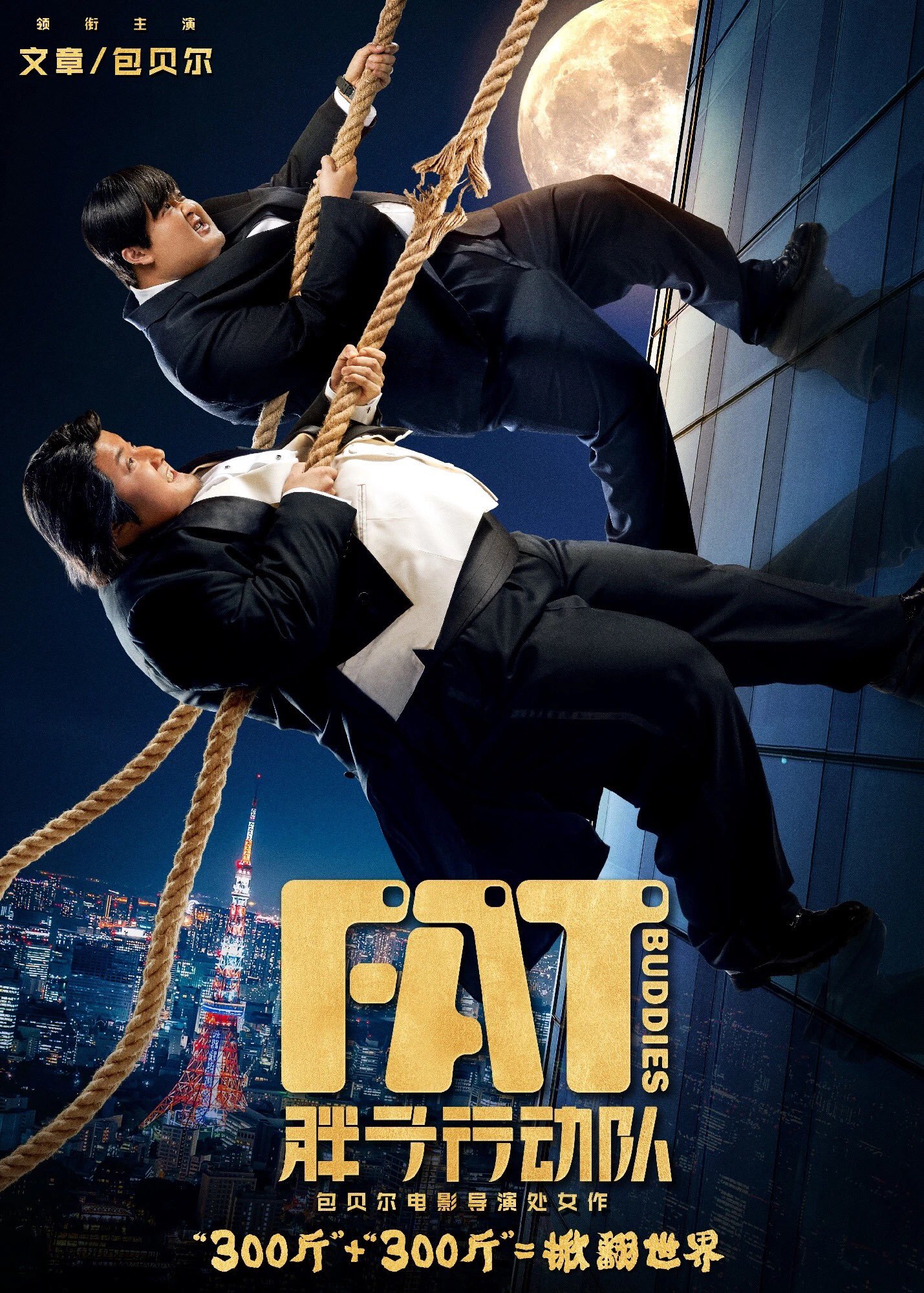
Fat Buddies posterChinese cinema hasn’t exactly had the best record when it comes to dealing with atypical heroes, but then no cinema really has. Gazing at the poster for Fat Buddies (胖子行动队, Pàngzi Xíngdòng Duì) – the debut directorial feature from actor Bao Beier who also stars, one can’t help but assume the next two hours will be one long joke at the protagonists’ expense, but to its credit Fat Buddies is not (entirely) the film it seems to be and, ironically enough, there is more going on beneath the surface than an excuse to have at a “permissible” target.

The hero, played by Bao Beier himself, is a very rotund security guard currently working in a hospital in Tokyo for reasons which will (mostly) be explained later. Though Hao is a cheerful and friendly man with a strong sense of justice, he is ostracised by the (strangely large number of) other guards and has no real friends save his extraordinarily beautiful Japanese wife. Hao’s life changes forever one day when another large Chinese man calling himself “J” arrives at the hospital and causes a ruckus by trying to escape without paying. J convinces Hao that he is an international super spy on a top secret mission and that he needs Hao’s help to get out of the hospital so he can save the world. Believing he is finally being given the chance to become the agent of justice he’s always dreamed of being, Hao is only too eager to oblige.

Strangely enough, the entire film takes place in Tokyo even though the heroes and antagonists are all Chinese. Even so, it never resorts to the comedic caricatures common in recent mainland cinema when depicting the Japanese with even the police characterised as dedicated and efficient if sometimes a little overzealous and misguided, though one does wonder if the setting was chosen solely for the sumo associations of the grand finale. There is however a degree of bite in Hao’s view of himself as a non-Japanese person living in Japan who is married to a Japanese citizen and speaks the language fluently but still remains an outsider both because of his unusual appearance and because of his nationality (with a mild implication from some that perhaps the two things are not entirely unrelated). In an early set piece, Hao and J find themselves trying to infiltrate an upscale party where they have unwittingly stolen the clothes of a pair of famous dancers and eventually end up improvising a strange routine to a bawdy song which is all about being a “foreigner” in Japan who “doesn’t understand Japanese but loves Sora Aoi” and then continues in a similarly lowbrow vein with a mix of Mandarin, international English, and intentionally broken Japanese.

Rather than a two hour fat joke – though there are a fair few of those in a recurrent motif of J getting stuck in things Pooh-style and losing his trousers in the process, the the major message is that the pair are fine as they are and apart from the aforementioned problem, their size is not a barrier to being able to do anything they want including taking on international spy missions. Despite his happy marriage, Hao still suffers from loneliness and low self-esteem due to a lifetime of being looked down and on belittled, unable to make friends because of prevalent social stigma towards those on the heavier side. The solution, however, is not a makeover or a crash diet but a gradual process towards Hao regaining his sense of self worth and realising he has plenty to offer the world despite what anyone else might say. Similarly J, who experienced rapid weight gain after a life threatening injury and also suffers from narcolepsy, proves that he is still able to do his job even if he benefits from having a partner around when he randomly falls asleep at inopportune moments.

Fat Buddies isn’t claiming to be high art and there is certainly enough of the low humour the title implies to keep those enticed by the poster happy enough, but there is also genuine heart in its odd couple buddy comedy as the two similarly under-appreciated big guys bond in their shared desire to reclaim their sense of dignity and refuse to be shamed or belittled just because of their size (even if they are otherwise quite bumbling and inefficient in their mission). Strangely uplifting, Fat Buddies is an extremely silly comedy starring two men in fat suits repeatedly bumping into things but like its heroes refuses to be bound by stereotypical conventions and manages to make heartwarming drama out of its admittedly ridiculous premise. 


Fat Buddies is currently on limited release in UK Cinemas.

International trailer (English subtitles)