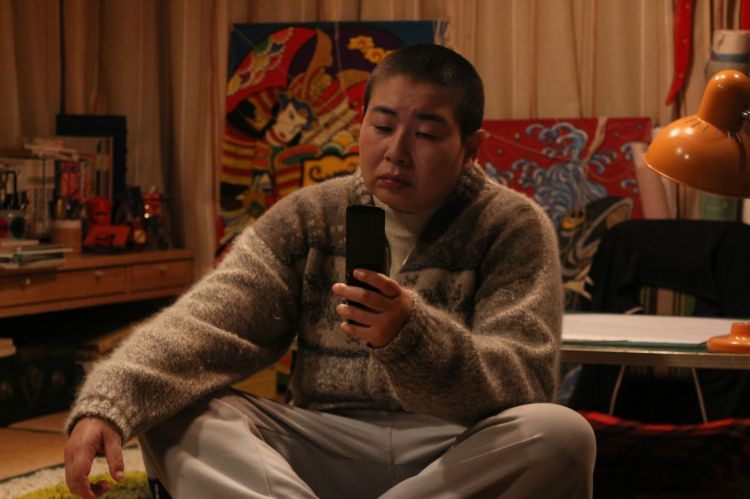
Fuku-chan of FukuFuku Flats (福福荘の福ちゃん, Yosuke Fujita, 2014)

cbTezoQReview of Fuku-chan of FukuFuku Flats up at Uk-anime.net! Screening in London as part of the 2014 Raindance Film Festival on 30th September / 1st October. Tickets still available and the director will be in attendance!


It’s been quite a while since Yosuke Fujita released his first feature length film – the charming comedy Fine, Totally Fine in which two childhood friends who haven’t quite grown up fall in love with the same kind of strange girl, but now he’s finally back with another feature following his short film Cheer Girls which formed part of the Quirky Guys and Gals anthology film. Like those two previous efforts, Fuku-chan of FukuFuku Flats is another warm and funny tale of the strange lives of ordinary people.

The titular Fuku-chan (played by actress Miyuki Oshima) is a painter and decorator and something of a parental figure at the small block of modest apartments at which he lives, Fukufuku Flats. As well as defusing work place disputes including one character breaking wind in the face of another to try and wake him up after lunch, and ones at home such as two neighbours disagreeing about the ownership of an exotic pet, Fuku-chan lives a fairly quiet, solitary life. On the other side of the story, a once high-flying executive, Chiho, has quit her lucrative and steady job to pursue a career in photography only to discover her idol and mentor is interested less in her artistic attributes than her physical ones. As you might expect, the path of these two characters is destined to cross – however an unlikely pair they may seem. In fact as it turns out, they share connection that for one of the them has become a long buried memory but for the other is an unforgettable scar that has coloured the rest of their life.

The more observant among you may wonder if there’s a mistake in the above paragraph. The titular Fuku-chan is indeed a male but the character is being played by the popular Japanese comedienne Miyuki Oshima. Though this is by no means the first time that an actress has portrayed a male character on screen – Linda Hunt even won an oscar for playing a male photographer in The Year of Living Dangerously, some viewers may initially be thrown by the decision. Fuku-chan’s shyness, caring nature and reluctance when it comes to dating women might, after all, be explained if ‘he’ were in reality a ‘she’. However, that is not where our story takes us and a joke about the size of Fuku-chan’s ‘maleness’ is perhaps designed to reassure us about his true nature.

As with Fine, Totally Fine Fujita’s world is packed out with eccentric characters and instances of everyday surrealism. From the the completely crazy ‘avant-garde’ photographer with his strange dress sense and giant camera wrapped up in some kind of alien-like yellow suit to the owner of an Indian restaurant who’s philosophically opposed to the idea of drinking water whilst ‘enjoying’ a spicy curry, these are some very strange people but crucially the sort of strange you might just come across in your everyday life – they never feel contrived or deliberately bizarre, just people that are little abstracted from the norm. Also to the film’s credit is that the characters’ individual quirks are just those – amusing, as character traits, but not ‘jokes’ in and of themselves.

There is, however, a slightly dark undertone to the film. The traumatic incident that binds the two central characters together is of a fairly ordinary variety, a typical sort of thoughtless teenage prank that happens everywhere, everyday (in fact, something similar happened to the author of this review in the dim and distant days of youth). Its ubiquity doesn’t make it any less cruel and even if it wasn’t exactly malicious in its intention, the effects of such humiliation can have an enormous effect on the rest of someone’s life. It’s not hard to see how such an experience could make someone bitter, withdrawn and misanthropic and it’s testament to Fuku-chan’s innately warm nature that his ability to help others remains undimmed even if he keeps himself in protective isolation. Conversely, you have to accept that some people’s problems are in need of more specialist care than even the kindest of hearts can provide, no matter how much you may want to help them.

Fuku-chan of FukuFuku Flats is another excellent entry in the ‘human comedy’ genre. Warm, genuinely funny and in the end even a little moving, it’s impossible not to be charmed by the film’s whimsical, absurd world. Though darkness sometimes creeps in around the edges, it only makes the light seem brighter and actually adds a little real world turmoil to Fuku-chan’s otherwise innocent world. An unconventional (not quite) romantic comedy, Fuku-chan of FukuFuku Flats is nevertheless a masterclass in the genre and genuinely one of the most fun films to come out of Japan (or anywhere else for that matter) for quite some time.

The Tale of Iya (祖谷物語 -おくのひと-, Tetsuichiro Tsuta, 2013)

1Japanese cinema has certainly been no stranger to the discussion of environmental issues from Studio Ghibli’s concerns about the modern society’s encroachment into the natural world to the ultra modern concerns about pollution and the dangers of nuclear disasters. However, they’ve rarely been addressed to poetically as in The Tale of Iya which is an extraordinarily rich examination of man and the landscape. Tinged with magical realism and surreal juxtapositions, The Tale of Iya is an oddly wonderful experience in the broadest sense of the word.

Film begins with a vast expanse of deep snow in which a lone figure dressed in traditional blue mountain dress with a conical straw hat is making an everyday journey to a local shrine. This could be a scene from any Jidaigeki or even a woodblock print were it not for the crashed car the old man finds a little further into his journey. A woman has been thrown through the windscreen and is lying motionless the bonnet. The old man gives the incongruous scene a quizzical look, but moves on along his planned path. Then, however, even more strangely he finds a little pink bundle by the side of a frozen river. This time he does stop and scoop the infant up. A jump cut sees us flash forward to around fifteen years later as teenage girl dressed in pink gets up to make breakfast for her ‘grandfather’  – the old man of the mountains. On her way to the local school she passes an old lady who’s taken to making sack mannequins which seem to do their part to make up the population of this rapidly declining mountain village.

The newly born sack people aren’t the only newcomers though – in an attempt at modernisation, the town planning committee have elected to build a tunnel which will connect them to the main road and make transportation easier. However, this has met with strong opposition from ‘environmental groups’ represented by an American eco-warrior. Amongst these strangers is another from Tokyo who seems to have come for an unknown reason but eventually decides to stay and attempt to farm the land. Iya is certainly very beautiful, but country life is also hard and entirely dependent on the weather. The young people long to leave for the comparative excitement of the city. City people though long for the simplicity of a long forgotten country life.

The film begins in a more or less naturalistic style filled with the most beautiful cinematography of snow covered vistas and foggy mountains. However, a strong seam of surreality constantly builds throughout the film until it reaches the final third and almost becomes a sort of science-fiction film about a magical environmental product that can clean polluted rivers down to near perfect clarity. Folklore beliefs and practices run side by side with a more poetic slice of magical realism that is jarring at first (and actually a tiny bit frightening) but the film’s surreal and dreamlike imagery is likely to be the thing that lingers longest.

A Tale of Iya also manages to offer a broadly nuanced and balanced view of the nature of country life and concerns about the environment. This is a remote town with a dwindling population – the new tunnel will ease communication, ultimately make lives safer and perhaps stop so many young people leaving the area altogether. The local people are therefore very much in favour of the new tunnel and many of them actually work for the construction company who are building it. The only opposition to the bridge is from a group of foreigners who are living in a commune but come down from the mountain every day to shout ‘save Iya’ and various ‘shame on you’ type comments (in English) at the construction team. The irony being that their ‘commune’ run in a typical communal farming style with hundreds of ‘save Iya’ billboards might actually be the biggest eye-sore in the area.

That’s not to say the film isn’t in favour of conservation or that it feels all construction is beneficial (quite the reverse) but it is eager to present a fair comment on both sides of the problem. Similarly, it isn’t afraid to point out that this ancient way of life is extremely difficult. Kudo, who’s arrived from Tokyo and looks so jumpy all the time one wonders if he left in a hurry, is eager to learn about traditional farming. He looks so pleased with himself when he’s finally mastered how to water crops in the traditional way, not to mention that torturous looking two buckets on a stick water carrying device. It’s not long before he’s taken up the self sufficient life but the problem with that is you have to do everything yourself – no electric, no running water (other than that which runs in a stream), no sanitation and in short no safety net. Muddling through and celebrating small victories is fine in the blistering heat of summer but as the first snow falls and you don’t have enough winter stores, death from cold or starvation (or both) is a very real possibility. City people romanticise country life thinking it’s ‘easier’ or admiring its ‘simplicity’ but whatever it gives it also takes.

At 169 minutes, there’s no point in denying A Tale of Iya is an extremely long film that moves a stately pace. Undeniably some viewers will be put off by its epic running time and frequent flights of fancy but those who stay the distance will be richly rewarded. Magical, beautiful and finally profoundly moving, A Tale of Iya is an incredibly heady brew that stays in the mind long after it finishes. Truly ‘wonderful’ in every sense of the word, A Tale of Iya deserves to be much more widely seen.


First published by UK Anime Network.

The Kirishima Thing (UK-anime.net review)

thekirishimathingThis is from a million years ago but it was caught up in the queue at UK-anime.net and has only just been liberated! Also I wrote this when I was deathly ill (festival fever is a real thing!) so I’m not entirely sure it’s completely coherent. Anyway, have at it – The Kirishima Thing reviewed at Uk-anime.net


What’s up with that girl, why is everyone crying?

Must be the Kirishima thing again, right? It’s got everyone all riled up.

Hey, what exactly happened with that? Where is Kirishima?

You didn’t hear?! Kirishima quit the volleyball team! And nobody’s heard from him since, doesn’t answer calls, doesn’t answer texts – he’s in the wind….

Damn, man, that’s cold! Wonder what happened….

What happened with Kirishima, why he’s upped and quit the volleyball team quite suddenly right after having been made captain and with the team on course to win a big championship actually turns to out be almost totally irrelevant. We may speculate on why someone might just do that but we can never really know. What is important is that Kirishima’s unpredictable action causes a seismic wave to rip through the social structure of his class. With Kirishima gone, everyone else starts to question their own place in the social hierarchy – are they really where they want to be, where they ‘belong’ within the all important high school pecking order? Some threaten to move up and others down but will anything be the same ever again?

The ‘cool’ kids are in the ‘going home’ club or possibly ‘in a sports team but blowing off practice’, the next level are ‘kind of in a club because it’ll look good on my application forms (it’s not like I like it or anything)’ and then at the bottom we have the geeky guys and girls who are really into their club activities – exemplified here by the downtrodden film club. When Kirishima just quits and effectively demotes himself from the A crowd by quitting the volleyball team nobody’s really certain of anything anymore – what’s cool, what’s not, what do I care? The volleyball team feel betrayed by their captain’s absence, the cool boys are puzzled and uncertain without their leader to look to, the popular girls doubt their status now the alpha guy isn’t around and the film club….carry on as normal and try to ignore all the silly drama going around the school.

However, there are those in the higher echelons who maybe feel they don’t belong there. One of the cool girls has a secret liking for ‘geeky’ films but is frightened of becoming ‘one of them’ and losing her ‘popular’ status. Another girl, nominally one of the cool girls both hates and admires her friends for their vacuity and refusal to see whats going on around them. She is the only who really sees what’s going on everywhere, but even she too is afraid of losing her position. The most troubled and changed though is Hiroki, Kirishima’s ‘best friend’ who nevertheless didn’t know anything about his friend’s decision. Half in half out of the baseball team, he’s trapped between the cool world of the going home club and the slightly less cool one of being able to do something very well. The only people who aren’t really affected are the film club who are, to some extent, too invested in their own sense of inferiority to really notice what’s going on everywhere else.

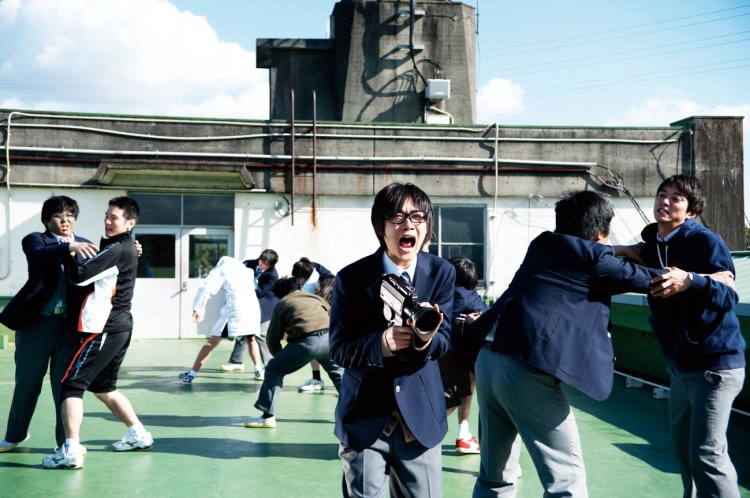
The film club  are in some ways the heart of the film as they both refuse to see and ultimately document the social fracturing that’s going on within the school. They seem to think themselves very hard done by -‘they’re always winning’ complains one boy after they find a location they want to use already occupied and later ‘I won’t cast them when I’m a director’ about the annoying popular clique who’ve just been laughing at them loud enough for them to hear before they’ve even gone past. However, they are the key to the film’s climactic roof top confrontation scene as the film club’s high school zombie invasion movie is rudely interrupted by the popular kids’ desperate search for Kirishima. This leads to a day of the dead style zombie fantasy sequence as the film club zombies devour the unwitting volleyball stars and popular girls which is the highlight of the film. The intermingling of the two groups which would never normally have anything to do with one another finally forces the ramifications of the Kirishima thing to come to a head. In some senses it clears the air; the tensions have boiled over and worked themselves out. However, for some the outcome is far from clear and they remain trapped between levels of high school cool.

The Kirishima Thing is certainly not for for those who like a lot of action, zombies aside, or something with a heavier plot element, but as an ensemble character study it excels. As an allegory for the wider problem of conformity/social norms vs individuality and self recognition in the adult world it’s certainly a very apt parable but all of the characters concerned are very well drawn and each afforded a degree of sympathy and understanding. The Kirishima thing strikes a more realistic tone than the director’s previous films (Funuke: Show some love you losers!, Perfect Nobara) which took place in a world of heightened reality but still has a strongly comic tone. An extremely nuanced and layered tale, The Kirishima Thing may require multiple viewings to completely appreciate but it’s certainly well worth the investment in time.


Also look out for fellow queue inmates Kumiko the Treasure Hunter and Tale of Iya which, I am assured, will shortly become eligible for parole.

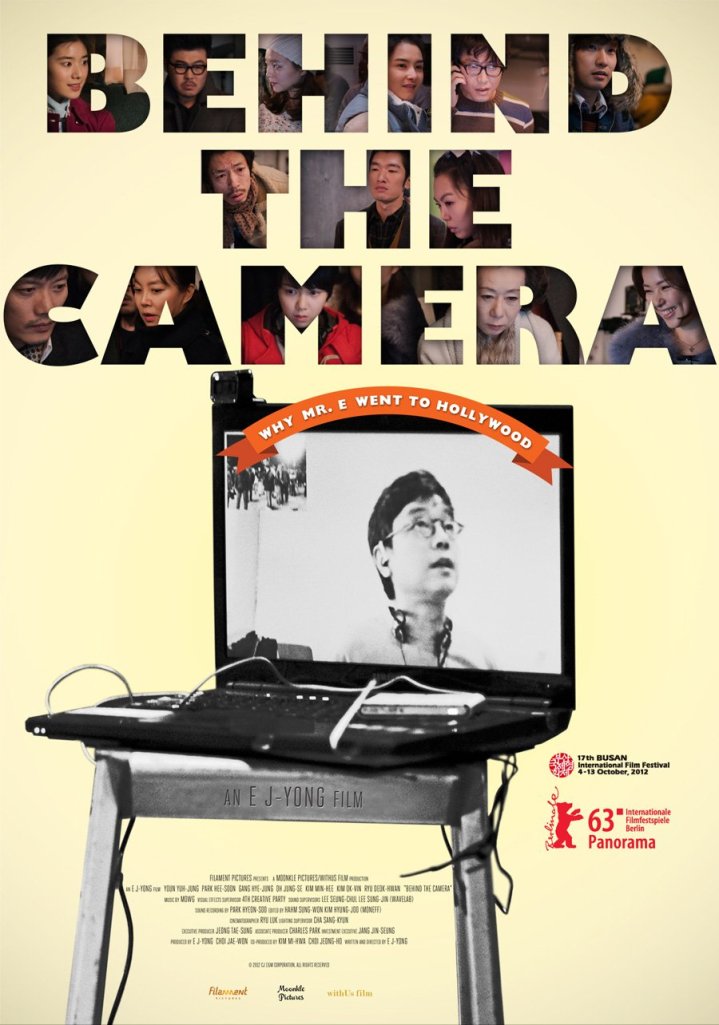
Behind the Camera (뒷담화: 감독이 미쳤어요, E J-yong, 2013)


fullsizephoto273825Review of Korean meta documentary style comedy up at UK-anime.net


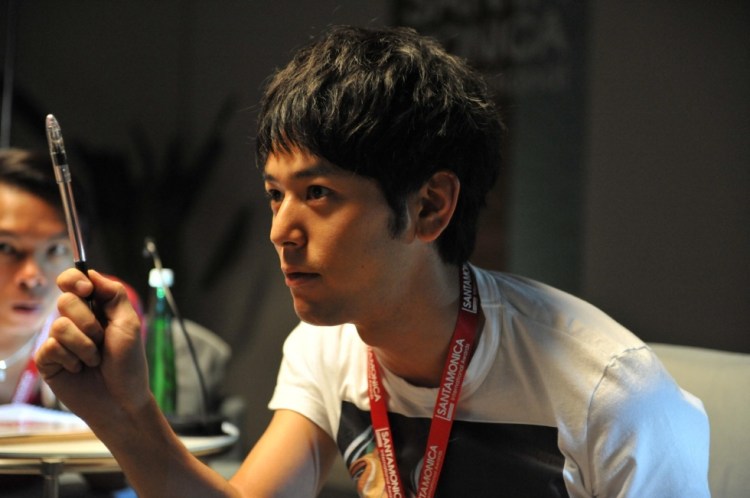
When Korean director E J-yong was commissioned to make a short film as an advertisement for Samsung, he thought to himself what a wonderful idea it would be if he could test modern technology to its limits and direct the film remotely from a hotel room in LA. In particularly meta touch, the script he’s designed for the film also features a Korean director remotely directing a film the only difference being that the fake director is doing it because his overseas girlfriend is in town and he’s trying to avoid having to choose between love and money. Like E’s previous film, Actresses, which got some of Korea’s most talented actresses together for a fashion shoot where they proceeded to trash talk the industry and each other, Behind the Camera is fiercely funny behind the scenes style mockumentary where the lines between reality and fiction are anything but clear.

As the film begins, some of Korea’s best known talent has been assembled for a preliminary meeting regarding the short film they’re going to be making over the next two days – only there’s one very important person who doesn’t seem to have arrived yet. Coming as a surprise to some, the producer then stands up and makes an announcement that this film is going to be a little different, in fact the first of its kind, as the director will not be present on set at any point during the shoot but will be supervising from LA via Skype! Some members of cast take this better than others, especially as they lose wireless contact almost as soon E starts trying to explain the nature of the concept. Predictably, some don’t even believe he’s really in LA at all just engaging in a elaborate practical joke but others regard the whole thing as a farce and vaguely insulting to their status in the industry. As time moves on, the crew gradually start just ignoring E and doing their own thing and it’s clear one or two of them have their eyes on the director’s chair. Can you really direct a film from half way across the world and still realise your vision in the same way you would if you were really standing on the set? What’s more, is the idea of a director in itself anything more than vain conceit if all you do is say ‘yes’, ‘no’, and ‘cut’?

In the wrong hands, films with this sort of conceit can go horribly wrong. Often too clever by half, anything with a meta construct has a serious risk of ending up on the wrong side of pretentious but it’s clear that E J-yong’s intentions are a world away from any such self aggrandisement. Essentially a bolted on companion piece to his Samsung commercial (what a fantastic use of time!) what E has crafted is a warm and witty backstage look at the movie making business. Completely unafraid to poke fun at himself as the director with a high concept who may or may not be in Hollywood trying to make in America like his friends Park Chan-wook, Kim Ji-woon and Bong Joon-ho (now he’s made a film in Hollywood even if it wasn’t a Hollywood film), Behind the Camera takes what could be a fairly thin joke and unpacks it in such a witty fashion that it easily sustains itself over the course of a full length film.

Like Actresses, Behind the Camera assembles a whole host of Korean cinema talent with actors, actresses and industry personnel mostly playing themselves. Some of the funniest moments in the film occur when the cast and crew are just hanging out together and chatting generally about various things. Yun Yoe-jong had taken a brief break from filming Im Sang-soo’s A Taste of Money in order to take part in this mini-project as a favour to E who hasn’t even bothered to turn up! In fact she originally told him she was too busy but after he sent her a depressing photo of himself begging her to star in his film she gave in. If anyone has earned the right to a few salty and spiky retorts after such a long and illustrious career it’s certainly Yun Yeo-jong and witnessing her intense displeasure with the entire endeavour is one of the highlights of the film. There are also plenty of meta references to the Korean film industry and cinema history for those who are well versed enough to pick up on them.

At first glance, Behind the Camera might sound like one of those precious industry “mockmentaries”  that are never quite as funny as they think they are, but Behind the Camera is different precisely because it isn’t afraid to turn the camera around and expose what really goes on backstage. You genuinely can’t tell what is ‘real’ and what is ‘constructed’ but what is certainly true is that Behind the Camera’s warm and humorous outlook make it one of the funniest Korean comedies of recent times.


Thermae Romae

THERMAE ROMAE-T

Lucius ambulat in Tokyo? Review of improbable time travel comedy Thermae Romae up at UK-anime.net.


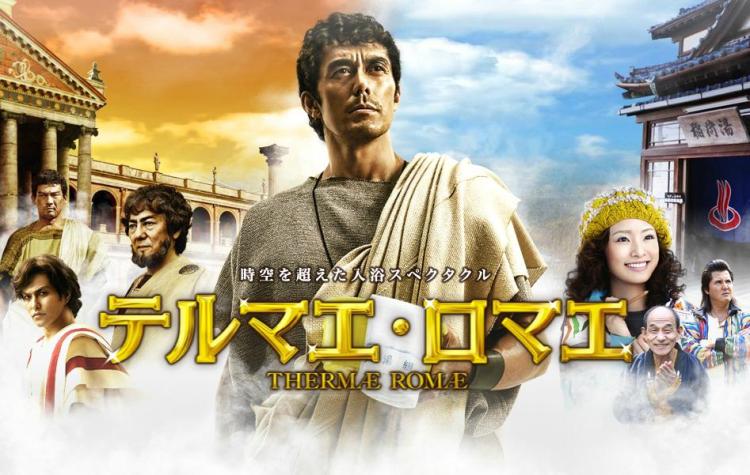
Pop quiz – what do modern day Japan and Ancient Rome have in common? Fish sauce? Emperor worship? Sandals? More than you thought, wasn’t it? Well, the correct answer is public bath houses and sure enough the people of modern day Tokyo still love going to the public bath even though they enjoy the luxury of being able to bathe at home! Of course, bath house culture with all its social and political uses and divisions was one of the things the Roman Empire took with it wherever it went. However, there must have been a time when some Romans began to feel their baths were getting a bit stale and in need of a new ‘modern’ twist, but what to do? What if they could leap forward in time and learn from the 21st century bath culture of modern Japan! Enter down on his luck architect Lucius who suddenly finds himself in a strange land full of strange looking people who seem to have taken bath technology to its very zenith.

Lucius Modestus (Hiroshi Abe) is a once successful bath architect with a case of serious designer’s block. Replaced on a prime project because he’s been unable to come up with any ideas he decides to go for a soak at the local bath house but whilst clearing his head underwater he finds himself sucked through a passage way only to reappear in a very strange looking place – it’s a bath house alright, but not as we know it! As they’re speaking a strange language he doesn’t understand, Lucius assumes the elderly men bathing here must be slaves and he’s been sucked into the “slaves only” part of the baths. Some of this stuff is kind of cool though – what are these funny spigot like things for, and these handy little buckets? Wait – they have baskets for their clothes?! We could do with some these in our bit! And so Lucius experiences the wonder of public bathing in Japan to the extent that it makes him cry with joy at which point he returns to Ancient Rome and begins to put some of these techniques to use in his designs. Travelling back and fore, Lucius always seems to run into the same Japanese girl who wants to make him the star of a manga and group of kindly old men. Can Lucius finally build the bath house of his dreams and stop a conspiracy against his beloved Emperor Hadrian at the same time?

Based on Mari Yamazaki’s manga of the same name (which also received an anime treatment from DLE), Thermae Romae sticks fairly closely to a fish out of water format for the the first half of the film as Lucius becomes by turns confused and then entranced by the various pieces of modern bathing technology he encounters on his travels. As a Roman encountering other people who are obviously not Roman, he of course adopts a superior attitude and assumes these people are either slaves or ought to be and so is extremely bewildered that their advancements seem to have eclipsed those of his own beloved Rome. These situations obviously provide a lot of room for humour as Lucius encounters various things that seem perfectly normal to us but strange and alien to him – his pure joy at discovering the wonder of the multifunctional Japanese toilet being particularly notable. It does though become fairly repetitive as Lucius finds himself in different situations which are essentially the same joke in different colours but then when the plot element begins to kick in later in the film it too fails to take off and feels a little too serious when taken with the wacky time travelling antics we began with.

Aided in his quest Lucius meets several amusing supporting characters including the group of elderly men from the baths who didn’t really need the help of an improbable ancient Roman to get themselves in trouble and Mami who functions as a kind of love interest who’s cast Lucius as the hero in her next manga. Mami begins learning about the Roman Empire and takes a course in Latin which helps a lot when she too finds herself in Ancient Rome and facilitates a kind of cross cultural exchange as she steals ideas from Rome for her manga as Lucius stole for the baths. However, the romantic comedy element never really comes together and even as Mami continues to pine over her noble Roman, Lucius remains aloof in the universal belief that all non-Romans are inferior. Though he does come to grudgingly acknowledge that the ‘flat faced people’ as he calls them have particular strengths such as their willingness to work as a team and put collective success ahead of personal gain, he never quite sheds his Roman arrogance.

It’s all very silly but undeniably quite funny if often absurd. We hear everyone in Rome speaking in Japanese and Lucius continues to think in Japanese wherever he actually is but obviously once he gets to Japan he can’t understand what anyone’s saying and attempts to communicate with them in Latin (whilst still giving his interior monologue in Japanese). Likewise, when Mami learns Latin she uses it to communicate with Lucius in Japan but once they get to Rome, all their ‘Latin’ is Japanese too which causes problems when the old men arrive because they’re speaking the same language as everyone else yet can’t understand anyone or be understood – which might be why they don’t get to say very much other than to Mami. It’s all quite strange and disorientating but kind of works as does the largely Puccini based score which screams 19th century Italy much more than Ancient Rome but helps to give the film the air of classical pomposity it’s aiming for. Big, ridiculous, silly fun – no one could accuse Thermae Romae of having any kind of serious message but it does provide genuinely entertaining silliness for the majority of its running time.


Pluto (명왕성, Shin Su-won, 2013)

GSEOiWzAs we’ve seen lately, there are certainly no shortage of films looking at the complicated and often harsh world of high school in Korea. Pluto (명왕성, Myungwangsung) takes a sideways look at the darker side of academic excellence when the praise and prestige of being one of the top students becomes almost like a drug and makes otherwise bright young people do things even a heroin addict in serious need of a fix might at least feel bad about afterwards with an all encompassing sense of entitlement that gives them a lifetime free pass for even the worst transgression.

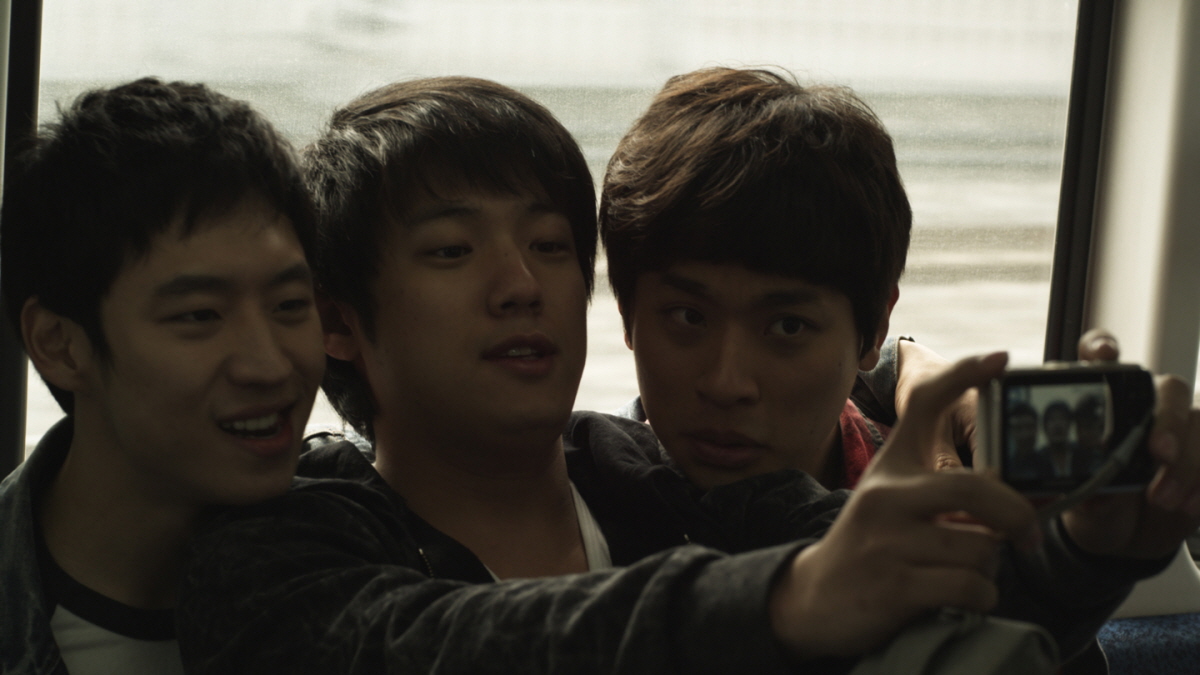
June (David Lee) is a bright young boy from a regular high school who’s just transferred into an elite boarding school educating the country’s next great hopes. He may have been a top student at his old school, but here he’s merely average as the school hotshots are pretty quick to point out. Here, the top ten students are treated like princelings – a special computerised teaching room, no curfew, better rooms, better resources and they can more or less do what they like so long as they keep their grades up. Occasionally someone manages to bump one of the top ten from the list but they quickly get kicked out again. The top ten operate like some kind of swatters mafia – they all stick rigidly together, swapping hot tips for the upcoming exams that they refuse to share with the others and engaging in a series of increasingly cruel “pranks” they term rabbit hunts.

The film opens with the police finding the body of the previously number one student Yu-jin (Sung Joon) in a wood with June’s phone lying next him having been used to film the entire grisly affair. June is arrested for the murder but is released after his alibi checks out. Sick of all the struggle and unfairness, June puts his particular talents to use to try and teach the world a lesson about the sort of people this system is producing.

The picture Pluto paints of the Korean schools system is a frankly frightening one in which academic success is virtually bought and paid for or guaranteed by class credentials. Yes, the top students obviously must have ability – some of their activities may come close to cheating but interestingly nobody seems to want to try actual deception to get ahead. However, that natural ability has clearly been bolstered by their parents’ wealth. Attending an elite school and spending more than some people earn on private tutors geared towards knowing how to get into the best universities undoubtedly gives them advantages which are out of reach for others no matter how smart they may be. Perhaps that’s fair enough in a capitalist society, they didn’t ask to be born to rich parents and who would turn that sort of help down if offered it? However, though they may possess the virtues of discipline, hard work and a desire to succeed what they lack is any sort of empathy or even common human decency. Engaging in a series of manipulative hazing exercises, the elite group will stop at nothing to protect their status specialising in thuggery, blackmail, rape and even murder. The sort of people this system is advancing are not the sort of people you want running your schools and hospitals, they are morally bankrupt and only care about their own standing in the eyes of others.

Perhaps it’s fitting that this elite boarding school is housed inside a former compound of the Korean secret police, including a subterranean layer of prison-like tunnels once used as a torture chamber. Aside from the obvious school as torture analogies, much of them film seems to be about what people choose to ‘unsee’. The headmaster of the high school is aware of the ‘untoward’ behaviour of some of his pupils but refuses to do anything in case it upsets their well connected parents, damages the reputation of his school or has an adverse effect on those all important test results. The ‘Pluto’ of the title is referenced in June’s university application essay on the demotion of Pluto from the accepted list of planets. He argues that this is unfair and a fallacy as it’s illogical to measure anything by its proximity to the sun which is, after all, just another star which will eventually die like all the others. Just because it’s a little different looking, you shouldn’t necessarily categorise it as being in some way ‘inferior’ based on a set of fairly flimsy criteria. June, like Pluto, hovers in uncertain orbit on the periphery – always wanting in but perpetually locked out. Naturally gifted but from an ‘ordinary’ background where his single mother sells insurance for OK money, June can’t hope to compete with these elite kids even if his capabilities may be greater. A lot of decisions have already been made as to what people choose to see, have chosen to regard as an ideal, even if the reality is painfully obvious.

Though oddly funny in places for such a hard hitting film, Pluto is a difficult watch at times and paints a depressing picture of the high pressured nature of the Korean educational system and of human nature in general. The elite group are universally awful people who run the gamut from arrogant, entitled prigs to snivelling cowards which makes it difficult to feel any sort of sympathy and you start to long for bad things to happen to them which somewhat undermines the film’s premise. Perhaps the problem is just that they were awful people who were enabled by a system rather than people who started out good and were corrupted by it. Stylishly shot and supported by well grounded performances from its young cast, Pluto is a welcome addition to this perhaps overcrowded genre which brings more than a few new thought provoking ideas to the table.


Review of first Pluto published by UK Anime Network.