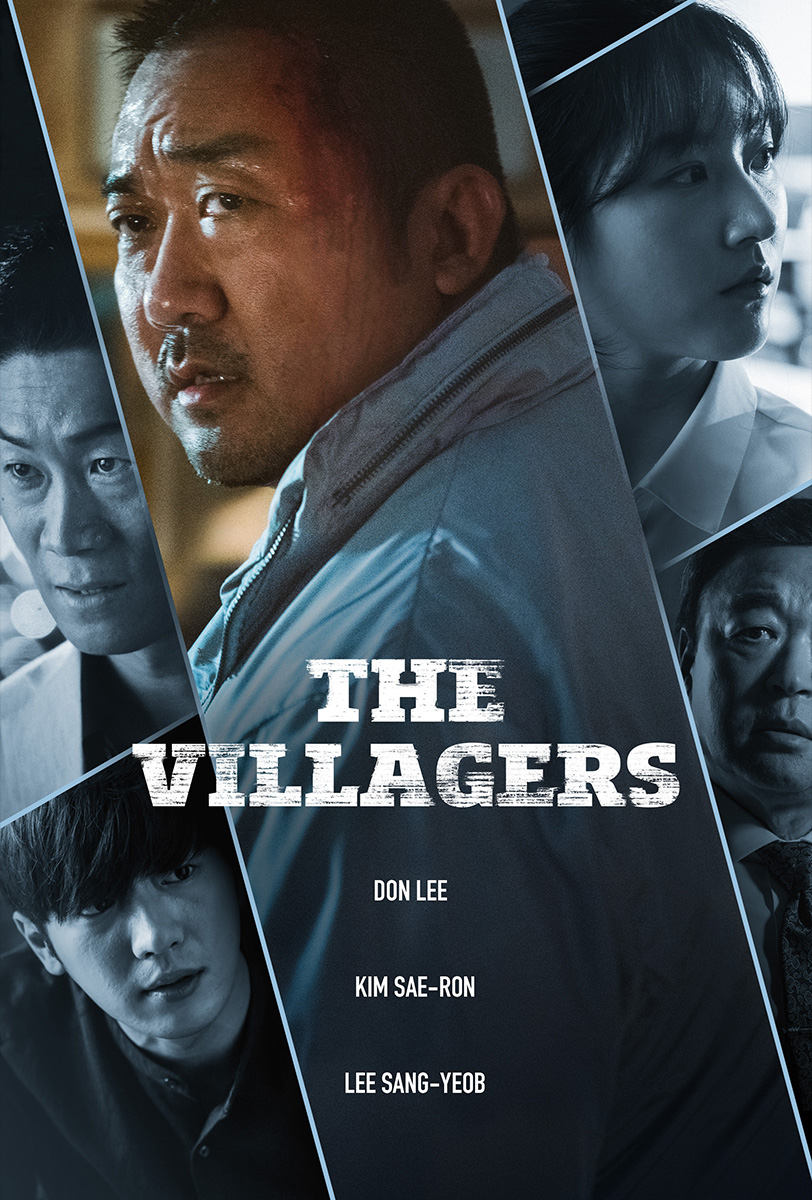
The Villagers (동네사람들, Im Jin-soon, 2018)

Trying to make a fresh start after being fired as a boxing coach in Seoul for challenging match fixing practices, a rookie teacher finds himself embroiled in small-town conspiracy in Im Jin-soon’s Ma Dong-seok vehicle, The Villagers (동네사람들, Dongnesaramdeul, AKA Ordinary People). Unlike the big bad city, this rural backwater is mired in feudalism and corruption as if it were stuck in the authoritarian past in which everyone keeps their head down and minds their own business rather than challenging injustice or trying to improve the lives of those around them.

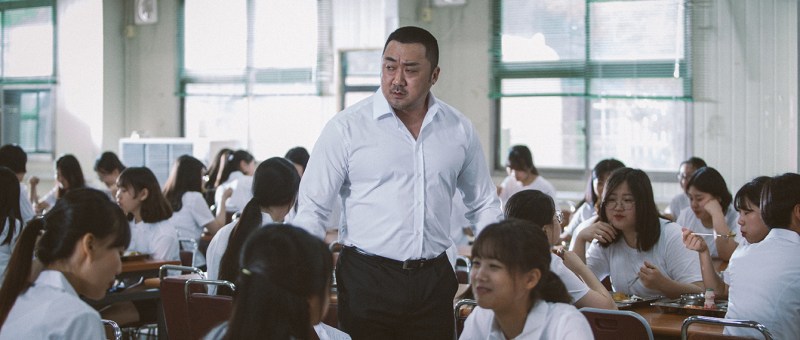
What Ki-chul (Ma Dong-seok) and high schooler Yu-jin (Kim Sae-ron) have in common is that they’re both outsiders. Yu-jin transferred to the high school from Seoul and has been branded a troublemaker by the judgmental teachers. But despite the school’s seeming authoritarianism, the pupils have little respect for the school system and openly flout the rules by smoking on school premises and being rude to the staff. It transpires that Ki-chul has basically been hired as a kind of muscle, charged with getting students who haven’t paid their fees or dinner money to cough up ahead of an upcoming audit of the school’s finances. Many of the students he approaches brush him off as if they simply don’t intent to pay, but the school doesn’t seem to be interested in finding out why they might not be able to or if there are problems at home. Yu-jin too rolls her eyes he asks her, but in her case she’s unwilling to finance an institution that’s not doing anything for her even if as Ki-chul advises her they won’t let her graduate if she doesn’t.

Ki-chul seems uncomfortable with his new role and tries to do what he can to help, but encounters resistance from the teachers who tell him there’s no point worrying about kids like these. If they skip school, they’re branded runaways and no attempt is made to look for them. The teaching staff lowkey threaten Ki-chul by reminding him his job’s to get the money and he doesn’t want to make trouble for himself when he was lucky to be employed here in the first place. And so he finds himself conflicted when he spots Yu-jin in town getting herself into dangerous situations trying to find out what’s happened to her friend Su-yeon (Shin Se-hwi) who’s been missing for days but the police won’t seem to do anything. Yu-jin tells him that adults can’t be trusted, especially not the police, but he thinks it’s teenage alienation before trying to report the case again himself through a friend on the force and having it rejected.

The fierce resistance to even mentioning Su-yeon ought to tip them off that’s something bigger’s going on, but everyone is focussed on the upcoming election in which the headmaster of the school is standing for governor that nothing’s getting done at all. Ki-chul tries to report another teacher for harmful behaviour towards students, but is yelled at for exposing the school’s business by going to the police “over some runaway”. He’s reminded to keep his head down and mind his own business, even while Yu-jin continues to be in danger and Su-yeon is still missing. An orphan whose parents had massive debts to loansharks, Su-yeon was forced to work in a bar to support herself and her grandmother. She dreamed of being beautiful and free as an adult, but was badly let down by many of those around her including the school who decided that girls like her weren’t worth helping.

Of course, Ki-chul can’t help standing up for justice through the medium of his fists and smashing his way to the truth while trying to keep Yu-jin safe. If someone disappeared Su-yeon, they won’t think twice about doing the same to Yu-jin, though she of course thinks she’s invincible and is too young to think sensibly about her own safety while desperate to find out what’s happened to her friend. They are both, however, trapped by the legacy of an authoritarian era in which the police works only for the powerful and dirty local politics taints everything around it as everyone desperately tries to ingratiate themselves with the new regime while avoiding stepping out of line and endangering themselves. Ki-chul, however, has not much interest in that and is determined to smack some sense into gangsters and law enforcement alike in an effort to show that the world doesn’t necessarily need to be this way if only more people were willing to stand up to cronyism and exploitation.


The Villagers is released Digitally in the US Oct. 7 courtesy of Well Go USA.

Trailer (English subtitles)

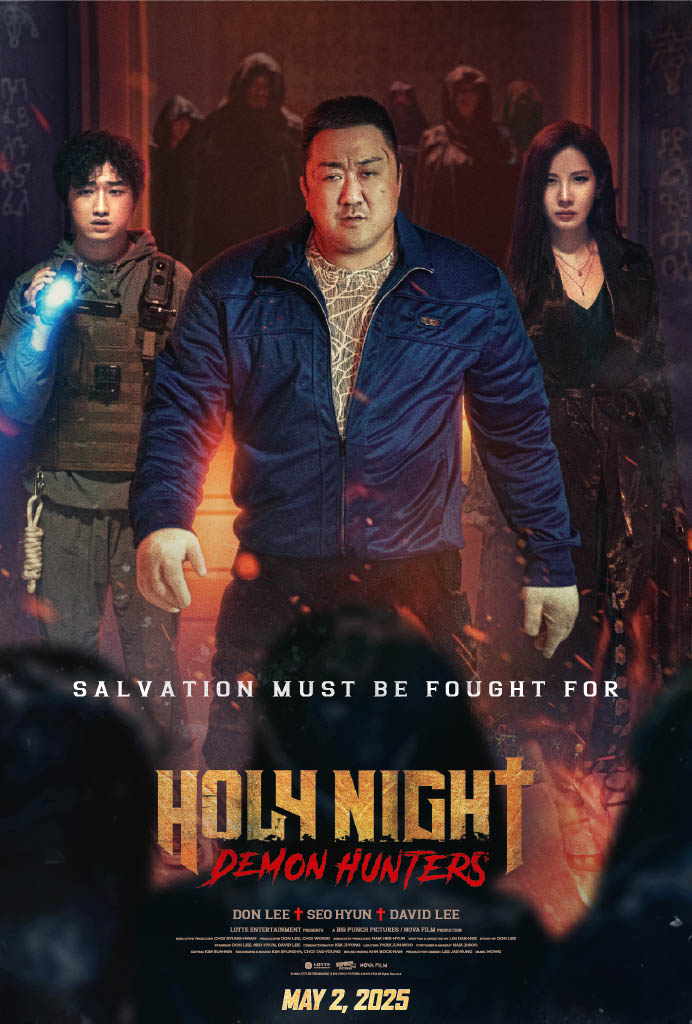
Holy Night: Demon Hunters (거룩한 밤: 데몬 헌터스, Lim Dae-hee, 2025)

The mighty fists of Ma Dong-seok punch the Devil right back to hell in Lim Dae-hee’s supernatural action drama, Holy Night: Demon Hunters (거룩한 밤: 데몬 헌터스, Geolughan Bam: Demon Hunters). The latest in the long line of vehicles for the much loved star, the film is as much about its hero’s own demons as the more literal kind as he finds himself confronted by the past and his unresolved trauma while trying to save a young woman who seems to have been possessed by a powerful and malevolent supernatural entity.

Bow (Ma Dong-seok) runs a detective agency that specialises in supernatural crime and is often called in when the police run out of other options. He and his two assistants, Sharon (Seohyun), the exorcist, and Kim Gun (Lee David), the cameraman, are charged with a missing persons case that has links to a series of ongoing violent crimes apparently committed by “Worshippers,” or those who have chosen the dark side and are in league with the demons to “cause harm to people and spread evil”. Meanwhile, the team is also approached by a doctor, Jung-won (Kyung Soo-jin), who is at her wit’s end trying to treat her younger sister Eun-seo (Jung Ji-so). Eun-seo is currently being treated for schizophrenia but, Jung-won now suspects after taking advice from fellow doctor and Catholic priest Father Marco, she may actually be possessed.

The film’s worldview is indeed steeped in religion and though it doesn’t really get into it, there’s something a little discomforting in its positioning of Jung-won as a woman of science eventually forced to accept that her sister’s illness is demonic. Not only is the implication that those living with schizophrenia are inherently dangerous and, in fact “evil”, but also that they pose an ongoing threat as Bow fights off a corridor full of otherwise zombified patients who’ve been released from their cell-like rooms by the demonically empowered Eun-seo. 

Meanwhile, in contrast to other similarly themed Korean supernatural thrillers, the Catholic Church is presented uncritically as a source of infinite good and the only means of fighting the darkness the demons represent. The only note of uncertainty lies in Bow’s feud with Father Marco because he unwittingly appeased the demons after realising that Bow’s childhood friend Joseph, with whom he grew up in the same orphanage, is actually the incarnation of Lucifer. He chose not to say anything because he didn’t want to believe that Joseph could be “evil”. In any case, Bow’s trauma flows from the same source. He blames himself for being unable to stop Joseph when he attacked the orphanage, killing several children along with their shared maternal figure Sister Angela. Working with another nun, Sister Catalina, Bow is saving to open a new Catholic orphanage as a means of atonement while otherwise vanquishing other demons with his God-given gift, his fists.

It’s only in confronting his trauma that Bow is able to unlock his full power, which actually comes from the Devil, though he, like Sharon, has elected to use it for “good” rather than evil. Thus they are both in some sense fighting their darker impulses in rejecting the “evil” view of the world presented by the Worshippers who, the film suggests, very much walk among us in the guise of “good neighbours.” The film sets this cosmology up as a kind of comic book-esque universe and even slips into webtoon-style animation in the closing scenes as Bow takes on yet more ungodly forces and smacks them straight back to hell.

That said, there’s less of Ma Dong-seok punching bad guys than might be expected from this type of film, though there’s certainly room for his brand of deadpan, wisecracking humour that gives the team a lived-in feel even if they otherwise seem slightly underwritten as if this were the big-screen adaptation of a television series the viewer hasn’t seen. It also has less in common with previous exorcism dramas such as The Priests, The Divine Fury, or Devil’s Stay and seems to be influenced more by Hollywood films about demonic possession while otherwise taking visual inspiration from the Paranormal Activity series and ghost shows along with the odd J-horror jump scare. It also borrows J-horror’s technological anxiety in Eun-seo’s ability to make the digital signal twitch, though the film never particularly does very much with it. Nevertheless, it’s all carried along by Ma’s winning charm as an action star along with the committed performances of the cast even when not particularly well served by the material. 


Holy Night: Demon Hunters is in US cinemas now courtesy of Capelight Pictures.

International trailer (English subtitles)
The Roundup: Punishment (범죄도시 4, Heo Myeong-haeng, 2024)

There’s a moment in the fourth instalment of the Roundup series when monster cop Seok-do’s boss asks him what good his fists are in the age of cyber crime. More so than in previous episodes, Punishment (범죄도시 4, Beomjoedosi 4) seems to lean hard into the idea that Seok-do iMa Dong-seok) is a dinosaur stuck in the 1970s and unable to understand the modern world. He’s a bruiser cop in an era of supposedly compassionate policing, a thug sent to catch a thug. Yet he’s also presented, as is actually said by his superior officer, as everything a good cop should be in his determination to nail the bad guys to keep a promise to a murder victim’s devastated mother.

But as in the previous films, the victim largely gets forgotten until the very end when Seok-do and his colleagues pay a visit to his grave. Set in 2018, the film is apparently inspired by a real life case and in an echo of the kinds of explanatory title cards seen at the end of Chinese films, ends with a reminder that the government began cracking down on cybercrime in that year. Reminiscent of anti-gambling drama No More Bets, the victim here is also a computer programmer effectively enslaved after being lured to the Philippines on a promising job offer only to be forced to work on casino websites by organised crime. Seok-do is mostly concerned with catching the bad guys rather than exposing this nefarious practice or its effects on those who fall victim to its addictive gambling scam. 

In any case, a running joke sees Seok-do once again cast as a dinosaur apparently unable to grasp simple concepts of modern technology. “Right, we’ll go get it before it closes, then,” he replies when informed the villains used “open source software”. He thinks syncing to the cloud means a crowd of people will come help you set up your phone and he never replaces his because it’s a bother to put in all those numbers into your contacts again. The team end up having to recruit a new team member from cybercrime, the only woman in the room which comes in handy when they need her to pose as the girlfriend of familiar comic foil Jang Yi-soo (Park Ji-hwan) who is tricked into thinking he’s been deputised with a shiny badge that looks like it fell out of a serial packet and has the telltale letters FDA at the top which Seok-do convinces him stands for Police Dark Army.

Despite all the thuggery, there’s something essentially childlike about Seok-do’s roguishness that sees him delight in playing a trick on Jang Yi-soo. After wrecking the first class cabin of a soon to depart plane, he walks off sheepishly like naughty little boy ignoring his boss’ frantic calls to come back and explain himself. In this instalment, we get less of the overt references to police brutality with one brief scene of Seok-do putting a motorbike helmet on a suspect and beating him over the head while his colleague keeps watch outside as we peek in through the widow. To remind us he’s still the good neighbourhood cop, we see several scenes of him visiting a restaurant run by the widow of a colleague killed in the line of duty and secretly slip his teenage daughter wads of cash to buy something nice for herself. 

What it all amounts to is a slightly awkward advocation for the police who are directly stated to be always there to protect the citizens and catch criminals who harm them even if they do It abroad. To this extent, Seok-do is a good cop literally smacking some sense into bad guys because it turns out his giant fists can fight “digital” crime after all and there’s no denying that it does feel good to see Ma Dong-seok smack bad guys. The action scenes this time around are visceral and surprisingly bloody not to mention loud with the sound of Ma’s thunderous fists flailing around. The film’s distinctly retro sensibility is echoed in the ‘70s score which seems to hark back to an era of maverick cop movies about men like Seok-do who keep order on the streets while Seok-do himself seems increasingly like a man out of time, a throwback to a bygone era perhaps uncomfortably romanticised in the quasi-authoritarian sensibility which seems to underpin it.


Festival trailer (English subtitles)

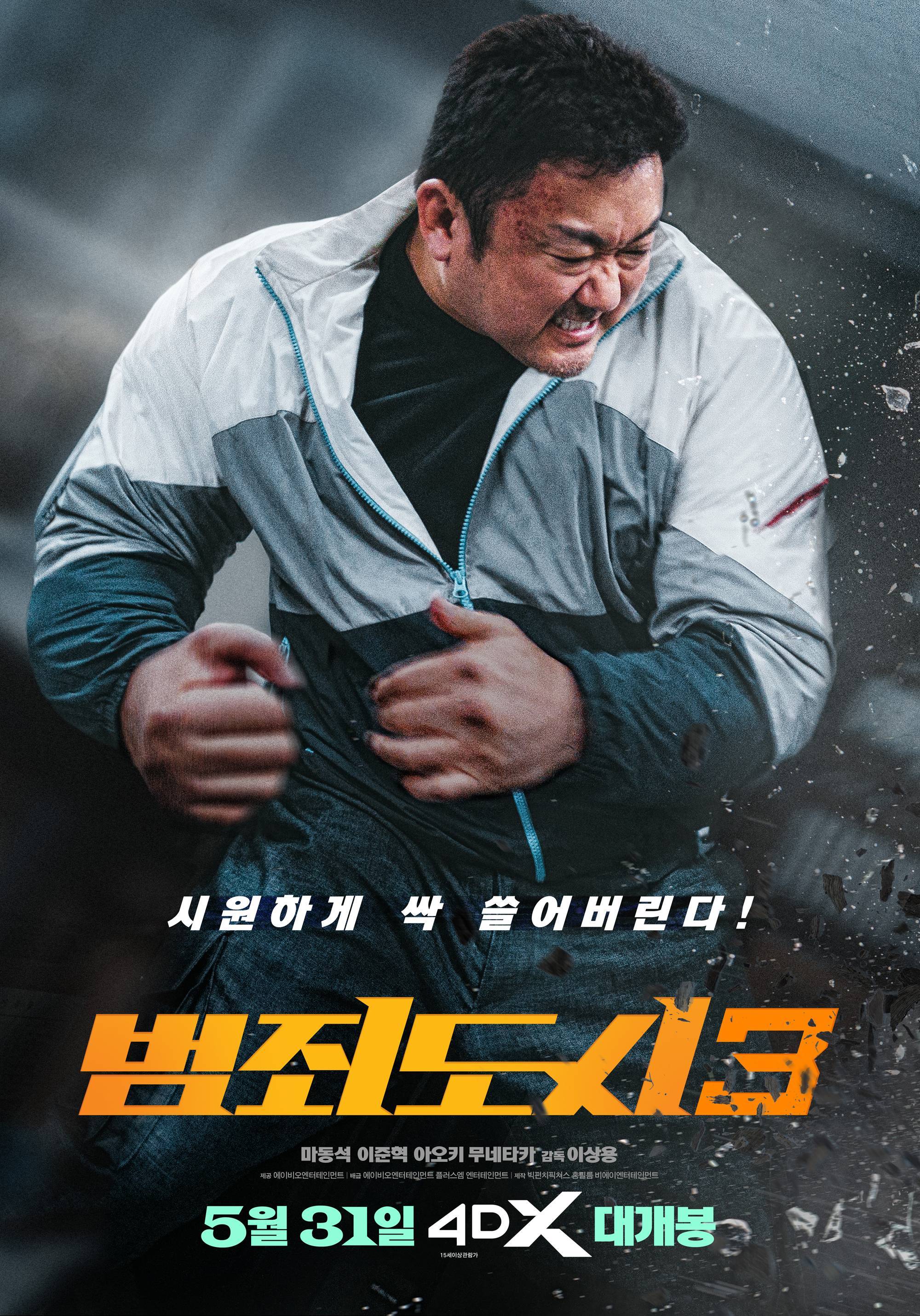
The Roundup: No Way Out (범죄도시 3, Lee Sang-yong, 2023)

Ma Dong-seok has been cultivating an image of himself as an action star for quite some time. The kind of marquee name who generally plays the hero, Ma looks back to the genre’s heyday presenting an uncomplicated vision of righteous masculinity, a bruiser with a heart of gold. The Roundup: No Way Out (범죄도시 3, Beomjoedosi 3) is the third in a series of films that began with The Outlaws and is projected to total at least eight instalments each starring Ma as the maverick detective his superiors hate to love. 

It’s true enough that you can’t get away from the more problematic elements of his unreconstructed good bad cop persona. We often see Seok-do (Ma Dong-seok) beat information out of suspects which the film treats as a cheeky joke in an otherwise tacit endorsement of police brutality that suggests red tape is the reason the guilty often evade justice. Meanwhile, in a step back from other Ma vehicles there are almost no women in the film and none in the police force. The heart of the case is the death of a 28-year-old woman who “fell” from a hotel room window and is later discovered to have died of a heart attack after being drugged in a club and dragged off by a random man who then literally threw her away to distance himself from the crime. The murder which Seok-do is supposed to be investigating is totally forgotten in his all encompassing drive to find out where the drugs are coming from which eventually descends into a battle of wits with a corrupt police officer who’s teamed up with a Korean-Japanese yakuza to skim his boss’ supply of new designer drug Hiper. 

There is a distinctly uncomfortable thread of xenophobia that runs through the series even if in this case the villainy is discovered closer to home in the form of police corruption. This time around, the threat is once again Japan which is apparently where Hiper originated though petty yakuza Tomo (An Se-ho) now manufactures it in Korea where he’s cut a freelance deal with dodgy cop Joo (Lee Joon-hyuk) to distribute it in the local night life scene without the knowledge of his boss back in Japan, Ichijo (Jun Kunimura). Joo has also cut a deal to sell the drugs to a Chinese gang, so it’s quite bad news for him when Ichijo gets wind of the situation and Tomo takes off with a suitcase full of pills for his own protection. Unluckily for him, Ichijo has already sent his most intimidating assassin, Riki (Munetaka Aoki), to find out what’s been going on behind his back. 

Problematic as it may be, Ma’s retro take on the action star is undeniably entertaining with his frequent hero moments and penchant for one liners. The first time he appears, we see him break up a street fight but mostly interested in finding out if the guy on the ground started it the implication being that perhaps if he did it’s none of his business but otherwise he’s going to have to intervene. Then again as he tells his exasperated boss, his personal motto is “punish and serve” and he’s here to get the job done even if that means wading in all fists blazing without much thought for regulations or procedure. At one point Seok-do and his guys stumble on a crime scene and walk around it touching everything in sight without bothering to even put on so much as gloves. 

In any case, Lee makes every punch land and quite literally as the screen seems to vibrate on contact almost as if the camera itself were taking a blow. Ma’s thunderous fists clash with the sound of justice as he all too easily disables hardened gangsters with one well placed slap. At times, his invincibility borders on the ridiculous but he does eventually allow himself be “defeated” if only temporarily as in his miraculous recovery from being run over by a gangster’s car. In many ways, Joo is Seok-do’s mirror, a bad bad cop with crazy eyes who kills without a second thought and behaves with narcissistic recklessness, overconfident in his abilities to sort his problems through his status as a law enforcement officer. Bruiser he may be, but Seok-do likes arresting people and never uses lethal force even when the opportunity is presented to him, symbolically snapping Riki’s katana and then proceeding to slap him seven ways to Sunday leaving the ice cool assassin collapsed amid a display of Japanese parasols. An end credits scene set three years later in 2018 sets up a fourth instalment and the return of a familiar face besides that of Seok-do himself who continues to charm as the world weary bruiser slapping down crime wherever it rears its ugly head. 


The Roundup: No Way Out is in UK cinemas now.

International trailer (English subtitles)
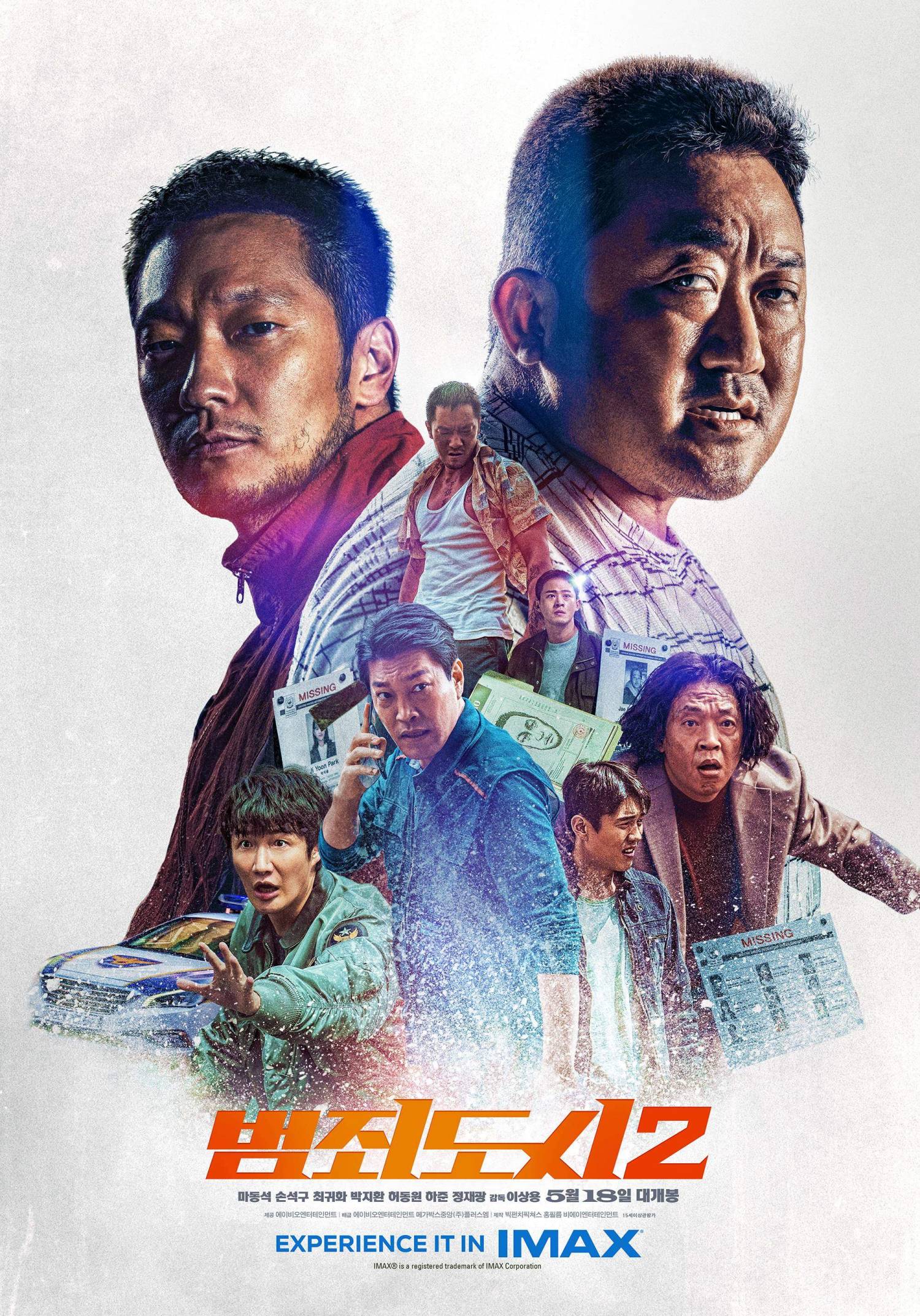
The Roundup (범죄도시 2, Lee Sang-yong, 2022)

Force of justice Ma Seok-do returns five years after The Outlaws to right more wrongs in jet-setting action comedy, The Roundup (범죄도시 2, Beomjoidosi 2). By this stage in his career, actor Ma Dong-seok has succeeded in creating a persona for himself as a loveable bruiser whose violence is just a way of being and always in service of a greater good. These are qualities very much in play as Seok-do (Ma Dong-seok) finds himself defending the interests of Korean citizens abroad against crooks the cops failed to catch at home.

Seok-do is however in the dog house for being accused of using excessive force in the papers after neutralising a hostage incident in a convenience store. To keep him off the front pages, the higher ups decide to send him on a mini mission abroad bringing home a Korean fugitive who has apparently turned himself in to the Vietnamese authorities. Given that this is quite an odd thing to do and the criminal’s explanation that he was suddenly overcome with guilt and wanted to repay his debt to society doesn’t ring true, Seok-do smells a rat. As he discovers, it all points back to the kidnapping and murder of a rich man’s son by vicious gangster Hae-sang (Son Seok-koo) who preys on unsuspecting tourists. Rather than get the police involved, the boy’s father has decided to hire a bunch of mercenaries to take revenge further destabilising the local underworld in Ho Chi Min City. 

It has to be said that there is something a little uncomfortable in the quasi-nationalist posturing of the film’s central premise. Korea has effectively been exporting crime by allowing dangerous criminals to flee abroad where the law can’t touch them. Korean crooks then make trouble for Korean tourists even if not quite to the extent of Hae-sang, all of which ignores the effects on the local Vietnamese population in concentrating on Korean on Korean crime. At the end of the film it’s even suggested that Korean police officers might be dispatched to other areas of Asia to look after Korean tourists which shows a certain lack of respect for national sovereignties while more or less letting the same police officers off the hook for failing to catch criminals in Korea or address the issues which led to them entering lives of crime. A maverick cop, Seok-do does rather throw his weight around in a foreign country, caring little for protocol and threatening to spark a diplomatic incident every few seconds. 

Then again he is just particularly keen on shutting down Hae-sang and exposing him for his heinous acts, cleaning up a mess that has ended up spilling over abroad. Ironically enough, the bereaved father, Choi (Nam Moon-cheol), maybe a powerful CEO but he made his money loansharking and is pretty much a petty gangster himself so of course he wants personal vengeance once again uncomfortably hiring mercenaries from China. Meanwhile, Seok-do ends up enlisting the help of a formerly undocumented migrant when Choi ends up getting kidnapped himself by a cornered Hae-sang.

In any case, Seok-do more than holds his own against the bloodthirsty villains in a series of well choreographed action sequences culminating in a one-on-one showdown on a bus. Much of Ma’s appeal lies in his effortless ability to take down bad guys which he does a plenty, even dispatching one via escalator to his waiting teammates below. Even so, he knows not to take himself too seriously and is keen to cede screen time to the ensemble allowing a gentle camaraderie to appear among his squad members despite their separation while Seok-do and the Captain are in Vietnam trying to have a covert holiday and the rest of the team are left behind to do regular admin work in the office. Though it may present some rather uncomfortable ideas in a kind of Korean exceptionalism that implies a degree of superiority over and disregard towards other Asian nations, the film is nevertheless a charming retro action comedy and perfect showcase for the charismatic star as his no-nonsense policeman makes a point of slapping down bad guys and fighting international crime while generally living his best life hanging out with similarly justice-orientated buddies. 


The Roundup screens in Amsterdam on 27th October & 4th November as part of this year’s Imagine Fantastic Film Festival.

International trailer (English subtitles)
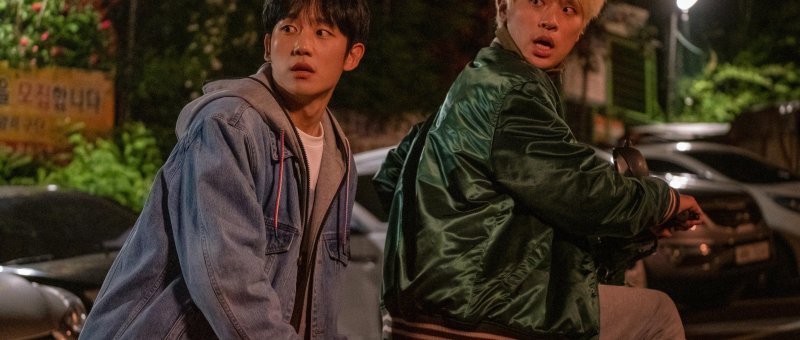
Start-Up (시동, Choi Jung-yol, 2019)

Two young men experience a failure to launch in Choi Jung-yol’s Start-Up (시동, Sidong), a much gentler coming of age tale than his 2016 feature debut One Way Trip. Like the earlier film, however, Start-Up finds its two heroes pulled in different directions while experiencing the same dilemmas, these being in the main a kind of toxic masculinity that sees them in part reject their respective maternal figures in internalised shame as sons who feel they should be but are fundamentally incapable of taking of care of them and perhaps concluding that their only familial connection must be disappointed and resentful.

We can see the boys’ sense of futility in the opening sequence in which they literally fail to kickstart a scooter that 18-year-old Taek-il (Park Jung-min), the hero, has somehow managed to buy on the internet but seems to be a dud. Eventually they wind up having an accident and being taken to the police station where Taek-il’s mother Jeong-hye (Yum Jung-ah) has to bail them out leaving even the desk officers looking quite embarrassed as she takes Taek-il to task for his irresponsibility, disappointed to learn he spent money intended for lessons to help him (belatedly) get his high school diploma on the useless scooter. He tells her he’s dropped out of school and has no interest uni, fiercely resenting her refusal to accept his decision while unwisely cutting in that she doesn’t have the money to send him anyway which earns him one of her trademark volleyball slaps. 

Taek-il’s unwise words perhaps hint at part of the reason he’s rejecting the life his mother wants for him in that he knows how much she’s suffered and sacrificed on his behalf and doesn’t want to add to her burden by encouraging her to overwork herself to pay for college when he doesn’t think he’s worth it anyway. Of course, he can’t say any of this to her, and she can’t tell him she only wants the best for him, so they alternate between silence and blazing rows with Taek-il retreating into peaceful visions of life on a desert island when everything gets too hard. Wanting to prove himself independent, he ends up running away but doesn’t have money to get very far so ends up working in a Chinese noodle restaurant in provincial Gun-san. 

His friend Sang-pil (Jung Hae-in), meanwhile, is an orphan living with his elderly grandmother (Go Doo-shim) who appears to be suffering from dementia and has been supporting the pair of them by peeling chestnuts. Like Taek-il, Sang-Pil desperately wants to be able to take care of his grandmother and make her life as easy as possible but is largely out of options which might be why he lets a shady friend, Dong-hwa (Yoon Kyung-ho), introduce him to his “company” which turns out to be a local loansharking gang for which Dong-hwa is an enforcer and debt collector. Sang-pil tells Taek-il that he’s got a job “in finance”, and though he’s conflicted enjoys the sense of self worth he gains as a working man earning money to look after grandma. He is too naive to realise that the first family they visit is aggressively nice to Dong-hwa because he’s probably been less than nice to them in the past, coming away with the mistaken idea that the job’s not so bad and people are grateful for the “service” they’re providing. 

A repeated gag sees both boys getting repeatedly beaten up, literally struck down every time they attempt to move forward. Taek-il finds himself punched in the stomach by an amateur boxer with problems of her own and thereafter knocked around by the eccentric chef at the Chinese restaurant (Ma Dong-seok), while Sang-pil is finally awakened to the dark side of his new job when he’s thrown through a glass doorway by a drunken client very clearly at the end of his tether. The answer is less fighting back than it is standing together and up for oneself as the boys begin to make mutual decisions about the future directions of their lives and the kind of men they’d like to be even if they still don’t quite know where they’re going. 

Start-Up’s genesis as an online webmanga might help to explain its myriad unresolved plot strands including the backstory of the mysterious boxing high school girl (Choi Sung-eun) who appears to have lost or become estranged from her family but ends up becoming the surrogate daughter of the kindly man who owns the Chinese restaurant (Kim Jong-Soo) which seems to be a haven for lost people of all ages looking for a place to call home, while Jeong-hye’s past success as a volleyball star is resolved as little more than an awkward punchline and her desire to start her own business which she is then swindled out of presented as something done solely for her son rather than for herself. The difficult economic circumstances of contemporary South Korea are certainly a factor in the boys’ malaise and general sense of hopelessness but it’s less Hell Joseon that’s trapping them than a complex web of familial love and resentment coupled with their desire as a young men to feel in control of their own lives rather than being constrained by parental expectation. “You should decide where to go first” Taek-il is repeatedly told, but when it comes right down to it the most important thing is figuring out how to start the engine, everything else you can figure out later.


International trailer (English subtitles)
Ashfall (백두산, Lee Hae-jun & Kim Byung-seo, 2019)

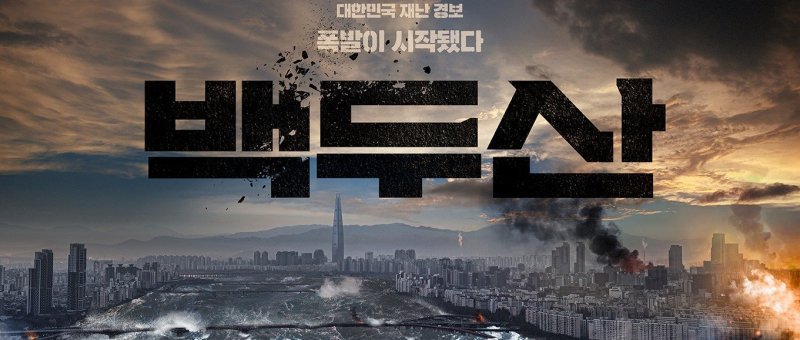
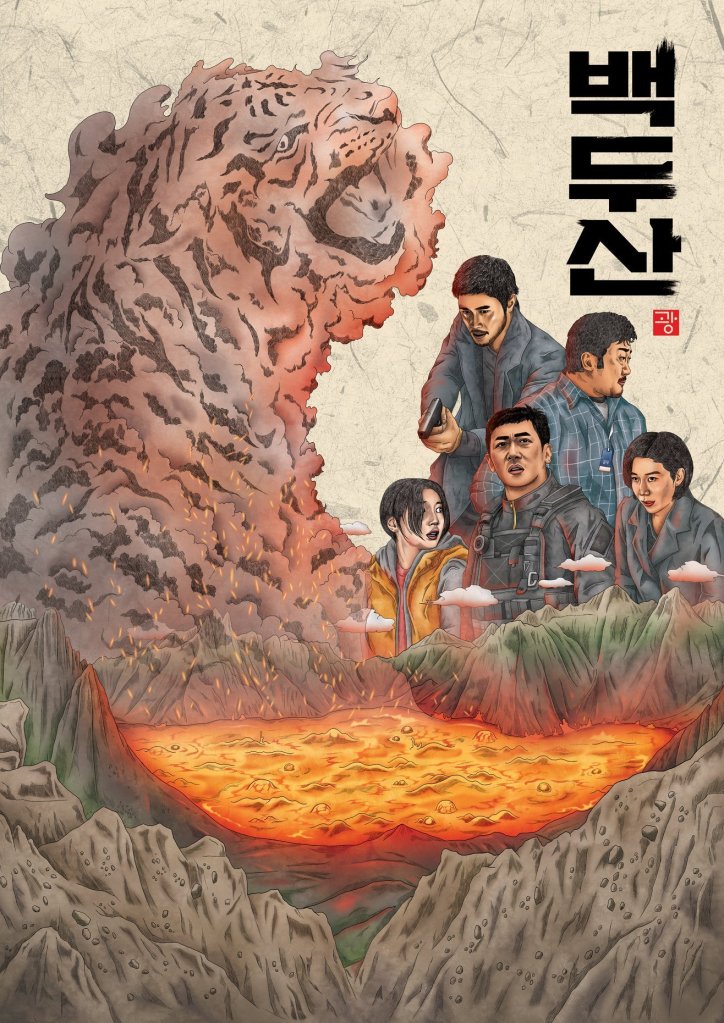
The Korean Peninsula once again faces existential threat though this time of a natural genesis, and ironically the only way to save it might be nukes from the North. Ashfall (백두산, Baekdusan) is the latest and the largest of Korea’s big budget disaster movies featuring a veritable host of A-list talent and action sequences on an epic scale, but also doubles down on the less palatable sides of the genre in an overt and sometimes uncomfortable nationalism which nevertheless has its positive sides in its temporary elision of the North/South divide as the heroes pursue their cross-border mission to save the people of Korea not only from volcanic threat but from becoming mere pawns in geopolitical brinksmanship. 

The most obvious problem, however, is that long dormant volcano and pregnant national symbol Mt. Baekdu has erupted, provoking massive earthquakes which quickly reduce most of the high tech capital to mere rubble. This is particularly bad news for heroic army bomb disposal expert Captain Cho (Ha Jung-woo) because, in true disaster movie fashion, today was supposed to be his last day. Cho’s wife (Bae Suzy) is heavily pregnant, and it seems he’s opted for a safer occupation in the light of his impending fatherhood. According to the predictions of previously derided Korean-American scientist “Robert” Kang Bong-rae (Ma Dong-seok, cast brilliantly against type), Mt. Baekdu will continue erupting with the third and most powerful wave taking out most of the peninsula, but he has a plan to stop it. He wants to use nuclear weapons to blow a hole in the side of the chamber, relieving the pressure. To do that, they need to hijack some of the uranium from very recently decommissioned North Korean missiles, which means sending a small military expedition over the border in secret to track down a possible double agent who knows where all the nuclear material is before loading up their own detonators and driving them into a mine under the volcano. 

All of this takes place against the backdrop of North Korea’s long awaited denuclearisation which is in the process of being witnessed by American forces who are very much not in favour of Kang’s plan seeing as it effectively means detonating a nuclear bomb right on the Chinese border. Once again, the film suggests, Korea finds itself the battleground in a proxy war, its sovereignty denied as it attempts to use whatever means it has to save itself but is actively prevented by various kinds of outside forces. Kang, who idolises America to the point that he rejects his Korean name and tries to leave the country as soon as possible on his US passport, eventually makes the ironic statement that the ensuing chaos is all down to this “incompetant government that can’t decide its own fate” as the American army shutdown a Korean operation to put his plan in action while Cho and his guys also find themselves actively targeted by US military acting covertly in North Korea. 

Somewhat unexpectedly, Cho is not quite the heroic action hero one would expect. He’s anxious and inexperienced, out of his depth as a man unused to being in the field, trained to defuse bombs not launch them and unfamiliar with standard weaponry. Because his guys are the good guys, the North Korean mission is supposed to be “non-lethal”, so they’re wading into this with tasers and rubber bullets while his opposing numbers have no such scruples. Ri (Lee Byung-hun), the North Korean double agent, runs rings around them, playing every advantage while his motives remain unclear until finally sitting comfortably within the realms of action movie melodrama as he and Cho develop an awkward mismatched buddy dynamic, bonding over paternal worries and North/South pop-cultural exchange. 

The familiar message is that all things are possible when working together for a common cause, making a possibly subversive argument that North/South solidarity is the most powerful weapon against entrenched American imperialism and a resurgent China while advocating strongly for a greater national sovereignty less beholden to foreign powers for military support. It comes as little surprise that Kang eventually decides to go back to his original name and stay in Korea for good rather than return to a discredited US, having rediscovered his Koreaness thanks to his role in saving the nation. Subtle this is not, but then who ever asked for subtlety from a big budget disaster movie?


Ashfall is available to stream in Europe until July 4 as part of this year’s Udine Far East Film Festival.

International trailer (English subtitles)

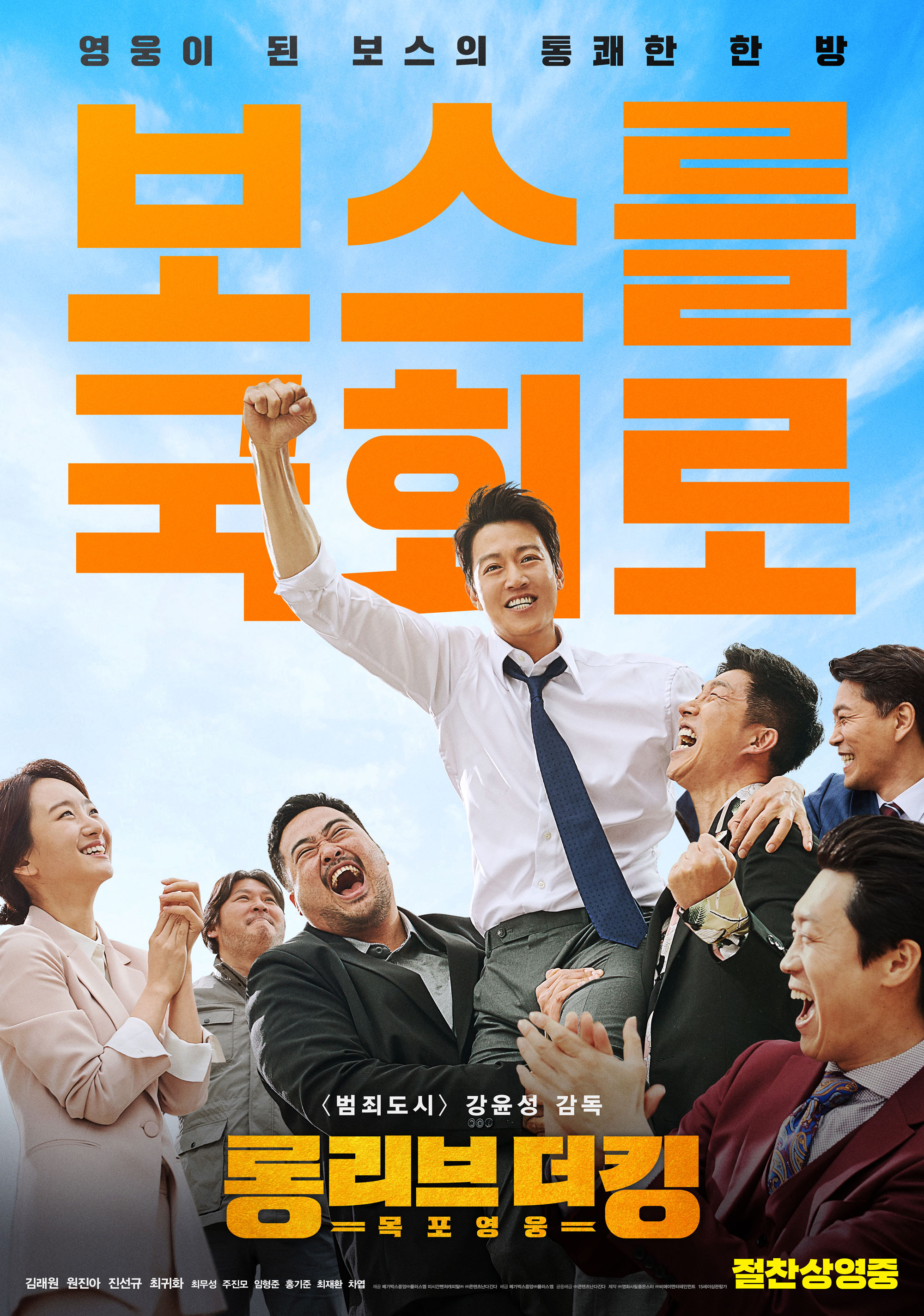
Long Live the King (롱 리브 더 킹: 목포 영웅, Kang Yoon-sung, 2019)

long live the king poster 1Back in the good old days, gangsters used to make a case for themselves that they were standing up for the little guy and protecting those who couldn’t protect themselves. Of course that wasn’t quite the truth, but one can’t deny how closely small town thuggery and political office can resemble one another. Following his breakout hit The Outlaws, Kang Yoon-sung returns with web comic adaptation Long Live the King (롱 리브 더 킹: 목포 영웅, Long Live the King: Mokpo Yeongwoong), another unconventional comedy in which a surprisingly loveable rogue rediscovers his national pride and finds a more positive direction in which to channel his desire to be helpful.

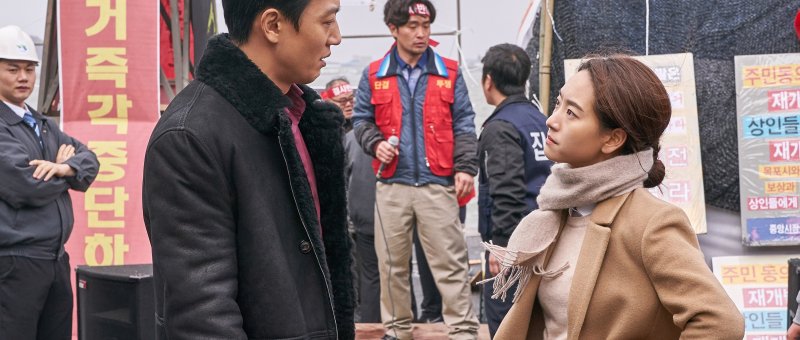
Se-chool (Kim Rae-won) is a notorious thug with a traumatic past currently working with a local gang hired to clear a small protest of stall owners trying to cling on to a traditional market space in working class Mokpo where a developer wants to build a theme park and upscale skyscraper. A feisty young lawyer, So-hyun (Won Jin-a), is working with the protesters on their case and has no problem telling the gangsters where to get off. Impressed, Se-chool is smitten and starts to wonder if he’s on the wrong side but his attempts to get So-hyun’s attention – being strangely nice to the protestors, buying everyone lunch etc, spectacularly backfire. Only when he hears about another man, Hwang-bo (Choi Moo-sung), who used to be a gangster but has now reformed and become a social justice campaigner running a small not-for-profit cafe serving meals to the vulnerable, does he begin to see an opening, vowing to give up the gangster life and commit himself to serving the people of Mokpo.

The irony is that everyone seems to think that Se-chool has a hidden agenda, but his only agenda is the obvious one in that he wants to win So-hyun’s heart even if that means he has to shape up and learn to become a decent person rather than a heartless gangster thug. Known as the king of the nightlife, Se-chool is regarded as a slightly eccentric, good time guy, so his sudden desire to go “legit” is met with bemusement rather than surprise, but old habits are hard to shake and it takes a while for him to realise that trying to help people with his fists is not the best way to go about it. Punching out some punks making trouble in a cafe gets him an earful from the proprietress who explains that she owes a lot of money to the guys’ gang so Se-chool’s chivalry has probably caused her a series of potentially serious problems she assumes he won’t be on hand to help her out with. Nevertheless, he retains his desire to wade in and do his bit, becoming a surprise local hero when he puts himself in danger to ensure the unconscious driver of a crashed bus gets out safely while the other passengers make their escape.

Meanwhile, local politics is starting to heat up. Venal politician Choi Man-su (Choi Gwi-hwa) is up for re-election and running on a platform of making Mokpo great again. It comes as no surprise that Man-su is deep into the corrupt theme park project and outsourcing general thuggery to Se-chool’s arch-enemy which eventually includes taking out potential rivals like Hwang-bo whose approval ratings are soaring while voters are becoming tired of Man-su’s big money tactics and insincere messaging. Soon enough, Se-chool is persuaded to enter the race seeing as his “local hero” persona puts him in good stead to oppose Man-su’s establishment credentials. But, in order to get elected and convince So-hyun he’s really changed, he’ll have to finally face his traumatic gangster past while learning to be open and honest with his feelings.

Kang goes in hard for the business of politics, taking pot-shots not only at corrupt establishment figures in so tight with organised crime that they’re little more than jumped up gangsters, but also at ambitious party hoppers, and misguided mobsters who think they’re onto the big ticket by hooking up with “legitimate” power. Poor Se-chool, meanwhile, actually thought he was doing “proper business” in his persona as a besuited gangster of the new, corporatised school little thinking about the little guy as he unwittingly went about his ultra-capitalist agenda. Heading for broad comedy, Long Live the King misses an opportunity for serious satire but has undeniable heart as the misused hero learns to accept himself in being accepted by others, falling in love not only with a feisty activist lawyer but with community spirit and progressive politics as he vows to fight for a better future for the people of Mokpo while opposing the inherent corruption in the system embodied by men like Man-su who feel themselves entitled to exploit solely by virtue of their own superiority.


Long Live the King was screened as part of the 2019 London East Asia Film Festival.

International trailer (English subtitles)

https://www.youtube.com/watch?v=34P-kidRXkU

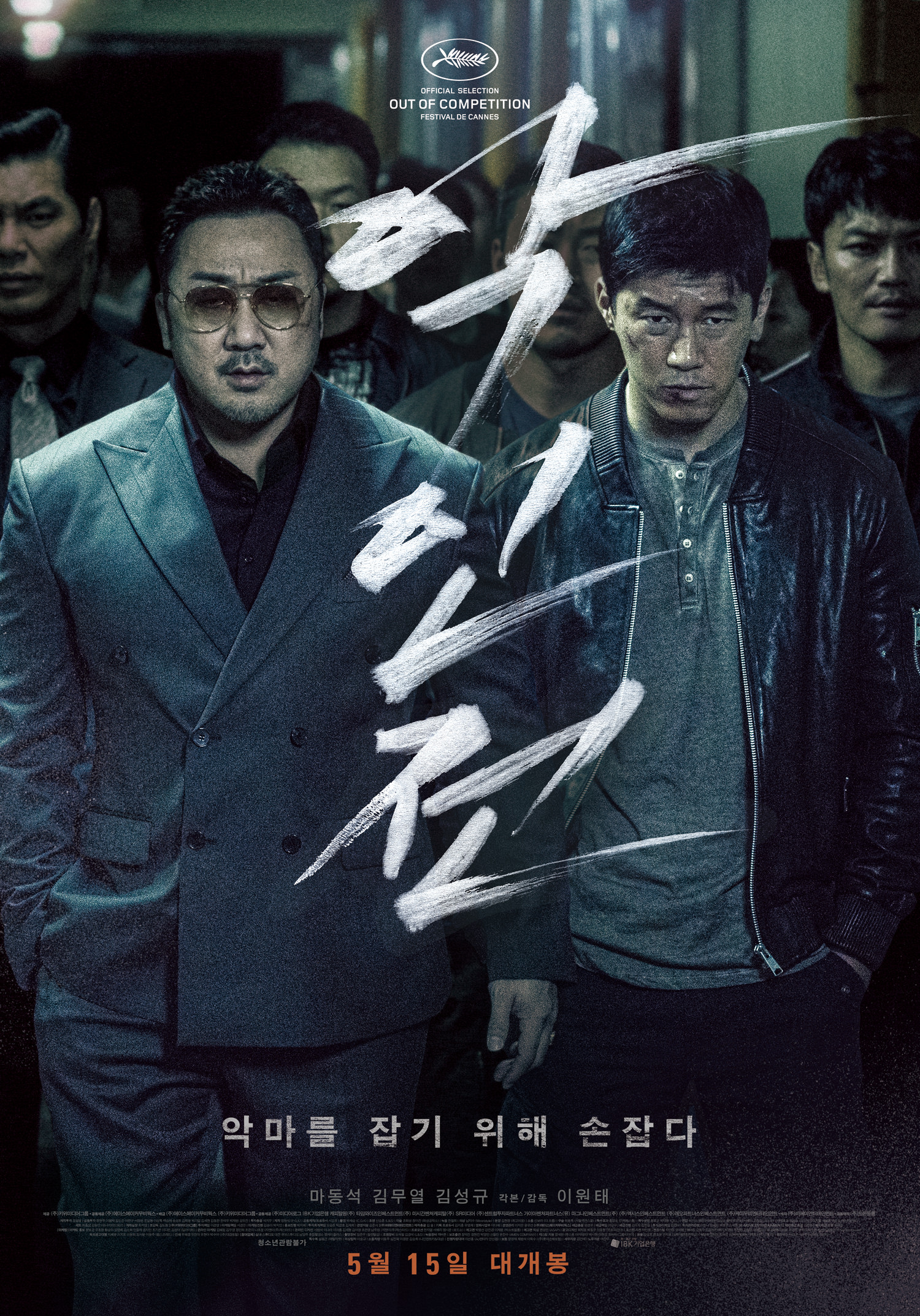
The Gangster, The Cop, The Devil (악인전, Lee Won-tae, 2019) [Fantasia 2019]

81745_1000“Two bad guys will catch the worst man” according to irritated gangster Jang Dong-su (Ma Dong-seok) in Lee Won-tae’s The Gangster, The Cop, The Devil (악인전, Akinjeon). He doesn’t quite know how right he is, even as he forms an unlikely alliance with a maverick cop himself highly irritated because his lazy colleagues won’t listen to his theory that a spate of unsolved murders are the work of a serial killer. More alike than they’d care to admit, the two “bad guys” team up to do what they have to do in order to make the killing stop but at what price?

A vicious killer (Kim Sung-kyu) has developed a habit of rear-ending solo drivers on lonely roads, stabbing them repeatedly and then leaving them for dead. Maverick cop Tae-seok (Kim Mu-yeol) has become convinced that the killings were carried out by the same perpetrator and that they have not yet been identified as a “serial killer” partly because the crimes took place in different districts and there is insufficient co-operation between precincts, and partly because his colleagues think serial killers are something you see in American movies. His superiors just want to close cases, they aren’t particularly concerned with upholding justice or protecting the innocent and so Tae-seok starts thinking outside of the box when he hears that the killer’s latest target was none other than top mob boss Jang Dong-su.

Dong-su got rear-ended after running an errand to have a word with a wayward underling, Hur (Yoo Jae-myung), who has forgotten his place. The killer made a serious mistake going after Dong-su who is a big, handy kind of guy and therefore manages to fend him off, even wounding him in the shoulder despite being badly injured himself. Though the obvious conclusion is that Hur sent someone after him, Dong-su is unconvinced seeing as he had never seen his assailant before and is pretty sure he’s not a member of the gangster underworld. Still, he’s very annoying because a gangster only has power in being respected and right now Dong-su looks a fool. If he wants to get his “professional” life back on track, he needs to get his revenge but to do that he’ll have to cross the floor and work with law enforcement, temporarily teaming up with rogue cop Tae-seok whose heart is in the right place even if he’s not averse to bending the rules.

One of the things which most bothers Tae-seok about amoral killer “K” is that, unlike most serial killers, he kills indiscriminately and purely for pleasure. He has no “type” and generally goes up against those most likely to fight back, unlike your average pattern killer who targets the vulnerable. Like Tae-seok and Dong-su, he is however quite annoyed – this time because someone has “framed” him for a murder he didn’t commit in order to further their own ends. Hugely overconfident and cooly psychopathic, he sits in the dock and asks what makes his crimes different than the state’s if the state is fixing to execute him without proper evidence. Pointedly looking at law enforcement, he affirms that the real villains are those who commit crime with kind faces (say what you like, but at least K looks the part).

When it comes to Tae-seok he might have a point. Conspiring with Dong-su to “kill him with law”, Tae-seok gleefully manipulates the system while giving Dong-su tacit permission to take his revenge as long as “justice” has been properly served. K doesn’t believe in anything, Tae-seok believes in a particular kind of “justice” if not quite in the law, while Dong-su mourns the sense of self-belief that allows you to rule the roost as an all powerful gangster. The three men are a perfect storm, each angry, each resentful, each vowing a particular kind of revenge against the forces which constrain them be they corrupt and lazy superiors, gangsterland disrespect, or the “injustice” of being accused of a crime you did not commit but not being properly credited for the ones you did. Bathed in a garish neon, Lee’s anti-buddy-cop drama embraces its noirish sense of fractured morality with barely suppressed glee as its similarly conflicted heroes pursue their violent destinies, true to their own but dragged to hell all the same.


The Gangster, The Cop, The Devil was screened as part of the 2019 Fantasia International Film Festival.

International trailer (English subtitles)

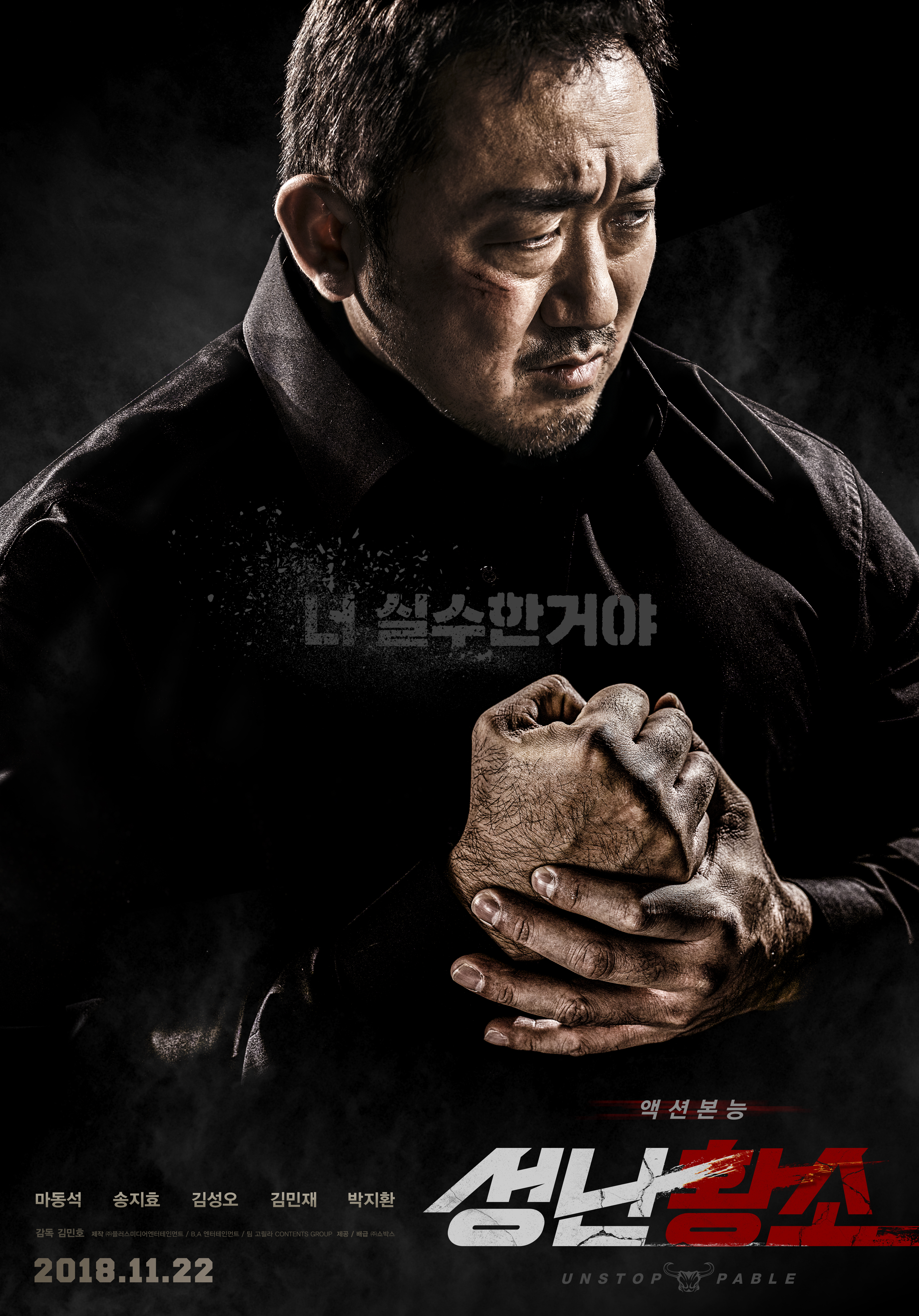
Unstoppable (성난황소, Kim Min-ho, 2018)

Unstoppable poster 5Can a person ever really change? The answer might be more complex than it seems but then again, you might not quite want them to change as much as you might think you do. Ma Dong-seok is quickly becoming Korean cinema’s MVP, in the genre stakes at least, and has begun to make a career for himself as a big hearted teddy bear of a man with gigantic heavy fists. It’s a legacy he very much embraces in the oddly light hearted Unstoppable (성난황소, Seongnan Hwangso) which sees him play a former gangster gone straight whose latent violent streak is reawakened when he becomes a warrior for love.

Dong-cheol (Ma Dong-seok) was once a notorious tough guy but gave up the streets when he met “an angel”, nurse Ji-soo (Song Ji-hyo), and married her. These days, he works a regular low pay labour job at the fish market but is always dreaming of better things which is why he’s constantly getting scammed by the latest get rich quick scheme proposed by one of his dodgy friends. The trouble starts when Dong-cheol is rear ended by some shady types and gets out of his car to ask for insurance details. Sensing danger but now fully reformed, Dong-cheol remains calm and refuses to engage but Ji-soo isn’t having any of it. She verbally lays into the gangsters and insists on compensation. When Dong-cheol returns home to find his apartment in disarray after arguing with Ji-soo about his unwise financial decisions during a birthday dinner at a fancy restaurant they can’t afford, he has an inkling about what may have occurred but finds the police slow and unsympathetic leaving him to take matters into his own hands.

Unlike many a similarly themed action drama, Unstoppable is keen to emphasise the sweet and innocent love between Dong-cheol and Ji-soo with even the climactic argument between them neutered shortly before Ji-soo is taken. Dong-cheol is not a violent man at heart, but is prepared to meet violence with violence where necessary and he does not like to lose. He takes damage, but never gives up the fight not because he’s angry and hellbent on revenge but because he loves his wife and is desperate to make sure nothing bad happens to her while he is around to prevent it. Meanwhile, Ji-soo is far from a damsel in distress. Refusing to be cowed, she keeps her wits about her and protects the other women kidnapped by the gang while she looks for a way to escape.

The fact is, there seem to have been a lot of unexplained disappearances of young women in this city – something which Dong-cheol becomes aware of while hanging around the police station, yet the authorities have not made much headway on the case. Dong-cheol quickly works out that he’s potentially dealing with an organised crime network which makes its money out of trafficking kidnapped women all over Asia and that, unlike himself, the families of these women largely opted to take the “compensation” money left in their place by the gangsters rather than fight back. This in itself annoys him, though not quite as much as being forced to play the gangsters’ game in order to maximise the chances of getting to Ji-soo before it’s too late.

What quickly becomes apparent to flamboyant gangster Ki-tae (Kim Sung-oh) is that he’s made quite a big mistake, even if that mistake might be more fun than hassle. Ji-soo is not the victim type and her husband will stop at nothing to get her back which means he’s fighting a war on two fronts, both surprised and somewhat amused to be met with such unexpected resistance. Still, Dong-cheol is determined to barrel through fists flying while his bumbling sidekicks – old comrade Choon-sik (Park Ji-hwan) and fast talking fixer Gomsajang (Kim Min-jae), handle the investigation from the sidelines. Undercutting the essential darkness of the “lone vigilante takes on heinous human trafficking ring” narrative with warmhearted humour, Unstoppable proves an ideal vehicle for the increasingly popular Ma Dong-seok which finds unexpected sweetness in the genuine connection between its perfectly matched husband and wife team.


Unstoppable was screened as part of the 2019 Udine Far East Film Festival.

International trailer (English subtitles)