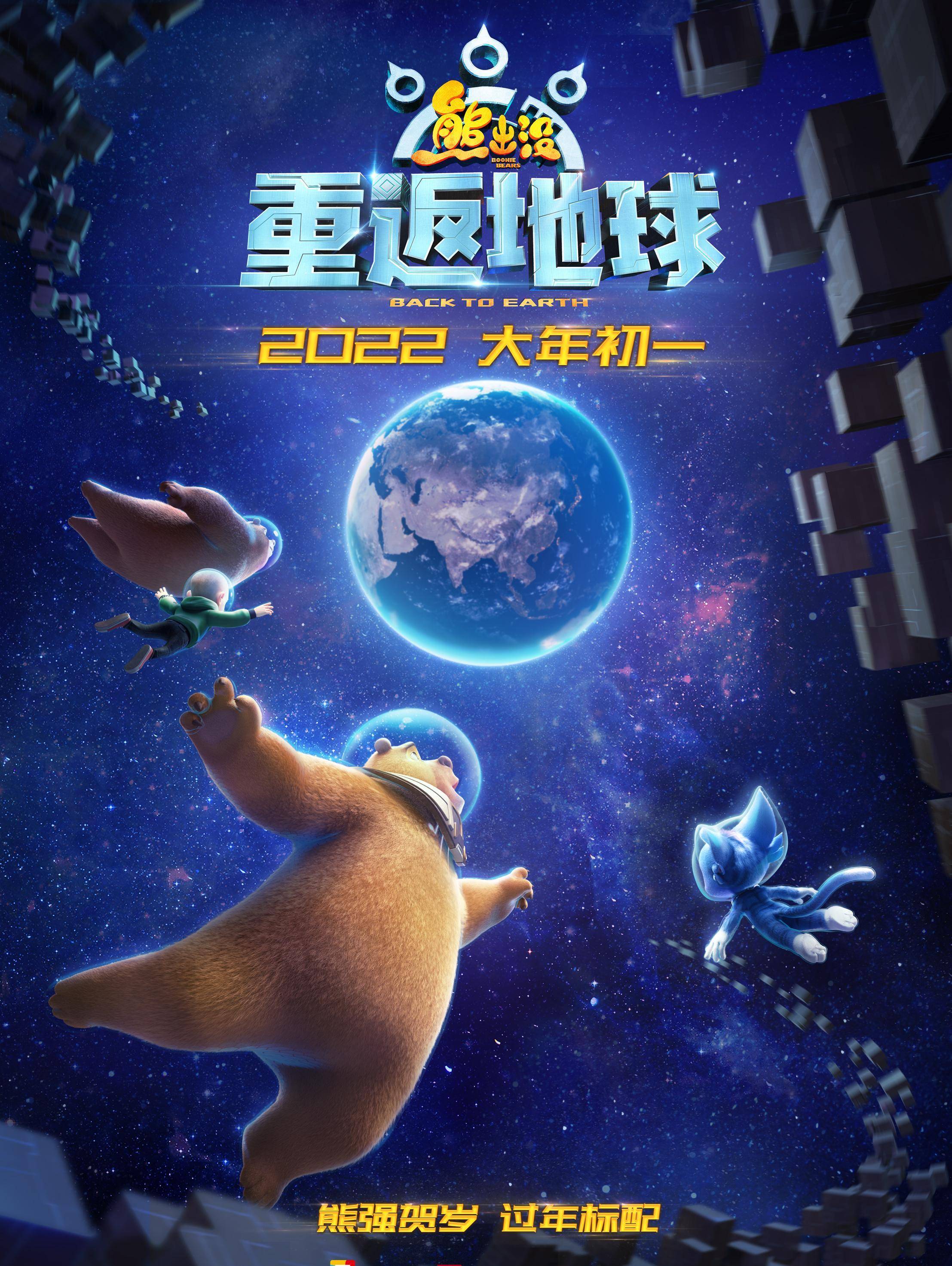
Boonie Bears: Back to Earth (熊出没·重返地球, Lin Huida, 2022)

One of the biggest animation franchises in Mainland China, Boonie Bears began airing as a children’s cartoon show back in 2012 and has produced over 600 episodes across 10 seasons. The latest movie, Boonie Bears: Back to Earth (熊出没·重返地球, xióng chūmò: chóngfǎn dìqiú), is the franchise’s eighth theatrical movie and again proved popular at the box office on its Lunar New Year release. As might be expected for a series revolving around woodland creatures, the first antagonist was a logger who later came round and teamed up with the animals to protect the forest, the franchise has a strong if potentially subversive ecological theme which reverberates throughout Back to Earth. 

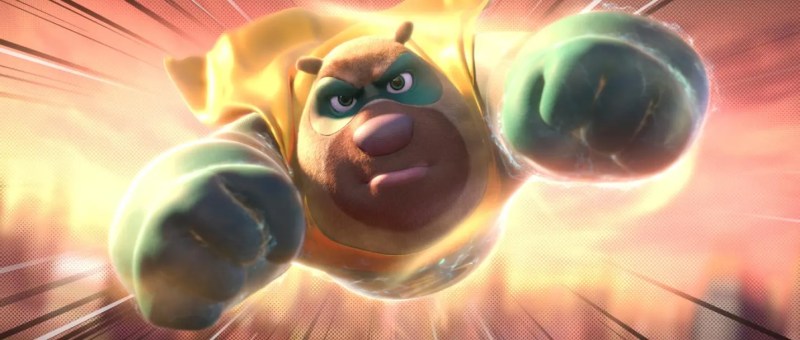
In fact, the chief job of unreliable younger brother bear Bramble (Zhang Bingjun) is sorting rubbish into the appropriate bins to keep the forest tidy. Daydreaming he casts himself as superhero battling a giant trash monster symbolising the destructive effects of the buy now pay later philosophy of the modern consumerist society. In any case Bramble’s cheerful days of chasing ice cream and just generally enjoying life in the forest are disrupted when he’s almost wiped out by bits of a falling spaceship and becomes the repository for all of its knowledge. This brings him to the attention of alien space cat Avi who needs his brain to locate his ship but is also being chased by a gang of nefarious criminals led by an amoral entrepreneur who wouldn’t let a little thing like the survival of the Earth interfere with her desires for untold wealth and power. 

As it turns out Avi also has a few lessons to offer as to the costs of irresponsible industrialisation having been born in an ultra-advanced cat society buried deep in the Earth’s core. The over mining of a valuable mineral soon destroyed the environment forcing the cats to flee into space looking for a new home. Avi hopes to return to his home city which lies abandoned as a kind of cat Atlantis accessible only with a valuable necklace which he needs Bramble’s help to retrieve. To begin with, the relationship between the pair is less than harmonious, though they soon bond in their shared quest to stop the evil corporate entities taking over the ancient technology and causing the death of the forest through their insatiable greed. 

Then again as one of the other creatures had put it, “you can’t rely on Bramble”, cross that he never pulls his weight and is always off in a daydream or chasing the next tasty treat. While Avi poses as an adorable kitten trying to convince Bramble to use his brain to help get the spaceship back, the others become even more disappointed in him believing that he’s taken against the cat out of jealously and resentment. Yet the lesson that everyone finally has to learn is that it doesn’t matter if Bramble isn’t the smartest or most hard working because he is strong and kind and has plenty to offer of his own. His gentle bear hug eventually saves the world in healing the villainess’ emotional pain so she no longer has any need to fill the void with cruel and ceaseless acquisition. 

Aside from the gentle messages of the importance of protecting the forest from the ravages of untapped capitalism, after all “this is our only homeland”, the film packs in a series of family-friendly gags including a surprising set piece in which Bramble dresses up as Marilyn Monroe to recreate the famous subway vent moment from The Seven Year Itch, while a pair of eccentric scrap merchants with a taste for rhyme provide additional comic relief. Even in the villains get a lengthy cabaret floorshow to mis-sell their evil mission to the guys from the forest belatedly coming to Bramble’s rescue. In any case, thanks to everyone’s support and encouragement Bramble finally gets to become the hero he always wanted to be proving that he’s not unreliable and even if he doesn’t always succeed is doing his best. Boasting high quality animation, genuinely funny gags, some incredibly catchy tunes and well choreographed musical sequences along with a warmhearted sense of sincerity, Boonie Bears: Back to Earth is another charming adventure for the much loved woodland gang.


Boonie Bears: Back to Earth is in UK cinemas from 27th May courtesy of The Media Pioneers (screening in a family-friendly English dub).

Original trailer (no subtitles)

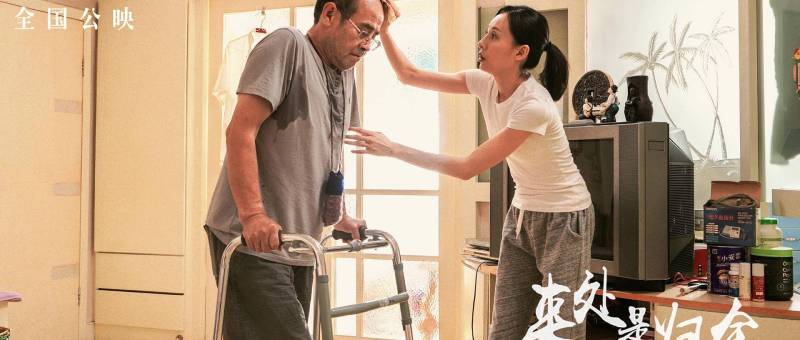
Being Mortal (来处是归途, Liu Ze, 2020)

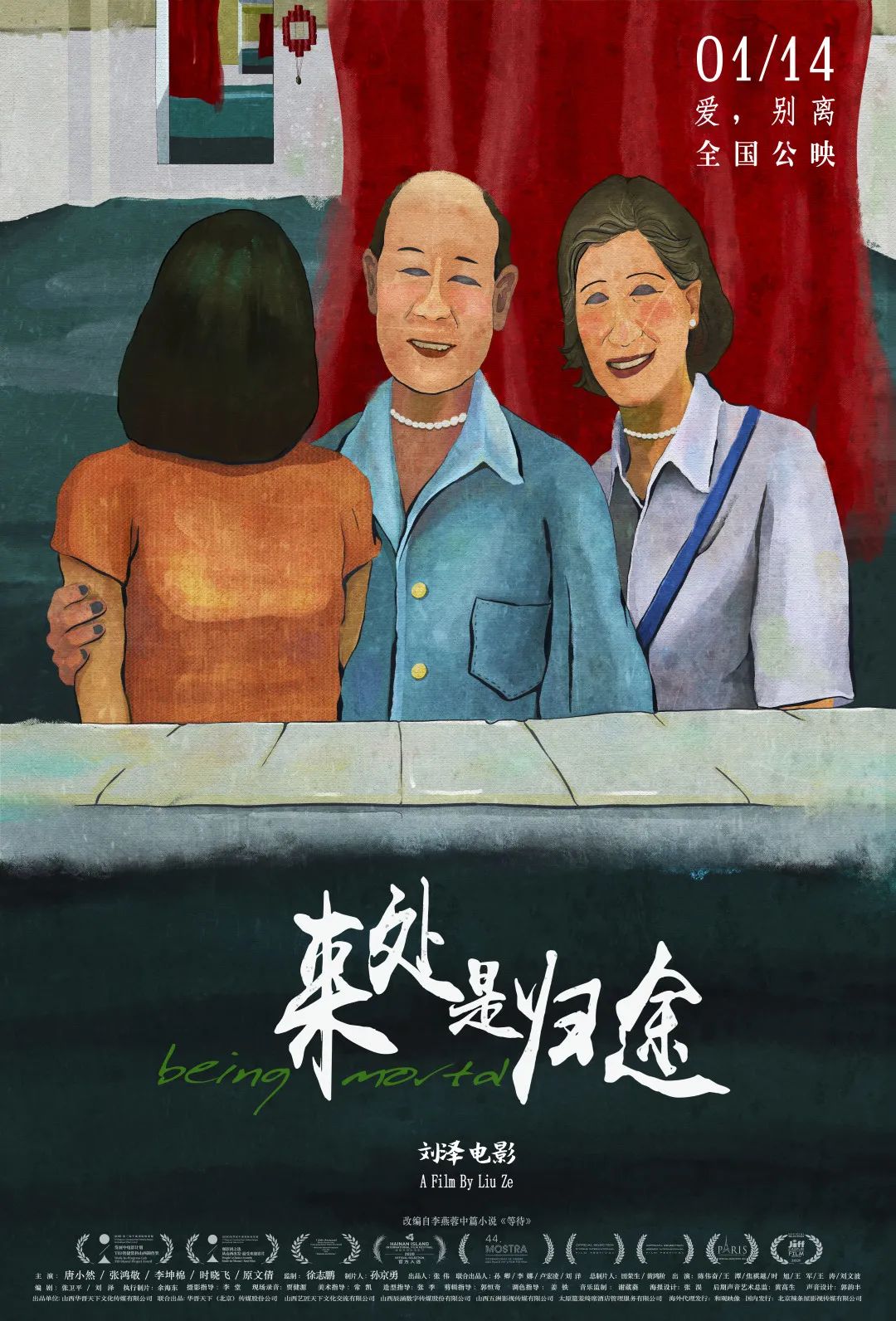
A young woman finds herself haunted by a sense of erasure in Liu Ze’s moving family drama Being Mortal (来处是归途, lái chǔ shì guītú) adapted from the novel by Li Yanrong. As the title might suggest, the questions the heroine faces are those of mortality and of the realities of death and ageing in contemporary China as she struggles to decide what the best thing to do is when it comes to caring for her ageing parents. Highlighting both the social changes born of increasing modernity and the pressures of an ageing society, Liu’s drama has few answers but explores the strain caring for those who will not recover can place on those around them. 

At 30, Tian (Tang Xiaoran) makes the difficult decision to accept a job transfer and return to her hometown in order to help her mother, Wenxiu (Li Kunmian), care for her father, Jianguo (Zhang Hongjing), who has been suffering with dementia for the past few years. Though we do not hear much about her life in the city, it’s also true that part of the motivation for moving lies in her unsatisfying relationship with a married co-worker who refused to leave his family. A friend suggests that he may have been reluctant to make the move in part because of Tian’s responsibility to her father, viewing him as a burden he was unwilling to bear. At the wedding of a hometown friend, she rekindles a relationship with her high school boyfriend, Qin Mu (Shi Xiaofei), the two of them being the only ones among their classmates to have remained unmarried. But as both the romance and Jianguo’s illness progress, the need to care for him also places a strain on the couple’s relationship with constant confusion as to the shared responsibilities and uncertainty for the future. 

Tian does have an older sister, Hua (Wang Tan), who is already married and has a child of her own yet lives some distance away and is able to help only financially though her money is often refused. Feeling guilty and seeing the toll caring for Jianguo is taking on her mother and sister, Hua suggests that it might be time to consider a nursing home or else a professional carer but Wenxiu and Tian are reluctant believing they’d be abandoning him or failing in their responsibility of care. Even so the rapid progression of his dementia which intensifies when he is hospitalised with pneumonia places an increasing strain on the two women, Wenxiu at one point snapping and shouting at Jianguo after he has soiled himself. As the women argue, Qin Mu finds himself trying to clean the old man up only to be shooed away by a regretful Wenxiu after she’s pulled herself together and retreat to the bathroom where Tian can hear him retching. This momentary crisis brings the couple’s relationship to a crunch point, Tian telling Qin Mu he can leave and he doing so without much of a protest. 

Much of the drama revolves around the effects of Jianguo’s illness on those around him, but he often has heartbreaking moments of lucidity sobbing in terror and frustration the first time he wets himself as his wife and daughter even in their own shock and confusion do their best to help him. “I’m completely worthless” he later cries, returning a pained gaze and muttering “I’m sorry” before trying to stab himself in the neck after hearing Wenxiu snap “stop tormenting me” in a moment of frustration. Meanwhile he keeps saying that he wants to go home, back where they lived years ago haunted by the figure of a small boy reminding him of the son they lost to illness in childhood. 

Tian is perhaps lucky in that despite the One Child Policy, she does have a sister and is not entirely alone even in the spectre of her impending orphanhood no matter how her relationship with the similarly burdened Qin Mu may turn out as he contends with his hardline former soldier father pent up with his own sense of embittered resentment. Nevertheless, Liu captures a sense of the despair among women like Tian facing a series of dilemmas in considering the best way to care for her parents as they age while also worrying for her own future in a sometimes uncertain society. Though essentially low key and naturalistic determined to present a sense of everyday ordinariness Liu’s sweeping transitions between moments in time along with flights into Chinese opera and the occasional dream sequence lend a note of poignancy to the familial tragedy at the film’s centre. 


Being Mortal streamed as part of Odyssey: a Chinese Cinema Season.

Original trailer (English subtitles)

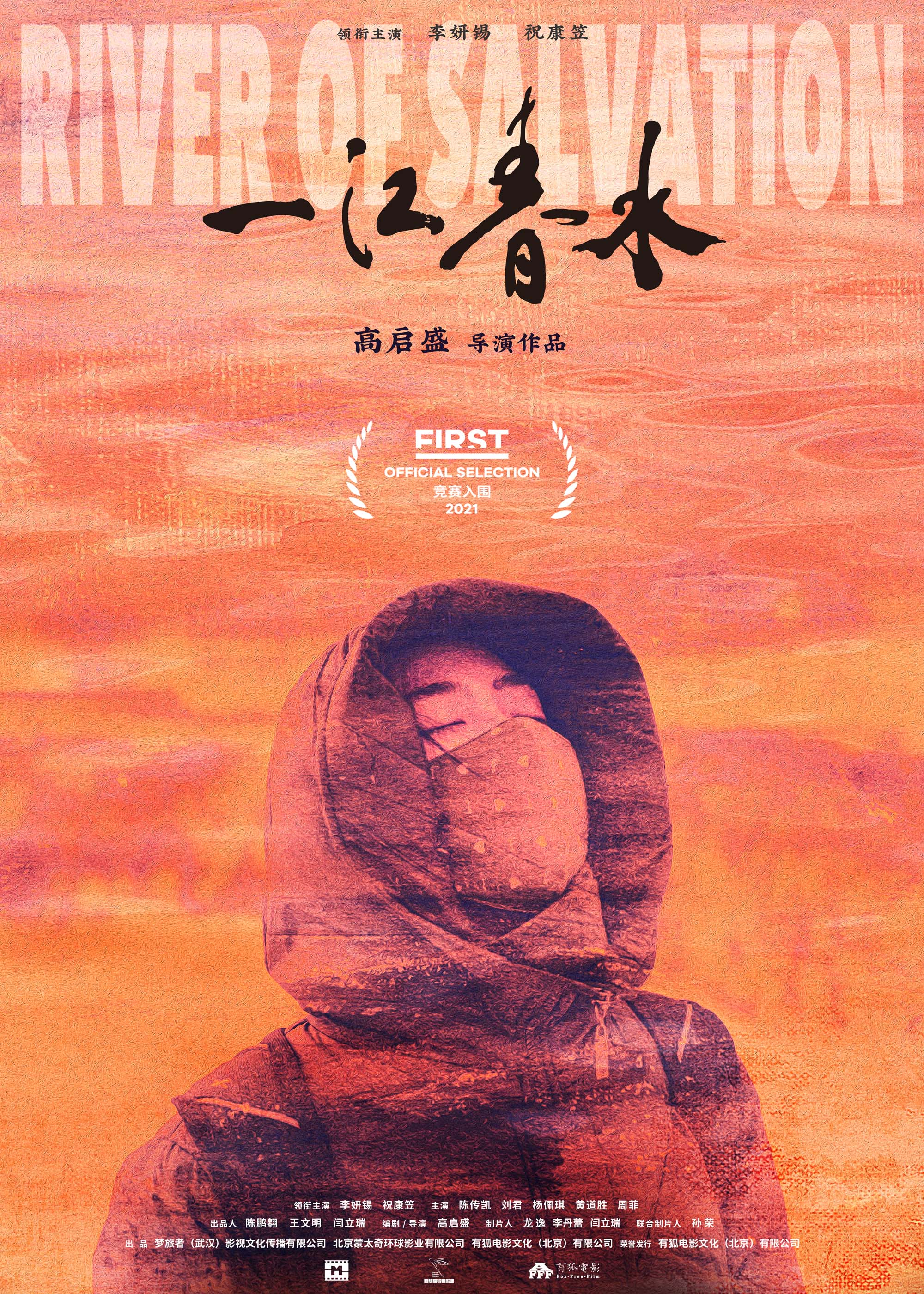
River of Salvation (一江春水, Gao Qisheng, 2020)

“But life’s supposed to be good, isn’t it?” the heroine of Gao Qisheng’s indie drama River of Salvation (一江春水, yī jiāng chūn shuǐ) asks an old lady who has just explained that she’s considered taking her own life because of its inescapable misery. The film’s title may in its way be ironic in that there’s no real sign of salvation for anyone in this quiet backwater of rural China where as we discover no one is quite who they say they are. 

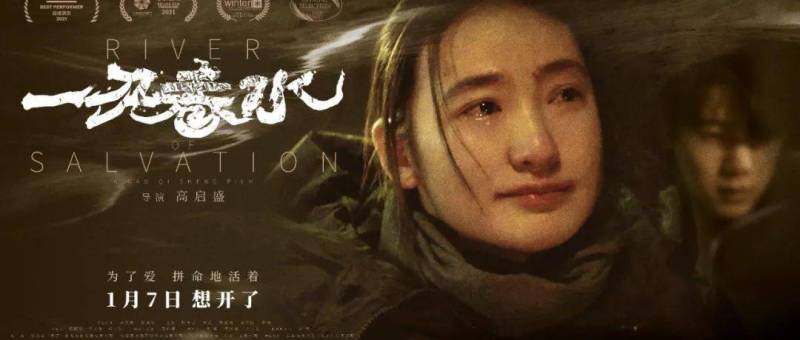
The hopelessness of 32-year-old Rong’s (Li Yanxi) existence is emphasised in the opening scenes in which she gets dressed up and heads to the port to pick up her fiancé’s mother only to be told that she won’t consent to the marriage partly because her intended’s first wife was a refined, elegant woman of much higher status while her son, Sanqiang (Chen Chuankai), is rough and boorish. Rong walks home feeling humiliated but also as if a last shot at happiness has been taken away from her. Sanqiang is also her boss at the moribund massage parlour (seemingly legitimate and offering only foot massages) where she works which is itself in the midst of financial difficulty. Meanwhile, she’s also the sole carer for her 18-year-old younger brother, Dong (Zhu Kangli), who spends most of his time playing video games and hanging out with his delinquent girlfriend, Jing (Yang Peiqi). 

As dull as her life seems, we can also see that Rong has a degree of anxiety and may be attempting to hide something about her past. She seems unusually cagey when her friend and workplace colleague Jinhua (Liu Jun) tries to invite her to a recently opened dumpling shop while almost always wearing a face mask claiming to be allergic to UV light. When the police are called due to a workplace altercation, she finds herself hiding in the basement obviously not wishing to encounter them. Yet as she discovers pretty much everyone in this small backwater town is hiding something or as Jinhua puts it is different on the inside. The guy on the front desk (Xi Kang) has been embezzling money to cover a gambling problem while even the lovely old lady (Huang Daosheng) with whom Rong bonds has not been entirely honest with her even while selling dreams of a better life. 

The central crisis is itself motivated by dishonesty in Jing’s claim that she is pregnant, later (perhaps falsely) stating that she made the whole thing up in order to test Dong shortly after reciting her own tearful monologue about the kind of life she wants but fears she can never have. The relationship between Jing and Dong encourages Rong to reflect on her own adolescence which contains more than a few troubling elements the film never sufficiently explores even while it becomes clear that she is haunted by guilt over something which is later revealed to be a triviality. People ask her if she hasn’t thought of moving on, but she tells them that she doesn’t know how to do anything else essentially trapped in dead end small-town China where the only hope of escape seemingly lies in marrying a man with means. 

Making up her mind, Rong begins teaching Dong how to be independent in the light of her impending absence while he too steps into adulthood in finding his own direction and striking out in search of it. Having faced her past, Rong quite literally burns her mask perhaps hinting at a return to a more authentic self yet pushed into a strategic retreat released from the purgatorial limbo of her small-town life but left with no place to go. Shot in 4:3, Gao’s static camera lends an additional air of stagnation to Rong’s otherwise stultifying existence which is not itself unhappy except in its concurrent anxiety and pervasive sense of hopelessness. There may be no river of salvation, but Rong does at least begin to unpick the duplicities of the world around her in unmasking the various personas she encounters while digging out their hidden truths until finally deciding to face her own and gaining with it a kind of liberation if not perhaps one which engenders a great deal of hope for the future. 


River of Salvation screens in London at Picturehouse Finsbury Park, 17th May as part of Odyssey: a Chinese Cinema Season.

Original trailer (Simplified Chinese / English subtitles)

Lan Yu (蓝宇, Stanley Kwan, 2001)

“It’s not really over as long as there are memories” the cynical hero of Stanley Kwan’s haunting romantic tragedy, Lan Yu (蓝宇, Lán Yǔ), is reminded by his earnest lover only to find himself both immersed in and comforted by nostalgia, “because I feel you never really left”. Inspired by a subversive yet hugely popular erotic LGBTQ+ web novel thought to have been written by a Chinese woman in exile in the US Kwan’s aching melodrama is one of very few Mainland films to deal directly with the subject of homosexuality but is also a melancholy meditation of the frustrated liberations of post-Tiananmen China. 

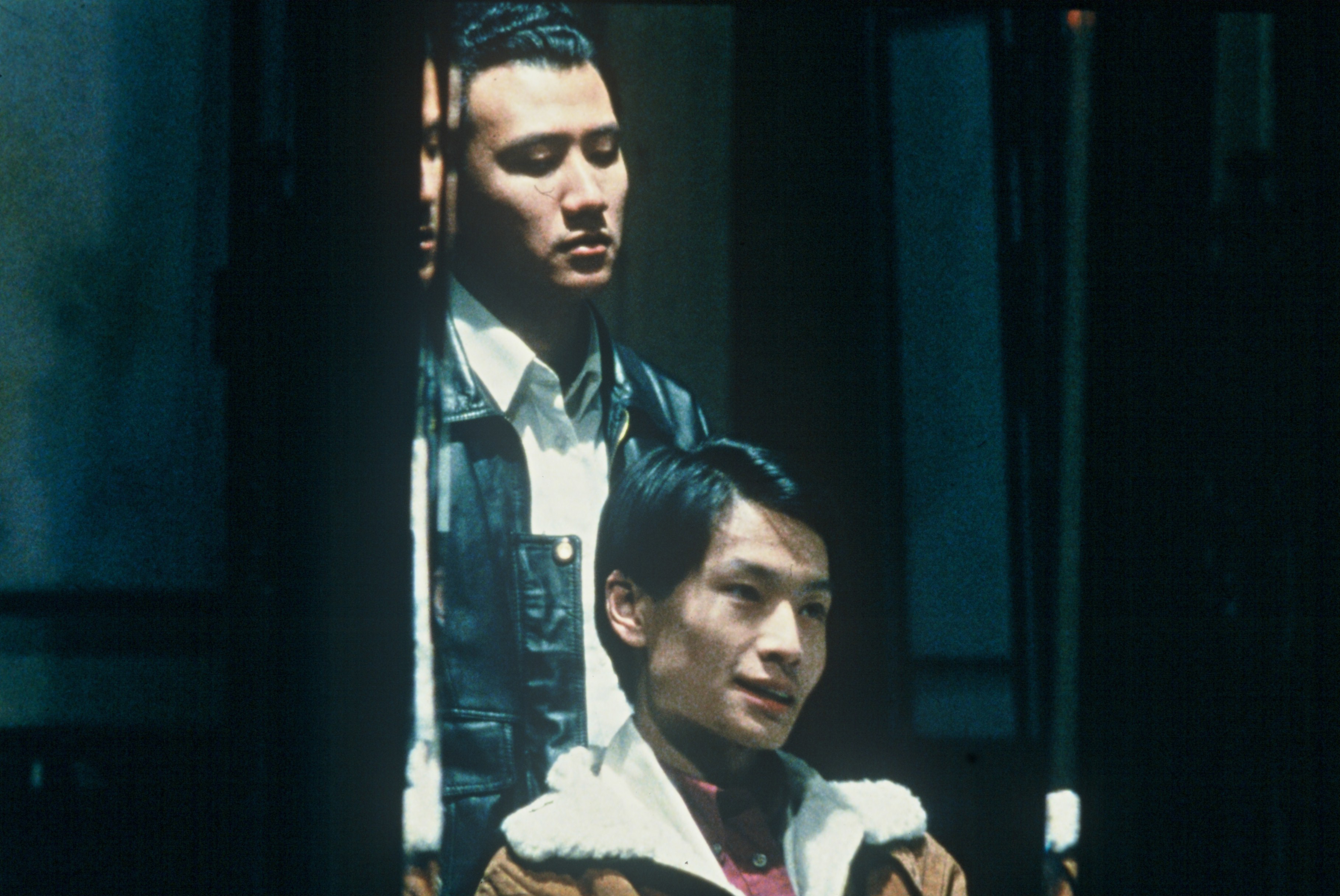
In 1988, hero Handong (Hu Jun) is perhaps the personification of an age of excess. In a sharp suit and sunshades, he plays the ladies man while repressing his homosexuality in an act of superficial conformity. His money can buy him anything, and to begin with it buys him Lan Yu (Liu Ye) a cash-strapped architecture student turning to sex work to make ends meet, only to discover himself drawn to this “weird” young man who doesn’t really care about his consumerist success save asking with a melancholy air if he’s ever been to America. As we later discover, Lan Yu had wanted to study abroad but travel was not such an easy matter in late ‘80s China while even some years later he has trouble organising a passport and visa. Handong as a wealthy businessman may have no such trouble, perhaps his money really can buy him anything after all even a superficial sense of liberty in what is still an oppressive and authoritarian society. 

For Handong, sex with men may be a way of expressing a freedom he does not really believe he has endangering his relationship with Lan Yu by picking up another random student in a park while reminding him that “this kind of stuff isn’t serious”. “So what is serious for you?” Lan Yu not unreasonably asks, but it may be a difficult question for Handong to answer. What’s serious for Lan Yu is the authenticity of his feelings. He is uninterested in Handong’s wealth, saving the money that he gives him rather than spending it, ironically making good on Handong’s joking suggestion “maybe you’ll bail me out if I’m broke one day”. 

In the pivotal sequence set against the backdrop of the Tiananmen Square protest, it is nevertheless Handong who finds a kind of liberty in accepting the reality of his feelings for Lan Yu overcoming his internal conditioning which convinces him that love is a weakness. Meanwhile, Lan Yu’s revolution evidently fails in the chaos of the protests, Handong cradling him as he weeps for all he’s seen. It’s this liberation that allows them to engage in a conventional romance, Handong buying a suburban villa he puts in Lan Yu’s name where they can live together as a couple albeit discreetly. But in the end Handong cannot let go of a sense of conventionality, eventually sacrificing his love for Lan Yu for a traditional marriage which later fails presumably because of its essential inauthenticity or at least Handong’s inability to accommodate himself with it. 

Torn in two, he makes his money through dodgy deals with Russian businessmen themselves perhaps also experiencing a degree of political confusion. They turn down Handong’s invitation for champagne hinting they’d rather go shopping for their wives. Yet Handong also aspires towards Japan, then at the height of its economic success, buying fancy clothes for country boy Lan Yu which lend him the air of a sophisticated Tokyoite. But Japan like China and Russia is also about to experience a moment of instability quite literally bursting Handong’s bubble while he is left to carry the can for his company’s not entirely above board business practices after his influential father dies. Saved by Lan Yu’s unwavering love for him, he abandons his consumerist conceits and immerses himself a world of simple comforts living in his small flat which is, ironically enough, rented at a preferential rate from Lan Yu’s Japanese boss. 

Through his various experiences, Handong rediscovers a sense of pure joy and contentment in his newly simple life of domesticity in which his relationship with Lan Yu appears to be accepted by his sister, brother-in-law, and best friend, but Kwan hints at sense of uncertainty in the anxious canted angles and frequent mirror shots that return us to the opening sequence. The men have in a sense exchanged roles, Lan Yu now guiding Handong in this changing society. Yet the bleakness of the ending suggests that these changes will never come to fruition, a literal construction accident resulting in a romantic tragedy that leaves Handong both trapped and comforted by the nostalgic past in the memory of Lan Yu and the idea of the better society he came to embody. 


Lan Yu screens in London at Prince Charles Cinema 12th May as part of Odyssey: a Chinese Cinema Season.

Trailer (English subtitles)
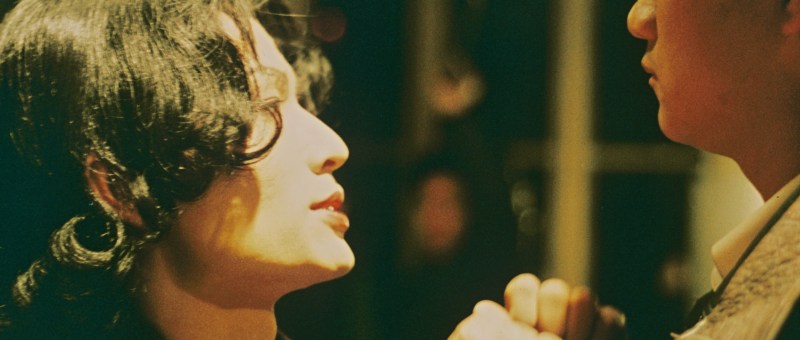
ON STAGE (登場, Zhang Yaoyuan, 2021)

Lead singer of alternative rock band Second Hand Roses, Liang Long has been a sometimes controversial figure previously known for his shaved head and androgynous appearance often appearing onstage in female clothing and heavy makeup. Ironically enough Zhang Yaoyuan’s documentary ON STAGE (登場, Dēngchǎng) captures him mostly off, now with a full head of hair as he prepares for a New Year concert in his home area of Shenyang in the North East while simultaneously shooting a movie later released as No Problem directed by Looking For Lucky’s Jiang Jiachen.  

Zhang also hails from the North East and the area does seem to be important to the film, a banner above the stage at one point bearing the message “Develop the North East” with the film crew also wondering if their film can help do the same only for Liang to correct them that “revive” might be better than “develop” seeing as the area had been prosperous in the past but is now struggling without the oil industry. Meanwhile, he’s joined in the discussion by Wang Hongwei, star of Jia Zhangke’s Xiao Wu which the pair later reference while lamenting the decline of the North East before going on to describe the modern day Hegang as a kind of film city but not in an altogether good way each scandalised that apartments are so cheap it’s more cost effective for film crews to buy rather than rent even if they make a loss when they sell at the end of the shoot. Meanwhile, the gang later go on tour paying a visit to the China–North Korea Friendship Bridge in Dandong with two crew members engaging in separate mini rants about North Korea tricking China into paying more than their fare share by pulling out early. 

In any case, Liang is certainly cineliterate, shooting a Wong Kar-Wai-esque intro video for his upcoming concert set to Quizás, Quizás, Quizás and featuring a woman walking sadly through the streets. Another crew member decides to have another pop at Japanese directors, mystified by their admiration for natural light having sworn off ever working with Shunji Iwai again because he wanted to do things his own way. Doing things his own way is however something that’s very important to Liang as he explains to a caller on a radio show “I must keep my style from inside to outside”. The caller had somewhat impolitely explained that she originally thought his eccentric appearance seemed “nutty” but later came to understand it wondering if it’s something that Liang was doing deliberately only for him to answer that he’s fine with people describing him as crazy because he knows he’s “normal”. “When I’m in an artistic state, everything goes natural. Nothing weird” he adds, implying that his appearance is merely the purest expression of his artistic intent though it’s true enough that others may not always approve of his use of makeup or androgynous dress. Nevertheless, the concerts seem to attract a coterie of diehard fans copying his style often dressing in rose-patterned shirts and dresses with wigs and makeup, Liang later asking a photographer to go out and film them because he says they enjoy being appreciated. 

Liang does indeed seem to be a savvy operator, also interacting with his fans through live streaming which he describes as more difficult than performing onstage though he does seem pretty nervous hanging around in the wings waiting for the intro to finish ahead of his big New Year concert. Meanwhile, he’s frequently seen taking photo ops with fans and family members of the crew, in general pleasant to be around if occasionally impatient never grandstanding or pushing his fame but hanging out with his crew drinking and swapping stories. Even so he’s scathing when asked for recommendations of contemporary bands complaining that there’s “no one worth respecting” because most are artistically stagnant trading on past glory rather than coming up with new ideas. Stagnancy is not perhaps something of which you could accuse him given how incredibly busy he seems to be in just this short period of his life, never really stopping between rehearsing for the New Year show, shooting the movie, and live streaming for his fans. Shot in a crisp black and white, Zhang’s observational documentary frames him a garrulous yet contemplative man perhaps most at home onstage in the most natural state of his pure artistic vision. 


ON STAGE screened as part of Osaka Asian Film Festival 2022

Original trailer (Japanese subtitles only)

After the Rain (两个星球, Fan Jian, 2021)

When the Great Sichuan Earthquake struck in 2008, 69,000 people lost their lives while a catastrophic blow was dealt to local infrastructure. With the One Child Policy then still strictly enforced, parents who had lost children in the disaster were offered government assistance in order to conceive a second child. It might be crass to describe these children as “replacements”, yet in one sense that is what they were intended to be. Jian Fan’s observational documentary After the Rain (两个星球, liǎng gè xīngqiú) follows two such children and their traumatised parents as they try to move on as a family in the wake of tragedy. 

Sheng is still haunted by his inability to rescue his daughter, Rain, from beneath the rubble of her school house. He and his wife Mei have decided to take part in the IVF programme and are hoping for a girl, believing in a sense that they’d be getting their daughter back. IVF doesn’t work out for them, but Mei conceives naturally a few months later and gives birth to a baby boy, Chuan. On what should be an unambiguously happy occasion, the sense of disappointment is palpable, Sheng in particular feeling cheated and resentful to have been denied a reunion with his daughter. Ying and her husband, meanwhile, are also unsuccessful with IVF but are simultaneously struggling to rebuild a relationship with their second daughter, Ranran, for whom they had to pay the second child fine subsequently sending her to stay with relatives in the countryside before bringing her back when their eldest girl, also called Rain, was killed in the earthquake. 

Both children are over burdened with the knowledge that they owe their existence to their sibling’s death, Mei bluntly telling Chuan that Rain’s life was sacrificed for his while later revealing that she sometimes dressed him as a girl as an infant while Ranran is forced to reckon with her parents’ decision to send her away only to be recalled when her sister died. At a memorial event other mothers discuss what they’ve told the children they conceived after the earthquake about their older siblings with most disapproving of Mei’s blunt approach fearing that such knowledge will burden their children or leave them feeling guilty and unloved but Mei is unrepentant. After all it is in a sense the truth. Because of the One Child Policy, the existence of these children would not have been possible had their elder sibling not have died in a such a horrifying way. 

Even so, Sheng in particular struggles to bond with his son catching himself letting it slip out that he wasn’t allowed to spend time with his daughter so he’s little interest in doing so with Chuan refusing to take him out to an amusement park harping on about how wasteful Chuan is and how much money he’s costing him. He constantly runs the boy down, criticising his performance at a school sports day and snapping at him at home with the obvious consequence that Chuan mainly ignores him and stays close to his mother though she is also at times unsympathetic, angry with him for crying while in pain after a medical procedure. 

A heartbreaking sequence sees little Chuan all alone and looking lost amid the graves at a memorial event for the earthquake while his parents talk with others in the same position, as if for a minute they’d forgotten he existed. Trapped in grief, Sheng still lovingly washes one of his daughter’s dolls on the rooftop and seems at times torn and remorseful complaining that it made him feel sad inside to notice there was no light in Chuan’s eyes but still harbouring resentment towards him as if blaming his son for “replacing” his daughter. Ying meanwhile recounts all the ways Ranran is different from Rain as if the differences sometimes upset her even if she is in a sense closer to her than she had been to her older daughter leaving her with an additional sense of guilt. 

“Losing a kid leaves your heart empty” Ranran’s grandma remarks each of the parents still struggling to come to terms with their loss while the children equally struggle to accept the absence of an older sibling they never knew of whose loss they are constantly reminded and expected to mourn. Nevertheless they are all doing their best trying to move past their grief and rebuild their lives but ultimately unable to let go of the traumatic past while their children grow away from them left with only loneliness and resentment. 


After the Rain screens at UltraStar Cinemas Mission Valley, San Diego April 25 as part of this year’s SDAFF Spring Showcase.

Original trailer (English subtitles)
Girls’ School (女子學校, Mimi Lee, 1982)

The intense friendship between two young women is placed in jeopardy when a rumour begins to circulate that they are more than friends in Mimi Lee’s subversive 1982 drama Girls’ School (女子學校, nǚzǐ xuéxiào). The film’s educational framing may ensure that it can only reinforce the contemporary social codes of the repressive martial law era in insisting the two women must be guided back towards he “correct” path, but otherwise affords them a genuine sympathy that undercuts the sense of moral censure while simultaneously rooting the source conflict in the rejection and frustrated longing that provoke only pettiness and jealousy. 

Chia-Lin and Chih-Ting have been best friends all the way through school and are more or less inseparable but the transgressive intensity of their relationship has also isolated them from their classmates some of whom, such as Chun-Hsueh, feel rejected and excluded. Possibly with a high degree of projection, it’s Chun-Hsueh who first starts the rumour that the two young women are “lesbians” only later admitting to the teacher Mr. Mei, informed via a note from class monitor Yu-Liang who has a crush on him, that she doesn’t quite understand what the word means or what saying it might mean not only for Chia-Lin and Chih-Ting but for the other girls and indeed for the school’s reputation. In reprimanding her, Mr. Mei accuses Chun-Hsueh of casting a dark shadow over the hearts of her previously innocent classmates now corrupted with the ugliness not only of her lie but the topic of homosexuality which he and the rest of the educational body view as something shameful and taboo. 

Reminiscent of William Wyler’s The Children’s Hour, the reason the rumour takes hold may be that there is a grain of truth in it in the burgeoning feelings between the two women yet in keeping with the social attitudes of the time the main interest is in proving that it isn’t true with each keen to clear their name of such vicious slander while the other girls frequently describe them as “disgusting”. Even so, the unfairness of their separation and the obviously strong feelings between the two women cannot help but evoke sympathy while Chih-Ting, the bolder of the pair, continues to insist that they’ve done nothing wrong even as Chia-Lin is overwhelmed by the pressure all around them suggesting that they might be better to simply “keep our friendship in our hearts” shamed into repressing their true feelings by an oppressively judgmental society. 

Then again, the film also succumbs to a series of uncomfortable stereotypical tropes in rooting Chih-Ting’s potential lesbianism in her tomoboyishness having been raised by a single father and longing for maternal affection. Having been abandoned by her mother she also feels emotionally rejected by her father who has a gambling problem and rarely returns home while further rejection by Chia-Lin at the instigation of her sister who is also a teacher at their school herself nursing a broken heart after her longterm boyfriend married someone else leaves her feeling like a “monster”, constantly asking herself “what’s wrong with me?” while wondering why others treat her like a “poisonous sore”. This sense of rejection and frustrated longing is the primary motivator for the actions of all, Chun-Hsueh starting the rumour because she wanted to be included in the girls’ friendship and Yu-Liang reporting it because she wanted to curry favour with Mr. Mei after seeing him scrunch up and bin a love letter while quite obviously smitten with Chia-Lin’s sister Miss Yang. 

Mr. Mei is clearly in a difficult position and often trying to do the right thing, admitting to Chih-Ting that the teacher’s don’t know how to help them, but also somewhat insensitive while like others overly mindful of the school’s reputation rather than girls’ fragile emotions never quite considering that the intensity of their feelings and the pressure placed upon them could lead them to harm themselves or else endanger their mental health. It is then a little uncomfortable that the resolution lies in Chih-Ting who had previously professed to hate everyone except Chia-Lin undergoing a softening in which she becomes “more cheerful and mature”, eventually re-embraced by the same classmates who shunned her now satisfied the rumour isn’t true while Chih-Ting has quite literally sacrificed a part of herself to be accepted by a society whose acceptance she had been insistent was unnecessary. The starkness of her conversion along with the subversive quality of the melancholy love song which recurs throughout may attack the underlying homophobia in supporting the truth of the feelings between the two women but leaves them with little possibility for emotional authenticity in an overly conservative society. 


Girls’ School screened as part of Osaka Asian Film Festival 2022

Restoration trailer (Traditional Chinese / English subtitles)

Waiting for My Cup of Tea (一杯熱奶茶的等待, Phoebe Jan Fu-hua, 2021)

How long should you wait for love? Released during the prime romance season over the Christmas holidays and adapted from her own novel, Phoebe Jan Fu-hua’s Waiting for My Cup of Tea (一杯熱奶茶的等待, yī bēi rè nǎichá de děngdài) wonders if love is something you can defer or something to which you should submit as a collection of youngsters attempt to deal with various kinds of baggage from unresolved attachments to chronic illness, career worries, and the burden of responsibility for one’s own feelings and those of others. 

Xiao-hua (Ellen Wu), for example, is a shy young art student who seems to stand at a distance from her friends while intensely irritated by a classmate/neighbour who has a sideline as a model and seems to have everything passed to her on a plate simply for being pretty. It’s Yi-chun’s love life, however, which is beginning to annoy her partly because each of her suitors, which Xiao-hua suspects may extend to at least three, constantly rings her bell mistakenly believing Yi-Chun’s is broken. After being jokingly threatened by Yi-chun’s overbearing secret boyfriend, she later runs into another young man, Zi-jie (Simon Lien Chen-hsiang), ringing her bell in vain advising him to come back later fearful of a scene should he enter and find another guy in Yi-Chun’s flat, while she’s also touched by the sight of a third man, A-wen, sitting quietly on a bench opposite her window next to a bouquet of flowers assuming he too is probably waiting for Yi-Chun. 

Feeling sorry for A-wen sitting out in the cold waiting for a girlfriend who’s probably off with someone else, Xiao-hua buys him a hot milk tea from a vending machine which will become something of a motif throughout the film, but it’s Zi-jie she eventually falls for after a series of meet cutes during which he declares himself uninterested in committed romantic relationships and indifferent to Xiao-hua’s revelation that Yi-Chun may have as many as three guys on the go at the same time. Even so, he appears much more interested in her than he ever was in the model next-door, later ending his association with Yi-Chun rather abruptly much to her surprise in order to better romance Xiao-hua if mainly through an air of mystery. 

Though all of these people are very young, in the main college students about to graduate, they each have their own barriers to romance which they’re wary to overcome, Xiao-hua’s being her previous relationship with fellow student Shao-Ping who broke up with her to take care of a childhood friend living with mental illness while selfishly asking Xiao-hua to wait for him. At one point or another, everyone asks someone else to wait or else to give them time, Xiao-hua eventually that of asking Zi-jie on figuring out why he seems to be keeping a distance from her echoing the words of the radio host she’s fond of listening to that he should give her time and learn to let her in, while he later asks the same of her, and of course A-wen is always “waiting” in one sense or another. There is something a little uncomfortable in Shao-ping’s broodiness, opposed to Xiao-hua’s new relationship not only because he unfairly believes he still has a right to a say in her romantic future but uncomfortably suggesting that he sees an ironic degree of symmetry fearing that Xiao-hua will discover that Zi-jie is a “burden” she will become responsible for an idea tacitly affirmed in the otherwise positive conclusion in suggesting that Zi-jie must wait until he’s physically fit for love before committing himself fully. 

Meanwhile Xiao-hua’s romantic naivety is challenged by relationships between her friends witnessing a couple she thought were made for each other suddenly break up while each of them prepare for their lives after college, getting jobs and moving on often in different directions. She comes to realise that it’s unfinished business that holds people back and that in the end it’s better to have an uncomfortable conversation than leave a door open that would be better closed because there’s no sense waiting for a moment that’s already passed, but then paradoxically commits herself to waiting as an act of faith in a surer love. A gentle meditation on loneliness, grief, and the internalised barriers to romance Jan’s melancholy drama is less an advocation for moving on than for taking the time to find the right direction or at least one that is your particular cup of tea. 


Waiting for My Cup of Tea screens in Chicago April 10 as part of the 14th season of Asian Pop-Up Cinema.

Original trailer (English subtitles)
Grit (鱷魚, Chen Ta-Pu, 2021)

A former gangster just released from prison finds his loyalties conflicted while working for a corrupt local official in Chen Ta-pu’s quirky romantic crime drama, Grit (鱷魚, èyú). According to a not particularly interested policeman, no one really cares about things like loyalty or morality anymore but like the best of noble gangster heroes, Yu Da-Wei (Kai Ko Chen-tung), otherwise known as Croc because of an incomplete tattoo of a dragon on his back, really does yet his nobility only makes him vulnerable to the machinations of those around him even as he does his best to stand up to thuggish intimidation masquerading as local government. 

At 17 years old, Yu was convicted of a gangland murder though it was rumoured at the time that petty gang boss Liu (Lee Kang-sheng) may have orchestrated the hit and set the young man up as a scapegoat promising him riches on release and that the grandfather who raised him would be looked after. Now a local councillor, Liu at least keeps his promise handing over twice the agreed amount of money along with a folder detailing where his grandfather’s ashes have been interred, but is otherwise unsupportive while later reluctantly agreeing to give Yu a job in his office during which he runs in to stubborn farmer Chen (Angelica Lee Sinje) whose father has recently passed away after a drunken accident. Chen has being trying to ring the council for weeks because someone’s cut off the water supply to her rice paddy but no one is willing to help her get it turned back on. Over earnest in his new occupation, Yu throws himself into action but is largely unaware of the vagaries of local politics and the likely reasons behind Miss Chen’s sudden inability to earn her living. 

Chen is quick to denigrate local government, complaining that they always turn up for weddings and funerals but when you really need them they’re nowhere to be found. That’s one reason she’s so surprised by Yu’s genuine attempts to help but conversely disappointed when nothing is really done. For his part, Yu is disappointed too because he really thought they were there to serve the people so he rolls up his sleeves and unblocks the irrigation channel himself but thereafter finds himself on the receiving end of the harassment Chen has been facing for months because she refuses to sell her land to developers. Liu is only motivated to help on discovering that the thugs at Chen’s farm may have been sent by a political rival but thereafter resorts to typical gangster tactics. Rather than try to help Chen, he blackmails his way onto the deal and then tells Yu to do whatever it takes to get her off her land so they can all profit as part of a dodgy real estate scam.  

An old school gangster, Yu is torn between loyalty to his old boss for whom he’s already been to prison and doing the right thing especially as he begins to bond with Chen as she continues to care for him after he is badly injured by thugs. He naively gives Liu opportunities to change, tries to convince Chen her land’s not worth dying for, and searches for another solution but eventually finds himself hamstrung by the contradictions of the world in which he lives where former gangsters are now in legitimate power and the state continues to behave like a low level street gang. It might be tempting to read a wider political message into Chen’s determination to hang on to her land which as her father was fond of saying is the only thing you can’t import as she alone refuses to give in to intimidation asking why it is they’re telling her to leave when there seems to be no good reason while Yu is eventually pushed towards resistance if only in her defence because of the mutual kindness that has arisen between them, two people otherwise alone in the world. 

“We all have our own worth” Liu snarls, but Yu is perhaps beginning to realise his, no longer the naive kid but turning the boss’ weapons back on him willing to sacrifice himself in order to save Chen even if he retains an unrealistic belief that Liu will honour his promises. Quirky in tone and somehow earnest, Chen Ta-pu’s charming crime drama is at once an innocent romance in which a lonely woman and a morally compromised man find love while battling institutional corruption, and a tale of personal redemption as the hero discovers “something more important” than loyalty to an oppressive social system and exploitative mentor.  


Grit screens in Chicago April 10 as part of the 14th season of Asian Pop-Up Cinema.

Original trailer (Traditional Chinese / English subtitles)

Treat or Trick (詭扯, Hsu Fu-Hsiang, 2021)

Diamonds, What it is it about them that makes everyone crazy? A bag of the elusive gemstones leads a series of corrupt cops towards a purgatorial hellscape deep in the mountains in Hsu Fu-Hsiang’s remake of the 2004 Korean film To Catch a Virgin Ghost, Treat or Trick? (詭扯, guǐ chě). The title could stand in for diamonds themselves which after all have little intrinsic value outside the illusionary desirability they evoke, but also hints at the “trickster” nature of its duplicitous hero. 

Corrupt cop Feng (Chen Bolin) admits that he didn’t join the police out of a fierce sense of justice, but because it was more convenient for his gangster lifestyle as he demonstrates in arresting a bunch of crooks only to stage a secondary robbery, getting his best friend Chiang (Yen Sheng-yu) to pose as a thief taking him hostage and running off with a bag of diamonds. Only, unbeknownst to Feng, Chiang has been picked as a fall guy for Boss Lin (Yu An-shun) to whom they were supposed to deliver the diamonds and has taken off with them. This is obviously a problem for Lin who takes cop Psycho hostage and charges Feng, his buddy Monk, and a guy from the gang Yang (Liu Kuan-ting), to track him down and bring the diamonds back. The trouble is that Chiang got into a car accident swerving to avoid the ghostly presence of a young woman and has wandered into a very weird village where everyone seems to be acting suspiciously. 

In many ways, you could see the village as a kind of purgatorial space inhabited by those trapped between two worlds towards which the gang of corrupt cops is beckoned to answer for their transgressions. Meanwhile, they’re also haunted by the figure of the mysterious woman whose presence is both help and hindrance hinting at dark goings on in this very remote area where visitors are a rarity. Having found out about the diamonds, the villagers are obviously keen to keep hold of them but then there are only so many to go round and it’s not as if you can cut a diamond in half, so the dilemma remains exactly who is going end up with the loot and how creating division on both sides. 

You couldn’t really say that either of these groups are the good guys, but it’s true enough that the villagers variously end up paying a high price for their greed usually caught out by their attempts to get one up on the cops, injured by backfiring weapons or caught in their own traps. Meanwhile, even Chiang falls victim to the essential weirdness of the village in succumbing to a freak accident which leads some to believe that he is dead though in a running gag he turns out to be more or less unkillable as if the eeriness of the place will not allow him to die no matter how many times he’s thrown off a hill, nailed in the head, crushed under falling objects, or set on fire. Yet Feng and his buddies remain largely untouched, outsiders in this strange world and completely by accident occupying some kind of murky moral high ground in trying to rescue their friend (along with diamonds which they need to get Psycho back and save their own lives by smoothing things over with Lin).

Hopping from the gangster movie to supernatural horror, martial arts, and mystery Hsu’s absurd morality farce throws in a series of running gags from “unlucky” Chiang’s strange ability to survive the unsurvivable to frequent allusions to the diamond sutra while possessing its own sense of karma as the greedy find themselves victims of their own scheming, but then perhaps not as the final twist might imply. Even so in this weird place, natures and destinies perhaps possess the ability to change, eccentric thug Yang getting far too into his role as a cop and finally deciding he’d like to be a “good guy” after all while guided by their brotherhood Feng and Monk too find themselves rediscovering a sense of justice in accidentally helping to solve a long dormant cold case. It’s all curiously circular, which is perhaps fitting for this farcical morality tale, but the jury seems to be out on whether even the brotherhood between Feng and his buddies not to mention their newfound sense of justice can survive the cursed allure of the stolen diamonds. 


Treat or Trick screens in Chicago April 9 as part of the 14th season of Asian Pop-Up Cinema.

Original trailer (Traditional Chinese / English subtitles)