Love Conquers All (爱情征服一切, Tan Chui Mui, 2006)

“Girls are mostly stupid” extols the dubious romantic lead of Tan Chui Mui’s debut feature, “they think their love can conquer all”. Ironically titled Love Conquers All (爱情征服一切, àiqíngzhēngfúyīqiè), Tan’s ‘90s drama wonders how true that might be or if in a sense love can at least triumph over reality as we watch the naive heroine falling wilfully or otherwise into a dangerous web of abuse and exploitation while torn between the innocent romance of a hometown boyfriend and the confusing compromises of seedy urbanity. 

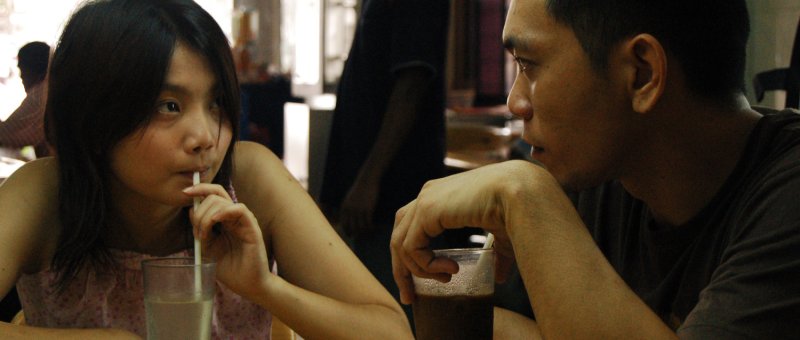
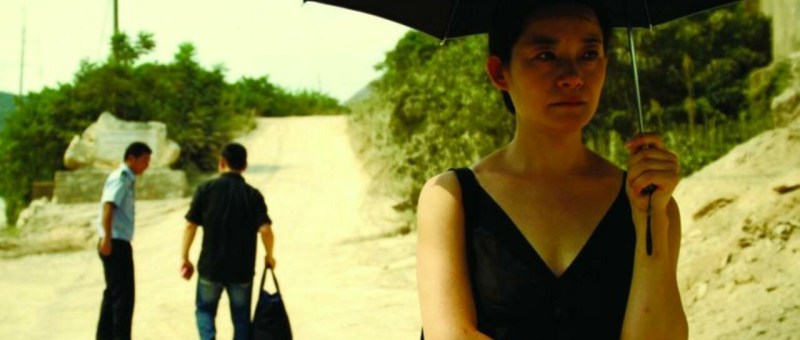
Innocent country girl Ping (Coral Ong Li Whei) travels from her home in Penang to work in a relative’s restaurant in Kuala Lumpur. While using a pay phone to keep in touch with her family, she comes to the attention of John (Stephen Chua), a somewhat rough local man who quickly begins stalking her bizarrely enough with the offer of a bunch of bananas to which Ping claims to be allergic. Nevertheless, lonely in her new life in the city rooming with her employer’s young daughter Mei, she eventually gives in and begins a relationship with him. While they’re at a hawker stand one evening, he introducers her to his friend, Gary, whom he claims is a pimp. Gary’s modus operandi is to pick up a new girl every three months, make her his girlfriend and then disappear sending a friend to say he’s in trouble with some shady types and needs money fast. Unable to pay, the young woman is drawn into sex work which Gary forces her to continue on his return before selling her off to people traffickers and starting the process over again. 

Ping seems fairly horrified by John’s story, but inevitably experiences something similar herself as John expresses fear for his future given the precarity of his underworld life, turns up with bruises, and then disappears sending Gary to tell her he needs money fast. She knows what’s happening but goes along with it anyway, perhaps out of a sense of fatalism or as John has suggested because she gives in to the romantic fallacy that her love can save him though he only means to use and discard her. Or perhaps, who knows, it is just a coincidence and he really does love her after all. A minor moment of potential exploitation mirroring their earliest date in which she suggests buying him a jacket but he prefers a different, possibly more expensive one, may imply something different. 

In any case, Ping’s view of romance may be overly idealised informed by the brand of TV drama so cheesy that little Mei and her mum can’t help giggling as they watch. Mei too is in the middle of an innocent romance with a penpal who calls himself only the “Mysterious Man” which is on one level worrying even if her explanation that he usually talks about stuff at school implies they may be of a similar age and she may even know him. At different stages, both Ping and Mei are seen drinking at the cafe staring into space thinking of their respective romantic interests though Ping’s situation is obviously not quite so innocent. On a fairly coercive date in which he idly raises the idea of marriage and children, John drags her to the beach and posits an ideal family life in small house like that of his aunt to whom he introduces her as his wife but may or may not actually mean to provide her. 

“You have no choice unless you jump” John uncomfortably repeats as he completes his romantic conquest even as Ping continues to call her hometown boyfriend on the phone telling him she loves him even in front of a mildly jealous John. Perhaps their romance is to her a kind of fantasy of romantic sacrifice set in contrast with the more prosaic sacrifice she has made to leave her family and travel to the city. While working in the cafe she’s approached by another creepy guy only a little older than John but just as persistent and taking much the same approach insistently asking for her name though she eventually manages to brush him off. Yet the question remains, is Ping merely a romantic fool, “stupid” as John had said, or a young woman attempting to take control of her romantic destiny as perhaps Mei is doing when she asks her mother to drive her to her pen pal’s address so she can figure out what he looks like? Shot digitally in a retro 4:3, Tan’s debut feature is replete with zeitgeisty detail of Kuala Lumpur in the ‘90s and filled with the lacuna of nostalgia, but offers no real answers for the duplicitous nature of love. 


Love Conquers All streamed as part of Odyssey: a Chinese Cinema Season.

Original trailer (English subtitles)

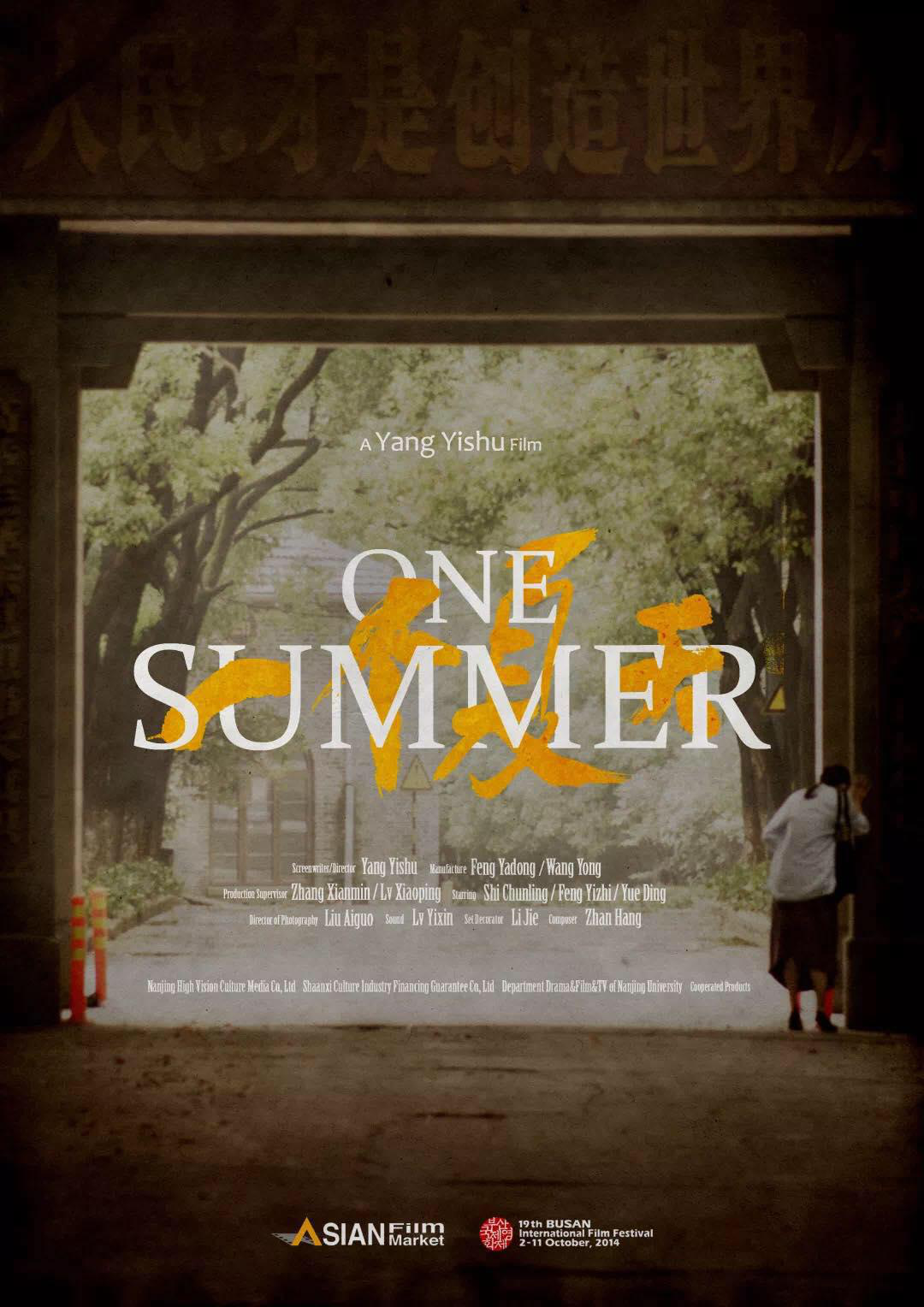
One Summer (一个夏天, Yang Yishu, 2015)

“It makes no difference having a husband or not” a friend of the heroine in Yang Yishu’s One Summer (一个夏天, yī gè xiàtiān) laments, yet Zhen is determined to retreive hers or at least find out why he seems to have been swallowed whole by the contemporary society. Trying her best to live a “normal” life or at least give the semblance of one to her daughter she searches for answers but becomes increasingly disillusioned with every step closer to her husband’s salvation. 

Zhen’s otherwise ordinary and comfortable life is disrupted by a doorbell in the middle of the night. Insistent, the bell rings continuously forcing Zhen’s husband Xiaoping to investigate. The ringers turn out to be policemen who make a less than polite request for Xiaoping to accompany them to the station not even allowing him time to say goodbye to his wife or explain what’s going on. The knock at the door is a hallmark of authoritarianism and it’s this cold and austere regime which Zhen finds herself battling. She has no idea why her husband has been taken or to where or for how long. No one can tell her anything either, she’s left entirely alone and in the midst of her confusion must try to balance caring for her young daughter with the increased financial demands of becoming a single mother temporarily or otherwise. 

The neighbourhood woman she asks to watch her little girl explains that she can’t help because the house she paid for in the country for her in-laws to live in is going to be knocked down and she needs to go back there to make a fuss and pay some bribes to make the best of a bad situation. Meanwhile, a third party at the lawyer’s office where Zhen goes for help mutters about bribing the judge and she’s later tricked into giving a large sum of money to gangsters on the advice of someone who said they knew how to help Xiaoping. 

Chasing the police, she’s denied any sort of information before someone more senior tells her that she’s got the wrong station so they can’t help her anyway and in any case suspects are apparently prevented from seeing their families so there’d be no point in finding him. Later she’s told that she might not be able to see Xiaoping until either the case is dropped or he’s been sentenced which might take “several years”. After exhausting the legal routes she tries asking around their old friends to see if anyone knows anything she doesn’t and discovers that some of them have moved abroad or died in mysterious circumstances. Uni friend Lu now a lawyer and continuing to carry a torch for her agrees to help but also remarks on how she’s changed from the bright and cheerful actress he once knew now a wife and mother assigned to an archive where she subversively helps a young woman research a documentary on a persecuted scholar. 

Eventually she discovers that Xiaoping has been hauled in on possibly spurious charges relating to some potentially dodgy dealings at his NGO, accused of illegal fund-raising, tax evasion, and for some reason bigamy which you think would alarm Zhen but it doesn’t seem to suggesting that she either has so much faith in Xiaoping that she refuses to accept it could be true or has decided that it isn’t relevant. On the other hand, the neighbourhood woman offers a few pointed words on experiencing domestic violence from her overbearing husband while her friend laments that hers is always away working so it’s almost as if she weren’t married at all almost implying that Zhen may as well give up her quest because men are unreliable and in some sense always absent even if not literally imprisoned by the state. 

And then just as abruptly as it began everything seems to have been “settled” as if it never happened in the first place. The police harassment, necessity of becoming acquainted with her husband’s business affairs, the stress and worry of trying to take care of her daughter and provide her with a stable home, along with the need to run round her old friends begging for help most of them can’t offer all seemingly forgotten in the interests of a return to genial domesticity. Even so a sense of tension remains, the constant anxiety of living under an authoritarian regime in which a knock at the door may come at any time and you may never see your home again. 


One Summer streamed as part of Odyssey: a Chinese Cinema Season.

Original trailer (no subtitles)

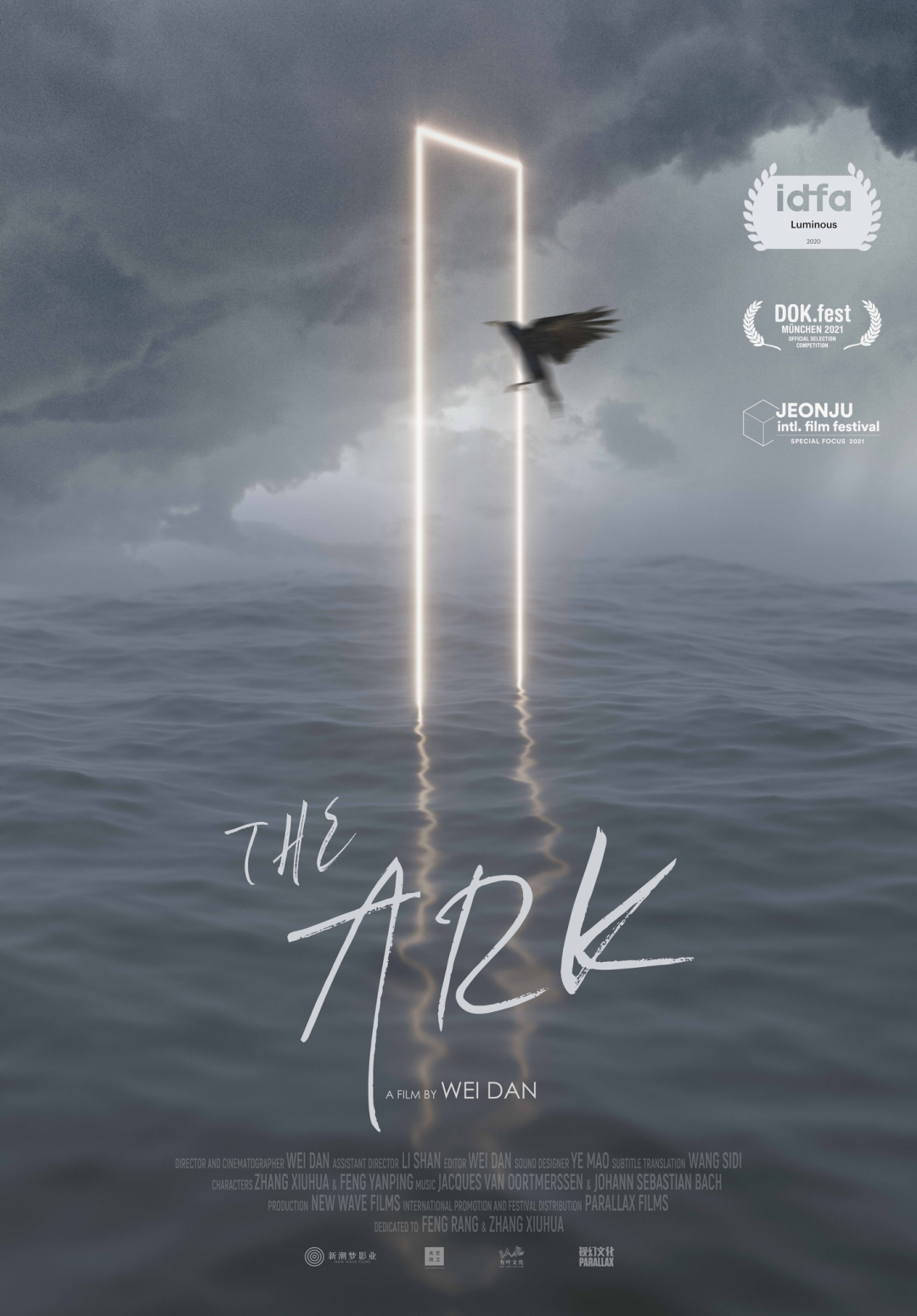
The Ark (方舟, Wei Dan, 2020)

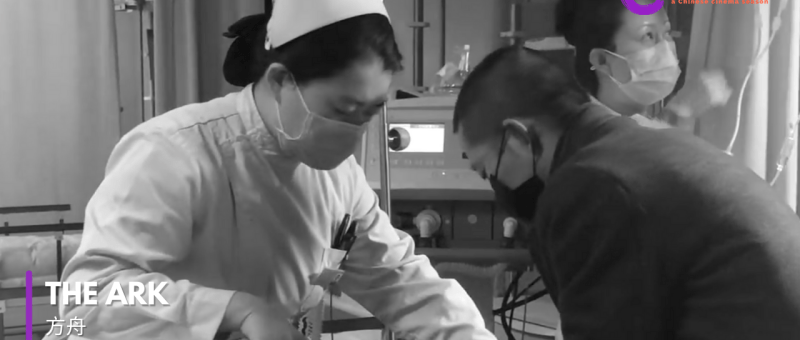
Something that often gets forgotten in the midst of the pandemic is that people continued to suffer from other illnesses and ailments some they may have been ultimately unable to receive treatment for. Wei Dan’s sometimes harrowing documentary The Ark (方舟, fāngzhōu) revolves around an elderly woman, Xihua, who is hospitalised with a wasting disease in spring 2020 just as the pandemic takes hold and is cared for largely by her children and grandchildren as they try to figure out what’s best for her while coming to terms with the idea that their mother and grandmother may not be able to overcome this final illness. 

Shot in a dispassionate black and white and a claustrophobic 1:1 frame, Wei captures Xihua’s obvious sense of confusion and distress. A brain haemorrhage some years previously apparently left her unable to speak meaning that she is unable to communicate her pain to her caregivers while her family try to explain to the medical staff what her condition is showing them her legs almost entirely wasted away. While the family do their best to care for her themselves, patiently emptying her bedpan and analysing its contents, they also express suspicion and frustration with the medical establishment repeatedly stating that they worry their mother is not getting proper care because the doctors are after bribes all the time with other patients bringing in expensive gifts to curry favour. 

Meanwhile, money in particular begins to press on the mind of Xihua’s oldest son who is obviously in a degree of mental distress unable to bear the thought that his mother might die because he cannot get the money together to pay for her treatment while simultaneously worrying that maybe all he’s doing is selfishly prolonging her suffering. When it’s suggested that an operation may alleviate Xihua’s symptoms, he finds himself ringing people he hasn’t spoken to in years most of them perhaps understandably sympathetic but unwilling or unable to help. The directness of this approach places an additional strain on his marriage as his wife feels embarrassed to see him begging around for money and thereby exposing the fact they don’t have any. Meanwhile she also worries about the financial stability of their own family, at one point snapping at him that they should pull the kids out of school and tell them their futures are ruined. In a heated moment, she even mentions leaving him reopening old wounds in complaining that she feels as if nothing she does is ever good enough and her husband is no good to her. 

When Xihua passes away after having had an operation to remove a sizeable gallstone that had been causing an obstruction in her bowel, the sense of discord only increases as it becomes apparent that some members of the family, which is largely Christian, are extremely religious and offended by the idea of any kind of traditional rites being performed believing it would upset God. Briefly expanding to 16:9, Wei cuts away from the heated arguments to find Xihua’s grieving son weeping over the body feeling as if all his efforts were in vain while trying to comfort himself that at least she is no longer suffering. 

The family’s distress runs parallel with the expansion of the pandemic though the hospital itself seems to be running more or less as normal save for the odd man in a hazmat suit disinfecting the waiting room even as the family describe a quarantine centre on the television in Xihua’s room as an “ark”. Compounding the worries of Xihua’s son, he’s about to lose his job while one of the grandchildren also complains that his clothing business is struggling and he’s thinking about opening a dry cleaner’s instead. Someone unironically advises him to think about investing in elder care which he suggests is about to become a growth industry thanks to China’s ageing population and the adverse effects of the One Child Policy which has left a generation unable to care for all their elderly relatives, not to mention their own children, at once. Though quietly harrowing, Wei’s film nevertheless finds a degree of serenity in its final stretches as the children return to their family home and its myriad memories throwing this private tragedy in stark relief amid so many other losses in age of fear and suffering. 


The Ark streamed as part of Odyssey: a Chinese Cinema Season.

Original trailer (English subtitles)

East Palace, West Palace (东宫西宫, Zhang Yuan, 1996)

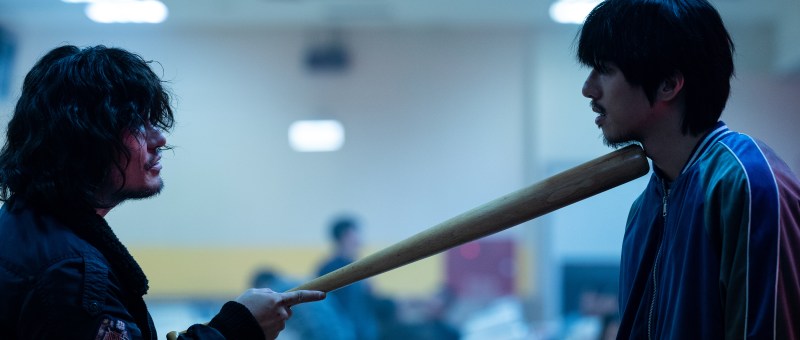
“The convict loves her executioner, the thief loves her jailer. We love you. We have no other choice.” the hero of Zhang Yuan’s beguiling, transgressive drama East Palace, West Palace (东宫西宫, dōng gōng xī gōng), whispers to his no longer sleeping guard. “I love you”, he later adds, “why don’t you love me?” turning the tables on an implacable authority and demonstrating that he too wields power. Considered the first Mainland film to deal directly with homosexuality, Zhang’s theatrical chamber piece is as much about the co-dependency of the oppressor and the oppressed as it is about gay life in post-Tiananmen Beijing while suggesting that in a sense submission too can be a weapon. 

Gay travel writer A-Lan (Si Han) is first challenged by a uniformed policeman in a public toilet. Staring at him intently, he stops A-Lan for no real reason, asking for his ID followed by a series of other personal questions with seemingly no law enforcement import before double checking if the bike outside is his and that he has a proper permit for it. These acts of hostility begin a cat and mouse game between the A-Lan and law enforcement, another policeman, Shi Xiaohua (Hu Jun), almost desperate to come up with a reason to arrest him on raiding the park, a popular spot for cruising, after dark. But as he leads him away, A-Lan suddenly plants a kiss on the policeman’s cheek and taking advantage of his momentary shock makes his escape. 

During in the arrest, meanwhile, Shi and the other policemen had a made a point of insulting each of the men who have not actually done anything illegal under the Chinese law of the time, beating them or forcing them to beat themselves, ordering them to squat on the ground, and even threatening to call one frequent offender’s place of work. As Shi often will, the police refer to the men as “despicable” and the “dregs of soceity”, yet A-Lan is in a sense empowered by his submission in allowing himself to be arrested before subsequently escaping having planted the seeds of his seduction. He flirts with danger in mailing Shi a book with the inscription “To my love, A-Lan” and thereafter deliberately gets himself arrested, later running away from Shi only in the desire to be chased by him.  

Hugely reminiscent of Kiss of the Spider Woman, the majority of the film takes place within the confines of the park’s police hut occupied only by A-Lan and Shi, a prisoner and a guard. Yet as in the Peking opera story A-Lan repeatedly quotes, elegantly recreated in Zhang’s theatrical shifts into fantasy, the two roles are to an extent interchangeable. Shi thinks he’s the guard, that he exercises authority over A-Lan, but A-Lan is also manipulating him, trapping Shi within this space and drawing him towards a recognition of his own latent desires, the same desires that were aroused when he hassled him in the public toilet. While Shi, the guard though no longer in uniform, is constrained by authority, A-Lan, the prisoner, is free in embracing his essential self and weaponising the essence of his power in the choice to submit as reflected in his masochistic desires. “It is not despicable. It is love” he insists on being challenged by Shi after detailing his BDSM encounter with a wealthy man, echoing his previous reminders that “What I write might be trash. But I am not”, refusing to allow Shi to degrade him even while taking pleasure in submitting to authority. 

Even so, he declares himself conflicted in having married a woman presumably for appearances’ sake something of which many in his community do not approve and leaves him both guilty in his treatment of his wife and disappointed in himself. When Shi barks “explain yourself” he details his life as a gay man from his first sexual experience in which he pretended to be a woman to being assaulted by thugs after sleeping with a factory boss adding only that “this kind of experience makes life with living”. “We all march to a different tune” he tries to explain to Shi, individual but also identical. He mentions another regular to the park he describes as a transvestite but in the language of today might better be thought of as transgender, A-Lan explaining that she enjoys wearing women’s clothes but is different from the men in the park. She does not make love to them, and they do not bother with her, A-Lan insisting that she too has her own beat to which to march as does Shi even in his increasing confusion. 

Shi wields his handcuffs, the relationship between the pair mediated through them just as that between the guard and beautiful prisoner in his story is mediated through chains, but eventually places the cuffs on each of their hands locking them together in an intense embrace. The guard cannot exist without the prisoner, nor the prisoner without the guard. “He will no longer escape from his love for her” A-Lan ends his story, the guard releasing his beautiful charge while she decides to return to him each of them knowing they are trapped in melancholy waltz of love and hate. Highly theatrical and scored with a persistent note of dread, Zhang’s beguiling drama hints at the sadomasochistic interplay between authoritarian power and a subjugated populace while allowing its hero to mount his resistance only through deriving pleasure from submission. 


East Palace, West Palace screens at the BFI on 27th May as part of this year’s Queer East. It is also available to stream in many territories via GagaOOLala.

Boonie Bears: Back to Earth (熊出没·重返地球, Lin Huida, 2022)

One of the biggest animation franchises in Mainland China, Boonie Bears began airing as a children’s cartoon show back in 2012 and has produced over 600 episodes across 10 seasons. The latest movie, Boonie Bears: Back to Earth (熊出没·重返地球, xióng chūmò: chóngfǎn dìqiú), is the franchise’s eighth theatrical movie and again proved popular at the box office on its Lunar New Year release. As might be expected for a series revolving around woodland creatures, the first antagonist was a logger who later came round and teamed up with the animals to protect the forest, the franchise has a strong if potentially subversive ecological theme which reverberates throughout Back to Earth. 

In fact, the chief job of unreliable younger brother bear Bramble (Zhang Bingjun) is sorting rubbish into the appropriate bins to keep the forest tidy. Daydreaming he casts himself as superhero battling a giant trash monster symbolising the destructive effects of the buy now pay later philosophy of the modern consumerist society. In any case Bramble’s cheerful days of chasing ice cream and just generally enjoying life in the forest are disrupted when he’s almost wiped out by bits of a falling spaceship and becomes the repository for all of its knowledge. This brings him to the attention of alien space cat Avi who needs his brain to locate his ship but is also being chased by a gang of nefarious criminals led by an amoral entrepreneur who wouldn’t let a little thing like the survival of the Earth interfere with her desires for untold wealth and power. 

As it turns out Avi also has a few lessons to offer as to the costs of irresponsible industrialisation having been born in an ultra-advanced cat society buried deep in the Earth’s core. The over mining of a valuable mineral soon destroyed the environment forcing the cats to flee into space looking for a new home. Avi hopes to return to his home city which lies abandoned as a kind of cat Atlantis accessible only with a valuable necklace which he needs Bramble’s help to retrieve. To begin with, the relationship between the pair is less than harmonious, though they soon bond in their shared quest to stop the evil corporate entities taking over the ancient technology and causing the death of the forest through their insatiable greed. 

Then again as one of the other creatures had put it, “you can’t rely on Bramble”, cross that he never pulls his weight and is always off in a daydream or chasing the next tasty treat. While Avi poses as an adorable kitten trying to convince Bramble to use his brain to help get the spaceship back, the others become even more disappointed in him believing that he’s taken against the cat out of jealously and resentment. Yet the lesson that everyone finally has to learn is that it doesn’t matter if Bramble isn’t the smartest or most hard working because he is strong and kind and has plenty to offer of his own. His gentle bear hug eventually saves the world in healing the villainess’ emotional pain so she no longer has any need to fill the void with cruel and ceaseless acquisition. 

Aside from the gentle messages of the importance of protecting the forest from the ravages of untapped capitalism, after all “this is our only homeland”, the film packs in a series of family-friendly gags including a surprising set piece in which Bramble dresses up as Marilyn Monroe to recreate the famous subway vent moment from The Seven Year Itch, while a pair of eccentric scrap merchants with a taste for rhyme provide additional comic relief. Even in the villains get a lengthy cabaret floorshow to mis-sell their evil mission to the guys from the forest belatedly coming to Bramble’s rescue. In any case, thanks to everyone’s support and encouragement Bramble finally gets to become the hero he always wanted to be proving that he’s not unreliable and even if he doesn’t always succeed is doing his best. Boasting high quality animation, genuinely funny gags, some incredibly catchy tunes and well choreographed musical sequences along with a warmhearted sense of sincerity, Boonie Bears: Back to Earth is another charming adventure for the much loved woodland gang.


Boonie Bears: Back to Earth is in UK cinemas from 27th May courtesy of The Media Pioneers (screening in a family-friendly English dub).

Original trailer (no subtitles)

Being Mortal (来处是归途, Liu Ze, 2020)

A young woman finds herself haunted by a sense of erasure in Liu Ze’s moving family drama Being Mortal (来处是归途, lái chǔ shì guītú) adapted from the novel by Li Yanrong. As the title might suggest, the questions the heroine faces are those of mortality and of the realities of death and ageing in contemporary China as she struggles to decide what the best thing to do is when it comes to caring for her ageing parents. Highlighting both the social changes born of increasing modernity and the pressures of an ageing society, Liu’s drama has few answers but explores the strain caring for those who will not recover can place on those around them. 

At 30, Tian (Tang Xiaoran) makes the difficult decision to accept a job transfer and return to her hometown in order to help her mother, Wenxiu (Li Kunmian), care for her father, Jianguo (Zhang Hongjing), who has been suffering with dementia for the past few years. Though we do not hear much about her life in the city, it’s also true that part of the motivation for moving lies in her unsatisfying relationship with a married co-worker who refused to leave his family. A friend suggests that he may have been reluctant to make the move in part because of Tian’s responsibility to her father, viewing him as a burden he was unwilling to bear. At the wedding of a hometown friend, she rekindles a relationship with her high school boyfriend, Qin Mu (Shi Xiaofei), the two of them being the only ones among their classmates to have remained unmarried. But as both the romance and Jianguo’s illness progress, the need to care for him also places a strain on the couple’s relationship with constant confusion as to the shared responsibilities and uncertainty for the future. 

Tian does have an older sister, Hua (Wang Tan), who is already married and has a child of her own yet lives some distance away and is able to help only financially though her money is often refused. Feeling guilty and seeing the toll caring for Jianguo is taking on her mother and sister, Hua suggests that it might be time to consider a nursing home or else a professional carer but Wenxiu and Tian are reluctant believing they’d be abandoning him or failing in their responsibility of care. Even so the rapid progression of his dementia which intensifies when he is hospitalised with pneumonia places an increasing strain on the two women, Wenxiu at one point snapping and shouting at Jianguo after he has soiled himself. As the women argue, Qin Mu finds himself trying to clean the old man up only to be shooed away by a regretful Wenxiu after she’s pulled herself together and retreat to the bathroom where Tian can hear him retching. This momentary crisis brings the couple’s relationship to a crunch point, Tian telling Qin Mu he can leave and he doing so without much of a protest. 

Much of the drama revolves around the effects of Jianguo’s illness on those around him, but he often has heartbreaking moments of lucidity sobbing in terror and frustration the first time he wets himself as his wife and daughter even in their own shock and confusion do their best to help him. “I’m completely worthless” he later cries, returning a pained gaze and muttering “I’m sorry” before trying to stab himself in the neck after hearing Wenxiu snap “stop tormenting me” in a moment of frustration. Meanwhile he keeps saying that he wants to go home, back where they lived years ago haunted by the figure of a small boy reminding him of the son they lost to illness in childhood. 

Tian is perhaps lucky in that despite the One Child Policy, she does have a sister and is not entirely alone even in the spectre of her impending orphanhood no matter how her relationship with the similarly burdened Qin Mu may turn out as he contends with his hardline former soldier father pent up with his own sense of embittered resentment. Nevertheless, Liu captures a sense of the despair among women like Tian facing a series of dilemmas in considering the best way to care for her parents as they age while also worrying for her own future in a sometimes uncertain society. Though essentially low key and naturalistic determined to present a sense of everyday ordinariness Liu’s sweeping transitions between moments in time along with flights into Chinese opera and the occasional dream sequence lend a note of poignancy to the familial tragedy at the film’s centre. 


Being Mortal streamed as part of Odyssey: a Chinese Cinema Season.

Original trailer (English subtitles)

River of Salvation (一江春水, Gao Qisheng, 2020)

“But life’s supposed to be good, isn’t it?” the heroine of Gao Qisheng’s indie drama River of Salvation (一江春水, yī jiāng chūn shuǐ) asks an old lady who has just explained that she’s considered taking her own life because of its inescapable misery. The film’s title may in its way be ironic in that there’s no real sign of salvation for anyone in this quiet backwater of rural China where as we discover no one is quite who they say they are. 

The hopelessness of 32-year-old Rong’s (Li Yanxi) existence is emphasised in the opening scenes in which she gets dressed up and heads to the port to pick up her fiancé’s mother only to be told that she won’t consent to the marriage partly because her intended’s first wife was a refined, elegant woman of much higher status while her son, Sanqiang (Chen Chuankai), is rough and boorish. Rong walks home feeling humiliated but also as if a last shot at happiness has been taken away from her. Sanqiang is also her boss at the moribund massage parlour (seemingly legitimate and offering only foot massages) where she works which is itself in the midst of financial difficulty. Meanwhile, she’s also the sole carer for her 18-year-old younger brother, Dong (Zhu Kangli), who spends most of his time playing video games and hanging out with his delinquent girlfriend, Jing (Yang Peiqi). 

As dull as her life seems, we can also see that Rong has a degree of anxiety and may be attempting to hide something about her past. She seems unusually cagey when her friend and workplace colleague Jinhua (Liu Jun) tries to invite her to a recently opened dumpling shop while almost always wearing a face mask claiming to be allergic to UV light. When the police are called due to a workplace altercation, she finds herself hiding in the basement obviously not wishing to encounter them. Yet as she discovers pretty much everyone in this small backwater town is hiding something or as Jinhua puts it is different on the inside. The guy on the front desk (Xi Kang) has been embezzling money to cover a gambling problem while even the lovely old lady (Huang Daosheng) with whom Rong bonds has not been entirely honest with her even while selling dreams of a better life. 

The central crisis is itself motivated by dishonesty in Jing’s claim that she is pregnant, later (perhaps falsely) stating that she made the whole thing up in order to test Dong shortly after reciting her own tearful monologue about the kind of life she wants but fears she can never have. The relationship between Jing and Dong encourages Rong to reflect on her own adolescence which contains more than a few troubling elements the film never sufficiently explores even while it becomes clear that she is haunted by guilt over something which is later revealed to be a triviality. People ask her if she hasn’t thought of moving on, but she tells them that she doesn’t know how to do anything else essentially trapped in dead end small-town China where the only hope of escape seemingly lies in marrying a man with means. 

Making up her mind, Rong begins teaching Dong how to be independent in the light of her impending absence while he too steps into adulthood in finding his own direction and striking out in search of it. Having faced her past, Rong quite literally burns her mask perhaps hinting at a return to a more authentic self yet pushed into a strategic retreat released from the purgatorial limbo of her small-town life but left with no place to go. Shot in 4:3, Gao’s static camera lends an additional air of stagnation to Rong’s otherwise stultifying existence which is not itself unhappy except in its concurrent anxiety and pervasive sense of hopelessness. There may be no river of salvation, but Rong does at least begin to unpick the duplicities of the world around her in unmasking the various personas she encounters while digging out their hidden truths until finally deciding to face her own and gaining with it a kind of liberation if not perhaps one which engenders a great deal of hope for the future. 


River of Salvation screens in London at Picturehouse Finsbury Park, 17th May as part of Odyssey: a Chinese Cinema Season.

Original trailer (Simplified Chinese / English subtitles)
Lan Yu (蓝宇, Stanley Kwan, 2001)

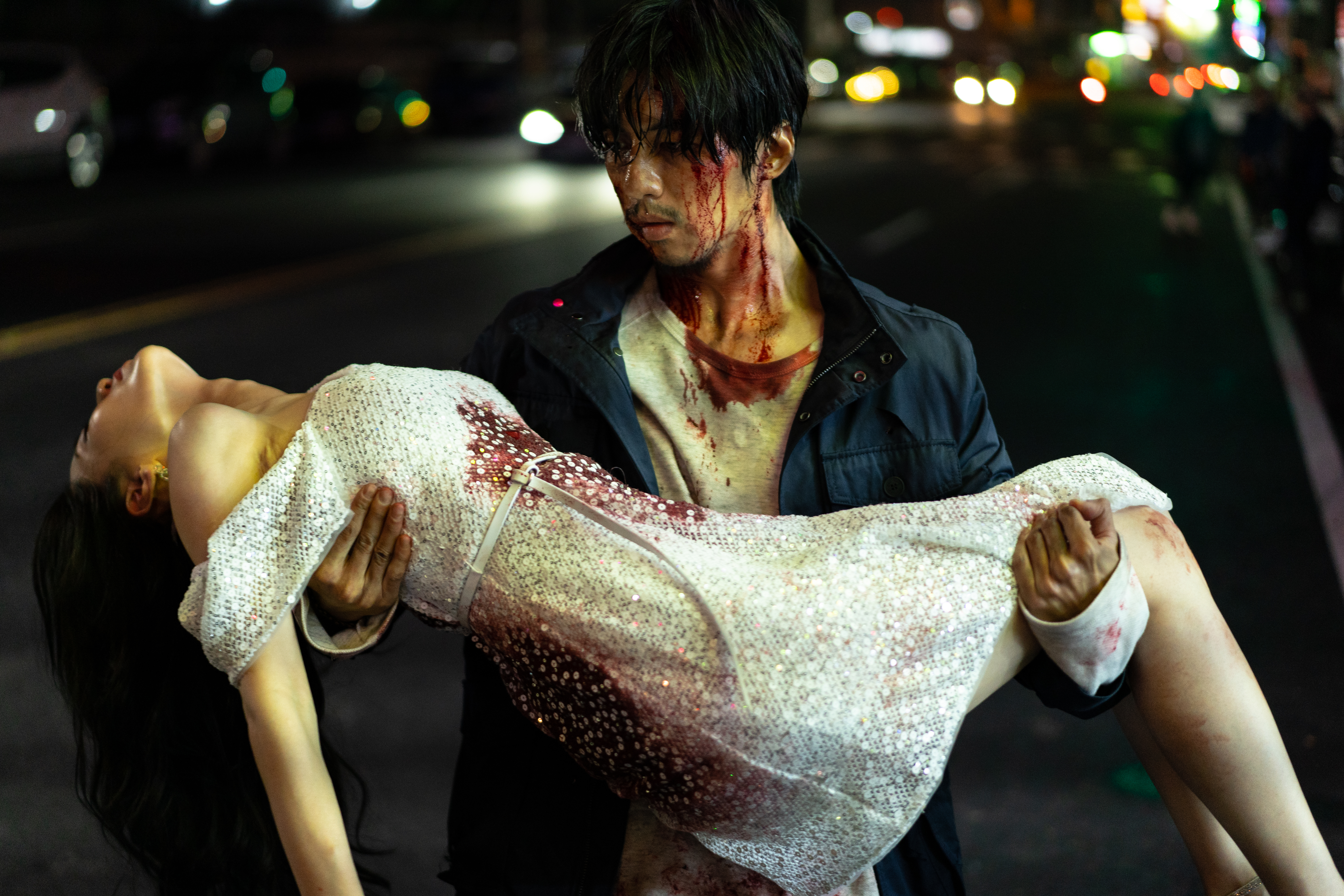
“It’s not really over as long as there are memories” the cynical hero of Stanley Kwan’s haunting romantic tragedy, Lan Yu (蓝宇, Lán Yǔ), is reminded by his earnest lover only to find himself both immersed in and comforted by nostalgia, “because I feel you never really left”. Inspired by a subversive yet hugely popular erotic LGBTQ+ web novel thought to have been written by a Chinese woman in exile in the US Kwan’s aching melodrama is one of very few Mainland films to deal directly with the subject of homosexuality but is also a melancholy meditation of the frustrated liberations of post-Tiananmen China. 

In 1988, hero Handong (Hu Jun) is perhaps the personification of an age of excess. In a sharp suit and sunshades, he plays the ladies man while repressing his homosexuality in an act of superficial conformity. His money can buy him anything, and to begin with it buys him Lan Yu (Liu Ye) a cash-strapped architecture student turning to sex work to make ends meet, only to discover himself drawn to this “weird” young man who doesn’t really care about his consumerist success save asking with a melancholy air if he’s ever been to America. As we later discover, Lan Yu had wanted to study abroad but travel was not such an easy matter in late ‘80s China while even some years later he has trouble organising a passport and visa. Handong as a wealthy businessman may have no such trouble, perhaps his money really can buy him anything after all even a superficial sense of liberty in what is still an oppressive and authoritarian society. 

For Handong, sex with men may be a way of expressing a freedom he does not really believe he has endangering his relationship with Lan Yu by picking up another random student in a park while reminding him that “this kind of stuff isn’t serious”. “So what is serious for you?” Lan Yu not unreasonably asks, but it may be a difficult question for Handong to answer. What’s serious for Lan Yu is the authenticity of his feelings. He is uninterested in Handong’s wealth, saving the money that he gives him rather than spending it, ironically making good on Handong’s joking suggestion “maybe you’ll bail me out if I’m broke one day”. 

In the pivotal sequence set against the backdrop of the Tiananmen Square protest, it is nevertheless Handong who finds a kind of liberty in accepting the reality of his feelings for Lan Yu overcoming his internal conditioning which convinces him that love is a weakness. Meanwhile, Lan Yu’s revolution evidently fails in the chaos of the protests, Handong cradling him as he weeps for all he’s seen. It’s this liberation that allows them to engage in a conventional romance, Handong buying a suburban villa he puts in Lan Yu’s name where they can live together as a couple albeit discreetly. But in the end Handong cannot let go of a sense of conventionality, eventually sacrificing his love for Lan Yu for a traditional marriage which later fails presumably because of its essential inauthenticity or at least Handong’s inability to accommodate himself with it. 

Torn in two, he makes his money through dodgy deals with Russian businessmen themselves perhaps also experiencing a degree of political confusion. They turn down Handong’s invitation for champagne hinting they’d rather go shopping for their wives. Yet Handong also aspires towards Japan, then at the height of its economic success, buying fancy clothes for country boy Lan Yu which lend him the air of a sophisticated Tokyoite. But Japan like China and Russia is also about to experience a moment of instability quite literally bursting Handong’s bubble while he is left to carry the can for his company’s not entirely above board business practices after his influential father dies. Saved by Lan Yu’s unwavering love for him, he abandons his consumerist conceits and immerses himself a world of simple comforts living in his small flat which is, ironically enough, rented at a preferential rate from Lan Yu’s Japanese boss. 

Through his various experiences, Handong rediscovers a sense of pure joy and contentment in his newly simple life of domesticity in which his relationship with Lan Yu appears to be accepted by his sister, brother-in-law, and best friend, but Kwan hints at sense of uncertainty in the anxious canted angles and frequent mirror shots that return us to the opening sequence. The men have in a sense exchanged roles, Lan Yu now guiding Handong in this changing society. Yet the bleakness of the ending suggests that these changes will never come to fruition, a literal construction accident resulting in a romantic tragedy that leaves Handong both trapped and comforted by the nostalgic past in the memory of Lan Yu and the idea of the better society he came to embody. 


Lan Yu screens in London at Prince Charles Cinema 12th May as part of Odyssey: a Chinese Cinema Season.

Trailer (English subtitles)

ON STAGE (登場, Zhang Yaoyuan, 2021)

Lead singer of alternative rock band Second Hand Roses, Liang Long has been a sometimes controversial figure previously known for his shaved head and androgynous appearance often appearing onstage in female clothing and heavy makeup. Ironically enough Zhang Yaoyuan’s documentary ON STAGE (登場, Dēngchǎng) captures him mostly off, now with a full head of hair as he prepares for a New Year concert in his home area of Shenyang in the North East while simultaneously shooting a movie later released as No Problem directed by Looking For Lucky’s Jiang Jiachen.  

Zhang also hails from the North East and the area does seem to be important to the film, a banner above the stage at one point bearing the message “Develop the North East” with the film crew also wondering if their film can help do the same only for Liang to correct them that “revive” might be better than “develop” seeing as the area had been prosperous in the past but is now struggling without the oil industry. Meanwhile, he’s joined in the discussion by Wang Hongwei, star of Jia Zhangke’s Xiao Wu which the pair later reference while lamenting the decline of the North East before going on to describe the modern day Hegang as a kind of film city but not in an altogether good way each scandalised that apartments are so cheap it’s more cost effective for film crews to buy rather than rent even if they make a loss when they sell at the end of the shoot. Meanwhile, the gang later go on tour paying a visit to the China–North Korea Friendship Bridge in Dandong with two crew members engaging in separate mini rants about North Korea tricking China into paying more than their fare share by pulling out early. 

In any case, Liang is certainly cineliterate, shooting a Wong Kar-Wai-esque intro video for his upcoming concert set to Quizás, Quizás, Quizás and featuring a woman walking sadly through the streets. Another crew member decides to have another pop at Japanese directors, mystified by their admiration for natural light having sworn off ever working with Shunji Iwai again because he wanted to do things his own way. Doing things his own way is however something that’s very important to Liang as he explains to a caller on a radio show “I must keep my style from inside to outside”. The caller had somewhat impolitely explained that she originally thought his eccentric appearance seemed “nutty” but later came to understand it wondering if it’s something that Liang was doing deliberately only for him to answer that he’s fine with people describing him as crazy because he knows he’s “normal”. “When I’m in an artistic state, everything goes natural. Nothing weird” he adds, implying that his appearance is merely the purest expression of his artistic intent though it’s true enough that others may not always approve of his use of makeup or androgynous dress. Nevertheless, the concerts seem to attract a coterie of diehard fans copying his style often dressing in rose-patterned shirts and dresses with wigs and makeup, Liang later asking a photographer to go out and film them because he says they enjoy being appreciated. 

Liang does indeed seem to be a savvy operator, also interacting with his fans through live streaming which he describes as more difficult than performing onstage though he does seem pretty nervous hanging around in the wings waiting for the intro to finish ahead of his big New Year concert. Meanwhile, he’s frequently seen taking photo ops with fans and family members of the crew, in general pleasant to be around if occasionally impatient never grandstanding or pushing his fame but hanging out with his crew drinking and swapping stories. Even so he’s scathing when asked for recommendations of contemporary bands complaining that there’s “no one worth respecting” because most are artistically stagnant trading on past glory rather than coming up with new ideas. Stagnancy is not perhaps something of which you could accuse him given how incredibly busy he seems to be in just this short period of his life, never really stopping between rehearsing for the New Year show, shooting the movie, and live streaming for his fans. Shot in a crisp black and white, Zhang’s observational documentary frames him a garrulous yet contemplative man perhaps most at home onstage in the most natural state of his pure artistic vision. 


ON STAGE screened as part of Osaka Asian Film Festival 2022

Original trailer (Japanese subtitles only)

After the Rain (两个星球, Fan Jian, 2021)

When the Great Sichuan Earthquake struck in 2008, 69,000 people lost their lives while a catastrophic blow was dealt to local infrastructure. With the One Child Policy then still strictly enforced, parents who had lost children in the disaster were offered government assistance in order to conceive a second child. It might be crass to describe these children as “replacements”, yet in one sense that is what they were intended to be. Jian Fan’s observational documentary After the Rain (两个星球, liǎng gè xīngqiú) follows two such children and their traumatised parents as they try to move on as a family in the wake of tragedy. 

Sheng is still haunted by his inability to rescue his daughter, Rain, from beneath the rubble of her school house. He and his wife Mei have decided to take part in the IVF programme and are hoping for a girl, believing in a sense that they’d be getting their daughter back. IVF doesn’t work out for them, but Mei conceives naturally a few months later and gives birth to a baby boy, Chuan. On what should be an unambiguously happy occasion, the sense of disappointment is palpable, Sheng in particular feeling cheated and resentful to have been denied a reunion with his daughter. Ying and her husband, meanwhile, are also unsuccessful with IVF but are simultaneously struggling to rebuild a relationship with their second daughter, Ranran, for whom they had to pay the second child fine subsequently sending her to stay with relatives in the countryside before bringing her back when their eldest girl, also called Rain, was killed in the earthquake. 

Both children are over burdened with the knowledge that they owe their existence to their sibling’s death, Mei bluntly telling Chuan that Rain’s life was sacrificed for his while later revealing that she sometimes dressed him as a girl as an infant while Ranran is forced to reckon with her parents’ decision to send her away only to be recalled when her sister died. At a memorial event other mothers discuss what they’ve told the children they conceived after the earthquake about their older siblings with most disapproving of Mei’s blunt approach fearing that such knowledge will burden their children or leave them feeling guilty and unloved but Mei is unrepentant. After all it is in a sense the truth. Because of the One Child Policy, the existence of these children would not have been possible had their elder sibling not have died in a such a horrifying way. 

Even so, Sheng in particular struggles to bond with his son catching himself letting it slip out that he wasn’t allowed to spend time with his daughter so he’s little interest in doing so with Chuan refusing to take him out to an amusement park harping on about how wasteful Chuan is and how much money he’s costing him. He constantly runs the boy down, criticising his performance at a school sports day and snapping at him at home with the obvious consequence that Chuan mainly ignores him and stays close to his mother though she is also at times unsympathetic, angry with him for crying while in pain after a medical procedure. 

A heartbreaking sequence sees little Chuan all alone and looking lost amid the graves at a memorial event for the earthquake while his parents talk with others in the same position, as if for a minute they’d forgotten he existed. Trapped in grief, Sheng still lovingly washes one of his daughter’s dolls on the rooftop and seems at times torn and remorseful complaining that it made him feel sad inside to notice there was no light in Chuan’s eyes but still harbouring resentment towards him as if blaming his son for “replacing” his daughter. Ying meanwhile recounts all the ways Ranran is different from Rain as if the differences sometimes upset her even if she is in a sense closer to her than she had been to her older daughter leaving her with an additional sense of guilt. 

“Losing a kid leaves your heart empty” Ranran’s grandma remarks each of the parents still struggling to come to terms with their loss while the children equally struggle to accept the absence of an older sibling they never knew of whose loss they are constantly reminded and expected to mourn. Nevertheless they are all doing their best trying to move past their grief and rebuild their lives but ultimately unable to let go of the traumatic past while their children grow away from them left with only loneliness and resentment. 


After the Rain screens at UltraStar Cinemas Mission Valley, San Diego April 25 as part of this year’s SDAFF Spring Showcase.

Original trailer (English subtitles)