
Sunshine (Antoinette Jadaone, 2024)

“Don’t drag me into this,” a boy says after hearing that his girlfriend is pregnant, having already questioned if the baby’s really his. Miggy signals his lack of responsibility by directly asking Sunshine what “her” plan is, making it plain that she’s on her own and he does not see himself playing an active role in a predicament he essentially sees as nothing to do with him. Aside from Miggy’s father Jaime, who happens to be a protestant pastor, men are largely absent from Antoinette Jadaone’s Sunshine and even when they appear rigid figures of patriarchal control. 

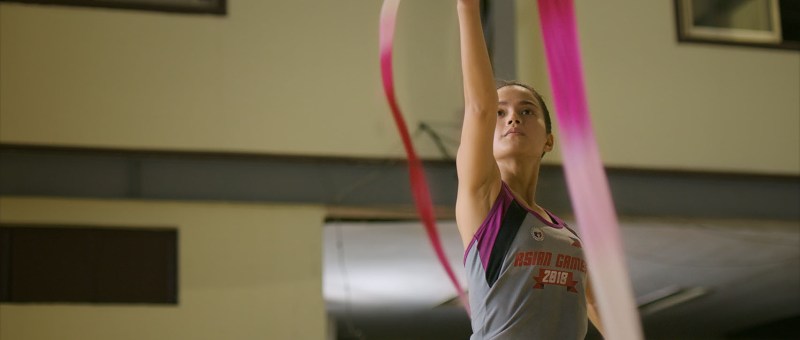
Sunshine implies that she’s only in this mess because Miggy pressured her into unprotected sex, but she’s left to deal with the fallout on her own. Still in school, she’s about to take her last shot at getting onto the Olympic rhythmic gymnastic team but risks losing everything she’s worked so hard for if her pregnancy is discovered. Even when she goes to buy a pregnancy test, she’s asked for ID and judged by the woman behind the counter while it’s otherwise true that abortion is illegal in all circumstances in the Philippines, meaning Sunshine’s only options are finding and paying a wise woman for medicine to provoke a miscarriage. 

It’s the reactions of other women that Sunshine most fears from her otherwise supportive coach, whose ambitions also rest on her performance, to her best friend who does in fact shun her on her mother’s insistence, and her older sister who is caring for the whole family and seems to be a single mother herself having had a baby at a young age. Like a grim siren, Sunshine’s niece won’t stop crying as if echoing the alarm of her impending maternity and her own discomfort with it. It’s a network of women that she turns to for solutions if not for advice. There’s no one Sunshine can ask for that, because what she’s looking for is illegal. All she can do is stand outside the church and pray that God take mercy on her by allowing her to wake up from this nightmare. There’s something quite ironic when she’s told to ask forgiveness from God “the father” by a religious and judgemental female doctor as if laying bare the patriarchal and oppressive underpinnings of the entire society. 

Yet cast onto a surreal odyssey through Manila in search of solutions, Sunshine finds herself becoming the supportive presence she herself doesn’t have. While pursued by a very judgmental little girl who echoes her inner confusion by branding her a “murderer” and questions her decision making, Sunshine is approached by another little girl who appears to be heavily pregnant and is begging for money to see a faith healer whom she hopes will help her end her pregnancy. Despite her own experience, Sunshine asks her why she doesn’t ask her boyfriend for help but the girl explains that he’s not her boyfriend, he’s her uncle, so she’s even more powerless and alone than Sunshine is. No one’s going to do anything about the Uncle Bobots of the world, but they’re only too happy to criminalise and abandon a little with no one else to turn to. 

Realising that the girl was trying to abort her child, the male doctor at the hospital refuses to treat her knowing full well there is a possibility she may die. Only a sympathetic female doctor is later willing to help. Sunshine too almost dies after her first attempt at taking an abortion pill which she does all alone at a love hotel where the woman on the counter didn’t want to give her a room because people who go to hotels on their own are a high risk for suicide. When she does eventually find out, Sunshine’s sister is actually sympathetic and stands up to Jaime on her behalf when he makes a bid to take over her life and force her into maternity by getting Miggy to apologise and unconvincingly insist that he actually loves her and their baby while leveraging his wealth and privilege against her by recommending that she be cared for by his family doctor and the best hospitals at his expense. It does however provoke a degree of clarity in Sunshine’s insistence that she doesn’t want to be a mother and has no intention of becoming one while rediscovering herself in rhythmic gymnastics and making peace with her younger self. A sometimes bleak picture of young womanhood in the contemporary Philippines, the film nevertheless finds relief in pockets of female solidarity and the conviction that it doesn’t have to be this way for the younger generation who should be free to pursue their dreams and make their own choices about what they do with their bodies.


Sunshine screens April 26 & 30 as part of this year’s San Diego Asian Film Festival Spring Showcase.

Where Is the Lie? (Marupok AF, Quark Henares, 2023)

What is it that motivates acts of seemingly pointless cruelty, why do people obsessively waste their own lives trying to make those of others miserable? Quark Henares’ inspired by real events (depending on who you ask) catfishing drama Where is the Lie? (Marupok AF) sees a trans woman fall victim to homophobic love fraud amid a climate of intense transphobia and subsequently make the decision to take a stand not as a petty act of revenge but to reclaim her dignity and protect her community while generously wishing her tormentor well. 

The catfisher, Beanie (Maris Racal), is given the right to reply through a series of confessional videos which slowly gain prominence towards the film’s conclusion. She admits that she knows what she did but does not really understand why she did it save justifying herself that she’s been “bullied” by members of the LGBTQ+ community in the past. She deliberately mangles the acronym and makes a point of using male pronouns to refer to the trans woman she’s currently targeting, Janzen (EJ Jallorina), but later starts to slip up instinctively using “she” after spending months talking to her normally over a dating app posing as buff model Theo (Royce Cabrera). Asked what the point of all this is, Beanie doesn’t have much of an answer beyond the cruelty itself explaining that the end goal is simply to ghost the target once they’ve made an emotional connection to cause them to feel hurt or humiliated. Perhaps these seem like low level consequences to Beanie who regards the catfishing as something like a weird hobby though one she expends an immense amount of time on seeing as she doesn’t appear to have anything else going on in her life aside from her actual job as a video director working in the fashion industry. 

The strange thing is though is Beanie describes Janzen as fun to talk to and they even seem to strike up a genuine connection over their shared interest in design. Beanie then finds herself in dilemma, simultaneously accelerating the plan to avoid having to deal with her complicated feelings but then restarting it after its natural end point by inserting herself into the conversation posing as Theo’s cousin and apologising on his behalf for his treatment of her in a moment of panic. The implication is that Beanie’s behaviour is motivated by an internalised homophobia in which she cannot bear to admit her desire for other women keeping her connection with Janzen because she is attracted to her but simultaneously denying it through a deliberate attempt to cause her pain and humiliation in returning her feelings vicariously through the fake Theo persona.

Some may feel that the film to too sympathetic towards outward transphobe Beanie or that once again implying the villain is closeted is unhelpful, but there may be something in her claims to be a kind of victim too in that her internalised homophobia is caused by societal conservatism in a largely Catholic, patriarchal culture. The film is clear on the dangers and discrimination Janzen faces daily both online and off as her friends remark on the case of a trans woman being arrested for using the ladies’ bathroom and later TV news footage shows president Duterte pardoning a US soldier who had been convicted of murdering a transgender sex worker. As the film begins, Janzen’s boyfriend breaks up with her over his discomfort about publicly dating a trans woman, implying that he is ashamed or embarrassed in his inability to explain the relationship to his older conservative parents. An online date then goes south when he realises she is trans. As her friends tell her Theo seems too good to be true especially as his social media only contains professionally taken photos and no personal posts or connections but Janzen is blinded by love and deeply wants to believe that the relationship is “real”.

That might go someway to explaining why she puts up with so much nonsense from Theo and continues to interact with him even after he calls her a series of slur words, leaves her waiting at the airport for a fake meeting, and then dumps her in a Jollibee after convincing her to travel all the way to Manila knowing she has no return ticket or place to stay. Playing out almost like an incredibly perverse Cyrano de Bergerac, the film at times pushes Janzen into the background in favour of exploring Beanie’s motivations for her seemingly senseless, sadistic cruelty, but subsequently allows her to reclaim centrestage in owning her own story by taking a stand against transphobic bullying on behalf of the other victims and her wider community while very much claiming the moral high ground by wishing Beanie nothing but peace though whether she’ll ever find it is anybody’s guess. 


Where Is the Lie? screened as part of this year’s New York Asian Film Festival

Original trailer (English subtitles)

Images: © Anima Studios, Kroma Entertainment, December 2022.© 2022 Kroma Entertainment. All Rights Reserved