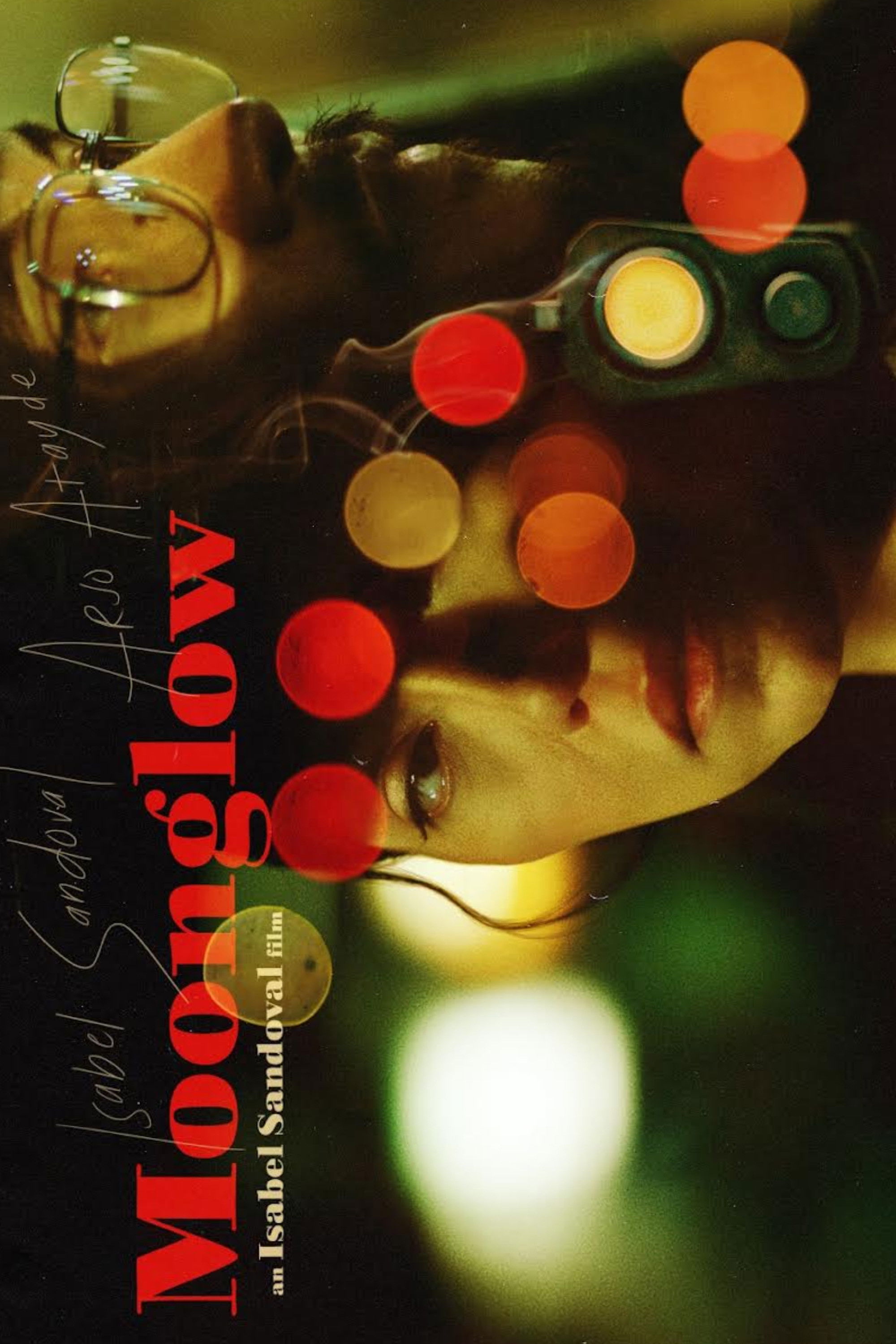
Moonglow (Isabel Sandoval, 2026)

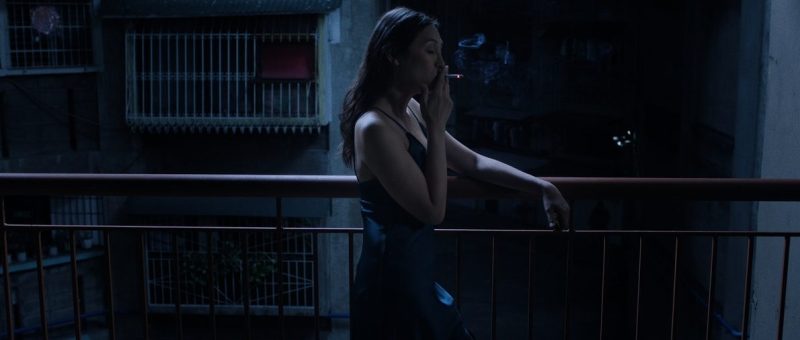
A conflicted policewoman is placed in charge of investigating a crime that she herself committed in Isabel Sandoval’s moody noir, Moonglow. In many ways about the deadening quality of life under authoritarianism, the film contemplates complicity and resistance along with the “paradise of progress” that is touted as the modern Philippines though it faces many of the same problems as in 1979. You may think of yourself as some kind of moral crusader, Dahlia’s aunt warns her, but you’re no match for them.

Sister Therese may have a point. The news is full of stories of abandoned bodies and mysterious fires. Dahlia (Isabel Sandoval) characterises her theft as an act of rebellion and retribution. She does not keep this large sum of money taken from her corrupt boss’ safe for herself, but gives it to her aunt, a nun, with the instruction that it’s to be used to help the victims of a slum fire that later turns out to have been orchestrated by the police chief who is getting kickbacks from construction firms and envisions a bright future for himself in politics. 

Going into politics seems to be the ultimate goal for many. Charlie (Arjo Atayde) was also being groomed for office, but chose to emigrate instead after being confronted by the ugly side of his family’s elite status. The nephew of police chief Bernal, he’s just returned from America to look after his ailing father having become a lawyer rather than law enforcement official. Nevertheless, Bernal appoints him to the investigation presumably assuming he’s a safe person to ask because he’s family and therefore no threat to him. Old flame Dahlia, however, remarks on meeting him again that he now wears glasses, as if signalling Charlie’s ability to see things with more clarity than those around him whose vision has been blurred by continued exposure to life under the Marcos regime.

Dahila, who chose to stay rather than leave with Charlie, has indeed been compromised and is to an extent at least complicit as an agent of authoritarian power and according to some Bernal’s right hand woman. She says herself that she’s summoned in ghost in Charlie’s return and is haunted by the person she was before along with that of lost love. Each of them have repeated flashbacks to a lavish party shortly before Marcos took power which seems to hint at the coming future as Bernal introduces a man soon to be governor who echoes the contemporary radio broadcasts speaking of an era of prosperity hovering the horizon.

Alvaro manipulates Bernal with promises to make him his political successor, while it’s clear that any “prosperity” to come will only be for some. They burn slums to seize the land for shopping malls and luxury apartments leaving hundreds of people homeless and others of them dead. Alvaro later implies that some of the stolen money has been used to get the victims legal representation to challenge the government, a power that he also believes to have been “stolen” in that they have no right to it. Indeed, the authorities silence contrary voices without compulsion offing an investigative journalist reporting on the fires and later coming after Dahlia. Charlie reminds her that Bernal would sacrifice anyone, and indeed later implies he may do so with him when he starts asking the wrong questions about how much money went missing from the safe. 

Yet Dahlia’s tragedy is that in the end she can’t escape herself or her past. She can’t make all of this right through her act of rebellion, but neither can she accept the ways in which she did not resist or leave as Charlie had. That other life is also haunting her. Sandoval’s frequent use of dissolves signals the foggy quality of life under authoritarianism in which it becomes impossible to think or see clearly when every moment is self preservation or active complicity. Past, present, and future come to co-exist with Dahlia stuck somewhere in between, longing for a return to an elusive past while fearing that the future is no longer possible. She and Charlie are now, as she says, different people. Their romance belongs to another era which has now become inaccessible, or perhaps existing only in the realms of memory as a painful reminder of that which could have been.


Moonglow screens in Amsterdam 11th/12th April as part of this year’s CinemAsia Film Festival.

Trailer (English subtitles)
Sunshine (Antoinette Jadaone, 2024)

“Don’t drag me into this,” a boy says after hearing that his girlfriend is pregnant, having already questioned if the baby’s really his. Miggy signals his lack of responsibility by directly asking Sunshine what “her” plan is, making it plain that she’s on her own and he does not see himself playing an active role in a predicament he essentially sees as nothing to do with him. Aside from Miggy’s father Jaime, who happens to be a protestant pastor, men are largely absent from Antoinette Jadaone’s Sunshine and even when they appear rigid figures of patriarchal control. 

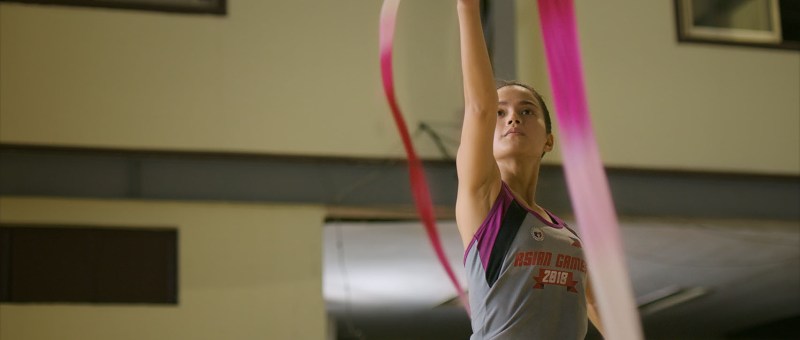
Sunshine implies that she’s only in this mess because Miggy pressured her into unprotected sex, but she’s left to deal with the fallout on her own. Still in school, she’s about to take her last shot at getting onto the Olympic rhythmic gymnastic team but risks losing everything she’s worked so hard for if her pregnancy is discovered. Even when she goes to buy a pregnancy test, she’s asked for ID and judged by the woman behind the counter while it’s otherwise true that abortion is illegal in all circumstances in the Philippines, meaning Sunshine’s only options are finding and paying a wise woman for medicine to provoke a miscarriage. 

It’s the reactions of other women that Sunshine most fears from her otherwise supportive coach, whose ambitions also rest on her performance, to her best friend who does in fact shun her on her mother’s insistence, and her older sister who is caring for the whole family and seems to be a single mother herself having had a baby at a young age. Like a grim siren, Sunshine’s niece won’t stop crying as if echoing the alarm of her impending maternity and her own discomfort with it. It’s a network of women that she turns to for solutions if not for advice. There’s no one Sunshine can ask for that, because what she’s looking for is illegal. All she can do is stand outside the church and pray that God take mercy on her by allowing her to wake up from this nightmare. There’s something quite ironic when she’s told to ask forgiveness from God “the father” by a religious and judgemental female doctor as if laying bare the patriarchal and oppressive underpinnings of the entire society. 

Yet cast onto a surreal odyssey through Manila in search of solutions, Sunshine finds herself becoming the supportive presence she herself doesn’t have. While pursued by a very judgmental little girl who echoes her inner confusion by branding her a “murderer” and questions her decision making, Sunshine is approached by another little girl who appears to be heavily pregnant and is begging for money to see a faith healer whom she hopes will help her end her pregnancy. Despite her own experience, Sunshine asks her why she doesn’t ask her boyfriend for help but the girl explains that he’s not her boyfriend, he’s her uncle, so she’s even more powerless and alone than Sunshine is. No one’s going to do anything about the Uncle Bobots of the world, but they’re only too happy to criminalise and abandon a little with no one else to turn to. 

Realising that the girl was trying to abort her child, the male doctor at the hospital refuses to treat her knowing full well there is a possibility she may die. Only a sympathetic female doctor is later willing to help. Sunshine too almost dies after her first attempt at taking an abortion pill which she does all alone at a love hotel where the woman on the counter didn’t want to give her a room because people who go to hotels on their own are a high risk for suicide. When she does eventually find out, Sunshine’s sister is actually sympathetic and stands up to Jaime on her behalf when he makes a bid to take over her life and force her into maternity by getting Miggy to apologise and unconvincingly insist that he actually loves her and their baby while leveraging his wealth and privilege against her by recommending that she be cared for by his family doctor and the best hospitals at his expense. It does however provoke a degree of clarity in Sunshine’s insistence that she doesn’t want to be a mother and has no intention of becoming one while rediscovering herself in rhythmic gymnastics and making peace with her younger self. A sometimes bleak picture of young womanhood in the contemporary Philippines, the film nevertheless finds relief in pockets of female solidarity and the conviction that it doesn’t have to be this way for the younger generation who should be free to pursue their dreams and make their own choices about what they do with their bodies.


Sunshine screens April 26 & 30 as part of this year’s San Diego Asian Film Festival Spring Showcase.