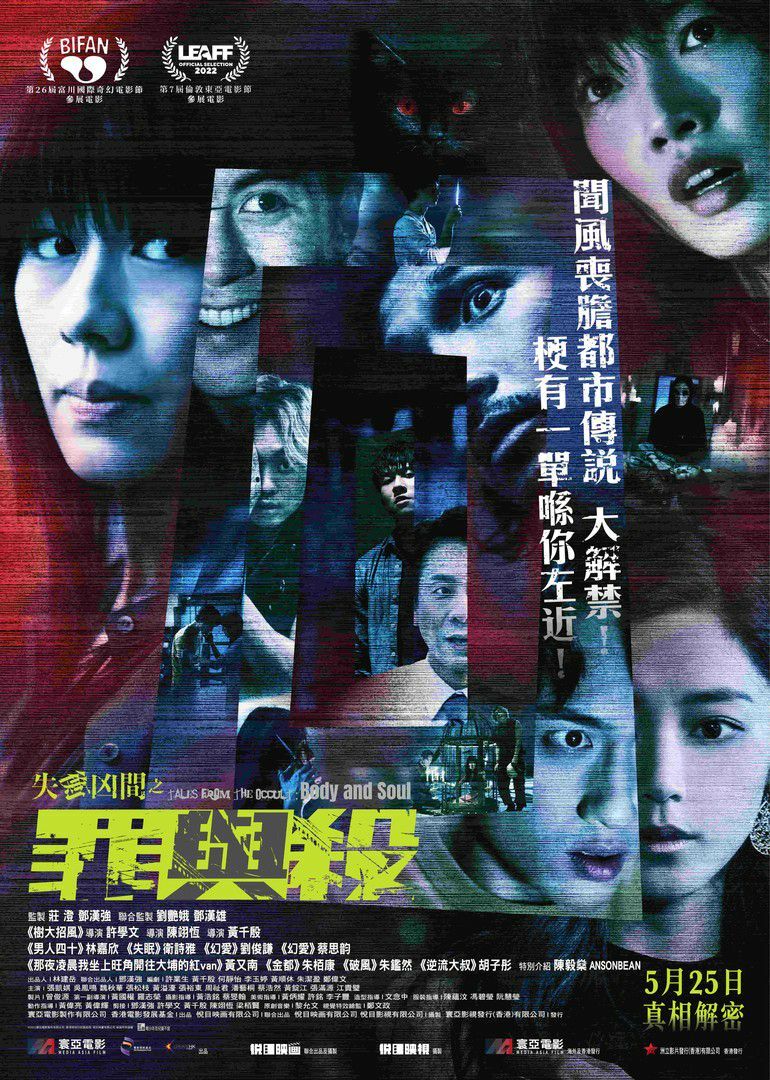
Tales from the Occult: Body and Soul (失衡凶間之罪與殺, Frank Hui, Daniel Chan Yee-Heng, Doris Wong Chin Yan, 2022)

The second in a series of horror-themed anthologies, Tales From the Occult: Body and Soul (失衡凶間之罪與殺) takes fairytales as its theme but truth be told none of the episodes has very much in common with the most well known version of their respective stories. What they do have in common is a rather grisly view of the nighttime city perhaps inspired by classic Cat III shockers though mediated through a strong sense of irony. “I like it a bit dark” one of the heroes exclaims and it’s certainly a sentiment shared by each of the three directors. 

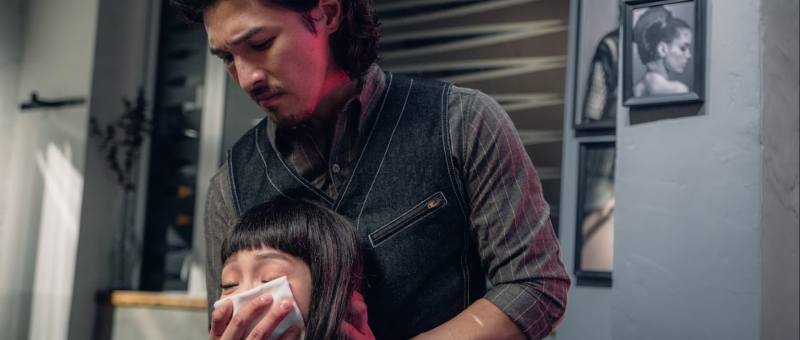
The first instalment, Frank Hui’s Rapunzel finds former idol star Maggie (Michelle Wai) trying to prop up her flagging career while constantly written off as a has been best known for a cheesy pose in a dated shampoo commercial. Her manager sends her to an obnoxious rich kid’s birthday party where the women are so young they weren’t even born when she was a star and relentlessly mock the weird “aunty” and her “retro” movies. One of the guys sets fire to her hair which is even more of a problem for her because she’s supposed to have an important meeting with a producer in the morning and he’s not going to hire her with a less than perfect appearance. Maggie’s desperation eventually draws her into the orbit of a hair fetishist serial killer from whom she must try to escape while attempting to rescue her hair and save her career. A secondary strain of social community places the killer’s creepy all night salon in a building that’s about to be torn down for urban renewal leading him to be bullied by gangsters to move out but not wanting to for obvious reasons. Maggie meanwhile eventually makes a surprising decision in order to fix herself which is in its own way cannibalistic at least of the female image when it comes to the idea of perfect hair. 

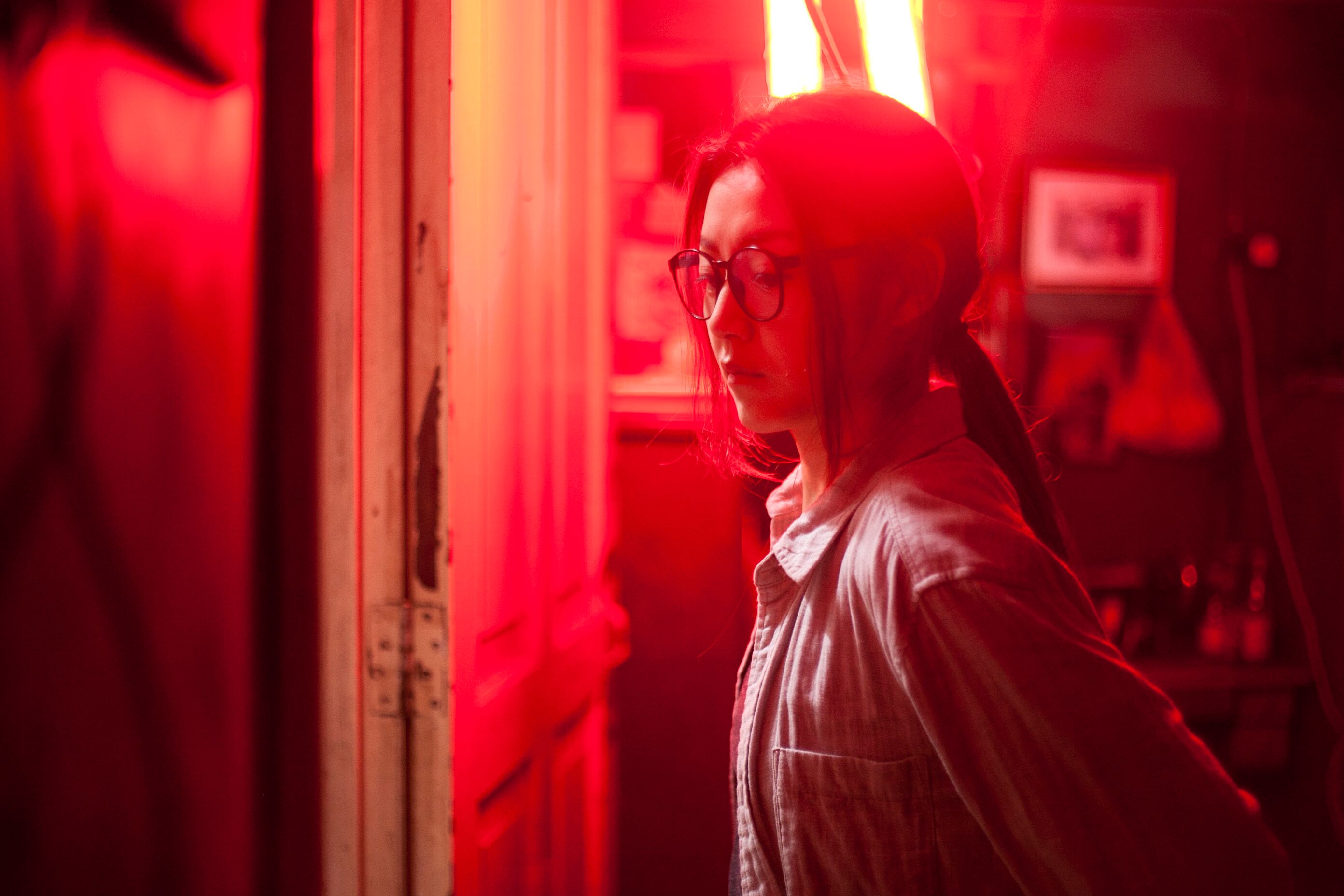
You couldn’t say that Daniel Chan’s Cheshire Cat really has that much to do with the classic Alice in Wonderland character either, though Chan does throw in something like a Mad Hatter’s tea party and leave his heroine trapped in a cage suspended above the air. Nora (Cecilia Choi Si-Wan) works in a cat rescue centre and is particularly upset by the idea of people hurting her feline friends, especially as her own cat Bobo was recently murdered. After agreeing to rescue a kitten trapped under a van she unwittingly passes into a grim haunted house adventure with a death metal vibe. In a series of atmospheric shots, Chan frames Hong Kong in an angry red tint capturing the increasing resentment of Nora as she continues to take out her rage on those who would harm poor defenceless creatures. 

Doris Wong’s The Tooth Fairy perhaps ironically subverts its title while toying with the interplay of sadomasochistic fetishes. Dental nurse Sammi (Karena Lam Ka-Yan) is being relentlessly harassed at work by sleazy dentist Steve (Tommy Chu Pak-Hong) who won’t take no for an answer. On her way to the bank, she comes across a fight between two young men in which one bites off the other’s ear, and invites the biter to her clinic to get his swollen cheek looked at. Steve, however, does not take kindly to this after seeing he and Sammi flirt with each other, extracting a healthy tooth without anaesthetic as if teaching him a lesson, but clearly deriving sexual pleasure from his pain just like the sadistic killer on the news. In any case events soon escalate following some cake-related triggering and not just for its capacity to ruin your teeth. The killer may claim they’re setting people free from their earthly suffering but is clearly in part at least killing for the thrill. 

In any case, danger seems to lurk behind every corner with potential serial killers apparently all around us as the heroes find out during their various quests. Their stories may not have much in common with their inspiration but each have a strangely ironic quality curiously mimicking B-movie cinema in terms of colour palette and production design, Frank Hui eventually opting for a neon-coloured nightmare lair while Nora and the gang chase through a haunted Hong Kong and Sammi does her best to extricate herself from the unwanted attentions of her sleazy boss who is perhaps the real monster in the shadows. 


Trailer (English subtitles)
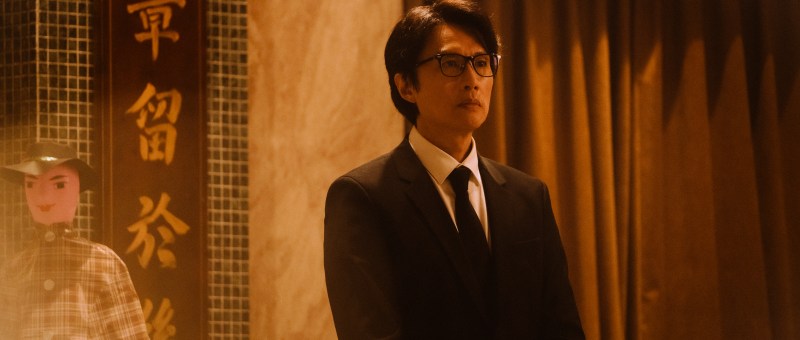
The Last Dance (破·地獄, Anselm Chan, 2024)

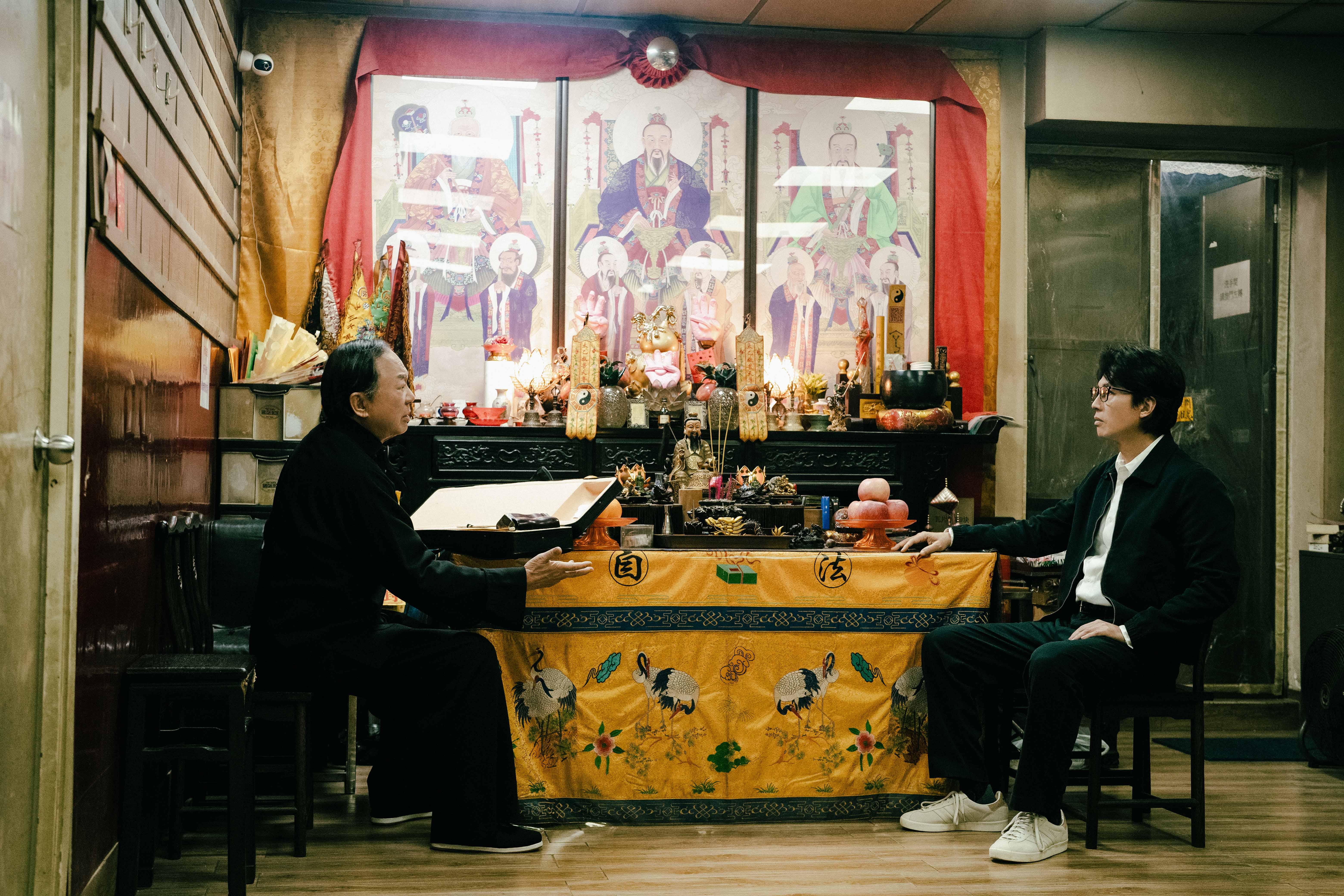
When serving the living doesn’t pay, why not make money from the dead? That’s the advice that’s given to former wedding-planner Dominic (Dayo Wong) in Anselm Chan’s touching spiritual drama The Last Dance (破·地獄), but after pivoting towards organising death rituals it’s the living he continues to serve. In many ways, Dominic stands at the borders of life and death, but he’s also an onlooker in a wider debate about tradition and modernity, what we inherit and what we choose to pass on, along with the departing soul of an older Hong Kong as the young flee abroad leaving those who stay behind to carry what may seem to them a burden too heavy to bear alone.

The irony is that though Dominic had been a wedding planner until the economic effects of the coronavirus pandemic killed his business, he is not in fact himself married and according to his long-term girlfriend Jade (Catherine Chau) did not see the point in a marriage certificate. One might infer that if he thought weddings were essentially meaningless exercises in vanity then he might feel the same way about funerals and his initial behaviour after taking over the funeral parlour run by Jade’s ageing Uncle Ming (Paul Chun) might confirm that suspicion. Not only does he start selling tacky trinkets as some kind of funeral favours, but makes a huge faux pas with an ostentatious stunt at his first funeral that causes upset and offence to the family. At the very least, it would have been useful to confirm how the deceased passed away before trawling their instagram account in an attempt to reconstruct their personality.

It’s this kind of insensitivity that irritates intensely grumpy Taoist priest “Hello” Man (Michael Hui) who brands Dominic an “amateur” believing that he’s only obsessed with money and intent on exploiting the grief of bereaved families. But on the other hand, Man is only really interested in the sanctity of ritual and doesn’t get involved with the living nor is he very sensitive to the emotional needs of those in the process of sending off a loved one. His entire life has been in service of the ancestors to the point that it’s soured his relationships with his two children. He has no faith in his son Ben (Chu Pak Hong) to inherit his position as a Taoist priest, while Ben resents being forced to inherit a burden he has no desire to carry. Daughter Yuet (Michelle Wai), perhaps ironically a paramedic, would have happily have carried it, but has endured years of being told that “women are filthy” and is prevented from inheriting these traditions because there is a taboo against women undertaking the role of a Taoist priest. The continual sense of rejection has left her with huge resentment towards her father and resulting low self-esteem that sees her engage in a no strings relationship with a married doctor.

Ultimately the film suggests that these traditions themselves are too large to bear, at least in their entirety, and do nothing more than crush and oppress the young. In part, they embody the spirit of an older Hong Kong which is itself in danger of fading away as seen in Dominic’s innovative new bespoke funeral planning services which to traditionalists might seem like they play fast and loose with ancient ritual, but the resolution that each Dominic and Man come to is that funerals are for those who remain behind and while Man liberates the souls of the dead Dominic does the same for the living in taking a more compassionate approach to dealing with those grieving a loss. Not only does his acceptance of the strange requests of a heartbroken mother (Rosa Maria Velasco) branded a “nutcase” and rejected by the local area bring her a degree of comfort, but his decision to allow what seems to be the same sex partner (Rachel Leung) barred from a funeral service the right to say goodbye albeit in secret demonstrates the necessity of doing right by both the living and dead.

As Man later says, in some ways he’s shown him how to do funerals and awakened him to the ways his oppressiveness in his adherence to tradition has prevented him from being a better father. His decision to wear a western suit for his own funeral might indicate a desire not to take this rigidity into the next world while hoping to liberate his children from the burden of tradition and show them that they were each loved and accepted even if it did not always seem that way. Which is not to say that the tradition should not be saved or that this is itself a funeral for the soul of an older Hong Kong, but only that if you let some of it, such as its inherent sexism, go it will be easier to carry when everyone carries it together. “Living can be hell,” Dominic admits and the funeral is a liberation both for the living and the dead. A touching yet surprisingly lighthearted meditation on life and death, what it comes down to really is that death is coming to us all but there’s no point spending your life worrying about it when you should just try to enjoy the dance until the music stops.


The Last Dance is in UK cinemas from 15th November courtesy of CineAsia.

UK trailer (Traditional Chinese / English subtitles)

Ready O/R Knot (不日成婚, Anselm Chan, 2021)

After two people have been together a significant amount of time, it might start occurring to others that really they ought to be married. Perhaps it even starts occurring to one or both of the two people too, but should you really make such a big decision based only on the fact that it’s the done thing rather than something you actively want to do? That’s a dilemma that presents itself to the young couple at the centre of Anselm Chan’s marital farce, Ready O/R Knot (不日成婚). While she would like a further degree of certainly in their relationship, he fears commitment along with a loss of freedom and authority as a family man with responsibilities perhaps greater than he feels he can bear. What ensues is an accidental battle of the sexes as each partner teams up with their respective allies to trick the other into going along with their plan. 

Guy (Carlos Chan Ka-Lok) and Ho-yee (Michelle Wai Si-Nga) have been together for five years after meeting at the wedding of Guy’s friend Grey Bear (Chu Pak Hong) and Ho-yee’s bestie Jen (Hedwig Tam Sin-yin). Grey Bear and Jen now have two children, but there is already an air of superficial duplicity in the relationship, Grey Bear using his friends to help him visit illicit sex services in Macao in rebellion against the tyranny of marriage. While the women quietly suggest to Ho-yee that it’s time they got married and left to his own devices Guy will continue to drag his feet, the guys are are determined to dissuade him viewing it somehow as a defeat of masculinity. They fear being tied down and mock other men for being in thrall to their wives while the women seem to fear that their men are duplicitous and unreliable and that therefore they need this additional level of protection. Nevertheless, the moment the marriage debate has begun, the relationship undergoes further strain and scrutiny even as each party descends into sometimes worryingly unethical levels of scheming in order to get their own way. 

It has to be said that for much of its run time, Ready O/R Knot reflects some extremely sexist, hopefully outdated social attitudes while making occasionally off-colour jokes about domestic violence and drugging one’s spouse without their knowledge or consent. At a low moment, Guy finds himself swallowing a morning after pill and thereafter gaining a sudden empathy for women on experiencing what he assumes is akin to period pain, lying on the sofa clutching a copy of Marie Claire while his friend who has also taken one in solidarity eats chocolate ice cream directly from the carton. Grey Bear thinks he was tricked into marriage by Jen’s plan to seduce him to forego protection thereby engineering an accidental pregnancy, which is why Guy has been avoiding intimacy with Ho-yee hoping to avoid being “trapped” in the same fashion. 

A perpetual man child, Guy resists the trappings of adulthood, reluctant to sell his two-person scooter and learn to drive a family car while remaining obsessed with football, his PS4, and hanging out with his sleazy, sexist friends. As the crisis intensifies, however, it leads Ho-yee towards a more progressive realisation, advised by her wise old grandmother (Siu Yam-yam) that she should learn to put herself first for a change and strive for her own happiness rather than that of her man. Guy begins to realise what he’s at risk of losing, but his late in the game epiphany isn’t in the end enough to repair the damage his diffidence has caused, returning agency once again to Ho-yee who has learned to ask for more, that her own hopes and desires are just as important as Guy’s, and that “marriage” is not in itself “the point”.

Buried underneath some of those sexist attitudes is a basic fear and tinge of toxic masculinity as Guy realises his reluctance is partly insecurity that he’ll fail as a husband, unable to “provide for” (apparently something he regards as a male responsibility, simultaneously mocking Grey Bear for living off his wealthy wife) Ho-yee or to make her truly “happy”. Only after undergoing a humbling and being willing to pursue the relationship on a more equal footing is he finally given a second chance, noting that Ho-yee should not be expected to sacrifice herself for their relationship to succeed while he has resolutely refused to invest in their mutual future by clinging to his individual past. Simultaneously cynical about the institution of “marriage” yet somehow eager to believe in the power of love and commitment, Ready O/R Knot takes a moment to make up its mind but in the end comes down on the side of equality in romance as its warring lovers eventually call a truce in rediscovering what it is that’s really important. 


Ready O/R Knot screens at Chicago’s Lincoln Yards Drive-in on May 2 as part of the 12th season of Asian Pop-Up Cinema.

Original trailer (English / Traditional Chinese subtitles)

Walk With Me (雙魂, Ryon Lee, 2019)

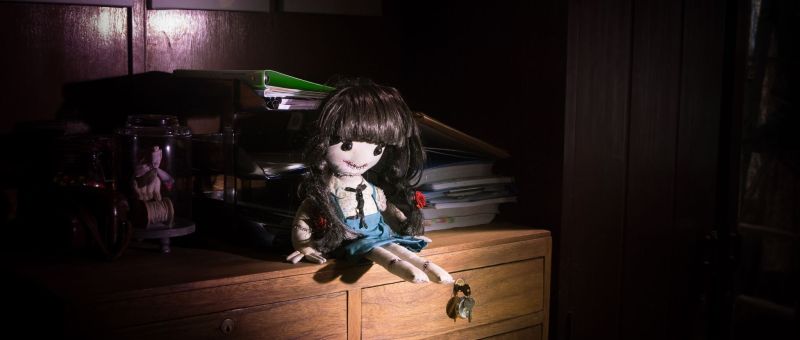
Walk with me still 3“I will be at your side for ever and ever” promises a creepy doll at the centre of Ryon Lee’s Walk with Me (雙魂, Shuāng Hún). It might be better to have the creepy doll on your side rather than on someone else’s but, all things considered, it’s a heavy thing to carry. At least, that’s how the heroine, Sam (Michelle Wai Si-nga), begins to feel when she starts to wonder if spilling all her anxieties onto the doll was the best idea seeing as now people around her seem to be “disappearing”. Is the ghost inside the doll angry and taking its revenge, or is it just trying to protect? Assuming, as Sam does, that ghosts even exist.

A 20-something woman still living at home with an abusive, gambling father (Richard Ng Yiu-hon) and a mother (Anna Ng Yuen-Yi) still grieving for her lost little boy, Sam has a dead end job in a factory where she is being sexually harassed by the male bosses and mercilessly bullied by the other ladies on the floor. Part of the reason Sam is being bullied is that a woman in her building was recently “possessed” by the spirit of a dead child which is judged more than a coincidence seeing as Sam’s mother maintains a shrine and makes offerings to her late son. The strange goings on only started when Sam’s family moved in around 18 months previously so the obvious conclusions have been drawn.

Intensely lonely and a perpetual victim, Sam later tells a childhood friend she unexpectedly reconnects with that she has grown so used to being bullied that she just accepts it and has given up. Dao Dao, the creepy doll, has been her only companion for most of her life and Sam has been used to using it as a kind of therapy device, something she can talk to freely without fear of recriminations. Harbouring the uncomfortable belief that the doll may be possessed by the ghost of her little brother who died before he was even born, she is starting to worry that her father’s constant attempts to get rid of Dao Dao by cutting it up or otherwise brutally disposing of it may have made it angry. To test her belief that Dao Dao is the cause of the unexplained strangeness in her life, she’s started carrying it around with her which, of course, seems to be making the danger spread – conveniently into her work life where most of the people she most hates are located.

Meanwhile, she’s reconnected with York (Alex Lam) – a guy who used to be her only friend when they were kids and bonded over being bullied (her nickname was “bony”, his was “chubby” – he’s been working out ever since). Like the doll, York promises that he’ll always be by her side to protect her from mean people and ghosts too – he doesn’t believe in them but if Sam does then he’ll go with it. Pretty soon, York has moved into the spare room in their building and is doing his best to stand by Sam but the strangeness of events keeps escalating while Sam’s mental state fluctuates. She keeps thinking that she sees the ghost of a little girl in pig tails, but remains more afraid of bad people than of supernatural threat. Even her boss’ little daughter seems to be a budding psychopath, posed eagerly with her iPhone in front of the microwave in which she’s placed an adorable little puppy just to watch it go pop.

York tells Sam that if she wants to beat the darkness she’ll have to become a part of it, apparently meaning that she’ll need to become as strong as it is in order to stave it off. Events however point towards her interpretation, that she’ll eventually have to turn to the dark side in trying to stand up for herself or else remain a perpetual victim. It may very well be irrational to blame a doll for a crime spree, but then nobody seems to think getting possessed by a ghost, or trying to keep one in your home like pet, is anything out of the ordinary. In any case the ghosts Sam is most afraid of are the ones within herself, the ones that hint at her own duality, and embody all of the rage, despair, and guilt of which she is unable to speak. Dao Dao will indeed “always” be with her, only perhaps not quite in the way she thinks. A psychologically acute tale of painful repression and low self esteem, Walk With Me is less the story of a creepy doll and its supernatural revenge than of a lonely soul’s gradual fracturing under the intense pressure of constant rejection and wilful misuse.


Walk with Me screens on 4th July as part of the 2019 New York Asian Film Festival