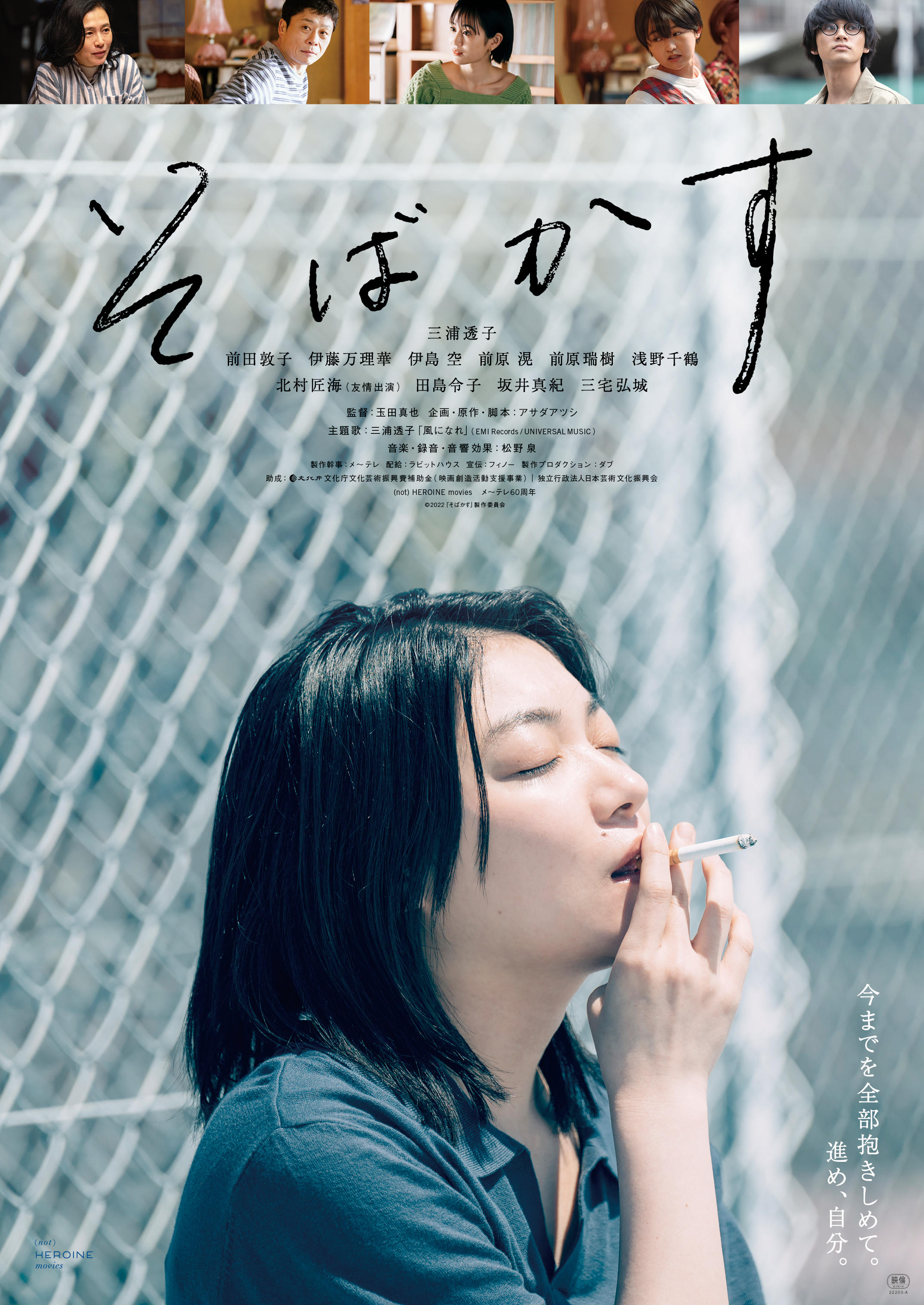
I Am What I Am (そばかす, Shinya Tamada, 2022)

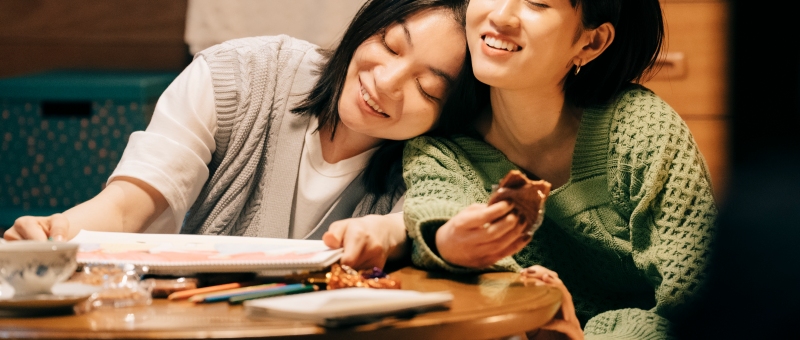
Part way through Shinya Tamada’s empathetic social drama I Am What I Am (そばかす, Sobakasu), the heroine’s sister remarks that she wishes she could live as if the world did not concern her as she assumes her sister does. In many ways, it’s an incredibly ironic statement because Kasumi (Toko Miura) finds herself constantly at the mercy of a world which refuses to acknowledge her, certain that the truth she offers freely of herself must be a lie or at least a cover for some other kind of shame. 

The fact is that Kasumi is asexual and has no interest in love or dating. As the film opens, she appears to be on some kind of awkward double date but seems isolated and aloof, as if deliberately left out of a conversation as she will be several times throughout the course of the film because of the centrality of “romance” in most people’s lives. She’s constantly asked about her “type”, or what she finds attractive in a man with a clear presumption of heteronormativity in also in play. Not wanting to get into it, Kasumi finds herself just nodding along offering some vague, stereotypical comment to smooth things over. When one of the men does strike up a more interesting conversation to which Kasumi can enthusiastically contribute, he doesn’t even listen to her but abruptly gets up to chase her friend. She ends up going to ramen bar on her own to decompress before running the gauntlet at home between mum, sister, and grandma who are all very confused by her lack of interest in marriage. 

Kasumi’s mother tells her that she has to get married someday, unable to accept that not to do so is also valid choice. Whether she does this because she feels embarrassed to have a 30-year-old unmarried daughter fearing that it reflects negatively on her parenting, is genuinely worried that Kasumi is lonely and unable to progress romantically because of shyness, or has a practical concern that she’ll be alone when she’s old, remains unclear though it does seem that her quest to marry Kasumi off is more to do with herself than her daughter. But with grandma apparently having had three divorces of her own, Kasumi’s sister Natsumi (Marika Ito) paranoid her husband’s cheating on her while she’s pregnant, and the parents’ marriage strained by her father’s depression it’s only natural she may wonder what’s so great about marriage anyway. 

In any case, though Kasumi constantly tells people quite directly that the issue is she has never experienced romantic desire and is fine the way she is they refuse to believe her assuming either that she is shy, stubbornly rebellious, or as her sister later suggests, gay. “No one would judge you for that,” she spits out less than sympathetically even while quite clearly judging her for this, as if it denies a basic fact of biology as unthinkable as someone claiming not to breathe the air. Her friend, Yashiro, who introduces her to a new job at a kindergarten, reveals that people did indeed judge him for being gay which is why he’s returned to his hometown. Not even he really believes Kasumi though eventually develops a sense of solidarity with her when her attempt to update Cinderella for a new, more inclusive generation leaves her both exposed and humiliated with a conservative politician visiting the school remarking that he thinks “diversity” is all very well but it only confuses the children and perhaps they should learn about it after developing “solid values”. 

The irony is that Kasumi is remarkably unjudgemental and accepting of all those around her, Yashiro remarking that he just knew she would be a safe person to disclose his sexuality to while she also bats nary an eyelid on reconnecting with a middle school friend (Atsuko Maeda) who turns out to have become a famous porn star in Tokyo only keen to protect her from the unwanted attention of star struck teenage boys and the accusatory eyes of those around them. Each of her attempts to find platonic friendship also fails because sooner or later romance gets in the way. She hits it off with the guy at the omiai marriage meeting her mother tricked her into attending because he also reveals that he has no desire to date or get married, but as much as she thinks she’s found a kindred spirit it turns out that his issue was a more conventional reluctance to enter a serious relationship. When he develops feelings and she has explain again that she meant it when she said she had no interest in romance he takes it personally, insisting that she’s lying and resentful that she doesn’t find him attractive. An attempt to get flat with a female friend also hits the rocks when she decides to get back together with an ex instead. 

When questioned about dating activities and giving the unoriginal answer of the cinema, Kasumi had mentioned a fondness for Hollywood remake of the War of the Worlds starring Tom Cruise. She later elaborates on her statement that she likes the way he runs to explain that in most of his other films, Tom Cruise is usually running towards something but in this one he’s just a regular guy running from trouble which something she can relate to because she’s been running away all of her life too. Yet the unexpected discovery that her mini stand over Cinderella might have done some good after all along with encountering someone who might indeed be a kindred spirit gives her the courage to start moving forward, less concerned by the world and more confident in herself. An empathetic tale of one woman’s attempt to live her life the way she wants frustrated by a conformist society, Tamada’s gentle slice of life drama is a refreshingly empathetic in its fierce defence of its heroine’s right to chase happiness in the way that best suits her.


I Am What I Am screened as part of this year’s Nippon Connection.

Original trailer (English subtitles)

Images: ©2022 “I am what I am” film partners
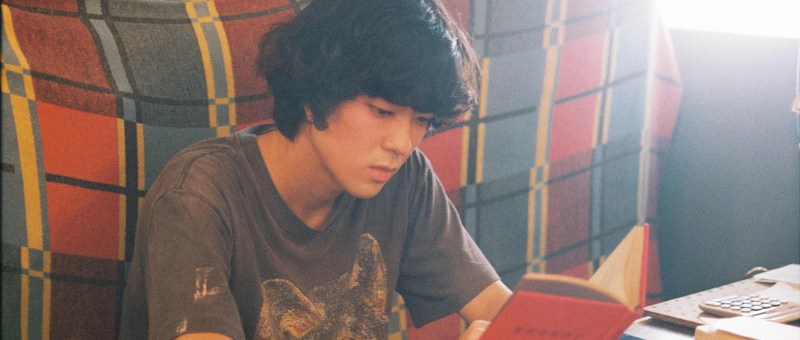
Over the Town (街の上で, Rikiya Imaizumi, 2019)

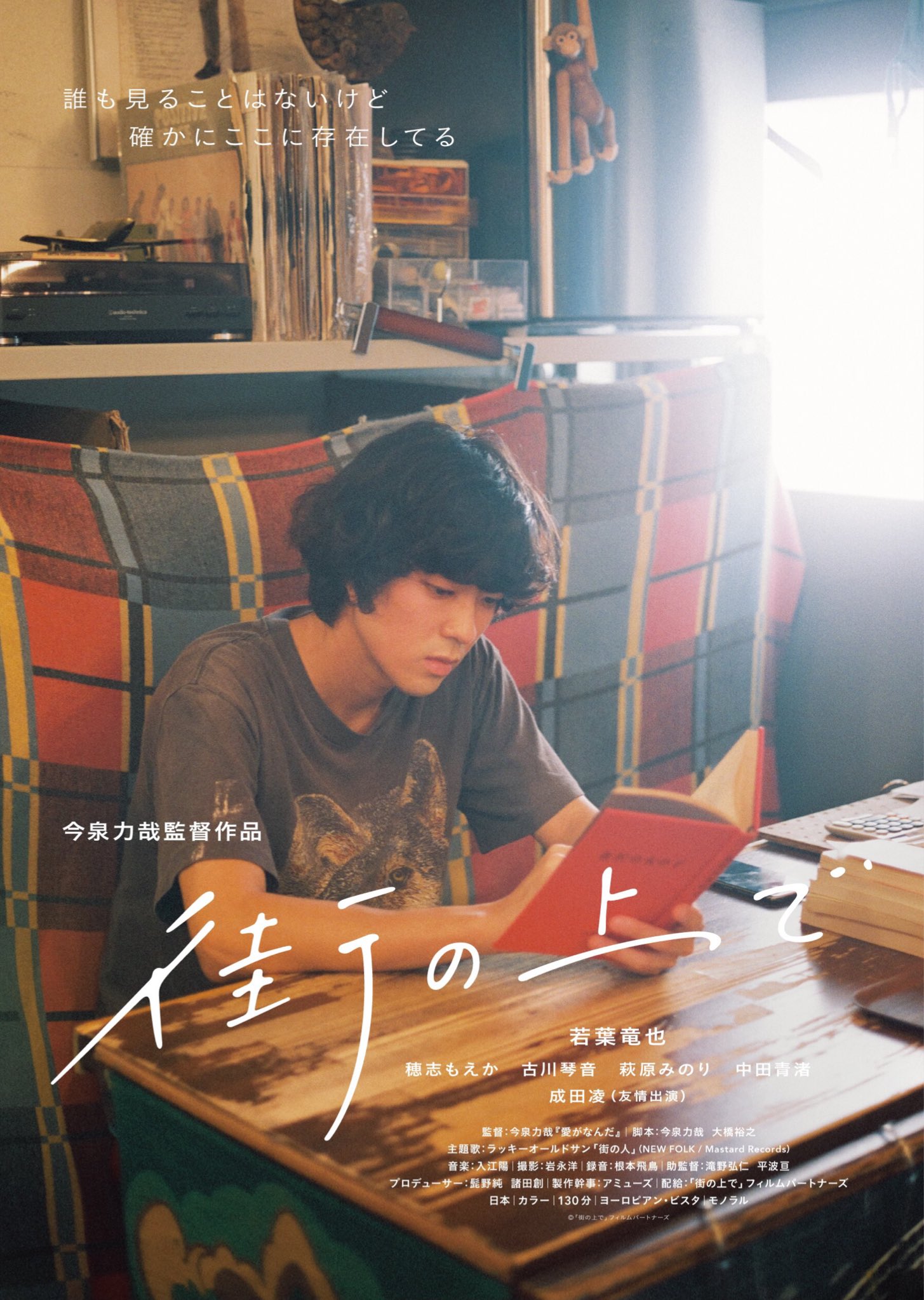
Frustrated youngsters chase an unrealisable dream of idealised romance in Rikiya Imaizumi’s ode to Shimokitazawa, Over the Town (街の上で, Machi no Uede). For the moment at least known as the bohemian, avant-garde artists quarter of the contemporary capital beloved for its slightly retro quality replete as it is with narrow lanes and period buildings, Shimokitazawa is also a place of constant change but as the hero later points out even if “parts change and disappear that doesn’t mean they never existed”. Nevertheless, he seems to be marked by a particular anxiety, as do many of his age struggling to make meaningful connections in an ever shifting world. 

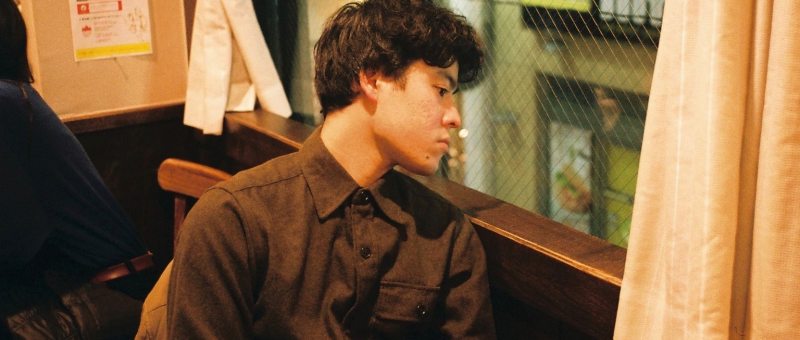
Ao’s (Ryuya Wakaba) world begins to crumble when he’s unexpectedly dumped by his beloved girlfriend, Yuki (Moeka Hoshi), on her birthday. Unceremoniously telling him that she’s met someone else, Yuki rationalises that breaking up is the only option but Ao tries to resist only for her to tell him that he can go on deluding himself that he still has a girlfriend but from now on she’ll be hanging out with someone new. From then on, Ao seems to be surrounded by frustrated couples and worryingly outdated ideas of romantic politics such as those of the students who drop into the vintage clothing shop where he works. Ao assumes they’re a couple, but a row slowly brews as the girl, Asako, declares herself bored with helping the guy, Shigeru, try on clothes that turn out to be for the purpose of impressing a different girl altogether despite knowing that Asako fancies him. Eventually Shigeru makes a highly inappropriate suggestion, almost akin to a bet, that if the woman he has a crush on rejects him he’ll deign to dating her even though Asako is “a distant second” in his heart. The shocking thing is that Asako agrees, a slightly mournful look in her eyes as she finally reaffirms that she really hopes it works out with the other girl. 

Throughout the exchange during which Ao looks on as an awkward bystander, it becomes increasingly difficult to see what’s so great about Shigeru. Meanwhile, not even Ao comes off particularly well, struggling to deal with his breakup and refusing to accept Yuki has moved on. So hung up on her is he that she eventually ends up contacting the barman at his favourite haunt to ask him to have a word, explaining that it’s inappropriate to go on texting your ex even if she doesn’t reply. Meanwhile, he finds himself at the centre of romantic missed connection, captivated by a sad woman at a concert who gives him a menthol cigarette he keeps in his ashtray as a kind of talisman for the rest of the picture. Infinitely awkward, he talks himself out a potential date with the cute girl at his favourite used bookstore (Kotone Furukawa) by asking an inappropriate question, later doing something similar to a woman (Seina Nakata) with whom he makes a more platonic connection as they each reflect that for some strange reason it’s much easier to open up to someone you have no romantic interest in. 

Perhaps that’s why a melancholy policeman keeps stopping random people in the street to ask their advice on his peculiar romantic dilemma in having inconveniently fallen in love with his “niece” (by marriage and the same age as he is, so maybe it’s “OK”, he’d like to think). Shimokitazawa, which Ao rarely leaves, is indeed a small world, the various strands of his romantic entanglements strangely connected from a young woman’s unrequited longing for her sumo wrestler childhood sweetheart to a TV actor’s (Ryo Narita) troubled love life and a young film director’s (Minori Hagiwara) attempt to deflect her own sense of romantic disaffection. Just as Yuki used another man as an excuse to break up with Ao, Ao finds himself recruited as a fake boyfriend to help a young woman shake off a controlling ex whose refusal to accept the relationship is over in the absence of another man skews even darker than his own signalling perhaps like that first vintage shop exchange the dangerously outdated sexual politics which continue to underpin modern dating. Perhaps boring love is the real kind of fun, comfortable and balanced marked by true connection and mutual vulnerability rather than a giddy anxiety. A stubborn holdout where everything’s secondhand in a continual circulatory process of exchange and return, Shimokitazawa is the kind of place where love finds you even if it takes a while to wander on its way. A charming ode to this timeless yet ever-changing district, Imaizumi’s quirky dramedy keeps the neurosis of young love on the horizon but suggests that romance, like a well baked cake, keeps much better than you’d think when cooled.


Over the Town screened as part of the 2021 Osaka Asian Film Festival.

Original trailer (no subtitles)

The Hardness of Avocado (アボカドの固さ, Masaya Jo, 2019)

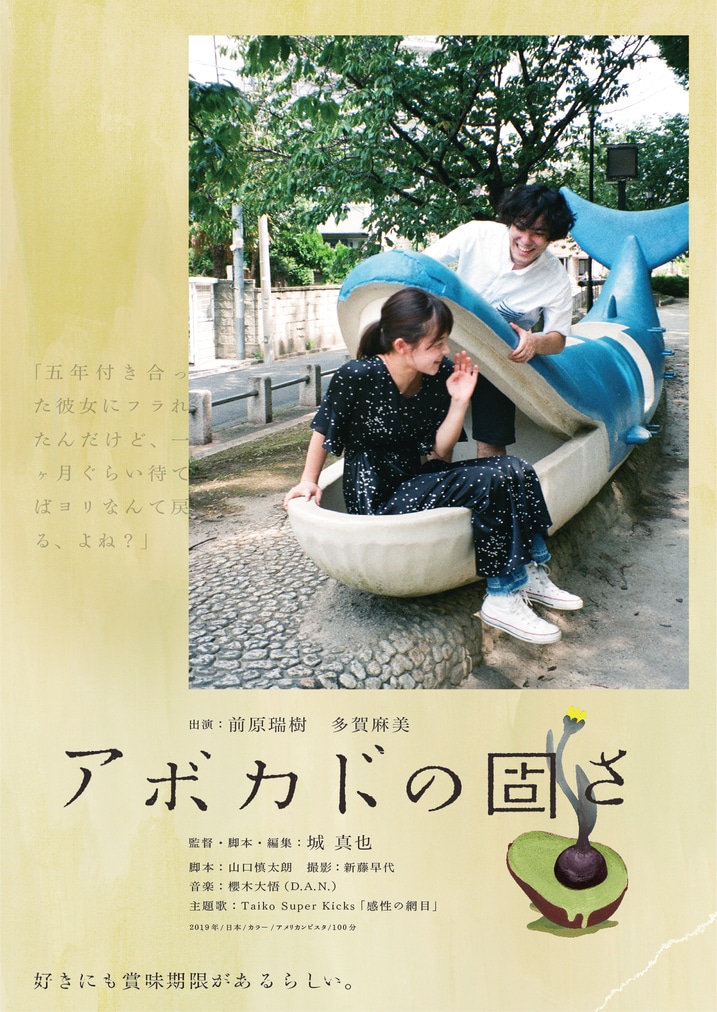
“Reality might be bitter, but at least your coffee is sweet” according to the “gloomy” voiceover performed by aspiring actor Mizuki Maehara in Masaya Jo’s The Hardness of Avocado (アボカドの固さ, Avocado no Katasa). In many ways a tale of quarter-life inertia and youthful denial, Jo’s indie drama finds its struggling hero looking for the sweet spot, trying to grab the avocado at the opportune moment between rock hard and squishy mess but floundering in world which seems both continually confusing and perhaps inherently unfair. 

At 24, Mizuki (Mizuki Maehara) is a jobbing actor living with his sister (Zuru Onodera) in a small apartment. He’s been in a committed relationship with Shimi (Asami Taga) for the last five years and is already thinking about moving in together, asking her to help him pick out a sofa-bed after their date to the movies where she fell asleep and he ended up meeting a fan who recognised him from a previous film. Shimi, however, seems irritated, eventually answering Mizuki’s well meaning question about what she’d most like to do right now with the answer “break up”. In a pattern which will be repeated, Mizuki reacts somewhat petulantly, walking off with a “fine then” only to end up regretting it later. Unable to accept that Shimi is really ready to move on, he decides to give her (and himself) one month before, he assumes, they’ll get back together having each grown as people during their time apart. 

This baseless optimism and mild sense of self-centred entitlement are perhaps the very things that Mizuki is supposed to be outgrowing even as he struggles to get over Shimi. Having dated for five years, Mizuki took his relationship for granted, assuming it was settled and destined to go on forever. Shimi’s declaration comes as a complete surprise, shocking in its abruptness though we can see that she seems irritated by him and that it may be more than a temporary bad mood. She tells him that she needs “freedom” and time to herself, but it seems equally likely that, from her point of view, the relationship has simply run its course. Looking through his mementos, Mizuki finds a 20th birthday card from Shimi that promised she’d always be around to encourage him, but relationships entered in adolescence rarely survive the demands of adulthood and she, it seems, is after something more while all Mizuki seems to want is more of the same. 

Moping about the city, he engages in borderline misogynistic banter with his friends, occasionally irritating even them in his resentment towards a nerdy guy who has finally got a girlfriend. He finds himself applying for a job in a convenience store to make ends meet between auditions seated next to a pair of students who roll their eyes, mocking him for his lack of success as a man in his mid-20s still part-timing just like them. Meanwhile, he develops an unwise fondness for a woman he meets on a shoot, chatting her up at the afterparty but saying the quiet part out loud as he confesses his plan to have a fling while fully believing he’ll be getting back together with Shimi when the month is up. Despite the fact she has also told him she has a boyfriend, he suddenly declares his love to her, once again petulantly put out by her irritation as she points out how inappropriate he’s been seeing as all he’s done is talk about Shimi.

Shimi’s mother (Kumi Hyodo) can’t understand why she’d break up with someone as “nice” as Mizuki, and Mizuki is indeed “nice” if obviously imperfect, an earnest sort of man working hard to achieve his dreams, but she apparently wanted something less superficial, a more ”passionate and loving relationship” now that she’s outgrown adolescent romance. Mizuki is once again surprised when she brushes off his romantic overture, petulantly walking home while beginning to accept that something has indeed changed. Finally fastening the screws on his new chair (in lieu of the bed) he begins to regain some solo stability, a little more self-sufficient at least even if he still has some some growth to achieve on his own. A whimsical tale of millennial malaise and self-centred male entitlement, The Hardness of Avocado is a gentle advocation for learning to let go when something’s past its best while accepting that sometimes all you can do is set yourself right and start again. 


The Hardness of Avocado screened as part of Camera Japan 2020.

Original trailer (no subtitles)