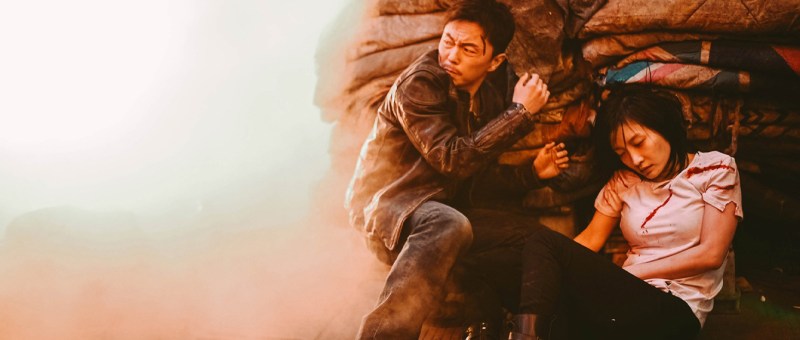
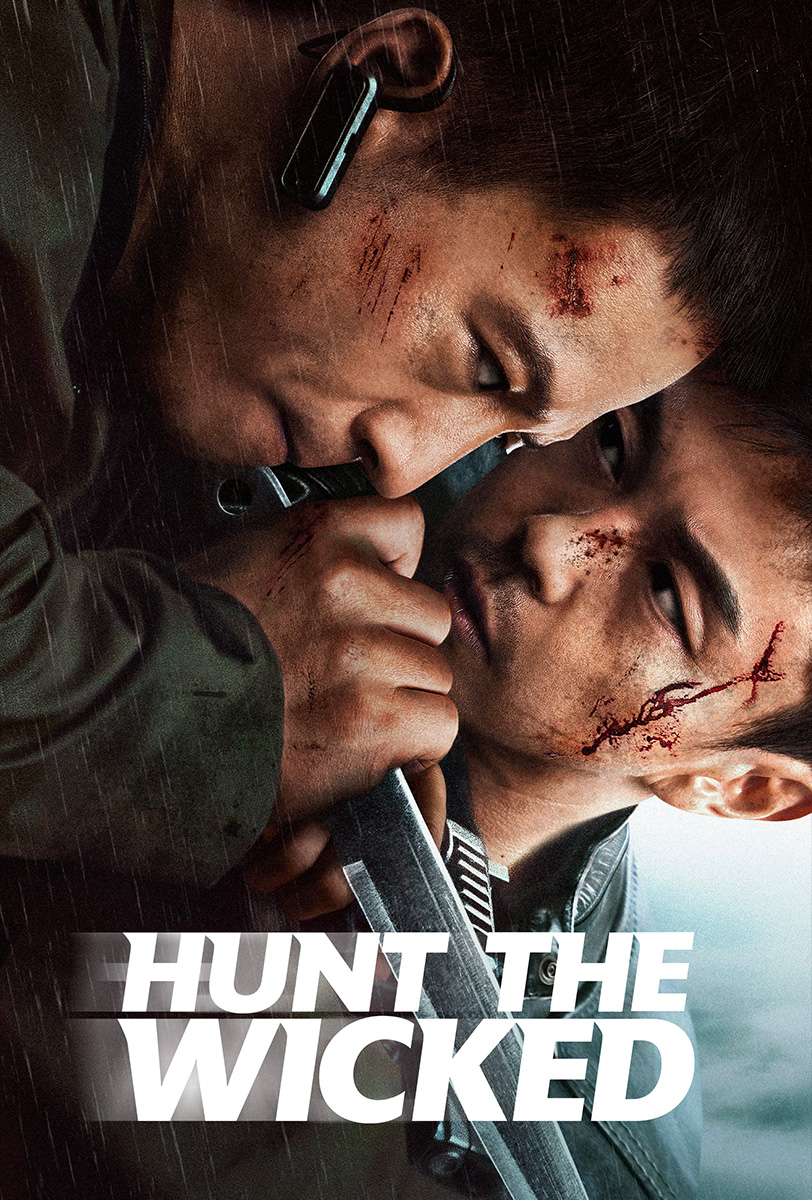
Hunt the Wicked (缉恶, Chris Huo Suiqiang, 2024)

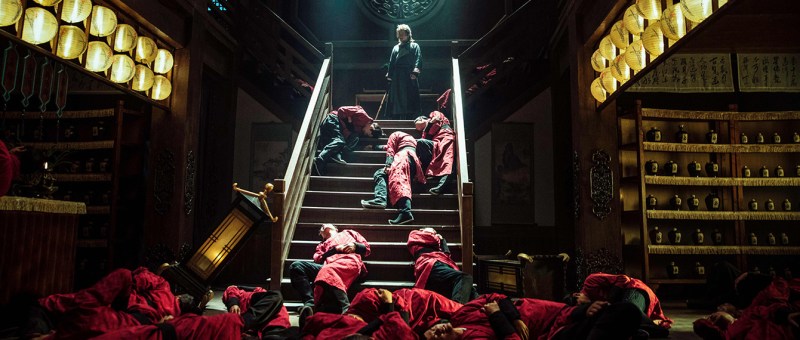
Once again set in a fictional South East Asian nation, Chris Huo Suiqiang’s Hunt the Wicked (缉恶, jī è) neatly unites the contemporary obsessions of political corruption and drugs as an earnest cop discovers he has an unexpected ally in a man he first assumed to be a crook. Consequently, and perhaps subversively, he realises that these twin problems can only be rooted out from outside of the official justice system and the rules of conventional law enforcement.

The opening sequence sees Wei Yunzhou (Andy On) and his wife Na Mei (Hong Suang) go after a chemistry professor who has secretly been working on a new techno drug called Ice Spider for a kingpin named King Long whom they have yet to identify. Making off with the designer drugs encased in ice, Wei Yunzhou is later confronted by hero cop Huang Minjin (Tse Miu) who takes the credit for their recovery. The city of Wusuli had been regarded as drug free as Huang and his colleagues had already rounded up all of the local dealers, but in fact, despite what Huang’s superiors instruct him to say in the press conference, the drugs were manufactured locally and that there’s another gang in town who are now running the entire operation alone.

A subplot about cleaning up the sewers to make the water drinkable hints at the embedded corruption of the society in which the mayor, who ran on a Duterte-esque anti-drugs platform, is later revealed to be the mysterious kingpin King Long and in effect merely used his position to take out the competition. Wei’s wife Na Mie later also hints at a persistent sense of elitism and inequality as Huang refuses to believe her claims that people are being abducted and used as drug mules against their will by insisting that it’s impossible for large numbers of people to be going missing under the radar. Pointing out most of them were from the slums, Namie explains the truth is they simply weren’t missed and the system so little values the lives of those like her from poor areas that it doesn’t bother to account for them. 

Though Wei first seems like he wants to take over the drugs business in Wusuli, it soon turns out that he as something else on his mind and like Huang is pursuing a noble mission in trying to get revenge against King Long. Realising they share a common goal, the two men generate an uneasy alliance as they team up to expose the mayor and take down not only Kin Long but all the other gangs who are working with him while setting free all the people he stole from the slums and getting rid of the source of corruption before mayor Song Pa can be elected as governor making him otherwise unassailable.

Huo ups the action stakes while making use of top stars Tse Miu and Andy On one of whom fights with a sledge hammer on a chain and the other a retractable knife on a wire. In some ways, these two weapons represent their approaches to justice, with Huang pictured on TV using the sledge hammer to smash through the ice and expose the drugs. He makes a noise and does everything in the open. Huang is so old school, he can’t even work the new printer. Wei meanwhile is a silent killer slicing and dicing with his knife on a string while otherwise using it to craft salmon sashimi at every conceivable opportunity. He’s pursuing his own kind of justice in the shadows and playing a long game that makes it unclear whose side he’s really on until it becomes obvious that he doesn’t really care about drugs or even really the corruption. He’s motivated solely by vengeance that is tinged with righteousness in that like Huang he is also trying to get justice for his men who were also casualties in this duplicitous war on drugs. 

As usual, the film ends with a roundup of the punishments all the guilty parties were given after being caught and arrested to ram home the message that both corruption and drugs are definitely bad things that no one should have anything to do with. It does however accidentally endorse the hero’s brand of rogue justice even if each of them also pay a price for stepping outside of the accepted rules of law enforcement. Then again, the fates of each of the female characters attached to the three leading men leave a sour taste in the mouth in rendering each of them mere plot devices in the guys’ machinations. The same could be said for the awkward characterisation of female police officer Tianyu (Gu Jing) as the squad’s maternal figure in her obsession with getting everyone their favourite dinner while simultaneously at the centre of a love triangle between boxing cop Li (Anson Leung Chun Yat) and the intense Huang. Nevertheless, the film more than makes up for any shortcomings in its high-octane action sequences and impressive production values.


Hunt the Wicked is released on Digital in the US on May 20 courtesy of Well Go USA.

Trailer (English subtitles)
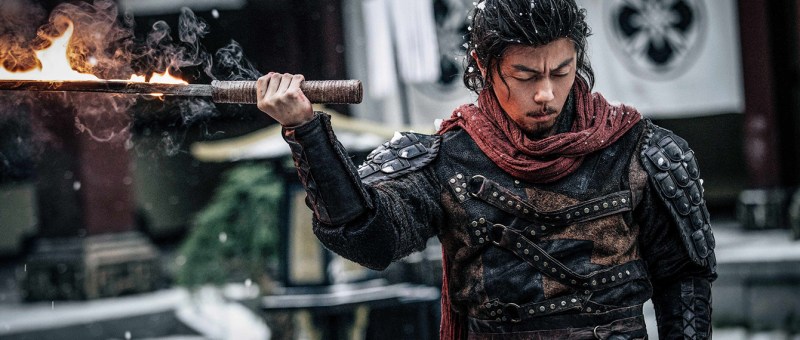
Eye for an Eye 2: Blind Vengeance (目中无人2, Yang Bingjia, 2024)

The wandering swordsman returns but this time to a world much more in disarray than when we last left it in the sequel to the surprise hit streaming movie An Eye for an Eye: The Blind Swordsman, An Eye for an Eye 2: Blind Vengeance (目中无人2, mùzhōngwúrén 2). Less origin story than endgame, the film finds bounty hunter Cheng Yi living in another dusty town and working for Youzhou Prefecture to bring in wanted criminals dead or alive but finally forced into the role of protector for a little girl dead set on vengeance against this world.

Richer in scope and ambition, this time around we’re given a little more backstory about the former lieutenant who is now using his martial skills to enact justice in an otherwise lawless society if only when he’s paid to do so. One of his targets turns out to be a man who served under him in the war and is disillusioned about its aftermath. “What did we gain in the end?” he asks, justifying himself that he may have killed a few people and taken some money but he was only claiming what he was owed. The argument doesn’t wash with Cheng Yi, but the war also took his sight from him and he too is a disillusioned exile from his home in Chang’an living a nihilistic life of drink of killing on the behalf of a distant and compromised authority. 

His wilful isolation may be why he is not originally motivated to help the orphan little girl Xiaoyu (Yang Enyou) who says her mother starved to death during their escape. Xiaoyu had tried to protect her little brother who seemed to be mute only to see him trampled beneath the hooves of a debauched nobleman who had just murdered an entire family because they had dared to tell on him to his father. The family had been planning to flee at dawn but Li Jiulang (Huang Tao) got there first. Xiaoyu witnessed his crime after sneaking in to steal the bread they were baking and was then freely given to her by a young woman Li later killed, further stirring her desire for revenge. Cheng Yi ends up saving her from Li on two separate occasions, though the second time it isn’t overly clear whether it was intentional or a drunken coincidence. Nevertheless, he continues to counsel her against pursuing her revenge, especially towards a man like Li who is wealthy and connected and has no compunctions about killing children. 

Li is also seen to abuse drugs and have a sadistic streak though no real explanation is given for his cruelty save that he is evil and has enough money and power to do as he pleases. No one except the little girl is going to put a bounty out on him, as she naively tries to do by selling her brother’s silver whistle to get a poster mocked up though Li simply offers a double bounty on her and it seems plenty are desperate enough to consider killing a defenceless girl to get their hands on it. Perhaps it’s this that eventually moves Cheng Yi’s heart as she continues to insist on an impossible justice even at the cost of her own life. Like him, she no longer has any family nor any place to call home and is displaced within the chaos of late Tang. Through bonding with her, he begins to rediscover his humanity and considers leaving the world of the bounty hunter behind to become an “ordinary person” in Chang’an to raise her away from this nihilistic way of life.

Building on the success of the first film, Yang Bingjia makes the most of an increased production budget to fully recreate the atmosphere of a bustling frontier town while continuing the Western influence as Cheng Yi hunts down wrongdoers in an otherwise lawless place. The connection between the cynical swordsman and his tiny charge has genuine poignancy as he continues to caution her against the path of revenge, reminding her that it is a continuous cycle and one act of vengeance merely sets another in motion, yet finally deciding that he must teach her what he knows anyway because like him she has no other way to live. Still, what he envisions for her is a peaceful life in Chang’an, far away from the chaos of the frontiers in a world that may not quite exist anymore but may yet come again if not, perhaps, for all.


Eye for an Eye 2: Blind Vengeance is released in the US on Digital, Blu-ray & DVD March 4 courtesy of Well Go USA.

Trailer (English subtitles)
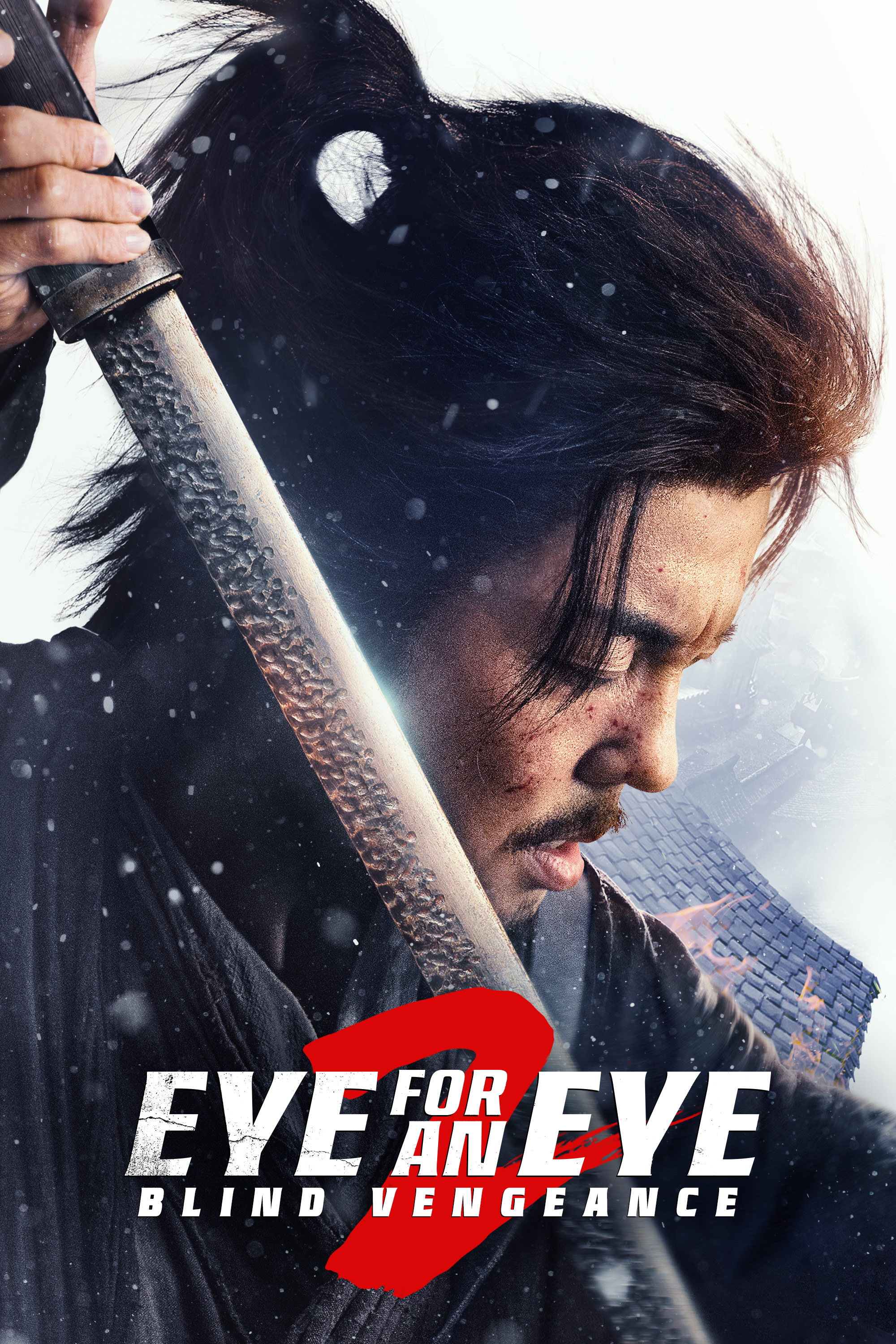
Eye for an Eye: The Blind Swordsman (目中无人, Yang Bingjia, 2022)

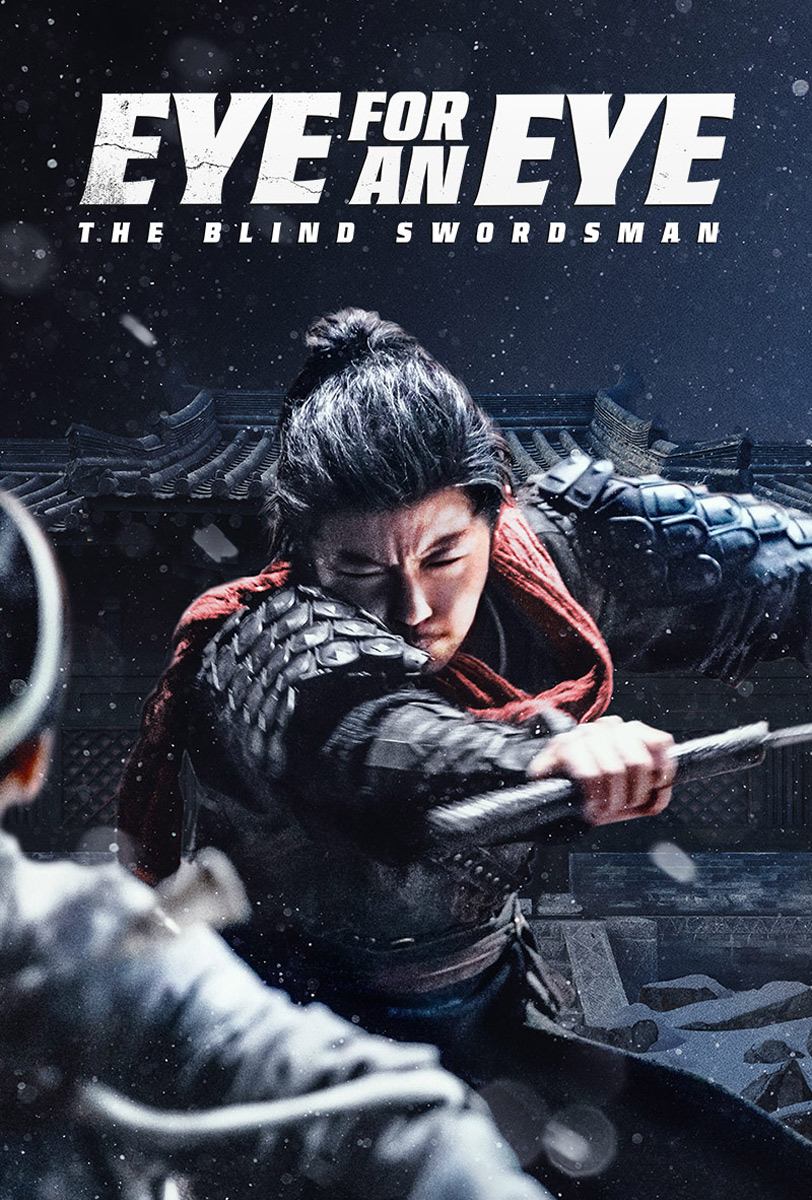
A blind swordsman takes revenge against the evils of feudal society in Yang Bingjia’s impressively helmed action drama, Eye For An Eye: The Blind Swordsman (目中无人, mùzhōngwúrén). Set in the “lawless” society of the Tang era following the Tianbao rebellion, the film has a western sensibility with its twanging guitar score and dusty roads not to mention jumped up gangsters trying to get a foothold in the legitimate order simply because they have become too powerful and no one is willing to resist them. 

Ni Yan (Gao Weiman), a young tavern woman who lost her brother and husband when her wedding was attacked by the Yuwen clan asks for nothing more than “justice” but that’s something no one can give her. Wandering swordsman Cheng Yi (Mo Tse) who’d taken a liking to her because she offered him some of her wine and even gave some to his horse reports the crime to the local magistrate after claiming the bounty on a fugitive, only he tells her directly that he will do nothing because the Yuwen clan have already moved beyond justice and not even he will touch them. 

In a way, Cheng is depicted as a failed revolutionary and his blindness a symbol his despair in a world he no longer cares to see. A bounty hunter by trade, his work is facilitated by old comrade Lady Qin (Zhang Qin) who, in contrast to him, seems to live a cheerful life repairing musical instruments while much loved in the town around her. Though they pretend to be saving money for an operation to restore Cheng’s sight, their line of work is perhaps cynical in taking advantage of the times while accidentally outsourcing a justice the authorities can no longer provide in the weakened Tang society. The Yuwen have infiltrated most institutions and cultivated relationships with important people that allow them to ride roughshod over ordinary citizens who are now completely at their mercy.

There might be something quietly subversive in these references to a corrupt and authoritarian institution which tries to brand Ni Yani the criminal in her pleas for justice, insisting that she admit to killing her brother herself in resentment of his criminal past while he is also hunted by the Yuwen because he knows to much about their dodgy dealings including raiding tombs to get precious gems to use as bargaining chips in a dynastic marriage negotiation. Cheng Yi did not originally want to get involved, himself too cynical and having given up hope of “justice” in this “lawless” society, but finds himself sympathetic towards Ni Yan because of the kindness she showed him and the obvious suffering her ordeal has inflicted on her. 

In a sense, his eyes are opened to the injustice of the society around him to which he had been wilfully blind if ironically accepting that he will never see again. He alone is willing to stand up to the Yuwen while even within their ranks petty resentments are growing as a princeling grows ambitious to escape his own oppression at the hands of an authoritarian brother who berates him for his weakness. 

Despite the budgetary issues which often plague straight to streaming cinema, Yang’s elegantly lensed drama brings a real sense of place to the dusty provincial towns where Cheng plies his trade along with the ornate elegance of the realm of Lady Qin whose flowing robes belie her military past. Drawing inspiration from the western as well as Japanese genre classics such as Yojimbo the film presents a world in decay in which the wandering swordsman becomes a moral authority, delivering justice if for a price. The irony is that it isn’t money which opens his eyes, but the reclaimed ability to see with his heart in deciding to help Ni Yan in her quest to avenge the deaths of those close to her. A series of excellently choreographed and well-shot action scenes along with Yang’s post-modern take on the material lend this tale of wandering swordsmen and feudal abuses a sense of the legendary that hints at further adventures for wandering sword for hire Cheng Yi bringing his own brand of justice to a lawless place. 


Eye for an Eye: The Blind Swordsman is out in the US on Digital, blu-ray, and DVD on 28th November courtesy of Well Go USA.

US trailer (English subtitles)

The Thousand Faces of Dunjia (奇門遁甲, Yuen Woo-ping, 2017)

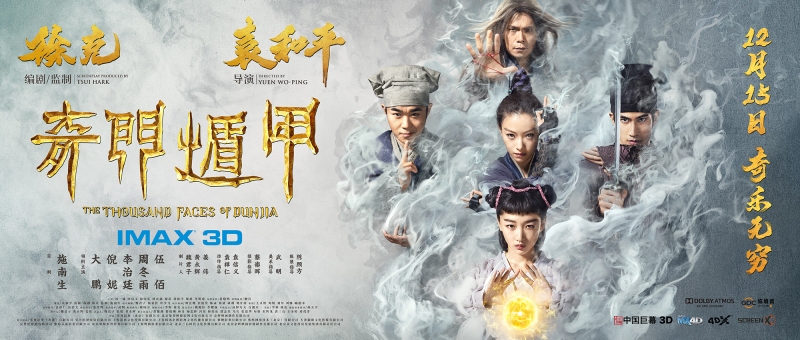
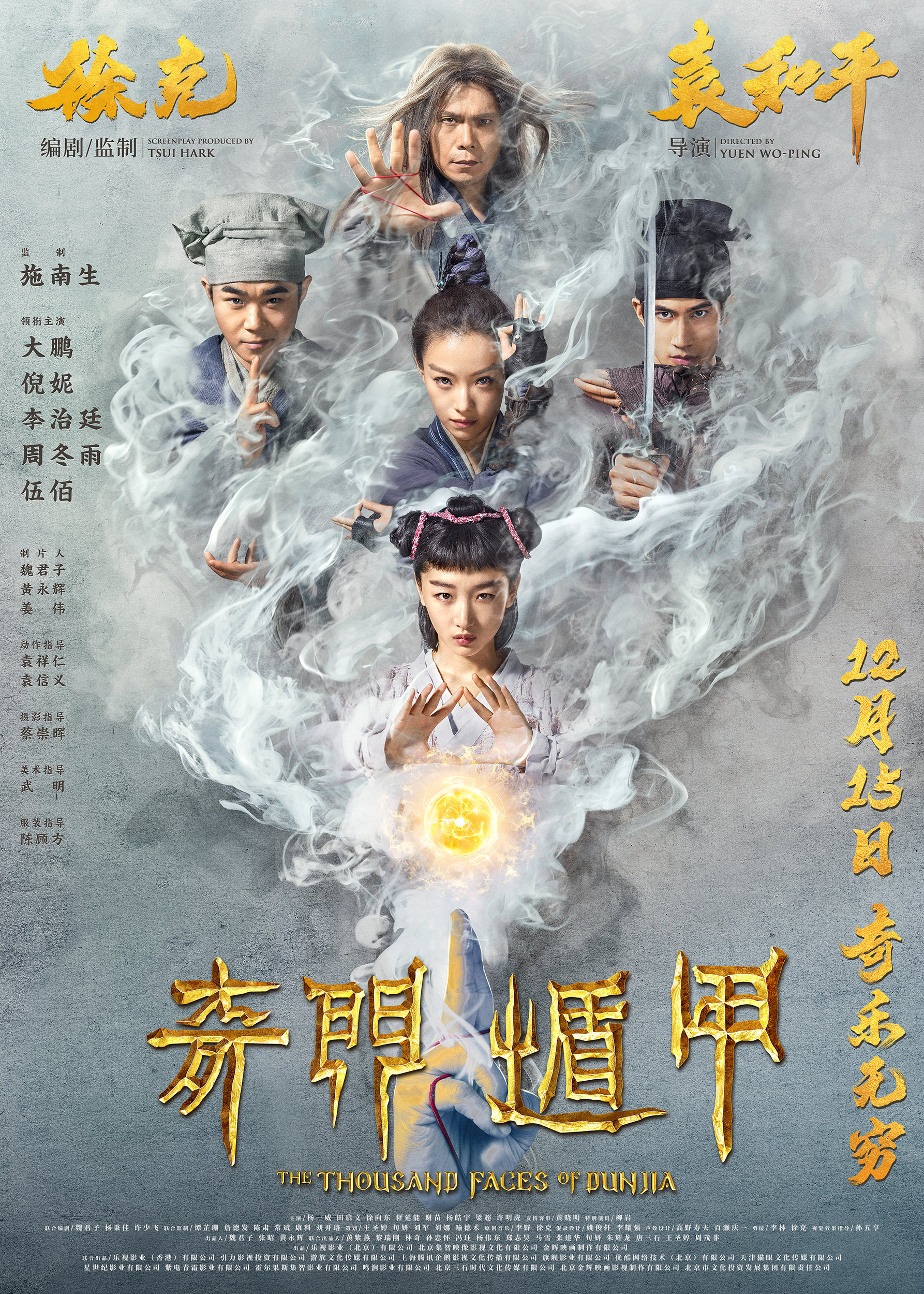
Thousand faces of Dunjia poster 6The Dunjia has a thousand faces. Or maybe not. Yuen Woo-ping teams up with Tsui Hark for a “remake” of Yuen’s 1982 classic The Miracle Fighters retitled The Thousand Faces of Dunjia (奇門遁甲, Qíméndùnjiǎ), only it isn’t much of a remake at all and simply pinches the idea of supernaturally-charged heroes fighting for justice which, it has to be said, is hardly original or at least not enough to justify Tsui’s claim that the two films are linked by a desire to push the boundaries of the wuxia film. Nevertheless, Yuen does his best to craft a tale of brotherhood and rebirth for his noble warriors newly re-energised by a life-giving phoenix, but struggles under the weight of an otherwise incoherent narrative.

So, in fantasy medieval China, the land is beset by a stealth invasion from otherworldly powers. Our heroes, the Wuyin clan, are the last line of defence against the increasingly powerful alien marauders. In order to beat them, they need to unlock the mysterious power of Dunjia, which, according to a prophecy, can only be done by a very specific person. Accordingly, the clan’s “big brother”, Zhuge (Da Peng), has gone out looking. Unfortunately, not everyone is convinced by what he brings back – a young woman he found in some kind of institution who has a childish, ethereal quality and a surprising ability to suddenly morph into a giant colourful phoenix.

Yuen opens with a brief discussion of Qimen and the Dunjia which seems to have something to do with interdimensional co-ordinates but truth to tell it turns out not to be very important. The main thrust is that weird alien beings have been living amongst us for centuries and are quietly waiting for us to die out so that they can inherit the Earth. Only some of them have lost patience. The aliens might be about to get their hands on a world destroying device, something the Wuyin are desperate to prevent but the aliens keep using their abilities against them and their prospects look increasingly hopeless.

With the narrative in disarray, Yuen relies on the camaraderie between the members of the Wuyin to carry the film (which it largely does). There’s history between the de facto leader Dragonfly (Ni Ni) and healer Zhuge despite the Wuyin’s increasingly silly code which forbids affection between comrades and punishes it with mutual slapping. Accordingly the pair spend most of the film bickering while conflicted by the arrival of romantic rivals in the form of the mysterious Circle (Zhou Dongyu) and an earnest young policeman, Dao (Aarif Lee), who keeps stumbling on the activities of the Wuyin but has his memory wiped to prevent the truth getting out. Despite the plot holes and inconsistencies, the Wuyin are an intriguing bunch who do their best to earn our sympathies even whilst shouldered with a series of incomprehensible events.

Incomprehensibility is not necessarily a problem in a wuxia film, in fact it can sometimes be an asset, but the concept is continually let down by over reliance on poor quality CGI and bland production design. Yuen opens with an engaging, if surprisingly cutesy, sequence of Dao and Dragonfly enjoying a (re)meet cute while chasing a giant three-eyed fish through the streets of an ordinary city, but despite the resurgent beauty of Circle’s colourful phoenix the cartoonish battles between soulless alien mecha giants largely fail to convince.

Cartoonish though it may be, there is charm in Dunjia’s lowbrow humour as the gang bicker amongst themselves and engage in a comically romantic tug of war. Yuen breaks the tale into a series of chapters as if mimicking an old fashioned wuxia serial and there is certainly a strain of meandering fairytale nonsense in the film’s refusal to pick a direction and follow it even if it takes things too far with an all too abrupt ending designed only as an inelegant hook for an upcoming sequel. Ironically enough, Dunjia is a film about coming “full circle” and then being reborn anew like a phoenix from the flames but pushes itself too far in threatening to set the wheel turning again just when it ought to be hitting its stride. Flawed but intermittently entertaining, the first adventure fo the Wuyin clan is off to a rocky start but sheer charisma alone may be enough to ensure repeat custom.


Currently available to stream in the UK (and possibly other territories) via Netflix.

Original trailer (English subtitles)