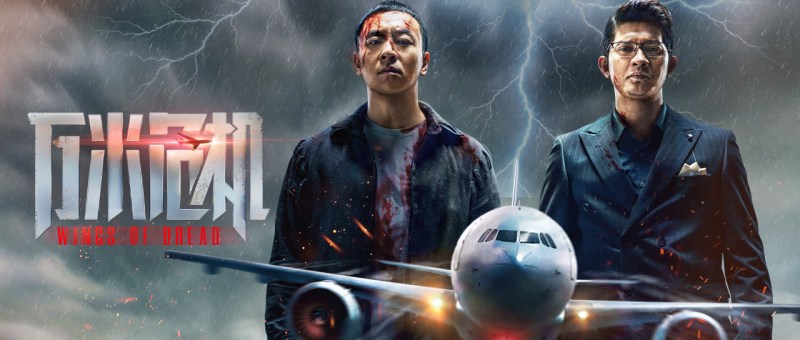

Wings of Dread (万米危机, Ashton Chen Xiaolong & Qin Pengfei, 2026)

Perhaps surprisingly, aeroplanes seem to be dangerous places in recent Chinese cinema. From the hardware failure of The Captain to Oxide Pang’s hijacking drama High Forces, something always seems to go seriously amiss when it comes to air travel. Streaming actioner Wings of Dread (万米危机, wàn mǐ wēijī) is the latest in this growing genre and once again carries a mildly patriotic message in praising the Chinese air police who are willing to put their lives on the line to ensure passenger safety.

Then again, former cop Chaoyang (Ashton Chen Xiaolong) may feel a little bit inferior after giving up his police career to become an aeroplane security officer in order to spend more time with his girlfriend, air stewardess Dong Lu (Nita), who also gave up her opportunity to work abroad. Dong Lu has evidently had enough of Chaoyang’s grumpy behaviour and moved out their flat, though he is carrying a ring he still hopes to give to her. Rushing to the airport in an attempt to convince her to move back in before her next flight, Chaoyang becomes distracted by a drug user and decides to take down their entire gang first. From a certain point of view, his priorities may be all wrong, though the main problem in the relationship seems to be that Chaoyang expects Dong Lu to be in stewardess mode all the time by being constantly cheerful and treating him like a prince without seeing her as a real person who needs to be able to switch off and relax after a long shift.

This relationship issue is never resolved in a concrete way but only through the action movie trope of Chaoyang’s proving his heroism by saving Dong Lu when the plane they’re both on after he flew to her destination to win her back is hijacked by a criminal gang. One of China’s most wanted has been arrested in a fictional South East Asian nation and is being escorted back to the mainland. Among the passengers, there are both undercover members of the gang planning to break him out and plain-clothes security officers ready to deal with any trouble. Slightly confusingly, the gang have also brought a bomb and are threatening to blow everyone up if the captain doesn’t fly to their chosen destination, which at the very least seems counterproductive and a little bit reckless on behalf of the crooks.

That the bomb got on board along with a lot of 3D printed plastic guns can be attributed to lax security procedures at the airport in the fictitious South East Asian nation, but the point is that this plane is well protected by Chinese air police. Villain Paquet (Iko Uwais) sneers that Chinese police are “pathetic”, which proves quite irritating to Chaoyang who immediately bounces back to win the fight and prove that they are willing to do whatever it takes to ensure passengers reach home safely even at the cost of their own lives. The passengers too are unusually co-operative after being made aware of the bomb threat, giving up their bags to form a barrier and even joining in with the final fight against the bad guys. 

Qin, who is known for his skill in shooting action sequences in confined spaces, does some of his finest work in a fight between a female officer and gang member set entirely within a toilet cubicle, while otherwise making full use of the environment as passengers grab tray tables to attack the hijackers who equally throw opponents over shelving units and smash their heads into arm rests. Casting top international action star Iko Uwais as the villain adds a degree of prestige unusual for a streaming film, though choosing to dub his voice seems like an odd decision, especially as all his dialogue is in English. Nevertheless, the film is impressively put together and largely transcends its streaming origins in scope and ambition despite the looseness of its plot and occasionally awkward attempts at humour. 


Wings of Dread screens 21st August as part of Big Bad Film Fest.

Trailer (no subtitles)
The Butcher’s Blade (手遮天, Liu Wenpu, 2026)

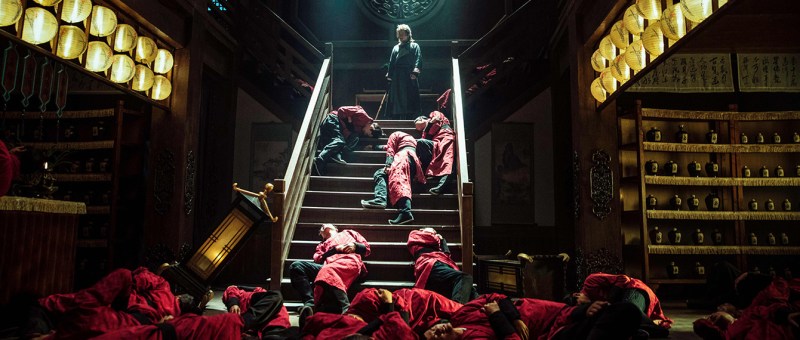
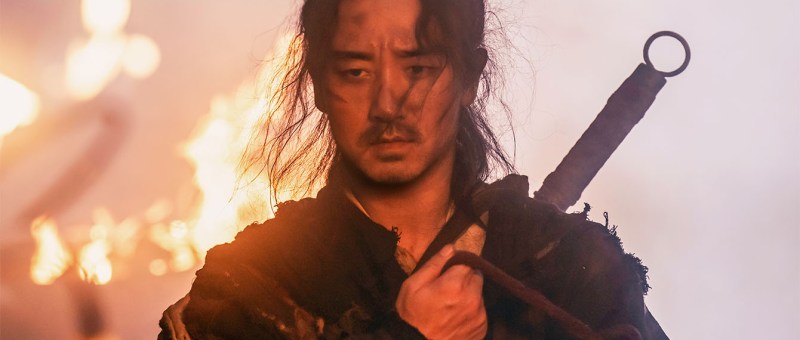
Laws are meaningless if no one’s prepared to enforce them. According to the opening titles of The Butcher’s Blade (手遮天, shǒu zhē tiān), the Song had a complicated criminal code with lots of rules to be followed. However, in the real world, they only really apply to certain people. Xue Buyi (Liu Fengchao) has been a constable for 10 years but has become a bitter, broken man who feels himself to be a coward for remaining complicit with this corrupt regime.

A courtesan reports the local coffin maker for rape and violence having slashed her face and thereby not just physically and psychologically harmed her, but destroyed her livelihood. The courtesans complain they’ve reported him before and that no one helps them because they’re not the sort of people who matter in this world. Buyi announces he’ll get them justice and does indeed arrest the coffin maker, but the villagers then turn against him. The coffin maker is well connected and Buyi’s boss lets him go. The courtesans are unsurprised but disappointed, while Buyi’s self-loathing only deepens. His pride and masculinity are further eroded when he tries to help a woman selling noodles that he’s fond of fend off an exploitative landlord who’s been upping the rent in an attempt to coerce her into a sexual relationship. Wei simply asks him for the money instead, but Buyi has nary a penny to his name. Deliberately humiliating him, Wei makes Buyi drink flasks of soy sauce in exchange for reducing Erniang’s (Gao Weiman) debt which Buyi does until Erniang puts a stop to it.

Given all that, it’s easy to see why he might turn to the dark side and allow this world to remake him in its image. The war inside him is between his upbringing as a pupil of Eagle Hall, a brutal police training facility designed to churn out thugs who heartlessly carry out the will of the powers that be, and his natural compassion which baulks at the brutal torture and murder expected of him as a law enforcement official. Buyi is directly contrasted with former colleague Li Zhen (Yuan Fufu) who is keen to get him back on side and working for Eagle Hall, while Buyi struggles with himself over the degree of moral comprise he’s comfortable accepting to be one of Huang’s elite policemen. By remaining complicit, he hopes he can get the money to save Erniang’s noodle stall and protect her from Wei, but she quite obviously can’t stand what Buyi is becoming and didn’t envisage having brutal policemen as her main clientele.

There seems to be a subversive allusion to the present day in the world that surrounds Buyi which is filled with corrupt officials and supported by a rotten regime that policemen like him prop up with thuggish authoritarianism, serving the interests of the powerful over those of the people. Buyi finds himself at the centre of conspiracy when he takes a job guarding government funds intended for disaster relief in the hope of getting extra money to help Erniang only to be accused of robbing the place himself. Recruited by former mentor Huang (Chunyu Shanshan), he witnesses his indifference to the disaster victims who have largely fallen into exploitation at the hands of corrupt landowner Wei. Huang plans to sacrifice them for his own personal gain by framing them as a revolutionary army led by a rival official seeking to overturn the regime which he will then heroically surpress. 

Buyi, however, has to decide whether he can really continue going along with all this or rise up to resist it. Liu Wenpu frames Buyi’s intervention in heroic terms in which he’s surrounded by an eerie blue glow and the sound of firecrackers as he finally decides that he can’t let people like Huang continue with their authoritarianism and indifference towards the welfare of the people. His rebellion, however, seems to make himself something of an outlaw condemned to a life of wandering while ultimately pointless. Huang was just one many and now others are trying to use his fate as a means of advancing their own position. The elegantly choreographed fight scenes take on a symbolic quality as Buyi progresses towards his showdown with Huang while battling himself and his inner conflict, torn between the what it takes to succeed in a world as corrupt as this and his essential humanity before finally coming down on the side of justice for all rather than continuing to serve the interests of an exploitative elite.


The Butcher’s Blade is released on Digital in the US on May 4 courtesy of Well Go USA.

Trailer (English subtitles)

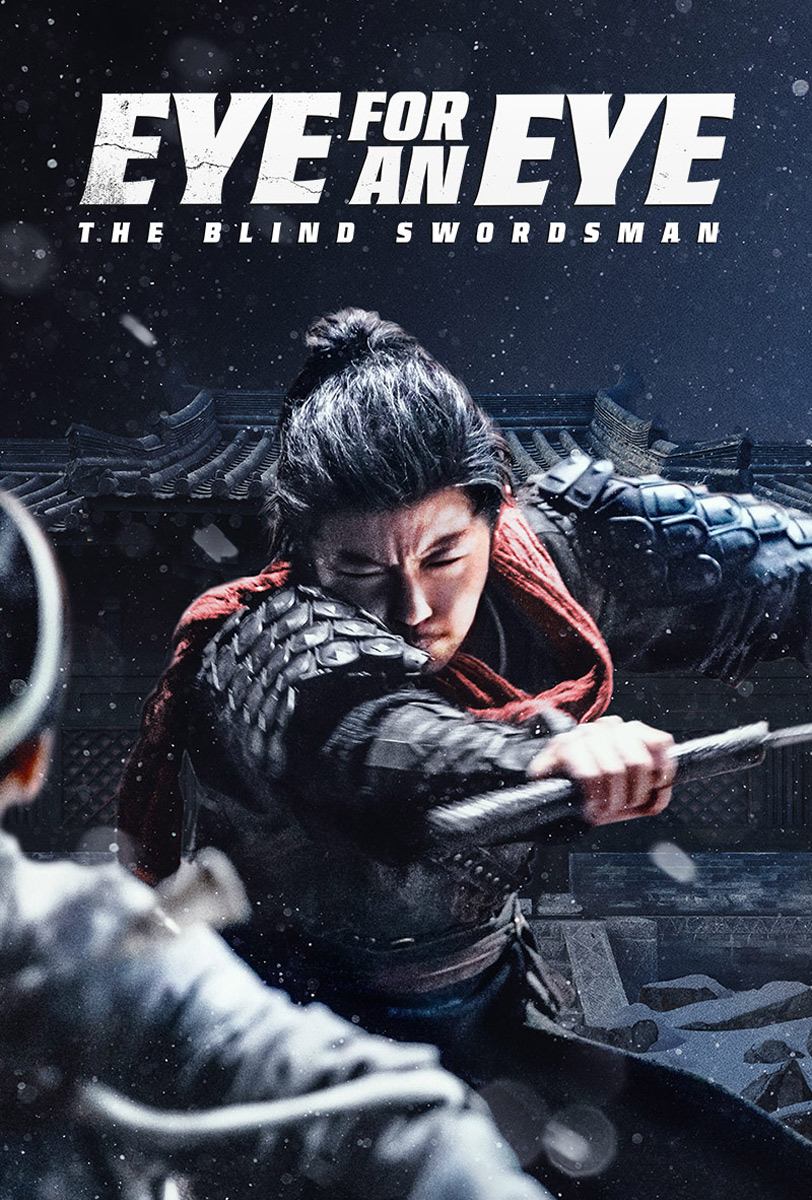
Eye for an Eye: The Blind Swordsman (目中无人, Yang Bingjia, 2022)

A blind swordsman takes revenge against the evils of feudal society in Yang Bingjia’s impressively helmed action drama, Eye For An Eye: The Blind Swordsman (目中无人, mùzhōngwúrén). Set in the “lawless” society of the Tang era following the Tianbao rebellion, the film has a western sensibility with its twanging guitar score and dusty roads not to mention jumped up gangsters trying to get a foothold in the legitimate order simply because they have become too powerful and no one is willing to resist them. 

Ni Yan (Gao Weiman), a young tavern woman who lost her brother and husband when her wedding was attacked by the Yuwen clan asks for nothing more than “justice” but that’s something no one can give her. Wandering swordsman Cheng Yi (Mo Tse) who’d taken a liking to her because she offered him some of her wine and even gave some to his horse reports the crime to the local magistrate after claiming the bounty on a fugitive, only he tells her directly that he will do nothing because the Yuwen clan have already moved beyond justice and not even he will touch them. 

In a way, Cheng is depicted as a failed revolutionary and his blindness a symbol his despair in a world he no longer cares to see. A bounty hunter by trade, his work is facilitated by old comrade Lady Qin (Zhang Qin) who, in contrast to him, seems to live a cheerful life repairing musical instruments while much loved in the town around her. Though they pretend to be saving money for an operation to restore Cheng’s sight, their line of work is perhaps cynical in taking advantage of the times while accidentally outsourcing a justice the authorities can no longer provide in the weakened Tang society. The Yuwen have infiltrated most institutions and cultivated relationships with important people that allow them to ride roughshod over ordinary citizens who are now completely at their mercy.

There might be something quietly subversive in these references to a corrupt and authoritarian institution which tries to brand Ni Yani the criminal in her pleas for justice, insisting that she admit to killing her brother herself in resentment of his criminal past while he is also hunted by the Yuwen because he knows to much about their dodgy dealings including raiding tombs to get precious gems to use as bargaining chips in a dynastic marriage negotiation. Cheng Yi did not originally want to get involved, himself too cynical and having given up hope of “justice” in this “lawless” society, but finds himself sympathetic towards Ni Yan because of the kindness she showed him and the obvious suffering her ordeal has inflicted on her. 

In a sense, his eyes are opened to the injustice of the society around him to which he had been wilfully blind if ironically accepting that he will never see again. He alone is willing to stand up to the Yuwen while even within their ranks petty resentments are growing as a princeling grows ambitious to escape his own oppression at the hands of an authoritarian brother who berates him for his weakness. 

Despite the budgetary issues which often plague straight to streaming cinema, Yang’s elegantly lensed drama brings a real sense of place to the dusty provincial towns where Cheng plies his trade along with the ornate elegance of the realm of Lady Qin whose flowing robes belie her military past. Drawing inspiration from the western as well as Japanese genre classics such as Yojimbo the film presents a world in decay in which the wandering swordsman becomes a moral authority, delivering justice if for a price. The irony is that it isn’t money which opens his eyes, but the reclaimed ability to see with his heart in deciding to help Ni Yan in her quest to avenge the deaths of those close to her. A series of excellently choreographed and well-shot action scenes along with Yang’s post-modern take on the material lend this tale of wandering swordsmen and feudal abuses a sense of the legendary that hints at further adventures for wandering sword for hire Cheng Yi bringing his own brand of justice to a lawless place. 


Eye for an Eye: The Blind Swordsman is out in the US on Digital, blu-ray, and DVD on 28th November courtesy of Well Go USA.

US trailer (English subtitles)