Drive Into Night (夜を走る, Dai Sako, 2022)

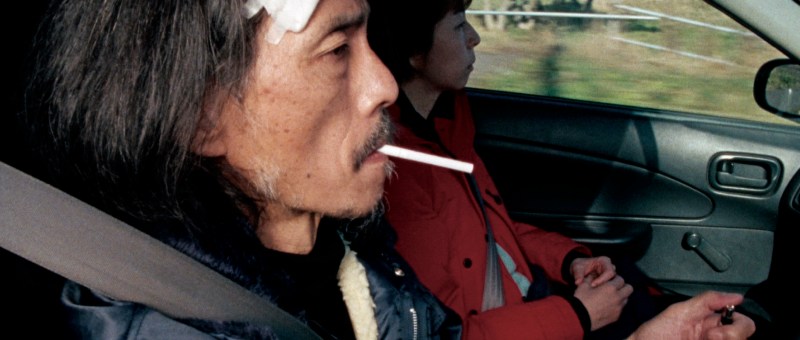
Small-town futility leads to tragedy when two frustrated scrapyard workers attempt to cover up a crime in Dai Sako’s dark psychological drama Drive into Night (夜を走る, Yoru wo Hashiru). Oppressive in its atmosphere, the film situates itself in a world of constant humiliations where life is cheap and reputation everything. Its heroes seek escape from their disappointing existences through consumerism and extra-marital affairs, but no longer see much of a future for themselves while even the dissatisfying present seems to be ebbing away from them. 

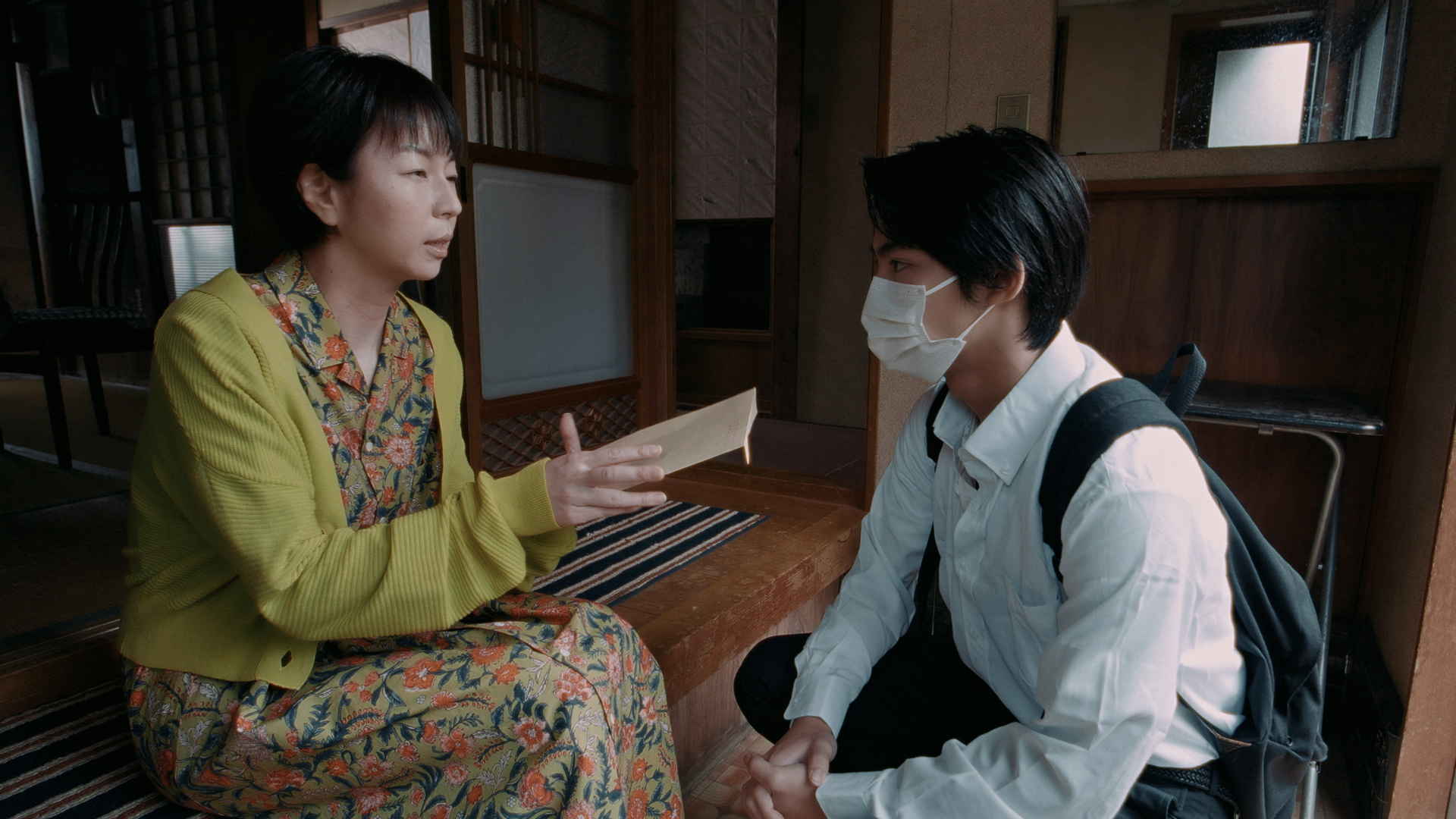
Asked what makes his life fun, Akimoto (Tomomitsu Adachi) replies “not much”. A classic mild-mannered guy, he’s regarded as the office dogsbody and at the beck and call of his abusive manager, Hongo (Tsutomu Takahashi). When a new female sales representative, Risa (Ran Tamai), visits the yard, Hongo runs Akimoto down in front of her apologising for having such a useless employee who does nothing other than drive around all day. His sense of masculinity is also wounded by an older colleague who tries to sell he and his friend Taniguchi (Reo Tamaoki) some kind of aphrodisiac but reflects that Akimoto is too “tame” to ever make use of it, while even Taniguchi needles him about being a 40-year-old man who’s never had a girlfriend and still lives at home with his parents. In many ways he’s the classic “nice guy”, but there’s also something a little dark about him that makes it seem as if he may snap any moment. That may have been what happened when he and Taniguchi went to a bar with Risa shortly after she’d been coaxed into a works drink with Hongo. Something obviously went dreadfully wrong in the night, because Risa is soon reported missing and both Akimoto and Taniguchi begin behaving oddly. 

It is true enough that both men, and many of their colleagues, also consider themselves to be on the scrap heap. Akimoto is tempted to quit his job to put distance between himself and the scrapyard but reflects that he’s unlikely to find another job even if quitting so suddenly might arouse suspicion as Taniguchi warns him. Meanwhile, he knows the yard is in trouble. They have him running round doing cold calls but returning empty handed, while office workers are constantly fielding calls about unpaid invoices. His irritation is palpable when he spots the boss, Miyake, leaving one morning soon after he arrives, loading expensive golf clubs into his fancy car. Hongo bullies him, but later says he does it out of respect because Akimoto is the only one who bothers to do his job properly. But then again even Hongo concedes that hard work gets you nowhere. Most of his paycheques go on child support and he often sleeps in his car in the car park. The only reason he’s not been fired is that he has a personal connection to Miyake.

Even so, this fairly tenuous relationship does not really explain why Miyake goes to such great lengths to protect Hongo when he becomes the prime suspect in Risa’s disappearance and is framed by Taniguchi and a guilty Akimoto. It may be in a way that he really does think of the company as a kind of family, as perhaps do the loan sharks who keep calling them after Akimoto ends up in debt having joined a weird cult encourages him to think there is nothing wrong with him and the fault is all with an unaccepting world. The cult leader tells him that he is “full of anger”, which perhaps he is. This being in the immediate aftermath of the coronavirus pandemic, Akimoto is often questioned about still wearing a mask long after most people have abandoned them and part of the reason is as an attempt to hide his true self. After joining the cult he takes it off, but soon adopts another disguise in dressing in Risa’s clothes as his mental state continues to decline. 

Taniguchi meanwhile makes an effort to continue with his “normal” life which includes visiting his mistress. Unbeknownst to him, his wife Misaki (Nahana) is also having an affair with the consequence that neither of them is able to fully devote themselves to their young daughter Ayano who eventually ends up in a potentially dangerous situation because of her parents’ various transgressions. Nevertheless, despite discovering that her husband may have been involved in a murder it’s Misaki who decides that he has to “protect our family” above all else. Amid all of this, Risa becomes almost literally lost before later being unceremoniously dumped like so much scrap. After framing Hongo, Taniguchi tries to convince Akimoto that Risa isn’t their problem anymore as they each struggle to hang on to the previously disappointing realities they had been so desperate to escape. 

It has to be said that aside from the misogyny of its worldview, there is also an uncomfortable quality in the film’s characterisation of a shady Chinese businessman who of course knows how to get rid of bodies along with the fact his chief associate is Korean-Japanese gangster. Though the film’s strongest character may in fact be the Filipina bar hostess, Gina (Rosa Yamamoto), on whom Akimoto fixes most of his hopes who defiantly tells the cult leader that she’s happy with her life and has no reason to join his organisation, Akimoto exposes himself by telling her she’s wrong because he doesn’t see why a “foreigner”, “a woman”, who works in a “dirty” bar, could be happy or averse to being “saved” by him. Still he insists that he hasn’t “changed”, it’s the world that’s changed around him. Taniguchi later says something similar, and they each may have a point. In any case, this world is largely one of resentment and futility in which there is no release. Sako captures the drudgery of his protagonists lives with crushing naturalism but also perhaps little sympathy.


Original trailer (no subtitles)
Heaven’s Story (ヘヴンズ ストーリー, Takahisa Zeze, 2010)

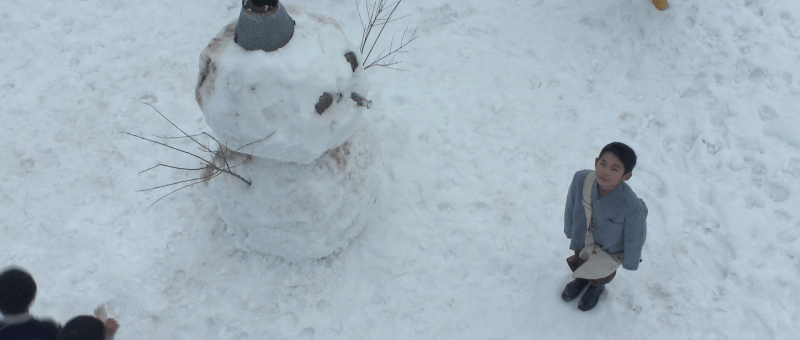
“When your family’s murdered, aren’t you entitled to happiness?” remarks a bereaved husband trying to move on from tragedy to a similarly bereaved little girl who is determined not to. “I don’t think so”, she coldly replies, dragging him back into a dark world of hate and vengeance. At that time perhaps best known for his career in pink film, Takahisa Zeze’s 4.5-hour epic Heaven’s Story (ヘヴンズ ストーリー) weaves a tale of interconnected hurts born of violence and its legacy, parental betrayals, and irreconcilable loss. The only victory is survival, but it’s a prize none of us will win. The best we can hope for is continuity, and perhaps leaving something more behind us than fear or rage. 

Our heroine, Sato (Moeki Tsuruoka), is orphaned when her parents and older sister are brutally murdered by a disgruntled employee exacting some kind of petty revenge on her father. The killer is later found dead in a hotel room, presumed to have taken his own life. The tragedy is however just one of many. Passing by a TV screen, Sato catches a report detailing the death of her family members and their murderer which is immediately followed by a press conference with a very angry young man whose wife and infant daughter were killed in random attack by a passing drifter who has been given an indeterminate sentence on account of the fact that he was underage and suffered greatly during his childhood. Tomoki (Tomoharu Hasegawa), the bereaved husband and father, vows revenge angrily insisting he won’t ask for the death penalty because he wants the killer, Mitsuo Aikawa (Shugo Oshinari), released as soon as possible so he can kill him with his own hands. Only eight years old, Sato identifies with his rage. The man she wants to kill is already dead and she’s been robbed of the chance of closure through vengeance so vicariously latches on to Tomoki’s quest for retribution, making him something of a personal hero. 

Tomoki’s words were offered in the raw pain of his loss. His reaction is understandable, but as he later says, people started to lose sympathy for him once he called for the killer’s death. As time moves on, he perhaps starts heal, marrying again and having another little girl, starting a new life in a new place which of course does not overwrite his past loss but is a new start. That’s something Sato can’t allow or understand. She feels irrationally betrayed by Tomoki’s decision to leave his loss in the past and move on to a new life. Rocking up at his tranquil island home, she accuses him of forgetting the dead, guilting him into thinking he’s betrayed the memories of his wife and child by not knowing that Mitsuo has been released from prison let alone not having taken his revenge. 

Mitsuo, however, has also attempted to move on. It can’t be denied that he committed a heinous, unforgivable crime, but he is also, in a sense, a victim himself. His mother took her own life when he was 13 because his father was abusive and he carries that abuse with him, which of course does not excuse his crime but might help to explain it. Kyoko (’70s folk singer Hako Yamasaki), a lonely doll maker, is taken by his enigmatic statement that he wants to be remembered by the unborn and begins writing to him in prison, eventually agreeing to adopt him as her son though she is already suffering with the early stages Alzheimer’s. Later in a tense conversation with Tomoki, Mitsuo describes Kyoko as a woman of great warmth and if it were not for her he might perhaps have killed again. Her positive maternal presence gives Mitsuo the sense of anchoring through parental love that he had never had, restoring him towards a more normal kind of existence as he diligently cares for her while her condition continues to deteriorate. 

Time swindles them all. Kyoko desperately tries to remember something she’s forgotten, while Sato is locked into a pleasant childhood memory of walking with her parents to see a newly completed housing estate which seems to be the very embodiment of a post-war utopia, a large green space surrounded by neatly arranged, identical blocks with well appointed family homes piled one on top of the other. The conclusion takes us somewhere similar, only inverted, in the empty shell of a disused danchi, once a home to a bustling mining community now abandoned by the modern era. In the monologue which opens the film, Sato recounts a folktale about a monster who lived in the hills and attacked people, but did so only accidentally in his loneliness and longing to be a part of the world around him, but the people were afraid and so they rejected him and his monstrousness intensified. Tomoki destroys his second family in an internecine need to avenge the first driven by Sato’s demonic need for vicarious retribution, while Mitsuo’s attempt to move into the light is frustrated by an inability to escape his past. All the fear, and hate, and suffering, breeds only more of the same. “Heaven’s Story” may be in many ways the story of violence, but violence is not its resolution. Sato makes a kind of peace with the past, but will also carry that legacy of pain back into the complicated urban world as far from the heavenly vistas of tranquility which exist now only in her memory as it’s possible to be. 


Original trailer (no subtitles)
TOCKA (タスカー, Yoshitaka Kamada, 2023)

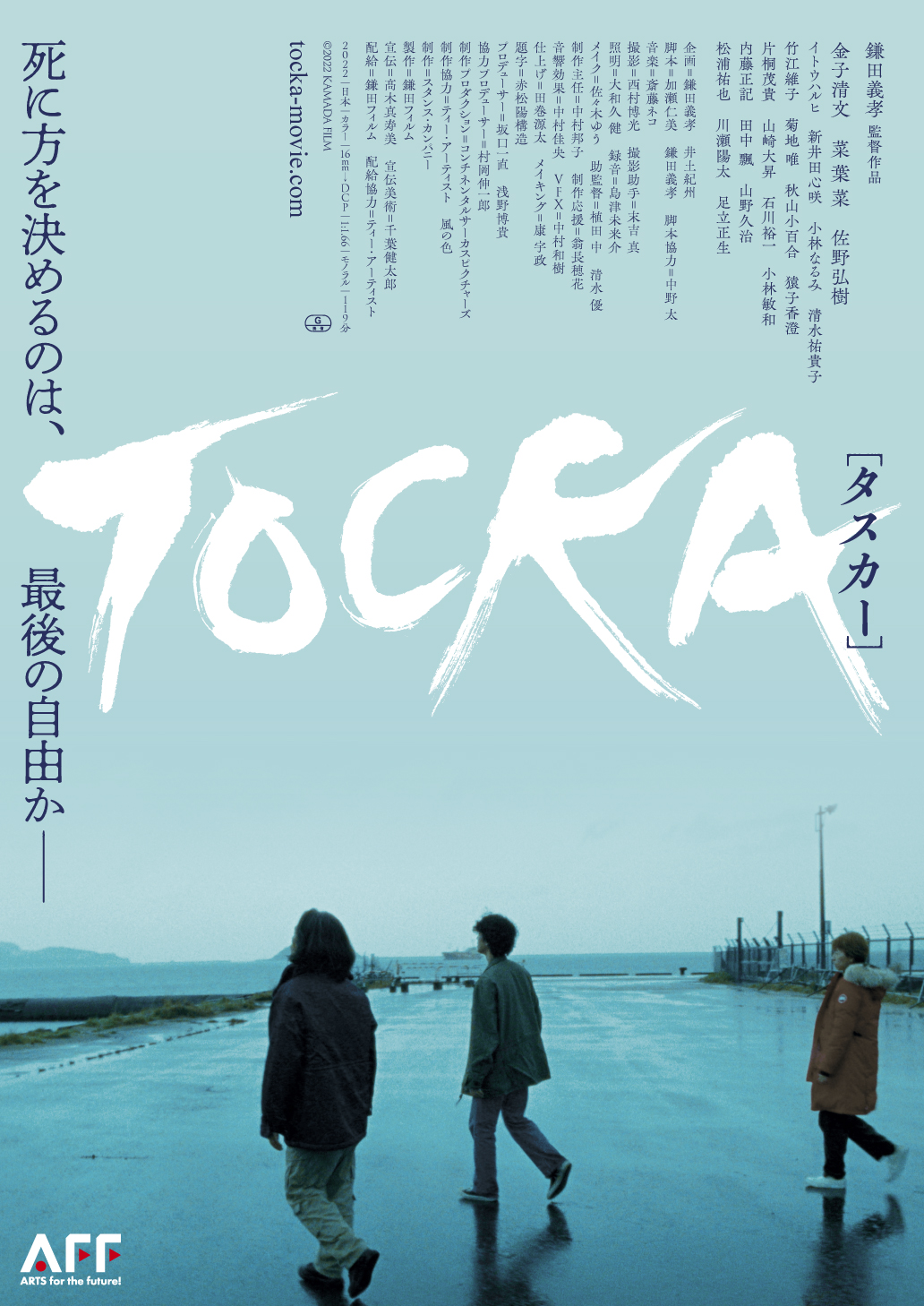
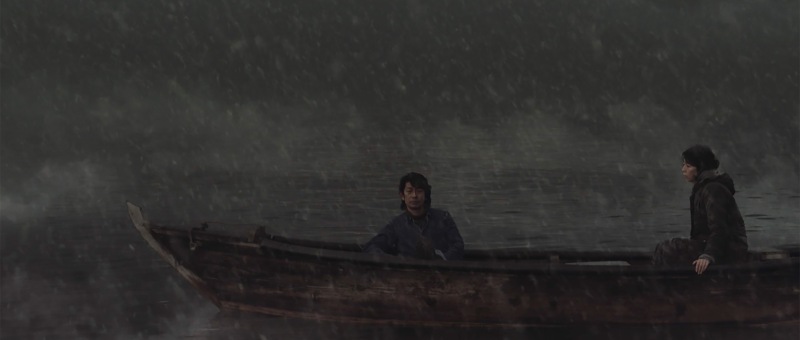
The man at the centre of Yoshitaka Kamada’s bleak social drama Tocka (タスカー) claims that he no longer knows why he’s alive, but as the woman he’s just asked to kill him replies no one else really knows either but even so they continue to live. Set in the northernmost reaches of Hokkaido where you can pick up Russian-language radio and it’s not unusual to spot signage in Cyrillic, the film’s title is taken from a Russian word that describes a quality of spiritual agony that manifests as listless ennui while its sensibility seems to be very much in tune with that of 19th century Russian literature. 

This indeed a cold a barren place almost devoid of signs of life. The heroine, Saki (Nahana), has returned in flight from the implosion of her life in Tokyo but has not told her parents who presumably live not too far away that she’s lost her job or broken up with her fiancé. Instead, she’s living a difficult and dissatisfying life with a part-time job in a local supermarket while contending with massive debts. Unable to see a way forward, she begins to consider taking her own life which is how she ends up meeting Shoji (Kiyobumi Kaneko), a man who wants to die but is unable to kill himself so is looking for someone to help him. 

Perhaps it says something of Saki’s own desperation that she considers his proposal or at least does not necessarily see anything odd about it aside from Shoji’s general vagueness about the reasons he wants to die. Like her, he is living a dissatisfying life but mostly precipitated by the loss of his family and his subsequent descent into alcohol dependency. He used to run a junk shop selling second hand appliances, but his business has also gone bust leaving him with nothing. His only goal is to make sure his daughter receives the payout from his life insurance policy which would be void if it was ruled that his death was a suicide. 

Yukito (Hiroki Sano) also works as a junk man, but scams his clients by pressing them to pay despite advertising a free removals service for unwanted appliances. He also steals petrol to sell illegally on the side and has nothing much going for him in his life while feeling guilty that he has failed to repay the sacrifices his mother made to raise him. Meanwhile, his sister is pregnant and the baby’s father has abandoned them leaving her in much the same position as her own mother but worried she doesn’t have the strength to manage on her own. 

It’s not difficult to understand the reasons why they want to end their lives even if as they sometimes suggest it’s more that they lack reasons to live while those in favour of dying are readily apparent. There doesn’t appear to be much going on in Northern Hokkaido when the businesses seem to be those dedicated to moving around obsolete items, buying junk or selling junk or maybe even stealing junk to sell to people who can’t afford anything better or else for scrap. All three feels themselves already on the scrap heap with nothing more than broken dreams to their names. Saki once wanted to be a singer in Tokyo, but now can’t seem to see a reason to be much of anything at all.

The way she later sees it, it’s alright to want to die and it’s alright to do it too even if you’ll hurt the people you’ll leave behind. None of them are fully able to escape their sense of despair or hopelessness despite the bonds that arise between them as they try to fulfil Shoji’s dying wish. In the end, the firmest expression of friendship is that they will help one another die if and when it’s what they really want though they may never meet again in more pleasant circumstances. In any case, Kamada captures a sense of bleakness in the beauty of the snowbound landscape which remains otherwise barren and defined by emptiness even as those trapped inside it try to find reasons either to live or to die but more often than not find nothing much of anything at all. 


TOCKA screened as part of this year’s Nippon Connection

Original trailer (English subtitles)

Images: ©2022 KAMADA FILM

She is me, I am her (ワタシの中の彼女, Mayu Nakamura, 2022)

A gentle sense of haunting lingers over the protagonists of Mayu Nakamura’s pandemic-era anthology She is Me, I am her (ワタシの中の彼女, Watashi no Naka no Kanojo). COVID-19 seems only to have exacerbated their sense of loneliness and regret, confronted by the ghosts of other lives and absent friends while having little else to do but think about past and future amid an atmosphere of anxiety. Yet within the lonely city there is space for fresh connection and new beginnings even if in themselves somewhat unexpected.

The sense of distance is obvious from the first episode, Among Four of Us, in which three university friends meet again after many years in a public park, only in reality they’re each sitting on their own in different parts of the city while connected by telephone. They speak briefly of their lives, each filled with disappointment one a struggling actor, one a conflicted housewife happily married but wondering what might have been, and the other living with a former lover who can’t forget their absent friend. Much of the conversation revolves around Sayoko who haunts them on this beautiful moonlit night as they each realise they’ve done little but think about her though she somehow slipped away from them and may have had sorrows and regrets of her own they never thought to ask about. 

It’s Sayoko who again seems to haunt the third chapter, Ms. Ghost, in which a young woman encounters an old lady sleeping on a bench near the station and realises they have more than a little in common. In fact it’s almost as if she were talking to an older version of herself, alone and beaten down by life, dreaming of past glories. Both women reflect not only on their broken dreams as country girls who came to the city to act, but on the various ways they’ve been displaced by the pandemic having lost their places of work and been left with nowhere else to go. Forced into sex work after her hostess bar closed down, the younger woman is haunted by a sense of danger that she might end up just another name in the newspaper killed by a violent man. 

Then again the lonely woman of part two, Someone to Watch Over Me, finds herself captivated by a delivery driver, Kazuya, who hastily polished off one of the meals she ordered but did not have the strength to eat. Becoming somewhat obsessed with him she continues ordering food only to have him eat it, but is conflicted on discovering a note of darkness in their relationship. When he tells her that she is not alone even if she thinks she is, it comes across as a much less comforting statement than he meant it to be hinting at the various ways having someone to watch over you isn’t always as nice as it sounds. She too is haunted by absence, along a with a vague sense of being watched that she may however uncomfortably have started to enjoy. 

The heroine of the fourth episode, Deceive Me Sweetly, is haunted by the loss of her youthful dreams taken from her along with her high school lover, a photographer just like the delivery driver, by her declining sight. Yet she can perhaps see further than most and straight through the young man who arrives at her door attempting to run an ore ore scam poignantly claiming to be the brother that hasn’t contacted her in years. Struck by remorse, the young man begins to regret scamming this strangely trusting woman remarking that the real Kazuya wherever he may be must be lucky to have a family he could call in time of need, which the young man perhaps does not. While she is haunted by lost youth, the woman is also in a way haunting him like a mystical figure offering the hand of redemption and setting him free into a world that seems more open fuelled by the need to repay a debt of kindness to a woman he never really knew. Even in these days of lonely desperation, there can still be hope and connection. Filmed with dreamy minimalism, Nakamura’s four tales each starring actress Nahana and connected by seemingly random details discover a sense of the comfort in strangers that a city can offer even in the midst of its own loneliness. 


She is me, I am her had its World Premiere at Japan Society New York on Nov. 12 as part of The Female Gaze: Women Filmmakers from JAPAN CUTS and Beyond.

Original trailer (no subtitles)
Images: © 2022 Omphalos Pictures

Red Snow (赤い雪, Sayaka Kai, 2019)

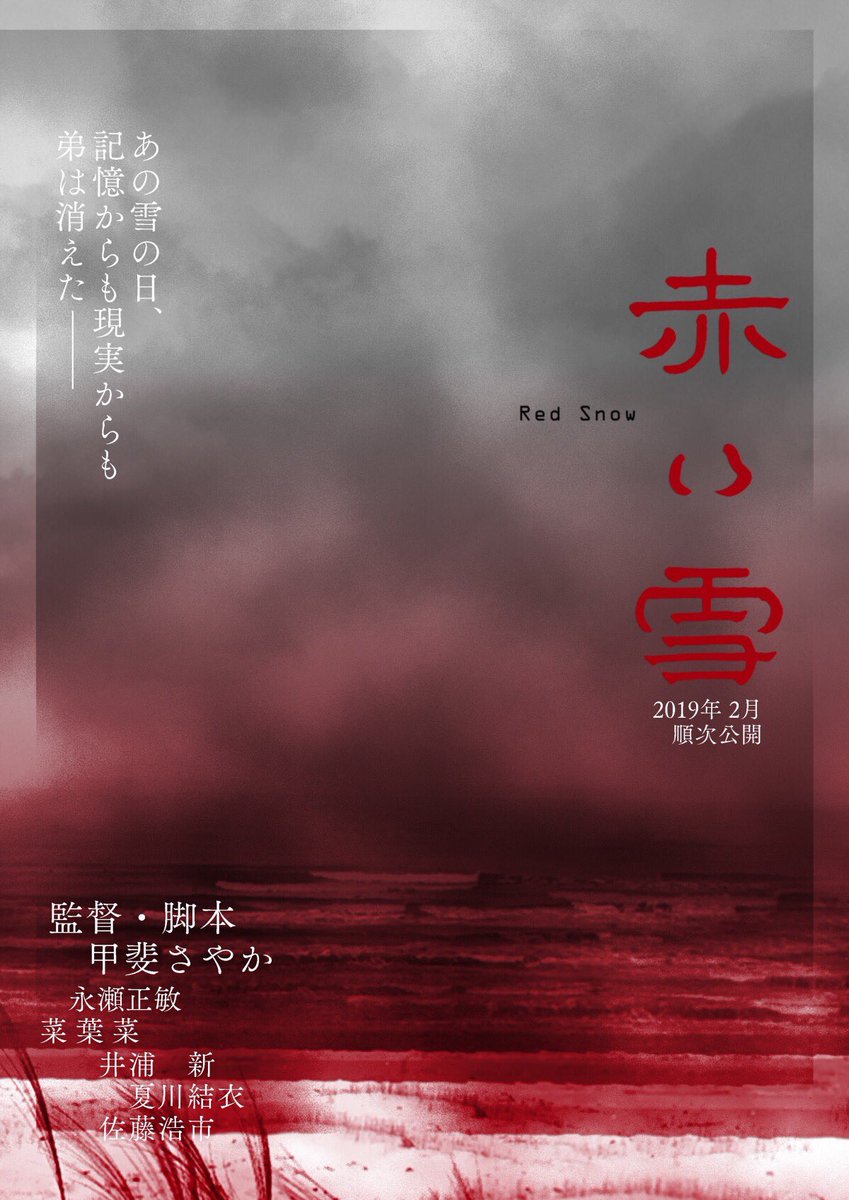
Red Snow poster 2“We’re just pieces of a puzzle” a temporarily deranged woman exclaims to a gloomy seeker after truth in Sayaka Kai’s eerie debut Red Snow (赤い雪, Akai Yuki). Truth, as it turns out is an elusive concept for these variously troubled souls trapped in a purgatorial tailspin on their gloomy island home. When a stranger comes to town intent on unearthing the long buried past, he stirs up deeply repressed emotion and barely concealed anger but finds himself floundering in the maddening snows of a possibly imaginary coastal village. 
30 years previously, a young boy, Takumi, went missing on the way to a friend’s house accompanied by his brother Kazuki who claims he simply disappeared from view in the heavy snow. Sometime later, a child’s remains were found in a burned out building. The prime suspect was a strange woman with a young daughter who escaped the fire in the middle of the night in a suspiciously elegant outfit. Nevertheless, the woman was later exonerated and the truth behind Takumi’s disappearance remained shrouded in mystery.

In the present day, a reporter, Kodachi (Arata Iura), arrives in town with the intention of writing some kind of exposé on the case. He interviews the detective involved and makes contact with Kazuki (Masatoshi Nagase), now a broken middle-aged man who has dedicated his life to perfecting the art of lacquerware. A secondary lead takes him to Sayuri (Nahana) – the daughter of the prime suspect now, in a tragic piece of circularity, an outcast herself and possibly a sex worker in a violent relationship with an older man (Koichi Sato) who may or may not be her pimp.

Each of them has tried to move on from the unresolved tragedy of Takumi’s disappearance, but all appear to have failed. Kazuki dreams of the day his brother vanished right in front of his eyes, seeing a little red jumper lost in the snow but unable to remember anything more. He fears he will never know what happened unless his memory somehow returns, though as his mentor tells him what actually happened and the way you remember it are often different. Waxing philosophical, Kodachi muses that memory is what links the past and future but memory, and therefore life itself, is ambiguous. The “truth” may be unknowable and known at the same time to those who refuse to confront its various contradictions. 

Like the young Sayuri watching through a tiny crack in the wardrobe door where her abusive mother has placed her out of the way of all her “fun”, nobody sees the whole of anything. The young Sayuri morphs into the adult Sayuri and into her mother whom she fears she has become. The only witness to the incident, Sayuri refuses to speak of it though perhaps there’s more kindness in her silence than it first seems even if her unwillingness to remember may also be a kind of self preservation. She too is a victim, but is blamed all the same despite being only a small child powerless to intervene or be held complicit in whatever it is her mother might have done or not done in her quest for survival.

Sayuri remains trapped within the orbit of her now absent mother, herself an outcast in another abusive relationship this time with a sociopathic old man, while Kazuki struggles to accommodate his sense of guilt for something he can’t quite remember. Emotions briefly bubble to the surface, petty resentments and jealousies that pass between all small children but might perhaps have had terrible consequences one snowy night. Sayuri may be right when she insists that they are pieces of a puzzle, each holding tiny fragments of truth that might be assembled into a coherent whole, but also aware that if they did so they may not like the picture that they see.

Eerie and ethereal, the snowy coastal town almost may not exist at all haunted as it is by traumatised souls trapped in a purgatorial cycle of guilt and confusion as they try to piece together the past. Sayaka Kai’s dreamlike, poetic debut is a visually impressive existential mystery in which past and present intertwine leaving our troubled heroes lost in a fog of falling snow unable to access the future through the corrupted pathways of memory.


Red Snow was screened as part of Japan Cuts 2019.

Original trailer (English subtitles)

Erica 38 (エリカ38, Yuichi Hibi, 2019)

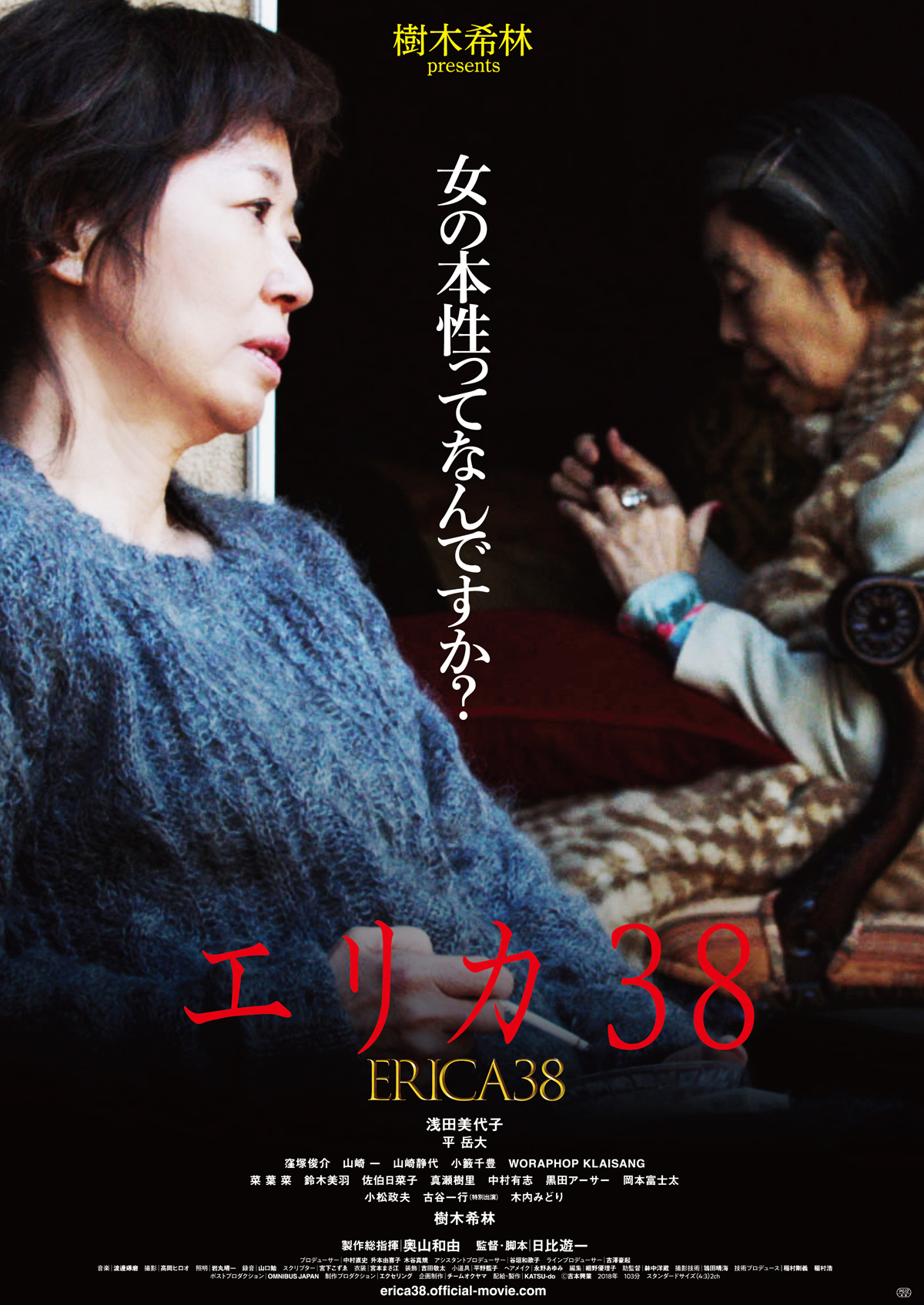
Erica 38 poster“Everybody’s life is in someway unfulfilling”, admits the philosophical victim of a con woman in ripped from the headlines tale Erica 38 (エリカ38). “It’s like a crutch” he adds, without a little fantasy you can’t go on. Like the “Erica” of the title, her victims are also looking for escape from an unsatisfying reality, and unfortunately for them already have what she feels would make her life more bearable – vast wealth. Returning to Japan after three decades abroad, director Yuichi Hibi does his best to humanise the figure of the coldhearted grifter, painting her as just another disappointed, lonely old woman desperately trying to recapture the sense of possibility so cruelly denied her in youth.

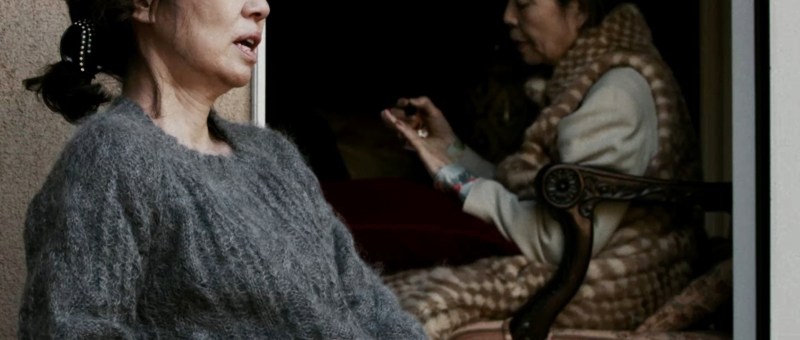
Later rebranding herself as “Erica”, a 38-year-old woman of means, our “heroine” is Satoko Watanabe (Miyoko Asada), an ageing bar hostess supplementing her income by peddling a dodgy multi-vitamin pyramid scheme to bored housewives eager to make a few extra bucks. Her sales pitch, however, gets her noticed by a refined old woman sitting close by in an upscale hotel during in one of her sessions. The woman, Mrs. Ito (Midori Kiuchi), introduces her to a “friend”, Hirasawa (Takehiro Hira), who cuts in with a sales pitch of his own in branding himself as a paid up member of the global elite who works with the Pentagon on important international matters. Hirasawa heavily implies his business is not quite on the level, but Satoko, captivated by his suave sophistication, fails to realise just how dodgy he really is. Before long, she’s joined him in his “consultation” business, selling fraudulent investment opportunities in the emerging market of Cambodia.

It is surprisingly easy to sympathise with the dejected Satoko as she falls under Hirasawa’s spell. Already well into her 50s when the film begins and clearly over 60 when she rebrands herself as the 38-year-old Erica, Satoko has led an unhappy life beginning with a traumatic childhood lived in the shadow of an abusive, adulterous father. The only memory of joy from her youth is when she and her mother (Kirin Kiki) giggled together after accidentally tipping rat poison into dad’s miso soup. Life since then, it seems, has been one disappointment after another spent in the hostess bars of Kabukicho. What all of that means, however, is that she’s become skilled in the art of selling fantasy. All that time invested in extracting cold hard cash from lonely men has set her in good stead for selling unrealistic investment opportunities to the already comfortably off.

Unrepentant, Satoko tells herself that she bears no responsibility towards those who lost money in her scams because they were chasing exactly the same thing she was – escape, and they both found it at least for a moment. Her victims made the decision themselves, she never forced anyone, and so it’s their own fault that they fell for her patter while she perhaps laments only that she’s been foolish and profligate in not planning better for the eventual implosion of all her schemes.

“There’s a thin line between real and fake”, she tells a party guest admiring one of her paintings, “if someone sees it as real then real it is”. Satoko’s cons are, in essence, an extension of the paradox of the hostess business. Anyone with an ounce of sense would have seen that the business isn’t legitimate, but like a salaryman in a hostess bar they invest in the semblance of connection while knowing in a sense that isn’t “real”. Ironically enough, Satoko is forced to realise that the first victim of her subterfuge is herself. Chasing a dream of love, she fell hard for Hirasawa without thinking him through. Hirasawa succeeds in his schemes because he’s scrupulously careful in maintaining his persona – he operates out of hotels, has no fixed address, and uses several cellphones. As Satoko later finds out, he is effectively running a harem, romancing several women all like herself bringing in the big bucks while he sits back relatively risk free. She has been used, once again.

The implosion of her dream of romantic escape is what sends her to Thailand where she ponders a reset, rebranding herself as the 38-year-old Erica of the title and beginning an affair with a young and handsome Thai man she rescued from gangsters with her ill-gotten gains. Porche (Woraphop Klaisang) later describes her as “My Angel”, of course realising that she was much older than she claimed but claiming not to care. It may be that he really did love her, but you can’t ignore the corruption of all that money and the power that it buys. In the end, money can’t buy you love, or a path out of loneliness, or a cure for disappointment.

Satoko was, like many, just another lonely, disappointed old lady trying to escape an unsatisfying present through a fantasy of returning to the past, rebooting herself as a successful business woman, loved and in love, as someone with a brighter future to look forward to. Her sales patter worked because it was “true”, the similarly dejected could sense in her the desperation for escape and as they wanted to escape too they let her take them with her. A melancholy tale of delusion and disillusionment, Erica 38 has immense sympathy for the scammer and the scammed painting them both as victims of an often unfair, conformist society in which freedom is the rarest commodity of them all.


Erica 38 screens in New York on July 25 as part of Japan Cuts 2019.

Original trailer (English subtitles)