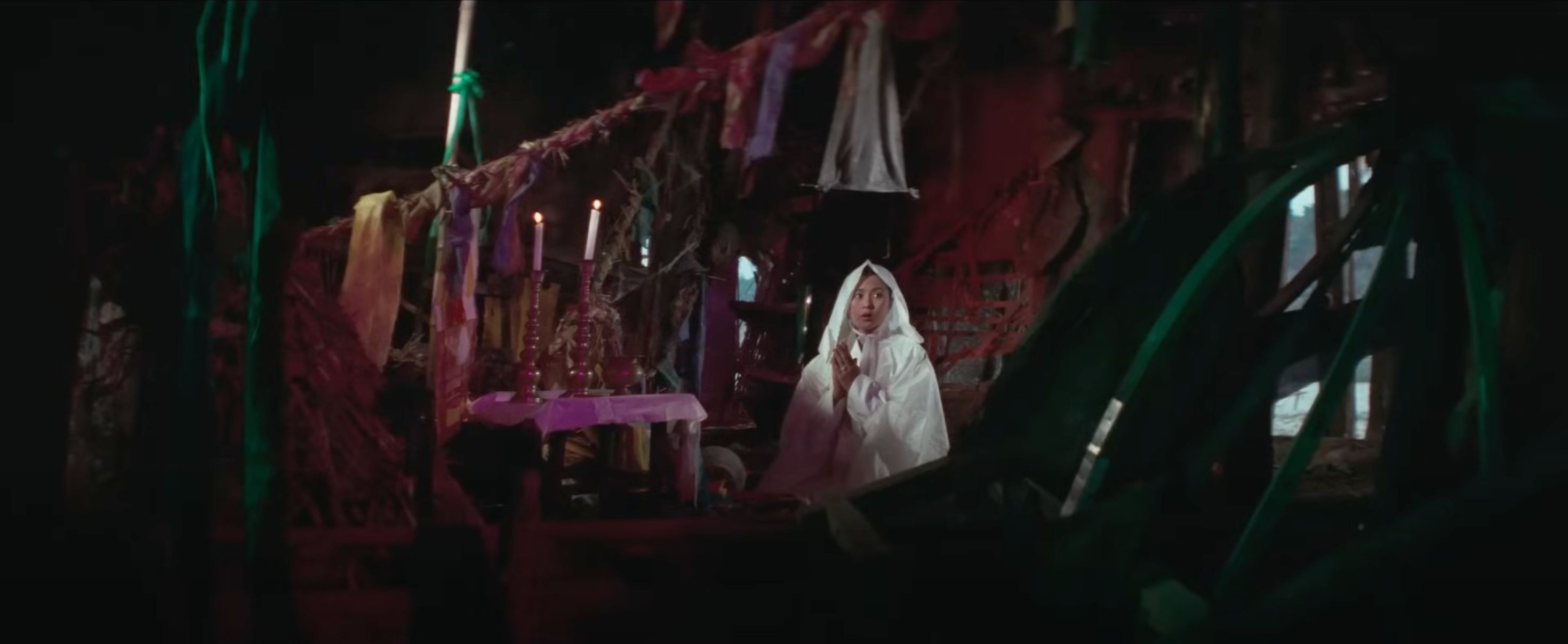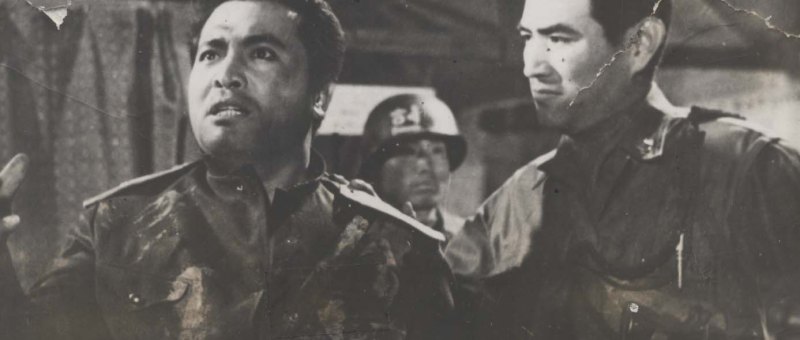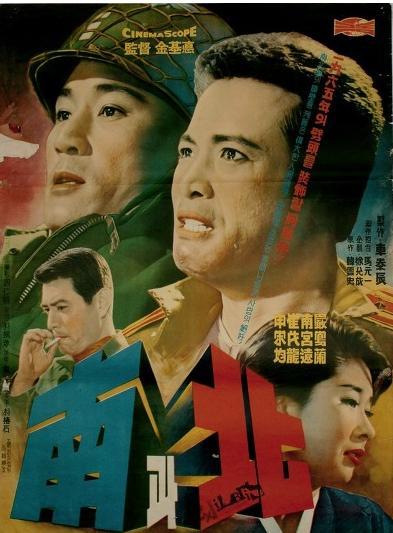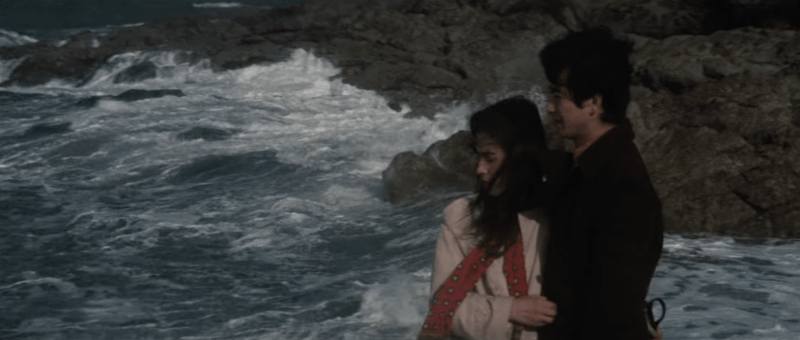
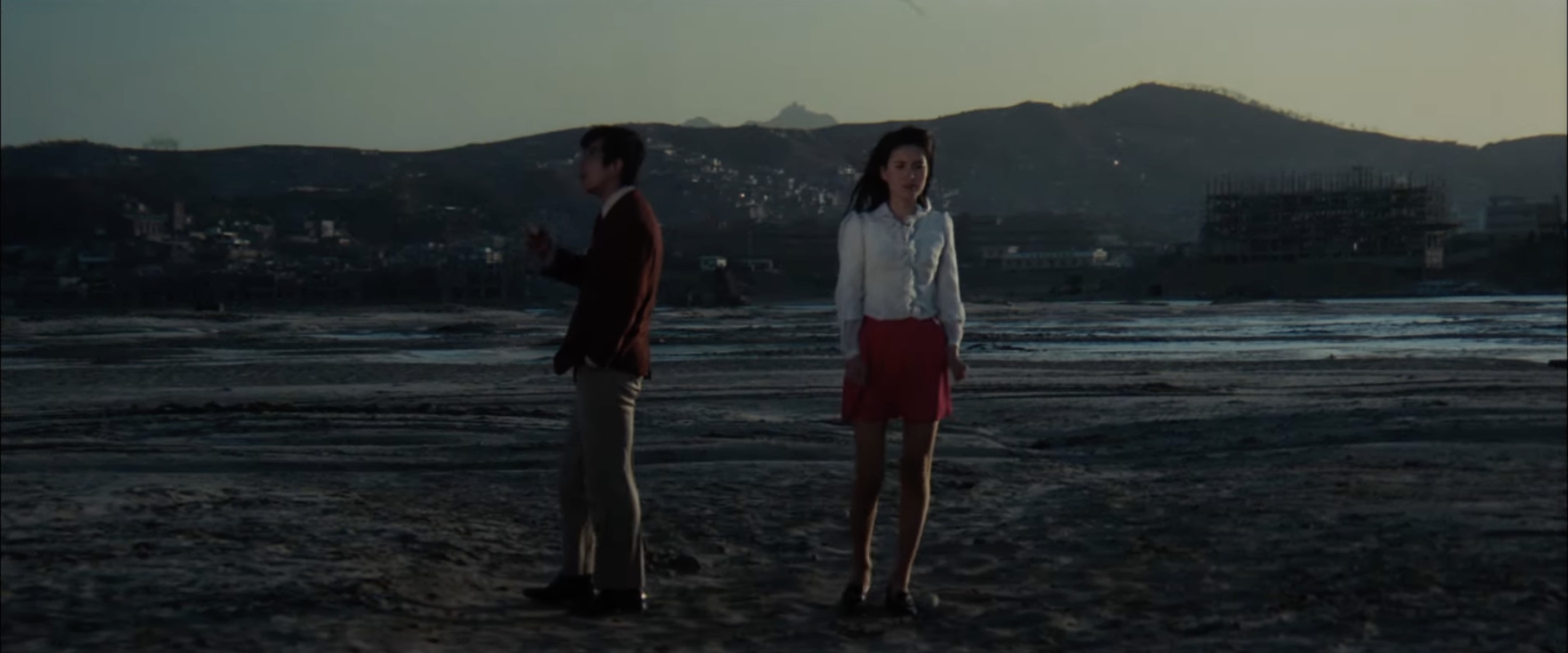
Full Ship (滿船 / 만선, Kim Soo-yong, 1967)

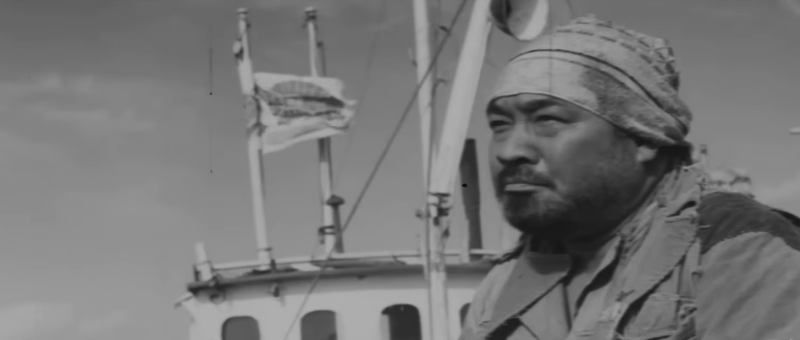
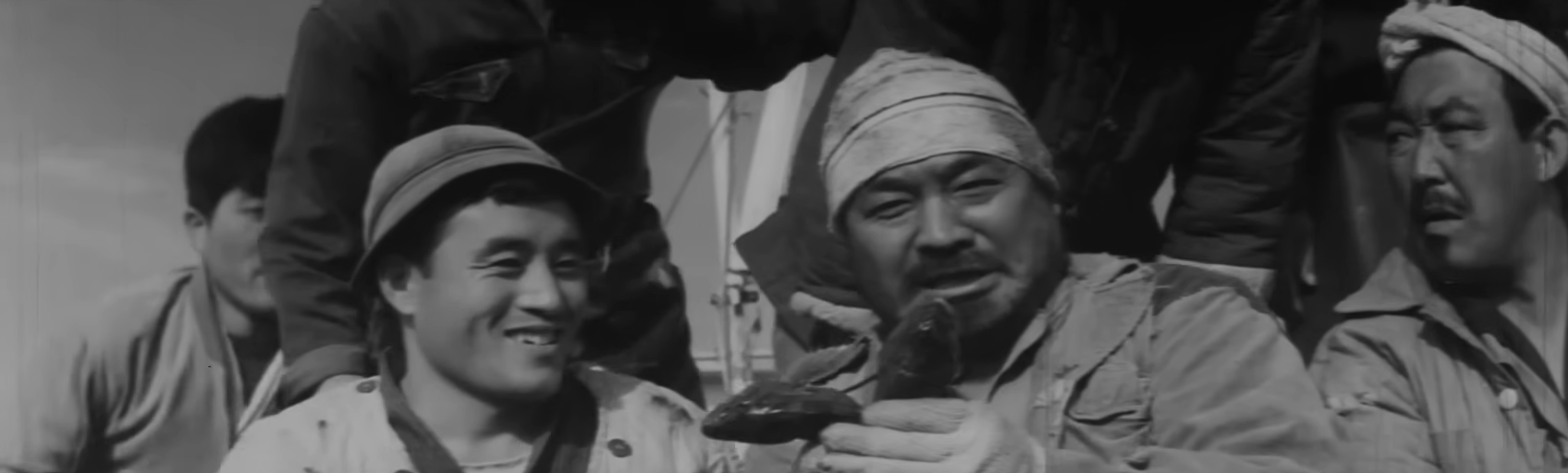
Released two years earlier, Kim Soo-Yong’s The Seashore Village had focused on the lives of women left behind while their husbands went to sea. Full Ship (滿船 / 만선, Manseon), meanwhile, more closely examines the lives of the men themselves along with the increasing pull towards modernity as this very traditional way of life becomes ever more precarious. Based on a play and another of Kim’s literary films, it nevertheless flies close to the wind in subtly challenging the effect that feudalistic capitalism has on each of these men’s lives as they find themselves dependent on the whims of the shipowner.

As Gom-chi (Kim Seung-ho) says, he’s fifty years old and he’s spent his life captaining someone else’s boat. Yet, he’s spent a lot of it toadying for the shipowner and justifying his reluctance to pay the fisherman by citing the shipowner’s expenses which include fuel for the boat, paying the union, and mending nets. The shipowner claims that he lives off debts and the fishermen actually owe him because he’s been lending them money and expects them to pay him back. Some of the other men suggest holding a gut ritual in his honour, but it’s unclear whether the shipowner is really as strapped as he says or merely hoarding all the money for himself. He dresses in fancy hanbok and looks more like a feudal lord than a contemporary business owner. When the fishermen do indeed come in with full boats and expect they’ll finally be getting what they’re owned, they receive only sacks of rotten hulled barely rather than rice. Still, most of them feel they have no choice than to suck up to the shipowner with even Gom-chi agreeing there are expenses to pay while drunkenly letting slip that he has savings and plans to buy his own boat only for the shipowner to find out and ban him from going to sea until he pays up what he owes.

Which is all to say, they’re between a rock and a hard place though “sea-crazy” Gom-chi holds tight to this way of life and has become estranged from his oldest surviving son Do-sam (Namkoong Won) who refuses to become a fisherman while Gom-chi’s wife, who has just given birth to a late baby though already in middle age, is opposed to letting their newborn grow up to go sea. They’ve already lost two sons to the waves, while Gom-chi’s father and grandfather were taken by the waters. To his mind, a fisherman dying at sea is merely going home and Do-sam is a failure and a coward for not following the tradition. 

He blames this on the fact that Do-sam left the island to do his military service and has become corrupted after seeing a different way of life on land. Another man who escaped the island, Beom-soe (Park Noh-sik), has returned wearing a suit and looking like a successful businessman, though as we later discover he’s on the run for a crime committed in the city, symbolising what the end results of this urban corruption may be. Seul-seul (Nam Jeong-im), Gom-chi’s daughter, is also tempted by the city while travelling there to sell goods though almost run over by a bicyclist on her arrival demonstrating its many dangers. People stare and laugh at them, as if the island women with their old-fashioned hanbok had emerged from another world. They laugh at Seul-seul too when she gives in to temptation and gets her hair set and styled into a beehive paid for by her boyfriend Yeon-cheol (Shin Young-kyun) who has also resisted the sea in favour of starting an innovative pearl farming business which is starting to pay off, though Gom-chi still seems resistant to their marriage. Beom-soe is taken with Seul-seul’s island innocence and tries to convince her to come with him with fancy presents from the city of soaps, perfumes, and silk, but she continues to resist him as if sensing that his urban success is not to be trusted. 

But, on the other hand, some seem to think it would be better to take their chances on land than continue with this harsh way of life. The film opens with a funeral in which a half-crazed old woman asks why they’re burying her son when he told her in a dream that he was alive just lost at sea. After a storm, Gom-chi comes back shouting of full boats, but they’re full of dead men drowned by the shipowner’s greed though he only complains about the damage to his vessel. Even the shamaness is a little bit corrupt, telling Do-sam’s mother that it would be inauspicious for him to marry because she’s having an affair with him herself, though prayers and rituals to the Dragon King are all they really have to protect them. Trapped between the sea and encroaching modernity that promises only more exploitation and misery, they have, as the poetic bookending narration suggests, only the life-giving, life-taking waters to turn to.


A Swordsman in the Twilight (황혼의 검객, Jeong Chang-hwa, 1967)

Jeong Chang-hwa is better known for the films he made with Shaw Brothers in Hong Kong, including the iconic King Boxer which helped to kick start the Kung Fu craze of the 1970s, than for earlier films he made in his native Korea. Nevertheless, while he was there he also instrumental in creating a new genre of Korean swordplay films with A Wandering Swordsman And 108 Bars of Gold and 1967’s A Swordsman In The Twilight (황혼의 검객, Hwanghonui Geomgaek).

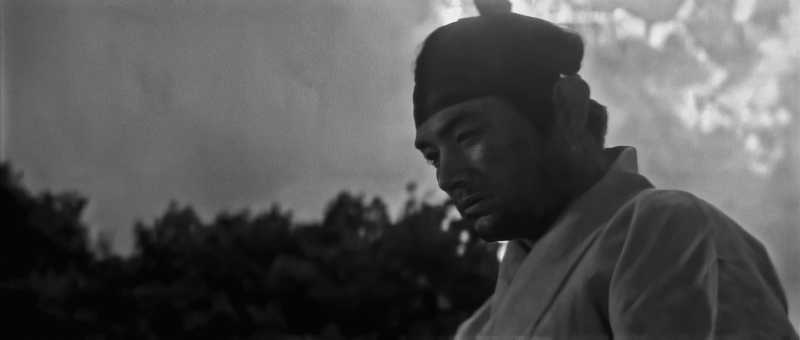
Drawing inspiration from both Japanese samurai movies and King Hu’s wuxia dramas, the film is set in 1691 and like many Korean historical dramas revolves around intrigue in the court. Our hero is however not a high ranking courtier but as he describes himself a struggling vassal who was lucky to get his job as a lowly palace guard because he has no real connections nor does he come from a prominent family and his skills and long years of study mean almost nothing in this society ruled by status. The more things change, the more they stay the same. In any case, he was not unhappy with his life, got on well with his father-in-law, a poor scholar, and had a loving wife and daughter, who like him, valued human decency over ambition. 

But it’s that gets them into trouble when the venomous Lady Jang stages a palace coup to usurp the position of rightful queen, Min. Queen Min is depicted as a shining example of traditional femininity and idealised womanhood. Though the situation she finds herself in is unfair, she bears it with good grace and refuses the small comforts others offer her saying only that she is a sinner and it’s only right she suffers this way for displeasing the king. Hyang-nyeo (Yoon Jeong-hee), wife of swordsman Tae-won (Namkoong Won), was once her servant and shares her birthday so feels an especial connection to her. Pitying Queen Min seeing her forced to walk barefoot through the mud she offers her shoes and for this crime is hounded by the Jang faction on account of her supposed treason.

Having taken the local governor and his clerk, who are also against the Jang faction but don’t know how to oppose it, hostage, Tae-won narrates his long sad story and reasons for his desire for revenge against corrupt courtier Oh Gi-ryong (Heo Jang-kang) who, it seems, is also motivated by resentment and sexual jealousy after having once proposed to Hyang-nyeo but been instantly rejected by her father who did not wish to marry his daughter off to a thug. As such, he comes to embody the evils of the feudal order in his casual cruelty and pettiness. When we’re first introduced to Tae-won he saves a young woman who was about to be dragged off by Gi-ryong’s henchmen presumably as a consort for their immediate boss, Gi-ryong’s right-hand man, but is warned by the other villagers that he should leave town quickly else the Jang gang will be after him. That is however, exactly what Tae-won wants. He fights a series of duels with Gi-ryong, the first of which ends with Gi-ryong simply running away when Tae-won breaks his sword and in their final confrontation he resorts to the cowardly use of firearms not to mention an entire squad of minions pitched solely against a wounded Tae-won and the unarmed governor.

What it comes down to is a last stand by men who know the right path and are now willing to defend it rather than turn a blind eye to injustice. Tae-won’s own brother (Park Am) had thrown his lot in with Gi-ryong in the hope of personal advancement, willingly aligning himself with the winning side and complicit in its dubious morality. This of course puts him in a difficult position, though he implies he will be prepared to sacrifice Tae-won and his family if necessary even if he also tries to find a better solution such as suggesting Tae-won kill Queen Min to prove his loyalty to the Jang faction. In an odd way, it speaks to the contemporary era as a treatise on how to live under an authoritarian regime not to mention the creeping heartlessness of an increasingly capitalistic society. 

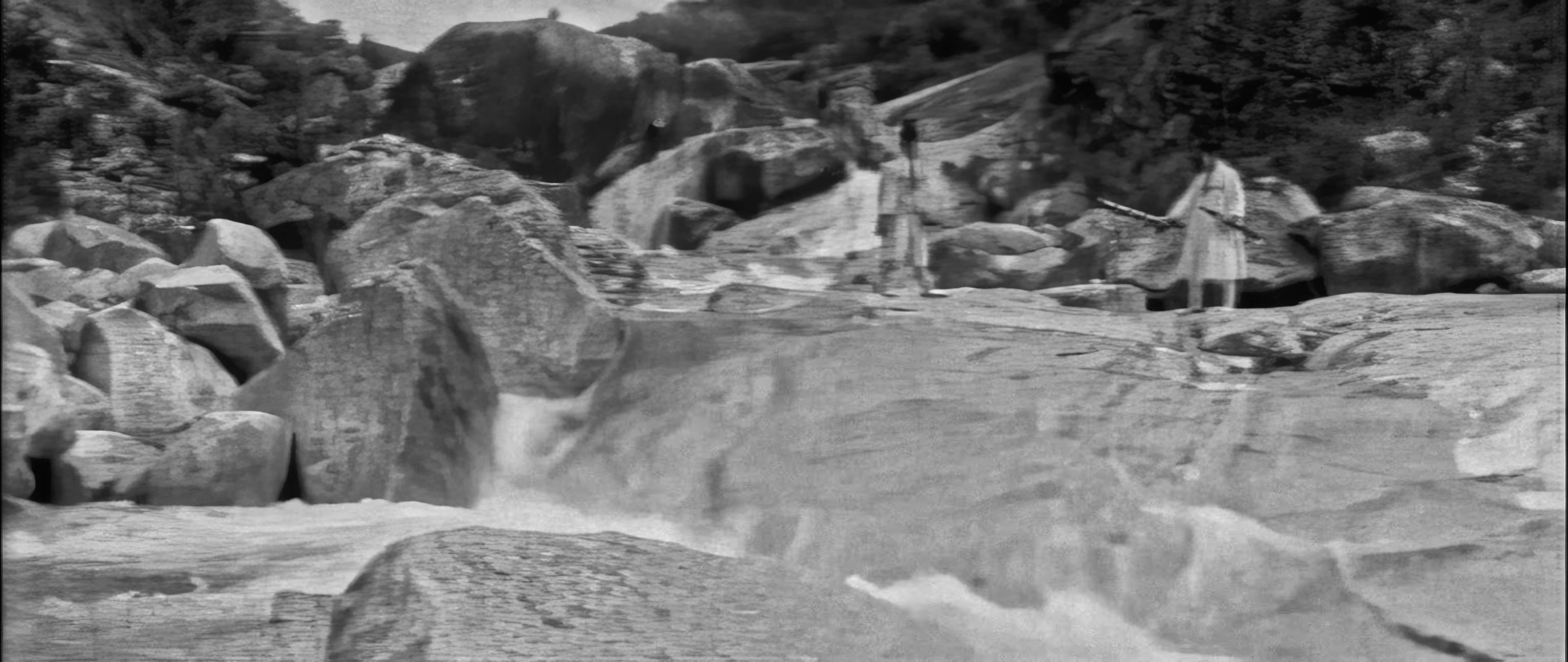
This sense personal rebellion may owe more to the jianghu sensibility found in the wuxia movies of King Hu than to the righteous nobility of the samurai film even if the ending strongly echoes chanbara epics in which the hero is displaced from his community and condemned to wander as a perpetual outlaw in a society which does not live up to his ideals. While staging beautifully framed action sequences such as fight at a rocky brook, Jeong undoubtedly draws inspiration from Hu in the use of trampolines and majestic jumps that have an almost supernatural quality. The sword fights are largely bloodless until the final confrontation but also violent and visceral. Gi-ryong’s henchman plays with a minion he feels has betrayed him by lightly scratching his throat before going in for the kill and such cruelty seems to be a hallmark of the Jang faction. But despite the seeming positivity of the ending in which a kind of solidarity has been discovered between Tae-won and the governor, the film ends on an ambivalent note with the fate of the nation still unknown as Lady Jang stoops to shamanic black magic to hold sway and darkness, the lingering shadows of authoritarianism, still hang over the swordsman even if he is in a way free as s rootless wanderer no longer quite bound by feudal constraint. 


A Swordsman in the Twilight screened as part of Echoes in Time: Korean Films of the Golden Age and New Cinema.

The Hut (피막, Lee Doo-yong, 1981)

We’re told that the titular hut in Lee Doo-yong’s 1981 shamanism drama (피막, Pimak) is a like a stopping place between this world and the other. Babies are born there, but more usually it’s a place where the dying are sent to expire. Located in a more literal liminal space on the outskirts of the village, it presents a borderline that keeps the villagers safe from the taboo of death. They say the souls of those who die there cannot return to haunt the village, which is to say the village is a place free of death and also of the grudges of the past.

That is, however, not quite true. During the colonial era, the heir to noble house, Seongmin, has fallen ill and is likely to die but is being cared for at home by his desperate family who have invited shamans from all over the county in an attempt to cure him. This has obviously annoyed the village’s resident shamaness who is forever telling them they’ve made things much worse for themselves by sidelining her and shunning the local goddess, but the cause of the boy’s illness is quickly rooted out by Okhwa (Yu Ji-in), a powerful shamaness who leads the family to a buried vase in the woods which has been broken allowing the trapped should of Samdol (Nam Koong-won), the former keeper of the hut, to escape.

The Old Madam (Hwang Jung-seun) immediately admits that she was the one who put him in there, though she did not know where the vase was buried. The Gang family has a curse on it which results in many of their sons dying young before they could father sons of their own and leaving behind young widows which are perennial problem in the rigidly Confucianist, patriarchal society that some may argue continues into the present day but is certainly in the ascendent in the 1920s and 30s. As in many films of this kind, managing the sexual desires of young women, which are acknowledged as normal and natural, under such an oppressive system presents a key challenge to the social order. Given the taboo against second marriages, the family’s large collection of widowed daughters are seen resort to acts of self-harm in order to quell their desires in the absence of men. When the second daughter-in-law falls ill after stabbing herself in the thigh with a silver dagger, the Old Madam is sympathetic but believing she cannot be saved sends her to the hut to die. But before she does, the Old Madam also orders Samdol to sleep with her on pain of death so that she won’t pass into the afterlife with her needs unmet. The Old Madam is after all a widow herself, if an older one, and understands the frustration and desperation the younger woman feels. 

But the decision she makes breaks another taboo for as he points out himself, Samdol is the lowest of the low, a commoner who deals with the dead. Not only is the sex itself non-consensual, but threatens the social order in its transgressive qualities, crossing a class divide while also occurring outside of a marriage. Of course, it takes place in the liminal space of the hut where such borders meet. Described as quiet, honest, and reliable, Samdol is a kind man who also patiently nurtures the daughter-in-law back to health with medical herbs from his garden and eventually reveals to her what he was forced to do by the Old Madam but the two later fall in love and conceive a child which of course means they must both die in order to preserve the social order. 

Okhwa arrives as a kind of inspector exposing the poisonous past of Gang family which after all probably did do something untoward in order to become prosperous which is why there’s a curse on it. We get the impression that she may have ulterior motives and almost certainly knows more than she’s letting on while otherwise looking for information. She is not in fact a shaman, though her mother was and a fairly legendary figure at that, but later becomes one and with it a kind of avenger mainly for women who suffer under this system but also for men like Samdol abused by the feudal class order and forever at its mercy. The shamaness is also of course a liminal figure who lives outside of conventional society which views her with suspicion as a woman with both power and independence.

But even Okwha is subject to the unwanted attentions of men who despite their insistence on a woman’s chastity believe themselves entitled to her body, not only the head of the Gang family (who is actually elderly and presumably survived the curse), but men in Western dress who snatch and rape her. Thus the hut also exists at the nexus of tradition and a seemingly destructive modernity ushered in by Japanese imperialism. After recovering from his illness following Okhwa’s guk exorcism, Seongmin insists he just got better on his own and there’s no such thing as ghosts. We’re told he studied abroad in Tokyo and in fact dresses in a Japanese-style student’s uniform complete with cape. He tells his mother that they’re making scientific advances in Japan and that it’s ridiculous to think a ghost could have killed the Old Madam and the head of the family who died in odd circumstances during the guk along with his uncle in Western dress who had raped Okhwa. He proves to her scientifically that someone could have merely set traps for each of them and points the finger at Okhwa as a likely murderess rather than a gifted spirit medium.

Perhaps we more “rational”, modern people might agree with him but the film seems certain that there are indeed vengeful spirits haunting the landscape, those who fell victim to the hut mentality and were deliberately cast out and left to die by their society who effectively exiled them in their death. Okhwa can’t exorcise the evil ghosts of patriarchy, classism, feudalism, or sexual repression but she can perhaps in part symbolically end their tyranny by dissolving the border and burning the whole thing down. 


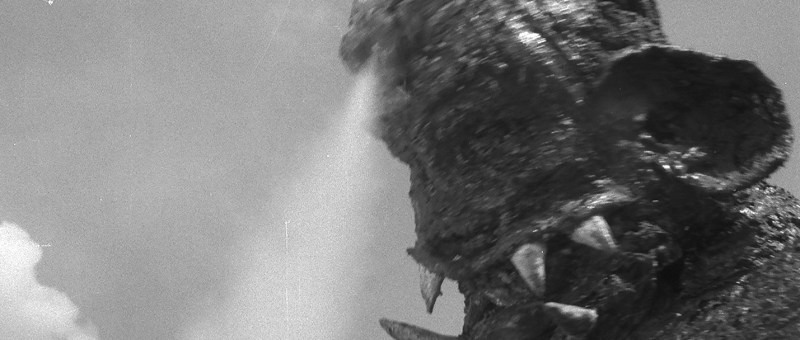
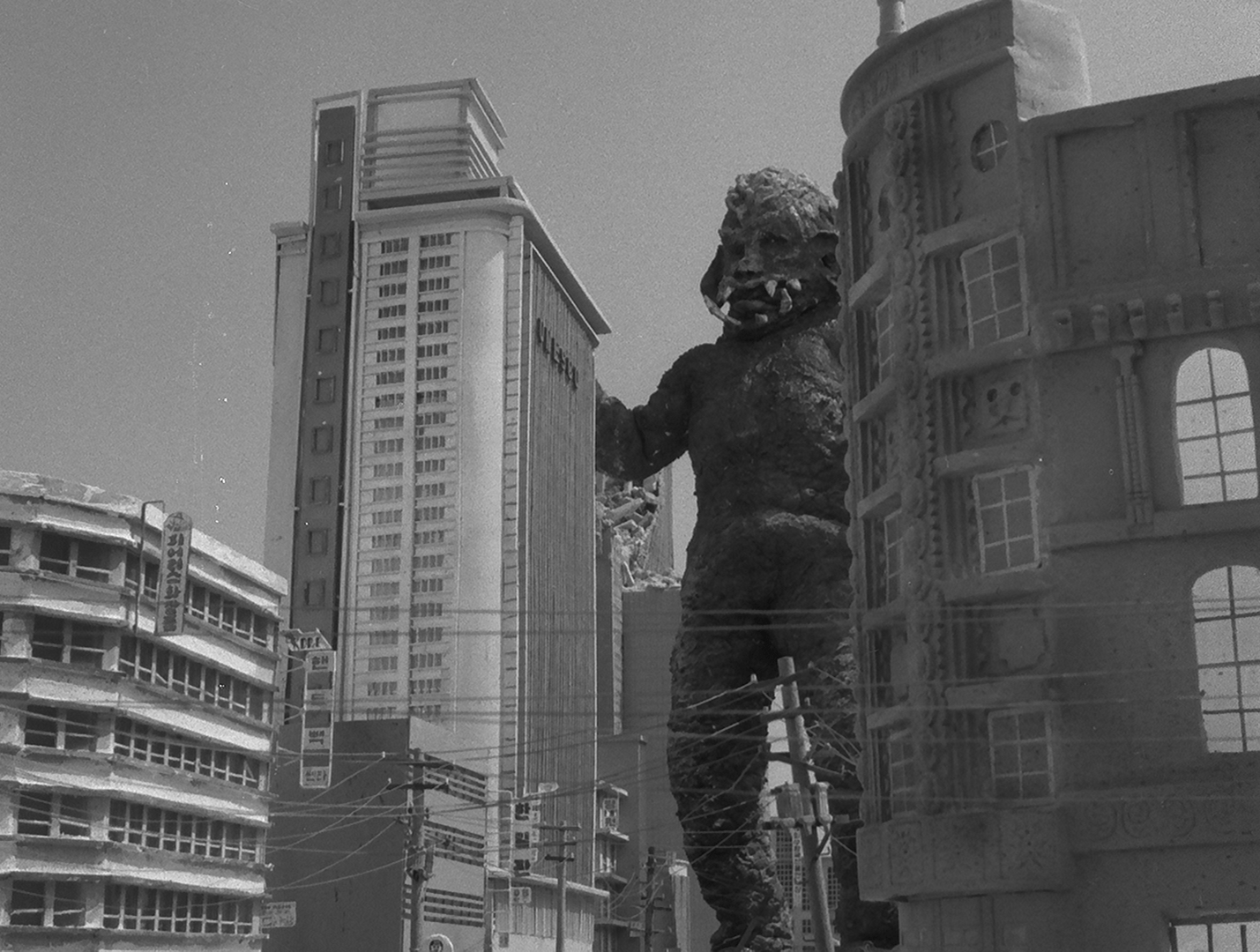
Space Monster Wangmagwi (우주괴인 왕마귀, Gwon Hyeok-jin, 1967) [Fantasia 2022]

In Japan’s classic kaiju movies, the fault usually lies not with the monster but with humanity. The kaiju itself is neither good nor bad but simply what it is and its rampage is often a response to humanity’s mistreatment of the natural world or irresponsible scientific endeavour. In Korean monster movie Space Monster Wangmagwi (우주괴인 왕마귀, Ujugoein Wangmagwi), however, the threat is more concretely extra-terrestrial though the monster may be equally blameless apparently tortured and manipulated by an evil imperialist power hellbent on the colonisation of the Earth.

Shiny-suited aliens in impractical helmets are already on their way where they plan to disguise their invasion with the help of a passing typhoon. Their grand plan is to drop their space monster, Wangmagwi, onto the planet’s surface and let him run rampage until humanity has been subdued and they can claim the Earth. What they didn’t count on, however, is humanity’s spirited resistance led by brave Korean armed forces members and for some reason a plucky little boy with a pocket knife who manages to climb inside Wangmagwi and weaken him by taking out his vital organs. 

Wangmagwi’s extraterrestrial origins may hint at a fear of invasion most obviously from the North along with Cold War paranoia rather than an attempt to reckon with past transgressions or fear of new technology. The alien invaders are eventually forced to abandon their mission and turn back having experienced unanticipated human resistance vindicating the nation’s ability to defend itself even as the armed forces consider quite radical action such as the possibility of using nuclear weapons which the aliens from the planet Gamma admit would be disadvantageous seeing as they then wouldn’t be able to live on the planet either. 

Even so, the tone of the film is at least close to parody with the local population flailing about in panic trying to figure out what the best course of action might be. There is a particular irony in the captain of the spaceship’s explanation that the invasion has been 10 years in the planning so they can’t let it go wrong, while bride-to-be Ahn Hee feels something similar because she’s been planning her wedding all her life so this whole alien invasion thing is very inconvenient for her. Despite the warnings, Hee and her mother head to the wedding hall anyway with her in her full wedding dress waiting for airman fiancée Oh (Namkoong Won) to arrive though all military personnel have already been ordered back to base. Obviously, having her wedding cancelled at such short notice is distressing, but given there’s a rampaging kaiju on the loose Hee’s hysterics seem both childish and irresponsible though she later pays for them in being kidnapped by Wangmagwi and carried around just like Fay Wray in King Kong.

Meanwhile, the film throws in a lengthy comic relief sequence revolving around two middle-aged men who set up a bet to see who is the most cowardly leveraging their life savings, homes, and even a wife who later throws herself on the other man’s mercy hoping he’ll help her escape the kaiju because her own husband is too useless to be relied upon. Conversely, the military aren’t finding this funny at all instantly springing into action risking their lives to stop Wagmagwi’s rampage through the capital city which after all has only recently been rebuilt. The little boy meanwhile, seemingly an orphaned street kid, complains that grownups are all cowards incapable of facing Wangmagwi and so he’ll have to do it himself. 

The film ends on a note of familial reconciliation in which Hee and Oh pledge to adopt the boy suggesting that the threat has been overcome and normality has now returned while the Gamma simply sacrifice Wangmagwi in deciding to cut their losses and return home. Despite the comic overtones, the praise of the armed forces is sincere leaning into an authoritarian message that the military is necessary for protection of the nation while subtly undercutting it by suggesting that it’s a fearless boy who is responsible for Wangmagwi’s downfall though in reality it’s the Gamma who eventually turn on him, ordering his “termination” through a “self-destruct” mechanism. Featuring some impressive model work, Space Monster Wangmagwi never takes itself too seriously, packing in portentous storm noises alongside its tokusatsu-inspired effects, but does perhaps have something to say about the anxieties of the Korean society in the late 1960s. 


Space Monster Wangmagwi screened as part of this year’s Fantasia International Film Festival.

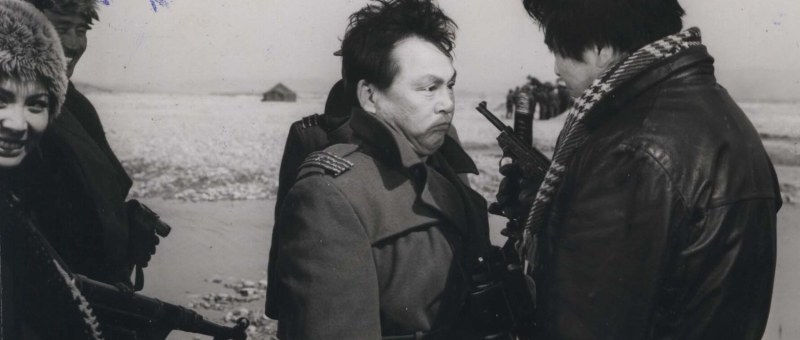
Break up the Chain (쇠사슬을 끊어라, Lee Man-hee, 1971)

Break Up the Chain poster1970 had been a difficult year for Lee Man-hee. A conflict on the set of The Goboi Bridge in which Lee intended to star against the advice of his regular team resulted in the end of his creative relationship with screenwriter Baek Gyeol and cinematographer Lee Suck-ki. Meanwhile, he’d also suffered a crisis in his personal life after parting ways with actress Moon Jeong-suk who had been both a lover and a muse. To top it all off he also had some financial problems and didn’t work at all for the year following Goboi Bridge’s release – a significant period of time in the high-speed world of early ‘70s Korean cinema in which it was not unheard of for a director to make as many as 10 films in one year. Break Up the Chain (쇠사슬을 끊어라, Shwisaseuleul Geunheola) was intended to be something of a “come back” but it finds Lee defeated, doing what he does best but also playing the game he never really wanted to play in succumbing to the patriotism epic (albeit a little tongue in cheek).

Riffing off Sergio Leone, Lee frames his resistance romp as a Manchurian western. A mysterious golden Buddhist statue has more than just monetary value as it also contains a list of the names of resistance operatives which can be revealed with the use of a special chemical formula. Three men are after it – Cheol-su (Namkoong Won), an adventurer for hire who might or might not be working for the resistance; Tae-ho (Jang Dong-hwi), a petty gangster; and Dal-geon (Heo Jang-kang), a collaborator working with the Japanese. The men are each interested in the statue for selfish reasons – Cheol-su for his reputation, Tae-ho for the money, and Dal-geon for the prestige. None of them is interested in the resistance movement itself, the statue’s importance in relation to it, or anything really beyond themselves and their day-to-day lives.

Of course, as this is a patriotism epic, the men eventually come round to the greatness of Korea as their individual quests converge and they find themselves alongside the resistance surrounded by the Japanese. The Japanese are largely a bumbling bunch who remain unaware of the statue’s “real” power even whilst holding it, thinking only of its monetary value as a lump of gold or work of art they could export abroad for financial gain. Confronted and faced with failure, the leader of the Japanese is firstly humiliated by his defeat at the hands of the resistance but then decides to show them the greatness of the Japanese army by committing Harakiri right there on the spot. Stripping off the captain begins to get cold feet, suddenly struck by the enormity of the moment when one of his lieutenants draws his sword ready for the beheading. The Japanese captain then seems to come down with “a cold” and resolves to visit the medical tent instead.

The early drama revolves around the interplay of the three self-interested outsiders as they scheme and plot to make use of each other and get the statue for themselves. Of the three, Cheol-su emerges as the most “noble” even though his quest is mercenary enough – his name is his business and thus he wants the statue to fulfil his contract and maintain his sense of integrity as a gun for hire. Tae-ho is merely interested in financial gain with a mild desire for social revenge and the thrill of outsmarting a rival, but both men are filled with an intense distaste for men like Dal-geon who have “betrayed” the countrymen they too have refused to serve. That aside, Tae-ho and Dal-geon begin to form a weak alliance of the opportunistic as they bond in their mercenary intentions, while Cheol-su lingers on the outside as his quest ties him more closely with the independence movement. Eventually the trio realise they have to work together to get the statue, even if their ultimate intention is to double cross the others and keep it for themselves. They do however suddenly rediscover their patriotic spirit, resolving to give the statue to the people who need to most while they ride off into the sunset in search of other ways to serve their country.

Set in dusty Manchuria (where the resistance movement operated in exile), Break Up the Chain is part of the short-lived boom of Korean “westerns” which were popular in the late ‘60s and early ‘70s. Lee abandons his experimental ambitions and aims squarely for the populist, reaching only for post-modern irony in his boys own adventure story filled with feats of daring do and flight on horseback. Yet he comforts himself with that sense of irony, pulling away from the absurd adventures of our heroes to show the faces of men dying in snow reminding us that their flight from the horror of war was perhaps a rational one rather than an act of cowardice or a failure of patriotism. Nevertheless, Lee seems to be at odds with himself as he gives in (to a point) and presents a silly story of amoral chancers suddenly rediscovering their “Koreanness” in the barren wastelands of Manchuria but does so with a sense of bitterness which conspires to rob the tale of its childish sense of fun.


Available to stream online via the Korean Film Archive’s YouTube Channel.

North and South (南과北/남과북, Kim Ki-duk, 1965)

north and south poster

Melodrama has often been an unfairly maligned genre, dismissed as pandering to the sentimental or engaging in frivolous emotion but to do so misses the undercurrent of social questioning that such films often entail. Korea has made the melodrama its own – indeed, though genre is often a more fluid matter in Korea than it is elsewhere it’s difficult to find films of any kind which are completely devoid of melodramatic themes. It’s less of a surprise therefore to find that Korean cinema turns to melodrama to examine one the nation’s most pressing concerns – the relationship between North and South. Kim Ki-duk’s North and South (南과北/남과북, Namgwa Buk) is the story of a woman caught between two men, two nations, and two eras but it’s mediated through the story of a noble North Korean who has battled all in the name of love, left his family, his home, his country only to find that he is too late and the world has already left him behind.

The film begins with capture of a North Korean soldier in November 1952, the middle of the Korean War. Following normal procedure, the soldier, Major Jang Il-gu (Shin Young-kyun) is taken in for questioning but the major matter on his mind is the lady in the photograph he keeps brandishing to everyone he meets. Rather than political disaffection, Il-gu has defected to the South in the name of love – he’s looking for a woman he regarded as his wife, the mother of the son he has never seen. The South Korean officers are less than sympathetic, they’ve been noticing increased activities on the frontiers and they want to know some concrete military details before they even agree to admit Major Jang, but Il-gu won’t talk until they promise to help him look for Eun-ga (Um Aing-ran) – the woman for whom he has betrayed his comrades.

Captain Lee Hae-ro (Choi Moo-ryong), otherwise sympathetic to Il-gu’s plight, runs into a problem when elements of Il-gu’s story start sounding all too familiar. In a coincidence too staggering to believe, Eun-ga is Hae-ro’s wife. Originally reluctant to marry him, Eun-ga had explained that she had a son already and was waiting for the child’s father (to whom she was not “legally” married) from whom she had been separated by the 38th parallel. Lee was patient and persistent, he told Eun-ga that she was free to leave him should her long lost love return (never believing it was possible) and that he was content to look after her until that day came or, should he be so fortunate, for the rest of his life. Now Il-gu has arrived as if to punish him for disrupting this fairytale of doomed romantic love.

Unlike many films of the time, Kim is not interested in demonising the North so much as emphasising the tragedy of Korea’s division. Eun-ga and Il-gu are divided by more than just politics. Eun-ga was the middle-class daughter of a wealthy doctor, Il-gu was the son of one of their servants. Their love was not possible even before the war, but still it blossomed. Growing up together, Il-gu and Eun-ga experienced the quintessentially innocent taste of first love, vowing to stay together even in the face of fierce parental opposition and social convention, but it is the war which eventually seals their fate. Il-gu, not wanting to be conscripted into the Japanese army hides out in a shack where Eun-ga, the only person to know his whereabouts, spends a fateful night with him during which time their child is conceived.

Dreaming only of being re-united with his “wife” and child, Il-gu has been carrying around a picture of Eun-ga and looking for an opportunity to defect ever since the erection of the 38th parallel. Abandoning everything in the name of love, he has left his mother alone in the North and risked his life in hope of seeing Eun-ga once more. Hae-ro, a romantic man himself, is intimidated by Il-gu’s passion. The great, fated love he’d imagined for himself in marrying the nurse who had saved him at his lowest ebb suddenly pales in comparison to Il-gu’s willingness to sacrifice his life in pursuit of a true love dream. Understating Il-gu’s feelings, Hae-ro finds himself in a terrible position, worried that his love will leave him, feeling guilty for pestering her into a marriage she may not have really wanted, and unsure whether he should even tell Il-gu and Eun-ga that he holds the key to their long delayed reunion. Il-gu remains resolute, demanding love or death, but Hae-ro vacillates, drinks himself into solipsistic misery, and indulges his own weaknesses which are only made worse by Il-gu’s continued heroism.

Immediately before the final sequence in which the trio are forced to confront their emotionally difficult situation, Il-gu is threatened with a gun but refuses to give up any information without proof he can meet Eun-ga. Believing all hope to be lost, he asks only to be allowed to go up a mountain to die but is moved by the compassion of intelligence officer Kwon (Namkoong Won) who alone is committed to delivering Eun-ga and eventually gives up his information even though it pains him to betray his own comrades. In an impassioned debate with Kwon, Il-gu gives voice to the film’s overarching message in reminding him “Are we not all brothers”. Kwon, counters that the reason they fight is in service of Il-gu’s quest – it’s precisely so that he can come here, speak freely, and pursue his love unhindered. The “South” is winning, in a sense, but the message of brotherhood and understanding between men is the one which is delivered with the most clarity.

Understanding between men is indeed the theme of Hae-ro and Il-gu’s eventual meeting. Eun-ga’s torment is relegated to background detail as she sobs her heart out in the corner in the unfairness of her impossible situation. Her heart has always belonged to Il-gu and she feels herself to have betrayed him, betrayed love, in marrying an admittedly good and kind man out of reasons of practicality rather than passion. Coming to understand the situation, Il-gu responds with compassion and understanding even in the middle of his own heartbreak. He bitterly regrets his journey and wishes Hae-ro had told him Eun-ga was now his wife rather than allow him to hurt her by suddenly reappearing and breaking her heart all over again. Witnessing Il-gu’s magnanimity, Hae-ro is also moved, offering to step back and allow Il-gu to return to the family he may have lost. Both men recognise the goodness of the other, want nothing more than the best outcome of the situation for Eun-ga and her son, and are committed to moving forward with sensitivity in trying to minimise the emotional pain inflicted on the innocent Eun-ga who continues to suffer through no fault of her own.

The “fault” falls on the 38th parallel which, as Il-gu explains during a painful first meeting with his unknowing son, is “the worst thing ever made by stupid men”. The situation is indeed impossible, there is no easy answer for Eun-ga who will have to choose between past love and a present commitment (or, uncomfortably, have that decision made for her by her respective lovers). Kim dramatises their anguish perfectly through the extraordinary performances of his cast during the drawn out, painful encounter in which they attempt to forge a way forward, but Eun-ga, who stands in for her nation, stands to lose all when this same fierce love and understanding between men may cost her everything in tragic gestures of love and sacrifice.


Available on DVD as part of the Korean Film Archive’s Kim Ki-duk box set. Not currently available to stream online.