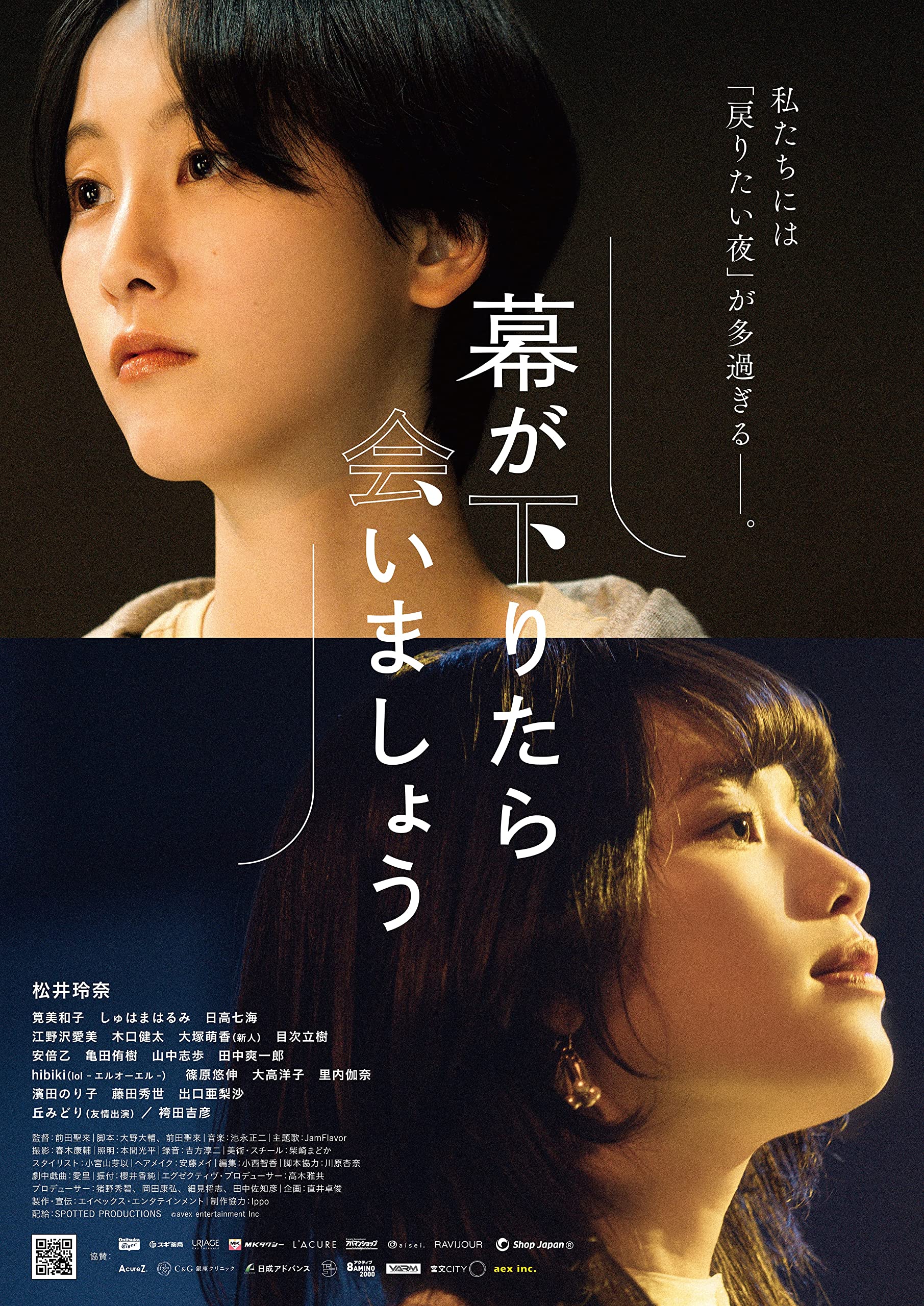
Back To That Day (幕が下りたら会いましょう, Seira Maeda, 2021)

A young woman facing a life crisis is forced to reevaluate her relationships with art, friends, and family after learning that her estranged younger sister has suddenly passed away in Seira Maeda’s indie drama, Back to that Day (幕が下りたら会いましょう, Maku ga Oritara Aimasho). Facing a patriarchal society, the young women at the film’s centre wonder if it’s better to chase your dreams even if they won’t come true or contend with the unfair demands of contemporary salaryman culture in the hope of achieving conventional success and a comfortable life. 

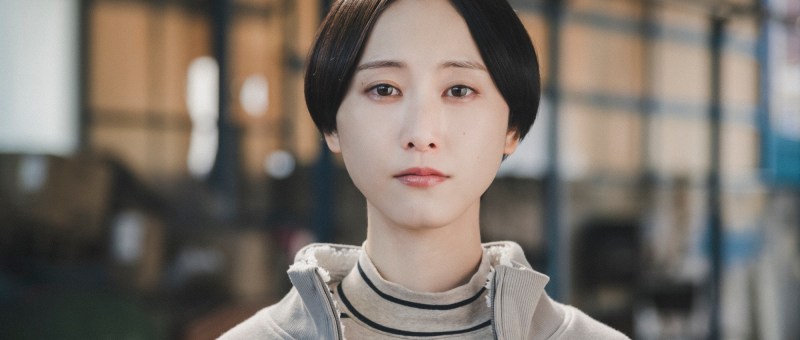
At around thirty, Manami (Rena Matsui) is beginning to lose patience with herself feeling that she’s achieved little in her career as a theatre director in the last 10 years while continuing to work part time at her mother’s hair salon. Her younger sister, Nao (Miwako Kakei), left abruptly for the city some time previously and the pair have hardly spoken since partly as we discover because of a high school falling out that continues to play on Masami’s mind in undermining her sense of confidence in her art. 

The two women have in many ways chosen different paths, Nao striking out by heading to the city and getting a regular office job and Manami staying at home trying to make it work in theatre but finding herself treading water. On the night that Nao dies, the sisters mirror each other each black out drunk collapsed in the street but only one of them is alone which in the end perhaps makes all the difference. Out to dinner with members of her theatre troupe celebrating an engagement, Manami has far too much to drink, much more than than anyone else or than is really appropriate becoming embarrassing in her belligerence as she lays into even her closest friends while others wonder why they bother with the troupe at all now that most of them are ageing out of their carefree days, have full-time paying jobs and growing familial responsibilities to take of. 

Nao, meanwhile as we discover, was pressured into drinking more than was wise by her boss at a semi-compulsory work do, an all too common form of power play in the contemporary working culture. Carrying her own share of guilt, Manami is alerted to this hidden source of her sister’s suffering by one of Nao’s colleagues, Mihashi (Manami Enosawa), who alone attended the funeral. Facing the same continued harassment, Mihashi is determined to confront her boss with the help of Niiyama (Kenta Kiguchi), an activist working on behalf of employees experiencing workplace bullying, but is later blamed herself with the implication that Nao drank on her behalf while she perhaps should have stayed to make sure she was alright before leaving for the last train. Her colleagues insist that Nao seemed cheerful and engaged with the party, while Manami and her actress friend Sanae (Nanami Hidaka) wonder if she wasn’t just playing the part, that in feeling disconnected from her family she wanted to feel accepted by those around her. 

In an unexpected turn of events, however, Manami decides to not to take Nao’s employer to task or attempt to change a dangerous and outdated workplace culture but to try and make peace with difficult relationship they had through restaging the high school play that set them apart which as it turns out was actually written by Nao but for which Manami had taken credit. Along the way she’s led towards a more commercial path by the duplicitous Niiyama who turns out to be a bit of a sleaze and not much better than those he claimed to be challenging. What she discovers is that restaging Nao’s play may not be the best way to honour her, gradually working through her grief and guilt by writing an original piece inspired by their relationship while reconsidering herself and her life up to that point. Of course, in one sense, she reduces Nao to a plot device in the mere motivation for her own creative rejuvenation while partially letting herself off the hook in discovering a family secret that explains a lot about her difficult relationship with her mother but does at least allow her come to terms with her sister’s death in letting her burn out bright just as in the alternate ending she’d crafted for Anna Karenina as a woman driven to extremes by the strictures of her society. 


Original trailer (no subtitles)
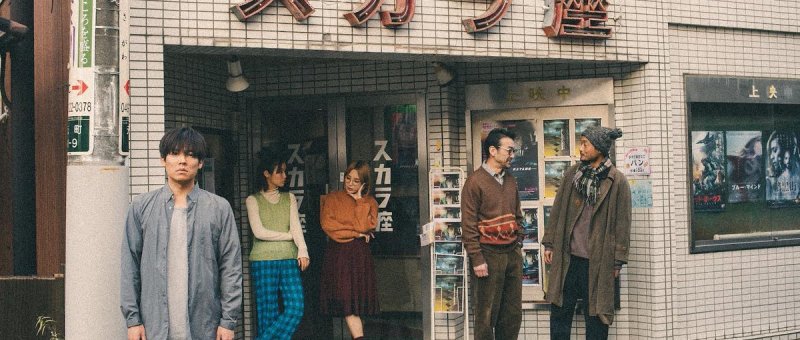
Twilight Cinema Blues (銀平町シネマブルース, Hideo Jojo, 2023)

Japan’s mini theatres have been in a status of crisis since the pandemic. Already struggling under the weight of changing times the immediate restrictions pushed many over the edge unable to entice older regulars back into screens or find a new audience among the young. This is doubly bad news for the industry as a whole as it’s mini theatres that allow indie films the platform they need to succeed and without them there is little avenue for films produced outside of the mainstream. Like Lim Kah-Wai’s Your Lovely Smile, Hideo Jojo’s Twilight Cinema Blues (銀平町シネマブルース, Ginpeicho Cinema Blues) similarly extols the virtues of the mini theatre which is not just somewhere to watch films but a place to belong that has room for anyone and everyone that wants to be there.

That’s more than true for Takeshi (Keisuke Koide), a struggling man approaching middle age who’s become near destitute and is almost sucked into a welfare scam targeting the homeless by a pair of shady yakuza claiming they run an NPO. At the orientation he runs into Kajiwara (Mitsuru Fukikoshi ), the owner of a mini theatre who declines to join the gangsters’ scheme but offers Takeshi the opportunity to bunk in his storeroom while working part-time little knowing that to Takeshi this particular mini cinema is like a return to source allowing him to rediscover his love of film.

But the mini cinema itself is also struggling. They simply don’t get bums on seats and Kajiawa is behind on paying his staff. Though they have a small collection of regulars, they aren’t enough to keep the lights on on their own. Even the projectionist is thinking he’ll probably retire along with the machine. Unable to afford new films, Kajiawara relies on cheap and easily licensable classics such as old favourite Casablanca but is largely unable to see away out of his situation while feeling guilty over ending what was effectively a family business and local landmark. The building’s 60th anniversary, 60 being a symbolic number in Japanese culture as it represents a full turn of the Chinese zodiac and literal new start, presents an opportunity to both Kajiawara and Takeshi to begin to move forward by renewing their faith in cinema.

The faith of Takeshi’s homeless friend Sato (Shohei Uno) needed no renewing. Though he had nothing, the ability to see a film twice a month made him feel human while the community at the cinema is perhaps the only one that still accepts him. He offers a small prayer after every film, and instructs Takeshi that he should the same. But his openhearted faith is also his undoing, allowing him to fall for the yakuza scam little realising they’ll force him to work for them taking half of the social security payments they helped him sign up for in the process. In the outside world, men like Sato find only exploitation and prejudice with cinema their only refuge.

Then again, filmmaking isn’t easy. A young woman who desperately wanted her debut film to play in her hometown cinema has based her first feature on the life of her father, a failed film director who drank himself to death (in a neat allusion to Oshima’s Cruel Story of Youth, her film’s title literally translates as “cruel story of a director”). Similarly, the suicide of a much loved assistant director has prevented those around him from moving on, preoccupied with the shock his death caused them in its suddenness and lack of obvious cause. They blame themselves sending their lives into a downward spiral that results in crushing financial debts and the end of a marriage. In some ways, the film is an ode to the ADs who keep everything running, including on occasions the director, and are in a sense the custodians of filmmaking.

Still, it’s clear that not everything can seamlessly repaired. Times have moved on even if some have been left behind and you can’t always simply reclaim what you’ve lost, but you can always start again with another spin of the wheel and make the most of what you’ve got. It won’t be the same, but that doesn’t mean it won’t be good. Jojo’s heartwarming tale of cinema has an undercurrent of darkness and despair running beneath, but also suggests that the silver screen can be a beacon hope when the world is at its bleakest and not least for those whose existence largely lies behind it.


Screened as part of this year’s Japan Foundation Touring Film Programme.

Original trailer (English subtitles)

Infinite Foundation (無限ファンデーション, Akira Osaki, 2018)

Sometimes the music finds you when you need it most. So it is for the heroine of Akira Osaki’s wistful coming-of-age drama Infinite Foundation (無限ファンデーション, Mugen Foundation). To better capture the teen experience with an immediate naturalism, Osaki’s cast was provided with no script only a vague outline inspired by the songs of singer-songwriter Cosame Nishiyama and asked to improvise each individual scene. What results is suitably intense tale of complicated teenage female friendships, frustrated ambitions, and fear for the future in which a shy, introverted young woman gradually finds the courage to chase her dreams with the help of an ethereal songstress and unexpected solidarity. 

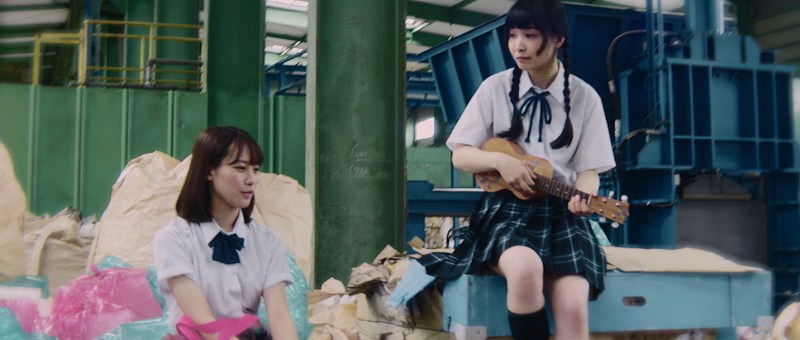
Mirai (Sara Minami), whose name literally means “future”, is a dreamy young girl who thinks she’s not much use for anything so usually idles away her time in school drawing dress designs in her sketchbook when the teacher’s not looking. In fact, she’s technically in summer school catch up, but every time the teacher returns to check on her he notices that she still hasn’t got round to filling in the answers on her maths test. Wandering home one day she hears the gentle strains of a ukulele coming from a nearby recycling plant and strikes up a friendship with a strange girl, Cosame (Cosame Nishiyama), with her hair in long plaits and dressed in a school uniform. Meanwhile, she’s also unexpectedly approached by the stylish Nanoko (Nanoka Hara) who, taken with her beautiful designs, insists that she join the drama club to help them come up with costumes for their imminent production of Cinderella. 

Perhaps Mirai will be going to the ball after all. Before that however she’s still contending with a sense of insecurity while her cheerful and supportive mother (Reiko Kataoka) tries to encourage her to pay more attention to her studies. Pushed towards conventional academic success, Mirai had been a little embarrassed about her love of drawing, particularly as it’s something as “frivoulous” as dress designs which she can’t believe anyone else would value. Rather than hanging out with friends, she spends most of her time sewing in her room, retreating into comfortable fantasy but also lonely and a little bit lost. So when Nanoko is so enthusiastic about her artwork it gives her a much needed confidence boost showing her that someone at least thinks her drawings have value and are not silly or embarrassing wastes of time. 

The drama club, however, is something of a baptism of fire for someone who feels themselves not good with people and at sea with interpersonal relationships. Mirai sticks fast to Nanoko, but Nanoko’s longterm bestfriend Yuri predictably doesn’t like it that she’s abruptly dragged this other person into their shared activity while the other members of the group struggle to relate to her, describing her as difficult to talk to and leaving her sitting in the corner doing her own thing while they get on with rehearsing. The main drama occurs when Nanoko makes a surprising announcement that puts the show in peril. She has a big audition lined up in Tokyo for a part in a film which makes it impossible for her to also star in the play. Nanoko asks for understanding, but does so with a degree of entitlement and superiority that cannot help but annoy her friends. She implies that she’s in this because she’s a real actress, while they’re only messing around in a school play. Mirai isn’t sure where to put herself, her new friend has just betrayed her and now she doesn’t know if they were ever friends at all or she was just using her to increase her hold over the drama club. 

The message that Mirai begins to get is that she may have real talent, but it’s up to her to achieve her dreams. She begins to feel that everything she’s been doing with her life has been superficial and incomplete because she never had the confidence to follow through, living in her own tiny bubble alone in her room for fear of getting hurt out in the big wide world. While the mysterious ukulele player sings her inspirational songs about living with loneliness, Mirai begins to build her infinite foundations towards a more confident future as a young woman determined to fight for her dreams.


Infinite Foundation streamed as part of this year’s online Nippon Connection Film Festival.

Original trailer (no subtitles)

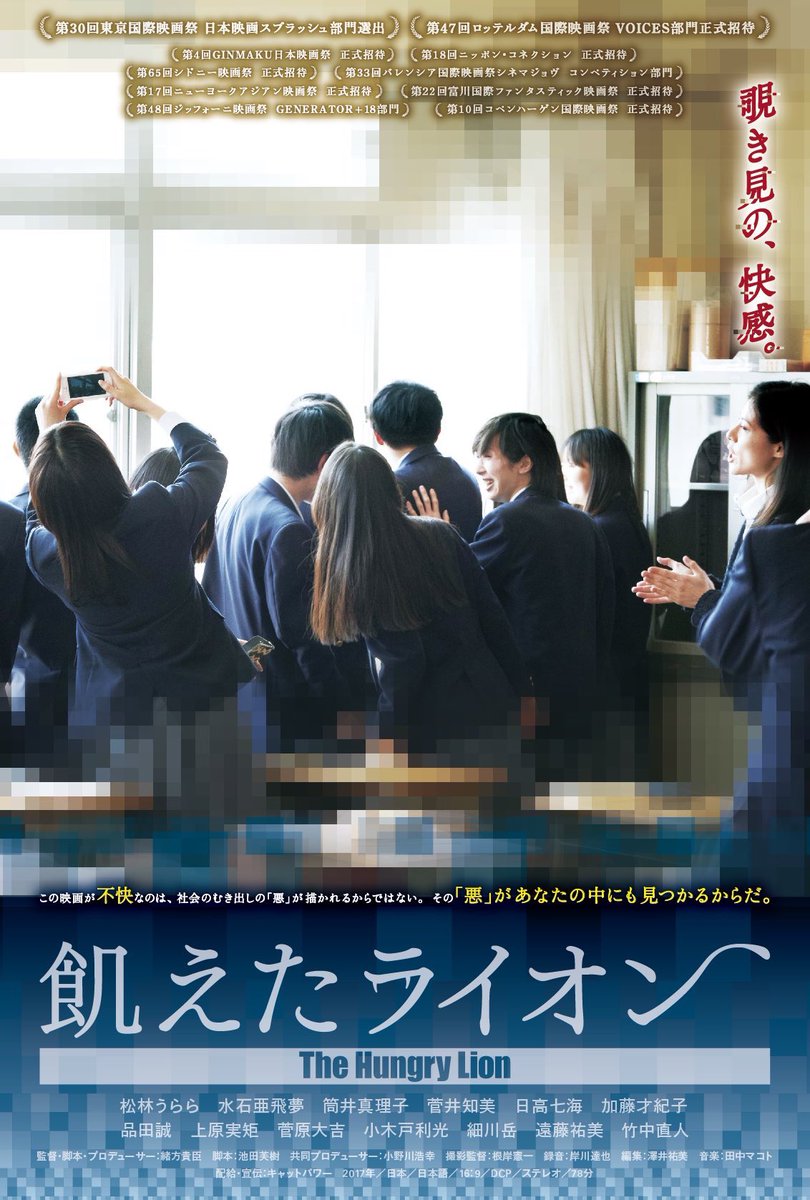
The Hungry Lion (飢えたライオン, Takaomi Ogata, 2017)

Hungry lion posterRumour has a strange power. A baseless lie, no matter how innocuous, can quickly derail a life but the power of lie with a tiny grain of, if not truth exactly but circumstantial evidence, can prove ruinous when there are vested interests at play which make belief an attractive prospect. The heroine of Takaomi Ogata’s The Hungry Lion (飢えたライオン, Ueta Lion) finds herself at the centre of such a storm through no fault of her own, becoming a victim not only of her country’s restrictive social codes, tendency towards victim blaming, and reluctance to deal openly with “unpleasant” topics, but also more directly of the latent jealousy lurking in her closest friends which finds a convenient home in someone else’s scandal. Nobody will come to her rescue, her “disgrace” has exiled her from the group and she finds herself abandoned as a lonely a sacrifice to the hungry lion that feeds on social shame.

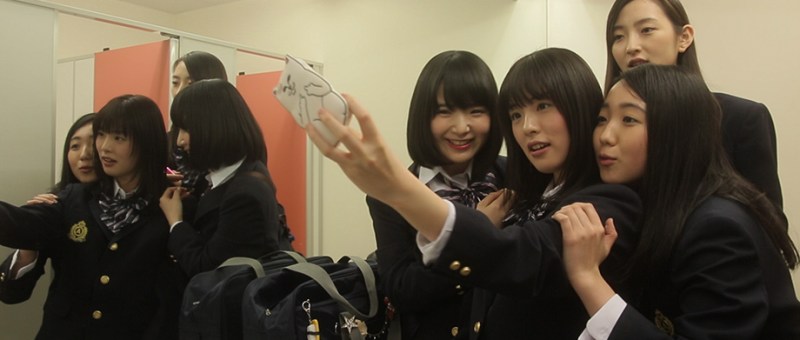
High school teacher Mr. Hosono is not exactly popular with his students. He is strict with the boys but less so with the girls, as he proves greeting one tardy student who blames a train accident for his late arrival by berating him about his regulation busting necklace while allowing a female student, Hitomi (Urara Matsubayashi), who arrives a couple of minutes later to take her seat unharrassed. Midway through the register, Mr. Hosono is called away and eventually arrested in connection with the viral video all the kids were looking at before he arrived which appears to show him in a compromising position with a student. For one reason or another, a rumour spreads that Hitomi is the girl in the video. She isn’t, but few believe her strenuous denials and her life becomes one of constant strife not only because of the bullying itself, or the injustice of being falsely accused and then disbelieved by those closest to her, but by the way she is made to feel embarrassed and shamed for causing trouble to others even though she herself has done nothing wrong.

A “relationship” between a teacher and a student is never appropriate, and Mr. Hosono has at least been removed from his position at the school, but no one seems very interested in identifying the girl in the video in order to help her, only to spread ruin and rumour. Hitomi is not the girl in the video, but even if she had been there is no support on offer to her as a person who has been abused by someone in a position of power she should have been able to trust, nor are there any measures in place to ensure her academic life will not be unduly damaged by becoming involved in such a traumatic incident. Aware of the rumours, the school accepts Hitomi’s assertion that she is not the girl but still suspends her to avoid “awkwardness” and protect their own reputation. Likewise, her own mother and sister are far from supportive, berating her for bringing shame on the family and creating problems for them in making the family a target rather than standing by her in her ordeal whether she had been the girl or not.

The rumour itself seems to spring from persistent shaming and stigmatisation of atypical families. Hitomi is 18 and she has a boyfriend who is a little older. He has some shady friends and likes to push buttons as he does by causing mild embarrassment to Hitomi by taking her into the curtained off “adult” section of the local video store in an attempt to shock her. Nevertheless the pair eventually make their way to a love hotel (where they are not age checked) and he films her in a compromising position. Girls talk and Hitomi’s friends all know about her relationship which is also plastered all over her social media on which she is something of a star. Some of her friends are jealous but also harbour a degree of disapproval and the mere fact that she is already sexually active ties her to the girl in the video and casts her in an “impure” light in the cute and innocent world of high school girls. Similarly, her boyfriend’s estimation of her drops after she consents to sleep with him while his leering friends make lewd comments and regard her as an “easy” girl who has lost the right to refuse their advances.

Ostracised for essentially becoming a “fallen woman”, Hitomi is left entirely alone with no one to turn to for support. Later, authorities are keen to stress that it’s important to speak out if you’re suffering because adults will always help children but like everything else they are just empty words. The school give out a pamphlet on the importance of prudence when using social media, but refuse to accept their responsibility in failing to protect their students. The news meanwhile becomes obsessed with tearing apart Hitomi’s family, laying the blame at their feet, insisting that Hitomi’s downfall is in someway a result of her parents’ divorce even blaming her mother for having the audacity to find a “boyfriend” before her children were fully grown. The image we had of Hitomi is suddenly reversed. No longer is she a “slutty schoolgirl” involved in an illicit relationship with her teacher, but a neglected child damaged beyond repair by “liberal modern society”.

Reputation is what matters, but reputation is easily manipulated and rewritten, muddy even when objective truth is revealed. Ogata shoots in brief vignettes, each severed from the next by a stark black screen which forces us to examine the objectivity of each scene as distinct from the others, assembling our own versions of “objective” truth which are in fact guided by Ogata’s carefully crafted editing. Fake news has an agenda, truth does not, but it’s often much easier to believe the lie especially if the lie benefits us much more than the truth or enables us to feel superior to someone we secretly think needs taking down a peg or two. Society is a hungry lion which feeds on shame, externalised and internalised, as those who find themselves on the wrong sides of a series of social taboos become unwilling sacrifices to its unkind, unforgiving, and unrelenting hunger for suffering.


Screening at New York Asian Film Festival 2018 on 30th June, 2.45pm.

Original trailer (English subtitles)