
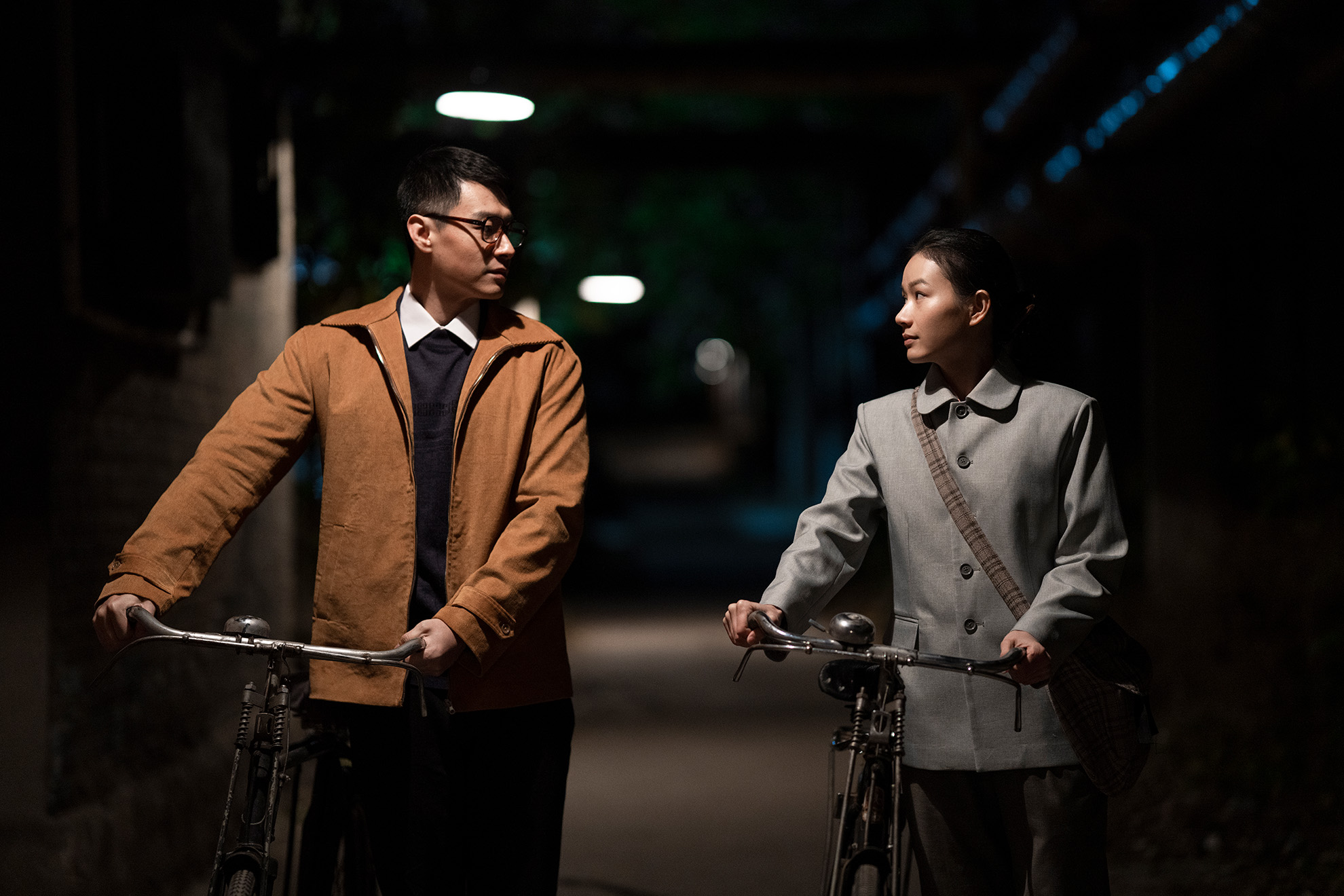
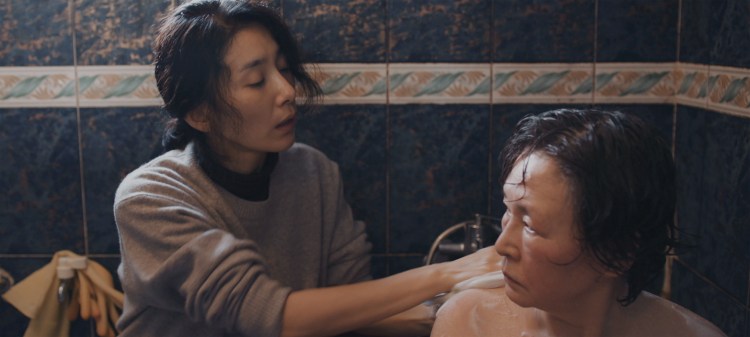
Adapted from Zhang Xinzhen’s autobiographical novel Dream, Wang Chao’s A Woman (孔秀, Kǒng Xiù) charts an ordinary factory worker’s path through the Cultural Revolution and gradual disillusionment with Maoism before eventually achieving her goals of becoming a novelist amid the social transformations of the 1980s. In some ways a victim of her times, Kong Xiu is ironically an “ironclad” woman overcoming all hardship but it seems unable to escape the patriarchal oppressions of a conservative society.
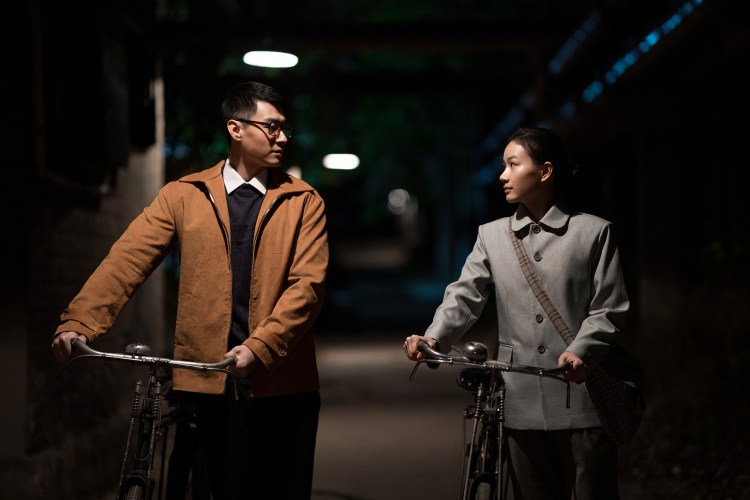
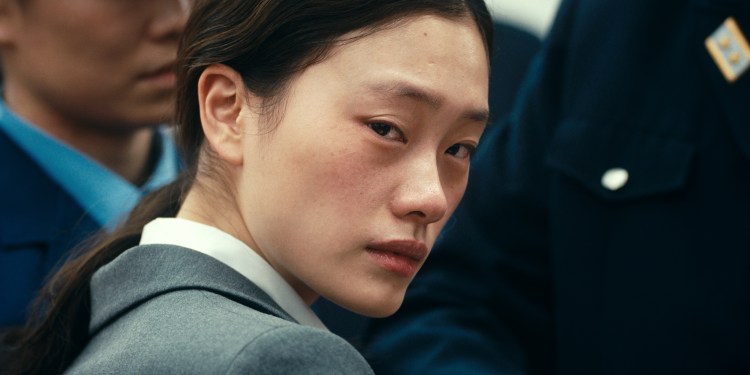
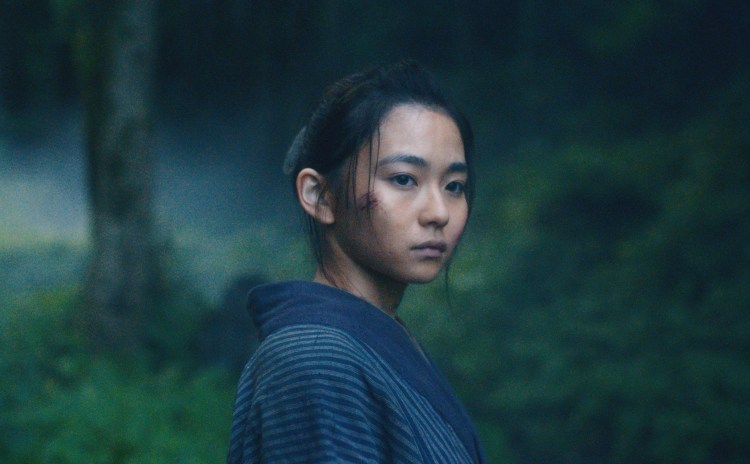
Opening in 1967, Xue (Shen Shiyu) is told by her mother that at almost 19 she is old not to be married and dutifully becomes the wife of a local man, Hanzhang (Wang Xuedong), whom she quite likes because he is an intellectual even though that is quite a problematic thing to be in the early days of the Cultural Revolution. Xue had once been told that she was the best writer in her class and gifted a book of Grimm’s Fairytales by her proud father, but partly because she is a woman and partly because of the times she is not permitted to finish school and begins working in a textiles factory. Nevertheless she feels proud to be a “worker” and seems to have bought into the Maoist ideology she is regularly required to chant out before work which insists that they serve the only god that matters in the Chinese people through the practice of their productivity.
Chanting about feudalism and imperialism, Xiu is blind to the ways in which it is only the author of her exploitation that has changed for it is still others that profit from her labour giving little back with false promises of social good. She finds herself torn between two worlds, rejecting the feudalistic values of the peasant village where she grew up for the shining modernity of the city. Five years into her marriage, Xiu has two children and has moved into the factory women’s dorm while her relationship with the weak-willed Hanzhong flounders amid their obviously different desires. Hanzhong’s mother objects to Xiu’s modern womanhood, merely sneering when she explains that she’s a “worker” and viewing her as a failed wife who shirks her duties to their family by not returning on Sundays, her only day off, to help out on the farm.
Meanwhile, she’s grown tired of Hanzhong’s sexual demands especially as he becomes Indignant on being asked to wear a condom and she wants no more children. She has already had more than one abortion and is warned by the doctor that she may be endangering her long term health if she carries on doing so with the same frequency. After divorcing Hanzhong she marries another man and has another son but almost dies in childbirth while her second husband, Yang (Zhu Dongqing), does not even bother to return until after the child is born. Dong, her first son, had been considered part of her husband’s family and so she lost him in the divorce, while Yang begins to reject her daughter, Xue, once his own child is born leading her to live with her widowed aunt, Jun, who explains that she wasn’t all that broken up about her husband’s death. He was a nice enough chap but the marriage was arranged by the Party and they were never really man and wife.
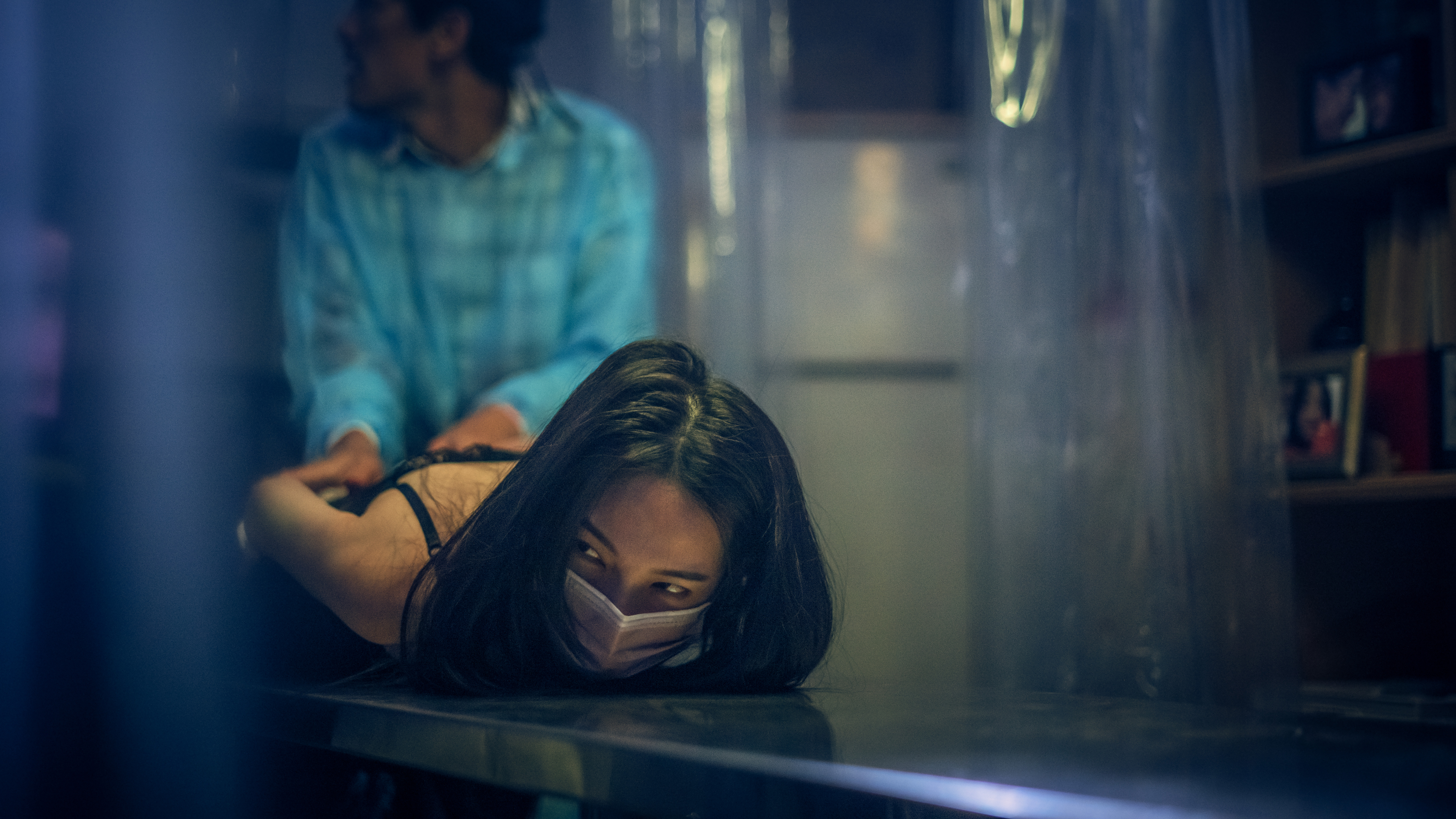
A teenage Xue who’s taken to listening to cassette tapes of Teresa Teng songs in the park with a local boy throws back at her mother that she has no right to speak because she has never known love, something the film suggests that both Xiu and her sister have ben robbed of because of the oppressively patriarchal social codes of the feudal village and the Communist Party respectively. Xiu’s second marriage is worse than her first as Yang is violent, strangling or smothering her during sex she otherwise rejects, but she feels she cannot leave him once he becomes ill and is physically disabled. Meanwhile, her pride in her role as a “worker” at the factory begins to weaken as she sees through the cult-like chants and is tacitly accused of being a counter revolutionary for her lack of commitment having been betrayed by both her husband and someone she thought a friend who report her for having said out loud that the factory’s productivity drive was just PR fluff and lies knowing that they produce shoddy goods and cut corners just to look good on paper.
The film begins to open up in the late 1970s once Mao is gone and the Cultural Revolution ended, Xiu remembering a love of literature while there is a sense of exuberant freedom now that you can read Rousseau out loud in the market square. The universities have reopened and even those of Xiu’s generation who missed out consider applying to make up for lost time, but then again attending a book party with sympathetic colleague Comrade Wu (Yu Qingbin) who has long carried a torch for her their brief moment of courtship is abruptly cut short when a patrol passes by and they have to turn out the lights for fear of being caught dancing. When Xiu eventually achieves her dreams and has a story published in the Workers’ Daily, the factory suddenly decides she’s a good role model after all and an embodiment of the spirit of the times even recruiting her to give a speech and displaying her manuscripts for the other workers to read.
“It’s the past, don’t let it trouble you,” Xiu remarks on receiving a long overdue apology and in many ways it seems to be the way she lives her life which has been filled with hardship and heartbreak from the broken relationship with her eldest son who declines to return her letters to her seeming loneliness once again returning to the village a new woman but one also who stands astride the contradictions of a new China. Each step of her life is accompanied by the sound of a train, heralding her path towards “modernity” if coloured by a sense of loss in the persistent memory of what it once took from her. A poignant examination of the destructive social codes not only of the feudal era, but the false promises of equality under Maoism and the terrors of the Cultural Revolution, Wang’s drama may subversively suggest that it isn’t all sunshine and roses in an unseen contemporary China but nevertheless ironically hails its heroine’s “ironclad” resilience in the face of persistent social oppression.
A Woman screens July 23 as part of this year’s New York Asian Film Festival.
Trailer (English subtitles)
Images: © LOCO FILMS all rights reserved












 Windows on Worlds