A Century in Sound (百年の音色, Nick Dwyer & Tu Neill, 2024)

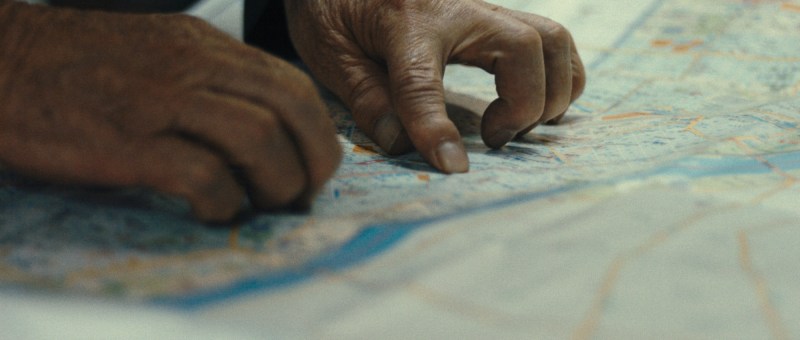
Listening cafes are a phenomenon particular to Japan in which the music is the draw rather than the quality of whatever refreshments are available. Indeed, as Nick Dwyer and Tu Neill’s documentary A Century in Sound (百年の音色, Hyakunen no neiro) makes plain, they are spaces of community and identity in which people with similar tastes come together even if, as at classical music cafe Lion, they sit in silence to better absorb the music. Exploring three such cafes which are themselves a dying breed, the film also examines Japan’s complicated 20th century history and the shifting tastes that accompanied it.

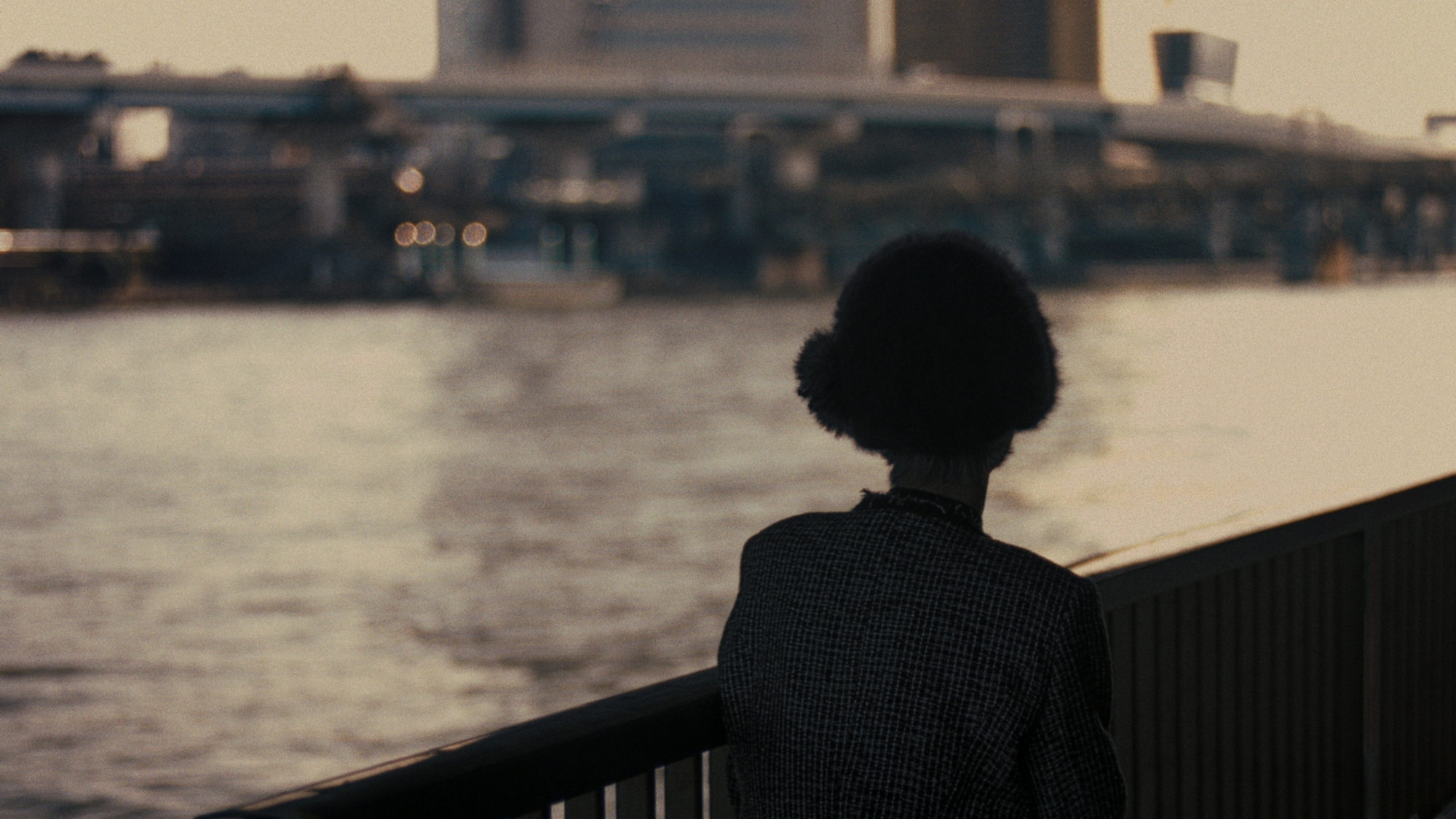
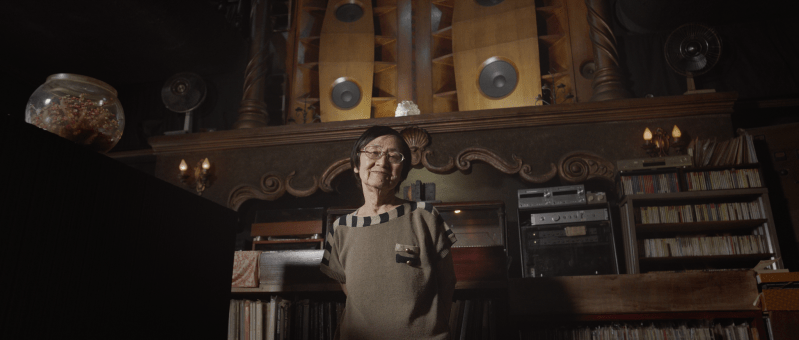
This is evident in the first cafe visited, Cafe Lion, which opened in 1926 and catered to a then new interest in European classical music which in Japan was viewed as something new and exciting. The nation was still emerging from Meiji-era transition and at that time, before the war, entering a moment of fierce internationalism and creativity. The current manager is in her 80s and relates her own memories of another Tokyo before the fire bombing along with the ways the city changed afterwards. Cafe Lion was among the first buildings to be rebuilt and they pride themselves on the quality of their sound system, even deciding to stop serving food because it was considered too noisy and got in the way of the customers’ ability to hear the music. Her son will be taking over the business, so she’s hopeful that this tradition will survive and they’ll be able to continue spreading the love of classical music in the wider community.

The reason these spaces originated was that in the beginning records and sound equipment were expensive so people couldn’t afford to buy their own and would request music they wanted to hear at a cafe instead. Jazz Kissa Eigakan didn’t open until 1978, but though it may have arrived earlier, the owner, Yoshida, attributes the popularity of jazz to a desire for freedom in the post-war society as exemplified by the protests against the security treaty with the Americans and subsequent anti-Vietnam War movement. A former film director, he found the same energy in the Japanese New Wave and opened the cafe to share his love of jazz and film even going so far as making it his life’s work to construct his own sound system to get the best possible sound for his customers that won’t leave them feeling tired or overwhelmed. He also hosts film screenings demonstrating the various ways these spaces have become community hubs that provide a refuge for people with similar interests along with a place to relax and be welcomed in an otherwise hectic city. 

That seems to be the draw for Atsuko, a regular at rock music cafe Bird Song which mainly plays Japanese music from the 70s and 80s. In her teenage years, she’d been a frequent visitor to famed rock cafe Blackhawk before going travelling and then settling down to have a family. Now regretting that she gave up her love of music, she’s returned to Bird Song to rediscover it along with another community of like-minded regulars. While Yoshida discusses the era of the student protests, the owner of Bird Song cites Happy End’s 1971 album as a turning point in not only in Japanese music but culturally in moving towards the post-Asama-Sanso society and the consumerist victory that led to the Bubble Era. He posits City Pop as the sound of consumerism and while looking back on his time as an ad exec in the era of high prosperity does not appear to think they were particularly good times or at least that they lacked a kind of spirituality that his customers are looking to rediscover in music. 

Dwyer and Neill make good use stock footage and films as well as artful composition to compensate for the talking heads while fully conveying the richness and warmth of these spaces along with their welcoming qualities. Though it’s obviously much easier now to access music wherever and whenever one wants, the cafes provide an optimal listening environment that no home system can replicate while simultaneously providing a place where people can come together and shut out the outside world. Though they may be dying out in a society driven by convenience, the owner of Bird Song has to work a second job as a security guard just to keep the lights on, the cafes represent the best of what a city can be in recreating, as one customer describes it, a village mentality of care and community built on the back of a love of music.


A Century in Sound Escape screened as part of this year’s Nippon Connection.

Trailer (English subtitles)
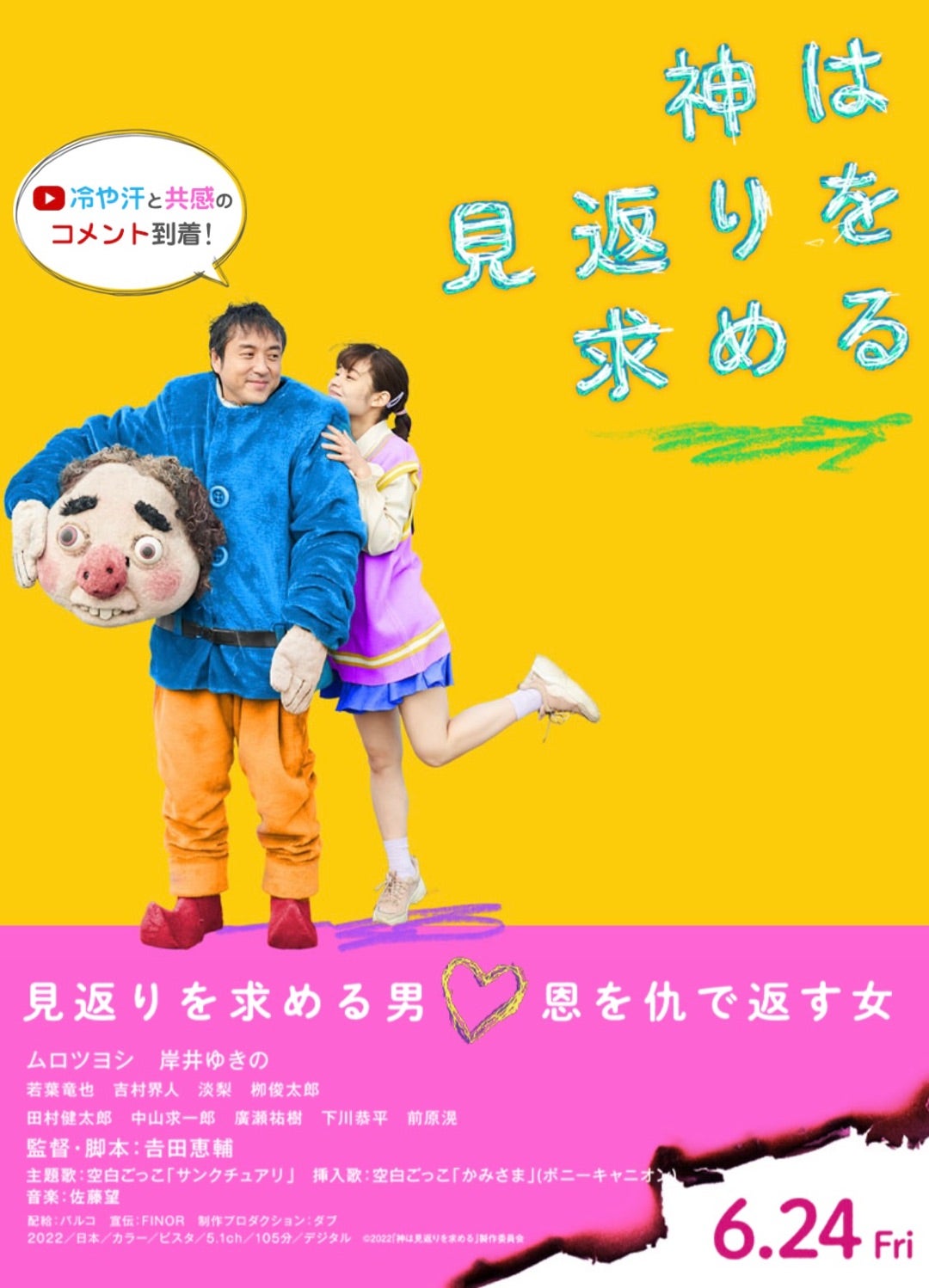
God Seeks in Return (神は見返りを求める, Keisuke Yoshida, 2022)

It’s perfectly natural a lot of the time to feel as if you expect nothing in return for helping someone, after all it’s only what you should do as a fellow human being. But really we do expect something even if it’s just acknowledgement and it can be hurtful and upsetting if don’t feel we get it while the sensation that we’re being taken advantage of can leave us feeling silly for having offered in the first place. Keisuke Yoshida’s Good Seeks in Return (神は見返りを求める, Kami wa Mikaeri wo Motomeru) revels in these human paradoxes as a self-confessed nice guy is pushed to breaking point by the fallout from all his attempts to be neighbourly which seem to have backfired exponentially. 

Then again, Tamogami (Tsuyoshi Muro) almost certainly does at least hope for something in return when he agrees to help out struggling YouTuber Yuri (Yukino Kishii) with her moribund channel by enlivening it with his skills in video editing and design. He isn’t helping her in order to engineer a sexual relationship, and in fact turns Yuri down when she suddenly disrobes exclaiming that it’s the only way she can repay him for his kindness, but does appear interested and is additionally irritated when she begins hanging out with a bunch of vlogger cool kids he thinks are just exploiting her naivety. Yuri had already payed him back with homemade beef stew, an offer that was accepted in the interest of friendship, but her constant references to repayment of a favour expose her idea of relationships as essentially transactional which to be fair they well may be. Even so, she appears somewhat guileless, opportunist rather than calculating and desperate for attention.

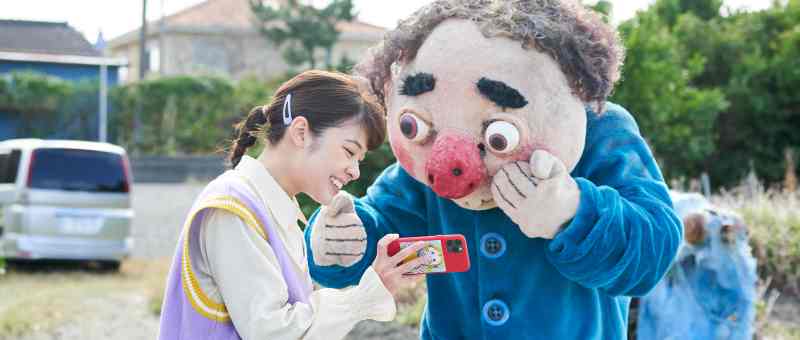
That might be why she can’t see that the reason she became unexpectedly popular after agreeing to a “body paint” stunt with a pair of more established YouTubers is that people wanted to see her naked which is why they’re always requesting more of the same. The first half of the film plays as quirky comedy, an offbeat romance between a nice middle-aged man and a dippy young woman who thinks she’s no good at anything and incapable of being alone. But things soon turn sour when one of Yuri’s stunts seems like it might have serious consequences for a local business owner and Tamogami has to muster all of his PR skills to put this particular fire out. The simple friendship between them that was brokered by a weird ogre-like mascot suit Yuri christens Jacob is disrupted by Yuri’s desire for fame as she undergoes a complete personality transformation after falling in with a group of more successful, media savvy YouTubers who have fancy design skills and marketing teams. She dismisses Tamogami as old-fashioned and joins in when the others make fun of him in rejection of the genuine friendship that had arisen between them.

When a friend he’d helped out financially and even stood guarantor on his debts takes his own life Tamogami is deep in the hole. Finally he wonder’s if he shouldn’t have something in return for all the unpaid labour he’s been doing for Yuri but she predictably brushes him off until he finally embarks on a weird vendetta trying to “expose” her YouTube channel for being founded on lies and exploitation. There may be something in her that’s regretful, wistfully looking at the sweater Tamogami had given her with cute illustrations of her and Jacob on it, while her new “god” Murakami openly mocks him leaving her conflicted about the dark side of their new internet endeavour effectively bullying a guy whose only crime was being nice and bit too dull and middle-aged for her new hipster friends sure to drop her like she’s hot as soon as something goes wrong.

Though not as extreme as some of Yoshida’s other films, God Seeks in Return suggests that nice guys never prosper but also that no one’s really as “nice” as they think they are. We wall want something in return even if it’s just a thank you and not to be belittled or taken advantage of. There can be something paradoxically selfish in niceness in which people do it more for their own gratification or to feel they are better than those they help and conversely the same in those who take advantage of others. In it’s way bleak and melancholy in its vision of human relationships, the film nevertheless holds out a faint hope in the reality of the genuine connection between its mismatched heroes no matter how dark and twisted it may eventually become.


God Seeks in Return screens 1st June as part of this year’s Nippon Connection

International trailer (English subtitles)

Paper City (Adrian Francis, 2021)

In March 1945, the firebombing of Tokyo killed 100,000 civilians and devastated 16 square miles of the city yet 70 years later those who survived have yet to be acknowledged by their government which has made no investigation or attempt to assist those who lost everything to the fires. Adrian Francis’ documentary Paper City follows a series of now elderly men and women who experienced the tragedy first hand and worry that the lessons of the past are being lost especially with the increasingly nationalistic mindset of the current government which seems hellbent on remilitarisation and the end of the pacifist constitution. 

One of the chief concerns of the survivors is that there is no dedicated memorial to those died in the bombing. The remains of some victims are housed behind the memorial to the victims of the 1923 Great Kanto Earthquake, hidden away and out of sight. Survivors cite the example of other nations such as Germany in which the government has acknowledged its role in the harm caused to civilians through warfare and has acted to protect those who lost their homes, livelihoods, and families because of it. In Japan they feel ignored and forgotten, particularly aggrieved because government policy at the time exacerbated the problem in that they were instructed to stay and fight the fires rather than to evacuate the city. Many had been lulled into a false sense of security believing that as the areas they lived in were residential and had no military facilities they would not be targeted little knowing that the bombing would be indiscriminate with no intention to spare civilian life. 

As one elderly man puts it, they lost everything. Only a child himself as many of these now elderly people were, he lost not only his closest family members but his home and community along with any means they may have had to support themselves economically leaving them little more than destitute beggars in the ashes of a ruined city yet the government did nothing to help them. The Morishita district is one of few that made an attempt to record the names of the victims, those who were confirmed dead and those who were assumed so whose bodies were never found, holding a memorial service for them every year. Meanwhile another man only 14 at the time recalls being drafted to help clear up bodies using firemen’s hooks to pull them from the local river and now all these years later still unable to forget the face of a young mother with a child on her back whose hands still held tight to her hair. Another recalls seeing bodies piled up in a local park and disposed of en masse without dignity or identity as if they had never existed at all. 

What they fear most is being forgotten, that with the city entirely rebuilt no one even remembers anymore that it was once burnt to the ground. They petition the government for official recognition while protesting the injustice of war and the Abe administration’s determination to abandon the pacifist constitution. Protesting outside the Diet, they are ironically heckled by a nationalist counter protest who insist that the Japanese state is not at fault and the protestors should be taking their concerns to the American embassy instead. A kind of hopelessness sometimes falls over them, believing that the prospect of change is slim while the current iteration of the LDP remains in government while knowing that a change of government is also itself all but impossible. 

In any case, they know that their time is running short and they will need new voices to carry their message to the next generation to ensure that the firebombing of Tokyo is never forgotten. They share their harrowing stories of rivers on fire and blood red skies as a warning to the living while honouring the souls of the dead pausing for a moment to admire the figure of a wounded tree still standing tall reaching for the sky, in its way also a monument to endurance. Mainly observational in style with some direct interviews, Francis’ documentary captures the sense of desperation in the older generation that their suffering must not be in vain hoping that their message will get through and that one day there will be no more cities of ash or lonely children left behind to mourn them. 


Paper City streamed as part of this year’s Nippon Connection.

Original trailer (English subtitles)

Salaryman (サラリーマン, Allegra Pacheco, 2021)

The concept of the salaryman is deeply associated with Japan and with a particular way of working but is also in its own way troubling in its implications about the relationships between the employed and the employer in the contemporary society. Allegra Pacheco’s documentary Salaryman (サラリーマン) explores this culturally specific phenomenon along with its radiating effects on the wider society and the attitudes of younger workers who are beginning to turn their backs on the duplicities of the salaryman dream.

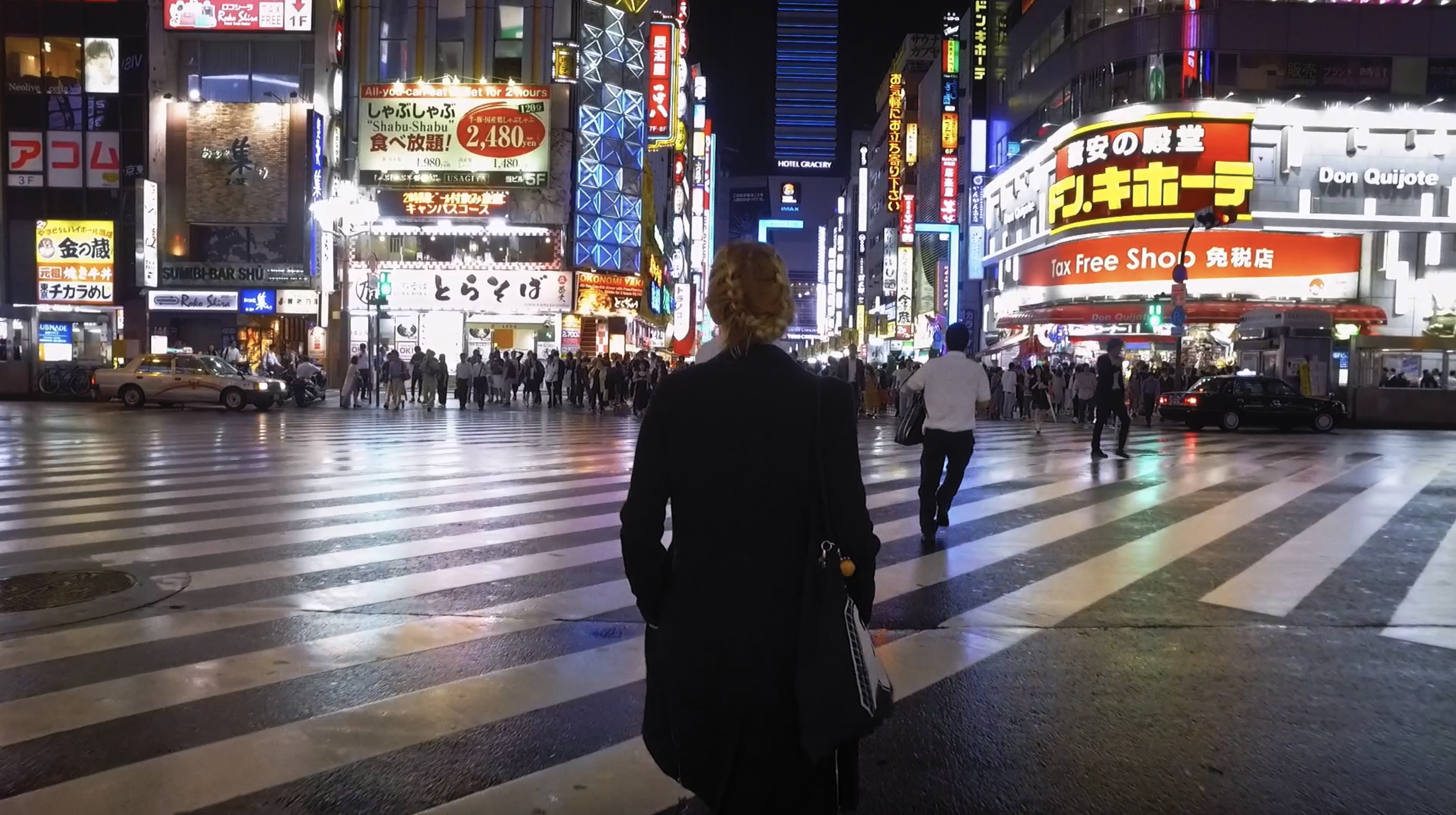
Originally from Latin America, Pacheco was first struck by the ubiquitous sight of drunk men in suits asleep on the streets of the nighttime city. The phenomenon has become so commonplace that few would remark on it or even really notice, yet to an outsider such as Pacheco it appeared strange. After all in few other cities would it be possible to fall asleep in a public place and wake up unharmed in full possession of one’s belongings. What she discovers through talking to several salarymen is a story of continual erasure in which the “corporate cattle” as one brands himself are left with no other acceptable outlets to relieve workplace stress born of an oppressive and bullying culture than excessive drinking often as part of the semi-compulsory nomikai afterwork drinking sessions. Having missed the last train, these men often have no other option than to simply wait until the morning when rather than returning home they replace their shirt at a convenience store and head straight back into the office.

These excessive working practices of course take a toll on the family when men rarely arrive home before 10pm if at all and leave early for the morning commute with little opportunity to interact with their wives and children. Pacheco then follows one working mother who is more or less left to handle the entirety of childrearing alone in her husband’s continual absence having to work taking her son to daycare and picking him up into her own working day along with the housework and cooking her own dinner. Meanwhile Pacheco also turns her attention to the phenomenon of the Office Lady or “OL” which is not exactly a salarywoman but separate category of worker treated almost like corporate domestic staff. Such women are often looked down on by the society around them which views the job solely as a stopgap for those looking to leave the workforce on marriage to become a traditional housewife. 

The presence of the OL may reinforce the idea of the corporate entity as a patriarchal authority in which the female executive or salarywoman is not regarded as an equal in what is often regarded as a homosocial society. One commentator describes the self-image of the salaryman as a contemporary samurai who owes ultimate loyalty to his company prioritising his corporate family over the social. Another reason salarymen can be found scattered over the city another expert argues is that they simply fear going home to a less certain environment in which familial bonds may have begun to fray under the strain of their workplace stress. Though Japan actually has well placed labour law designed to protect employees from exploitation it is not well enforced partly because of the nature of the relationship between workers and employers that prevents employees from speaking up about workplace bullying or injustice. 

These bonds between the employed and the employer are largely founded on the post-war promises of the era of rising prosperity in which companies offered jobs for life along with a tacit agreement to look after employees and their families which encouraged the already collectivist mindset that allowed workers to believe they were working towards a common goal of rebuilding the nation and ensuring economic prosperity for all. Such bargains however largely fell apart after the collapse of the Bubble Economy leaving the present generation with all of the stress and few of the rewards their parents may have enjoyed. Pacheco interviews the mother of Matsuri Takahashi who sadly took her own life in exhaustion born of the exploitative working environment at a top advertising firm with a reputation as a “black company” regularly ignoring standard employment law in the knowledge that they are unlikely to be challenged for breaking it. Other young people similarly cite burnout and the fear of karoshi or death from overwork as reasons they decided to leave the corporate world but even they do not necessarily find fault with the system only point out that it suits some better than others and was no good for them.

Then again according to a man who organises the extreme commute as an ironic sporting contest, the pandemic may have issued a wakeup call to the ranks of salarymen realising how nice it is not to have to cram themselves into a rush hour train or miss their kids’ bedtimes because they can’t get out of a nomikai. According to him the salarymen and women of tomorrow will demand the right to work when and where they want less likely to conform to outdated ways of doing business or wilfully participate in a system of widespread exploitation when offered no guarantees of future employment by a company who may try to silence them if they speak up and is just as likely to casually discard them at the first sign of trouble. His belief that this working revolution may usher in a new age of mutual compassion may seem naive or idealistic but it seems there’s hope for the salaryman yet that he may finally discover the means to free himself from an oppressive and exploitative working culture. 


Salaryman streamed as part of this year’s Nippon Connection.

Original trailer (English subtitles)

I Go Gaga, Welcome Home Mom (ぼけますから、よろしくお願いします。~おかえりお母さん~, Naoko Nobutomo, 2022)

Naoko Nobutomo’s documentary feature debut I Go Gaga, My Dear proved an unexpected hit on its 2018 release striking a chord with many middle-aged and younger people facing similar issues to the director while preoccupied about how best to care for their ageing relatives. Her 2022 followup I Go Gaga, Welcome Home Mom (ぼけますから、よろしくお願いします。~おかえりお母さん~, Bokemasukara Yoroshiku Onegaishimasu -Okaeri Okasan-) once again follows her parents though this time witnessing her mother’s gradual decline and eventual hospitalisation along with her equally ageing father left alone at home. 

Nobutomo does retread some of the same ground reusing footage from the previous documentary to fill in gaps in her mother’s story giving a brief overview of life and marriage before the first signs of the Alzheimer’s with which she would later be diagnosed would appear. It is however also rawer, including several scenes of Fumiko in extreme distress calling out for a knife in order to end her life in a moment of frightening lucidity or walking around the house asking “what’s wrong with me?” 

The couple had hoped to stay in their home taking care of each other but as Fumiko’s condition declines that becomes increasingly impossible until she finally suffers a stroke and is hospitalised. Naoko frequently talks to her father Yoshinori about returning home to help him care for her but her offer is always refused. They tell her not to worry about them and to do the things she wants to do while she can but Naoko continues to worry. Explaining that her parents had married at a late age by the standards of the time and never expected to have any children, she recounts that she was raised in an extremely loving home and that sense of love and devotion is still very much evident between the elderly couple who continue to love and care for each other deeply. 

But then Yoshinori is also ageing, approaching his 100th birthday, and taking care of his wife takes an obvious physical toll. After Fumiko is hospitalised, he walks for an hour everyday to visit her while even carrying the shopping home from the local store is far from easy. Meanwhile he too undergoes physical therapy hoping to build up his strength for when Fumiko eventually returns home. Though in generally good health, at times he too struggles suffering a nasty fall during heavy rain on his way home from the dentist and later hospitalised with a hernia. His daily visits to Fumiko seem to keep him going, but even these come to an end during the COVID-19 pandemic during which hospital visits are restricted leaving Fumiko, bedridden having suffered a second stroke, all alone with nothing to do. 

The presence of COVD-19 is also reflected in the funeral, an incredibly small affair populated by people wearing masks. Fumiko’s condition caused her to worry about her quality of life while a poignant visit to her home reduces her to tears before she’s transferred to hospital for longterm care. In her voice over Naoko explains that she’s been spending more time in Kure with her father, but evidently does not wish to intrude on his independence as far as she can help it while he becomes an accidental local celebrity given the documentary’s success. Fumiko too had been looking forward to seeing it, a treasured pamphlet lying next to her bed, but was ultimately unable to because of her ill health. 

Like its predecessor, I Go Gaga: Welcome Home, Mom tells a heartwarming study of an elderly couple doing their best to care for each other though later turns in a poignant direction as Naoko and her father begin to process the possibility that Fumiko will not return home something very painful for Yoshinori who is evidently suffering himself extremely worried about the thought of losing his wife. Yet life in a sense goes on, Yoshinori edging his way to his 100th birthday and pledging to live until 120 before heading to a diner for the hamburger steak he’d been craving. He even gets an award from the local mayor in celebration of his centenary. Ending on a poignant note, Nobutomo switches back to older footage of happier days in which her parents go about their ordinary lives filled with precious memories never to return. 


I Go Gaga, Welcome Home Mom streamed as part of this year’s Nippon Connection.

Original trailer (no subtitles)

Mr. Suzuki: A Man In God’s Country (鈴木さん, Omoi Sasaki, 2020)

God is dead, or maybe not in Omoi Sasaki’s deadpan satire of the ills of contemporary Japan, Mr. Suzuki : A Man in God’s Country (鈴木さん, Suzuki-san). Set in a seemingly isolated fascist state, the film lays bear the intergenerational conflict of the ageing society along with the lonely resentment of those in middle-age caught between two stools in a society which seems only to cater for the young and the old while the powers that be, determined to build a “wholly beautiful city”, go to great lengths to cure the falling birthrate. 

It’s this that 44-year-old unmarried care home attendant Yoshiko (Asako Ito) fears especially when randomly informed one day that if she remains without a husband her citizenship will be cancelled and she’ll have to leave the city unless she elects to become a member of the military which is currently exempt. Her friend Ayako chooses to do just this, no longer able to bear the pressure of being unattached, but Yoshiko is unwilling to surrender her way of life on the whim of some government official. She is constantly bombarded with invitations to the “Beautiful Matchmaking” event but is later rejected because it is only for the “young” only to be reprieved by the mayor who tells her to come back in more suitable attire while declaring that God will not abandon those who make the effort. 

This almost forced insistence on national service as mediated through childbirth and the creation of “beautiful families” as an expression of one’s loyalty to “God”, the nation’s mysterious leader who has not been seen in 20 years, is of course disturbing even as other voices echo the words of real life politicians suggesting that those who have not born children are “defective adults” who must serve their country in other ways such as in the military. With God apparently in poor health the government reads out all his statements on his behalf, issuing commands in his name while distributing his image throughout the land as the locals continue to believe blindly in his existence. 

A crunch point comes for Yoshiko when she discovers a dishevelled middle-aged man taking shelter in the “Utopia” care home where she works. Rather than turn him in she decides to let him stay and later abruptly proposes a paper marriage so that she’ll avoid losing her citizenship. Though “Suzuki-sensei” (Norihiko Tsukuda) proves a hit with the ladies once they discover his musical talents, his outsider status later becomes a problem when the government use the pretext of a soldier’s death to claim they’ve started a war and are on the look out for “enemy spies” though they are also as it turns out looking for the absent God whose identity we can guess. Sights of the old ladies running defence drills with broom handles uncomfortably recall those of peasants training with bamboo spears during the war as does one old lady’s reluctance to take part having been led to blame herself for her brother’s wartime death while gossip that spies loot and poison wells is reminiscent of the pogrom against Koreans in the aftermath of the Great Kanto Earthquake of 1923. A gang of thuggish youths with a penchant for happy slapping the homeless insisting that they “do not deserve to live in God’s beautiful country” instantly become spy hunting vigilantes, while rewards are offered for informants reporting anyone whose face they do not recognise. 

The offer presents Yoshiko with a dilemma. Rather than marry him, she could decide to turn Suzuki in and get guaranteed citizenship along with a pension but would it really be worth the price of living with his betrayal? Mr. Suzuki’s true identity will come as no surprise, though his sojourn among the believers exposes the shakiness of the regime when he is mobbed by a militia of angry townspeople out for blood hellbent on rooting out a “spy”, ironically arranged in the form of a cross as they occupy a T-section surrounded by fields. Shuffling between the disturbing and the merely strange, Omoi Sasaki’s deadpan, absurdist drama has its share of poignancy in the frustrated connection between outcasts Yoshiko and Suzuki while satirising the surreal authoritarianism of the world all around them with its mandated hair cuts and bizarre portrait of its absent leader which must be bowed to on all occasions but perhaps does not stray so far from the contemporary realities in all of its discomforting talk of beautifying the nation through the sacred act of childbirth. 


Mr. Suzuki: A Man In God’s Country streamed as part of this year’s Nippon Connection.

Original trailer (English subtitles)

Backlight (逆光, Ren Sudo, 2021)

©2021 『逆光』 FILM
©2021 『逆光』 FILM

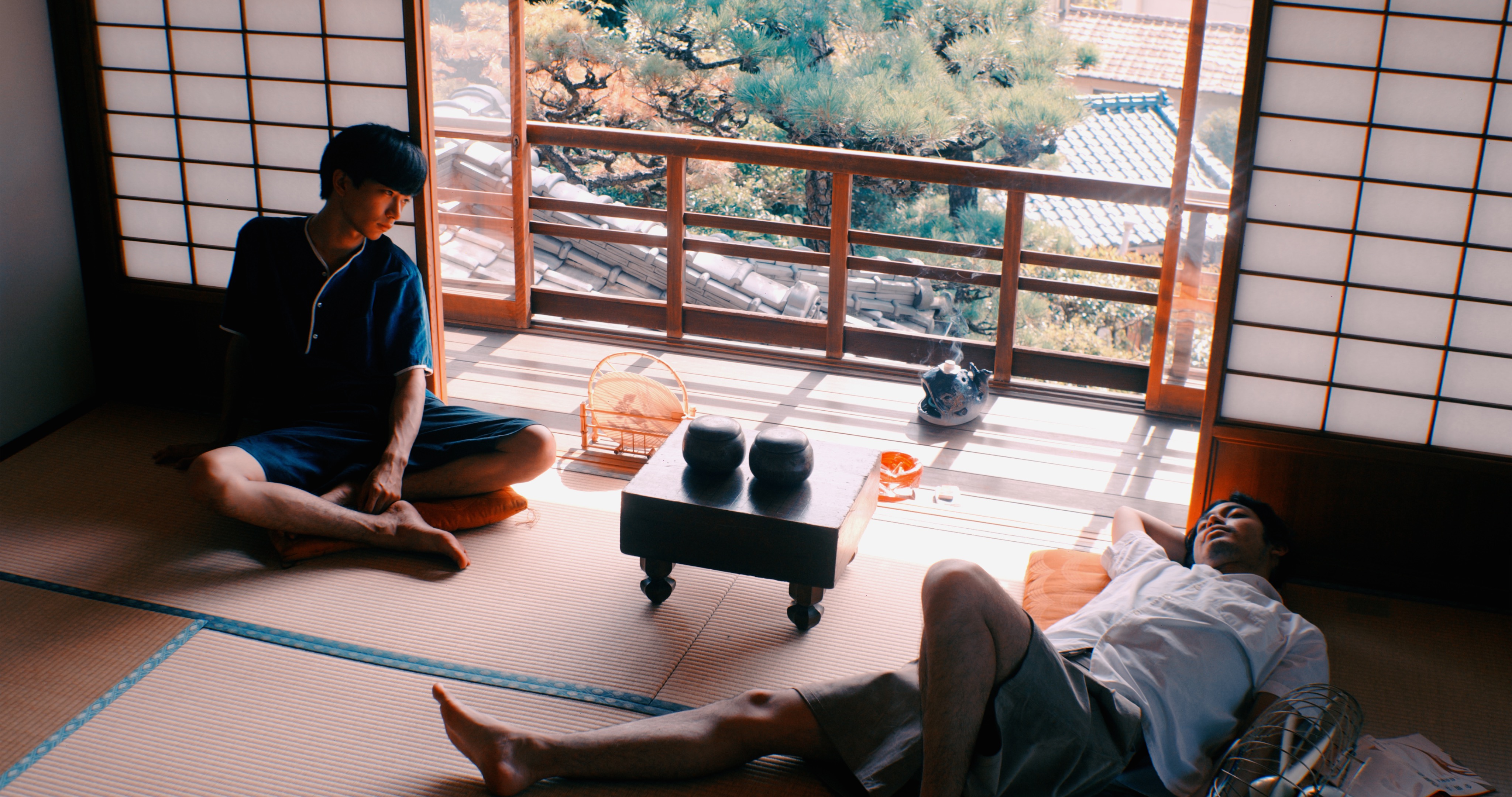
An aloof young man brings a friend back from college but struggles to convey to him his true feelings in the Onomichi of the 1970s in actor Ren Sudo’s directorial debut, Backlight (逆光, Gyakko). This may partly be because he himself is uncomfortable in his childhood home while the object of his affection seemingly takes to it though as someone else later hints perhaps in the end he is only toying with him as a pleasant summer diversion that will eventually draw to a close. 

Sudo opens the film with a series of black and white slides of Onomichi in the 70s accompanied by a cheerful voiceover in opposition to the film’s subsequent gloominess describing the area for tourists and in particular its cable car. Finally the slides give way to clumsy shots of Yoshioka (Haya Nakazaki), university friend of Akira (Ren Sudo), and a copy of Yukio Mishima’s College of Unchasteness. Akira has invited Yoshioka to stay with him at his family home in Onomichi for a week over the summer, but it’s fairly odd behaviour to invite someone somewhere and then spend the whole time telling them how awful it is and that you can’t wait to leave. 

Evidently the son of wealthy parents who for whatever reason are not around, Akira is a fairly unsympathetic figure who seems to have been harbouring resentment towards Onomichi ever since his family moved to the area from Tokyo when he as a child. He views it as dull and backward and seems to have only contempt for those who live there such as childhood friend Fumie (Eriko Tomiyama) whom he blanks in the street as like the cable cars of the opening he passes her in the company of Yoshioka. Realising he is back, she arrives at his home to return some books he’d lent her but even on encountering her there Akira treats Fumie disdainfully and is quite embarrassingly rude in front of his new friend explaining that he lent the books so that a simple country girl like her wouldn’t fall behind the times while contemptuously assuming that she won’t actually have read them. 

These misogynistic attitudes seem prevalent in the local community which is in any case unusually obsessed with Mishima. Another local intellectual describes College of Unchasteness, which Akira has not actually read, as “silly prose for women” a phrase Akira later echoes, while making a cynical comment as to its content suggesting that a woman’s ultimate pleasure lies in being murdered by a man she may have been manipulating. Unable to voice their desires directly there may be a degree of manipulation going on, Akira silently courting Yoshioka who may indeed be toying with him in the way that he may have been toying with Fumie who has since come to know of his sexuality. In any case he seems to be uncertain of Yoshioka’s receptiveness, crassly suggesting Fumie invite another girl, Miko (Akira Kikoshi), who seems strange and otherworldly, with the rationale that it would be a problem if she were too pretty and by implication insulting Fumie too in the process. Miko meanwhile is evidently upset by the lewd conversation while later prompted to leave the party after a political debate breaks out about nuclear arms. Perhaps it’s not surprising for a party that seems to be populated by Mishima devotees but even if their support for re-armament is a facet of their anti-Americanism it is curiously at odds with the times again upsetting Miko whose mother is a survivor of the atomic bomb having lost all her family. 

Even so the closing scenes turn back to Mishima and doomed romance in a description of love as a political act in which love that does not transgress, is not considered shameful or taboo, is not really love at all. Akira may have found the courage to overcome his fear of rejection, but it seems has not been altogether successful in love. Playing with the light, the brightness of the beaches, murkiness of the room occupied by Yoshioka, and that of the fire ominously reflected on Akira’s face, Sudo adds a note of wistful nostalgia expressed in the song sung by Miko that perhaps presents this “heartbreaking” summer with a sentimentality it does not quite appear to have even as Akira seems to come to an accommodation with himself, Fumie, and Onomichi amid the confusing summer heat. 


Backlight streamed as part of this year’s Nippon Connection.

Original trailer (no subtitles)

Images: ©2021 『逆光』 FILM

Target (標的, Shinji Nishijima, 2021)

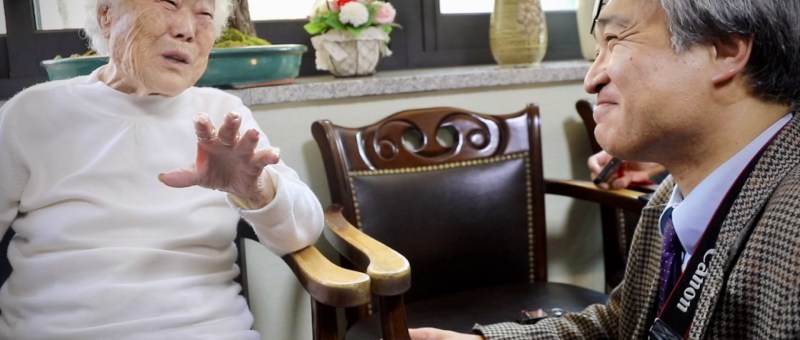
In the early 1980s, the well respected left-leaning national newspaper the Asahi Shimbun ran a series of articles based on accounts by author Seiji Yoshida of his involvement in wartime atrocities which brought the “comfort woman” issue into the mainstream consciousness for the first time. Unfortunately, however, Yoshida’s reputation was tarnished when it was revealed that much of his “autobiographical” writing had been heavily embellished or simply made up. The discrediting of Yoshida’s testimony handed an easy win to the resurgent right that allowed them to cast doubt on Japan’s history of wartime sex slavery.

In 1991, the truth became much harder to deny when former comfort woman Kim Hak-sun came forward to tell her story publicly. Asahi Shimbun journalist Takashi Uemura wrote an article based on a taped recording of her testimony shortly before her own press conference but soon found himself the prime target for nationalist trolls who harassed not only the Asahi Shimbun but Uemura himself along with members of his family. In 2014 more than 20 years since the article was published, they once again swarmed when it was revealed that Uemura had accepted a part-time teaching position at woman’s university which was later rescinded because of the continued “bashing” both he and the institution received which included several death threats. 

Shinji Nishijima’s sometimes unfocussed documentary Target (標的, Hyoteki) is concerned less with the comfort woman issue itself than the scandal’s place in an ongoing culture war which has been quietly intensifying since the late 90s with the foundation of ultra-nationalist lobby group Nippon Kaigi in 1997 which is coincidentally the year that Kim Hak-sun passed away without seeing justice. Many other papers had run similar articles based on Kim’s taped testimony using the same terminology which reflects that used by Kim, yet only the Asahi Shimbun and Uemura himself were singled out as “traitors” to Japan and in the view of some more extreme commenters deserving of the death penalty. The article was branded a “fabrication” which is a serious accusation to make of a journalist at a major newspaper though in actuality the charges that are levelled at him concern only potential “inaccuracies” in his writing regarding use of terminology and the omission that Kim had trained as a kisaeng (the Korean equivalent of the geisha) which was revealed during her press conference but not included in the taped testimony while the journalist who later attacks Uemura relies on the same tired arguments insisting that there was no forced recruitment and the women at the comfort stations were established sex workers employed locally or trafficked by family members and middlemen. 

The argument put forward by the documentary suggests that Uemura was a convenient target because his wife was Korean and his mother-in-law was the head of the Association for the Pacific War Victims though the true target was the Asahi Shimbun which had long been a bugbear for nationalists because of its liberal democratic outlook. Part way through the documentary, Uemura visits the grave of a journalist who was murdered after penning an expose of police mistreatment of the Korean community in Osaka who had begun resisting fingerprinting on the grounds that it was discriminatory. The implication is that this is a campaign to silence the press and one which has proved increasingly effective with outlets largely choosing to self censor unwilling to upset the government and lose their access by addressing topics that might be thought taboo such as Japan’s wartime past. Meanwhile under the Abe administration there was a concerted campaign to revise school history textbooks to erase the concept of comfort women altogether along with other mentions of wartime atrocity. 

Suing the journalist who branded him a “fabricator” for defamation Uemura explains that his aim is not so much to vindicate himself and the story but challenge encroachments on free speech in an increasingly authoritarian society. Though the courts agree he has been “defamed” they find no “illegality” while upholding the conservative view that denies the existence of comfort women. As it later transpires the journalist who had attacked him in the press had previously written a similar article herself and had largely based her current views on those of a prominent conservative university professor without bothering to interview either Uemura or any of the surviving Korean comfort women in person ironically including several “inaccuracies” in her own writing owing to some fairly shoddy journalism and lack of familiarity with the source material. In any case, as someone puts it the most important thing is to record an accurate version of the truth so that nothing like this happens again while halting the erosion of democratic freedoms through creeping authoritarianism.


Target streamed as part of this year’s Nippon Connection.

International trailer (English subtitles)

Ring Wandering (リング・ワンダリング, Masakazu Kaneko, 2021)

“Don’t forget me” pleads a mysterious young woman guiding the hero of Masakazu Kaneko’s Ring Wandering (リング・ワンダリング) towards the buried legacy he is unwittingly seeking. In this metaphorical drama, the aspiring manga artist hero is on a quest to discover the true appearance of the long extinct Japanese wolf, but is confronted by a more immediate source of unresolved history while working on a construction site for the upcoming Tokyo Olympic Games. 

The manga Sosuke (Show Kasamatsu) is working on is about a wolf and a hunter, Ginzo (Hatsunori Hasegawa), whose daughter Kozue was killed by one of his own traps. Though praising the general concept, his workplace friend points out that his manga lacks human feeling but Sosuke claims it’s unnecessary in a story that’s about a duel to the death between man and nature while matter of factly admitting that Kozue is merely a plot device designed to demonstrate Ginzo’s manly solitude. Yet Soskue complains that he can’t make progress because the Japanese wolf is extinct and he can’t figure out how to draw it. 

His quest is in one sense for the soul of Japan taking the wolf as a symbol of a prehistoric age of innocence though as it turns out he knows precious little about more recent history. The workers at the construction site have heard rumours about a stoppage at another build and joke amongst themselves that if they should find any kind of cultural artefact they’ll just ignore it rather than risk the project being shut down or any one losing their job. The site itself symbolises a tendency to simply build over the buried past erasing traces of anything unpleasant or inconvenient. When Sosuke comes across an animal’s skull buried in a pit he has recently dug, he is convinced it’s that of a Japanese wolf only later realising it is more likely to be that of a dog killed in the fire bombing of Tokyo during the war along with thousands of others on whose bodies the modern city is said to lie. 

Then again, impassive in expression Sosuke is particularly clueless when it comes to recent history. While searching for more wolf cues he comes across a young woman (Junko Abe) looking for her missing dog but completely fails to spot her unusual dress aside from assuming the old-fashioned sandals she is wearing are for the fireworks show set to take place that day incongruously in the winter. Similarly in accompanying her to her home he is confused by all her references to things like the metal contribution and her brother having been sent to the country. He wonders if she might be a ghost, and she wonders the same of him, but still doesn’t seem to grasp that he’s slipped into another era fraught with danger and anxiety only realising the truth on exiting the dream and doing some present day research. 

The fallacy of violence works its way into his manga in the fact that Ginzo’s traps eventually lead to the death of his daughter while he becomes on fixated on besting the wild wolf as a point of male pride though others in the village are mindful to let it live. A pedlar meanwhile explains that the wolf has been forced down towards the village because of the declining economic situation as more people hunt in the mountains for food and fur depriving him of his dinner. He tells Ginzo that the country has been “brainwashed in militarism” and the gunpowder that killed Kozue and will one day be repurposed to create joy and awe is now his most wanted commodity. In the end Ginzo too is saved by a kind of visitation, a ghost from the past offering a hand of both salvation and forgiveness along with an admonishment forcing him to take responsibility for his role in his daughter’s death.

In forging a familial relationship with a lost generation Sosuke comes to a new understanding of more recent history and in a sense discovers the connection he was seeking with his culture, weaving the anxieties of 1940s into an otherwise pre-modern fable about the battle between man and nature in which wolf becomes not aggressor but casualty in a great national folly. Like Kaneko’s previous film Albino’s Trees deeply spiritual in its forest imagery and oneiric atmosphere, Ring Wandering finds its hero transported into the past while unwittingly discovering what it is he’s looking for without ever realising that it has always been right beneath his feet. 


Ring Wandering streamed as part of this year’s Nippon Connection.

Original trailer (English subtitles)

Images: ©RWProductionCommittee

One Day, You Will Reach the Sea (やがて海へと届く, Ryutaro Nakagawa, 2022)

“We only see one half of this world” according to the absent heroine of Ryutaro Nakagawa’s moving mediation on loss and the eternally unanswered questions we leave behind when we die, One Day You Will Reach the Sea (やがて海へと届く, Yagate umi e to todoku). Taking its name from a plaintive folk song about a wife waiting for the return of a husband lost at sea, Nakagawa’s indie drama finds its melancholy heroine struggling to move on while plagued by a sense of regret in the absence of an ending. 

Mana (Yukino Kishii) first bonded with Sumire (Minami Hamabe) in the early days of university when she helped her navigate the tricky social rituals of freshers week, eventually moving in to her apartment but then moving out again to live with uni boyfriend Tono (Yosuke Sugino). It’s Tono who in one sense brings the reality of Sumire’s absence back to her more than a decade later as he decides it’s time let go. Letting go is however something Mana struggles to do, not least because Sumire disappeared during the 2011 tsunami and as her body was never found there’s still a part of her that refuses to believe she will never be coming back.  

Tono criticises Mana for wanting to keep Sumire stuck in the same place forever yet it is she who is somehow stuck, still living her admittedly stunning apartment as if afraid to move in case Sumire should return and find her gone. She had once told her that she wanted to work for a furniture company in Kyoto but is currently working as a head waiter at an upscale restaurant where she has developed a paternal relationship with the manager, Mr Narahara (Ken Mitsuishi), only to discover that perhaps she didn’t really know him either or that she only knew the part of him he wished for her to see. Her resentment towards Tono is in part that he knew a different side of Sumire that remained unknown to her, though equally neither of them can be said to have known her entirely. 

The relationship between the two women remains frustratingly ill-defined but what’s clear is that they represented something one to the other as two halves of one whole. They made each other feel at ease, but if romance is what it was it remains unresolved. Despite having claimed that she wanted nothing more than to stay in Mana’s apartment, Sumire eventually leaves explaining to Tono that she cannot say cannot stay with her forever giving him a look that perhaps he should know when he quite reasonably asks why. Then again perhaps she just thinks she’s holding her back, that if it were not for her Mana would long ago have moved on finding new and more fulfilling directions in life. She urges Mana to interact more, hoping that she’ll find someone to tease out the “real” her though she of course already has.

A perspective shift late in the film fills in some of those details from the other half of the world that we don’t get to see, laying bare Sumire’s own distress and vulnerability as it becomes clear that she has something she wants to say to Mana but is always frustrated and finally never does. When someone is gone, you can no longer ask them what they meant or solve the riddles of their life even if you can patch back together a vague picture composed of the memories of those who knew them. “I didn’t want her to be found but I felt I had to find her” Mana explains of her early attempts to look for Sumire after the tsunami wanting answers while simultaneously afraid to get them. Burdened by another sudden and unexpected loss, she takes a road trip to Tohoku and witnesses testimony taped by a local woman from tsunami survivors eventually receiving her own epiphany in an animated dream sequence that links back to those which bookend the film. Watching footage from Sumire’s ever present videocamera fills in a few more details, but what she comes to is less a point of moving on that an accommodation with loss that suggests Sumire has in a sense returned and will always be with her as sure as the sea. What we mourn is not only an unresolved past with all its concurrent regrets, but the other half of the world we’ll never see in all the unlived futures that never got to be. 


One Day, You Will Reach the Sea streamed as part of this year’s Nippon Connection.

Original trailer (English subtitles)