Unchained (四月の余白,  Keisuke Yoshida, 2026)

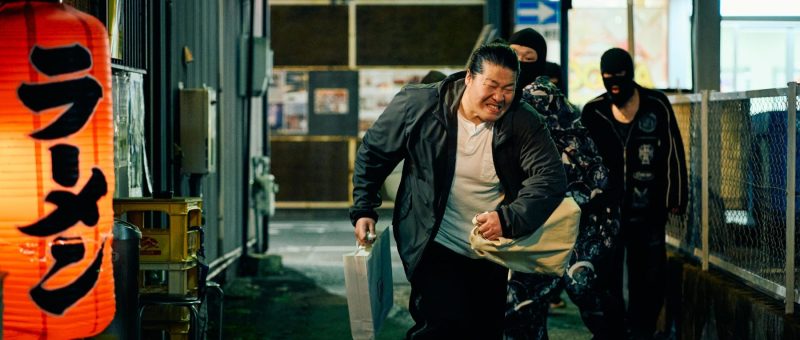
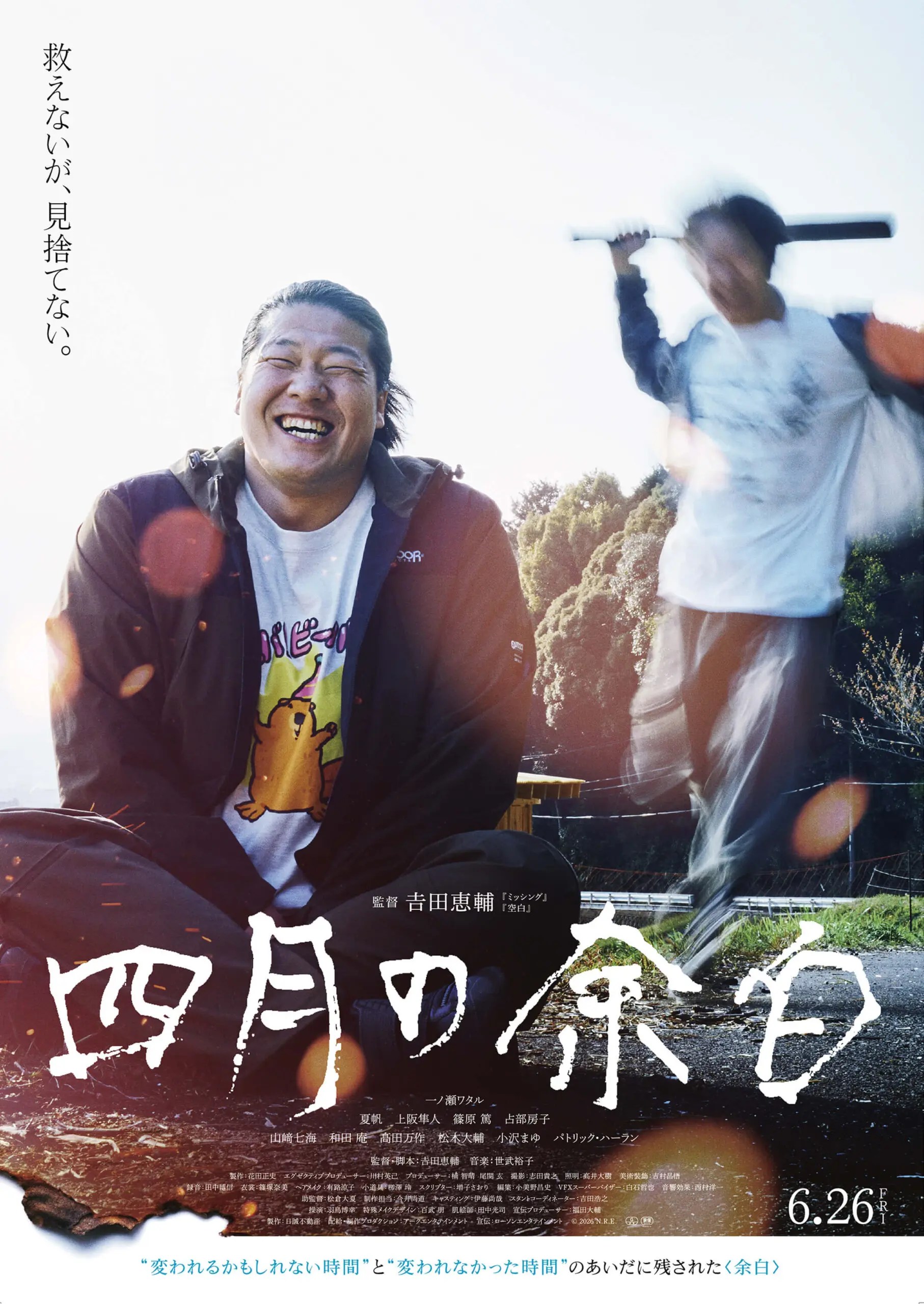
Can a person really change, or should we just accept that some people are born bad and can’t be accepted in mainstream society? This seems to be the question at the centre of Keisuke Yoshida’s empathetic drama Unchained (四月の余白, Shigatsu no Yohaku) which suggests, in a way, that violence is a vicious circle as society tends to write off those with behavioural issues pushing them deeper into their isolation and giving them little opportunity for reform or rehabilitation.

“Mister Nishi” (Wataru Ichinose), as he seems to be known, is a former delinquent who committed acts of heinous violence in his youth, spent time in prison, and experienced a personal tragedy that acted as a wake up call and gave him the opportunity to turn his life around. He now works at a kind of tough love bootcamp that attempts to guide wayward teens back towards the mainstream. His methods, however, are not universally approved and especially not by contemporary teachers. Though corporal punishment has long been outlawed in educational facilities, Nishi believes that sometimes there is no other way to reach these children and violence may be the only way to teach them that their actions have consequences. 

A teacher takes him to task and asks him if he isn’t just teaching them to be violent and in fact pushing them towards and anti-social behaviour. Nishi disagrees, but the film doesn’t really explore the alternative any further and more or less sides with Nishi. The children at the facility do seem to be doing better than they presumably were beforehand and do not appear to be unhappy there. It also seems that they are expected to do farm work, and it’s unclear if they’re being compensated for that, though this may be a slight cultural difference that is not raised in the film either by the documentary crew that comes to film the facility nor by a journalist who tries to take Nishi down by accusing him of fabricating details of his backstory which eventually leads to the facility closing down. 

Nishi may, however, have met his match in Kaito (Hayato Kohsaka), a violent young man exhibiting an extreme lack of empathy. Kaito’s teacher first seeks out Nishi because she’s at a loss of what else to do, while the boy’s mother appears to be a good woman who has tried everything she can and is now at the end of her tether. Kaito has become violent towards her too and apparently beat the family dog to death in a fit of rage for which he feels no remorse. The mother is beginning to feel suicidal and willing to try Nishi’s methods as a last-ditch effort to save her family. There is no clear reason why Kaito became this way. We get a hint of generational violence in that Kaito seems to resent his father who is disabled and in his view defeated by life. His father does seem to have become depressed because of his disability and it’s because of the depression and sense of worthlessness that he’s been unable to hold down a job and has taken to drink.

In a twist of fate, it turns out that it was Nishi who crushed his knee and left him permanently disabled. Kaito’s father therefore piles all of his resentment onto him without taking any responsibility for the choices he made himself after that. When Kaito ironically injures another boy in the same way, his father begins to realise his mistakes and cautions the other boy against becoming consumed by resentment or a sense of defeat. It’s this notion of “defeat” that becomes central to the interrogation of a cultural notion of toxic masculinity in which the reason some of these young men are thought to act out is that they don’t want to be seen as losers and harm others to prove their superiority. This is in part true of Kaito who declares himself happy to hurt other people as long as he himself does not get hurt. It’s not that he is incapable of understanding that others experience pain in the same way that he does, but that he simply does not really care. 

Some argue that Nishi doesn’t either and that, as he was a delinquent himself, he is incapable of fully sympathising with victims and only has empathy for those commit acts of violence. Nevertheless, that does give him a unique perspective that allows him to help some of these teens both by supporting them and being a positive role model as someone who has been able to reform and live a more mainstream, settled life. Then again, some seem dubious of the way he seems to change after the media takes interest which leaves him with less time for the children while chasing the spotlight. Ms. Kusano (Kaho), meanwhile, wonders if she did the right thing or perhaps just did what was easiest for her in abandoning Kaito into Nishi’s care. She chastises herself for having forgotten a model student who spoke to her at a reunion while uncertain if it’s right to devote so much of her time to kids like Kaito rather than supporting those he victimised such as student who withdrew from the school due to his bullying.

While a fellow teacher’s characterisation of Kaito as a”bad apple” who should be “discarded” before he causes any more trouble may seem callous, it’s also true that without his influence the other kids who’d been in his gang begin to straighten out and give more thought to their futures. Though he struggles at the facility, Kaito does seem to benefit in a way from a less stimulating environment and shows signs of change, if also of self-sabotage and an inability to walk away from his delinquent life for fear of being seen as a loser. It’s only after he’s cajoled into another act of violence and receiving kindness in return that he begins to see the error of his ways. The film seems to suggest, then, that person can change but that equally society has to let them, rather than try to tear them down as they did to Nishi in denying him his fresh start by reminding him that no apology is enough to change what he did in the past. While perhaps controversial in some of its implications, the film is at least empathetic and even handed, filmed in an unostentatious style that tries to sympathise both with the dealers and the receivers of violence in the conviction that there is no one who cannot change.


Unchainedscreened as part of this year’s Camera Japan.

Trailer (no subtitles)
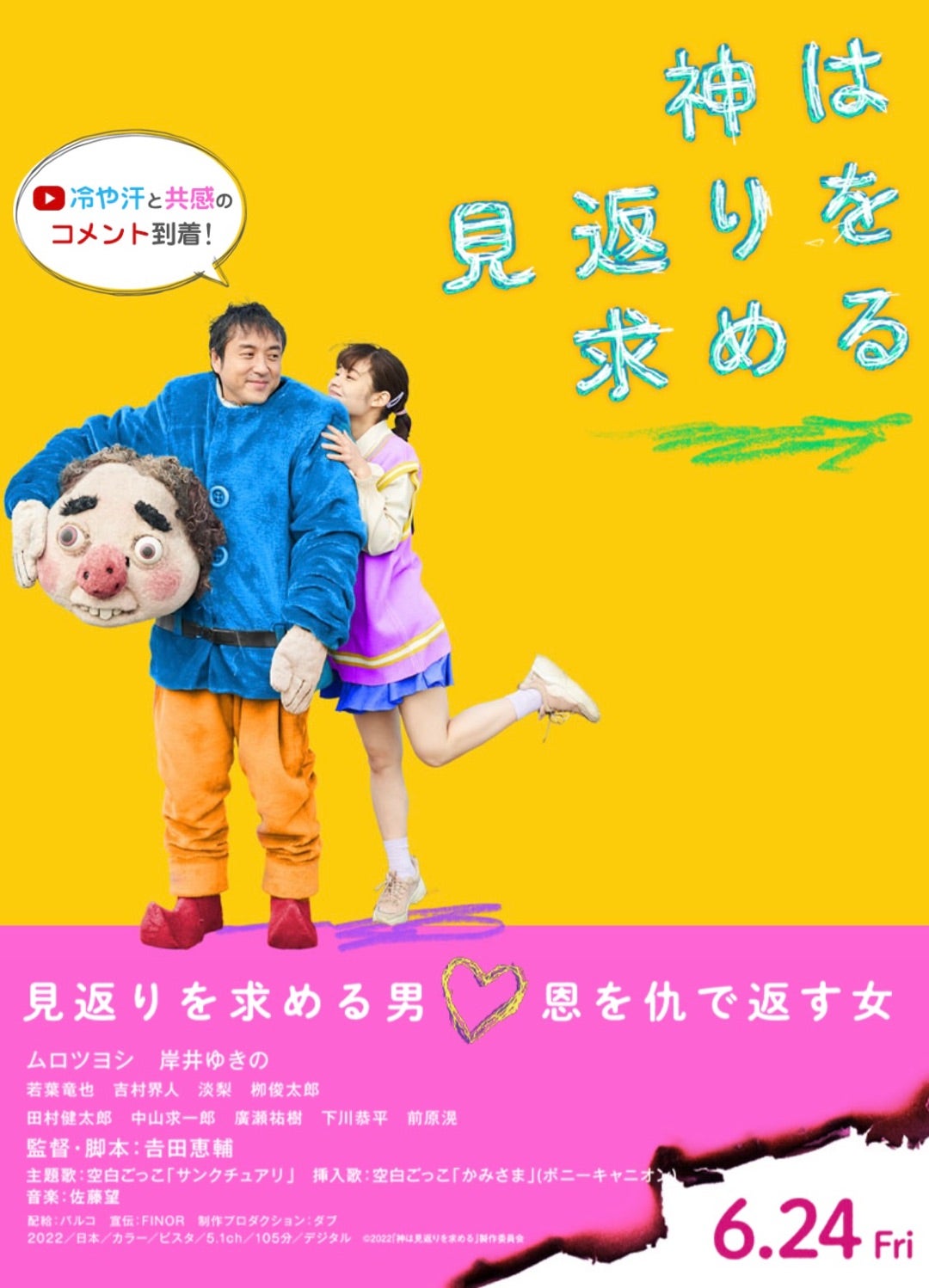
God Seeks in Return (神は見返りを求める, Keisuke Yoshida, 2022)

It’s perfectly natural a lot of the time to feel as if you expect nothing in return for helping someone, after all it’s only what you should do as a fellow human being. But really we do expect something even if it’s just acknowledgement and it can be hurtful and upsetting if don’t feel we get it while the sensation that we’re being taken advantage of can leave us feeling silly for having offered in the first place. Keisuke Yoshida’s Good Seeks in Return (神は見返りを求める, Kami wa Mikaeri wo Motomeru) revels in these human paradoxes as a self-confessed nice guy is pushed to breaking point by the fallout from all his attempts to be neighbourly which seem to have backfired exponentially. 

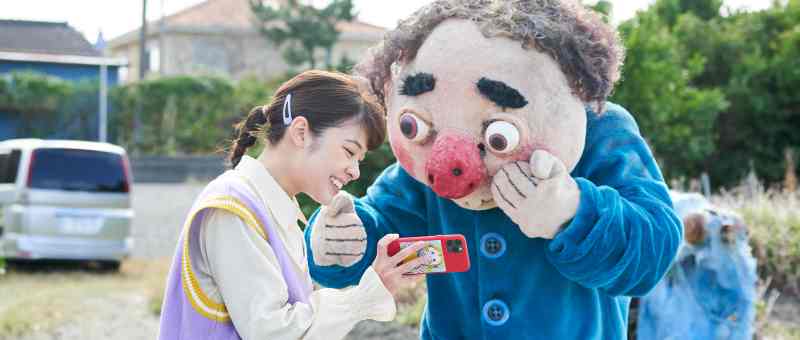
Then again, Tamogami (Tsuyoshi Muro) almost certainly does at least hope for something in return when he agrees to help out struggling YouTuber Yuri (Yukino Kishii) with her moribund channel by enlivening it with his skills in video editing and design. He isn’t helping her in order to engineer a sexual relationship, and in fact turns Yuri down when she suddenly disrobes exclaiming that it’s the only way she can repay him for his kindness, but does appear interested and is additionally irritated when she begins hanging out with a bunch of vlogger cool kids he thinks are just exploiting her naivety. Yuri had already payed him back with homemade beef stew, an offer that was accepted in the interest of friendship, but her constant references to repayment of a favour expose her idea of relationships as essentially transactional which to be fair they well may be. Even so, she appears somewhat guileless, opportunist rather than calculating and desperate for attention.

That might be why she can’t see that the reason she became unexpectedly popular after agreeing to a “body paint” stunt with a pair of more established YouTubers is that people wanted to see her naked which is why they’re always requesting more of the same. The first half of the film plays as quirky comedy, an offbeat romance between a nice middle-aged man and a dippy young woman who thinks she’s no good at anything and incapable of being alone. But things soon turn sour when one of Yuri’s stunts seems like it might have serious consequences for a local business owner and Tamogami has to muster all of his PR skills to put this particular fire out. The simple friendship between them that was brokered by a weird ogre-like mascot suit Yuri christens Jacob is disrupted by Yuri’s desire for fame as she undergoes a complete personality transformation after falling in with a group of more successful, media savvy YouTubers who have fancy design skills and marketing teams. She dismisses Tamogami as old-fashioned and joins in when the others make fun of him in rejection of the genuine friendship that had arisen between them.

When a friend he’d helped out financially and even stood guarantor on his debts takes his own life Tamogami is deep in the hole. Finally he wonder’s if he shouldn’t have something in return for all the unpaid labour he’s been doing for Yuri but she predictably brushes him off until he finally embarks on a weird vendetta trying to “expose” her YouTube channel for being founded on lies and exploitation. There may be something in her that’s regretful, wistfully looking at the sweater Tamogami had given her with cute illustrations of her and Jacob on it, while her new “god” Murakami openly mocks him leaving her conflicted about the dark side of their new internet endeavour effectively bullying a guy whose only crime was being nice and bit too dull and middle-aged for her new hipster friends sure to drop her like she’s hot as soon as something goes wrong.

Though not as extreme as some of Yoshida’s other films, God Seeks in Return suggests that nice guys never prosper but also that no one’s really as “nice” as they think they are. We wall want something in return even if it’s just a thank you and not to be belittled or taken advantage of. There can be something paradoxically selfish in niceness in which people do it more for their own gratification or to feel they are better than those they help and conversely the same in those who take advantage of others. In it’s way bleak and melancholy in its vision of human relationships, the film nevertheless holds out a faint hope in the reality of the genuine connection between its mismatched heroes no matter how dark and twisted it may eventually become.


God Seeks in Return screens 1st June as part of this year’s Nippon Connection

International trailer (English subtitles)

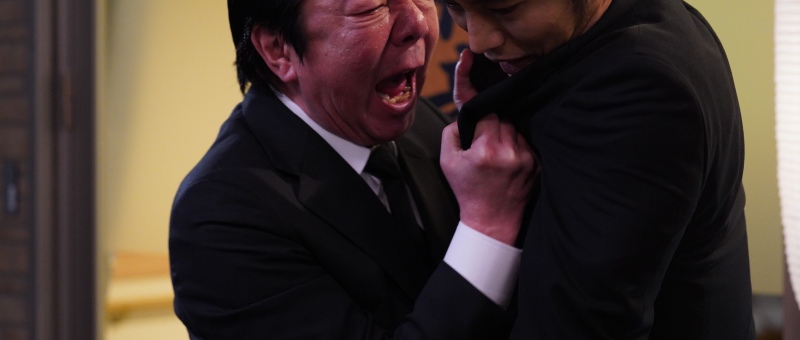
Intolerance (空白, Keisuke Yoshida, 2021)

At times of tragedy it may be natural to look for someone to blame, as if being able to pin all of this pain and anger on a single source would somehow help you to accept it. But in other ways tragedy is just a confluence of circumstances that are either everyone’s fault or no one’s. How far back can you really trace the blame? There would be no end it. That’s perhaps the conclusion that the protagonists of Keisuke Yoshida’s Intolerance (空白, Kuhaku) eventually come to, realising that their attempts to blame others are often born of a desire to deny their own responsibility or else to protect something else they fear losing. 

At least that’s how it is for grizzled fisherman Mitsuru (Arata Furuta), a man well liked by no one. A rude and violent bully, he terrorises all around him not least his teenage daughter Kanon (Aoi Ito) who is meek and passive with a slightly ethereal quality as if she’s learned that blending into the background is the best way to protect herself. Stopping in to a local convenience store on her way home from school, she’s accosted by resentful store manager Naoto (Tori Matsuzaka) who grabs her by the arm and accuses her of shoplifting nail polish. At some point, Kanon panics and bolts out of the store. Naoto chases her along a busy highway until she suddenly darts out into the road trying to get away from him and is hit first by a car driven by a young woman and then by a truck travelling in the opposite direction. Despite his gruff exterior, Mitsuru is quite clearly destroyed by his daughter’s death but becomes fixated on clearing her name of the shoplifting, insisting that he never saw her wear any makeup and that Naoto is to blame for her death in acting with such a heavy hand. 

Of course, it doesn’t occur to Mitsuru that Kanon may have worn makeup in secret and made sure to keep it from him knowing how he’d likely react. Likewise, perhaps she ran from the store because Naoto would have called her father and she was frightened of what he’d do if he found out she was caught pilfering, and pilfering nail polish at that. He remembers that she wanted to talk to him about something to do with school the night before she died but he didn’t listen, assuming she must have been being bullied and was forced to steal the nail polish only to hear that no one at school really even remembers her. She was a just a vague presence they can’t even quite identify. Her teacher meanwhile begins to reproach herself, realising that she failed in her duty of care repeatedly shouting at Kanon that she had “no motivation” rather than trying to help her find some or to get along in her own way, let alone figuring out what caused her to behave the way she did or if there were problems at home. Sick of Mitsuru’s belligerence the school finally set him on the new target of Naoto who was once accused of molesting a teenage girl he accused of shoplifting. 

Like Kanon, Naoto is a slightly hollow presence who also had a strained relationship with his father. As he lay dying, Naoto failed to answer his calls because he was playing pachinko and felt ashamed, afraid of another lecture from his dad about wasting his life on gambling. He struggles with his role in Kanon’s death, on the one hand guilty feeling he overreacted and inadvertently caused her to stray into harm’s way while otherwise resentful, justifying himself that it’s only natural for a storeowner to chase a shoplifter down the street. Both he and Mitsuru soon fall foul of a media culture that likes sympathetic victims and heartless villains, the media shocked by Mitsuru’s boorish behaviour but more so by Naoto’s callous indifference trimming an otherwise nuanced statement to imply that he feels his supermarket is the real victim as customers stay away or else issue complaints about their obviously heavy-handed shoplifter policy. 

“Imposing your own views on others is nothing more than torture” Naoto tells a well-meaning middle aged woman whose narcissistic cheerfulness is a neat mirror of Mitsuru’s intimidating aggression. Aggressively mothered by Kusakabe (Shinobu Terajima), Naoto carries an additional burden of guilt in realising he’s lost the store his father left to him, but she embarks on a tasteless “real victim” campaign insisting they did nothing wrong and it’s all Kanon’s fault for stealing in the first place. Kusakabe can’t bear to lose the store because it seems there’s not much else in her life. The film’s Japanese title translates as “blank” or “void” and it is indeed a void that Kusakabe is trying to fill in needing to feel needed by centring herself in her various volunteer activities such as working at a soup kitchen in addition to her crusade to save the store. 

It’s this giant abyss of grief and guilt which pulls each of them towards the edge, but in the end there’s really no way to apportion blame. The poor woman who first knocked Kanon down is completely undone by the experience though it really wasn’t her fault, repeatedly approaching Mitsuru asking for his forgiveness only to be cruelly rebuffed. It’s her mother’s (Reiko Kataoka) quiet show of dignity which stands in such stark contrast to his own white hot rage that finally forces him to realise the destructive quality of his intimidating behaviour, accepting his responsibility in his daughter’s death while understanding that in his fierce desire to control he robbed himself of the ability to know her. Really you can’t say whose fault it was, Mitsuru’s for the fear he instilled into his daughter, Naoto’s for his insecurity and misplaced zeal in hunting down a thief, the drivers’ for failing to brake, Kanon’s mother’s (Tomoko Tabata) for remarrying and having another child, the teacher’s for making Kanon feel useless, the other kids’ for rejecting her, or Kanon’s own for darting out into the road. For each of those there are a hundred other branches. There would be no end to it. But then, the strange thing is that Kanon shares her name with Buddhist deity of mercy, Mitsuru beginning to soften now willing to offer an apology where it’s due and to bear his own degree of guilt if not yet entirely able to forgive. In any case, ending in bright sunshine, Yoshida concludes with a return of the gaze between father and daughter that suggests forgiveness may indeed have arrived. 


Intolerance screened as part of this year’s Camera Japan. 

Original trailer (English subtitles)

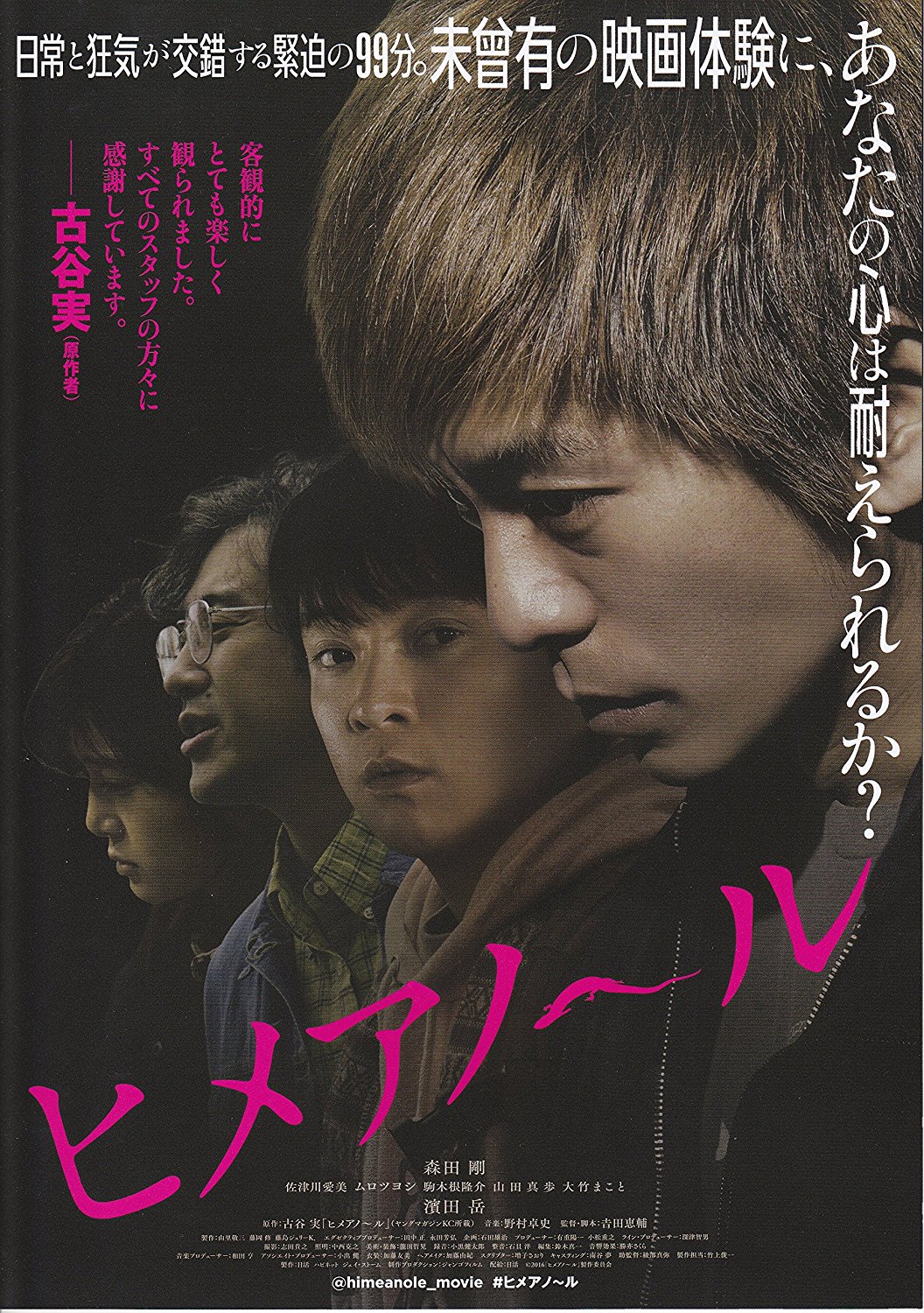
Hime-anole (ヒメアノ~ル, Keisuke Yoshida, 2016)

hime-anole posterSome people are odd, and that’s OK. Then there are the people who are odd, but definitely not OK. Hime-anole (ヒメアノ~ル) introduces us to both of these kinds of outsiders, attempting to draw a line between the merely awkward and the actively dangerous but ultimately finding that there is no line and perhaps simple acts of kindness offered at the right time could have prevented a mind snapping or a person descending into spiralling homicidal delusion. To go any further is to say too much, but Hime-anole revels in its reversals, switching rapidly between quirky romantic comedy, gritty Japanese indie, and finally grim social horror. Yet it plants its seeds early with two young men struggling to express their true emotions, trapped and lonely, leading unfulfilling lives. Their dissatisfaction is ordinary, but these same repressed emotions taken to an extreme can produce much more harmful results than two guys eating stale donuts everyday just to ask a pretty girl for the bill.

Okada (Gaku Hamada) is a young man lost. He has a dead end construction job he doesn’t like and isn’t particularly good at, but treading cement all over the finished floors at least helps him bond with his mentor, Ando (Tsuyoshi Muro), who seems to view him as a friend even if constantly referring to him as “Okamura”. Okada takes the opportunity to explain his malaise to Ando – that he feels his life slipping away from him in its emptiness, going through the motions with no real hobbies or girlfriend to give his existence meaning. Ando does not really understand this, he says dissatisfaction is natural and the driving force of all life but, on the other hand, he is not particularly dissatisfied because he lives for love!

Ando has a crush on a girl at the local cafe, Yuka (Aimi Satsukawa), who actually hasn’t noticed him because she’s pre-occupied with the blond guy who got there before Ando and sits outside everyday just staring at her. Luckily or unluckily, the guy in question, Morita (Go Morita), is an old high school acquaintance of Okada’s and so Ando asks him to find out what’s going on with this scary looking guy and his angelic lady love.

So far, so Japanese indie rom-com, but when the title card flashes up about a third of the way in, we’re in very different territory. Suddenly the colour drains from the screen and Yoshida changes his aesthetic and shooting style almost entirely. Gone is the comforting, slightly washed out colour scheme and the static, middle-distance camera of the opening. Now we are the voyeur, held helpless behind Yoshida’s erratic shaky cam, hiding behind the bins as Morita goes about his bloody business. Morita’s world is dark yet realistic, he’s shot and positioned with the arch naturalism familiar to the Japanese indie and the violence he inflicts is not movie violence, it is shocking, sickening, and visceral.

Hime-anole does not shy away from the consequences of its actions. This is, in a way, its point. At one time or another everyone concludes the increasingly surreal events they become engulfed in must be all their fault because they all have at some point acted in a way they do not quite approve of. Guilt is another of the emotions that is hard to express, especially when it’s mixed with humiliation or fear, but left unaddressed it is these corrosive agonies which develop into deep psychoses. Morita, a violent sociopath, was once (or so it would seem) an ordinary young boy who liked video games and had few friends. Perhaps if he hadn’t been the victim of humiliating, sadistic treatment, or if someone had found the courage to stand up for him, none of this might be happening.

Then again, the world is a strange place filled with people who have trouble deciding where the lines are when it comes to appropriate behaviour. Poor Yuka seems to have become something of a nutter magnet, stalked by two guys at the same time and chatted up in the street by persistent suitors who only leave her alone when they realise she’s waiting for another man. Okada is the only man who’s treated her like a regular human being for a very long time so it’s no surprise that she begins to prefer him to his awkward friend. Ando is, it has to be said, odd. Convinced Yuka is the one for him yet completely uninterested in her feelings, he vows to persevere. Yet for all his talk of chainsaws, Ando is basically harmless (to others at least) and just another lonely guy who doesn’t know how to express himself in way in which he will be understood. Morita, by contrast, is instantly creepy and has no interest in connection, he only wants to take and possess in a kind of ongoing vengeance for truly horrific events in his childhood following which something inside him became very broken.

That Hime-anole ends with a Brazil-style fantasy only adds to its strangely melancholy air as it insists on sympathy for the devil even whilst showing each of his sadistic crimes for the ugly, bloody messes they really are. Maybe the reason everybody feels they’re to blame is that in some way they are yet everyone has done things they regret or aren’t proud of, wishing they’d done things differently or managed to find the courage to do what they thought was right rather than choosing to protect themselves or keep their head down when they could have saved someone else pain. Betrayals can be small things, but they fester – like those unspoken emotions which were making our guys so unhappy in the first place. There are no innocents in Hime-anole save perhaps for the ones pushed further than they could endure, but there are those finally facing up to their own flaws and attempting to do things differently now they know better. If that’s not progress, what is?


Original trailer (no subtitles)