Love in the Big City (대도시의 사랑법, E.oni, 2024)

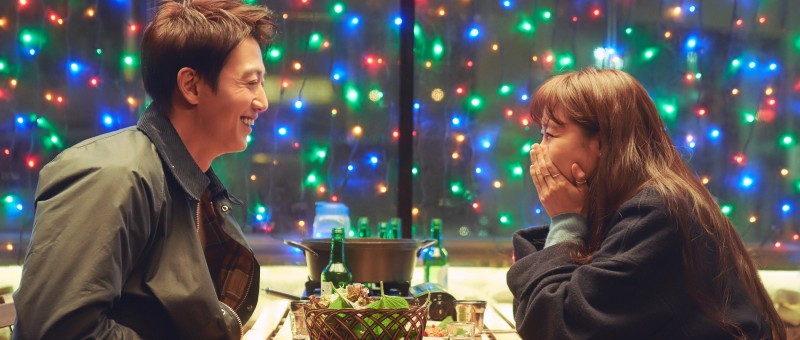
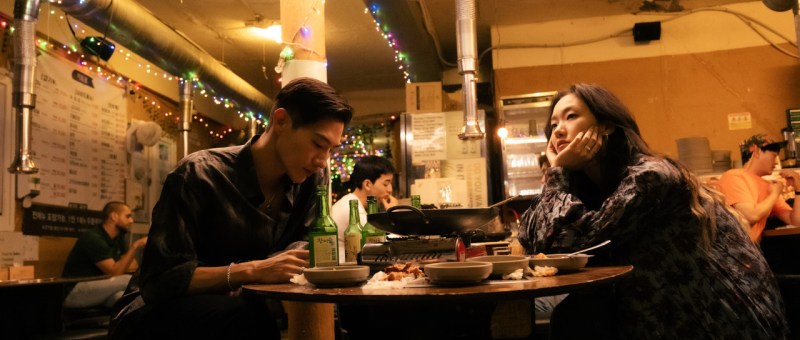
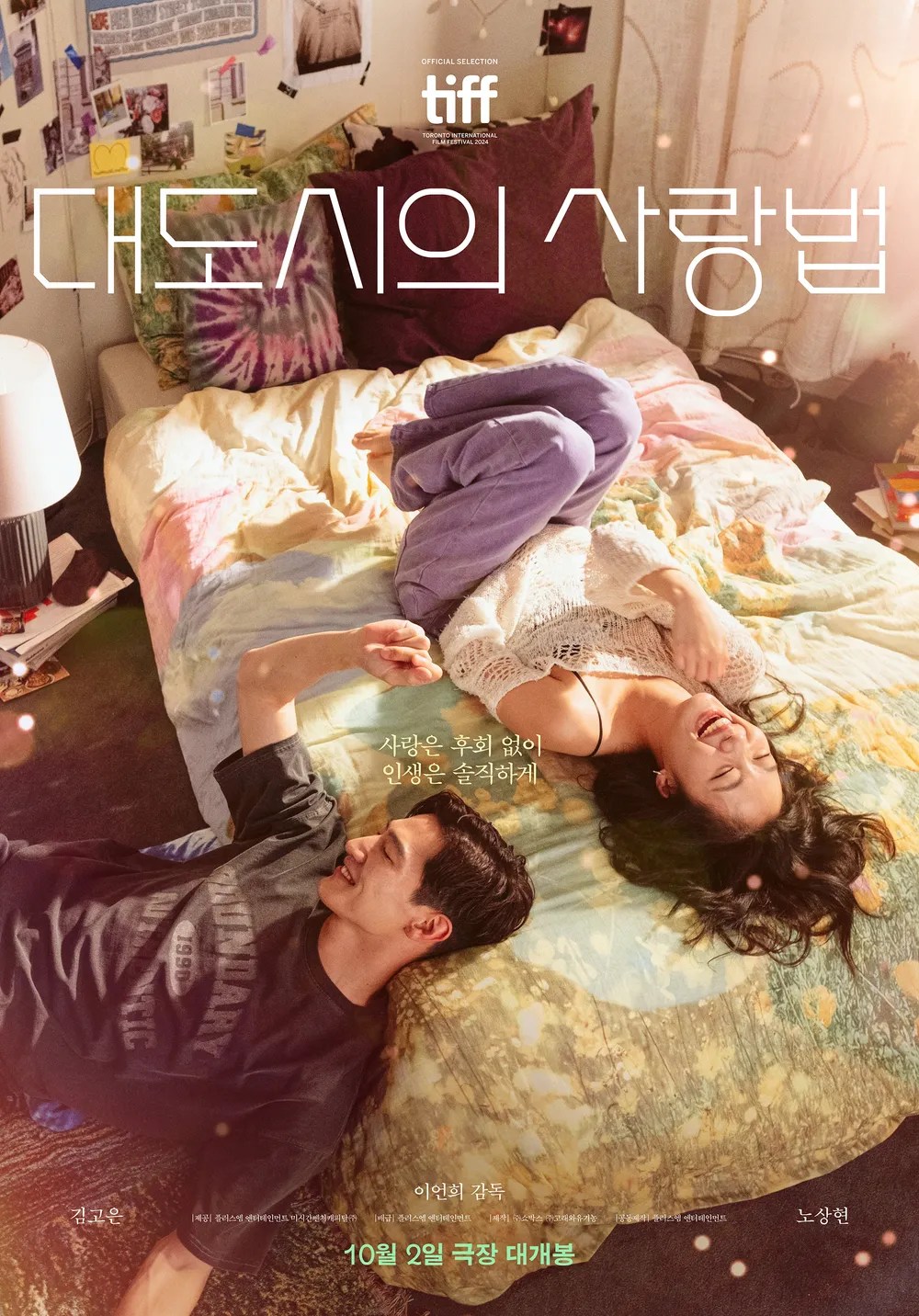
“How can being yourself be your weakness?” asks a young woman who, more than anything else, is defiantly herself, to a young man who indeed is anything but. The heroes of E.oni’s Love in the Big City (대도시의 사랑법, Daedosiui sarangbeop), adapted from the acclaimed novel by Park Sang-young, are in some ways on parallel journeys that somehow weave through and around each other as they each try to navigate an often hostile society that has no place either of them.

For aspiring writer and in the film’s early stretches student of French literature Heung-soo (Noh Sang-hyun), his “weakness” is that he’s gay and though he seems to have accepted this about himself is firmly in the closet. Free spirited Jae-hee (Kim Go-eun) who spent her teenage years abroad in France catches him making out with their professor but couldn’t care less though Heung-soo rebuffs her attempts at friendship fearing they’re akin to a kind of blackmail or that she plans to out him to their fellow students. It’s not until Jae-hee is publicly shamed when it’s rumoured a topless photo being shared online is of her that the pair finally become friends. Sick of the curious stares and covert giggles, she lifts her shirt in front of the class to prove it isn’t her, earning the nickname “crazy bitch”.

Her response is the exact opposite of Heung-soo. She claims her freedom by baring all, being defiantly herself and outwardly at least little caring for what others think of her while Heung-soo makes himself invisible and says nothing harbouring intense fear of being exposed. They are each in their way pariahs. Heung-soo because of his sexuality which is still unacceptable to many in the fiercely conformist society of South Korea in which Christian religious bodies still have huge influence and loudly oppose LGBTQ+ rights and freedoms. Heung-soo’s widowed mother is also intensely religious and having stumbled on one of his stories about a crush on a classmate is aware that he is gay but does not speak of it and continues to believe he will be “cured”. This is perhaps why she keeps urging him to do his military service believing it will make a man out of him.

For all of these reasons, it’s not surprising that Heung-soo is unwilling to live his life openly as a gay man because of the prejudice he knows he will face from those around him. Jae-hee, by contrast, refuses to hide and lives the way she wants to but is shamed by those who feel a woman should live in a certain way which is to say quietly, politely, and obediently. A man she thought was a boyfriend while he thought of her as a bit on the side publicly slut shames her and asks what sort of idiot would want to date a woman like her. Though we first meet her as a confident, rebellious student we see her gradually beaten down by the world around her and the demands of corporate culture. Considering marrying a man she may not actually like because it’s what you do, she stares sadly at a middle-aged woman opposite her on the train dressed in a near identical outfit and the comfortable shoes that are psychologically at least uncomfortable for Jae-hee in representing her capitulation to the properness of mainstream society. 

Her degradation continues to the extent that she finds herself in a relationship with a domineering, intensely patriarchal man who later turns violent when she tries to leave him. E often cross cuts and juxtaposes Heung-soo’s and Jae-hee’s experiences as they each suffer similar blows and indeed violence from a macho society if in different ways and for different reasons while having only their intense bond as fellow outsiders to rely on. This really is the love in the big city, a deeply felt platonic and unconditional love between two people who essentially have no one else. It’s through this love that each comes to love and accept themselves, Heung-soo eventually gaining the courage to fully embrace his authentic self while Jae-hee finally regains her independent spirit and refuses to let others shame her while standing up both for the LGBTQ+ community and the young woman she once was at the mercy of a male-dominated corporate culture. Warm and often funny, the film paints contemporary Seoul as an outwardly oppressive city of enforced conformity but equally discovers small pockets of freedom and joy along with the wholesome comfort of true friendship and self-acceptance.


Love in the Big City screened as part of this year’s London Korean Film Festival.

International trailer (English subtitles)
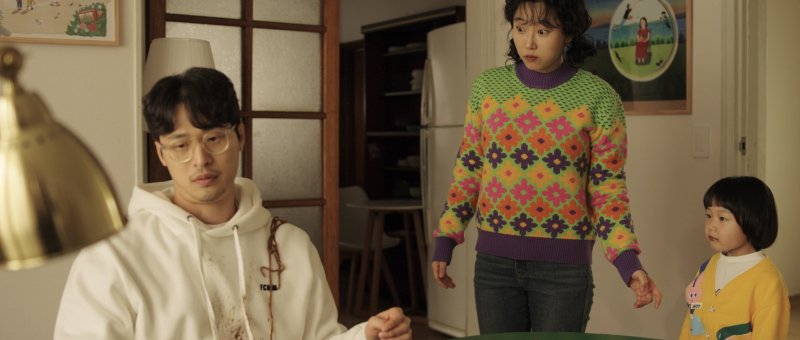
Cat Kiss (고양이 키스, Hwang Soo-bin, 2022)

A widowed single father’s life is suddenly thrown into disarray when his son’s decision to take in a local stray cat forces him to confront the trauma of his wife’s death in Hwang Soo-bin’s light-hearted drama, Cat Kiss (고양이 키스, Goyangi Kiss). Less a study in the inertia of grief than an empathetic tale of how caring for others can reopen a heart that was closed, the film leans in hard to its cat-themed metaphors of finding comfort and support in expected places. 

In any case, since his illustrator wife passed away Young-hee’s (Oh Dong-min) been unable to venture into her drawing room without having a panic attack. That might be why his son, Jae-in (Shin sua), decides to hide a kitten in there that he claims followed him home from a school trip. Unfortunately, Young-hee is allergic to cats and immediately wants to get rid of it but is convinced not to by Ro-un (Ryu Abel), an energetic and cheerful woman who runs a local repair shop and comes to fix their leaky roof.

Fixing the roof is partly what she carries on doing, bonding with the family and trying to help them move on with their lives through turning the drawing room into a cat room in a kind of compromise with Young-hee’s allergies only it’s as much the emotional connection that he’s allergic to as the feline itself. The same might be said of his odd relationship with his neighbours, a family of three who live across the way that includes a little girl Jae-in sometimes plays with. Finding Young-hee collapsed after a panic attack, the neighbours tell him he can always come knock on their door if he has a problem but he isn’t really ready for that kind of connection yet. 

Young-hee’s grief-stricken inertia is plain from his expressionless face and generally melancholy aura. Even Jae-in remarks that he’s always sad a little moody. Ro-un’s mission is to make the family smile again though she has an uphill battle but equally, Young-hee does not try to deflect her attentions which some might see as overbearing given that she’s more or less forced him to erase the last traces of his late wife from their home, but as if responding to a cat kiss slowly allows her into their lives and hearts as a more positive influence amid their melancholy.

She meanwhile is carrying a heavy burden of her own which goes a little beyond the loss of her cat which closely resembles that rescued by Jae-in. They are all in a sense stray cats looking for someone to take care of them and restore some of what they’ve lost. Even the family across the way which Young-hee had so envied has its sources of tension stemming from the unfulfilled desires of the parents with salaryman dad dreaming of becoming a dancer and the mother looking for more things to do outside the home now her daughter’s a little older. The daughter meanwhile has a hangup of her own in regards to traditional femininity, resentful that people have said Jae-in is prettier than she is despite being boy, and criticising her being “strong”. 

Another strong woman, Ro-un tells her not to be afraid of her physicality though her choice of words somehow backfires. A kind of runaway herself, she too is trapped in a state of inertia by a traumatic past she hasn’t fully dealt with while remaining upbeat and relentlessly cheerful as a kind of coping mechanism for the blows life has dealt her. Focussing on the cat provides them with a roundabout way of communicating and an opportunity for developing a shared intimacy that gently guides them back into the world. 

Despite the melancholia of the situation, Hwang keeps the tone light and adds a little quirky, down to earth humour including small instances of animation echoing Young-hee’s late wife’s occupation as an illustrator. Somewhere between offbeat romcom and grieving drama, the film is a kind of testament to the healing power of cats along with their tendency to find good people to take care of them just as those who become cat butlers slowly begin to open their hearts while generally making the world a slightly less unfriendly place.


Cat Kiss screened as part of the 18th Season of Asian Pop-Up Cinema.

International trailer (English subtitles)
Good morning (안녕하세요, Cha Bong-ju, 2022)

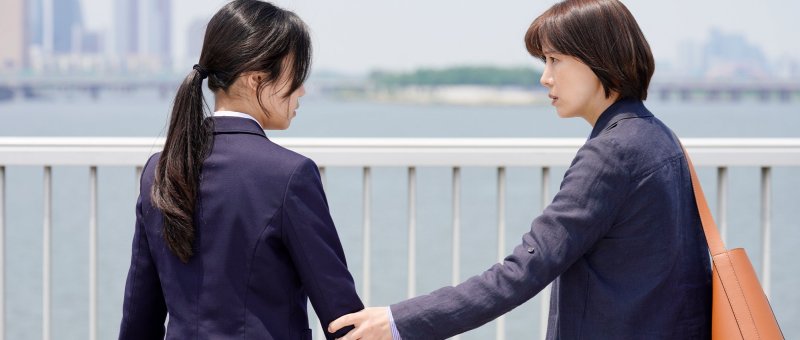
A lonely young woman finds a new place to belong while discovering the meaning of life after being taken in by a cheerful community of patients at a hospice for those with terminal illness in Cha Bong-ju’s lighthearted drama Good Morning (안녕하세요, Annyeonghaseyo). “Good morning” is to the patients an affirmation of life and way of greeting the new day as gift rather than a burden as the heroine had come to see it while unable to escape her sense of hopelessness and futility.

High schooler Su-mi’s (Kim Hwan-hee) desire to end her life is born largely of the circumstances she finds herself in as an orphan. Not only is she rejected by others her age who mock her for having no family, but she is trapped in an exploitative situation at a care facility where she is molested by the man who’s supposed to be taking care of her and also forced to work in his restaurant where she is expected to put up with inappropriate behaviour by drunken customers. Even if she were able to continue enduring it, she knows that she will soon come of age at which point she will be roughly ejected from the care system and expected to support herself with no further help available to her. It’s this sense of hopelessness that brings her to a nearby bridge from which she intends to jump only to be stopped by a middle-aged woman, Seo-jin (Yoo Sun), who manages to talk her down largely by promising that she will show her how to die.

That is in a sense what she does. Seo-jin works in a hospice caring for those with terminal illnesses who have each come to an acceptance of death and their path towards it. The patients are determined to live out their remaining days as best they can, remaining cheerful and committing themselves to accomplishing something be it learning English, writing a book, or finishing a painting. Su-mi bonds most closely with an elderly man (Lee Soon-jae) who had been illiterate and is working hard to learn to read and write while he still has time. What she discovers is that it is possible to find meaning in life even in the shadow of death, and that what gives her own life meaning is the sense of community she experiences at the hospice allowing her to feel part of a large family which had been denied to her during her time in the care system. 

“You just need to give them a little attention” Su-mi advises of some struggling plants at Seo-jin’s apartment, herself blossoming under the attention Seo-jin and the patients are paying to her, though there may be something a little uncomfortable in the suggestion that Seo-jin may have been partly at fault for a traumatic event in her past in assuming that things grow on their own as long you provide adequate nutrition. She blames herself for not paying enough attention and failing to realise that there was something wrong until it was too late only latterly understanding that like the plants people need more than simple sustenance to grow. Nevertheless, she and Su-mi gradually help each other to rediscover joy and happiness in life while forming a familial bond that restores something to each of them and grants them the ability to move forward into a happier future. 

Su-mi does learn “how to die” from the patients at the hospice, but what she’s really learning is how to live. The elderly man reminds her to live well and die without regret, making the most of every day doing what she wants to do and being happy while Su-mi gains a new perspective on life and death as she begins to step into herself gaining new confidence as a member of a community. Gentle and heartfelt, Cha’s lighthearted drama necessarily tackles some dark themes from suicide and terminal illness to the stigmatisation of orphanhood, difficulties experienced by those placed into the care system, and the inertia that can take hold while dealing with grief and loss but manages to lean towards the sunlight in embracing the healing qualities of relationships between people which give life its meaning.


Good morning streams in the US until March 31st as part of Asian Pop-Up Cinema Season 16.

International trailer (English subtitles)
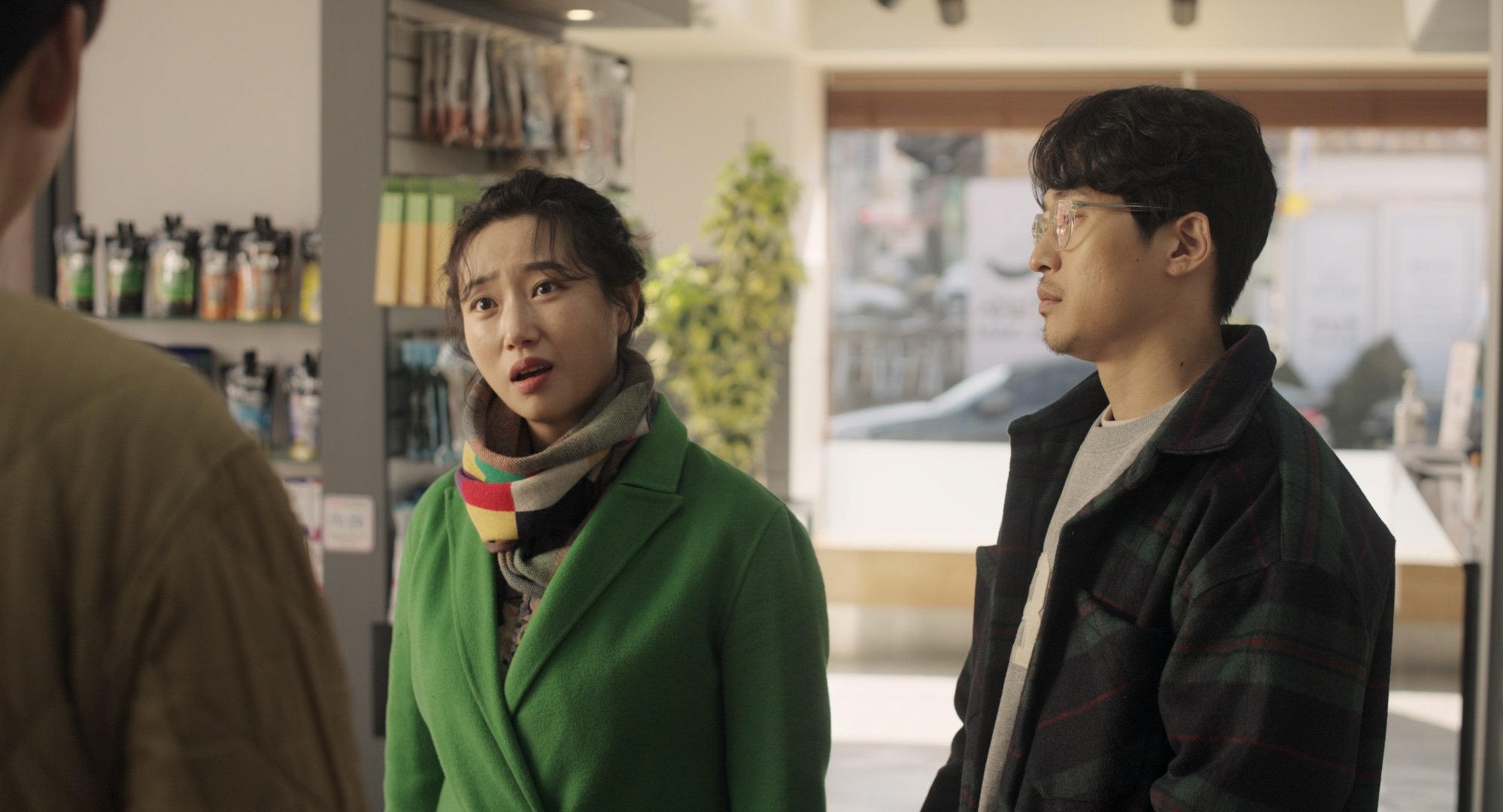
Next Door (옆집사람, Yeom Ji-ho, 2021) [Fantasia 2022]

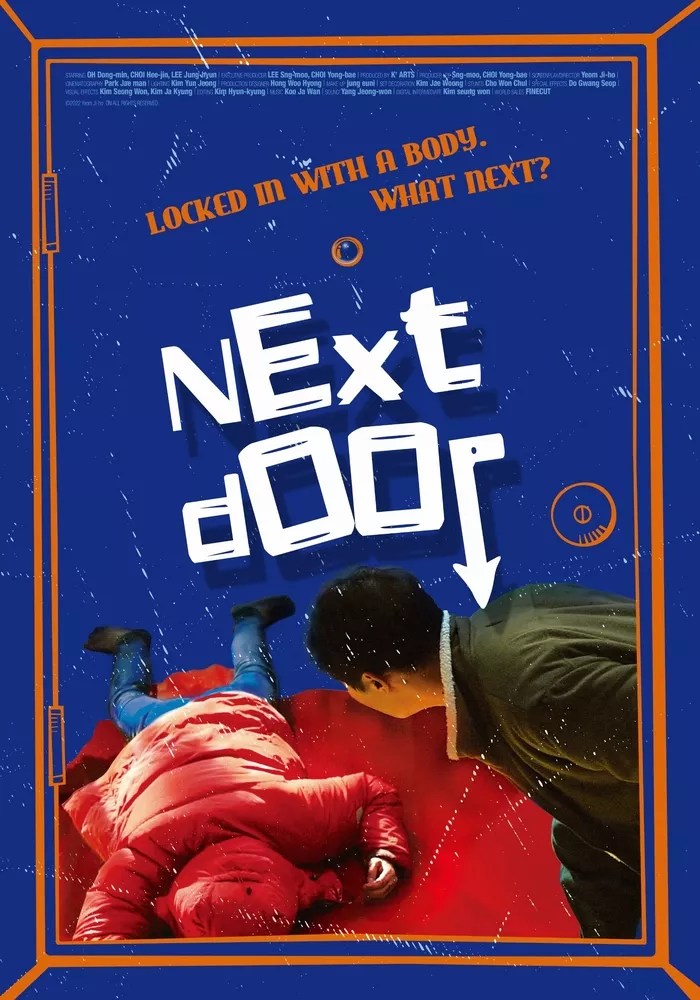
How much do you know about what’s going on with your neighbours? Chan-woo (Oh Dong-min) thinks he knows quite a bit because they never seem to stop arguing and the walls in this building are surprisingly thin, but as it turns out he didn’t really know very much at all nor to be honest did he really care. Yeom Ji-ho’s graduate film Next Door (옆집사람, Yeop Jib Salam) is a tense mystery farce in which an aspiring detective tries to investigate his way out of trouble and somehow ends up coming out on top almost despite himself.

Chan-woo has been unsuccessfully studying for the police exam for the last five years and hopes that his run of miserable failure is about to come to an end, that is as long as he can get himself together to submit the application by 6pm the following day. One of the many problems with that is that Chan-woo has a cashflow problem and there’s not enough in his account to pay the fee so he has to ring a friend who agrees to lend him money but only if he comes out for a drink. Reluctantly agreeing, Chan-woo fails to correct his friends when they assume he’s already passed the test and become a policeman only to get blackout drunk and create some kind of disturbance before waking up in an unfamiliar environment next to what seems to be a corpse surrounded by blood. After a few moments of confusion, Chan-woo realises he must have crawled in next-door in a drunken stupor and returns to his own apartment but discovers that he’s left his phone behind which is inconvenient in itself but especially as it’s now evidence that he was present at a crime scene which won’t look good on his police application form. 

To be honest, Chan-woo is not the sharpest knife in the drawer and it’s not until he’s been in the apartment, where he is trapped because the hallway is currently full of religious proselytisers, for some time that he remembers about fingerprints and DNA while deciding to do some investigating to figure out what might have been going on the previous evening. His friend’s messages suggest he has a history of becoming violent and aggressive while drunk and may have gotten into some kind of altercation all of which has him worried that he actually might have been involved in the corpse’s demise. 

Meanwhile all he ever did was complain about the noisy woman in 404 who was frequently heard arguing with a man. As an aspiring policeman perhaps he should have checked in on her to make sure she hadn’t become a victim of domestic violence rather than blaming his neighbours for his poor performance. To begin with, he assumes the body must be that of the woman’s boyfriend, but also makes a series of sexist assumptions while looking around the apartment and finding evidence that the person who lived there was a tech wiz immediately assuming that all the computer equipment must belong to the boyfriend. Similarly he decides the girl is probably an airhead after finding photos of her on the corpse’s phone because she is pretty and fashionable. When she finally turns up with bin bags and cleaning supplies, Hyun-min (Choi Hee-jin) first challenges Chan-woo on discovering him hiding in her closet but then changes her tune to appeal to Chan-woo’s vanity playing the helpless young woman looking to him for protection and in effect welding his sexism against him. 

His desire to play the hero may be behind his intention to become a police officer but then he’s not exactly a paragon of virtue himself. On discovering the body, we see him raid a piggy bank and pocket a note from the corpse’s wallet to solve his financial problems before thinking better of it and putting everything back where it belongs. He agrees to help Hyun-min deal with the body partly to protect her and partly to protect himself from his proximity to the crime all while trying to make sure he gets back to his own apartment to send the application form before the deadline. Even the landlady eventually offers him a discount on his rent in return for keeping quiet so the murder in the building won’t affect her business. “They were terrible people” he tells her when she repeats a rumour that Hyun-min got into a fight with a jealous boyfriend over money which might not be completely unfair even though he knows the rumour isn’t true and is not entirely blameless himself. A masterclass in blocking and production design, Yeom’s deliciously dark farce suggests it might be worth keeping a better eye on your neighbours in all senses of the term. 


Next Door screened as part of this year’s Fantasia International Film Festival.

International trailer (English subtitles)

Crazy Romance (가장 보통의 연애, Kim Han-gyeol, 2019)

Can you find love in a crazy world? According to Crazy Romance (가장 보통의 연애, Gajang Botong-ui Yeonae), yes and then again no. The Korean title translates as something like the most ordinary of romances, which, considering what we’re about to see, is in someways quite depressing. Achingly contemporary in its Ephron-esque air of sophistication, Crazy Romance nevertheless lays bare the costs to both men and women of living in a rabidly patriarchal, misogynistic society.

Our heroine, Sun-young (Gong Hyo-jin), has just joined a small advertising company in what many seem to feel is an unexpected step down in her career. At the awkward welcome drinks she’s asked a series of inappropriate, sexist questions, but her claims of not currently having a boyfriend are quickly disproved when a young man barges into the restaurant with flowers and abruptly proposes to her. It seems, Sun-young had attempted to break up with him that very morning, but he refused to listen and has now caused embarrassment at her job (which he expects her to quit anyway because they’ll be getting married). Meanwhile, Jae-hoon (Kim Rae-won) wasn’t really paying attention because he’s had too much to drink and is obsessively texting his ex who hasn’t replied in months. 

Jae-hoon’s alcoholism doesn’t seem to have affected his work, but has become a talking point around the office. The day after the party we see him wake up on the floor of his apartment surrounded by the detritus of drinking including, for some reason, several bags of corn on the cob, not to mention a cat which is apparently not his but might as well be now. Ever since his engagement ended, he’s been unable to move on, getting blackout drunk nearly every night and texting his ex who resolutely ignores him (not that you can blame her).

We can immediately see that there is not much difference in practical terms between Sun-young’s abusive ex Dong-hwa (Ji Il-joo) and Jae-hoon who is being positioned as the unfairly maligned nice guy, derided for his maudlin romanticism in being unable to forget his past love even though, as we alter discover, he broke off the engagement because she cheated on him while he was busy working hard for their future, neglecting their relationship as he fulfilled what he saw as his male responsibility to provide financial stability. Jae-hoon does, however, leave it at drunk texting and while privately resenting the fact she never replies, does not become dangerously obsessive, belligerent, or threatening as Dong-hwa later does in refusing to accept that Sun-young has ended their relationship. Nevertheless, witnessing their intense encounter in the car park and perhaps projecting, Jae-hoon tells Sun-young that he feels she’s been unfair to Dong-hwa who is after all “trying very hard” while implying that it’s romantic disappointment that has led to the apparent downgrade in her career prospects in the wake of derailed marriage plans. 

Jae-hoon’s embittered tone might suggest he’s mildly intimidated by Sun-young’s previously successful track record, but it is in a manner of speaking romantic disappointment which has done for her career in that Sun-young is now incredibly sick of having to deal with misogynistic workplace practices and persistent sexual harassment. Finding out the truth, Jae-hoon is outraged on her behalf but contributes to an ironic kind of victim blaming in berating her for not defending herself, as if she had the same right of recourse as he would have in her situation which of course she does not. As they bond in a shared sense of romantic disillusionment, the other team members start to turn against Sun-young, branding her a workplace hussy, while she in turn points out the hypocrisy of their interoffice gossip where everyone has a secret nickname from an employee everyone assumes is gay but is afraid to come out (he might have good reason, judging by his colleagues’ snide comments), to a female office worker’s decades-long unrequited love for their now married boss who is frequently derided for being thoroughly henpecked which is why he forces them into unnecessary company bonding sessions so he won’t have to go home and spend time with his family. 

The problem is that romance, or at least being vulnerable, is still embarrassing even in your 30s which is why everyone has to at least pretend to be drunk to pursue it. Both Jae-hoon and Sun-young are offered extremely problematic dating advice which effectively normalises abusive behaviour, childishly incapable of any kind of emotional honestly as they awkwardly spar with each other while their exes hover in the background. Sun-young tries to take Jae-hoon to task for his hypocrisy, pointing out that he thinks of himself as “better” than all the other useless men, but ultimately the film more or less agrees with him even if clear that he’s still a product of a misogynistic society and extremely self-centred while also genuinely nice as proved when we realise how he ended up with all that random corn. While he is maudlin and romantic, Sun-young is (understandably) cynical, but her spiky aggressiveness finds far less favour even if she is perhaps the one finally in charge of the direction of their relationship. Nevertheless, Crazy Romance cannot help but reinforce contemporary conservative social codes even as it critiques them, insisting that ordinary love is in itself crazy because the world is mad.


Crazy Romance is available to stream worldwide until July 4 as part of this year’s Udine Far East Film Festival.

Original trailer (English subtitles)