V.I.P. (브이아이피, Park Hoon-jung, 2017)

V.I.P. posterIn New World, Park Hoon-jung provided a bleak overview of creeping corruption with the absolute certainty that the forces of darkness will always win over those of the light, but with V.I.P. (브이아이피) he turns his attentions away from South Korea’s hellish gangland society to examine the effect of geopolitical concerns on the lives of ordinary citizens. He does this by positioning South Korea’s two biggest international concerns – America and The North, as twin manipulators with his home nation caught in the middle, trapped between the need to preserve allies and defend against enemies. The “enemy” here is a sociopathic serial killer allowed to get away with his crimes at home because of his elite status and then again abroad as a key informant of the American intelligence services.

Beginning at the end with a weary man accepting a gun and striding into a rundown building in Hong Kong, Park jumps back a few years to North Korea where an innocent schoolgirl is grabbed by a gang of three boys on a peaceful country road. Not only do they brutally rape and kill the girl, but they even go so far as to massacre her entire family. Police Chief Lee (Park Hee-Soon) identifies the killer as Kim Gwang-il (Lee Jong-Suk), son of a high ranking official. His boss closes the case; Gwang-il is untouchable. Lee is demoted and sent to a fertiliser plant.

A couple of years later similar crimes begin occurring in the South and maverick policeman Chae (Kim Myung-min), temporarily reinstated after being suspended for his violent ways, is handed the case after his superior apparently “commits suicide”. Like Lee, who eventually makes contact with Chae having followed his quarry to the South, Chae identifies Gwang-il and is prevented from arresting him but this time by South Korean intelligence services who were partly responsible for Gwang-il’s defection working closely with America’s CIA and the very greasy Agent Gray (Peter Stormare).

Like many Korean films of recent times the central point of concern is in the ability of the rich and powerful to do whatever they please and get away with it because their special status makes them untouchable. Park scores a double a whammy when he casts his villain both as an elitist and as a North Korean though he draws no connection between life in a brutalising regime and the desire to inflict violence.

This is a violent tale and the violence on show is sickening, often needlessly so. After showing us the aftermath of what happened to the innocent teenage girl in the prologue and then to her entire family including a five year old brother, there was really no need to go into detail but Park eventually includes a horrifying scene of Gwang-il garrotting his victim in an elegant drawing room right underneath the portraits of the Kims hanging proudly on the wall. The scene is problematic for several reasons but the biggest of them is in the depiction of the naked female body covered in blood and bruises while Park’s minions stand naked around her, pale and unstained by her blood, each of the actors carefully hiding their genitals from the camera. The victim, who has no lines other than a final plea not to kill her, is the only real female presence in the film save for one female police officer who is seen briefly and only appears to become another potential victim for Gwang-il.

The real ire is saved not for Gwang-il but for the intelligence services who lack the backbone to stop him. The Americans, or more precisely a need to placate them, are the major motivator – a fact which takes on additional irony considering Gwang-il is the North Korean threat the US is supposed to be helping to mitigate. It remains unclear why the CIA would be allowing Gwang-il free reign to live as a regular citizen given that he supposedly has important information regarding North Korean finances which is the reason the Americans are helping him defect, rather than keeping him safely contained and preventing him from committing heinous crimes all over the world which, apart from anything else, threaten to cause huge embarrassment to everyone involved. Still, Agent Gray lives up to his name in his general sleaziness and the intense implication that he is playing his own long game which may have nothing to do with country or protocol.

Park’s decision to structure the film in several chapters each with a different title card often works against him, taking the momentum of his procedural and occasionally proving confusing. Loosely, Park ties the stories of three men together – the idealistic North Korean officer who wants to see justice done, the grizzled cop with a noble heart, and the conflicted NIS officer realising the unforeseen consequences of his attempts to play politics for career advancement, but he fails to weave their fates into anything more than an extremely pessimistic exploration of hidden geopolitical oppression. Final shootout aside, V.I.P. is a grimy, politically questionable thriller which irritates in its narrative sluggishness and leaves a sour taste in the mouth in its own indifference to its villains’ crimes in favour of his V.I.P. status as the representative of an entirely different existential threat.


Screened at the London East Asia Film Festival 2017.

Original trailer (no subtitles)
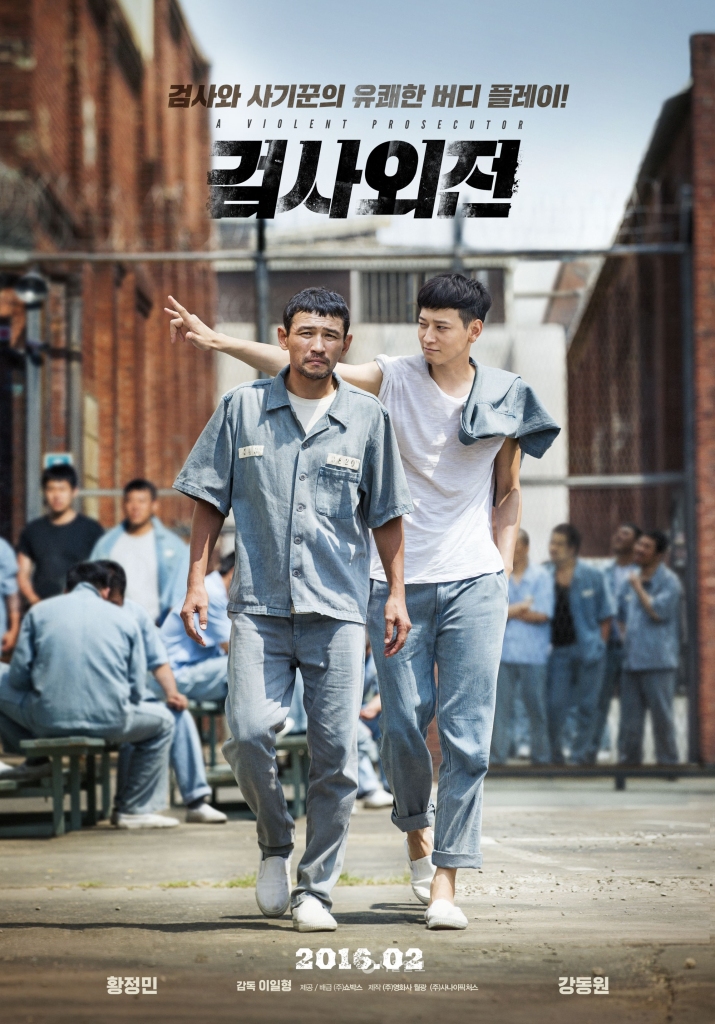
A Violent Prosecutor (검사외전, Lee Il-hyeong, 2016)

112997_47166_106Review of Lee Il-hyeong’s A Violent Prosecutor first published by UK Anime Network.

Police brutality is something of a hot button issue at the moment, so it’s a little disconcerting to see a film like A Violent Prosecutor (검사외전, Geomsawejeon) casting a rogue cop with a penchant for forced confessions as its hero. Then again, the theme plays into the obvious retro charm on offer and the film does, at least, make it plain that violence should have no place in law enforcement. The debut feature from director Lee Il-Hyeong, A Violent Prosecutor has a distinctly ‘70s vibe from its quirky credits sequence to the carefully managed tone which manages to be both serious and not at the same time.

Hwang Jung-min plays hardline prosecutor Byun Jae-wook, feared more than respected because of his willingness (or perhaps eagerness?) to indulge in physical violence in the name of justice. Already known as a trouble maker, Byun’s maverick status is an exploitable weakness and so when he kicks up a fuss trying to expose an obvious cover up, he’s framed for wrongful death after a witness dies in police custody.

Sent to prison among many of the men he helped to put there, Byun quickly finds his feet by providing free legal advice to the guards. Five years later, Byun has become the one of the prison’s top dogs but he’s still intent on clearing his name and nailing the guys who did this to him. Enter suave conman Chi-won (Gang Dong-won) and Byun sees an opening…

Aside from Byun’s problematic approach to his work, he’s definitely one of the good guys as justice, politics, and business have all come together in a whirlwind of mutually beneficial corruption. The whole mess begins during an environmental protest against an industrial complex which is about to be built right next to a bird sanctuary. The evil corporate bozos don’t want any delays so they pay a bunch of gangsters to infiltrate the protest and start a riot to make the environmentalists look like crazed, violent, loonies. Unsurprisingly, public opinion about the development improves following the unpleasant actions of the protestors. The police were just supposed to go along with this (police in Korean films never seem very interested in solving crimes after all), but Byun is different, he smells a rat and he’s not going to roll over and let powerful corporations abuse justice.

Unfortunately, his dedication is not matched by his colleagues who are more interested in their own careers than abstract concepts like truth or justice. Receiving pressure from above and realising Byun can’t be talked down, they decide to take drastic action. One of Byun’s bosses, Kang (Kim Eung-soo), later decides to move into politics, having solidified support through this alliance with the money guys, and is then interested in nothing other than his own success – lying, cheating, and smiling his way to the top. Corruption stemming from the power of monied corporations has become a constant theme in recent Korean cinema and A Violent Prosecutor makes good use of its cinematic background even if treating the subject matter in a necessarily light way.

Essentially, A Violent Prosecutor is a buddy comedy in which the two guys at the centre are kept apart for much of the film. Byun uses his hard won legal knowledge to fight his way out of prison by playing by the book, learning the error of his ways in the process. More often than not, he’s the straight man to Chi-won’s constant scamming as the charming conman comes up with one zany scheme after another trying to keep himself out of trouble whilst also helping Byun enact his plan of revenge. Actor Gang Dong-won is on fine form as the slippery but somehow loveable Chi-won whose main line of work is scamming chaebol daughters out of their inheritances by convincing them he’s a Korean-American Penn State business school graduate, peppering his speech with Americanisms but clueless when challenged on his English. He also deserves bonus points for subverting the “escape from prison dressed as a guard” trope by trying to escape from a corridor full of thugs by blending in with the very men sent to capture him.

Ending in a spectacular, if ridiculous, courtroom finale in which Byun defends himself by forcing a confession in a new, more acceptable way, A Violent Prosecutor delivers the necessary “justice” to all who seek it. Byun learns the error of his ways and accepts that his own violence was at least partly to blame for the way the situation developed, but also ensures that he gets justice for everyone else so that the rich and powerful can’t be allowed to ride roughshod over the people with no one to defend them. A smart buddy comedy, A Violent Prosecutor isn’t exactly the exploitative action fest the title seems to promise but is undoubtedly influenced by the bad cop movies of the ‘70s and excels at finding humour even in the strangest of places.


Reviewed at the 2016 London Korean Film Festival.

Original trailer (English Subtitles)

https://www.youtube.com/watch?v=_Cb-tYIsESg

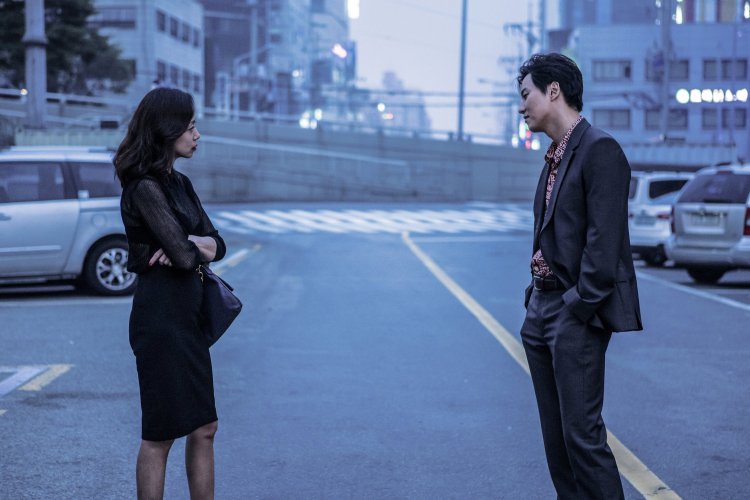
The Shameless (무뢰한, Oh Seung-uk, 2015)

fullsizephoto602641Review of Oh Seung-uk’s The Shameless (무뢰한, Moorwehan) up at UK Anime Network. I read some lukewarm reviews but I actually really liked this one (though I’m a sucker for B-movie noirs and my tolerance for melodrama is sky high)!


Director Oh Seung-uk maybe best known as the screenwriter behind such varied and well respected efforts as Green Fish (directed by Korean auteur Lee Chang-dong), Christmas in August and H, but way back in 2001 he made a minor splash at Cannes with his existential gangster piece, Kilimanjaro. The Shameless sees him one again turn to the shady world of underground crime though this time what he’s interested in is a romantic melodrama laced with deadly film noir morality.

Recently divorced police detective Jung Jae-gon has been handed what seems like a fairly straightforward murder. They already know who the killer is and the motive behind the crime, all that remains is to track the guy down. Luckily they also know that Park, a gangland thug, has a regular girlfriend, Kim Hye-kyung, who works at a seedy downtown bar. Through tailing her they’ll find their man. This is where things get sticky. Said girlfriend is the former lover of the head of another crime syndicate who’d now like to use Park’s current predicament to exact some revenge on the drifter who’s stolen his girl. Roping in a disgraced ex-cop, the gang offer Jae-gon a significant amount of money to cripple Park during his arrest and take him out of the picture for good. Jae-gon is conflicted. The way he sees it, the day you can’t tell which side you’re really on is the day you need to hand back your badge, but Jae-gon’s in need of money, this guy used to be his friend and then, there’s the girl…

Right here you have all the essential elements of your classic film noir. Basically good, if imperfect, detective receives an offer he can’t refuse and ultimately accepts it against his better judgement in part because of a femme fatale that he just can’t get out of his mind even if the more rational part of his brain knows this is something that is never going to happen. Before you know it, Jae-gon has researched Park’s history and adopted the persona of a former cellmate before taking an undercover job at Hye-kyung’s bar and attempting to become close to her in the hope that she’ll eventually lead them to Park’s whereabouts. Of course, he starts falling for her too and though she remains doggedly committed to Park, something in her begins to warm to him in return. This is a situation which can never end well and its classic B-movie style inevitability only adds to the eventual pathos of its deliberately downbeat ending.

The film is called The Shameless for a reason – nobody looks good in this shady world of corrupt cops and vicious gangsters who will stop at nothing to get what they want. The fact that you can barely tell who is on which side is a good indicator of the levels to which this world of chaos has become warped. Even the police are literally “shameless” stooping so far as to indulge in an interrogation technique which is, in fact, a sexual assault. At least the gangsters are abiding by their own rules.

The picture has a slick, stylish aesthetic which is perfectly in keeping with its morally grey, film noir inspired mood. It’s full of existential angst and the ennui of modern, aimless life. As usual for this kind of film, Hye-kyung repeatedly gets the short end of the stick – used and abused by faithless men, so massively in debt it’s almost impossible she’ll be able to extricate herself from the seedy world of hostess bars and petty gangsters before its too late. She’s only one victim of the pervasive sexism that defines this harsh world. Clinging desperately to Park, Hye-kyung’s one and only escape route is to hope one of these feckless men is the one who can take her away from this place.

Needless to say this isn’t one of those films where everyone gets what they want and walks off into the sunset of eternal happiness, but perhaps it isn’t as apocalyptic as the original premise might promise. That is actually something of a problem as the slightly softer ending undercuts the film’s emotional resonance and ultimately leaves one feeling a little less than satisfied. Still, even if The Shameless fails to hit its mark at the very end, Oh has still crafted a stylish and beautifully photographed neo-noir romance that stays true to its classic B-movie roots whilst also embracing the best of the modern crime movie.


Reviewed at the London Korean Film Festival 2015.