Sasori (さそり, Joe Ma Wai-Ho, 2008)

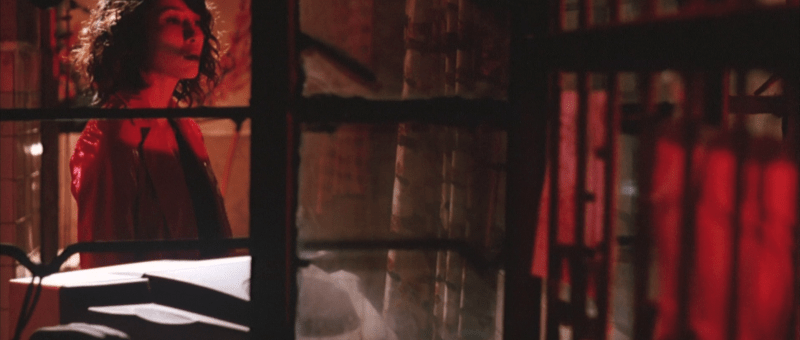
Sasori had been dormant for a decade before being resurrected in this Hong Kong co-production directed by Joe Ma. She is, however, a very different Nami Matsushima (Mizuno Miki) who becomes less a feminist avenger than a sociopathic killer, albeit one fixated on revenge and with ambivalent feelings towards her former lover, Hei Tai (Dylan Kuo Pin-Chao), who evidently did not have enough faith in her to realise that she didn’t murder his entire family just because she felt like it.

Nevertheless, in contrast to other Namis, she did make the decision to do it and went through with stabbing Hei Tai’s sister in the heart right in front of him even if she did it to protect him from the crooks who’d invaded their home. Motives are never explicitly explained, but it’s later suggested that Hei Tai’s professor father may have been knocked off by a rival scholar/gangster researching “inhuman organ treatment”. In any case, the goons that break into her home sexually assault Nami and tell her the only way to save Hei Tai is to help them kill his father and sister. Unfortunately, Hei Tai does not seem to recognise the position she was in nor her transgressive love for him, so is filled with boiling rage and resentment. Curiously, Nami never actually explains either, but is by that point mired in a women’s prison where she contends with the sleazy warden (Lam Suet) and the cellblock’s toughest lady, Dieyou (Natsume Nana), through the medium of cage-based mud wrestling.

This Nami’s transformation is obvious when she rips the loose skull fragment from a woman with learning difficulties she’s befriended and uses it to kill Dieyou. The moment at which she kills Dieyou’s sister, a woman she has no quarrel with, solely to unbalance her rival is presented as a kind of climax in which Nami herself appears to get off on the act of killing. During this earlier stretch of the film, Nami’s victims are largely female and killed for petty reasons. Seemingly cowed and beaten down, she does what the warden says rather than opposing him or like other Nami’s stabbing him in an eye. 

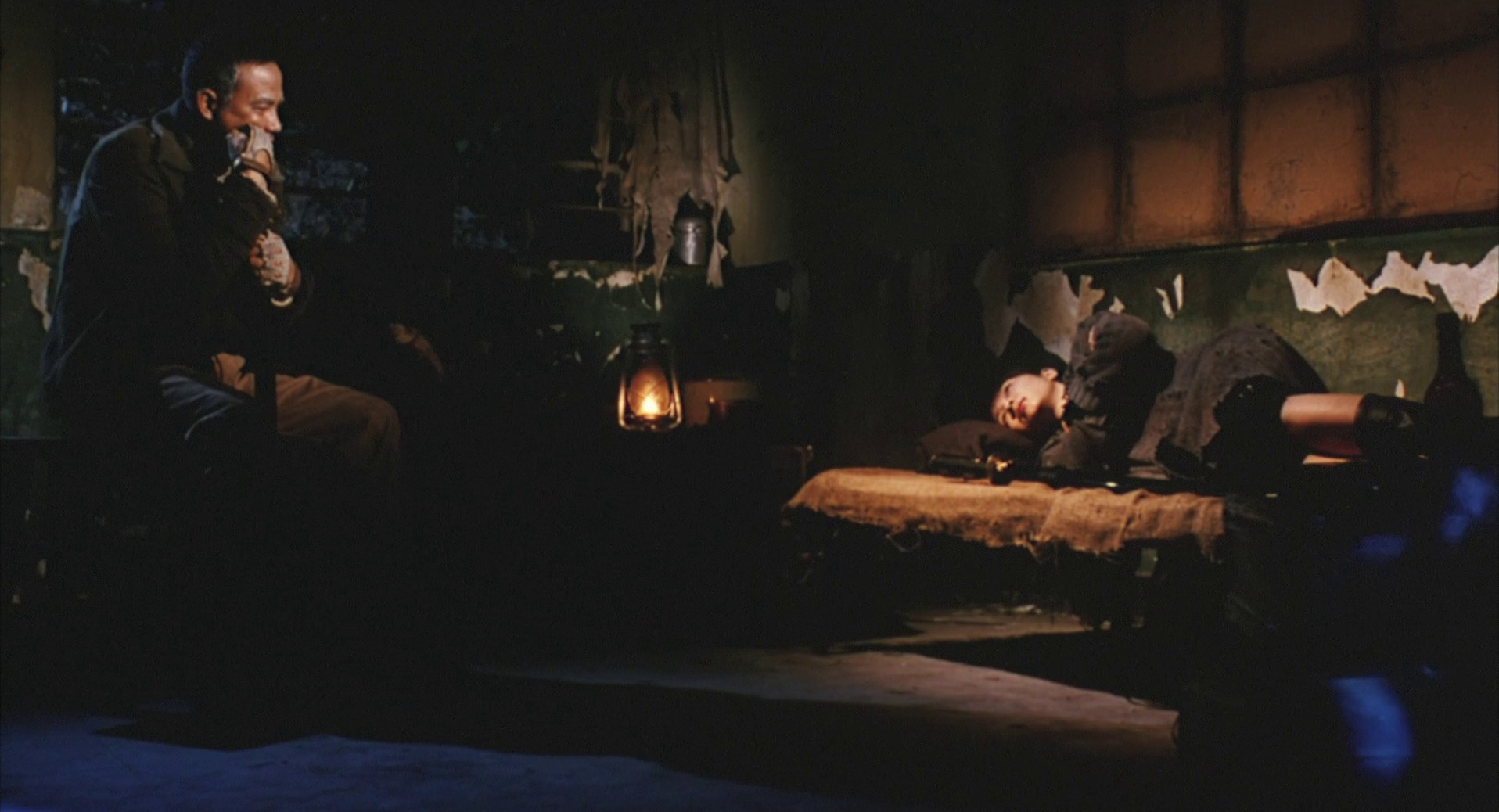
This does, however, eventually allow her to escape if as a corpse rescued by a mysterious “corpse collector” (Simon Yam Tat-Wah) who gifts her a Japanese sword and teaches her kung fu so she can achieve her revenge. It’s at this moment that she becomes a kind of supernaturally powered embodiment of vengeance, but it’s immediately made clear that the only revenge she seeks is personal. Spotting a pimp kicking a sex worker in the street, she strikes him down but only tells the sex worker that she doesn’t plan to kill her too otherwise making no further attempt to help her. Ma then takes the action back to its manga roots, relying on obvious wirework to lend a kind of unreality to the fight scenes even if the hand-to-hand combat is generally more realistic. 

But at the same time, Nami steps into a more arthouse space in a meditation on time and memory that seems to be borrowing a little from Old Boy or perhaps 2046 as she walks into a bar where the barman tells her that he can hypnotise people to erase their memories though he doesn’t they should. Re-encountering Hei Tai who no longer remembers her or his past life as a policeman, she finds herself ambivalent about her revenge, on one level resenting him and on another wondering if she has the right to start over without the problematic fact of her having been responsible for the deaths of Hei Tai’s whole family. 

There are many things that don’t really make all that much sense, from the inhuman organ research to Hei Tai’s possibly selective amnesia. Nevertheless, Ma piles on the style with a particularly 2000s Hong Kong aesthetic with its neon lighting and woozy camera work but also adopts a retro sensibility brought out by the use of mainly post-sync sound in which the Japanese actors are dubbed into Cantonese. By the film’s conclusion, Nami has once again become a legend but this time a much less palatable one not so much avenger for an oppressed minority as a cold-blooded and sadistic vigilante interested in little more than personal revenge.


International trailer

The Laundryman (青田街一號, Lee Chung, 2015)

青田街一號_主海報A_直式_有贊助_OLCould you, should you, attempt to wash away life’s “stains” by erasing them? The hero of Lee Chung’s The Laundryman (青田街一號, Qīngtián J Yīhào) is engaged with just that in his clandestine occupation in which he works as a kind of “cleaner”, smoothing the wrinkles out of life’s little problems for the monied and unscrupulous. Yet he finds himself “haunted” by his crimes, accused by those he so casually dispatched without asking why, and eventually forced into a reexamination of his life and work.

Known only by the cryptic codename “No. 1, Chingtian Street” (Joseph Chang Hsiao-chuan), our hitman is one of many working for the mysterious A-gu (Sonia Sui Tang) at her family laundry which she runs as a cover for her stable of assassins, claiming that they merely clean the stains from people’s lives rather than their clothes. A-gu’s methods are complex and exacting. Picking up concerned citizens in the street, she guides them towards her services before Chingtian or one of his colleagues inserts themselves into their target’s daily routine, knocks them off in a quiet sort of way, then brings the body “home” to be “laundered”.

The snag is that Chingtian has recently become plagued by the spirits of those he’s killed. Three of them, to be exact (and an extra one he didn’t off but has started following him anyway). Traditional therapy proving no help, A-gu sends Chingtian off to see Lin (Regina Wan Qian), a pretty psychic, despite affirming that all of this is some weird thing going on with Chingtian’s head rather than genuine paranormal activity. Lin, spotting his ghostly followers right away, explains to Chingtian that they most likely have unfinished business – i.e. finding out who wanted them dead and why. There is, however, a little more to it than that as a further trail of death begins to linger behind Chingtian that leads back to a dark and repressed memory of his youth.

Despite its whimsical tone, Lee’s drama leans heavily into the darkness in asking why it is someone might decide to pay to have someone else killed. The answers aren’t the ones you’re expecting. No business disputes or political machinations, only frustrated loves and loneliness. A nerdy young loner falls for the larger lady from next-door and is horrified to realise that her boyfriend beats her to the point at which she has begun to consider suicide as a means of escape. He wants to save her, and after all the world might be “better off” without the violent boyfriend, so he gives in to A-gu’s alluring offer to have the guy offed (for a small fee). Meanwhile, another mark decided on his course of action out of an excess of love, or to put it more pointedly, its dark side as he became increasingly convinced he could not live up to its expectation and determined to free himself of the burden, damning himself further into a downward spiral of self-destructive humiliation.

A-gu’s life philosophies lean to towards the callous with all her talk of “cleaning” and affirmations that “useless people should be destroyed”, but as Lin points out it’s quite something else to bump off a lovely older couple – some might even call it heartless. Heartless is what Chingtian has been raised to be, so his recently reawakened humanity is quite a problem. Caught between A-gu who alternates between something like possessive mother and femme fatale (which is just as strange a dynamic as it sounds), the pixyish Lin, and later the dogged policewoman Yang (Yeo Yann Yann) who’s picked up on a trail set down for her to find but followed it further than intended, Chingtian is forced to confront himself and his past, in a sense putting his psyche on a spin cycle to reverse a lifetime’s worth of brainwashing and remember who it is he really is.

Strangely warm and fuzzy, Lee’s whimsical world of colour is a perfect mix of film noir fatalism and fairytale promise as Chingtian walks a precarious path towards reintegration of his personality while trying a fair few others on for size. The childlike silliness of an anti-ghost musical number mingles with the hard edged kung fu of a violent procedural but Lee never loses his sense of cartoonish fun even as Chingtian begins to find his answers and with them a clue to inner darknesses personal and otherwise.


Currently available to stream in the UK (and possibly other territories) via Amazon Prime Video.

International trailer (English subtitles)