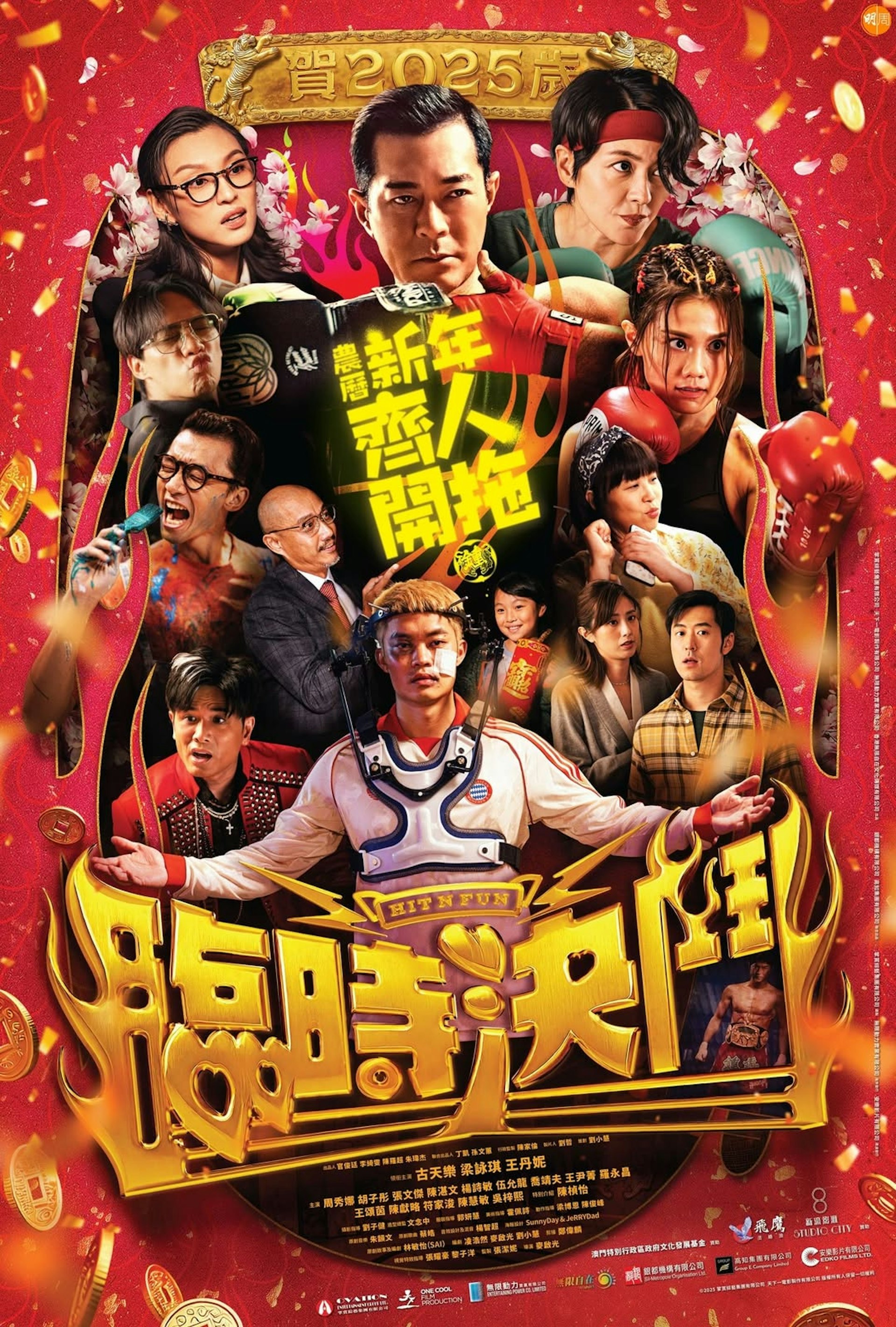
Hit N Fun (臨時決鬥, Albert Mak Kai-Kwong, 2025)

“There’s no point looking back,” according to the heroes of Albert Mak Kai-Kwong’s surreal Muay Thai comedy Hit N Fun (臨時決鬥), but then again it seems like victory lies in staying in the ring. No matter how many times you lose, you have to keep fighting because precisely because you have no expectation of winning. Bruce’s (Louis Koo Tin-lok) gym in Macao is then a remnant of a world on the brink of eclipse that he’s been desperately trying to cling on to only to come to the slow realisation that it may be time to let it go.

His wife Carrie (Gigi Leung Wing-kei) is experiencing something similar after trying to make a comeback as an actress. A promising opportunity goes awry when she realises it’s for an advert for a menopausal tonic and protests that’s she’s far too young for all that but is immediately shut down by the producer, Elsa (Louise Wong Tan-ni), who says she doesn’t even know who she is but is only using her as a favour to her aunt, Bridget (Harriet Yeung), who is Carrie’s manager. Carrie complains that she can’t get a foothold in the contemporary cinema scene partly because of a dearth of parts for women her age, while she’s equally too afraid to let go of ingenue roles and her image of herself as one to make the irreversible shift to playing mothers of adult women. But then it also seems that you can’t get anywhere without a huge following on social media, which is largely powered by young actors from big agencies with hundreds and thousands of fans. 

Meanwhile, Elsa can’t let go of her long-term boyfriend Daniel (Peter Chan Charm-man) who has been unsuccessfully trying to break up with her but has not yet disclosed that he’s now in a relationship with Surewin (Chrissie Chau Sau-na), a Muay Thai champion who started out at Bruce’s gym but left with his best student, Arnold (German Cheung), to start up on their own. Unlike Bruce’s traditional gym, Arnold’s is a slick, modern facility that pushes expensive package subscriptions and has a sideline in merchandising and fitness-related goods. In many ways the battle is between the wholesome sense of community presented by Bruce’s rundown school, and Arnold’s soulless corporate enterprise which doesn’t even really care that much about Muay Thai anymore.

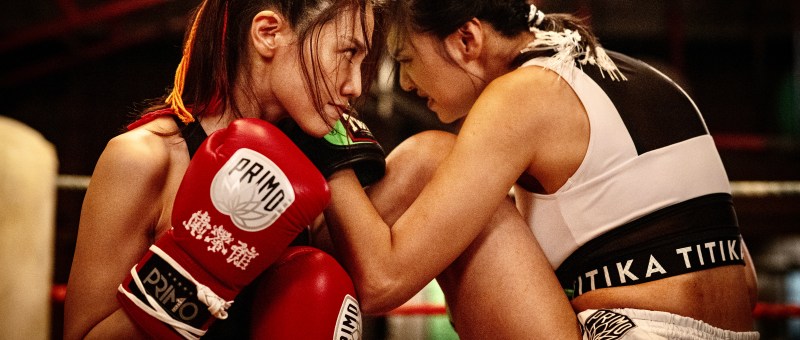
Then again, the unlikely champion of this wholesomeness is Elsa, who decides she has to fight Surewin not exactly for Daniel but to avenge and vindicate herself. Even though it’s very unlikely that she could really beat a champion after an intense three months of training, Elsa is determined to give it a go more out of stubbornness and pride than anything else. But then all she really needs to do is stick around, much like Bruce. Elsa only needs to be standing after four rounds and as Bruce is fond of reminding her, if the final bell hasn’t rung, then you haven’t lost yet. 

While training at the gym, Elsa begins to loosen up a bit and shifts more towards the world of Bruce’s gym than her high-powered job that is founded in consumerism and geared towards selling people things they don’t want or need to distract them from a sense of dissatisfaction about their lives. But on the other hand, perhaps there’s no point in the kind of stubbornness that prevents you from moving forward. Bruce has an old leather sandbag in his gym that seems to embody its soul, yet it’s already leaking sand as if the building itself were bleeding. Ironically, it’s Arnold who eventually tries to save it while Bruce seems resigned.

What they reach seems to be a kind of compromise, utilising Elsa’s skills to modernise and expand the gym, which is really just another way of fighting if also perhaps a concession and decision to leave something behind. You could also read this as an allegory for the Hong Kong film industry which is increasingly leaning towards the Mainland but still hanging on though some might say losing its soul in softening any hint of localness. On the other hand, Hit N Fun is quite defiantly a homegrown comedy starring some of the biggest local stars from Louis Koo and Gigi Leung to Tony Wu and the rising star Louise Wong. It ultimately seems to say, we’re still here, and we’ll pick our battles, but we’ll keep fighting even if we can’t win because perseverance can be a victory in itself.


Trailer (Traditional Chinese / English subtitles)
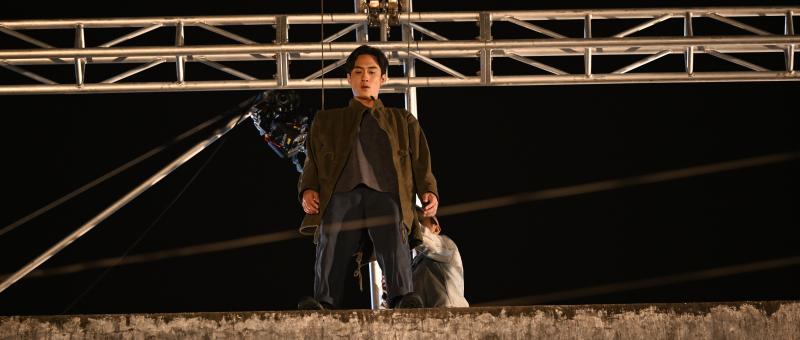
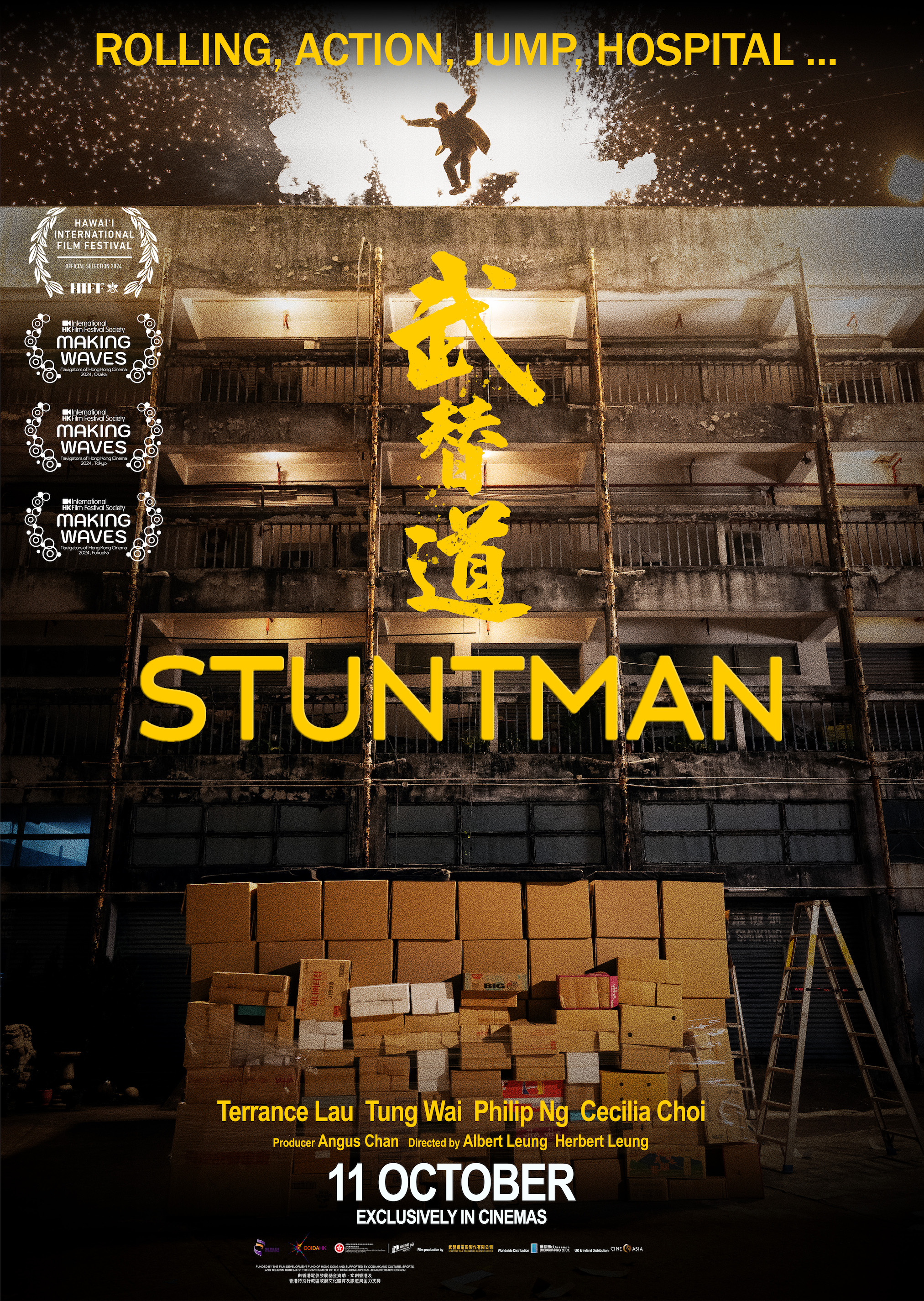
Stuntman (武替道, Herbert Leung & Albert Leung, 2024)

No matter how good a film is, it’s never worth risking someone’s life. Intellectually, “heartless” action choreographer Sam knows that, but once the camera’s rolling all he seems to see is the take and it’s win at all costs. An homage to the glory days of Hong Kong cinema when no one had ever heard the words health and safety, Herbert Leung & Albert Leung’s Stuntman (武替道) is in its way a paean for those who risked their lives for our entertainment but also for a fading Hong Kong which has the film seems to argue lost it’s bite and become rather defeatist if not docile. 

Those around Sam, played by real life action choreographer Tung Wai, seem to be convinced that “Hong Kong cinema is dead,” largely because, for very good reason, it’s no longer possible to make the kind of films they did back then with crazy, death-defying stunts and visceral action sequences. The opening scenes of the film, set in the mid-1990s, find Sam filming what appears to be a Police Story-style chase through a shopping mall that is supposed to end with a stuntman stand-in jumping from a bridge onto a moving car to catch the bad guy. The stuntman, Wai, is young and experienced so he doesn’t make the jump at which point Sam yells at him and asks his assistant, Kam, to to do it instead. But everything that could go wrong does and Kam is seriously injured because of Sam’s singleminded stubbornness in refusing to film the sequence with a cut which would obviously make it safer even if he argues less exciting. 

Sam evidently does feel a degree of guilt for this, especially as it later has other consequences for his personal life, and retreats from the film industry to run a bone setting clinic with posters for classic Hong Kong films on the wall. It’s a reverence for this bygone era that enables him to bond with Long (Terrance Lau Chun-him), a younger and more modern kind of stuntman who isn’t necessarily afraid of taking risks but understands the importance of on-set safety. Long can’t catch a break with demand for stuntmen falling rapidly precisely because of the concurrent decline of action cinema while his brother keeps pressuring him to give up his dreams and join his logistics company instead. It’s Kit’s delivery firm that becomes an accidental villain representing a Hong Kong that’s lost it’s nerve and is determined to play it safe while Sam’s recklessness perhaps represents the opposite, a dangerous desire to risk it all without considering the consequences for those around him.

But as he’s fond of saying, there’s always a way. It doesn’t have to be either or. The film seems to say, Hong Kong cinema isn’t dead, but now it belongs to those like Long to lead in new directions, modernising rather than fading away and taking the best of the past with it while leaving the more problematic elements behind. Originally swayed by Sam’s charisma, Long is somewhat horrified when he’s confronted with the consequences of his old school approach to filmmaking which includes going guerrilla style in the street without paying for permits with the consequence not only of police with real guns getting involved but innocent civilians trying to go about their day getting caught up in their fake robbery, becoming frightened and even injured in the ensuing panic. 

Meanwhile, he teaches old dog Sam a few new tricks in that being deliberately unpleasant is no longer the way to exert authority on set while ordering takeaway for everyone is a nice gesture that reminds them you’re all part of a team. As much as Long is a kind of surrogate son for Sam, he’s also reminded that there are some relationships that can’t ever really be fully repaired even if it’s not too late to try to remake them. His pain on seeing his soon-to-be-married daughter’s (Cecilia Choi Sze-wan) step-father taking pride of place at the wedding is palpable, but in the end he realises he’ll never really change because he’s a relic of an older Hong Kong unable to move forward into this new era. “No matter how strong the wind, keep the flame alive,” he tells Long talking both about the Spirit of Hong Kong and its cinema while in a flashback sequence reminding his young daughter that the fireworks will forever glow in her heart. Lent a degree of pathos by Tung Wai’s impassioned performance, the film is a true homage to classic Hong Kong action while also insisting that there’s always a way and it’s never too late to reclaim something of what’s been lost.


Stuntman opens in UK cinemas 11th October courtesy of CineAsia

UK trailer (English subtitles)

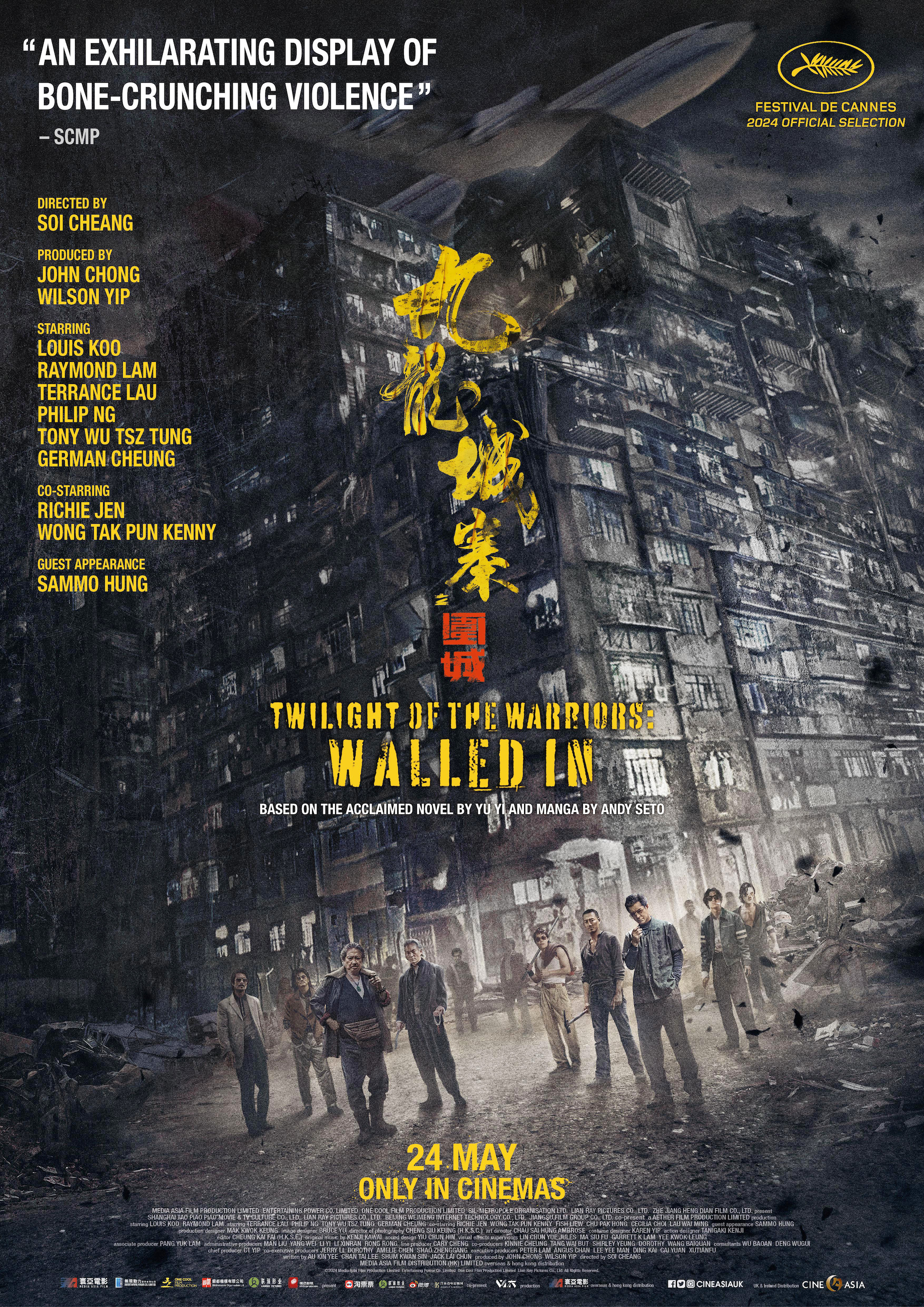
Twilight of the Warriors: Walled In (九龍城寨.圍城, Soi Cheang, 2024)

In Kowloon Walled City, you give help, you get help. Sometimes described as a colony within a colony, by the late 1980s the settlement was largely ungovernable and literal law unto itself save for the triads who maintained what little order there was. Yet in Soi Cheang’s Twilight of the Warriors: Walled In (九龍城寨.圍城) it’s a place of comfort and security, a well functioning community that as its leader Cyclone (Louis Koo Tin-lok) points out may be unpalatable for “normal” people but provides a point of refuge for the exiled and hopeless.

It’s difficult not to read it and Cyclone himself as embodiments of Hong Kong that is slowly disappearing. Dying of lung cancer, Cyclone is aligned with the fate of the walled city as someone whose time is running out, tired and world weary but still hanging on. In the opening sequence set 20 or so years before, we see Cyclone stand up to an apparent dictatorship and institute what seems to be a more egalitarian form of government though one obviously defined by violence. Nevertheless, when refugee Lok (Raymond Lam Wui Man) lands up there originally suspicious of Cyclone having been duped by local gangster Mr Big (Sammo Hung Kam-bo), he discovers him to be a stand up guy looking after those in his community and generally keeping the peace. Nevertheless, Lok’s arrival is the fatalistic catalyst for the opening of old wounds amid the free for all of the mid-80s society in which the Walled City, sure to be bulldozed, has just become a lucrative property investment.

Mr Big and his crazed henchman King represent this new order, amoral capitalistic consumerists who care little for the conventional rules of gangsterdom. Their bid to seize the Walled City has its obvious overtones as they seek to replace the (generally) peaceful egalitarian rule of Cyclone with something that appears much more authoritarian and ruthless. Believing himself to be a stateless orphan, Lok tries to keep his head down saving everything he can to buy a fake Hong Kong ID card which is also in its way a quest for identity not to mention a homeland and a sense of belonging. He finds all of these things, along with a surrogate father figure, in the Walled City only to have the new home he’s discovered for himself ripped out from under him because of a twist of fate. When he teams up with a trio of other young men who all owe their lives to Cyclone and the Walled City to attempt to take it back, it’s also an attempt to reclaim an older, more autonomous Hong Kong that exists outside of any kind of colonial control as evidenced by his final statement that no matter what happens some things don’t change.

This sensibility extends to the casting of the film which includes a series of Hong Kong legends including a notable appearance from the legendary Sammo Hung not to mention Louis Koo alongside a generation of younger stars such as Tony Wu and Terrance Lau Chun-him. Adapted from the manhua City of Darkness by Andy Seto, the film opens with a flashback to the original war for control of the Walled City that hints at deeper, extended backstories otherwise unexplored though equally mythologised by those who impart them to them Lok, a prodigal son and eventual inheritor of the City’s legacy. Even so, the comic book elements sometime distract from Soi Cheang’s otherwise evocative if hyperreal recreation of the Walled City slum or the political subtext that can be inferred in the presence of supernatural abilities such as those which seem to grant King near invincibility.

In any case, Soi Cheang looks back equally towards the history of heroic bloodshed in particular in his tale of brotherhood and loyalty in which the secondary antagonist is literally imprisoned by his own futile desire for a pointless vengeance on the descendent of a man who had wronged him but was already long dead himself. As he’d said, the future of the Walled City is in the hands of the younger generation who choose to end the cycle by setting him free rather than imprison themselves along with him while defending their home as well as they can. With some incredibly well designed action sequences including one that make its way onto a double-decker bus, Soi Cheang’s beautifully staged action thriller as its name suggests has a rather elegiac quality but also the spirit of resistance in its gentle advocation for the importance of supportive communities.


Twilight of the Warriors: Walled In is in UK cinemas from 24th May courtesy of CineAsia.

UK trailer (Traditional Chinese & English subtitles)

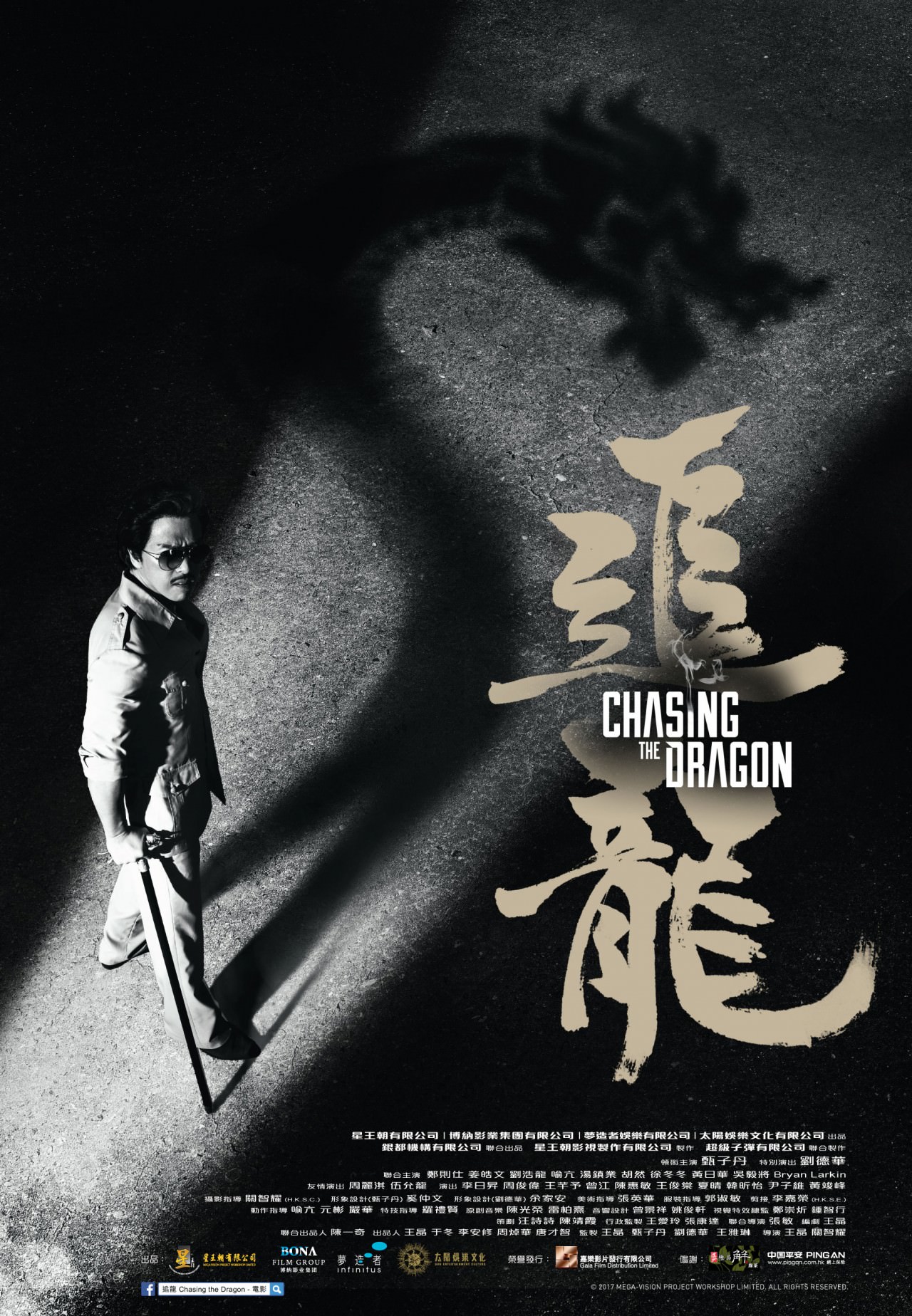
Chasing the Dragon (追龍, Jason Kwan & Wong Jing, 2017)

chasing the dragon posterWhen it comes to Mainland China anything goes so long as you set your movie before 1949. In Hong Kong it seems the same thing is true only the cut off date is 1997. Wong Jing and Jason Kwan’s surprisingly glossy Chasing the Dragon (追龍) follows two giants of 1960s Hong Kong in Crippled Ho whose life was previously brought the screen in 1991’s To Be Number One, and crooked (but only in a nice way) policeman Lee Rock who is played by Andy Lau – the very same part he inhabited in a series of films over 25 years ago. Marking a first time collaboration between martial arts superstar Donnie Yen and veteran leading man Lau, Chasing the Dragon firmly points its finger at the rotten roots of colonial corruption which, apparently, allowed such lawless times to endure in order to reap their copious rewards.

In 1963, Crippled Ho (Donnie Yen) smuggles himself into Hong Kong from the Mainland along with three of his friends and his little brother Peter. The boys find it hard to get honest work and are largely existing as hired muscle – or rather they’re supposed to get paid $30 to stand at the back make the local gangster’s gang look more impressive than it really is. One fateful day they get hired by Will, Grizzly Bear’s fixer, to hang around at a supposed confrontation with rival gangster Comic only this time the fight, which has been organised to put a damper on the birthday celebrations of crooked police chief Ngan, breaks out for real. Crippled Ho and the guys are skilled fighters who’d really rather avoid getting involved so they steal some police uniforms and try to escape by blending in but they’re caught by vicious British cop Hunter (Bryan Larkin) and nearly beaten to death before being rescued by the less corrupt Lee Rock (Andy Lau).

This first confrontation sets the tone for the remainder of the film as Crippled Ho, a vicious, ruthless, and ambitious gangster is repeatedly plagued by Hunter – the typically racist, corrupt, incompetent, greedy, and amoral sort which seems to define British officialdom across the Empire. Empire is the big enemy here (though it’s easy enough for one Empire to stand in for another) as pictures of the Queen reign supreme and men like Hunter think they can do whatever they like because colonial life is cheap. Lee Rock knows his place with the system and is content to play it. He warns Ho that pretty much anything goes, but the Brits are off limits because it’s the authorities that are bankrolling this illicit economy and any attempt to bite the hand that feeds threatens to bring the entire system crashing down.

As revealed in Ho’s opening voice over, ’70s Hong Kong was a haven of corruption in which the authorities collaborated with the Triads partly as a way of appeasing them but also as a way to make money. Unlike his incorruptible buddy, Lee Rock is as corrupt as they come – setting himself a target of $500 million and becoming actively involved in the drugs trade. He does, however, have his limits and makes sure to always play within the “rules”. The rules go awry when Rock decides to try deposing an unpredictable gang leader in favour of a more stable one and gets trapped inside Kowloon Walled City only for Ho to come to his rescue in answer of their debt of loyalty.

Despite their positions at opposite ends of the spectrum, Lee Rock and Crippled Ho generate a genuine brotherhood during the ten years which see their ascent to the top of the Hong Kong criminal tree. The launch of ICAC in 1974 which aims to eradicate corruption across the board threatens to bring the party to an end with its obvious desire for efficacy in refusing to hire the same old stooges who will do nothing, and actually arresting some of the most notorious abusers of power. Wong and Kwan end the film with a frankly ridiculous statement that thanks to ICAC and the retreat of the British, corruption has now been completely eradicated from Hong Kong along with colonial rule. Yet, in keeping with censorship guidelines, both Rock and Ho are allowed to appear in an epilogue sequence in which they have an emotional conversation revealing the ways crime has not paid for them in the way they hoped it might.

Dripping with period detail and thankfully reining in some of the more outlandish elements and unwise comedy Wong is often known for Chasing the Dragon is also a surprisingly bloody affair as ears are sliced off, severed heads appear in boxes, and the gang engage in a series of action packed set pieces many of them set in the famed Walled City. Yen and Lau play two sides of the same game while their intense bond is shaken by the need for revenge and a suspicion of betrayal. Wong Jing redeems himself with the assistance of the ever reliable Kwan in a star studded tale of corrupt yet noble criminals daring to rebel against oppression by embracing its amoral rules.


Currently on limited release in UK cinemas.

International trailer (dialogue free)