Magic Cop (驅魔警察, Stephen Tung Wai, 1990)

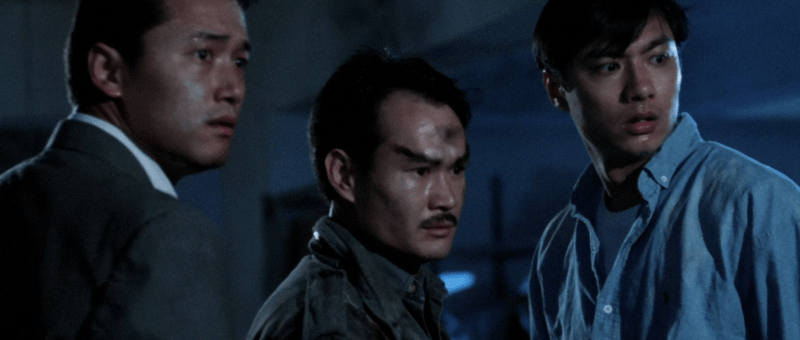
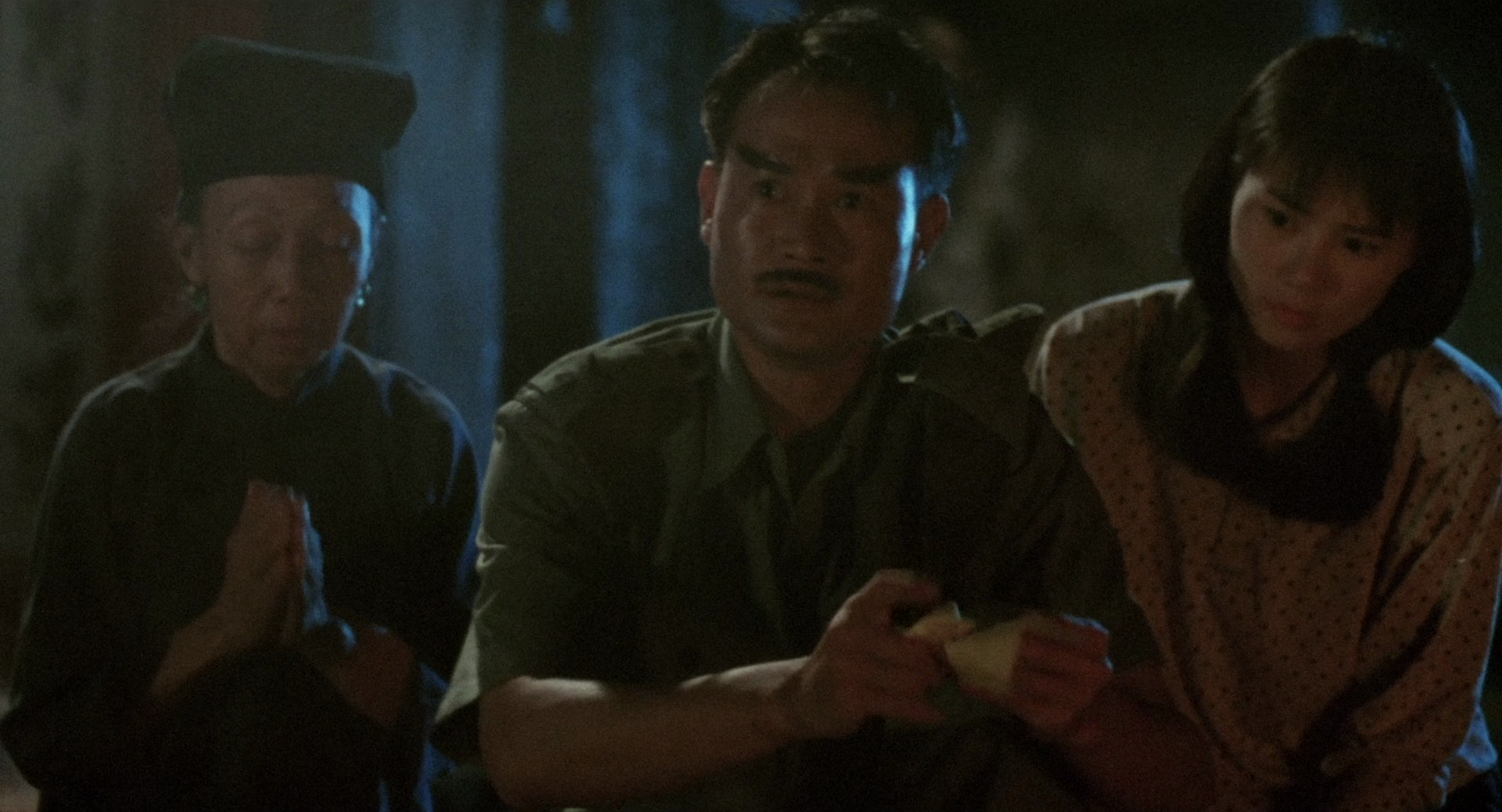
“Everything must be based on science,” a rather flippant young policeman insists when faced with the unusual investigative methods employed by Uncle Feng, rural cop skilled in Taoist magic. Though sometimes billed as Mr Vampire 5 and starring Lam Ching-Ying, Magic Cop (驅魔警察) in fact features no vampires but instead revolves around a demonic Japanese sect’s attempts to use Taoist zombies to traffic drugs. Uncle Feng is on the case after agreeing to travel into the city to identify the deceased granddaughter of a neighbour.

Much of the film is indeed about the contrast between rural Tung Ping Chau and the contemporary city. Slick policeman Lam (Wilson Lam) is not exactly thrilled to be saddled with Feng (Lam Ching-ying) as a parter, nor is he that keen on hosting him in his apartment. As he shows off to Feng, Lam’s place has a fancy electronic keypad rather than a key and is decorated in aggressively modern style. It has an unusual open-plan layout in which the toilet is housed in a pretend phonebox while the bath is in the middle of the room. As a modern policeman, Lam believes in things like forensics and harps on about the primacy of science. He doesn’t believe in the kind of Taoism that Feng represents and insists there must be a rational explanation for the fact the dead woman apparently died about a week before becoming the subject of Lam’s investigation. 

Even in the city, however, this kind of magic exists in this case wielded by a Japanese sorceress (Michiko Nishiwaki) running a demonic sect. She appears to be a good match for Feng, and otherwise uses a series of ninja techniques while trying to foil his investigation. In using zombies as drug mules, she has after all subverted the Taoist rituals to which Feng ascribes. His old partner on the force, Ma (Wu Ma), suggests that it was his superstitious nature that put paid to his career as an urban policeman. Though adept at solving crimes and catching wrongdoers he gained the reputation for being a “tornado”, creating chaos whoever he went. Lam too is put off by his chaotic nature and is slow to believe that Feng could be right about the black magic and zombies. He describes his investigative techniques as old-fashioned and resents the fact that he disobeys orders. Feng largely ignores him and his assistant Sergeant 2273 (Michael Miu) and acts impulsively, often using Sergeant 2273 as a vessel for his Taoist techniques. 

Nevertheless, Lam is slowly made to come around, admitting that Feng is a good policeman. Despite insisting Feng has no mind for science, Lam concedes that there is no science in this case and it cannot be solved scientifically. He is powerless to solve it alone and must reply on Feng’s Taoist knowledge. Though Sergeant 2273 much more readily accepts Feng as his superior and goes along with his suggestion that the case has a supernatural dimension, Feng favours Lam, while the two police officers bicker over their attempts to date Feng’s niece Arlene (Wong Mei-way) who is excited to be in the modern city having come from the rural backwater Tung Ping Chau.

Though juxtaposed with a British flag in Lam’s flat, Feng is in essence returning something of old Hong Kong to the island which is beginning to lose its identity amid its transformation into a financial centre and capitalist hotspot. That the villain is a Japanese woman heading a demonic sect of corrupted Chinese teachings also hints at a fear of cultural dominance and the threat external organisations pose to Hong Kong through capitalistic colonisation. Thus Feng must marshal all his skills to the defeat the demonic sect even while plunged into a more literal hell surrounded by flames. Only then is the city a safe space he can allow Arlene to explore alone while he returns to Tung Ping Chau in the company of his new disciple Sergeant 2273 making the same journey in reverse. Though filled with zany humour, the film never belittles the Taoism at its centre nor makes fun of Feng for his atypical policing methods so much as suggesting that the modern man Lam must open his mind to a world beyond reason and reintegrate these aspects of traditional culture that are in danger of erasure in a rapidly modernising city.


Original trailer (English subtitles)
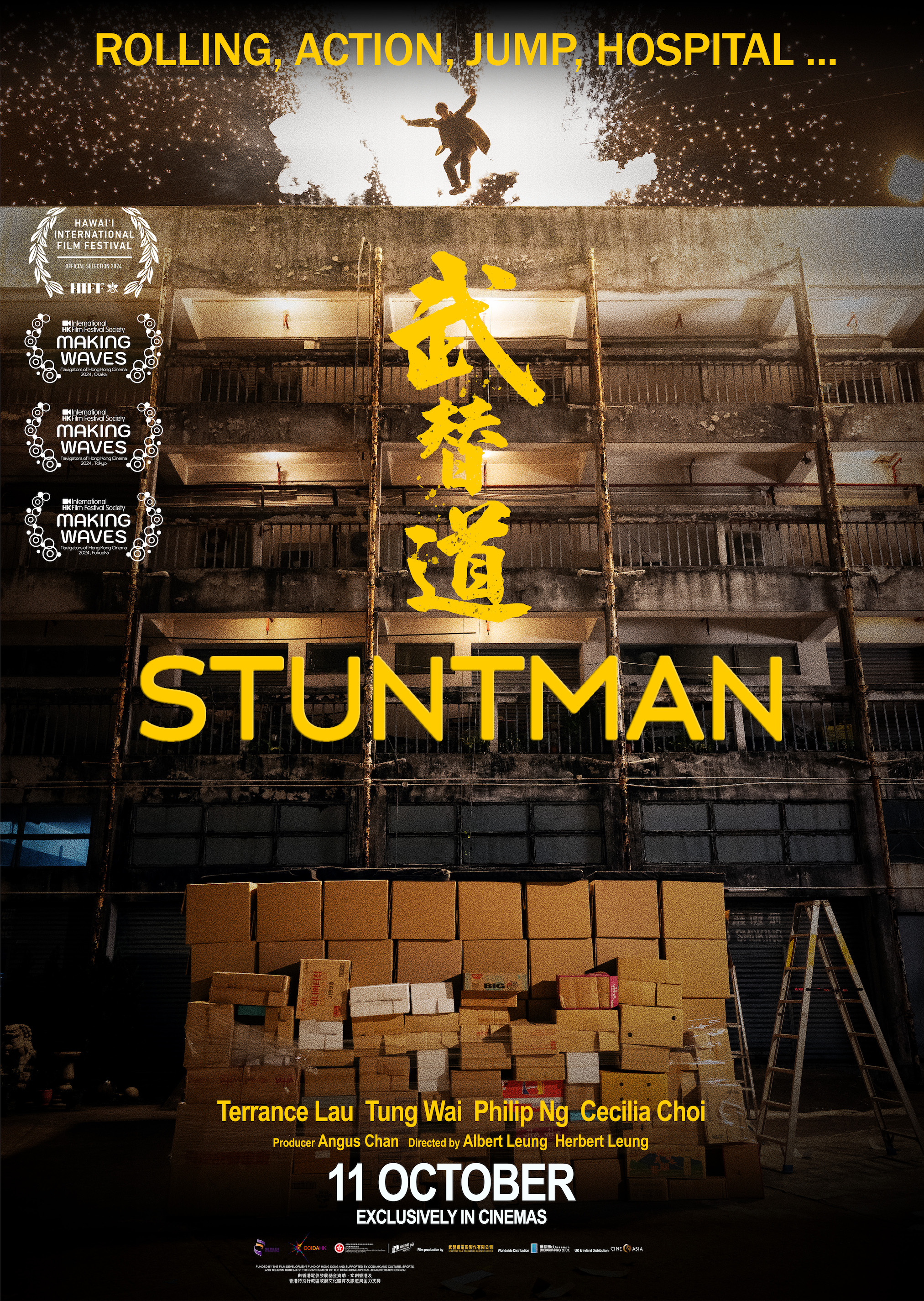
Stuntman (武替道, Herbert Leung & Albert Leung, 2024)

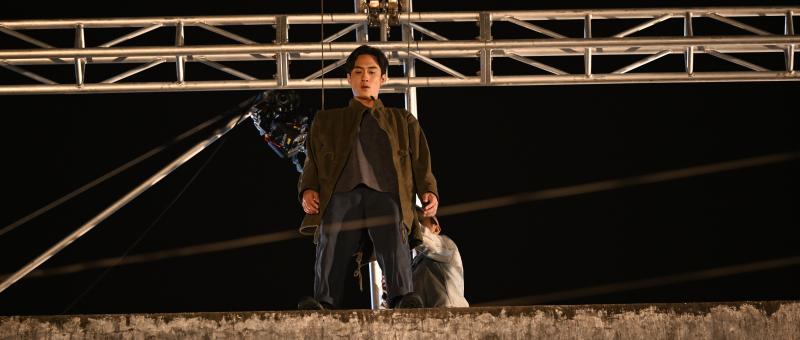
No matter how good a film is, it’s never worth risking someone’s life. Intellectually, “heartless” action choreographer Sam knows that, but once the camera’s rolling all he seems to see is the take and it’s win at all costs. An homage to the glory days of Hong Kong cinema when no one had ever heard the words health and safety, Herbert Leung & Albert Leung’s Stuntman (武替道) is in its way a paean for those who risked their lives for our entertainment but also for a fading Hong Kong which has the film seems to argue lost it’s bite and become rather defeatist if not docile. 

Those around Sam, played by real life action choreographer Tung Wai, seem to be convinced that “Hong Kong cinema is dead,” largely because, for very good reason, it’s no longer possible to make the kind of films they did back then with crazy, death-defying stunts and visceral action sequences. The opening scenes of the film, set in the mid-1990s, find Sam filming what appears to be a Police Story-style chase through a shopping mall that is supposed to end with a stuntman stand-in jumping from a bridge onto a moving car to catch the bad guy. The stuntman, Wai, is young and experienced so he doesn’t make the jump at which point Sam yells at him and asks his assistant, Kam, to to do it instead. But everything that could go wrong does and Kam is seriously injured because of Sam’s singleminded stubbornness in refusing to film the sequence with a cut which would obviously make it safer even if he argues less exciting. 

Sam evidently does feel a degree of guilt for this, especially as it later has other consequences for his personal life, and retreats from the film industry to run a bone setting clinic with posters for classic Hong Kong films on the wall. It’s a reverence for this bygone era that enables him to bond with Long (Terrance Lau Chun-him), a younger and more modern kind of stuntman who isn’t necessarily afraid of taking risks but understands the importance of on-set safety. Long can’t catch a break with demand for stuntmen falling rapidly precisely because of the concurrent decline of action cinema while his brother keeps pressuring him to give up his dreams and join his logistics company instead. It’s Kit’s delivery firm that becomes an accidental villain representing a Hong Kong that’s lost it’s nerve and is determined to play it safe while Sam’s recklessness perhaps represents the opposite, a dangerous desire to risk it all without considering the consequences for those around him.

But as he’s fond of saying, there’s always a way. It doesn’t have to be either or. The film seems to say, Hong Kong cinema isn’t dead, but now it belongs to those like Long to lead in new directions, modernising rather than fading away and taking the best of the past with it while leaving the more problematic elements behind. Originally swayed by Sam’s charisma, Long is somewhat horrified when he’s confronted with the consequences of his old school approach to filmmaking which includes going guerrilla style in the street without paying for permits with the consequence not only of police with real guns getting involved but innocent civilians trying to go about their day getting caught up in their fake robbery, becoming frightened and even injured in the ensuing panic. 

Meanwhile, he teaches old dog Sam a few new tricks in that being deliberately unpleasant is no longer the way to exert authority on set while ordering takeaway for everyone is a nice gesture that reminds them you’re all part of a team. As much as Long is a kind of surrogate son for Sam, he’s also reminded that there are some relationships that can’t ever really be fully repaired even if it’s not too late to try to remake them. His pain on seeing his soon-to-be-married daughter’s (Cecilia Choi Sze-wan) step-father taking pride of place at the wedding is palpable, but in the end he realises he’ll never really change because he’s a relic of an older Hong Kong unable to move forward into this new era. “No matter how strong the wind, keep the flame alive,” he tells Long talking both about the Spirit of Hong Kong and its cinema while in a flashback sequence reminding his young daughter that the fireworks will forever glow in her heart. Lent a degree of pathos by Tung Wai’s impassioned performance, the film is a true homage to classic Hong Kong action while also insisting that there’s always a way and it’s never too late to reclaim something of what’s been lost.


Stuntman opens in UK cinemas 11th October courtesy of CineAsia

UK trailer (English subtitles)