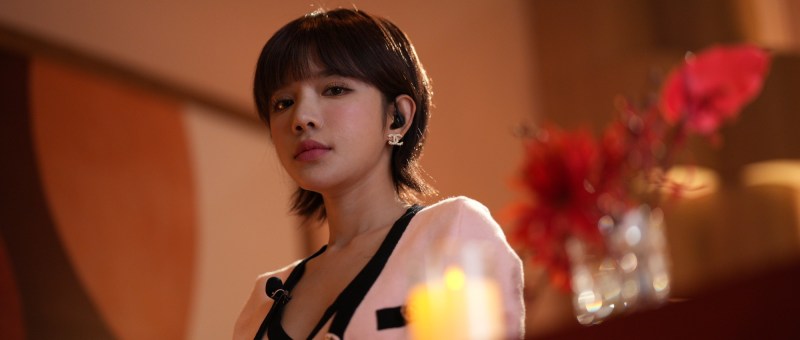
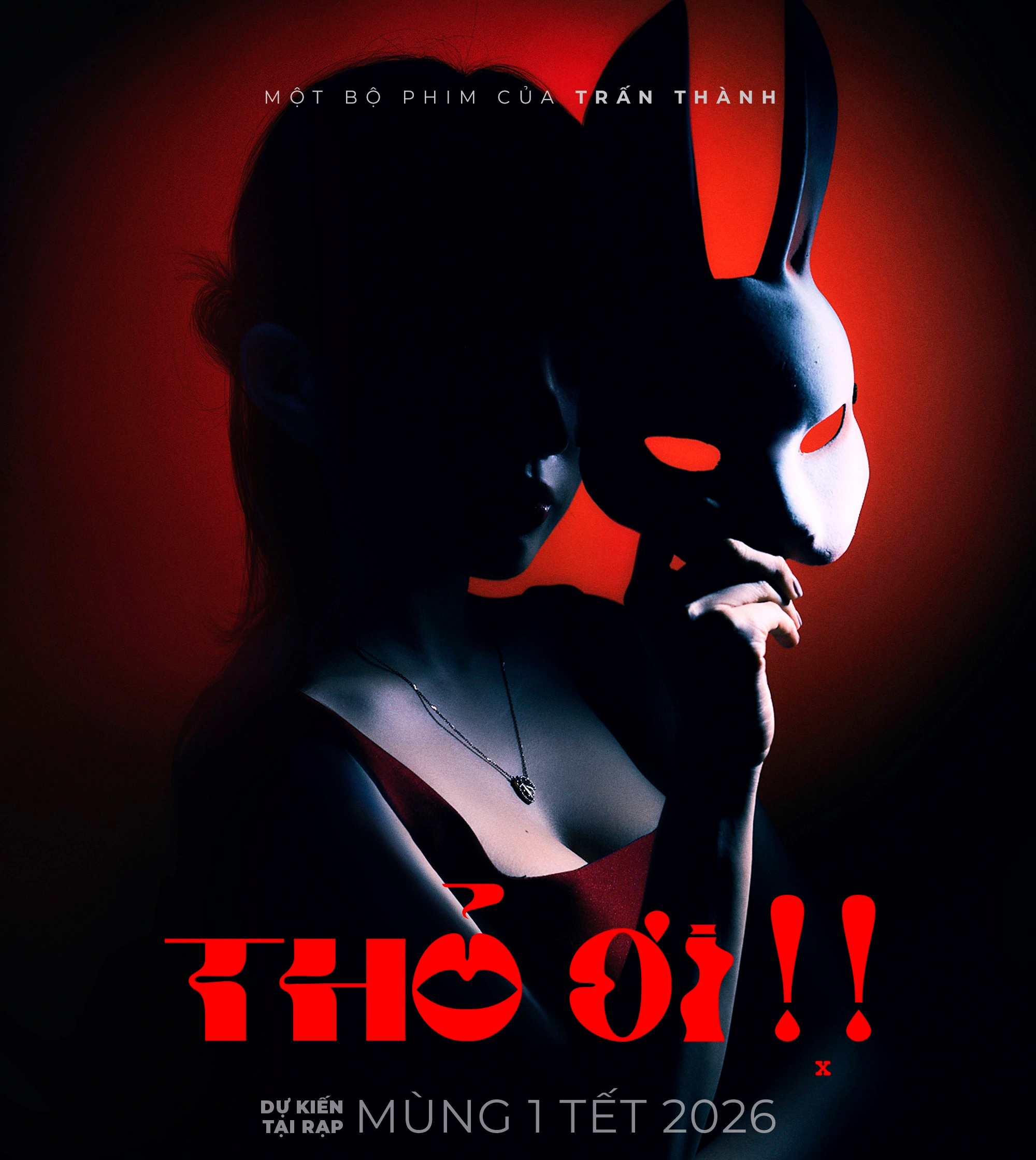
The host of a TV show offering love advice begins to reassess her marriage when probed by a guest who turns out to have an unexpected connection to her personal life in Trấn Thành’s outlandish drama, Bunny!! (Thỏ Ơi!!) Though it may originally seem as if the film intends to sympathise with female oppression in a male dominated society, it soon swings back with a more conservative conclusion in which the heroine seems to blame herself for the issues she uncovers in a marriage she assumed to be perfect.
Linh (Lyly) hosts a show in the guise of the “Shoulder Sister” in which she gives relationship advice to mainly female guests who wear animal masks to disguise their identity and are hidden from her in an adjacent room. She and her husband Phong (Vĩnh Đam) are currently living with her sister, Lan (Văn Mai Hương), who has her own business empire and is married to a younger man, Son (Quốc Anh). Lan is intensely jealous and henpecks her husband, becoming incredibly angry and upset when she goes through his phone and finds a picture from a party he was at that an ex-girlfriend apparently also attended. Linh is scandalised that her sister’s friends think setting your partner’s pin and trawling through their message is normal behaviour, insisting that she has no need for that and is completely confident in her relationship with Phong.
But the film opens with her filming footage for YouTube of a “romantic date” during which she snaps at Phong and later rejects his attempts to initiate intimacy. The film characterises the two sisters as bossy and finds humour in the way they manipulate their husbands, but at the same time locates the source of marital breakdown in their career success and independence, even suggesting that all their problems are down to not listening to the their husbands. Of course, it’s not sexist to suggest that communication issues can derail a marriage, but the conversation needs to flow both ways. Linh confronts Phong when she she begins to suspect him of having an affair, but he turns it back on her and says he feels lonely in their marriage because she doesn’t have time for him any more while showing few signs of being willing to take time out of his career as an executive at her sister’s company. It’s difficult for her to tell whether he has a point that she’s essentially self-involved and afraid of confrontation, refusing his requests to talk by placing a time limit on arguments and unilaterally making decisions rather than trying to reach a compromise or give Phong a chance to understand, or is just trying to gaslight her by making her think this is all her fault so she doesn’t look too closely at his behaviour.
The advice she’d give another woman would be to leave at the first sign of trouble, which is what she tells Bunny (Pháo) when she comes on the show looking for advice about how to leave an abusive partner. Though she’s tried to break up with him several times, Bunny’s ex, Kim (Trấn Thành), has been stalking and threatening her. Asked why she didn’t leave earlier, she replies that it’s hard to leave someone who really loves you, which is an odd characterisation of this obsessive connection. Nevertheless, when she comes back later saying she was able to break things off with Kim but has drifted into an affair with a married man, it becomes difficult for Linh to assess whether she got her nickname for being a bunny boiler and is stalking a man who isn’t interested, or has been tricked by the false promises of a cheating louse who told her he was “separated” and just waiting for the paperwork to come through on his divorce.
Nevertheless, Bunny too is made to feel guilty and responsible for Kim’s behaviour because he lost his leg in a traffic accident while working hard to contribute to their future. Uncomfortably, the film makes Kim’s disability the butt of a joke while also using it to undercut his masculinity by suggesting that no other women will want him nor will he be able to find steady employment. All of which is presented as justification for his controlling behaviour which grows steadily more concerning just as Bunny’s own pursuit of her married lover is depicted by some as that of a crazed and lovelorn woman no better than Kim.
In the end, however, the solution is found in female solidarity with Linh listening to Bunny’s story and protecting her while Lan’s friends provide essential emotional support as she tries to sort things out with Son to make their marriage a little less volatile. But the revelations of the finale would seem to undercut all of that as Linh asks herself once again if she really was at fault for neglecting her husband and is therefore responsible for the way that he behaved rather than condemning his emotional cowardice and the way it led him to treat Linh and others. As such it reinforces some conservative ideas about a wife’s role and female subservience rather than allowing Linh to reassess her view of a “perfect” marriage and ask herself if she’s really happy or merely in love with an idealised image of marital success.
Trailer (English subtitles)