Double Vision (雙瞳, Chen Kuo-fu, 2002)

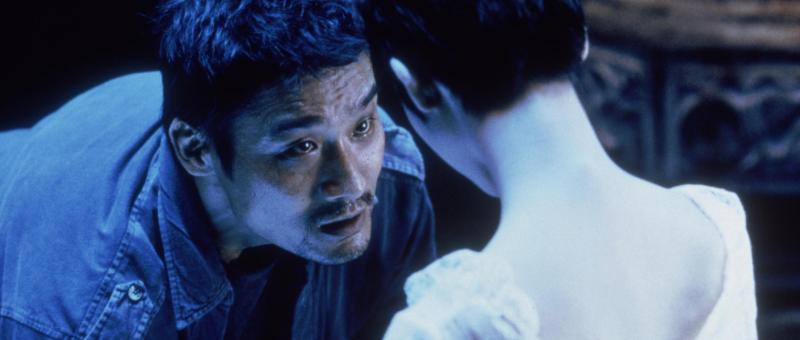
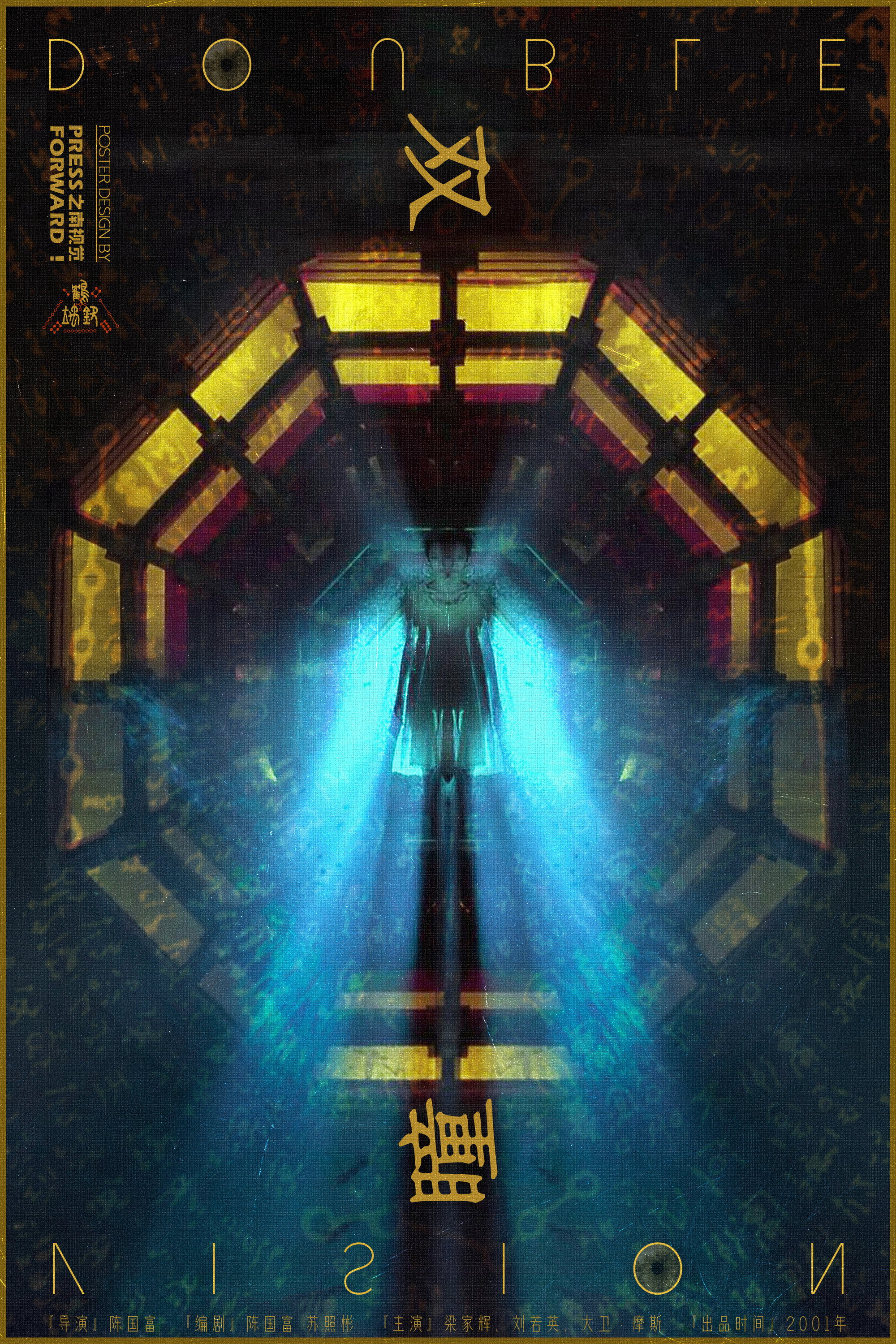
After a series of inexplicable murders strike Taipei, a mentally distressed local cop finds himself working with an American FBI agent while all the clues seem to point towards a mysterious local cult in Chen Kuo-fu’s supernaturally tinged thriller, Double Vision (雙瞳, Shuāng tóng). A co-production with Columbia Pictures, the film pits Eat and West, believer and non-believer against each other as dejected detective Huo Tu (Tony Leung Ka-fai) battles his own demons in having failed to protect his daughter during a hostage crisis.

It seems that, as an earnest young policeman, Huo Tu tried to blow the whistle on police corruption, the corrupt officer, in this case, being his wife’s cousin. Not only was Hu too shunned by the other officers who regarded him as a snitch, but his wife’s cousin took their daughter Meimei (Huang Wei-han) hostage. Frozen with fear, Huo Tu was unable to do anything very much to help her while attempting to talk the hostage taker down. His wife’s cousin eventually fired his gun at Meimei, though luckily it only scraped her scalp, while Huo Tu’s fellow officer took care of the hostage taker. Meimei has been mute ever since and is taking medication for behavioural issues. Blaming himself, Huo Tu has largely stopped going home, sleeping in his office instead, but is put out when his wife attempts to file for divorce.

Which is all to say Huo Tu is already at the end of his tether. He’s been demoted to the Foreign Affairs squad, of which he appears to be the only member, pulling people in for immigration irregularities which is how he ends up at the first crime scene, that of a CEO who apparently drowned in his 17th floor office in the middle of a heat wave. And then, a young woman apparently hallucinates a fire in her apartment and displays signs of having died from exposure to extreme heat despite there being no external evidence of fire breaking out. The reason the FBI is brought in is because one of the victims was a Catholic priest who was also, apparently, some kind of middleman for arms sales from the US.

Nevertheless, there is some local pushback regarding a perceived lack of sovereignty and the possibility of an American law enforcement officer pursuing a Taiwanese suspect in Taiwan. Richter (David Morse) is an acclaimed profiler, but is willing to accept that he may have been wrong in the past. His presence irritates the local cops, whose resentment towards him only grows once he discovering evidence they originally missed. Charged with being his interpreter, Huo Tu finds himself conflicted on once again being placed on the “wrong” side and alienated from those around him, while having to explain Taoist culture to Richter who refuses to admit the possibility of the supernatural playing any part in the killings. “I don’t understand why you can’t see all the evil in your country,” Huo Tu remarks after Richter questions his use of Taoist amulets, unable to understand the wider cultural context of Taoism in Taiwan.

An awkward friendship gradually arises between the pair as Richter also tries to save Huo Tu’s marriage, seemingly having had his own break down due to his dedication to his work. Through entering a kind of dream state born of the fungal spores that seem to have been integral to altering the victims’ perception of reality, Huo Tu is able to process some of his trauma in symbolically saving his daughter from a similar threat, yet it’s unclear how far his actions have any effect in the “real” world. The killings appear to have been committed as part of a Taoist ritual said to confer immortality after one passes through several different “hells” which echo the ways in which the victims died, though Huo Tu can’t get a handle on whether or not Taoist immortality is “real” and whether that actually matters in terms of the case at hand.

Chen generates an uneasy atmosphere throughout with a sense that evil is an ever-present background threat just as Huo Tu insists when trying to explain the cultural importance of Taoism to Richter. From the creepy room at the hospital with its foetus in a jar and collection of isolated body parts to the grisliness of the crimes and the mysterious fungus with which they were committed, darkness is everywhere, yet the force that plagues Huo Tu may be more earthly in his own sense of guilt and unworthiness in been having unable to protect those closest to him from the consequences of his own actions.


Screened as part of the Garden Cinema’s Made in Taiwan.
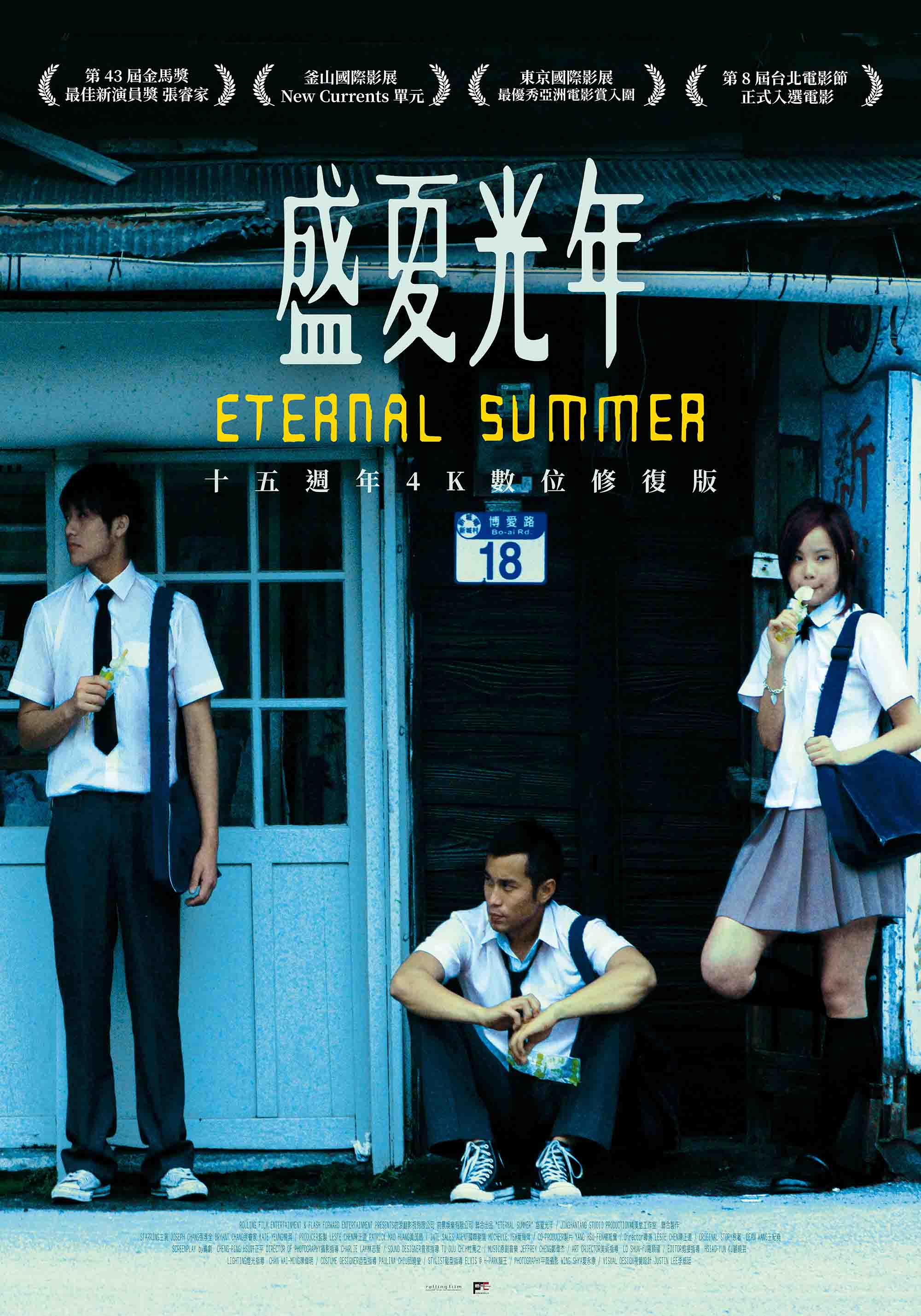
Eternal Summer (盛夏光年, Leste Chen, 2006)

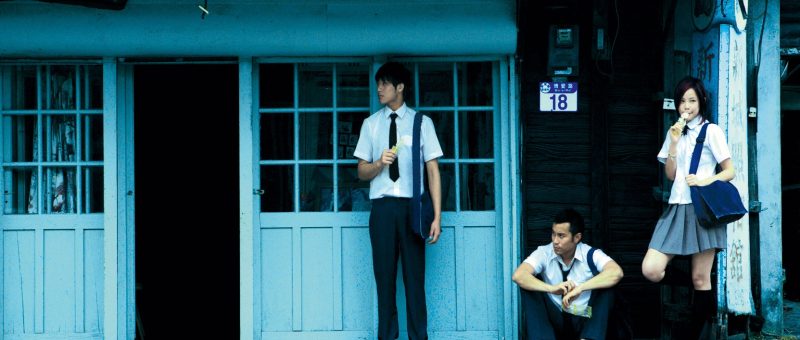
A trio of emotionally displaced teens find themselves swept into an awkward love triangle while longing to escape their loneliness in Leste Chen’s melancholy youth drama Eternal Summer (盛夏光年, Shèngxià Guāngnián). Each in someway marginalised and searching for acceptance, the teens struggle to define themselves as the world changes itself around them while bound by the paradoxical qualities of their circular relationships, their unspoken secrets continually driving them apart even as they continue to long for the intimacy born only of sharing their authentic selves. 

A quiet, studious boy, Joseph Kang (Ray Chang) is asked to befriend his deskmate Shane (Jopseph Hsiao-chuan) who has ADHD and has been labeled disruptive in the hope that creating social relationships with other children will help calm him down. The arrangement in a sense backfires, Joseph’s academic achievement falling while his friendship with Shane only grows in strength and intensity. By the time they are teenagers, the pair are inseparable but Joseph has also fallen in deep, unrequited love with his best friend, a secret he is afraid to share with anyone and ironically cannot share with the one person to whom he is supposed to be able to tell anything. The friendship is further disrupted by the sudden introduction of transfer student Carrie (Kate Yeung Mei-ling) who has returned to Taipei to live with her mother after years of living with her father in Hong Kong. Carrie first develops a fondness for Joseph while working with him on the school paper, but later figures out that he’s secretly in love with Shane and decides to support him as a friend while in another irony Joseph’s ongoing internal crisis eventually forces his friends together, Carrie secretly dating Shane while each of them knows on differing levels how their relationship may hurt Joseph when he eventually finds out. 

In 2006 Taiwanese society was perhaps not quite as accepting as it would become, yet Joseph’s anxiety in his sexuality in compounded by the desire not to lose his friendship with Shane fearing not just that his feelings are not returned but that he may reject him altogether just for being gay. While Shane, a high school sports star with terrible grades, eventually blossoms academically after Carrie makes the ironic promise to go out with him in the unlikely event he gets into uni, it’s heavily implied that Joseph’s previously high level of achievement is damaged because of his preoccupation with his sexuality shockingly failing his uni entrance exams and thereafter further separated from his friends as they move on and he remains in cram school limbo hoping for better luck next year. Meanwhile he finds himself in potentially dangerous situations cruising in parks trying to verify his homosexuality while privately consumed by shame. 

For Shane, meanwhile, his problem is that he feels rejected by the world around him because of the way his ADHD was treated as a child. Regarded as a disruptive troublemaker none of the other kids would play with him save Joseph, meaning that he too is desperate to maintain the friendship in fear of his inescapable loneliness even while finding a similar connection with Carrie who is herself longing for love seemingly having strained relationships with each of her divorced parents while geographically and culturally displaced in having spent much of her life in Hong Kong. Carrie is, however, the only one to know the whole truth frustrated with the two men in her life that they can’t simply clear the air by voicing the secrets that continue to erode their relationship. 

Then again perhaps what they really fear is “change”, afraid of an uncertain adulthood in which their childhood connection will necessarily weaken. “We will lose each other in the future?” a conflicted Shane wonders, uncertain if his co-dependency is entirely healthy or fair on his friends but fearing becoming alone or having to make a choice unable to lose one or both of his essential connections. At heart a mood piece, Chen’s melancholy drama is filled with the strange canted angles of a world out of kilter and poignant reflections of the past in the midst of present torment, both elegiac and nostalgic for a particular moment in time which must in some way pass even if his parting words are painfully ironic in their cutting intensity.


Eternal Summer streams in Poland until Nov. 29 as part of the 15th Five Flavours Film Festival.

4K restoration trailer (Traditional Chinese subtitles only)