Lumberjack the Monster (怪物の木こり, Takashi Miike, 2023)

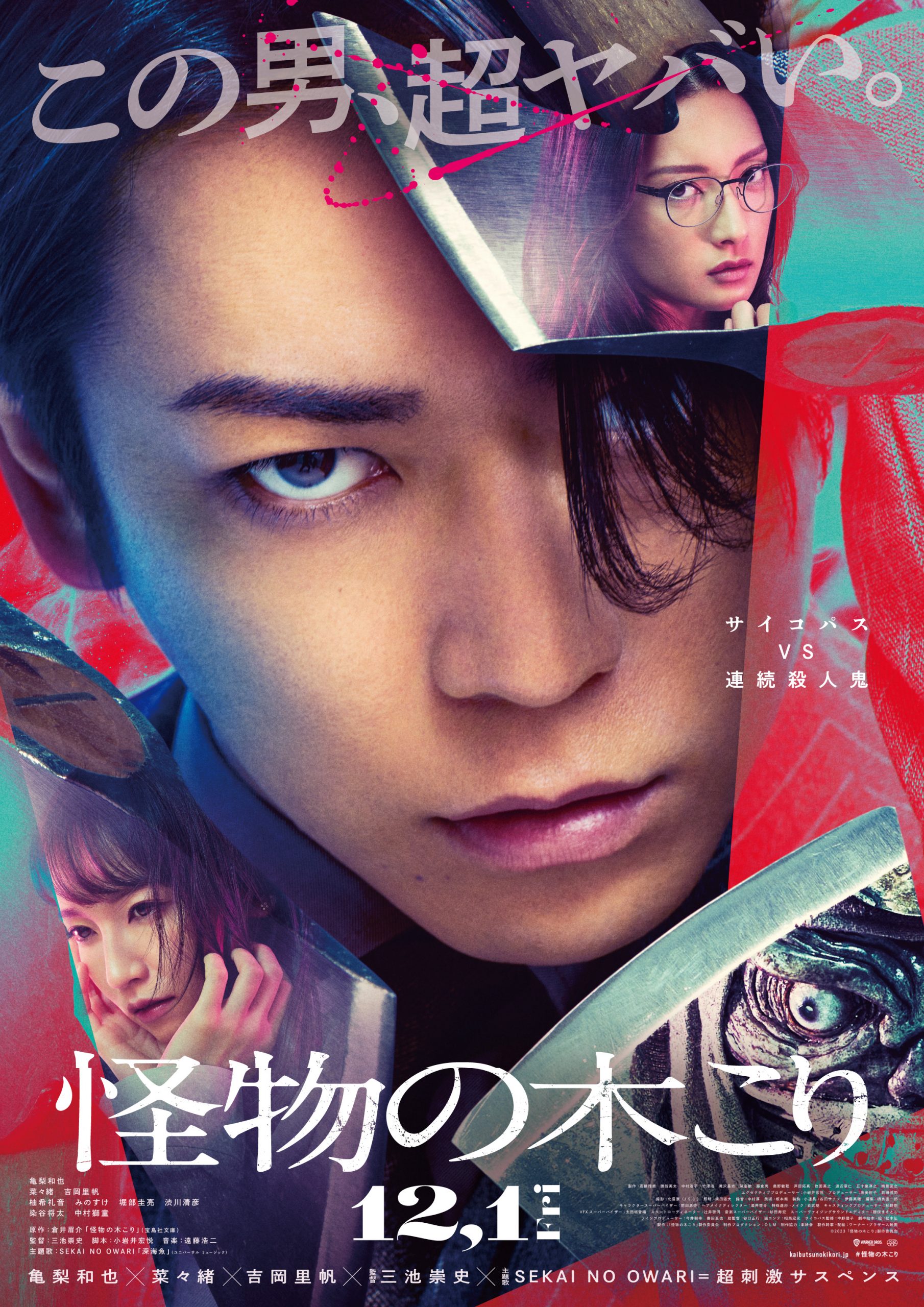
Could being a psychopath actually be better? It might be an attractive thought for some, the absolute freedom of living without emotional or moral constraint. Emotion is after all a difficult thing to bear, though life without it might also be lonely and unfulfilling leaving a void often filled by other desires such as a lust for wealth, status, power, or proof of superiority. Based on a novel by Mayusuke Kurai, Takashi Miike’s Lumberjack the Monster (怪物の木こり, Kaibutsu no Mikori) finds its hero at a point of existential crisis no longer certain of his true nature or identity.

The film takes its title from a fairytale featured in a picture book being read by a small boy who has been abducted and illegally experimented on. A monster begins living as a lumberjack in a small town where he begins killing and eating the residents, only no one notices. Eventually it realises that he spends more time being the lumberjack than the monster and is confused about his identity. With no friends left to talk to (because it ate them all), the monster decides to move to another town to make more friends but ends up sneaking into the house of a lumberjack, stealing a baby, and fashioning after itself to create another monstrous lumberjack.

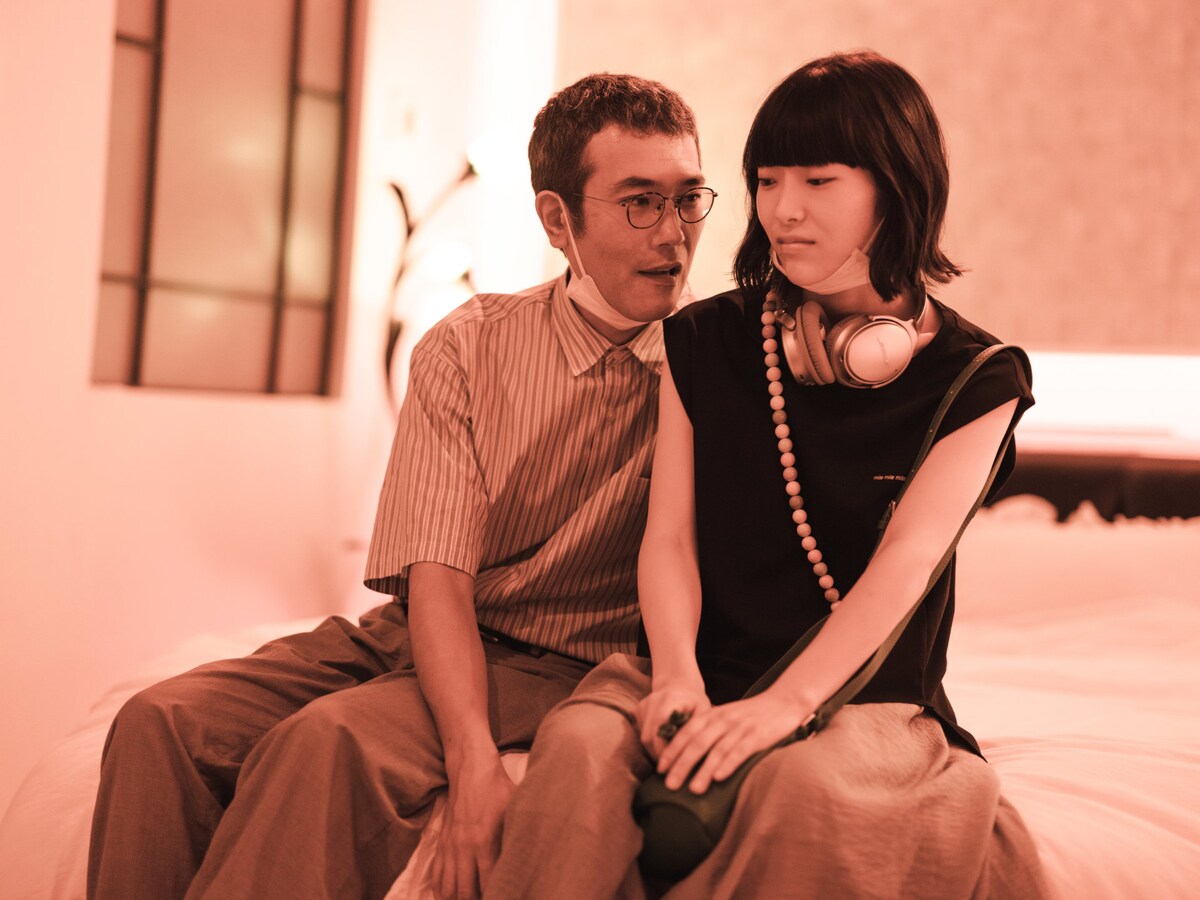
This is in a sense what’s happened to Akira (Kazuya Kamenashi), now a lawyer who discovers he has a “neuro-chip” in his brain that suppresses his emotions after he’s attacked by a masked figure and it breaks re-introducing him to an unwelcome humanity. This is quite inconvenient for him in that he’s done quite a lot to feel guilty about, firstly participating in a scheme with his “friend” Sugitani (Shota Sometani), a natural-born psychopaths, to facilitate his experimentation on live humans, and secondly that he murdered his boss who is also his fiancée’s father to take over his law firm. Though the fiancée, Emi (Riho Yoshioka), seems to be afraid of him, it’s also true that simple proximity to her warmth and kindness may have begun to reopen his heart.

Of course, it could be true that the mad scientists who abducted the children accidentally picked up a few who were already psychopaths but in this case it seems like the chip did its job on each of the victims of the axe-wielding assassin. Meanwhile, we also see “psychopathic” traits in lead investigator Toshiro (Nanao) who admits that she will do whatever it takes to get to the truth even if it includes throwing out the police rulebook. Akira asks her if her desire to solve the case isn’t also a roundabout means of vengeance for the death of her brother, leaving her not so different from the assassin who is also extracting vicarious revenge on man-made psychopaths, but she replies that that’s exactly how a psychopath might see it while also deflecting a similar question from embittered cop Inui (Kiyohiko Shibukawa) who remarks that if the killer’s only taking out psychopaths then why bother stop them?

In some ways, Akira is like the lumberjack. He was simply being what he was and knew no different, but gradually beginning to rediscover his humanity is burdened with guilt and remorse now acutely aware not just of the feelings of others rather than their consequences but of his own feelings too. The couple who abducted the children claimed they were doing it to save their son, trying to reverse engineer psychopathy so they could cure him though their actions were themselves psychopathic and like the lumberjack they created only more monstrous children like themselves. Akira has it seems rediscovered the person he may have been if he had been raised in the loving family from which he was abducted and is determined to search for the meaning of life, but he is also responsible for the decisions he made as a man who knew no guilt or remorse and may in fact have to pay for the moral transgressions he was not fully aware he was making. Miike conjures a sense of the gothic in the creepy, candlelit mansion where the children were kept and otherwise sticks to standard procedural for the “real” world, but finally lands back in the realms of fairytale as his hero finds himself part of neither one world nor another while faced with a choice that may earn him redemption but also loneliness and futility.


Trailer (English subtitles)

During the Rains (つゆのあとさき, Shinpei Yamazaki, 2024)

At several points during Shinpei Yamasaki’s indie drama During the Rains (つゆのあとさき, Tsuyu no Atosaki) we encounter someone whose life has been disrupted by the economic effects of the coronavirus pandemic. The danger is, of course, that the pandemic itself becomes the problem which is also a way of glossing over all the problems that existed before and will likely survive whatever kind of sickness they encounter. Chief among those problems and impacting the lives of the women at the film’s centre is problematic men and the generalised disregard for women.

It seems that Kotone was working in hostess bar that closed because of the pandemic while her no good boyfriend ran off with a necklace a customer had given her. Left with nowhere to go she’s noticed on the street by Kaede, a young woman who promises her a room in a love hotel but does so in order to recruit her for a threesome. Sometime later Kotone is working in a “cafe” where young women sit behind a glass window in numbered booths for male customers pick out and select though she also has a “daddy”, Kiyooka, who pays the lease on her flat and would be annoyed to discover she was still frequenting the cafe.

It’s the at the cafe that she meets Sakura, a naive young college student who was pushed into sex work when the place she was working before closed down because of the pandemic. Kotone at one point snaps back at her that she wouldn’t even be at the cafe if it weren’t for the pandemic as if suggesting she were in some way better than the other girls after she reacted with horror to Konone’s plan to find a “hardcore daddy” who’ll pay more for the right to break a few bones and cause other kinds of harm.

This might be ironic in a sense as Sakura is a Christian who carries around bible verses to calm herself down including the ones about turning the other cheek and blessing those who persecute you which don’t seem to be particularly good advice for the situations she finds herself in especially as the lesson she’s learned from them is that you should accept whatever abuse comes your way without complaining. Ironically that might be what Kotone has been doing in her almost total indifference to her circumstances. The Roomba in her apartment gets stuck in her hallway and shuffles in confusion between the walls after constantly butting its head unable to find a way out. Yet according to Kiyooka what separates Kotone and Sakura is that Sakura seems desperate in a way Kotone does not which is a quality he appreciates presumably because it gives him more control over her, something he knows he doesn’t have over Kotone who point black tells him she has no strong feelings about whether he dumps her or not after he discovers she’s still seeing other men and engaging in casual sex work.

The lollipops she’s always sucking on give Kotone a slightly childish edge as perhaps does her moodiness but she’s also cynical beyond her years and seemingly living the way she does almost as an act of self harm. She’s being relentlessly trolled by someone who accuses her of having a sexually transmitted disease while even the other girls at the cafe resent her, ironically calling her a slut and other misogyinistic insults. Later she’s even knocked down some stairs by a previous client who is resentful that she doesn’t really remember him while another of her regulars, Yata, paws at her insultingly as if feeling himself entitled to her body. Another customer whose wife and daughter left him after his business failed asks her why she does this, adding that he’s worried about his daughter which seems to be an incredibly ironic comment given the situation.

Even the girls at the cafe complain that they’re getting les work because of the influx of women showing up there after being pushed towards sex work out of desperation, but it’s almost as if the film would like to believe the pandemic was the problem rather than attitudes society has towards these women and indeed all women. Nevertheless, through her growing friendship with Sakura and an unexpected tragedy Kotone comes to realise that she can perhaps change her circumstances and does not necessarily have to continue turning the other cheek to a society that had largely turned its back on her.


Hello! Junichi (ハロー!純一,  Katsuhito Ishii, Kanoko Kawaguchi, Atsushi Yoshioka, 2014)

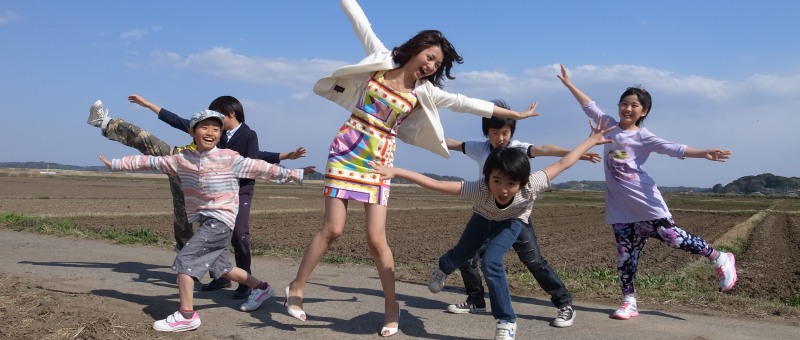
A collection of confused nine-year-olds decides the best way to solve all their problems is to start a band in charming kids ensemble movie, Hello! Junichi (ハロー!純一). Co-directed by Katsuhito Ishii, Kanoko Kawaguchi, and Atsushi Yoshioka, the film is more linear and less surreal than most of Ishii’s other work but has a refreshing take on the childhood adventure movie as the kids each deal with their various problems many of which still plague the adults around them. 

After all as kindhearted rocker Takao (Ryu Morioka) admits, the children aren’t really all that different from us. Shy and a little on the timid side, Junichi (Amon Kabe) is a peripheral member of his friendship group and perpetual fall guy who lists his only talent as the ability to carry everybody’s bags. His main problem is that he borrowed a rabbit-shaped eraser from his crush, Maeda, about a month ago and is too shy to return it. Now all he can think about is whether he should pluck up the courage or pretend to have forgotten. Things get more complicated when a new student teacher, the beautiful Miss Anna (Hikari Mitsushima), joins his school and confiscates the eraser as part of a cruel power game before agreeing to give it back if he helps her find out who scratched an offensive word into the side of her flashy car. 

Miss Anna is either the best teacher in the world or the absolute worst. She arrives dressed for a night out and puts on a cutie pie act for her dejected middle-aged boss Achikita (Yoshiyuki Morishita) which she immediately drops as soon as he leaves the room inappropriately giving the children far too much information about her personal life but they do at least get some maths out of it. She also smokes by an oil can round the back of the building and talks like an aggressive high school girl when her boss’ back is turned, but eventually comes round to her responsibility as a teacher after bonding with the kids. 

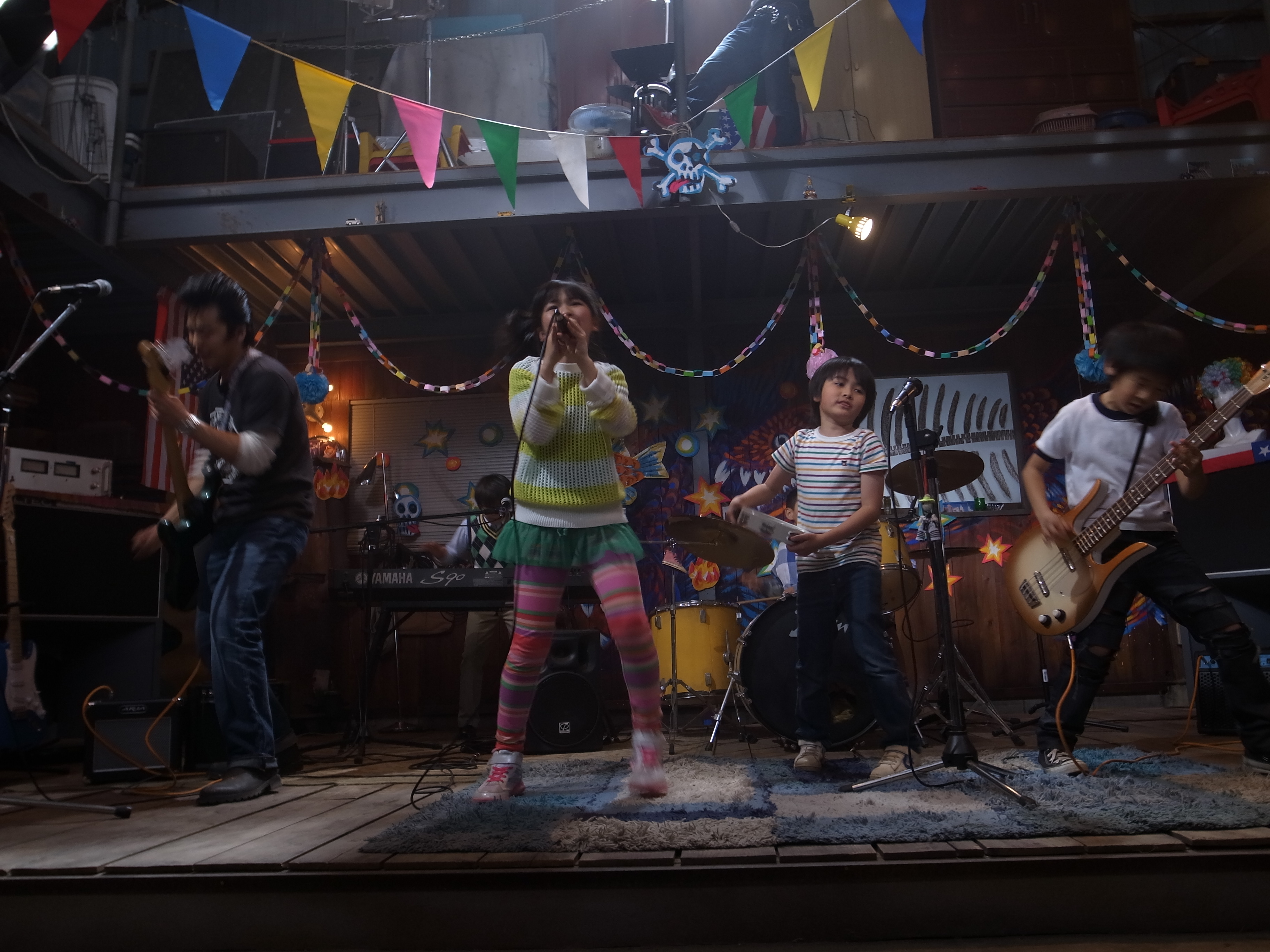
In comparison to some, Junichi’s problems aren’t really all that big except that his parents have to work late so he often has to prepare dinner for himself and his philosophising grandpa (Tatsuya Gashuin). Kuramoto (Yohei Hotta) meanwhile is beginning to act out at school because he’s got problems at home caused by his father’s gambling addiction which forces his mother (Chizuru Ikewaki) to run herself ragged just to stay afloat. With Miss Anna’s help, the kids decide to put on a concert for Mrs Kuramoto’s birthday which might on one level be charmingly naive but does in the end seem to cheer her up while allowing them to bond over their shared issues many of which are romantic in nature. 

During the opening sequence in the park, child actor Machida (Shoma Suginomori) had given the other boys some grown up love advice he picked up on set which amounted to getting girls to like you by giving them cliched compliments such as remarking on the beauty of their smile. It’s not terribly good advice and a little a bit patronising not mention insincere, but amusingly enough is the same approach eventually taken by Takao when he and Miss Anna awkwardly try to address their mutual attraction. In the end, she has to concede that she doesn’t know what to say either and they end up having a rather childish conversation about favourite foods which is all to say it doesn’t get any easier and the adults don’t necessarily know much more than the kids. 

Then again, there are some distinctly bad examples in Achikita’s thankfully ineffective attempt at workplace harassment and stalking of Miss Anna even if he eventually gives the most important life lesson in dressing down a trio of teenage bullies by telling them they have to learn love and appreciation or they’ll be weak men incapable of protecting anyone. Protecting people is something Junichi’s been worried about too, especially after failing to act when he spotted female classmate Tanaka (Rio Sasaki) duct taped to a pole by the bullies though she thankfully managed to save herself while uttering some particularly choice language for a nine-year-old. Still as his grandfather tells him he’s an unpolished stone. He has a weak side and a strong side and is still in the process of settling though the real business of growing up may be knowing which to be when. Charmingly quirky and infinitely warmhearted, Ishii, Kawaguchi, and Yoshioka masterfully capture an authentic sense of childhood anxiety while suggesting that none us is really so different after all. 


Hello! Junichi is out now the UK on blu-ray as part of Third Window Films’ Katsuhito Ishii Collection.

Original trailer (English subtitles)

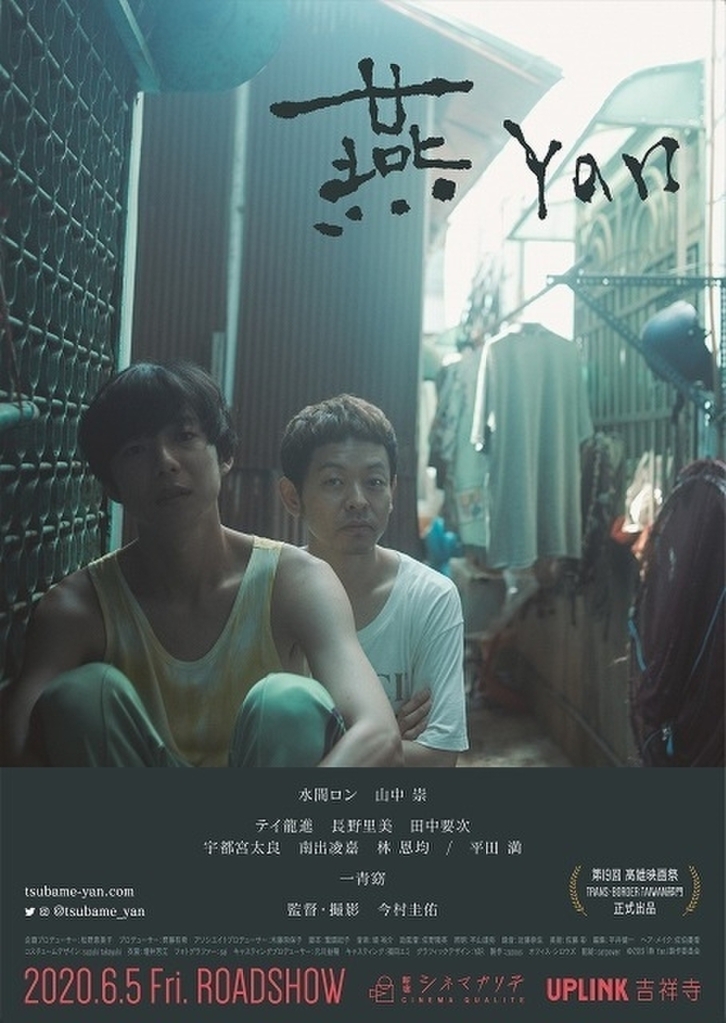
Yan (燕, Keisuke Imamura, 2019)

A sense of dislocation plagues the drifting heroes of Keisuke Imamura’s elegantly lensed Yan (燕), a poetic meditation on the legacy of abandonment both cultural and familial. As much about the disintegration of a family as the complexities of identity, Imamura’s nuanced character drama finds its hero looking for himself in the shadow of his long lost brother and rediscovering perhaps a long absent sense of security in reconnecting with his childhood self while learning to let go of his fierce resentment towards the mother he assumed had forgotten him. 

28-year-old Tsubame (Long Mizuma) is a workaholic architect with a successful, settled life in Tokyo. He is also, however, slightly disconnected and harbouring a great deal of anger towards his family, aside it seems from his cheerful step-mother. An awkward meeting with his father following a rare summons to the family home results in some distressing news. His company’s gone under and he’s deep in debt, which is why he wants Tsubame to go to Taiwan to deliver some important papers to his estranged older brother Ryushin (Takashi Yamanaka) whom he hasn’t seen in 23 years since he left with their mother (Yo Hitoto) so he can renounce his rights to an inheritance to avoid being liable for his father’s debts. Tsubame is reluctant, he didn’t even go to Taiwan for his mother’s funeral and has done his best to erase that side of his life from his memory, but after his step-mother guilt trips him by explaining that his father’s in poor health so it might be the last thing he’ll ever ask he finds himself on the next flight to Kaohsiung.

Despite his animosity towards his Taiwanese heritage, Tsubame seems to have maintained his Mandarin which is a definite help in the busy city but finds himself conflicted in being taken at first for a local and then recognised as not. Sitting down at a dumpling stand the proprietress and another customer guess that he is probably Japanese but on hearing that he was born in the area and his mother was from there immediately remind him that he is then also Taiwanese, something that appears to bother him. Flashing back to his childhood we witness both warm scenes of his mother conversing with her children in Mandarin while they mainly reply in Japanese, and a series of xenophobic micro-aggressions from neighbours who accuse her of trying to harm their children with new year dumplings containing lucky coins while Tsubame finds himself a victim of bullying by the local kids after mistakenly using his Chinese name, Yan, or making the usual kinds of language mistakes that all young children make but being made fun of over them as someone not quite Japanese. Like the heroines of What’s For Dinner, Mom? he also remembers a sense of embarrassment on being the only kid with a non-standard bento but sadly never managed to convert any of his classmates to Taiwanese food, internalising a sense of shame over his difference and becoming hyper Japanese in response. In a particularly painful moment, he berates his mother for her poor language skills and lack of cultural awareness, tearing up a drawing he’d made and crying out that he wished he could swap her for a “normal” Japanese mum like everyone else’s. 

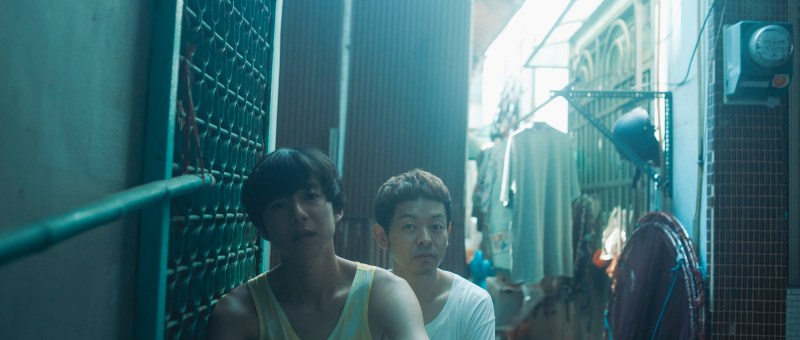
Why exactly she chose to leave only him behind, taking her older son with her, is never quite explained but perhaps a part of her felt that Tsubame preferred to stay in Japan. Ryushin meanwhile is carrying his own burden having left with his mother but resentful over her longing for the son she left behind. He appears to have felt dislocated himself as a boy raised Japan struggling to adapt to his new environment and is now a divorced father, it seems living with another man who left the Mainland for the comparatively liberal Taiwan to escape a conservative father and the pain of having to keep his true a identity a secret even from himself. Bonding with Tony (Ryushin Tei), his brother’s partner, Tsubame comes to a realisation that he has been doing something much the same in rejecting his Taiwanese heritage but struggles to accept that a person can be more than one thing and like the sparrow from which he takes his name could be equally at home in both Japan and Taiwan. 

As Tony tells him, somewhat cynically, bitterness is also born of love which is after all what has brought Tsubame all the way to Kaohsiung. Tsubame’s mother had told him the Chinese proverb that a mother’s love is like a flowing river, but a child’s is the like breeze that rustles the leaves. The small Tsubame replied that he’d always love his mother but has spent the majority of his life in silent resentment, only latterly acknowledging it might have been true after all after coming to an understanding of his mother’s choices and realising that in her heart at least she had never abandoned him. 


Yan was streamed as part of this year’s online Nippon Connection Film Festival.

Original trailer (English subtitles)

Wet Woman in the Wind (風に濡れた女, Akihiko Shiota, 2016)

wet woman in the wind poster largeBack in the early ‘70s, Nikkatsu reacted to the gradual box office decline of Japanese cinema by taking things one step further than their already edgy youth output in rebranding themselves as a purveyor of softcore pornography known as Roman Porno. Unlike the familiar “pink film”, Roman Porno was made with the assets of a major studio behind it including better actors, production values, and distribution power but it still obeyed strict genre rules calling for speedy turnarounds, minimal running times and the requisite amount of nudity (to the permitted parameters) at set intervals. 45 years later Roman Porno is back in a series of films directed by some of today’s most interesting directors who attempt to recreate the genre anew for modern audiences whilst paying homage to the originals.

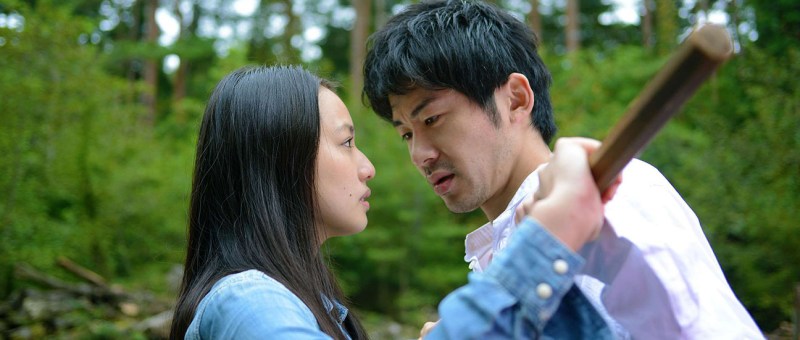
Akihiko Shiota’s Wet Woman in the Wind (風に濡れた女, Kaze ni Nureta Onna) starts as it means to go on with hapless protagonist Kosuke (Tasuku Nagaoka) sitting by a river looking sad just as a strange young woman suddenly rides her bicycle directly into the nearby lake before climbing out and stripping off her T-shirt (which, amusingly enough reads “you need tissues for your issues”), revealing her bare breasts to a complete stranger. Kosuke is baffled and confused. He tries to leave but the woman follows him, asking if she can stay with him tonight because she has nowhere else to go. Kosuke is resolved, he’s given up girls and wants nothing whatsoever to do with weird women from ponds but Shiori (Yuki Mamiya) is not one to take no for an answer.

It’s never made clear but something unpleasant has obviously happened to Kosuke that has made him retreat from the city with his tail between his legs (so to speak). A respected playwright, Kosuke seems to have had something of an existential crisis and has decided to condemn himself to a life of self-imposed isolation because “you have to be alone if you really want to think deeply about things”. His isolation is, however, only up to a point. Kosuke’s semi-primitive lifestyle sees him living in a shack in the woods but he has electric lighting provided by generator batteries and grinds his own coffee beans by hand after buying them from a local cafe owned by a man Kosuke went to university with but claims not to have known at the time. The cafe owner’s wife has recently left and he blames Kosuke for reawakening a desire in her that had apparently lain dormant with her husband.

In a shocking coincidence, Shiori has also taken a job at the cafe and has set about seducing the recently lonely owner who has now become fixated and jealous, once again afraid Kosuke in particular is going to steal away his new plaything just like he stole his wife. This is a fallacy on several levels, not least that Shiori is not a woman to be constrained by any man but a true free spirit who gives her love freely to whomever that she chooses.

Spirit might be the best way to describe Shiori who arrives and departs with the wind, a force of nature with the sole intent of freeing her targets of the burden of repressed desires. A radio broadcast later reveals that a tiger has been on the run from the nearby zoo and if this were a fable, you could almost believe the tiger to be Shiori, sinking her teeth into soft centre of human weakness and leaving right after she tears its throat out.

Free spirit as she is, Shiori does find herself in moments of danger as the the threat of sexual violence rears its ugly head. Kosuke likes to think of himself as an enlightened kind of man, an intellectual, but he’s also a self-involved womaniser not above attempting to force himself on a woman he feels to be his for the taking or, half in jest, threatening to rape a former lover. Yet for Shiori much of this is sport – she sees through Kosuke and neatly undercuts all of his self delusions and neuroses, but she’s also merely toying with him.

Finding himself literally kicked out of bed and rendered redundant when Shiori finds more pleasure in getting together with his former lover Kyoko, Kosuke wanders outside in confusion and seduces, with a degree of tenderness, Kyoko’s shy, bespectacled assistant, Yuko. When the morning comes, however, he feels he made a mistake. Yuko has become attached to him, sharing a traumatic childhood story only for Kosuke to brush it aside and encourage her to go out into the world to explore the rich pleasures on offer now that he has “awakened” her. Kosuke remains as self-centred as ever, but Yuko at least does perhaps find something in his words of “wisdom”.

As in all good sex comedy, the men are pathetic slaves to desires they find themselves unable to express, whether out of fear or cultural ideals of masculinity, while the women remain in control and must guide the men either towards a healthier outlook or their own destruction. Both Kosuke and the cafe owner conspire in their own downfall in misguided battles for possession or conquest. Having already suffered defeat, Kosuke has retreated from the field dejected and humiliated, but in his all out impassioned attempt to re-enter the world of carnality he literally brings his entire universe crashing down around his ears. Forced to realise his own ridiculousness, Kosuke is left alone with little else to do than survey the scale of the destruction his various delusions have wrought. A fun loving pastiche, Wet Woman in the Wind is an oddly whimsical tale, witty yet insightful even its seeming lightness.


Currently available to stream via Mubi.

Original trailer (English subtitles) NSFW!

Destruction Babies (ディストラクション・ベイビーズ, Tetsuya Mariko, 2016)

destruction-babiesPost-golden age, Japanese cinema has arguably had a preoccupation with the angry young man. From the ever present tension of the seishun eiga to the frustrations of ‘70s art films and the punk nihilism of the 1980s which only seemed to deepen after the bubble burst, the young men of Japanese cinema have most often gone to war with themselves in violent intensity, prepared to burn the world which they feel holds no place for them. Tetsuya Mariko’s Destruction Babies (ディストラクション・ベイビーズ) is a fine addition to this tradition but also an urgent one. Stepping somehow beyond nihilism, Mariko’s vision of his country’s future is a bleak one in which young, fatherless men inherit the traditions of their ancestors all the while desperately trying to destroy them. Devoid of hope, of purpose, and of human connection the youth of the day get their kicks vicariously, so busy sharing their experiences online that reality has become an obsolete concept and the physical sensation of violence the only remaining truth.

The rundown port towns of Shikoku are an apt place to stage this battle. Panning over the depressingly quiet harbour, urgent, thrumming electric guitars bring tension to the air as the younger of two brothers, Shota (Nijiro Murakami), catches sight of his only remaining family member, older brother Taira (Yuya Yagira). Currently in the middle of getting a beating from local thugs, Taira signals his intention to leave town, which he does after his boss breaks up the fight and tells him to get lost.

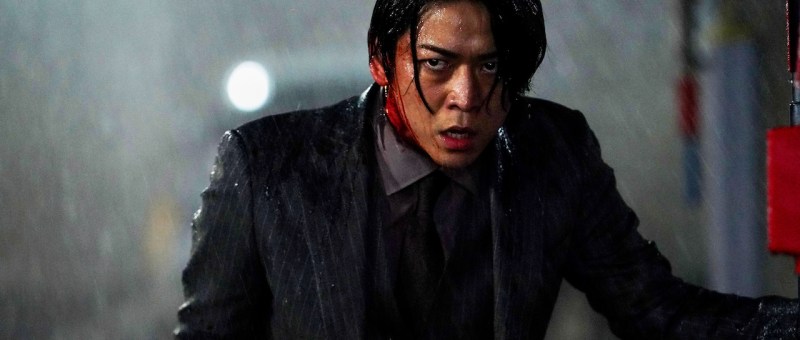
By the time Shota has crossed the river, his brother is already lost to him. A vengeful, crazed demon with strange, burning eyes, Taira has taken the same path as many an angry young man and headed into town spoiling for a fight. Driven by rage, Taira fights back but only to be fought with – he craves pain, is energised by it, and rises again with every fall stronger but a little less human.

As he says, he has his rules (as mysterious as they may be), but Taira’s violent exploits eventually find a disciple in previously cowardly high school boy Yuya (Masaki Suda) who discovers the potential violence has to create power from fear in witnessing Taira’s one man war of stubbornness with the local yakuza. Yuya, a coward at heart, is without code, fears pain, and seeks only domination to ease his lack of self confidence. Taira, random as his violence is, attacks only other males capable of giving him what he needs but Yuya makes a point of attacking those least likely to offer resistance. Proclaiming that he always wanted to hit a woman, Yuya drop kicks schoolgirls and sends middle aged housewives and their shopping flying.

The sole female voice, Nana (Nana Komatsu) – a kleptomaniac yakuza moll who finds her validation though shoplifting unneeded items selected for the pleasure of stealing them, originally finds the ongoing violence exciting as she watches the viral videos but feels very differently when confronted with its real, physical presence and each of the implied threats to her person it presents. Tough and wily, Nana is a survivor. Where Taira staked his life on violence and Yuya on the threat of it, Nana survives through cunning. The victory is hers, as hollow as it may turn out to be.

Mariko’s chilling vision paints the ongoing crime spree as a natural result of a series of long standing cultural norms in which contradictory notions of masculinity compete with a conformist, constraining society. The entire founding principle of the small town in which the film takes place is that men come of age through violence, though the older man who has (or claims to have) provided the bulk of parental input for these parentless brothers describes Taira as if he were the very demon such festivals are often created to expel. Men of 18 years carry the portable shrines, he repeatedly says, but 18 year old Taira is a “troublemaker” and “troublemakers” must leave the town altogether.

If Taira sought connection through violence, Shota continues to seek it through human emotions – searching for his brother, hanging out with his friends, and drawing closer to his brother’s boss who offers him differing degrees of fatherly input. In contrast to his peers, Shota seems to disapprove of the way his cocksure (false) friend Kenji (Takumi Kitamura) treats women though it is also true that Kenji is actively frustrating his attempts to find his brother whilst dangling a clue right before his eyes. Nevertheless, the harshness of this unforgiving world seems determined to turn Shota into the same rage filled creature of despair as his older brother as injustice piles on injustice with no hope of respite.

Destruction Babies is apt name for the current society – born of chaos, trapped in perpetual childhood, and thriving on violence. Taira and Shota were always outsiders in a world which organises itself entirely around the family unit but the force which drives their world is not love but pain, this world is one underpinned by the physical at the expense of the spiritual. Metaphorically or literally, the lives of the young men of today will entail repeated blows to the face while those of the young women will require ingenious sideward motions to avoid them. Oblique, ambiguous, and soaked in blood, Destruction Babies is a rebel yell for a forlorn hope, as raw as it is disturbing.


Screened as part of the Japan Foundation Touring Film Programme 2017 and set for UK release from Third Window Films later in the year.

Original trailer (English subtitles)