Kokuho (国宝, Lee Sang-il, 2025)

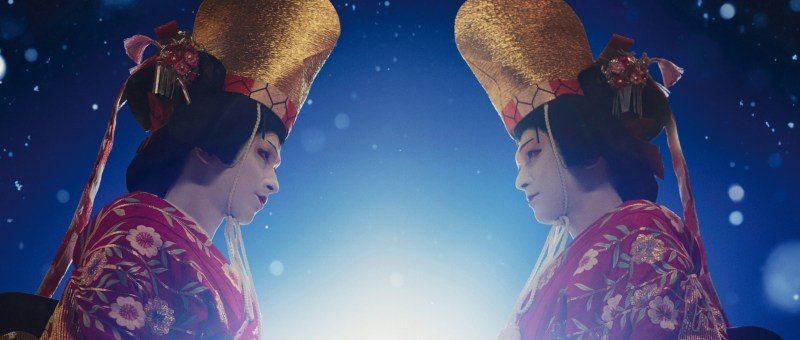
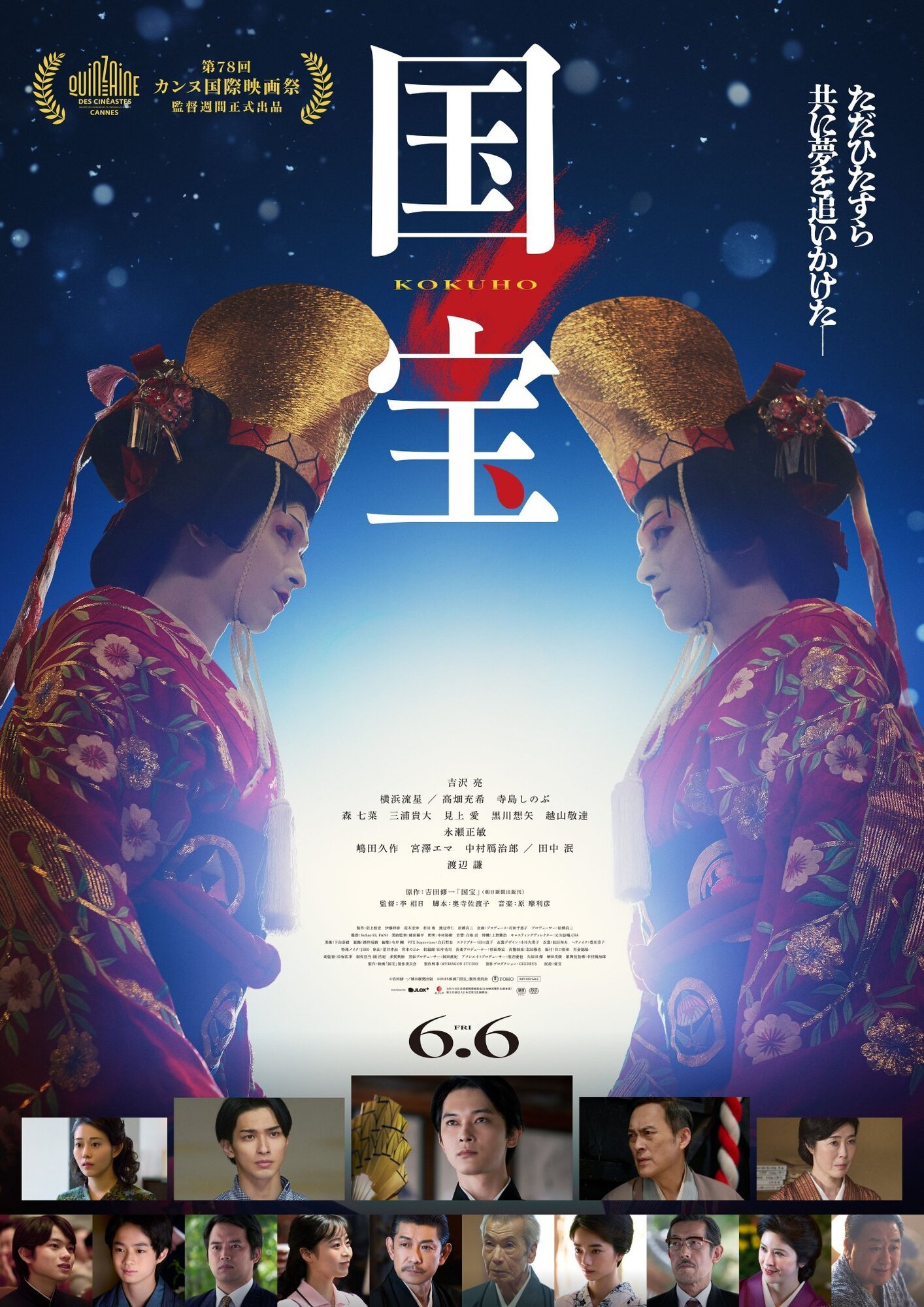
What does it mean to commit yourself so entirely to your art that you become it and effectively cease to exist? Playing the role of Ohatsu in Chikamatsu Monzaemon’s Love Suicides at Sonezaki, Kikuo (Ryo Yoshizawa) asks if Ohatsu’s lover Tokubei is really resolved to die for their love. The scene is intercut with his brother and rival Shunsuke leaving the theatre, led away by Kikuo’s girlfriend Harue (Mitsuki Takahata), just as Ohatsu leads Tokubei towards their mutual fate, as if Shunsuke were agreeing that he is not resolved to give his all to art in the way Kikuo evidently feels himself to be, at least in this moment.

The roles between them are reversed several times before they eventually perform the play again, but each of them are, in effect, in a love suicide with the art of kabuki, though kabuki itself is destined to live on. In any case, the “kokuho” of the title is a living national treasure and one who has indeed embodied their art. We’re introduced to one early on, Mangiku (Min Tanaka), an ageless onnagata, or player of female roles, who has a quasi-spiritual quality and warns the young Kikuo that though his face maybe beautiful, it could also be a barrier to his art and, in the end, consume him. It is said of Mangiku that all he will leave behind him is his art. The words are spoken with pity, but this is really what it means to be a kokuho and the highest compliment that might be paid to an artist. Mangiku himself would likely approve, casting an eye around his spartan room and declaring himself unburdened. 

But Kikuo is only half-joking when he says he cut a deal with the devil to make him the best kabuki actor in Japan. As a woman he abandoned later scolds him, all his sacrifices were made by others. Actors are greedy, another laments, and it’s true enough that Kikuo feared little in his need for success. The irony is that he too was an heir, only to a yakuza dynasty to which he could not succeed. His was father was gunned down in front of him while preparing to draw his sword, while Kikuo’s rebound tattoo does him no favours in the end and his attempt to avenge his father’s death apparently fails. Nevertheless, he vies for the approval of his surrogate father and kabuki master Hanjiro (Ken Watanabe) who values his skills above those of his biological son Shunsuke (Ryusei Yokohama) who alternately resents having his birthright stolen from under from him and acknowledges that Kiku has an innate talent with which his bloodline can’t compete.

Nevertheless, there’s a genuine and enduring brotherhood between the two men that never quite slips into hate or acrimony even as circumstances conspire against them. They both want what the other has. In the kabuki world, bloodline is everything and Kikuo is viewed as a interloper usurping Shunsuke’s rightful position, while Shunsuke wants the raw talent he knows he lacks and no amount of training and commitment can buy. Yet it is in a way about resolve, or at least the willingness to give your life to the stage and die in the pursuit of art. Kikuo’s signature piece is the Heron Maiden, in which a heron falls in love with a young man and becomes a young woman. But her love is unrequited. She goes mad, and can only show her love for him by dancing until she dies. This is, in effect, Kikuo’s dance with kabuki, a waltz to the death as he yearns for the “scenery” he as been searching for and eventually finds the apotheosis of his art in the moment of the heron’s demise.

Like Lee Sang-il’s previous films Villain and Rage based on a novel by Shuichi Yoshida, the film is a poetic meditation on the price of the pursuit of art that revels in its sumptuous production design and the intricacies of the kabuki world. With shades of Farewell, My Concubine, it frames its central dynamic not quite one of straightforward rivalry but a brotherhood between two halves of one whole who each know that neither of them can really win, while becoming a kokuho is an endless pursuit of artistic perfection in which one must be resolved to kill the self and die on stage in a lover’s suicide with a forever elusive kabuki.


Kokuho screened as part of this year’s LEAFF.

Trailer (English subtitles)
The Vancouver Asahi (バンクーバーの朝日, Yuya Ishii, 2014)

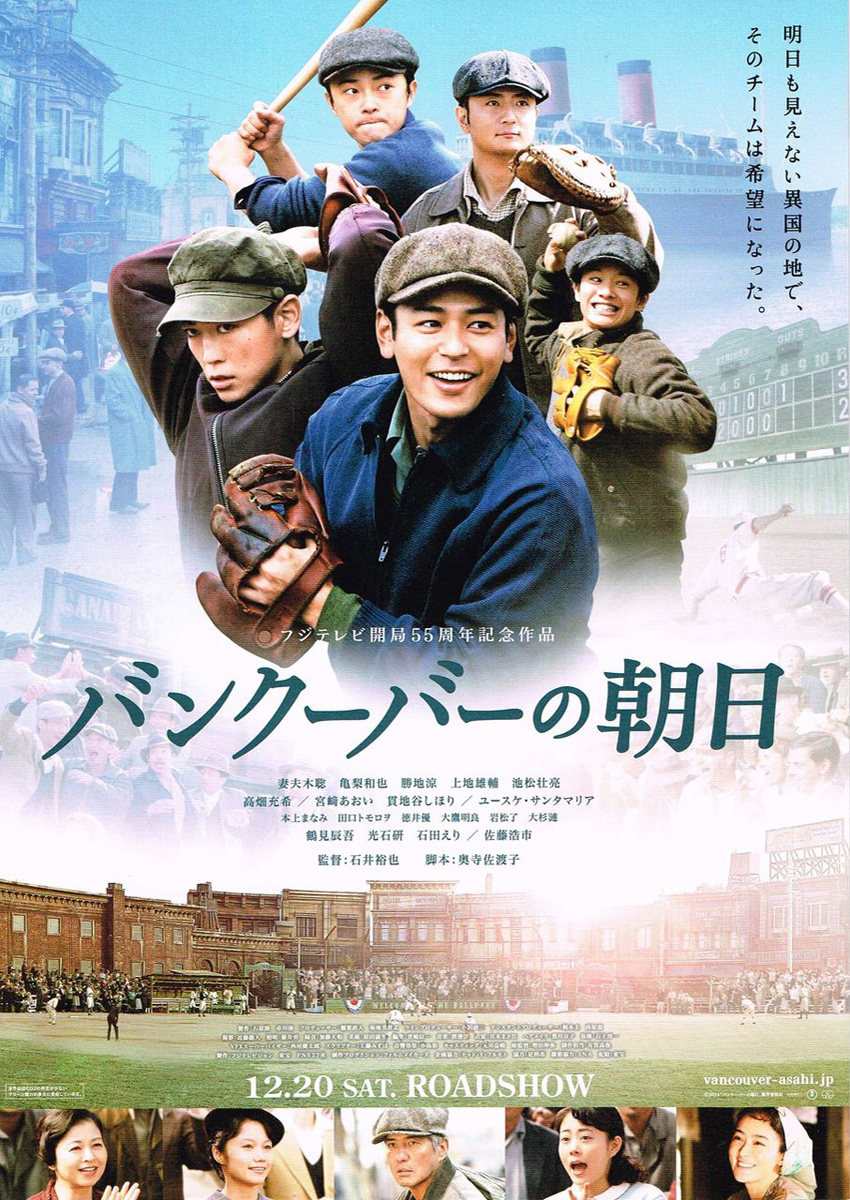
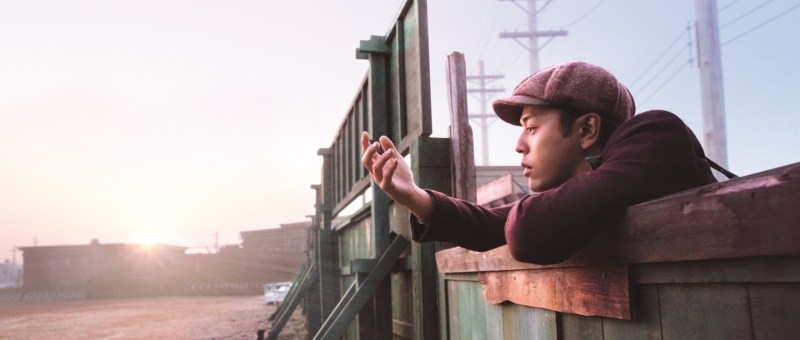
Second generation Japanese-Canadians stake their hopes on baseball in Yuya Ishii’s historical drama The Vancouver Asahi (バンクーバーの朝日, Vancouver no Asahi), inspired by the story of the Vancouver Asahi baseball team which was belatedly granted a place in the Canadian Baseball Hall of Fame in 2003. In many ways a conventional sporting movie in which the underdogs eventually triumph, Ishii does not shy away from the dark shadows of the 1930s even while framing the Asahi’s path to glory as a symbolic punch back against discrimination and oppression. 

As the hero, Reggie (Satoshi Tsumabuki), relates, many like his parents came to Canada at the beginning of the 20th century planning to work for three years and then return to a more comfortable life in Japan only to find themselves trapped in low-paid and exploitative work. Reggie’s main concern is that his drunken and dejected father Seiji (Koichi Sato) still sends the majority of his pay back relatives in Japan meaning their family live like paupers while as he never meant to stay he hasn’t bothered to learn the language or attempt to integrate into the local community. In fact, Reggie is their major breadwinner with his job at the sawmill but the only thing that makes his life worth living is playing baseball with the Vancouver Asahi baseball team even though they are regarded as something of a joke, always at the bottom of the league tables and never actually winning a game. 

The plight of Asahi is closely aligned with that of the immigrant community, divided as it is in its approach to integration with some feeling they should abandon their Japaneseness in order to better get along with Canadians and others fiercely determined to hang on to their traditions. When Reggie admits that they can’t win against the power of the Canadians it feels as if he’s talking about more than just baseball though his solutions are perhaps apt for both in realising that to beat strength you need to be smart. What he comes up with is essentially a bunt and run strategy that plays to their advantages of speed and lightness but also at times feels to him like a trick or a gimmick, an admission that they can’t compete in the normal way. “Why are you always apologising?” Reggie is repeatedly asked, his shyness and mumbling speech always seeking to keep the peace while his desire to offer justification is less as one Japanese old lady puts it “a bad habit of their culture” but a defence mechanism in an environment of potentially violent oppression. 

As Japanese migrants the family faces constant xenophobic micro aggressions, a woman at the hotel refusing to let Reggie’s bellboy friend Frank (Sosuke Ikematsu) carry her bags while they are also suspected as thieves or harassed by the local Canadians. Reggie’s hothead friend Kei (Ryo Katsuji) finds it increasingly difficult to keep his cool, not least as it turns out because his father was killed fighting for the Canadians in the last war and yet he is still treated as a dangerous outsider. Meanwhile, they are paid only half the wages of the Canadian workers, expected to work unreasonable hours, and can be fired without warning. Now an ageing man, Seiji is still a casual labourer fighting for a place on a truck to work at a quarry or construction site often in other towns away from his family in order to get more money. The team is constantly losing players because men lose their jobs and focus on finding new ones or moving away. As one old man laments, there’s no job security and even if you go to a Canadian university it won’t make any difference to your job prospects. Reggie’s sister Emi (Mitsuki Takahata) was on track for a scholarship only to have it pulled at the last minute when parents of the other kids complained it wasn’t right it was going to a Japanese girl. 

After the hotel fires all of its Japanese staff, Frank decides to go “back” to Japan where relatives will help him find work but pointing out to Reggie that he’ll still be seen as an outsider even there and there’s no guarantee anything will be any better in Japan. Poignantly the guys later catch sight of him in a newsreel as a soldier having been sent to the Machurian front. Once war breaks out they are discriminated against again, forced out of their homes and interned leaving all their property behind and destroying their small community, the Asahi included. The team’s unexpected success had forged a bridge between the Japanese and Canadian communities but it was not strong enough to survive the war. Stepping away from the sports movie, Ishii concentrates more on the ways they were betrayed, the team’s success later buried and forgotten while they find the advances they’d made washed away on the shore as if to suggest their strike back against an oppressive society could never be more than superficial while their position remains so precarious. 


Trailer (no subtitles)

Hope (望み, Yukihiko Tsutsumi, 2020)

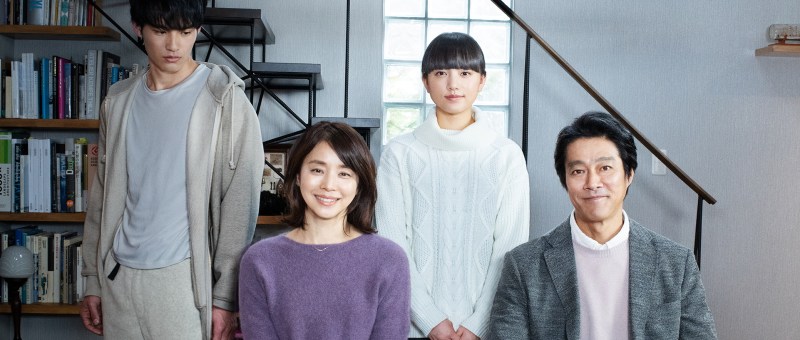
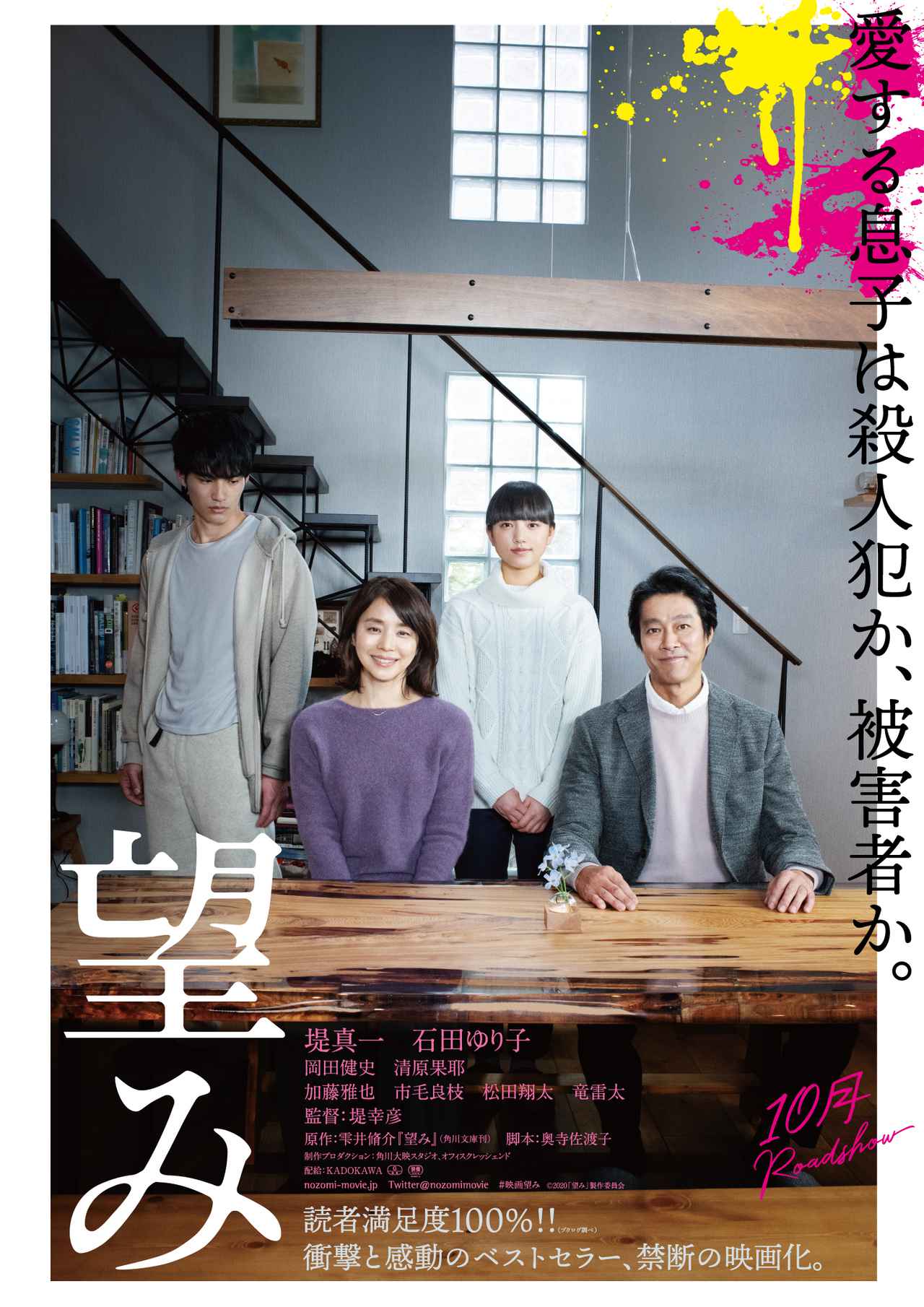
What would you prefer, that your son is alive but a murderer, or that he’s dead but blameless? That’s the dilemma faced by the family at the centre of Yukihiro Tsutsumi’s Hope (望み, Nozomi) who find themselves wondering if they really knew their son at all or had been deluded by an image of familial harmony that was only ever superficial. Meanwhile, they’re also at the centre of a media storm, on the receiving harassment from the press and neighbours, along with the potential financial strain of lost business and fracturing relationships in the local community.

Teenage daughter Miyabi (Kaya Kiyohara) tells her father that she’s read online some families have to move after a relative becomes involved with a crime, that they lose their jobs and place in the community. She’s been studying hard to get into a top high school and is worried that they may not now accept her even if she passed the exam because of something her brother may or may not have done. Some might say that a being a part of the family means that you live or die together, but there is a persistent sense of unfairness felt by all they are being made to suffer because of something over which they had and have no control.

Tadashi (Koshi Mizukami) never explained of this to them and it’s true that he had been behaving differently, was sullen, stayed out all night coming home with bruises, and had in fact recently purchased a knife but it’s difficult for them to believe that he could really have gone on the run after murdering a classmate. At the beginning of the film, architect Kazuto (Shinichi Tsutsumi) had shown off their warm family home to some prospective clients remarking that they wanted to ensure close relationships with the their children and that the design is a good opportunity to plan ahead for the next 10 or 20 years but perhaps there’s something a little hubristic in that statement. Kazuto is trying to sell an image of familial bliss that his house design can bring, but when he knocks on Tadashi’s door the boy is rude and resents the intrusion. Typical teen behaviour, the clients might think, but still it’s a minor crack in the edifice of the image of a perfect family.

But for all that it’s Kazuto who most strongly resists the idea that Tadashi may really have killed his friend and clings fast to the hope that he may be a victim too even though, as mother Kiyomi (Yuriko Ishida) points out, that might mean that he’s already dead and was killed alongside him. For Kiyomi, she just wants Tadashi, whose name means “correctness”, to be alive even if that means he really did do it. If that were the case, the family would also face constant harassment for the rest of their lives, Tadashi would be in prison for the next 15 years, and they would likely have to compensate the other family financially for the boy’s lost future and 50+ years’ worth of lost earning potential. None of that matters to her so long as Tadashi is alive, but to Kazuto it seems more important that Tadashi not be guilty and he reclaim the image he had of his son as a good and honest young man rather than a delinquent killer and bully.

Investigations among the teens turn up contradictory reports, some saying that Tadashi was aloof and arrogant while a group of girls insist on his innocence and even contemplate going to the police to help clear his name. What’s clear is that everyone seems to have taken football far too seriously and a situation among hotheaded young men went way out of control. As a policeman later says, problems often occur at this age because children who are mature enough to think for themselves start wanting to solve their own problems without worrying the adults around them but don’t always know the best way to do it and end up making everything worse. The irony may be that in the end Tadashi may indeed restore a sense of hope for his family that they can turn things around and regain a more genuine sense of familial harmony no matter what the outcome may be.


Hope screens as part of this year’s Japan Foundation Touring Film Programme.

Trailer (English subtitles)