
Carlos (カルロス, Kazuhiro Kiuchi, 1991)

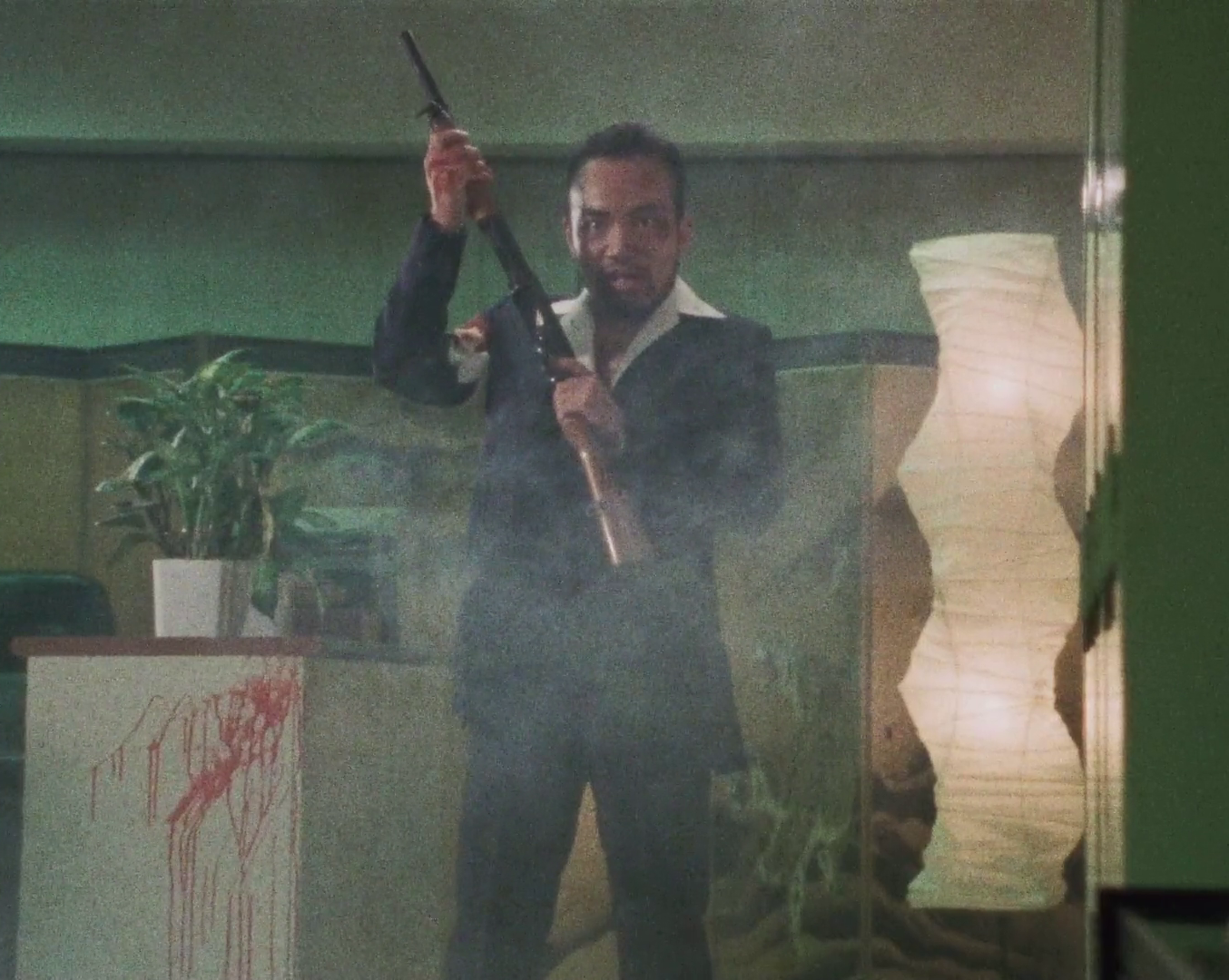
Fleeing a gang war with Columbian drug lords, a Brazilian gangster of Japanese descent tries his luck on the mainland but finds himself a perpetual outsider who can’t get himself taken seriously in Kazuhiro Kiuchi’s moody adaptation of his own manga, Carlos (カルロス). Owing a little bit to Brian De Palma’s Scarface, the tale takes place in a Japan mired in hopelessness and despair amid the spectre of economic collapse, while Carlos tries to play one gang off against another to exploit the terminal decline of the old school yakuza.

What we have here is a succession crisis. The Yamashiro boss (Minoru Oki) is planning to step down due to ill health though in the middle of a long-running dispute with the Hayakawa gang. When two of their guys are randomly killed, they assume only Hayakawa could be behind it little knowing that Carlos (Naoto Takenaka), a Brazilian-Japanese gangster on the run in Japan after killing eight policemen in a gang war in Brazil, killed them because they thought they didn’t need to obey the rules of the underworld with a “foreign” gangster. “We don’t need to treat those Brazilians as equals,” one says while already late to their appointed meeting. They haven’t paid Carlos for the guns he sold them, and when challenged, try to intimidate him into giving them away for free. But Carlos is sick of being intimidated and bumps them off himself. 

Carlos faces constant microaggressions about not being Japanese enough, though he speaks the language fluently without an accent. “Your crude taste doesn’t fly in Japan,” a yakuza tells him, criticising his outfit for being too informal when yakuza of this era generally dress in fancy suits and style their hair with military precision. That’s not really something that bothers Carlos, but he’s annoyed to be so easily dismissed and it’s true enough that he’s being used because they think he’s disposable. Not only is he not a “yakuza”, but as they don’t see him as Japanese either, they don’t need to accord him even the dignity they’d grant to a gang member. When Katayama hires Carlos to knock of his rival for the succession, Sato, he’s pissed off when Carlos takes things too far and puts on a show that threatens to blow the whole thing wide open by massacring Sato’s guys at baseball practice. To a man like Katayama, this is total idiocy and attributable to Carlos’ foreignness, both in his capacity for unnecessary violence and his lack of understanding of the rules of Japanese gangsterdom.

But the one place Carlos and his brother Antonio are fully Japanese is in the home of his aunt who also migrated from Brazil and their Japanese-born cousin Tomomi. Carlos’ aunt refers to them both by their Japanese names, Shiro and Goro, and cooks them Japanese food like sukiyaki. This pleasant domestic environment seems to represent a more settled life Carlos could have found outside of a crime family, especially as his brother Antonio grows closer to Tomomi, but there are also hints of darkness in his uncle’s early death from cirrhosis of the liver which suggests he may have had a hard life in Japan and taken to drink. Nevertheless, his aunt seems to have made a nice life for herself and her daughter and is overjoyed to expand her family by welcoming Carlos and Antonio.

Yet this sort of life seems outside of Carlos’ reach while he continues to play the yakuza gangs off against each other while simultaneously longing for some kind of recognition and almost willing them to figure out it was him who killed Sugita and Yano, the obnoxious Yamashiro guys. Meanwhile, the weakened yakuza have also turned to a foreign hitman, a brooding and robotic American who lacks compassion or compunction and unlike Carlos seems to be a mindless killing machine. When Carlos bests him, it’s an eerie moment echoing Blue Velvet as his body rocks and then falls. By contrast, when Carlos fights his way to the head of the Yamashiro gang, Yamashiro gets puffed up and draws his sword swearing he’ll teach Carlos what a mistake it is to underestimate the Japanese mob, only Carlos simply shoots him in a moment of clear victory over this outdated adherence to a traditional code. Nevertheless, it’s clear that Carlos can’t win here either and there is no room in Japan for a man like him. His only option is to go out all guns blazing as a means of validating himself as a force to be reckoned with, someone who was worthy of attention and of being taken seriously. Shot by the legendary Seizo Sengen, Kiuchi’s manga-informed compositions dissolve into visions of loneliness and despair but in its final moments reaches a crescendo of defiance if discovered only in futility.
A Taxing Woman’s Return (マルサの女2, Juzo Itami, 1988)

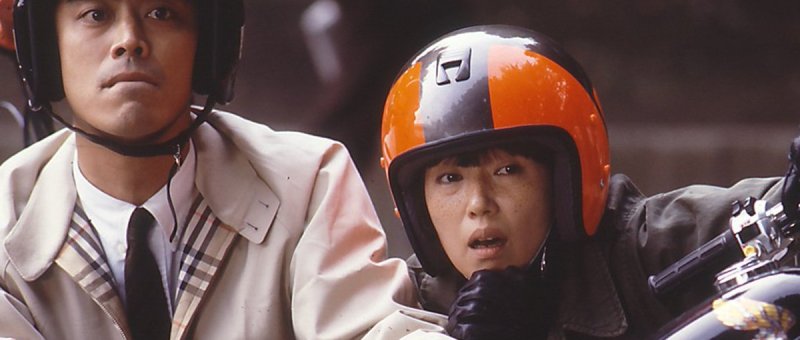
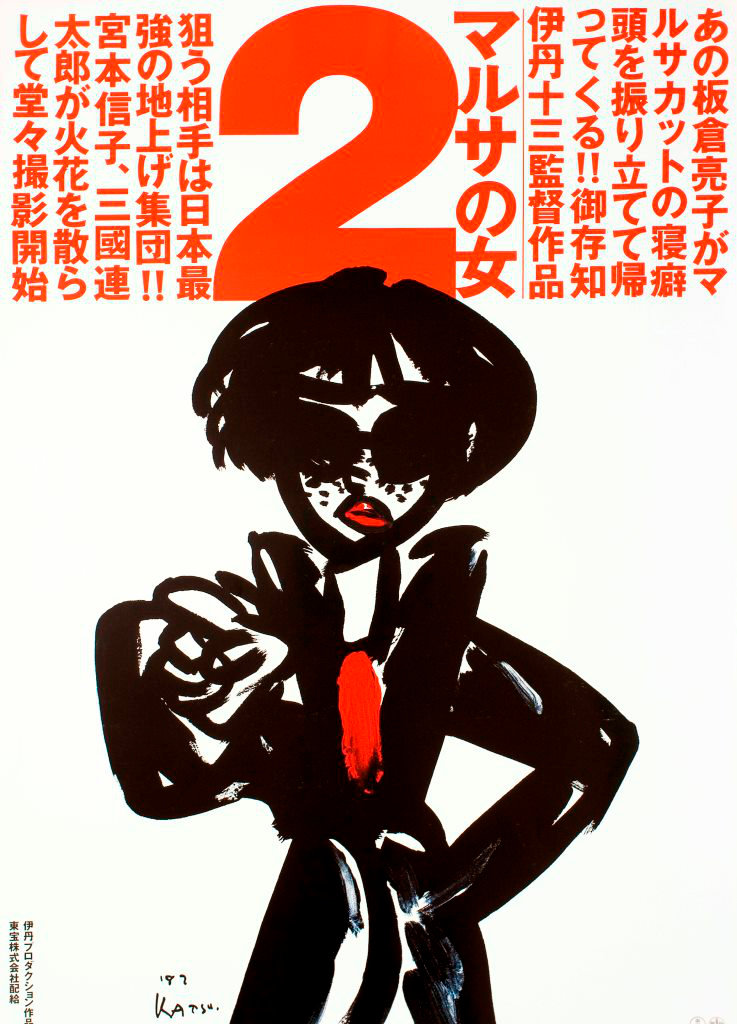
Taxing Woman 2 posterA Taxing Woman introduced us to Ryoko Itakura (Nobuko Miyamoto) – an oddball detective working as an insurance inspector who met her Irene Adler in a tax dodging corporate gangster with a limp. A year later she’s back, still the only woman working with the tax inspectorate and apparently still a dogged pursuer of those who would seek to defraud the Japanese government of its rightful earnings. Ryoko may have been a stickler for the rules who applied the same dog with a bone approach to a mom and pop store chowing down on its own supplies as to a dodgy yakuza led conspiracy, but she also believed in justice – something which stands her in good stead when she rubs up against a dodgy cult which, again, is a yakuza front but adds insult to injury by deliberately manipulating the vulnerable.

The action opens with some kids poking at the dead body of a “landshark” floating in a pond before flashing to a meeting of officials sucking crab meat from the shell and wondering what they’re going to do about this land they need cleared now their heavy is out of the picture. The corrupt politician from the first film, Urushibara (Takeya Nakamura), is apparently still involved in semi-legal land deals but palms the assignment off on a colleague. The big wigs need to empty a dated housing complex on some valuable land so they can build a vanity skyscraper – office space apparently being scarce in mid bubble Tokyo.

To do this they enlist the services of dodgy cult leader Onizawa (Rentaro Mikuni) and his troop of yakuza goons. Most of the tenants have already signed but they have three key holdouts – a diner owner clinging on to the family legacy, a stubborn paparazzo, and an intellectual professor who heads up the housing association. Unlike the yakuza of Taxing Woman, these guys have not reformed – they are the new/old style of lawless thugs who are perfectly prepared to threaten women and children to get their own way. Making it impossible for the tenants to stay through intimidation and noise torture, they stoop to blackmail to seal the deal.

Despite arriving only a year after A Taxing Woman, Taxing Woman’s Return (マルサの女2, Marusa no Onna 2) takes place in a much darker, though more obviously comedic, world. Whereas the earlier film adopted a noticeably ambivalent attitude to the tax inspectors and the enterprising gangsters, the villains of A Taxing Woman’s Return are so heinous and morally bankrupt as to be entirely indefensible even if the inspectorate takes a turn for the bumbling to compensate. The “cult” is, of course, merely a convenient money laundering front and tax dodge for the yakuza – religious organisations are exempt from taxation in the vast majority of cases which may be why the local tax office records hundreds of registered “religious bodies” in its jurisdiction alone. That doesn’t mean it doesn’t have its loyal followers, often vulnerable people looking for spiritual fulfilment but being bled dry by the money hungry cultists while the leader’s wife swans around in sables costing more than the average annual salary. A desperate devotee in need of a loan puts his own teenage daughter up as collateral only to see her raped by Onizawa, eventually becoming pregnant by him at only 16 years of age and thereafter becoming his devoted concubine in a bizarre instance of Stockholm Syndrome.

Yet for all the background darkness of weird cultists and nasty yakuza backed up by corrupt and venial politicians, Itami ups the cartoonish sense of the absurd with our hero Ryoko clambering over rooftops to listen in to the bad guys while her boss throws himself down flights of stairs and has to battle piercing sirens to get into the villains’ secret vault. It is however a dark humour as the opening makes plain with its troupe of little children staring at the strange shape floating in the water – a motif later repeated when a yakuza is gunned down in the street only for another group of children to pour over him as he expires, a single tear rolling down his cheek. The original spongy white body gives way to the businessmen sucking spongy white crab out its shell while insensitively discussing the late land shark, and the yakuza are unafraid to deploy a maggot infested severed hand (thankfully a fake picked up from a friend who makes horror movies) to convince the tenants they mean business.

At the end of A Taxing Woman, the gangster and the inspector reached something of a truce but one which came down, broadly, on the side of right. This time things aren’t quite so simple. The conspiracy is bigger and deeper, stretching all the way into the Diet and about more than just office space in still developing Tokyo. Onizawa, regarding himself as public servant, tries to say he did it all for his country, that if someone didn’t get their hands dirty Tokyo would be eclipsed by Hong Kong or Seoul. A post-war justification for a bubble era problem, but one that takes us straight back to the first film in Onizawa’s second proposition that only through money does he truly feel “immortal”. He may be a liar and a cheat, but he’s only a symptom of rapidly spreading infection, one which Ryoko and her team are powerless to cure, trapped on the wrong side of the fence while the bad guys build monuments to economic hubris, indulging in vanity in an era of bad faith which is about to be brought to a rather abrupt close.


Currently available to stream in the US/UK via FilmStruck.

Original trailer (no subtitles)