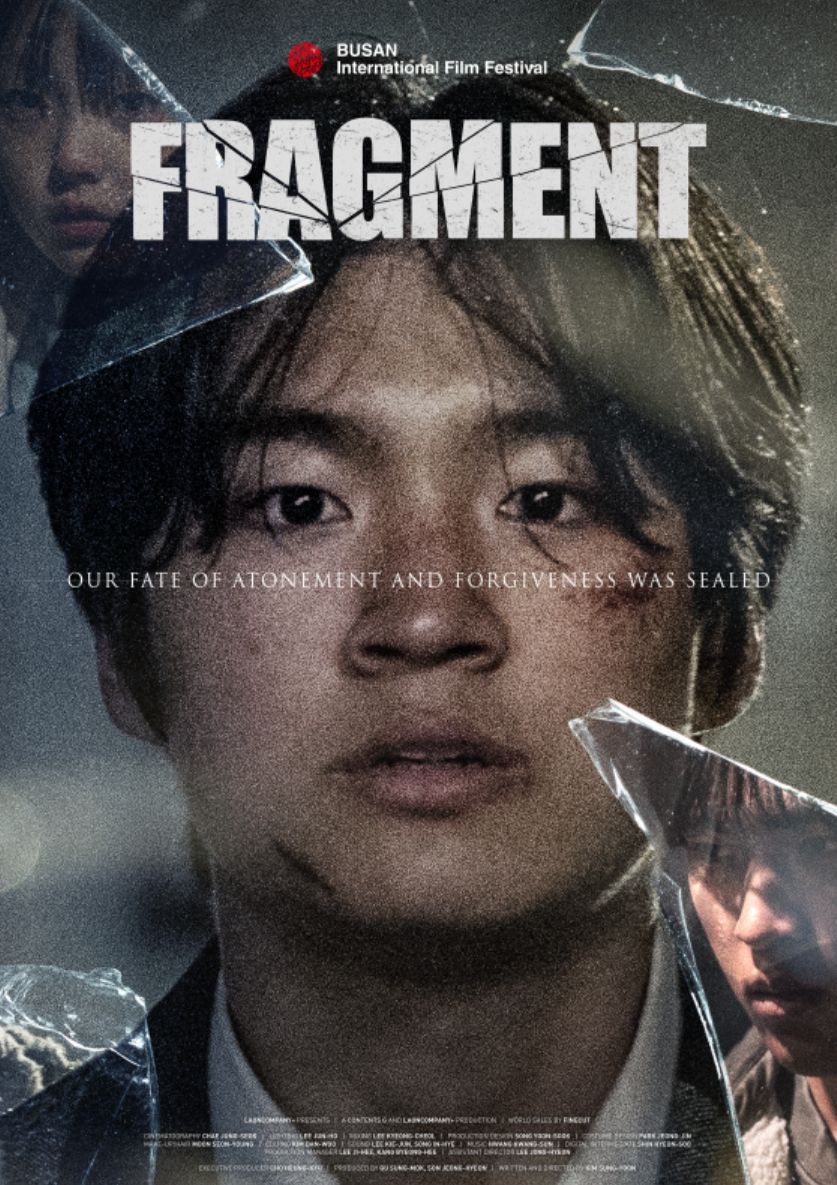
Fragment (파편, Kim Sung-yoon, 2024) [Fantasia 2025]

People often think of crime as something linear that ties together villain and victim but is otherwise an isolated event. The truth is that crime reverberates through the world around it, shattering the lives of others in the backdraught of its irrational violence. Son of the murdered couple, Gi-su is fond of saying that he’s the victim as if trying to reclaim this role and make it his identity while it remains to that Jun-gang and his sister Jun-hui are victims too for they have also lost their father who is now in prison.

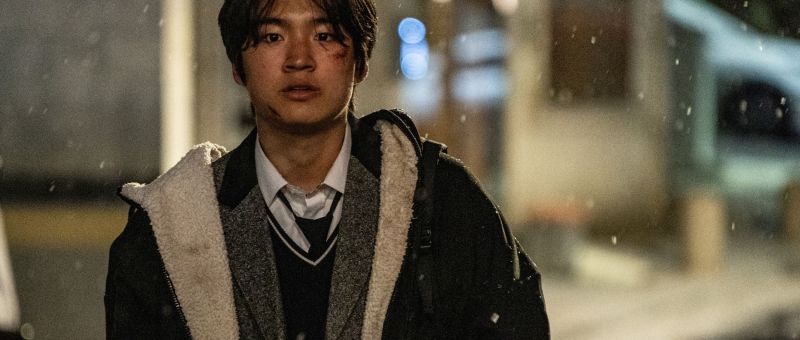
Indeed, while Gi-su may face overbearing care from his well-meaning relatives, Jun-gang is burdened with the stigma of being a murderer’s son while trying to protect his sister from the fallout of this awful situation. His most pressing problem is that they don’t have any money. His father did not appear to have any before either, but now their utilities are about to be cut off and their landlady’s sick of being strung along. Yet these aren’t problems a 15-year-old boy can fix on his own. He tries to get a job in a local convenience store but is first turned away because boys his age should be in school, and then offered a job but only on parental consent which he can’t get for obvious reasons. His teacher, Mr Park, is one of the few people to know the truth and keen to help him but has few real ways of doing so. As the son of the murderer, most are content to leave him to his fate and believe that he simply doesn’t deserve support because of what his father has done.

Jun-gang too feels guilty, though none of this is his fault. He knew what kind of man his father was and is always eager to prove that he is different. But the fact that he seems nice, honest, and polite doesn’t really matter. He’s still chased and bullied with kids at school going on about killer genes and actively singling him out for a beating. Jun-hui too is ostracised by her friends who’ve been told not to play with her because of what her father did. Gi-su tries to ease his frustration on him, breaking into their apartment and smashing the place up after coming to school to find him. As much as Gi-su tries to insist that he’s the victim, Jun-gang is a victim too and unlike Gi-su has no further family to support him and no one else to turn to for help. He fights back with decency, but largely finds it thrown in his fate.

Gi-su, meanwhile, is broken by his trauma and in the midst of a nervous breakdown exacerbated by exam stress. Like Jun-gang he blames himself as a means of asserting control over the situation and struggles to accept the new world he now inhabits following his parents’ deaths. His sympathetic aunt tries her best to get through to him, but his well-meaning uncle is a font of toxic masculinity screaming at him that he’s wallowed in his grief long enough and needs to man up and get over it. Though they’re cast in the roles of killer and victim, the boys are really much the same, each having lost their homes and families and now being essentially displaced from within their new lives.

The battle is really whether they can hang in there long enough to begin to see the other side and that there are still possibilities in their lives. The reason for the killing is never revealed, nor is it particularly important, if hinting at the constant pressures of the outward society. Jun-gang’s father’s behaviour implies long years of paternal failure, domination, and abuse from which Jun-gang is trying to emerge unscathed while Gi-su must on the other hand come to terms with the implosion of a seemingly perfect family life. That they each come to recognise that none of this is their fault and they’re really just the same is testament the boys’ innate goodness and growing sense of solidarity in the midst of so much acrimony. Hard-hitting though it may be in its exploration of how societal prejudice can allow people to slip through the cracks, Kim Sung-yoon’s film is also in its way uplifting in the presence of those are willing to help and Jun-gang’s refusal to give in to what the world tells him he should be,


Fragment screened as part of this year’s Fantasia International Film Festival.
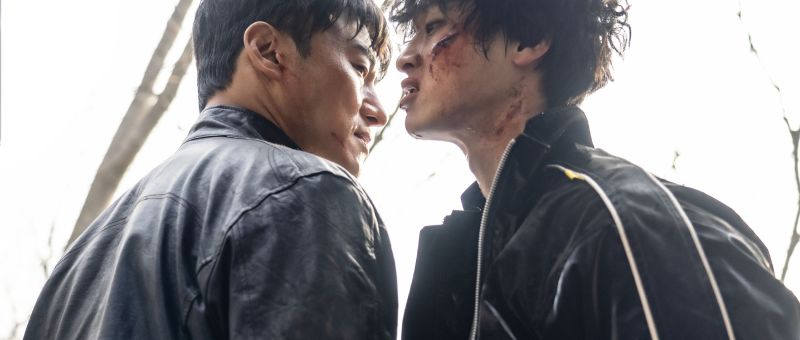
Devils (악마들, Kim Jae-hoon, 2023) [Fantasia 2023]

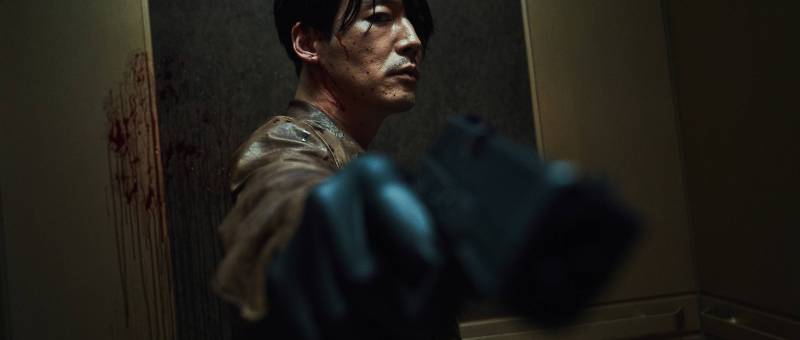
A detective consumed by thoughts of vengeance suddenly wakes up in the body of the serial killer he had been hunting, but how can we truly know who is who when each is so transgressively corrupt? The pluralisation in the title of Kim Jae-hoon’s bodyswap thriller Devils (악마들, Akmadeul) is no accident as the two men become in some senses interchangeable, their identities constantly shifting and largely dependent on those ascribed to them by others. “If you closed your eyes you’d swear he was Jae-hwan,” his confused partner admits though having witnessed him brutally torture a suspect/witness by hammering nails into his thighs. 

Jae-hwan’s (Jang Dong-Yoon) rage is partly born of guilt in that he failed to properly support his previous partner, who was also his brother-in-law, during a raid on a killer’s lair during which he got his throat slit by sadistic murderer Jin-hyuk (Oh Dae-Hwan) who has been brazenly posting snuff videos on the internet while continuing to evade the police. Two years later, Jae-hwan has been partnered with reletive rookie Min-sung and is determined not to make the same mistake when they get another shot at Jin-hyuk instructing him to stay behind and let Jae-hwan lead. But during the operation Jae-hwan goes rogue, chasing Jin-hyuk on his own and going missing after diving over a ridge in the woods. A month later a car carrying both men rams into a bollard outside police HQ only when he wakes up Jin-hyuk insists on speaking only with Min-sung and claims that he is in fact Jae-hwan.

Of course, Min-sung doesn’t really believe him despite being presented with information only Jae-hwan would know but is a little more convinced on visiting his former partner and observing him behaving strangely. The problem is, how can you tell the difference between a man using extreme violence for “justice”, which in this case is actually revenge, and one who uses it for pleasure? After teaming up with him, Min-sung is called to a station and assists Jin-hyuk/Jae-hwan drag an old man to a grimy trailer in the woods where he tortures him into giving up information on his fellow criminals by hammering nails into his legs while filming his “confession” as the kind of backup evidence which can’t be used it court but still might prove useful. You could say that it’s Jin-hyuk’s subconscious poking through, but Min-sung is fairly unfazed by this unorthodox investigative tactic and his conviction that Jin-hyuk is really Jae-hwan never wavers despite seeing him commit such a violent act so naturally.

Jae-hwan too hints at similarity between himself and Jin-hyuk when he complains that as a police officer he must “fight inside the fence known as law,” while the criminals are bound by no such constraints. He completely misses that this is what ought to separate them, to make their identities distinct, but now they are more or less the same in Jae-hwan’s willingness to turn vigilante, step outside the protection of the law, and do anything it takes to catch Jin-hyuk. “You’ve got my face, take advantage of it” Jae-hwan/Jin-hyuk sneers as he sends his opposite number to catch the men that have betrayed him, while each of them is to an extent adept at playing the role assigned to them at this and any given time. 

It goes without saying that the women who were murdered in the snuff videos have been more or less forgotten, Jae-hwan’s desire to catch Jin-hyuk is born of that to avenge himself as a policeman and gain vengeance for his brother-in-law’s death. In a pointed exchange, Jin-hyuk asks Jae-hwan how he knows that he is not merely toying with him, allowing Jae-hwan to think that he’s manipulating him but secretly in control, hinting at a kind of cat and mouse game between the two to claim the identity of the chaser and the chased. Yet whichever way you look at it, Jae-hwan has overplayed his hand, releasing a “hunting dog” he can’t control with disastrous consequences for himself and others. With a distinctly B-movie sensibility, Kim plays with identity and the malleability of memory to ask if we can really be sure of who we are at any given time while suggesting that’s something Jae-hwan should have been asking himself in his relentless pursuit of his spiritual mirror.


Devils screened as part of this year’s Fantasia International Film Festival.

International trailer (English subtitles)

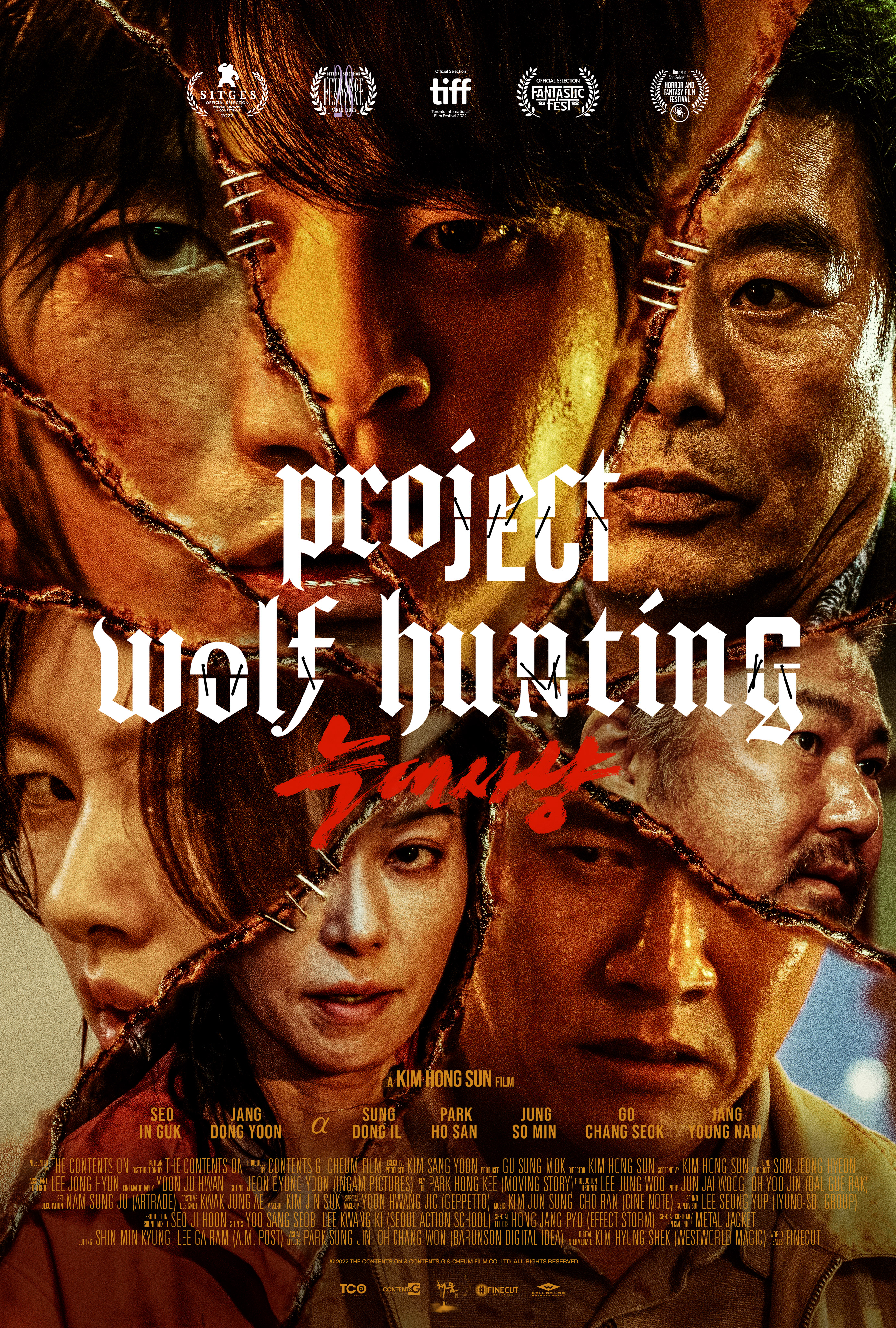
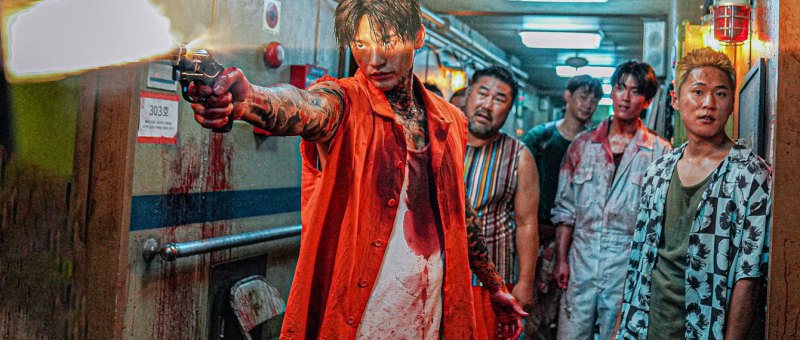
Project Wolf Hunting (늑대사냥, Kim Hong-sun, 2022)

“Remember, there’s nowhere to run” an arrogant police officer explains to collection of rapists and murderers locked aboard a cargo ship ready to be delivered to “justice” in Korea having attempted to flee to the Philippines. It is in someways ironic that these men and women, depraved as many of them may be, have been loaded onto a commercial vessel to be shipped home less like cattle than faceless and inanimate objects. Kim Hong-sun’s eerie gore fest Project Wolf Hunting (늑대사냥, Neukdaesanyang) is in many ways about the horrors of the past but also suggests that the present is little better in a world in which there is little difference between cop and thug and we are all at the mercy of looming violence. 

As one older prisoner puts it, “if this isn’t hell, I don’t know what is”. Thanks to an international extradition arrangement some of the worst Korean criminals are about to be repatriated from the Philippines only the historic event is disrupted by a suicide bombing carried out by a disgruntled victim whose smashed glasses and severed limbs are an eerie harbinger of what’s to come. After a rethink, the government decides to hire a cargo boat instead so the public won’t have access to the criminals, which is somewhat ironic, while accompanied by a crack team of veteran cops each with over 10 years of experience on the force. Already it isn’t seeming like a very well thought through plan, but as Captain Lee (Park Ho-San), who openly beats a prisoner with whom he has prior history on the dock, points out, there aren’t any cameras so he has full authority to enforce the law with no concern for the rights of inmates nor basic human morality. To cut it short, he’s little different than they are even if he isn’t, as far as we know, a multiple murderer or rapist. 

In any case, keeping a bunch of violent criminals handcuffed with only one bathroom break a day and no stimulation seems like a recipe for disaster even if it weren’t just plain inhumane. But inevitably the operation is compromised by an attempt to spring a gang boss which lets the criminals take control of the ship albeit temporarily seeing as there’s something else lurking in the bowels of this floating hellscape that is pure nightmare fuel and a not quite living embodiment of man’s inhumanity to man. Predictably, this all stems back to the abuses of the colonial era and the machinations of the equivalent of Unit 731 operating in the Philippines but has since seemingly been co-opted by a shady Korean organisation apparently also attracted to the research’s capitalistic potential in the booming anti-ageing market hoping to usher in the next stage of human evolution. 

What ensues is a parade of senseless violence in which cop and killer alike are stalked by a mysterious “monster” with wolf-like senses and preternatural strength, and that’s on top of the bloody destruction wrought by the vengeful criminals in their unsuccessful attempt to escape. As Lee had said, there really is nowhere to run though as it turns out that cuts both ways. The gang boss proves unexpectedly heroic, genuinely trying to save the moll who’d been arrested alongside him, while law enforcement reveals itself hopelessly out of depth even as Lee and his female subordinate Da-yeon (Jung So-min) pivot towards protecting the prisoners they were previously intent on oppressing as they form a temporary alliance to defend themselves against the mysterious threat, ironically a product of the “kemono” (beast) project and a reminder of what happens when you decide that some people aren’t really “human” after all. 

Even so, the rampage is indiscriminate. The “monster” doesn’t care if you’re a cop or a killer, all it knows is violence smashing in the heads of the toughest gangsters and ripping hearts out of well-built bodies without a second thought. It’s got no eyes but knows how to use a gun and it still might not be the scariest thing on the boat, at least not in the end as we wonder what exactly all this is for and what might be meant by the next evolution of our species. This is indeed hell and there’s no where to run either from the unresolved past or the malignant future. 


Project Wolf Hunting is released in the US on Digital, Blu-ray, and DVD on Feb. 14 courtesy of Well Go USA.

International trailer (English subtitles)

The Killer (더 킬러: 죽어도 되는 아이, Choi Jae-hoon, 2022) [Fantasia 2022]

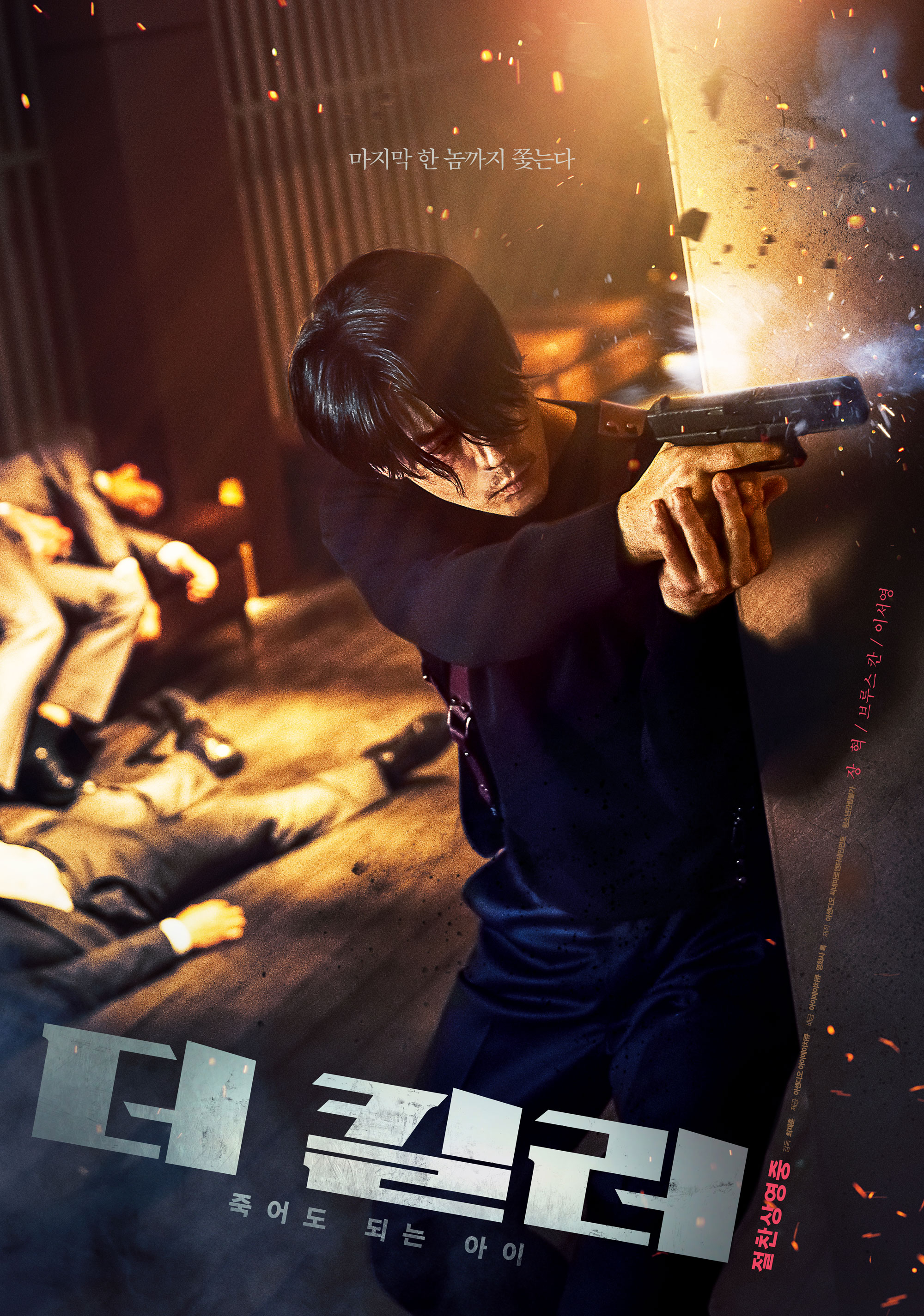
A retired hitman gets back in the game when he’s charged with babysitting a naive teen who almost immediately ends up getting kidnapped by human traffickers in Choi Jae-hoon’s retro action fest, The Killer (더 킬러: 죽어도 되는 아이, The Killer: Jookeodo Dweneun Ai). The Korean title of the film is appended by that of the novel from which it is adapted, The Girl Who Deserves to Die by Bang Jin-ho, and hints at the secondary drama which underpins the main narrative in which the kind of masculinity the cynical hitman projects is redefined to accommodate a nascent paternity, 

When questioned by the 17-year-old Yoon-ji (Lee Seo-young), Ui-gang (Jang Hyuk) tells her that he has no children because he didn’t want them. Even so he appears to be in touch with some of the children of his wife’s friends whom he mostly calls by generic names such as “Punk Ass 1”, and his rejection of paternity appears to be born of a desire for a simple life spent in comfort with his wife without additional responsibilities. When his wife asks him to take care of her friend’s daughter so the two of them can jet off to Jeju island for two weeks, he’s understandably reluctant especially as a girl of 17 hardly needs a babysitter but at the end of the day he generally does as his wife tells him. 

Consequently, he allows Yoon-ji a high degree of (illusionary) freedom while placing a tracker on her so he can at least keep tabs on where she is. Perhaps because her mother is away and has left her with a random middle-aged man she doesn’t know, Yoon-ji takes advantage of the situation and makes a few bad choices which result in her falling into the trap of a gang of people traffickers. Ui-gang wants to get her back mostly because his wife will be upset with him if he doesn’t but also begins to develop a fatherly bond with Yoon-ji while morally outraged by the societal corruption he uncovers through searching for her. 

In a genre archetype, sensitive killer Ui-gang has the moral high ground in that he has a code to live by along with a sense of justice that is revulsed by the casual cruelty of those who would trade human beings like cattle. He discovers that Yoon-ji’s kidnapping was not an accident but that someone actively chose her and wants to know who and why stopping not just at rescuing her but trying to take down the whole corrupt mechanism while discovering that its roots extend even further than he had expected. His final resolution that no child deserves to die restores his humanity as evidenced by his acceptance of a paternal responsibility and the creation of a new family unit with his wife and Yoon-ji. 

Even so his path to rescuing her is structured in the same way as a video game, Choi’s composition sometimes referencing that of a first person shooter as Ui-gang emerges from lifts and cooly takes out a gangster who then crashes violently into the background. He fights his way towards resolution hacking and slashing at hordes of oncoming foot soldiers while armed with nothing other than a pair of chair legs or else cooly executing them with a single shot. An arms dealer friend literally references The Man from Nowhere which the film at times also echoes both narratively and visually in its tightly controlled and well choreographed action sequences. This sense of unassailability is in itself a reflection of Ui-gang’s moral goodness while the bumbling quality of the crooks and the ease with which he dispatches them equally reflects their immorality. 

A retro action fest, The Killer makes the most of a modest budget while taking aim at a contemporary society that leaves young people so unprotected that traffickers can even claim to be “helping” them given that there are few other ways for runaway teens to earn a living on the streets. Then again it may be a little problematic that the solution presented lies in a restoration of the patriarchal ideal in Ui-gang’s resumption of his paternity in pledging to protect Yi-joon until she comes of age. Nevertheless, anchored by another strong performance from veteran actor turned rising action star Jang Hyuk, Choi’s stripped back action thriller is a visceral journey into the dark heart of the contemporary society.


The Killer screened as part of this year’s Fantasia International Film Festival.
International trailer (English subtitles)

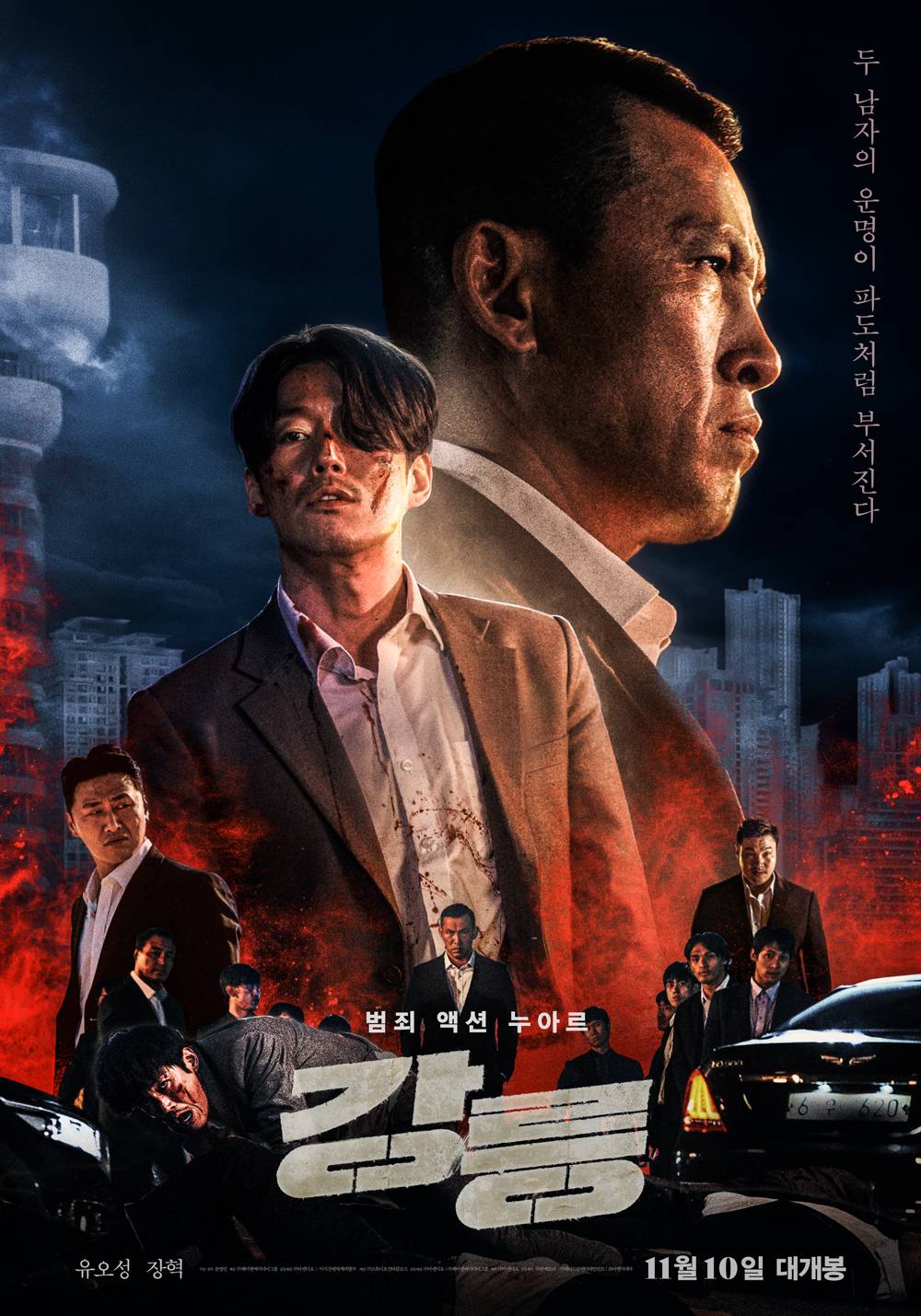
Tomb of the River (강릉, Yoon Young-bin, 2021)

“Why did you turn this place into hell?” a reformed gangster asks his defeated enemy only to be told that nobody made the world this way, it is just is. In any case, Yoon Young-bin’s purgatorial gangster epic Tomb of the River (강릉, Gangneung) finds itself in a world of conflicting moral values in which organised crime has become increasingly legitimised conducted by men in sharp suits sitting in elegant surroundings but no less thuggish, violent, and immoral than it ever was. 

The two opposing forces are hippyish middle-aged enforcer Gil-suk (Yu Oh-seong) whose boss has adopted an anti-violence philosophy, and the psychotic Min-suk (Jang Hyuk) whom we first meet as the only survivor of a smuggling boat massacre hiding in the hold eating the dead bodies of his comrades whom he may or may not have killed himself. The battle ground is a new casino resort in the previously peaceful rural backwater of Gangneung shortly to host the upcoming 2018 Winter Olympics. Gil-suk’s ageing boss decides to hand him the reins of the business but he objects out of old-fashioned gangster etiquette because the complex is technically located in an area handled by his colleague Chung-sub (Lee Hyun-kyun) who is currently in the boss’ bad books after a group of young people were found passed out having taken drugs in one of the karaoke rooms he manages. 

Gil-suk is perhaps a representative of disingenuous contemporary corporatised gangsters who still operate like thugs but do so with a veneer of elegance, his now elderly boss having achieved a state of zen in giving him small pieces of wisdom such as “don’t fight. If you fight you suffer whether you win or lose”. Gil-suk later echoes him when he tells his friend to leave Min-suk alone and that rather than fighting they should share a meal with him sometime instead acknowledging that his gang members’ lives seem to have been hard. But his compassion is as it turns out, misplaced, Min-suk is not the sort of man who can be befriended or softened with kindness for he is the personification of humanity’s baser instincts in unbridled selfishness and destructive desire. 

“I did it to survive” his underlings often justify themselves, believing they have no other option than to behave the way they do while Min-suk exploits the venality and misfortune of others as a kind of get out of jail free card promising to wipe their debts if they take the fall for his crimes. Sooner or later everyone betrays everyone else for reasons of greed or self-preservation, even Gil-suk eventually pulled towards the dark side while his policeman friend (Park Sung-geun) attempts to save him from himself. “What other choice did I have?”, he asks, but to conform to the dubious morality of the world around him. He criticises the police for a lack of action, but watches and does nothing as Min-suk carves up his entire squad of foot soldiers while patiently making his way towards him. 

The irony is that Gil-suk had been the good gangster, never wanting more than he needed and always happy to share. He is confused by the betrayal of his closest friends because he cannot understand their motivation. He had always thought of the resort as “ours” never considering that it could be “mine” while his friend tells him he should take it all because if he doesn’t someone else will. To prove his point Gil-suk tries to broker a peaceful solution by offering to share control with Min-suk in a process of appeasement, suggesting he take the club while he keeps the casino and they split the profits between them before eventually deciding to surrender it entirely in order to curry favour with an even shadier corporate gangster whose polite interest in the resort he’d previously rebuffed. 

Taking on spiritual dimensions in its gloomy backgrounds, battles fought under the light of a full moon, and the snow falling over the living and the dead in the melancholy final sequence Yoon’s hellish tale seems to take place in a gangster purgatory in which as Gil-suk finally announces romance really is dead, in its place only internecine violence and the intense desire to survive by any means possible mortal anxiety provoking only preemptive greed and cruelty. As Min-suk suggests “only death will end things” but everyone here is in a sense already dead only trapped in the eternal limbo of the gangster mentality. 


Tomb of the River streamed/screened as part of this year’s Udine Far East Film Festival.

International trailer (English subtitles)

The Witness (목격자, Cho Kyu-jang, 2018)

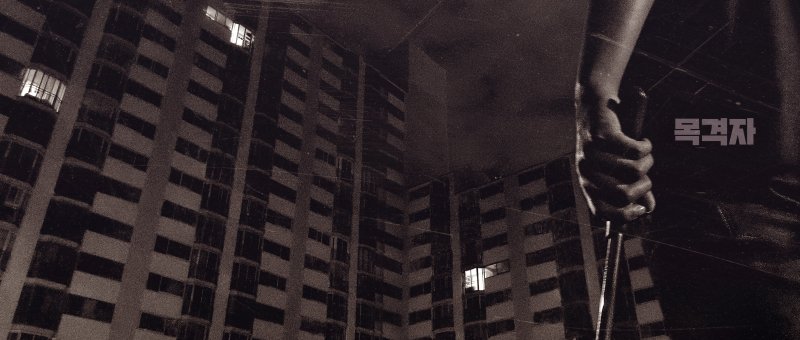
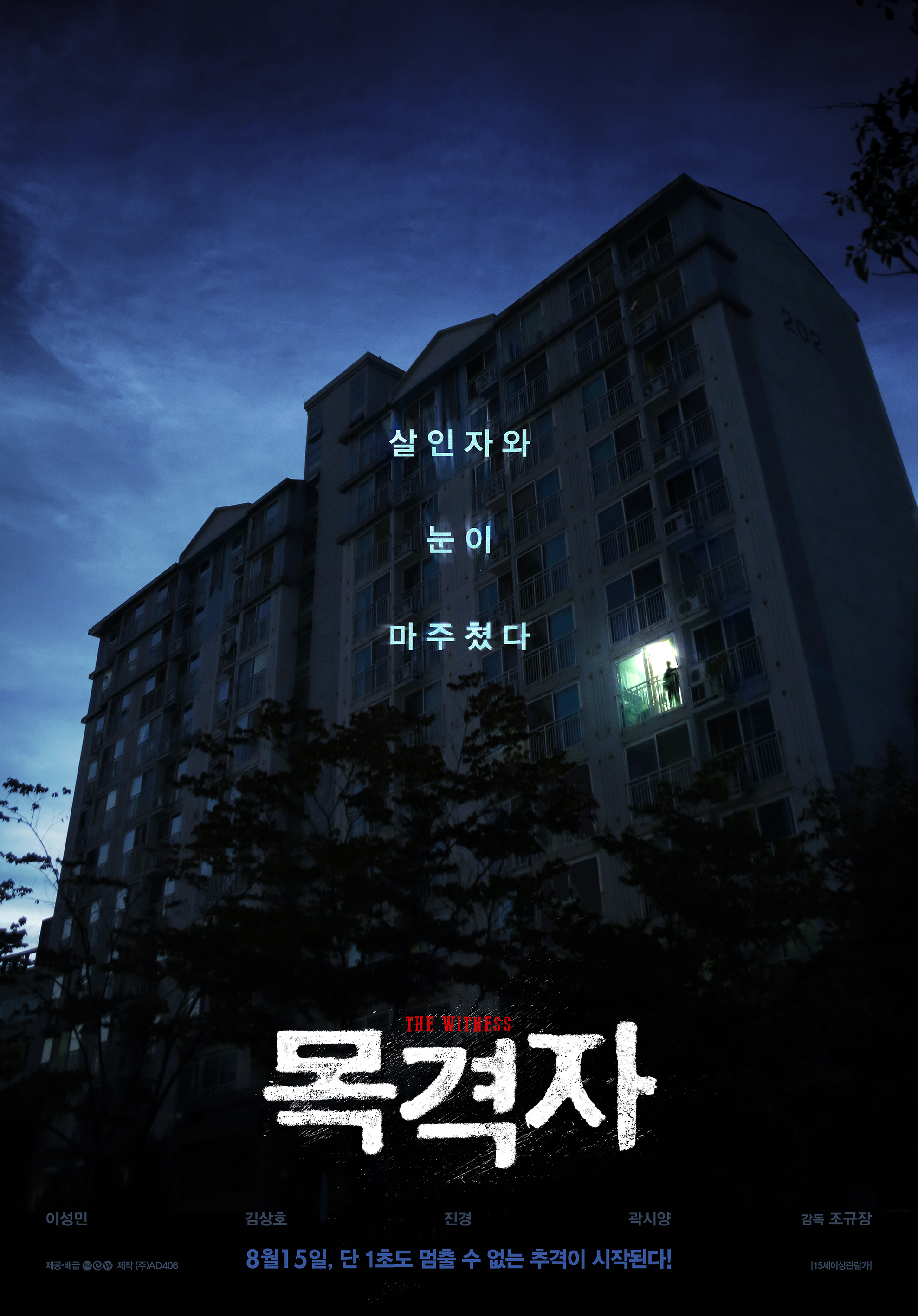
The Witness poster 2The murder of a young woman outside of her New York apartment block in 1964 became a psychology text book standard thanks to the fact no one had raised the alarm or come to help her. Later investigations more or less debunked the so called “bystander effect”, at least in this instance, but it remains broadly true that those who find themselves witnessing a distressing incident fully expect that “someone” will be dealing with it, conveniently forgetting that they too are “someone”. The hero of Cho Kyu-jang’s The Witness (목격자, Mokgyeokja) is only one of many to temporarily distance himself from his community when he fears he has locked eyes with a killer and inadvertently made his family a target for retribution.

Sang-hoon (Lee Sung-min), a middle-class lawyer, is riding high after buying a new apartment (with a hefty mortgage) for his wife and daughter. Rolling home drunk after an evening drinking with colleagues, he opens yet another beer and gazes out over the balcony of his new apartment musing on how great his life is only to be confronted with a screaming woman being chased by a violent man in the courtyard. She falls and the man strikes her. Sang-hoon struggles for his phone but drops it in drunken shock. His wife emerges from the bedroom and alerts the killer to their presence by turning the lights on. Sang-hoon snaps them off and goes back to the balcony where he is convinced the killer has seen him. Paranoid, he forgets all about the poor woman bleeding on the concrete below and spends the night in his hallway clutching a baseball bat just in case.

He doesn’t know it yet, but Sang-hoon has indeed made himself a target for a marauding “random” killer. Afraid and ashamed, he decides to keep quiet. It would be easy enough to read Sang-hoon’s unwillingness to get “involved” in other people’s business as a hangover from an upbringing in an authoritarian regime in which keeping your head down and your nose clean might be essential tools for survival, but it’s also fair to say that his attitude is defined as much by notions of middle-class respectability as it is by cowardice and selfishness. An old busybody in the apartment block is constantly banging on about the house prices, getting the residents to sign a legal waver promising not to cooperate with the police or the media to avoid the name of the community becoming linked with violent crime. Sang-hoon says he wants to protect not only his wife and daughter, but their home too. His hopes and dreams are bound up with conventional homeownership. This is the way he intended to fulfil his male obligations to protect his family, but now it’s being threatened in a way he never expected and he finds himself tested.

Despite himself, Sang-hoon does feel he ought to help those in need. He bristles when his wife wants him to help out a friend whose child was injured in a car accident that the police didn’t bother to investigate properly, because he knows it’s a lost cause and she’s better to settle. He feels sorry for her, but not enough to rock the boat. Being a lawyer he perhaps knows what a risk it can be when the wrong people know where you live, but he’s at constant battle with himself knowing that the killer is still out there and will likely kill again. If he’d only called an ambulance instead of cowering by the front door, the poor woman might have survived – her death is on his hands as much as the killer’s because he chose to do nothing. The body count will only rise all while Sang-hoon tries to hedge his bets, calculating whether he’s better off keeping quiet and hoping the killer appreciates his complicity or surrendering himself to the police in the hope that they can protect him by taking the killer out of the picture.

Sang-hoon’s desire not to get involved has left him very involved indeed. He hoped it would all go away if he turned a blind eye and kept himself out of it, but like it or not he is a member of a community and he has a responsibility which cannot be abnegated. It turns out the best way to protect your family is protecting other people’s, maintaining a herd immunity to the threat of violent crime. There is, however, a reason they tell you to shout “fire” and not “help” – people are selfish and if they hear fire they know they are in danger too so it’s in their interest to come running, if it’s only you in danger they may not put themselves out. Sang-hoon’s brush with the embodiment of random threat does at least release him from the ingrained isolationism of the aspirant middle-classes in which any kind of fellow feeling is distinctly frowned upon, allowing him free rein to embrace his natural tendency towards altruism safe in the knowledge that his desire to help is not a weakness but a strength that will keep his family safe through the interconnectedness of a compassionate community.


The Witness was screened as part of the 2018 London Korean Film Festival.

International trailer (English subtitles)

The Battleship Island (군함도, Ryoo Seung-Wan, 2017)

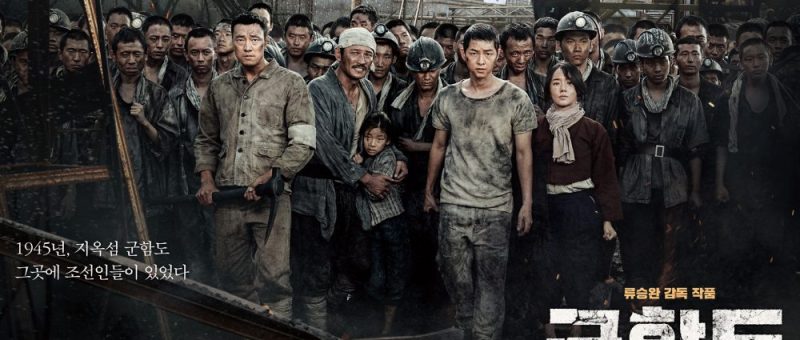
battleship island posterKorean cinema has been in a reflective mood of late. The ongoing series of colonial era dramas have sometimes leaned towards uncomfortable and uncompromising nationalism but among the more recent, there has also been an attempt to ask more serious questions about collaboration and capitulation of ordinary people living under a brutal and often cruel regime. While Age of Shadows dramatised this particular problem through the conflicted figure of a former resistance fighter turned Japanese military police offer, The Battleship Island (군함도, Goonhamdo) goes further in its depiction of those who dedicated themselves entirely to the Japanese Empire and were willing to oppress their fellow Koreans to do so. That is not to ignore the hellish conditions which define the very idea of Hashima as an off shore labour camp where depravity rules, exploitation is hidden, and the camp commander is free to run his ship however he sees fit.

In early 1945 Korea is still under Japanese colonial rule and ordinary Koreans are liable for conscription into the Imperial Japanese army whether they like it or not. Gang-ok (Hwang Jung-min) and his daughter Sohee (Kim Soo-ahn) are members of a popular jazz band but Gang-ok has a habit of getting himself into trouble and so they are tricked into getting on a boat to Japan hoping for a safer, more lucrative life. Where they end up is Hashima – otherwise known as “Battleship Island”. Gang-ok and Sohee are separated with Gang-ok stripped of his musical instruments and Sohee, who is only a child, carted off with the other women destined for the “comfort station”.

Ryoo wastes little time demonstrating the immense evil buried in places like Hashima. A deep seam coal mine in the middle of the sea, the island is a fortress prison from which escape is impossible. Early on, three small boys decide to flee after their friend is killed in a cave-in only for one to be shot and the other two drowned by the lazy soldiers of a Japanese patrol boat who couldn’t be bothered to fish them out of the water. The miners are beaten, starved, tortured and manipulated into submission knowing that capitulation is their best route to survival. Not only are these men the subjects of forced labour, they are also made liable for the “costs” involved in their own enslavement with the bill for their transportation, food, clothes, and tools deducted from their “wages” which are supposed to be paid into their bank accounts for access on release. Those killed whilst working are supposed to receive compensation for their families but as will later be revealed, systematic corruption means their families may not even know their loved ones are dead let alone that they are being denied the money rightfully owed to them.

Things get even worse for little Sohee who is forced into a kimono and smothered with makeup to “entertain” some of the Japanese officers on the island. She manages to buy herself some time when she realises the Korean record the camp commander puts on to “comfort” the “comfort women” is one she is actually singing on. This new discovery earns her and her father a slightly improved status in the camp though she may not be safe for long. Gang-ok has already reverted to his tried and tested methods for getting out of sticky situations, making himself a kind of camp fixer aided by his ability to speak Japanese.

The Korean prisoners are represented by a former resistance leader, Yoon Hak-chul (Lee Kyoung-young), who offers rousing speeches in public but privately is not quite all he seems. Gang-ok gets himself mixed up in a Resistance operation run by an OSS (Song Joong-ki) plant on site to rescue Yoon who eventually uncovers several inconvenient truths which make his mission something of a non-starter. Yoon’s empty rhetoric and self serving grandeur represent the worst of the spiritual crimes discovered on Hashima but there is equal ire for the turncoat Koreans who act as enforcers for the Japanese, issuing beatings and siding with their oppressors in the desperation to escape their oppression. Tragically believing themselves to have switched sides, the turncoats never realise that the Japanese hold them in even lower regard than those they have betrayed.

It is hard to avoid the obvious nationalistic overtones as the Japanese remain a one dimensional evil, smirking away as they run roughshod over human rights, prepare to barter little girls and send boys into dangerous potholes all in the name of industry. At one point Gang-ok cuts an Imperial Japanese flag in half to make the all important ramp which will help the captive Koreans escape the island before being summarily murdered to destroy evidence of Japanese war crimes which is a neat kind of visual symbolism, but also very on the nose. Once again, the message is that Koreans can do impossible things when they work together, as the impressively staged, horrifically bloody finale demonstrates, but as Ryoo also reminds us there no “heroes”, only ordinary people doing the best they can in trying times. 


Currently on limited UK cinema release!

Original trailer (English subtitles)