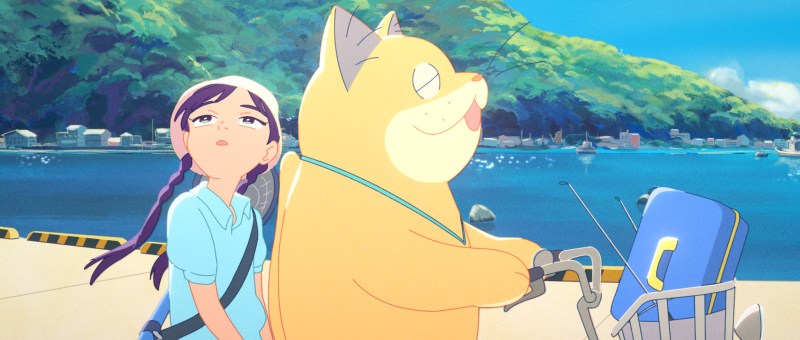
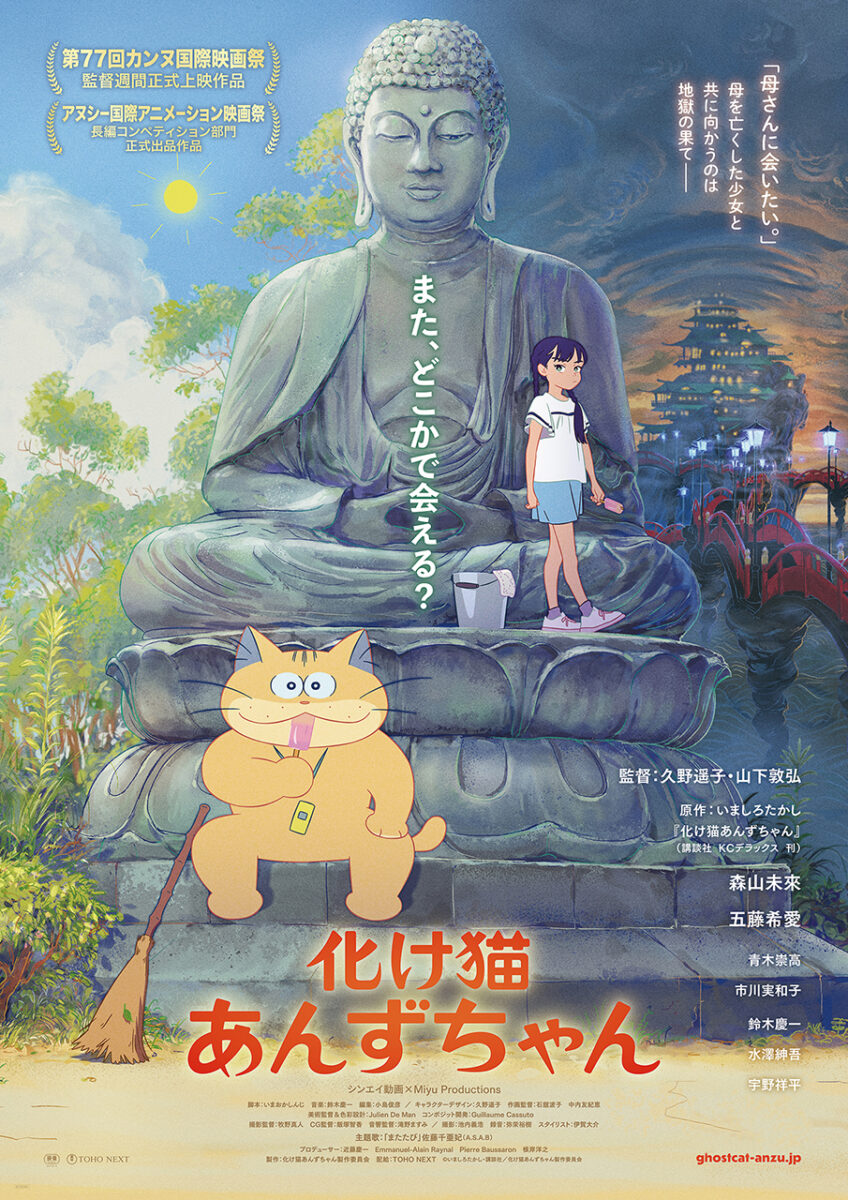
It can be comforting, in a way, to think that this world is deeper than we often think it is and that we live surrounded by ancient spirits who touch our lives in ways we never suspect. All of this is, however, a little more palpable in Iketeru, the town of eternal summer, where the heroine of Yoko Kuno and Nobuhiro Yamashita’s animation Ghost Cat Anzu (化け猫あんずちゃん, Bakemono Anzu-chan) is unceremoniously dumped by her feckless father as he attempts to sort out some persistent trouble with loan sharks.
Of course, to a girl from Tokyo who hoped to spend the summer break with her cram school crush, being sent to a temple to stay with an estranged grandfather it’s not even clear she has ever met before is not a whole lot of fun. But then as Karin (Noa Goto) says, she’s used to being alone, which might be why she takes against the giant ghost cat, Anzu (Mirai Moriyama), who lives like a human but obviously isn’t one. The funny thing about Iketeru is that no one finds Anzu’s existence odd, if at times troublesome. He’s even patiently arrested by a pair of policemen for not having a proper license for his moped which he didn’t think he needed because, after all, he’s a ghost and also a cat. A pair of little boys who’ve formed their own gang called “The Contrarians” to “defy society” call him “aniki” like some kind of yakuza boss and try to recruit him though being in a gang seems like too much bother for Anzu, which is something he has in common in Karin.
But the funny thing is, Anzu isn’t really so different from her father in that he too can be somewhat irresponsible. Though he knows he shouldn’t, he spends the money he was keeping for her on pachinko hoping to win big but predictably loses it all. He gets over excited about jobs that pay 3000 yen (£15) a day and overcooks food he’s dropped on the floor because it’ll burn off all the dirt. But like Karin, Anzu can be a little standoffish and it isn’t even until her arrival that he starts to interact with some of the other supernatural creatures in the area who appear to have already set up some kind of club. Having invited them over, Anzu complains they didn’t pay him enough attention and he won’t invite them again while Karin asserts that they seemed “nice”. Though Anzu himself has not yet quite taken to her, the yokai are touched by her tragic circumstances and feelings of abandonment so decide to do what they can to help her.
Part of Karin’s problem is that she’s still struggling to come to terms with her mother’s death three years previously. Iketeiru calls itself the town of eternal summer, but the summer in Japan is synonymous with the Bon festival during which this world and the other are at their closest and the spirits of the departed may temporarily return. Thus the town itself is a liminal space caught between the living and the dead which the mortal and supernatural co-exist in a very tangible way even if Karin’s eventual descent into hell involves jumping into a broken toilet in a Tokyo columbarium. Even so, she eventually finds herself squaring off against the King of Hell himself in the middle of the Bon festival while straddling the worlds of the living and dead and discovering the will to go on living which is perhaps what the town’s name may actually mean.
In that sense, it’s a place Karin discovers as much as it’s home to cure her sense of rootless abandonment. The rotoscoped animation and live-recorded dialogue lend a sense of uncanniness to the beautifully animated backgrounds which effortlessly evoke a sense of serenity in the timelessness of a summer in small-town Japan. The juxtaposition of the ancient and the modern, Jizo playing Nintendo Switch, yokai working at the golf course which is perhaps a manifestation of the disruption wrought on the natural world by human endeavour, echo a kind of cosmic irony but also an odd kind of warmth in the strangeness of the world around us with its immortal cat spirits and friendly supernatural creatures that seems a far cry from the sterility of the city with its violent loan sharks and indifferent friends.
Trailer (English subtitles)
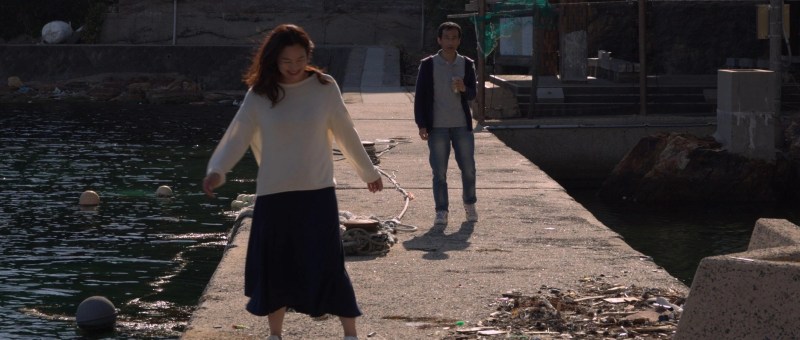

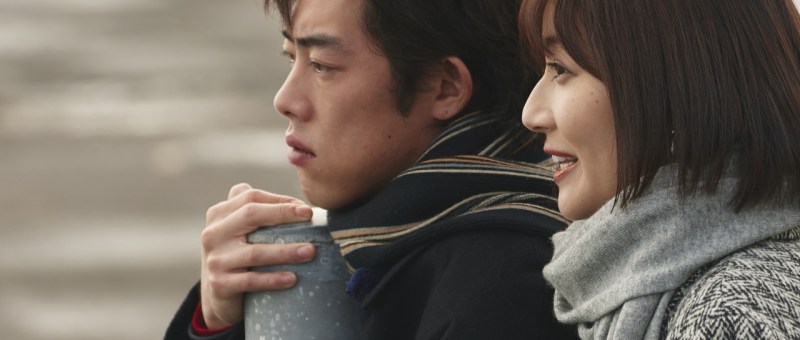
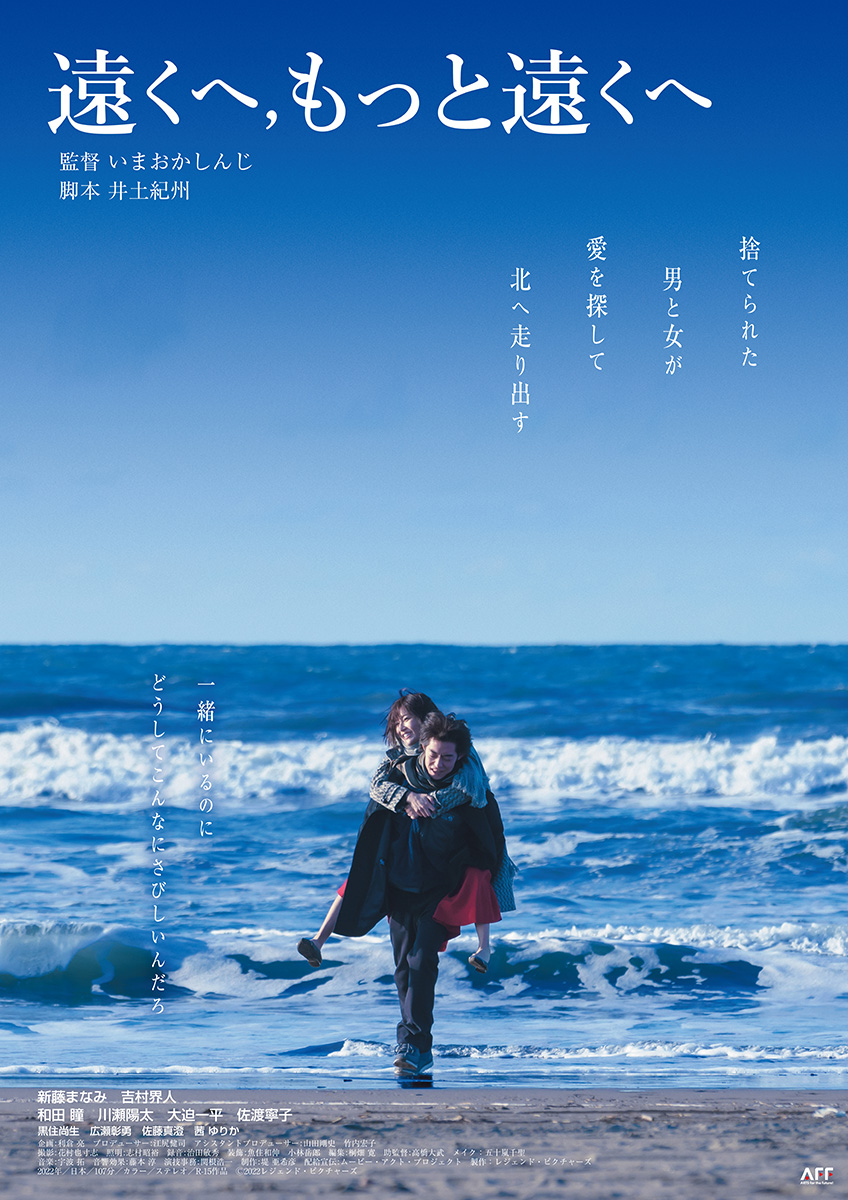


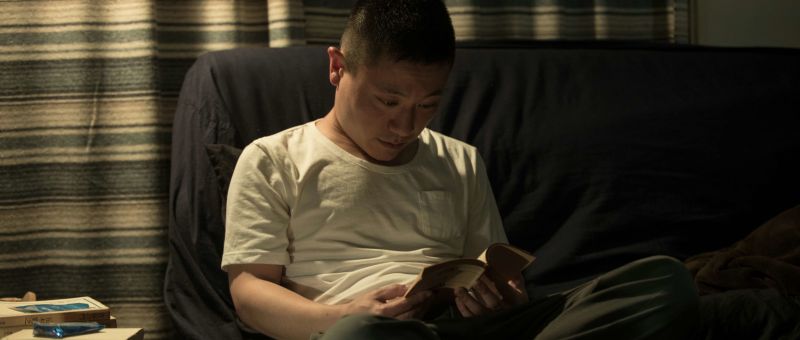
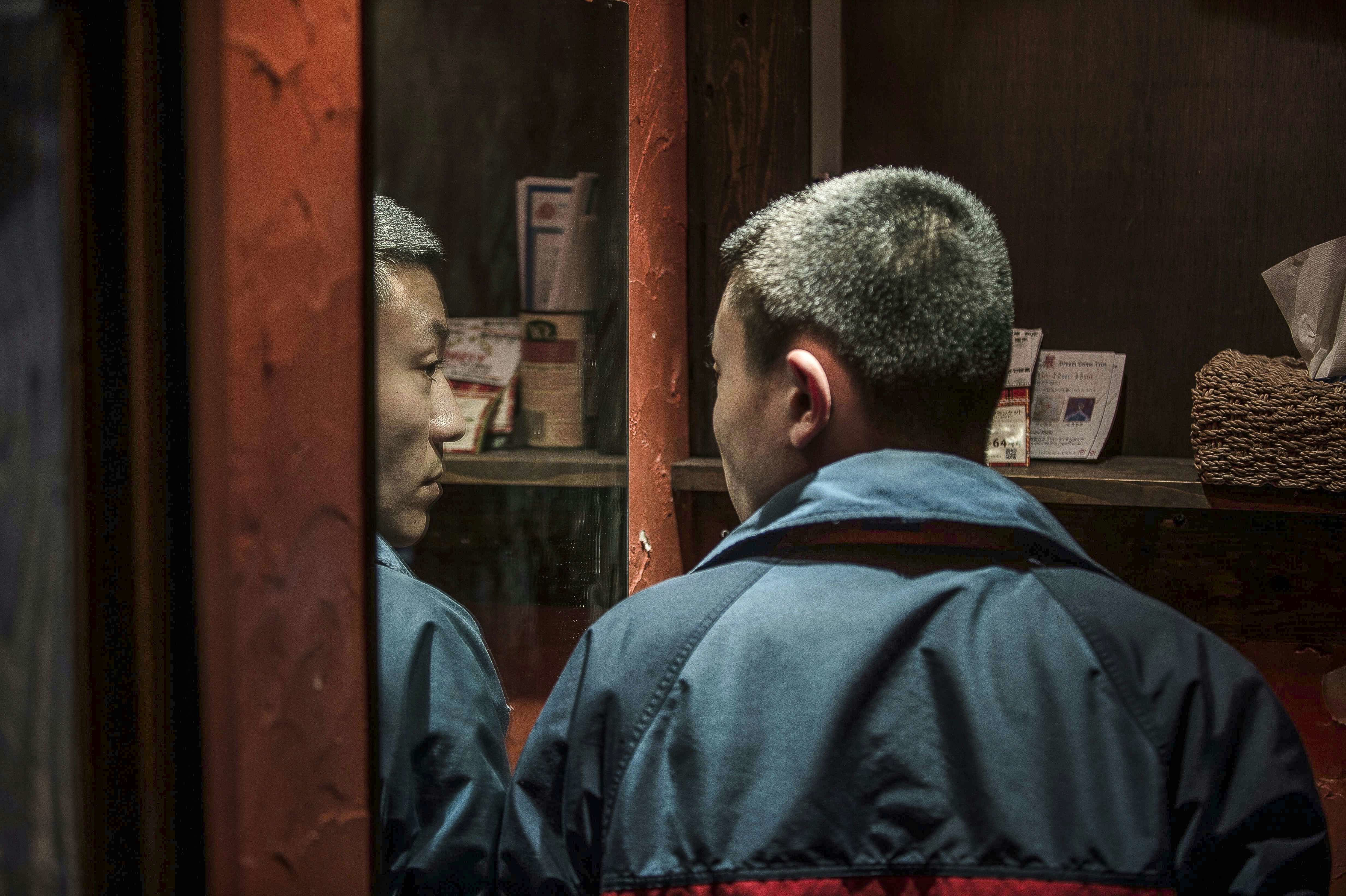
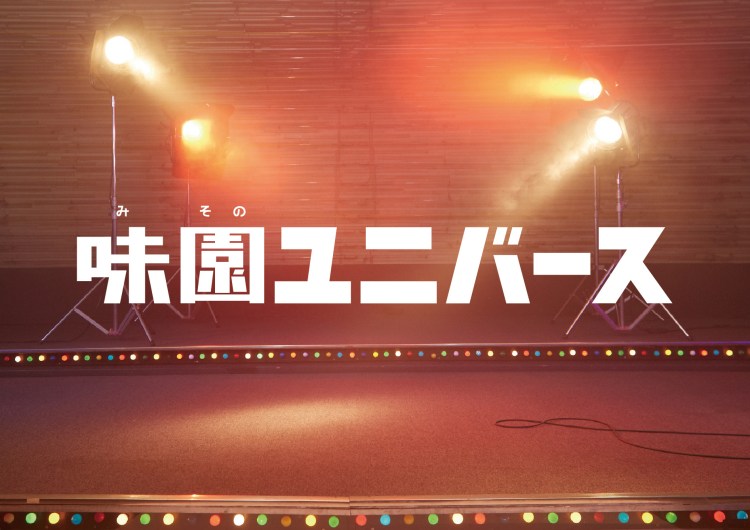 Nobuhiro Yamashita has made something of a career out of championing the underdog and La La La at Rock Bottom (味園ユニバース, Misono Universe) provides yet another foray into the lives of the disposed and degraded. With a lighter touch than some of his previous work, the once again musically inflected film is another testament to the power of redemption and that you can still turn your life around if you only have the courage to take the chance.
 Windows on Worlds