A Girl in My Room (左様なら今晩は, Natsuki Takahashi, 2022)

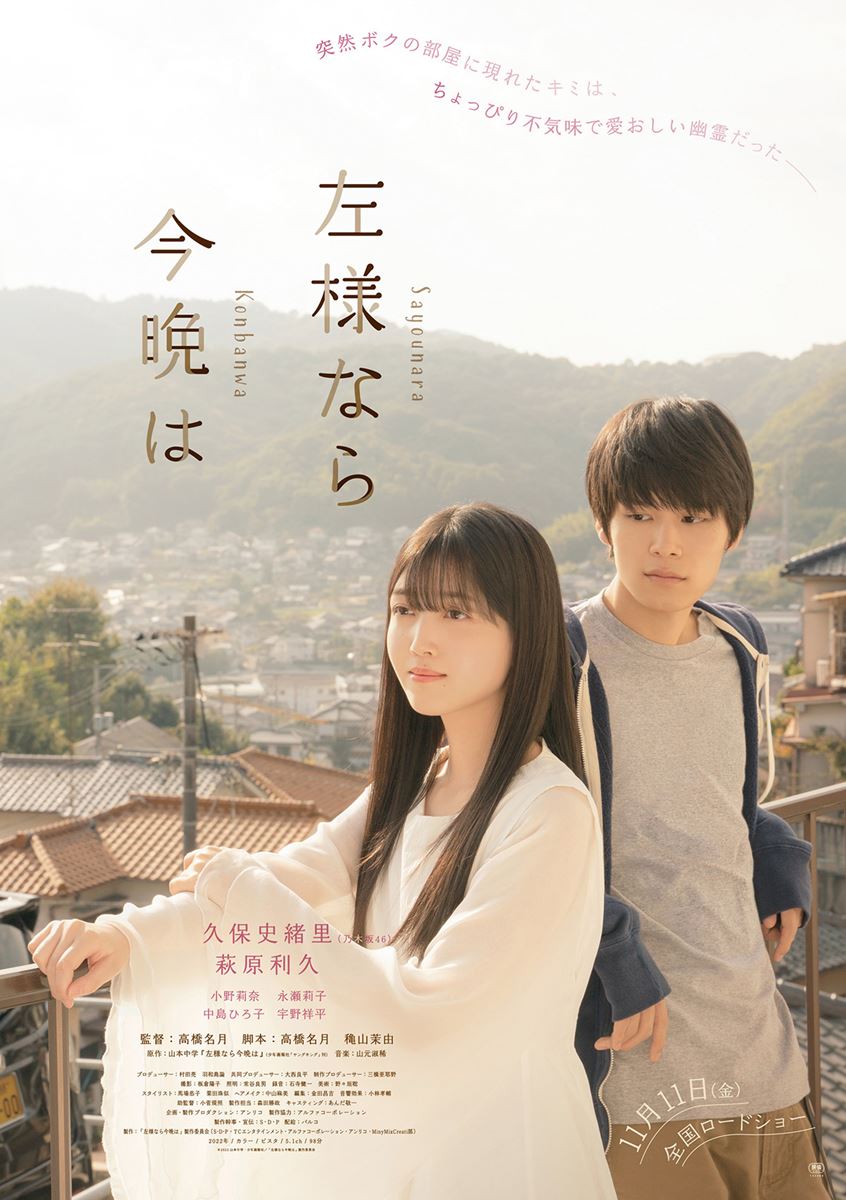
A young man reeling from a breakup is suddenly confronted by the literal ghost of lost love in Natsuki Takahashi’s supernaturally-inflected romantic drama A Girl in My Room (左様なら今晩は, Sayonara Konbanwa). Set in the peaceful town of Onomichi, the film finds its hero wasting away pining while wondering if falling in love with a ghost is all that bad only to later ask himself if any of it was real or just a fantasy of his lovelorn mind. 

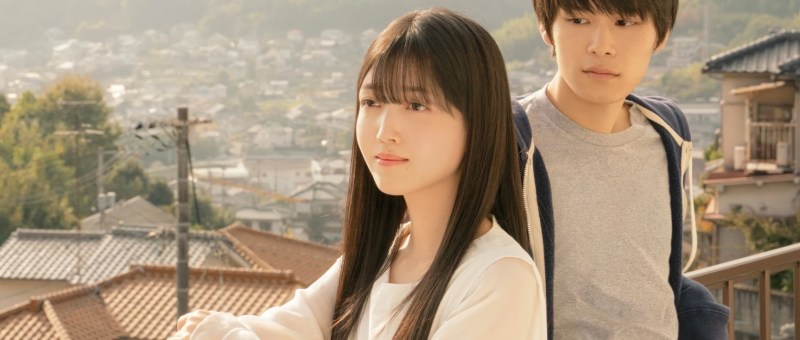
As the film opens, Yohei’s (Riku Hagiwara) girlfriend of two years, Rena (Riko Nagase), moves out of their apartment apparently sick of his superficiality and inconsiderate nature. Soon after, Yohei becomes aware that a ghost has been living in their apartment with them the whole time only should she couldn’t manifest because Rena apparently had unusually strong spiritual energy. Though originally frightened by the new presence, Yohei soon warms to the woman he names “Aisuke” (Shiori Kubo) and becomes determined to find out who she was and how she died only no one will tell him. 

Of course, Aisuke could just be the symbolic ghost of Rena, a spectre of lost love confronting him with his romantic failure, but also seems to have an inner life of her own even if she can’t remember much about who she was when she was alive and how it was she came to die in the apartment. Fleeting memories seem to hint at a life of loneliness marked by romantic longing in which she wanted nothing more than a regular grown-up relationship though sadly it never happened for her. If she has unfinished business, then falling in love may be part of it but then it’s clear that any potential relationship between herself and Yohei is doomed to failure seeing as she is already dead. 

Aisuke chose Yohei because she thought he was a good boyfriend after seeing him with Rena, but even so agrees that though he seems nice on the surface he never really thinks about anything and responds to criticism by smoothing it over with an apology rather than reflecting on his actions or trying to better himself. Work colleague Kanan (Rina Ono), who also has a crush on him, conversely claims that Yohei shows his kindness too easily though also remarking that kindness in itself can also be problematic. In any case, as he bonds with Aisuke, Yohei does seem to engage more with his flaws and reflect on the mistakes he may have made in his relationship with Rena in order to become not just a better boyfriend but a better person. 

In these respects, Aisuke becomes a romantic mirror confronting him with the problematic aspects of his own personality but somehow gaining in corporeality as the relationship progresses as if love were bringing her back to life. But then Kanan also claims that that’s because Aisuke is unwittingly sucking the life out of him which is why he looks tired and gaunt. A picture she took of him on her phone has a dark aura over his face hinting at something malevolent at work that’s taking a toll on his health. But as much as he’s warned, Yohei determines to stay with Aisuke, slowly falling in love with her in the wake of his failed relationship.

Partly a fable about the dangers of remaining trapped by the ghost of lost love rather than resolving to move on, the film is also a poignant love story in which the pair must help each other overcome their mutual unfinished business while becoming aware that their liminal romance cannot continue forever. A side plot involving an estate agent and his endless calls from a confused older gentleman randomly asking him for legal and life advice hints at other kinds of living ghosts and urban loneliness but also at those willing to take care of them as perhaps the estate agent did with Yohei and Aisuke in a bit of supernatural matchmaking helping each of them to begin moving on with their lives on either side of the mortal divide. Charmingly quirky and comforting in its tranquil setting, Takahashi ends on a poignant, bittersweet note but also one of warmth in which the ghost of lost love doesn’t so much haunt as abide, a constant source of comfort in a lonely existence.


Original trailer (English subtitles)

Life of Mariko in Kabukicho (探偵マリコの生涯で一番悲惨な日, Eiji Uchida & Shinzo Katayama, 2022)

It’s all go in Kabukicho in Eiji Uchida and Shinzo Katayama’s zany tale of aliens, serial killers, and secret assassins. The film’s Japanese title (探偵マリコの生涯で一番悲惨な日, Tantei Mariko no Shogai de ichiban Hisanna Hi), the most tragic day in the life of detective Mariko, may hint at the melancholy at the centre of the story in putting the titular investigator front and centre even while her success is fuelled by her position on the periphery but this is also very much the story of an area and community in a shrinking part of the city. 

It’s true enough that Mariko’s (Sairi Ito) karaoke bar seems to have become a local community hub filled with a series of regulars each of whom have stories of their own. Born and raised in Kabukicho, Mariko knows every inch of the area and thanks to the confessional quality of her work has her finger truly on the pulse which is what makes her such a good detective. Her case this time around is though a little more difficult as she’s been hired by the FBI to track down an escaped space alien because all aliens apparently belong to the US. This one’s been liberated by a mad scientist, Amamoto (Shohei Uno), who they say wants to team up with the alien for ill intent.

In what seems to be a nod to cult 1983 horror movie Basket Case, Amamoto carries the alien around in a picnic basket from which it occasionally irradiates people when frightened. Meanwhile, a serial killer is also stalking the area. One of Mariko’s regulars, Ayaka (Shiori Kubo), is keen to catch him though not for justice but the reward because she’s become obsessed with a bar host who’s been spending a lot of time with another customer because she can pay more. Mariko turns her offer down on the grounds that she doesn’t want to enable her romantic folly and otherwise seems rather uninterested in the serial killer case perhaps because no one’s hired her to solve it, but she also refuses a job from another regular who wants to track down his estranged daughter after being forced on a suicide mission by his former yakuza associates possibly because she suspects he won’t like the answer when she finds her. 

Home to the red light district, Kabukicho has a rather seedy reputation but here has a kind of homeliness in which the veneer of sleaze is of course perfectly normal and unremarkable. A yakuza intimidates a love hotel worker while standing directly in front of a rotating electric dildo in an S&M-themed room later visited by one of Mariko’s regulars with her nerdy film director crush who is so sensitive he can barely walk after exiting the cinema so moved is he by the cinematic expression. Most of the regulars are in their own way lovelorn and lonely, perhaps no less Mariko herself who has an attachment to a middle-aged ex-chef (Yutaka Takenouchi) who now runs a moribund dojo teaching ninja skills to anyone willing to learn. Despite the warmth of the community, life in Kabukicho can be hard as the host later echoes looking around his tiny apartment and sighing that he’s tired. It took so much out of him just to get this little and he barely has it in him anymore. 

Mariko too has her sorrow and buried trauma, hiding out in her bar but secretly imprisoned within the borders of Kabukicho as a kind of self-imposed punishment linked to her tragic past. The intersecting stories paint a vivid picture of an absurd world in which the innocuous civil servant next to you might be a secret assassin or you could turn a corner and run into a serial killer, not to mention a mad scientist with an alien in a basket. But for all its craziness it has a kind of integrity in which the strange is also perfectly normal and Mariko becomes a kind of anchor restoring order to an unruly world. As she’s fond of saying thing’s will work out and it’s difficult not to believe her or the defiantly upbeat spirit even among those depressed and downtrodden otherwise unable to escape the confines of a purgatorial Kabukicho.


Life of Mariko in Kabukicho screened as part of this year’s Camera Japan.

Original trailer (English subtitles)

River (リバー、流れないでよ, Junta Yamaguchi, 2023) [Fantasia 2023]

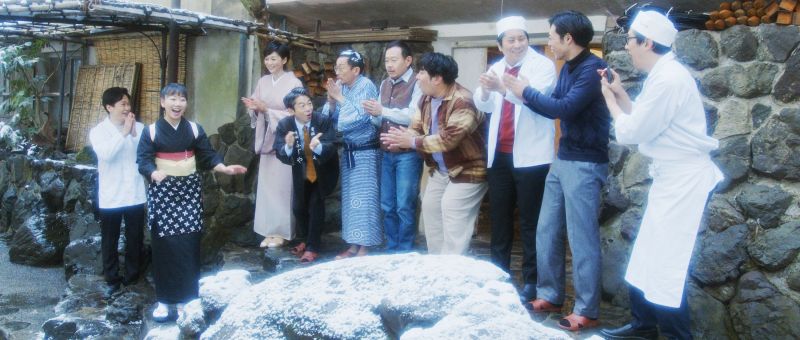
Some might say time stands still in the “peaceful” hot springs town of Kibune, but on this particular day it’s more than usually true in Junta Yamaguchi’s followup to the cult hit Beyond the Infinite Two Minutes, River (リバー、流れないでよ, River, Nagarenai de yo). This time around, the staff of a hotel along with its guests find themselves trapped in an infinite two minute loop in which they retain all their memories but are constantly returned to where they were two minutes previously no matter what they do. 

Depending on the situation, two minutes can be an eternity or an instant (or perhaps it’s always both) and in this case there isn’t much you can do in such a short time. The hotel staff find themselves constantly running up stairs and through corridors trying to coordinate their actions while accepting that nothing is permanent and any changes they try to make to their situation will be wiped out in the next loop. A chef who is also apparently a science enthusiast cautions them against taking any rash actions seeing as they can’t know when time will start flowing normally again, though for some the opportunity to embrace guilty pleasures such as poking a hole in the shoji is too good to pass up. 

As for what’s causing it, no one really knows but as it turns out everyone has a reason they might want to stop time. For maid Mikoto (Riko Fujitani) it’s that she fears her boyfriend plans to move abroad to study French cooking while another pair of guests secretly wanted to ask each other favours but are having trouble plucking up the courage and a blocked writer consumed with guilt for having killed off a key character is glad he can finally take some time out only to be slowly bored out of his mind when faced with an eternity of nothingness. The irony is that people come to places like these precisely because they’re “boring”, free from the chaos and stress of their ordinary lives. Mikoto says as much while wondering if that’s why her boyfriend wants to leave, that he feels as if he’s stagnating in a place where nothing changes and time doesn’t flow and that while he could be “happy” here with her living an ordinary life there’d always be a part of him wanting more.

Still, having this additional time helps each of them find clarity and begin to resolve some of their worries and anxieties. Even if they had “more time” in the more conventional sense, they may never have been able to speak plainly but given the enforced constraints of the time loop in which they quickly run out of other things to do and are more or less forced to talk to each other, they are all able to come to some kind of accommodation with what’s been bothering them. The two male guests are able to clear the air after an argument, the writer comes to a new appreciation of his characters thanks to his own sense of despair being trapped in the loop, and Mikoto realises she’ll have to let her boyfriend go in the hope that he’ll circle back around to her in time. 

The complexities involved are unlike those in Beyond the Infinite Two Minutes given that time constantly resets so the only point of consistency is the initial position of each person though the infinite quality of the looping provokes an additional layer of existential questioning as each of the various protagonists is forced to ask if they’re really moving on with their lives or even notice that time is indeed flowing. The clue that something is continuing to move lies in the differing levels of snowfall in each of the loops hinting at the increasing depths of their despair as they realise that not even death might free them from the maddening cycle of repetition while accepting they’ll have to work together to figure out what’s going on and how to escape the loop. The farcical humour soon gives way to a more poignant sense of reflection but also to a renewed joy and excitement that the future might actually be fun too and maybe it’s less scary to go there than be quite literally stuck in the present for all of eternity.


River screened as part of this year’s Fantasia International Film Festival.

Original trailer (English subtitles)