Army on the Tree (木の上の軍隊, Kazuhiro Taira, 2025)

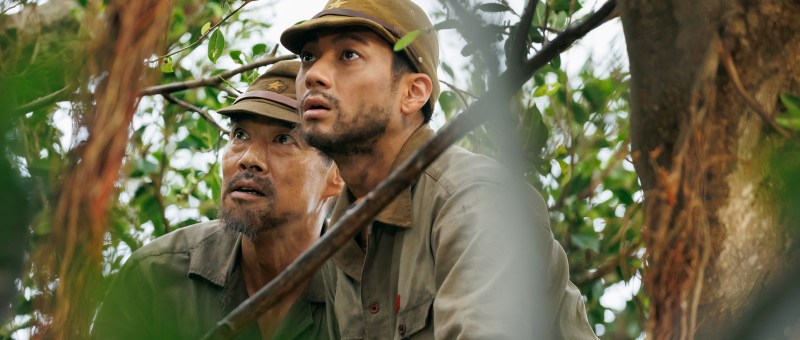
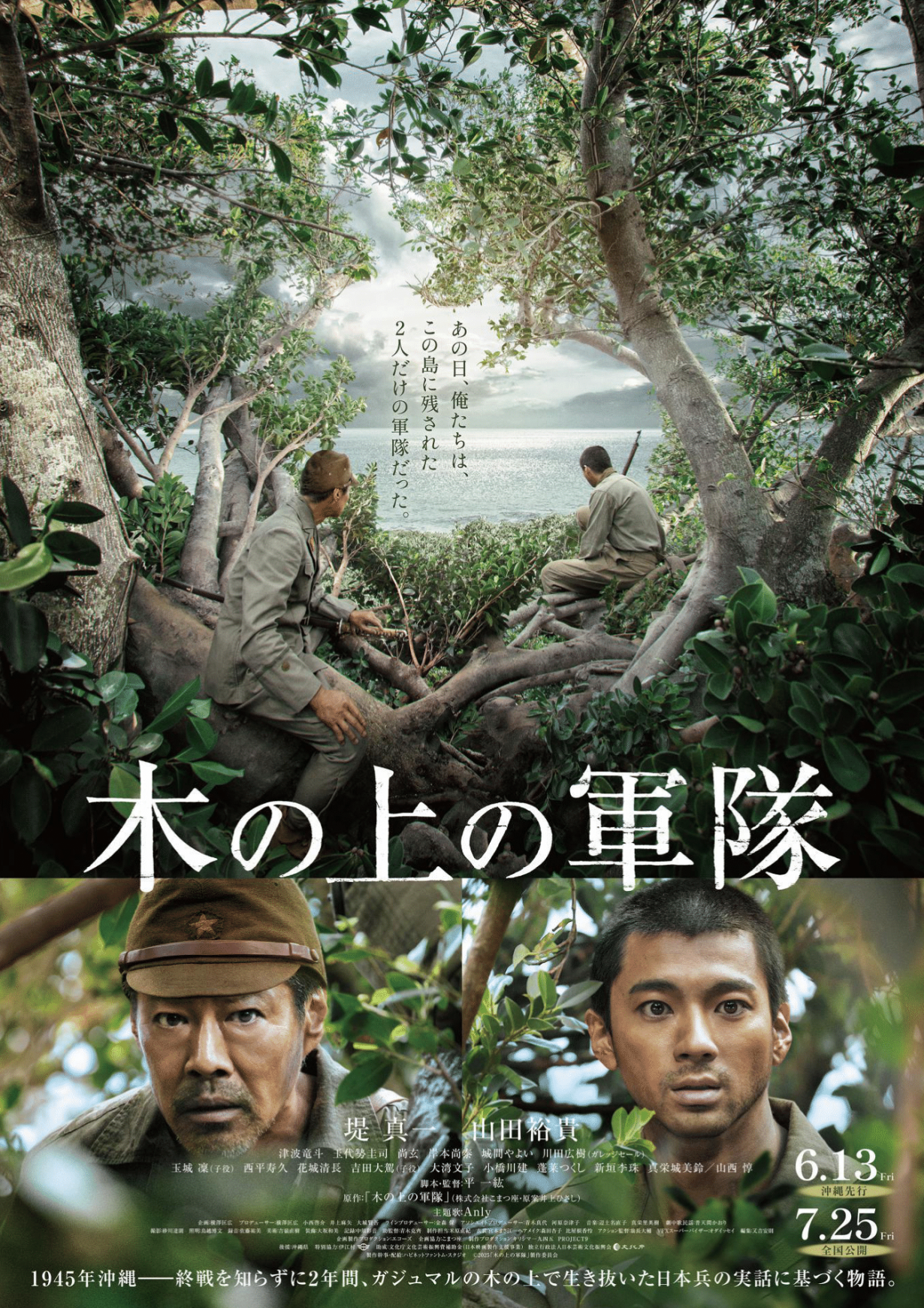
Based on an unfinished play by Hisashi Inoue, Kazuhiro Taira’s Army on the Tree (木の上の軍隊, Ki no Ue no Guntai) confronts the absurdity of war by marooning its heroes in a banyan tree far above the conflict but also increasing unwilling to come down and face an uncertain reality. Instead, they remain in a kind of limbo, trapped somewhere between life and death in continuing to fight their war in their own way while unbeknownst to them, the wider world moves on.

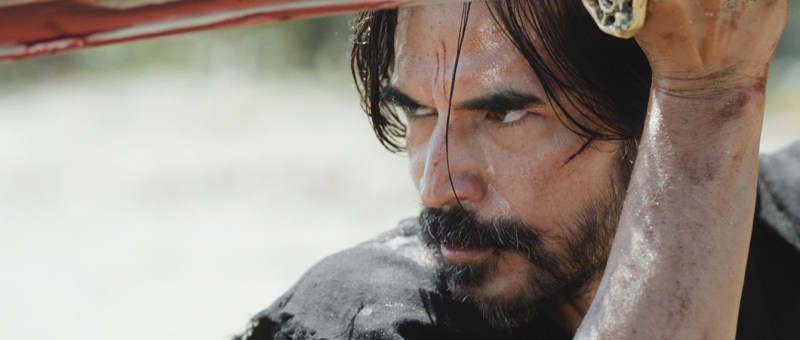
In any case, this “army of two” is comprised of very different men with a complicated and ever-shifting dynamic. Lieutenant Yamashita (Shinichi Tsutsumi) is a loyal militarist from Miyazaki on the mainland, while private Agena (Yuki Yamada) is a local who has never left the Okinawan island where his family were once farmers, until the Japanese army requisitioned their land. The truth is that Japan is a coloniser here, too, and there’s an awkwardness involved in the way they see the islanders as both Japanese and not. While discussing the building of a new air base Yamashita describes as the envy of the Orient, one of the other officers suggests they will simply use “the locals” in suicide attacks as if their lives are completely disposable and not of equal value to those of the mainland soldiers, while simultaneously suggesting they belong entirely to the empire for the commanding officers to use as they see fit. They’ve been training the civilian villagers in local defence using spears to attack straw models labelled “Churchill” and “Eisenhower”, but when one older man jokes about smearing his with excrement so the enemy might have a better chance of dying of infection, Yamashita beats him about the head for what seems like an eternity.

It’s Yamashita who seems to cling fiercely to militarist ideology and his loyalty to the emperor, even if there’s an obvious conflict in the fact that he’s “run away” to hide in this tree with Agena while the rest of his men are dead. This also gives him an additional psychological reason to want to stay up there so that he won’t have to face his guilt and shame in the defeat and having survived it along with having allowed all of his men but one to die. Trapped there together, the two men have no reason to believe that anything has changed and think the battle is still ongoing with American soldiers patrolling the forest. They attempt to survive foraging for food and water, drinking from a trough into which a dead body has fallen while Yamashita at first firmly rejects the idea of eating tinned food left behind by the Americans, describing it as “enemy food” and the eating of it as an act of treachery. Agena is not so foolish and finally gets Yamashita to eat some and avoid starvation by tipping some of it into an old Japanese army ration tin.

But as much as Yamashita is in charge by virtue of military hierarchy, he’s also a stranger here while Agena is intimately familiar with the terrain. He has a much better idea of knowing how to survive in the forest and which plants and insects are okay to eat. The truth is that the army had confiscated all this land to turn it into an “unsinkable aircraft carrier” which the local recruits had to build with their own hands. Once the situation deteriorates, they’re ordered to blow the whole thing up to prevent the Americans taking it over rendering their labour entirely pointless especially as their only goal is to slow the Americans down. They have no real prospect of stopping them or of surviving the assault. Meanwhile, as Agena points out, neither he nor the island will ever be the same again. His mother had lost her mind after their land was taken and his father failed to return from the war, while most of his friends are dead and the places he played as a child have taken on new meanings or perhaps no longer exist. The world before the war is lost to him, and he can’t ever go home again, unlike Yamashita who still has somewhere, and presumably also someone, to go back to.

Yamashita is not altogether appreciative of this fact as much as he comes to see Agena as a stand in for the son from whom he’d become estranged because of his hardline authoritarianism. Nevertheless, the bond that’s arisen between them does begin to reawaken his humanity and dissolve the rigidity of his ideology so that he is gradually able to accept the reality that Japan has lost the war, their battle is over, and it’s time to come down from the tree. Taira largely avoids judgement or falling into the trap of glorifying these men’s actions as soldiers who refused to give in, focussing instead on the absurdity of their position along with the literal and psychological dimensions of their purgatorial existence as they attempt to process how to move forward into an unknown world while still tormented by the old.


Army on the Tree screened as part of this year’s Camera Japan.

Trailer (no subtitles)

Come and Go (COME & GO カム・アンド・ゴー, Lim Kah-Wai, 2020)

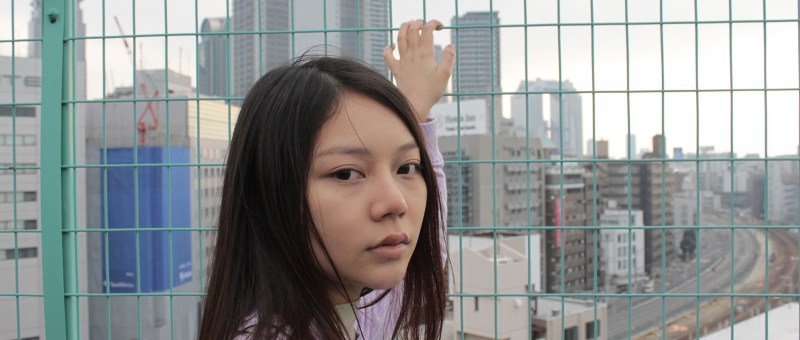
Japanese cinema has not always been willing to contend with contentious social issues such as immigration. More recently, however, indie filmmakers in particular have been keen to critique the nation’s attitudes towards those who’ve come to make their home there. Like Akio Fujimoto’s Along the Sea, Lim Kah Wai’s Come and Go (カム・アンド・ゴー) explores the lives of those who’ve come to Japan, in this case Osaka, in search of a better life but have mostly encountered exploitation and prejudice while marginalised Japanese residents apparently fare little better. 

Lim weaves his disparate tale around the discovery of a skeleton in a rundown part of town which is later found to belong to an elderly woman apparently reported missing six months previously. The comings and goings that we witness are an interconnected series of movements between a quartet of South Korean sex workers apparently trying their luck in Osaka because of an economic downturn at home, a tour group of wealthy Chinese tourists mainly interested in shopping, their guide, a Malaysian businessman in town for a presentation about tourism, a lost Japanese woman failing to make it as a hostess, an Okinawan porn producer literally pulling women off the street and embarrassing them into taking part in his videos, a Taiwanese sex tourist, a Vietnamese man on a “Technical Trainee” scheme but trapped in exploitative factory work, a student from Burma sexually harassed at the second of her part-time jobs, a Nepali refugee dreaming of opening a restaurant of his own, the Japanese teacher he is having an affair with, her husband the policeman, a middle-aged Japanese man embarking on a career as a rent-an-uncle, and a man being exploited while working in a car park who also seems to be mixed up with gangsters.   

Osaka it seems is a busy place. Mr Lee, the man travelling with the Korean sex workers, harps on about the “Osaka dream” as if the city held some special allure but pretty much everyone is struggling, either exploiting or exploited by others. Like the three women of Along the Sea, Nam came to Osaka on the technical trainee programme but is treated badly by his unsympathetic boss who refuses to give him permission to return to Vietnam temporarily to visit his mother who has been taken ill. Nam too attempts to run away, contacting a Vietnamese friend who runs a restaurant for advice where he’s told to convert his technical trainee visa to a student one by enrolling in a language school so he can “come and go” as he pleases. This is the same language school where Yoshiko, the policeman’s wife currently having an affair with Nepali Refugee Musoun, works. We can see that her classes are barely attended, and when she asks her boss about apparently fake names on the roster, she’s told to make her attendance figures look better on paper. It’s clear that not everything is on the level at the school, the headmaster explaining to Nam he needs to pay a hefty fee to enrol but that’s OK because they can help him find a part-time job in return for a hefty part of his salary. Later picked up by the police, Nam runs into another Vietnamese guy who also left his technical trainee programme but now regrets it, claiming he was cheated by false promises and one of his friends even took his own life as a result. 

Working at the same factory but as a part-timer, Burmese student Mimi finds something similar as she’s sexually harassed by the skeevy middle-aged boss at her second part-time job at a supermarket. While the men are forced to deal with labour exploitation and physical violence, the women are also subject to ingrained patriarchal values as evidenced by the preoccupation with sex and pornography among many of the male visitors such as sex tourist Xiao Kang who idly plays with sex toys in a store while lining up for an autograph from an AV actress, or the collection of sleazy Chinese businessmen demanding to be set up with authentic Japanese porn stars. The problem there is that porn producer Ryuji is deep in debt to yakuza loan sharks and has no women on his books, eventually brokering an unconvincing deal with Chinese tour guide Cheung and the South Korean pimp Lee to pass off the Korean sex workers as Japanese porn stars assuming that the Chinese won’t notice the difference because one woman’s as good as another. Meanwhile, conservative Malaysian family man William finds himself extremely uncomfortable when forced to conduct business in a hostess bar which his contact keeps insisting is how business gets done in Japan while unwilling to change his behaviour to accommodate his guest which is in itself ironic as William is there to advise them on boosting tourism from Malaysia through cultural awareness. 

While well-meaning protestors take to the streets to hold an anti-discrimination rally, Kenji fairly points out that they preach acceptance for the international community but ignore mixed-ethnicity citizens like himself, something fully borne out by their rather defensive and somewhat prejudiced conversation when he leaves to use the bathroom. The police conference regarding the skeleton ends with the policeman lamenting that the modern society has become selfish and indifferent to the feelings of others placing wealth and convenience above community which is how an old woman’s body went undiscovered so long and apparently became mixed up in a complicated real estate scam. Even the Japanese rent-an-uncle is forging time-limited, compensated relationships with strangers while his own son ironically tries to convince him to retire to Malaysia so he can get his hands on the house. These people are all connected even if they don’t know it, all victims of the same oppressive system as the city moves all around them increasingly indifferent to their existence.


Trailer (English subtitles)

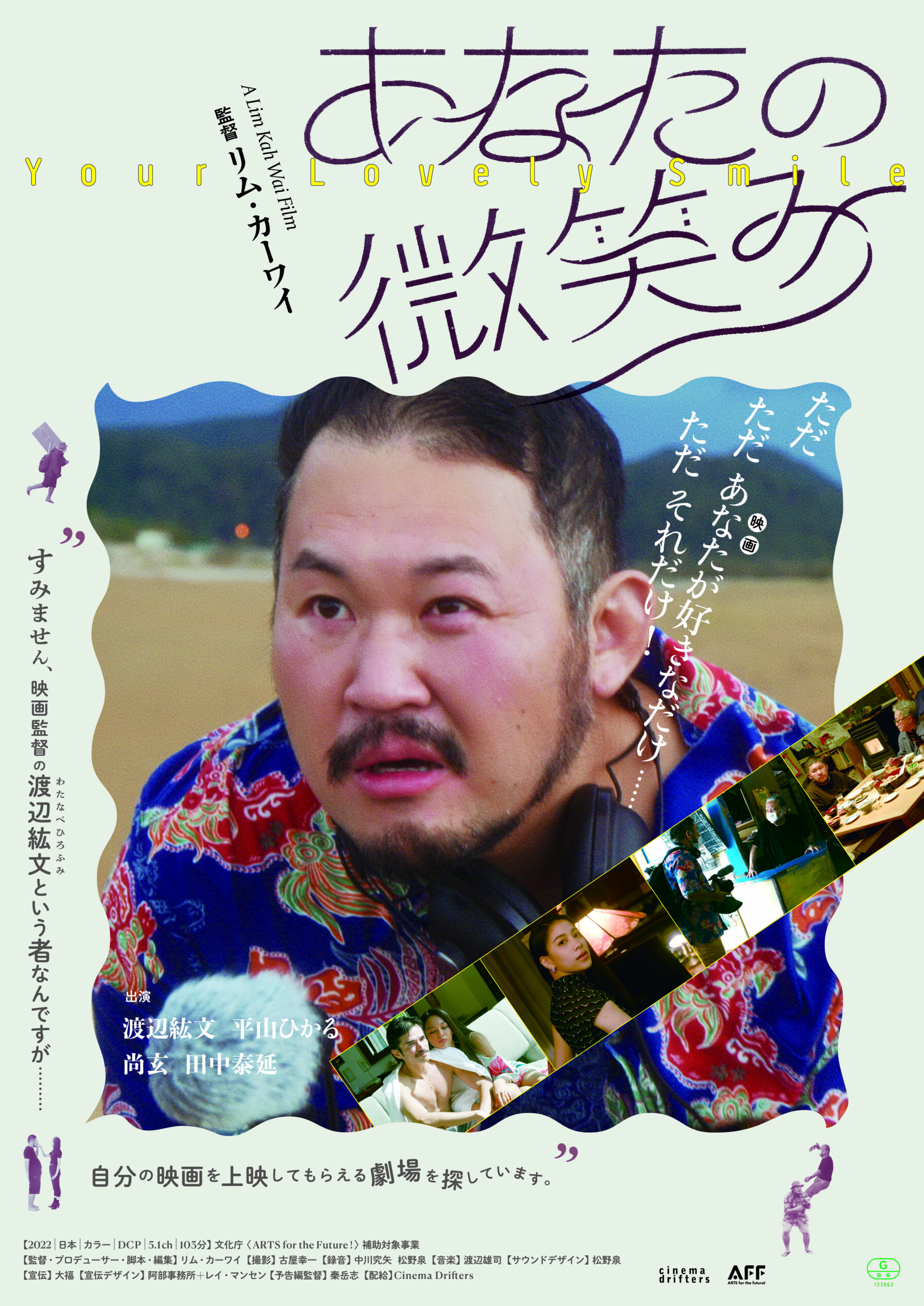
Your Lovely Smile (あなたの微笑み, Lim Kah-Wai, 2022)

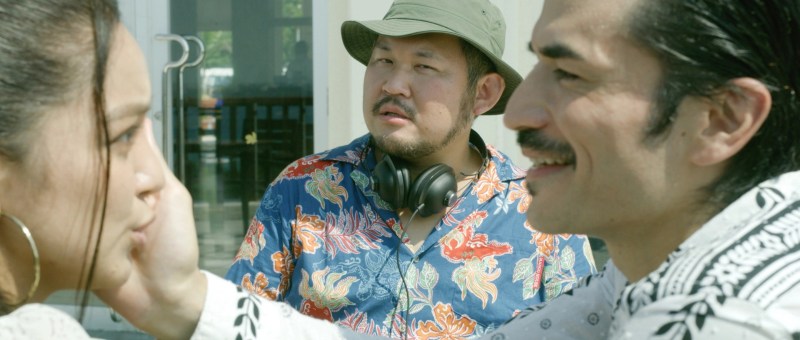
Indie director Hirobumi Watanabe has previously appeared as a version of himself in his own films, playing a self-involved and childish indie filmmaker railing against the world’s failure to recognise his genius in 2018’s Life Finds Away. For Malaysian director Lim Kah-Wai in Your Lovely Smile (あなたの微笑み, Anata no Hohoemi) he takes a rare leading role in someone else’s film doing much the same only with a little less self-laceration as he attempts to reorient himself amid personal and professional anxieties of the pandemic-era industry. 

Once again living out his ordinary days in Tochigi, Hirobumi sighs sadly as he reflects that no matter how many awards he gets his work will never equal that of New Wave masters such as Shohei Imamura and Kaneto Shindo. He’s having trouble completing a script and has no other work coming in. His brother is mainly supporting him through piano lessons, while Hirobumi keeps trying to reassure himself that a big offer from Netflix or Amazon is sure to turn up soon. He may be a “world famous director” but that doesn’t really help him pay the bills and only adds to his sense of anxiety. 

The irony is that in Life Finds A Way Hirobumi had received some harsh feedback from a woman who advised he consider making “good films” like Koreeda rather than the stuff he normally makes, but this time he gets a break, from Toho no less, who hire him for a shoot in Okinawa because Koreeda is too busy filming in Korea. What he experiences there is further humiliation at the hands of a deranged male star (Shogen) who orders him to write script in under a day and has his bodyguards follow him around to make sure he’s applying himself. But of course, the kind of film he wants (not that he really knows) isn’t the sort of film Hirobumi usually makes, or at least gangster romance hasn’t played much of a role in his filmmaking so far. Then again, when the actor asks about winning best actress awards, he might have a point that his films have rather tended to be male-centric save for the cheerfully absurd I’m Really Good which starred his young niece. 

While searching for artistic fulfilment, Hirobumi is often struck by visions of himself walking in the desert where he comes across a woman whom he subsequently encounters in “real life”. The humiliating experience in Okinawa sends him on a more literal journey travelling the length of the Japanese archipelago visiting indie cinemas in the hope that one of them will agree to screen his films. Even within this more friendly, environment, however, he discovers little support. Troubled by the economic conditions of the pandemic era, even microcinemas have to consider the bottom line and are reluctant to play anything other than established classics. Even when one rural cinema invites him for a mini retrospective, it turns out to be run by a man and his daughter who enlist him to hand out fliers and sell tickets in person to the less than enthusiastic locals only a handful of whom eventually show up. The closer he draws to the far the north, the more hopeless he begins to feel about the realities of indie filmmaking in the contemporary society. 

There is a poignant quality in Hirobumi’s obvious loneliness and desire for artistic approval, along with the sense of hopelessness he finds mirrored in some of the cinema owners who struggle to see a future for themselves in an age of streaming and changing taste in entertainment. All of the venues Lim visits in the film are genuine provincial theatres, their owners giving small interviews over the closing credits explaining the difficulties they find themselves in along with their intention to keep going as long as they can. The owner of Bluebird Theater is 92 years old and still running front of house, while the fourth generation owner of the only cinema left in his town wonders if he’ll have to shut up shop if his daughter decides she doesn’t want to inherit the business. The onscreen Hirobumi finds himself reevaluating his relationship with cinema, and even with his beloved Tochigi, as he travels as far as it’s possible to go in the depths of a Hokkaido winter trying to keep something at least alive. Lim’s aesthetic is warmer than Watanabe’s and less deadpan if equally melancholy, but evidently in tune with his sensibility as the two filmmakers come together in shared frustration with the indie life.


Your Lovely Smile screened as part of this year’s Red Lotus Asian Film Festival.

Original trailer (English subtitles)

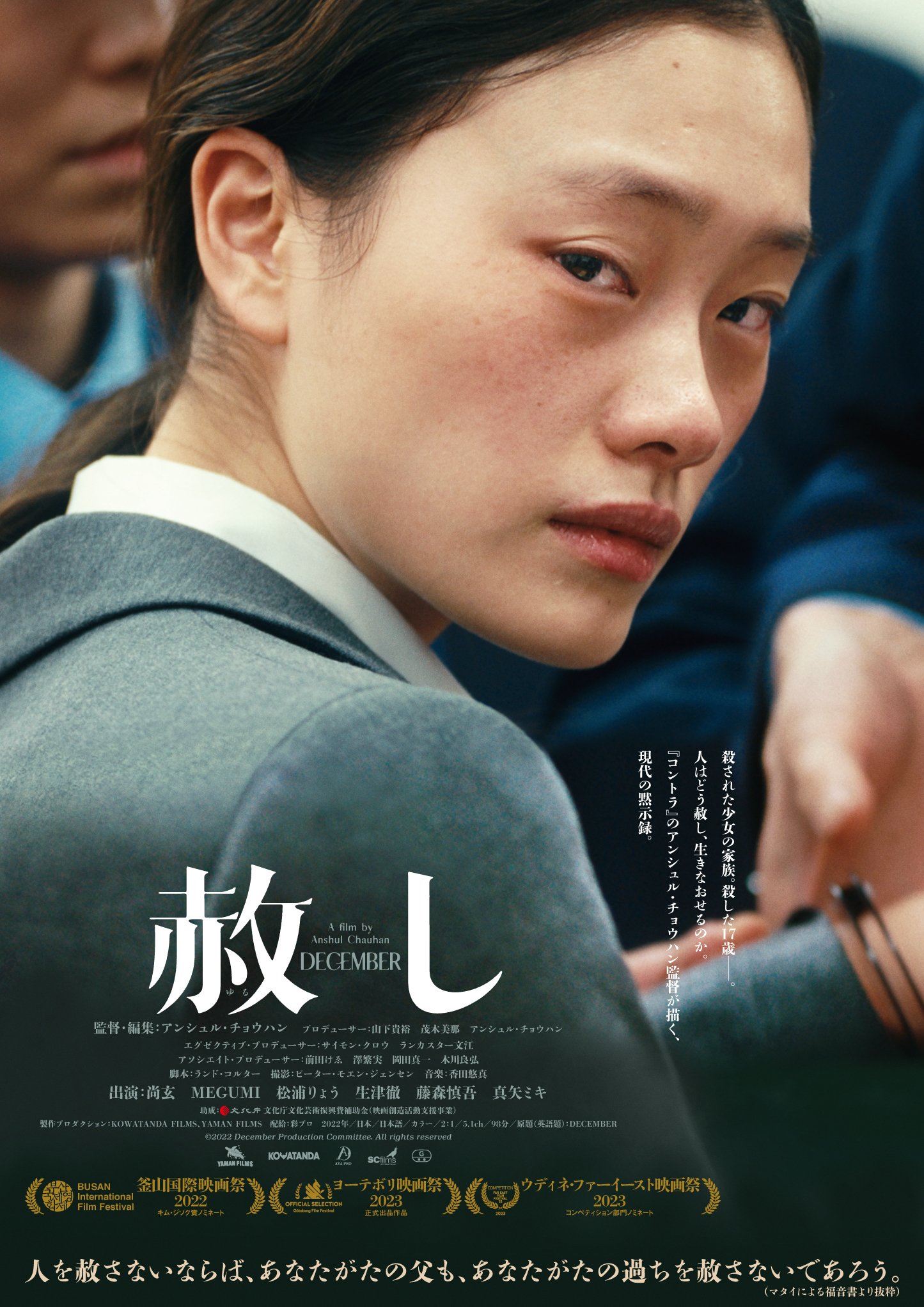
December (赦し, Anshul Chauhan, 2022)

Where is the line between justice and vengeance? The grieving father at the centre of Anshul Chauhan’s December (赦し, Yurushi) is determined that the teenage girl who stabbed his daughter to death should never leave prison, but what he wants is a kind of equivalent exchange in that the person who stole his future along with his child’s should have no right to one herself. A more mainstream effort than either of his previous films Bad Poetry Tokyo and Kontora each of which dealt with similarly thorny themes, Chauhan’s unusually tense courtroom drama is the latest to put the legal system on trial while asking difficult questions about grief, guilt, and what exactly it is we mean when we talk about “justice”.

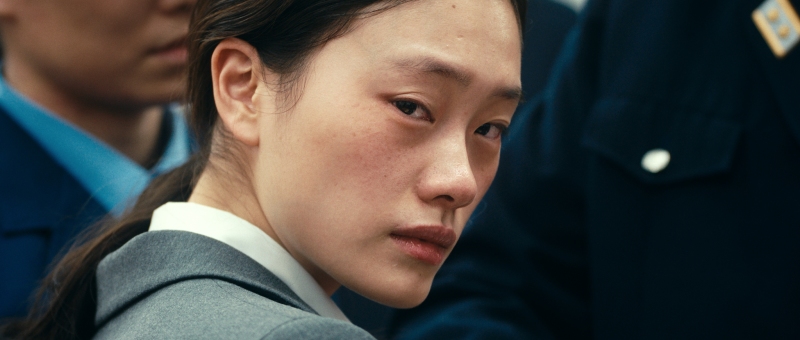
Seven years previously, 17-year-old Kana (Ryo Matsuura) stabbed her classmate Emi (Kanon Narumi) multiple times in a frenzied attack that resulted in her death. She was sentenced to 20 years in prison and has never attempted to deny her crime. It isn’t she who has asked for her sentence to be reviewed but an independent lawyer, Sato (Toru Kizu), who claims he’s doing it for “justice” though as Kana points out might have half an eye on compensation money she’d be able to claim for wrongful imprisonment if the case were successful. Sato seems to think it will be on the grounds that Kana was unfairly tried as an adult, mitigating circumstances were never brought to the defence’s attention, and the judge’s sentencing was swayed by personal feeling placing it outside of conventional guidelines that should be applied in cases like these.

For Emi’s parents, Katsu (Shogen) and Sumiko (Megumi), the appeal is a slap in the face. The couple have separated and while Sumiko has attempted to move on with her life, marrying a man she met in a support group for bereaved parents, Katsu has become a bitter alcoholic living a purgatorial existence of almost total inertia. Outraged, he is determined to make sure that Kana never leaves prison and is only sorry that she could not receive the death sentence because of her age, while Sumiko would rather not be involved at all, uncertain that she would be able to endure the emotionally draining process of another court case. They settle on presenting a united front, but discover that to do so is also to put themselves on trial while being confronted by a past neither has ever really faced.

The strain on Sumiko is evident as she walks along along a bridge at night and peers over the edge as if about to jump. She later learns that Kana had a mother too who did in fact take her own life after selling everything she owned to pay the compensation money that is used against them in court to imply that they’ve already been served “justice” in the form of monetary recompense from the defendant’s family which ought to declare the matter closed. Unlike Katsu, Sumiko had said her goal wasn’t vengeance but only to make sure that no other mother suffers as she has done, yet another mother already has for she lost a daughter too. Kana meanwhile has no one left to turn to even if she were released, she will have to make a new life for herself alone. Kana is herself victimised by an unforgiving society, the subtext suggesting that she was bullied for being the daughter of a single mother who was unable to fully care for her or provide the kind of material comfort children like Emi receive. The “happy family home” Katsu accuses her of destroying is also a symbol of everything Kana was denied but she did not kill out of jealousy or resentment only, ironically, to escape a kind of imprisonment and free herself of an oppressive bully.

Katsu says he’d kill her himself if he had the chance, but as Sumiko points out then he’d just end up in prison for the rest of his life with only his “righteousness” to comfort him. How could he claim to be any better? As Sato says, emotion has no place in a court of law. That’s why the law the exists and we mediate “justice” through a dispassionate third party to ensure the sentence is fair and not merely “vengeance”. Katsu certainly sees himself as a righteous man. In a repeated motif, Chauhan shows him taking the long way round by walking on the pathways of the grid-like forecourt leading to the courthouse while others hurriedly take the direct route crossing the squares at a diagonal angle. For him the answer is only ever black and white and he is very certain of his truths, but also blinded by his pain and unable to see that his desire for vengeance is more for himself than it is for Emi.

Only by accepting a painful truth can he begin to move past his grief, despite himself moved by Kana’s quiet dignity in which she admits her responsibility and suggests that she will never really be “free” even if she is released. What she offers, in her way, is peace allowing the bereaved parents to bring an end to their ordeal or least enter a new phase in their grief which allows them to move forward in memory rather than remaining trapped within the unresolved past. Perhaps in the end that’s what we mean by “justice”, a just peace with no more recrimination only sorrow and regret with renewed possibility for the future.


December screened as part of this year’s Osaka Asian Film Festival.

Original trailer (no subtitles)

Intimate Stranger (親密な他人, Mayu Nakamura, 2022)

“This society pampers men too much, no matter their age” according to a middle-aged woman searching for her missing son, yet in many ways it’s the primacy of the mother and maternal neglect that drive Mayu Nakamura’s eerie psychological chiller, Intimate Stranger (親密な他人, Shinmitsuna Tanin). Perhaps in some ways, that’s what a mother and a son should become, of course close and loving yet each with their own lives unknown to one another but for Mrs Ishikawa those boundaries have perhaps become corrupt in her overwhelming need to embody the maternal ideal. 

Mrs Ishikawa (Asuka Kurosawa) lives alone and is searching for her grown-up son, Shinpei, who went missing a year ago. She has a job in shop selling baby clothes and accessories but is described by other staff members as a bit strange though they continue to invite her to afterwork gatherings knowing she won’t come. One day she gets a call from a young man, Yuji (Fuju Kamio), who says he has information about Shinpei but in reality is part of a gang running “ore ore” scams who are also looking for him because he previously worked with them. Yuji’s purpose in approaching Mrs Ishikawa is to get info out of her, but she’s a little bit ahead of him and manages to plant the seeds of a dark seduction. 

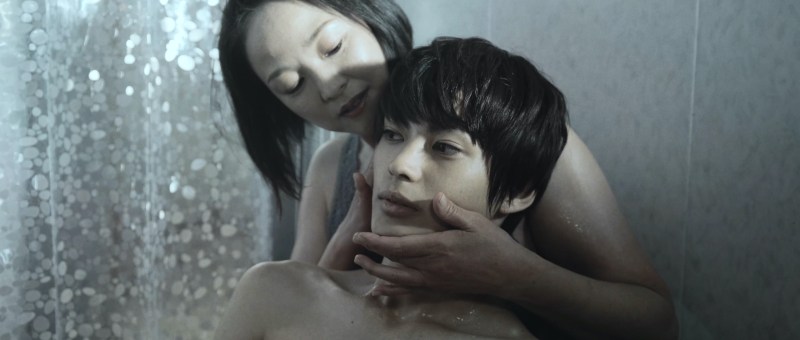
Seduced is what Yuji eventually is in a discomforting mix of the erotic and the maternal. Casting shades of Vertigo, Mrs Ishikawa persuades him to move into her apartment, sleep in Shinpei’s room, and wear his clothes keeping him a virtual prisoner while forcing him into the role of her surrogate son. As we later discover, Yuji was a teenage runaway seemingly abandoned by his mother and craves maternal affection but is ashamed of admitting and fearful of accepting it all of which would make him ideal prey for a woman like Mrs Ishikawa who at all rates seems to need a son to feel herself complete. 

At the shop where she works, Mrs Ishikawa transgressively sniffs and fondles clothes for newborn infants while at one point driven to distraction by a crying child temporarily separated from its mother to the point that she inappropriately picks it up. She appears to be totally consumed by the maternal image and to that extent or else because of some previous trauma becomes extremely hostile when confronted with her sexuality. Her horror on being picked up by a gigalo when expecting to meet a man with info about Shinpei might be understandable, but the glee on her face after slashing a man with a straight razor when he attempted to attack her is less so while Yuji’s eventual confusion about the nature of their connection highlights the discomforting intersection of the maternal and the erotic. 

We have to wonder if Shinpei simply decided to escape the grasp of an overbearing mother who could not bear to accept that her son was now a man, or if Yuji’s suspicions that he may have met a darker fate are more than mere reflections of his own fear of maternal connection. Yet like story of the bluebird of happiness that Shinpei was apparently fond of telling, perhaps each of them for a time found what they needed in the other only to lose it again on identifying the darkness that underlines their relationship. 

Listening to a report on the news, Mrs Ishikawa explains that “ore ore” scams only happen in Japan because nowhere else would a parent drop everything and run cash in hand when told a grownup son is in financial trouble which might in a sense be unfair save for the urgency, similar scams circulate via text and messaging apps in many countries. Yet the scam hints at this same level of disconnection, that the often elderly targets cannot tell that it is not their son or grandson’s voice on the phone nor realise that the information they’re being given does not make sense so estranged have families become. The coronavirus pandemic meanwhile only makes the scammers’ job easier given the loneliness of enforced isolation coupled with generalised masking which decreases the level of intimacy on both sides dehumanising the target while allowing the scammer to further conceal their identity. 

Mrs Ishikawa is in a sense wearing a permanent mask, consumed by the maternal ideal and unable to conceive of herself as anything outside of a mother. There is something unsettling and vampiric in her need as she at one point sucks blood from her finger and wields her razor with dangerous affection when offering Yuji the closest shave he’ll ever have but also a deep sadness that like the bluebird of happiness that which she most wants is always going to fly away from her one way or another. The uncanniness of the desaturated colour palate adds a further note of dread to the noirish tale of a young man seduced by Oedipal desire and drawn as much towards death as love.


Intimate Stranger screened as part of this year’s New York Asian Film Festival.

Original trailer (no subtitles)

Images: © Siglo/Omphalos Pictures

Spaghetti Code Love (スパゲティコード・ラブ, Takeshi Maruyama, 2021)

“Tokyo is where everyone comes to make their dreams come true, right?” a naive young woman exclaims having just abandoned her life in the country to chase freedom and independence in the capital. “You’re wrong” her reluctant, infinitely jaded host tries to correct her, “Tokyo is where everyone gets killed by their dreams”.  Tokyo is indeed the place dreams come to die in the debut feature from music video director Takeshi Maruyama, Spaghetti Code Love (スパゲティコード・ラブ). As one dejected Tokyoite puts it in her slightly pretentious opening monologue, what they’re chasing isn’t love, or money, or success but “approval” wanting desperately to find acceptance but more often than not encountering only defeat and despair. 

At least, that’s according to intense artist Kurosu (Rikako Yagi) who has become moderately successful but remains somewhat insecure knowing that her success is partially built on that of her famous parents. She insists that there are two kinds of people in the world, those who meekly put up with a disappointing reality and those who defiantly “create their own world”. She of course claims to be the latter, a highly individualist artist who takes no shit from anyone but that doesn’t excuse her tendency to behave like a total diva in an effort to assert he superiority over others, humiliating aspiring photographer Tsubasa (Nino Furuhata) by likening his set up to an ad placed by a rural supermarket. 

Tsubasa meanwhile is himself conflicted having come to Tokyo to further his career as a photographer but desperate for work and afraid of selling out. He came because he thought it was better to regret the things you’ve done rather than those you haven’t and that he’d always wonder if he stayed at home, but now he’s wondering if it’s better not to try, that the possibility of what might have been is easier to bear than knowing you tried and didn’t work out. Painting a slightly rosier version of his Tokyo life on social media he offers a Twitter friend the opportunity to visit him in the capital out of politeness only for her turn up, insist on staying with him in his tiny apartment, and make him feel even worse with her childish idealism which has a kind of poignancy in its unrealistic hopefulness.  

Like Tsubasa, aspiring singer-songwriter Cocoro (Toko Miura) is beginning to wonder if her dreams are worth pursuing as she meditates on the success of prettier rivals in both her work and romantic lives, spotting ex Shingo (Hiroya Shimizu) with his new squeeze and irritated when he smirks at her from across the courtyard. A cold and aloof young man fond of giving overly scientific explanations for philosophical questions, Shingo has decided that unhappiness is the result of broken attachment and so he’s decided to have no attachments at all even going so far as to have no fixed address living by apartment hopping every 10 days. As he discovers to his cost, living life with no connections may be fine on the day to day but you’ll be in a fix if you wind up in trouble and have no one to ask for help. His new girlfriend Natsu (Saya Kagawa), by contrast, has the opposite problem working as a sex worker in part as a means of protecting herself from romantic heartbreak by avoiding emotional intimacy. While Cocoro wonders what her life would be if she were as pretty as Natsu, Natsu meditates on the pretty girl paradox admitting that some things come easy but others slip through her fingers. She claims to love lonely people because lonely people don’t up and leave without warning. 

But loneliness manifests in many forms such as that exhibited by Shizuku (Kaho Tsuchimura), a part-time waitress with extreme low self-esteem who’s staked her existence being on the perfect partner for her boyfriend while terrified he’ll leave her an anxiety later borne out by the fact he’s married to someone else and apparently only using her as a “fun” break from his presumably less patriarchal domestic life. And then there’s Uber Eats driver Amane (Kura Yuki) and his unwise attachment to a low level idol star who’s since retired. Obsessing over her rather banal favourite aphorism about whether a falling tree in the forest makes a sound if no one’s around to hear it he vows to forget her once he’s made 1000 deliveries but realises that a romantic attachment is hard to break even if it’s entirely one sided. 

On the flip side, broken hearts eventually bring two next-door neighbours together as they mutually abandon their unhealthy coping mechanisms of online psychics and compulsive peanut butter eating while bonding in a shared sense of romantic disappointment realising the terrible men who dumped them aren’t worth all this aggro. A pair of emo high school students suddenly realise growing old isn’t so bad after all, and a kid struggling with his life plan survey suddenly realises that “no plan” is also a plan before careering off on a borrowed skateboard. Tokyo can be cruel and unforgiving, but so can everywhere else. Shot with true visual flair, Maruyama’s ethereal, floating camera follows this interconnected yet isolated band of young people all over the city as they search for love, chase their dreams, and yearn for connection allowing them each at least if not fulfilment then possibility as they learn to accentuate the positive in a sometimes hostile environment.


Spaghetti Code Love streamed as part of this year’s Japan Cuts.

Sexual Drive (性的衝動, Kota Yoshida, 2021) [Fantasia 2021]

A weird chestnut-bearing spirit of sexual awakening visits three troubled couples in Kota Yoshida’s odyssey of food-themed eroticism, Sexual Drive (性的衝動, Seitekishodo). As the title perhaps implies, Yoshida’s loose thesis seems to be that each of the spouses he counsels is living a dull and unfulfilling life because they’re repressing their authentic selves either unrecognising or rejecting the true nature of their sexual desires. Yet who or what is Kurita (Tateto Serizawa) and what is he really up to? Aside from all that, is he even “real”?

When we first meet Kurita, he’s bearing a box of Chinese chestnuts (“chestnut” being the first character of his name but also a slang term for clitoris) and walking with a pronounced limp. This lends credence to his story of having suffered a stroke three years previously though as we will later discover the cause is likely very different if at least suggesting a healthy corporality. The visit is all the more unusual as it seems he doesn’t know the man he’s come to see, Enatsu (Ryo Ikeda). Just as we’re wondering if this is some kind of hookup while his wife (Manami Hashimoto) works an extra shift at the hospital, we realise that the reverse may be true as Kurita claims to have been having a three-year affair with Enatsu’s spouse having fixated on her after she fitted a catheter for him following an operation. This is a discussion between men, but Kurita soon becomes excitable making lewd gestures with a mostly empty natto carton apparently likening its distinctive taste and odour to the nether regions of Enatsu’s wife. Goading him that their marriage has been sexless for the last five years, what Kurita seems to do is ironically restore Enatsu’s sexual potency through his vicarious enjoyment of his wife’s taste for this famously love it or hate dish of fermented soy beans. 

Kurita’s second victim, meanwhile, has apparently committed the crime of making inauthentic mapo tofu, its heat turned down to suit the Japanese palate. This time Kurita claims to have been an elementary school classmate of the nervous Akane (Honami Sato) who has frequent panic attacks and has finally got up the courage to go for her first solo drive. He insists that Akane is a sadist who brokered his own masochistic awakening through her merciless bullying and that the reason she’s so on edge is because she’s living a neutered life with only inauthentic mapo tofu when she should really be making her own loaded with enough spice to burn the roof of her husband’s mouth clean off. 

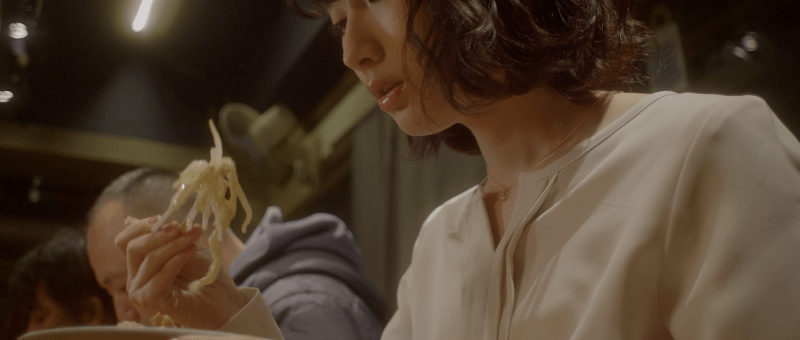
His third case, however, sees him steal a device from Snake of June in communicating with an adulterous husband, Ikeyama (Shogen), claiming that he’s kidnapped his mistress, Momoka (Rina Takeda), and will soon expose his extra-marital affair if he refuses to follow the instructions he gives him. These are mostly surprisingly wholesome and a little bit sad as what Kurita is hoping to teach Ikeyama is what a cad he’s being and how his insensitive treatment of Momoka must make her feel. Accordingly, he sends him to a greasy ramen bar mostly frequented by middle-aged men where talking is very much not allowed in order for him to consume a satisfyingly fatty dish the transgressive energy of which both inflamed Momoka’s desire and forced her into a contemplation of her role as the mistress of a married man. Ikeyama’s awakening is less to sex than to love in being forced to accept Momoka’s personhood in empathising with the loneliness his indifference causes her to feel. 

Yet, if it weren’t for the chestnuts, we might wonder if Kurita were real or merely a manifestation of each of his victims’ subconscious fears and desires. Even as it stands, we can’t be sure that anything he says is actually true, nor do we know what motive he has for guiding these frustrated souls towards their sexual release like some strange sex fairy sent from on high. Nevertheless, in satisfying appetites of all kinds he paints the fulfilment of authentic sexuality as a basic human need even as food becomes a kind of displacement activity standing in for the satisfaction of human desire. Strangely absurd in Kurita’s rather creepy demeanour coupled with his victims’ crumbling wholesomeness, Sexual Drive even if ironically presents a refreshingly positive message of embracing kink while remaining mindful of its effects on others. 


Sexual Drive streams in Canada Aug. 5 – 25 as part of this year’s Fantasia International Film Festival.

Original trailer (English subtitles)
Fancy (ファンシー, Masaoki Hirota, 2020)

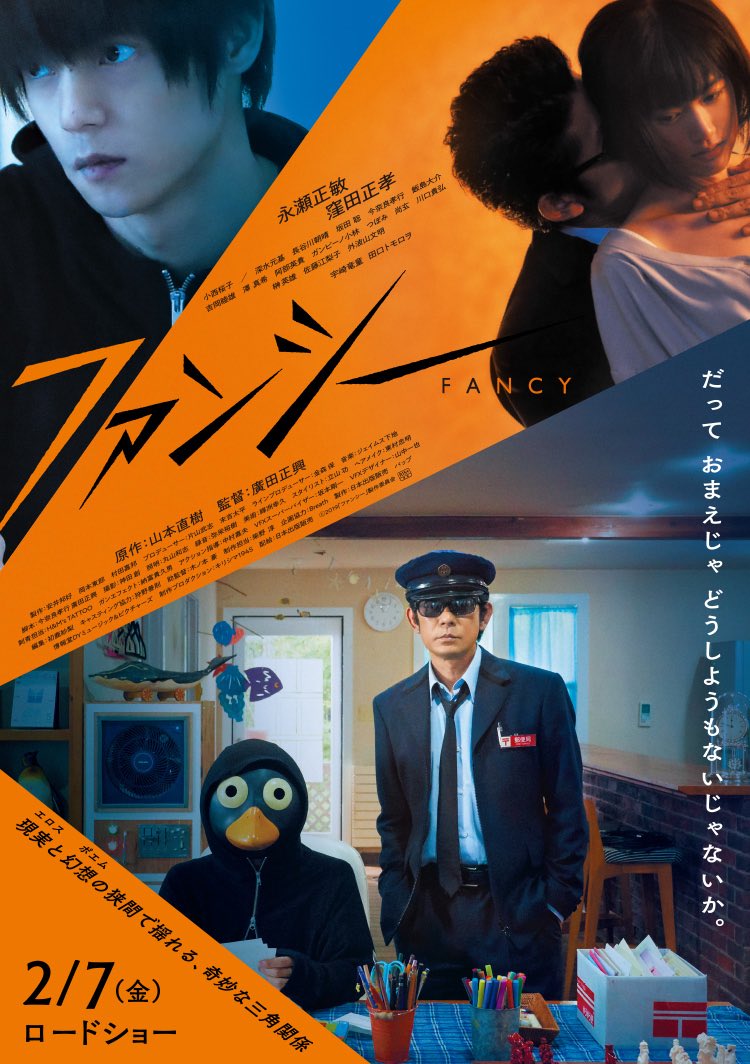
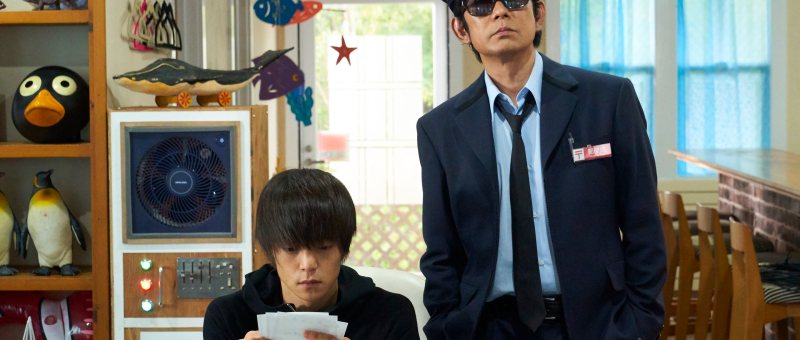
“Every minute of life is yours to make use of” according to the ultra cool hero of Masaoki Hirota’s Fancy (ファンシー), a laconic postman with a penchant for sunshades and a resigned attitude to transience. Adapted from the manga short story by Naoki Yamamoto, Fancy is indeed a transitory tale, a minor episode in the life of a poet who thinks he’s a penguin, his best friend the postman, and his penpal seeking her own kind of escape in an impromptu and probably unwise proposal of marriage. 

The postman, Takasu (Masatoshi Nagase), is also a tattooist, a former yakuza now reformed and living quietly in an old-fashioned hot springs town which seems to be stuck in the Showa era. As Takasu’s colleague Tanaka (Tomorowo Taguchi) puts it, it’s pretty “standard” now for everyone to have two jobs, his side hustle being a shooting gallery which is a front for the sex trade. Even the local Buddhist priest is intent on trying to sell everyone he meets a funerary monument, while Southern Cross Penguin (Masataka Kubota) is a best-selling poet particularly popular with high school girls in addition to being a flightless aquatic bird in human form. Penguin doesn’t expect us to believe him, but tells us that a penguin is just what he is and there’s no particular reason for it. So completely does he take his penguinhood that he opens the door in a full penguin mask, dresses only in black and white, mainly eats raw fish, and keeps his home ice cold with the aid of several industrial-size air conditioners. Penguin prides himself on answering the many fan letters he gets, explaining that they’re not so much “fans” as “comrades” who are also looking for the “shining country”. In any case, his fan mail is how he met the postman, his only friend, who is content to shiver in his home putting whisky in his tea to stave off the cold. 

Penguin’s life begins to change, however, when he gets a letter from “Moon Night Star” (Sakurako Konishi), a fan with whom he’d been corresponding. Moon Night Star pretty much insists on becoming his “wife”, failing to take Penguin’s hints that she might not be very happy “married” to an aquatic animal who can’t go outside. As we will later discover, Moon Night Star is in her own way rebelling against her fate, taking refuge in Penguin’s igloo and engaging in a delusion that she loves him in order to make it work. For his part, Penguin perhaps comes to like her too, but he can also see that she’s quite “depressed” stuck in the cold with him, pushing her towards the outside and into the arms of the postman. 

Takasu, meanwhile, finds himself on a series of borders as he begins to confront his past in the form of his absent father and the family he seems to have lost, sympathetically telling his pained former wife that her life is hers to do with as she wishes, perhaps in a sense cuttingly refusing her apology but also accepting her right to seize the present. Another man with two jobs, Takasu’s childhood friend is both yakuza gang boss and hotelier, confiding that the gangster stuff is too stressful and he wishes he could just focus on the hotel in the same way the Takasu has now become a postman. It’s his strange relationship with a yakuza drifter, however, that threatens to drag him back into gangsterdom as he learns that there’s been a schism in his former clan. With a turf war brewing, the loyalists have taken over his friend’s hotel, unreconstructed Showa-era yakuza on the streets of a pleasant hot springs resort. 

“We’re doomed anyway, do what you like” one of the goons intones, in one sense subverting Takasu’s mantra but in another perhaps embracing it. A memory of his father reminds him to “make very second count” while also catching him in an endless moment of gaze, unable to forget the back of the woman his father was tattooing at the time. Takasu looks and does eventually touch, but admits his jealousy obsessed with skin as canvas only latterly taking off his shades in a willingness to see and be seen. Penguin, meanwhile, who wanted to swim in a sea of words, finds himself floating free, braving but eventually succumbing to the heat before exclaiming that he’s going to close his eyes to allow a new story to start. The love of a poet is fleeting, Takasu reflects as each of the various protagonists shifts towards their “main” identity, edging back towards conventionality in abandoning the “fancifulness” of their sometimes strange existences. There will, however, be more strange adventures because even if it falls apart beneath your feet, life’s what you make it, be you a postman or a penguin. 


Fancy screened as part of Camera Japan 2020.

Original trailer (no subtitles)

Smokin’ on the Moon (ニワトリ★スター, Kanata Wolf, 2017)

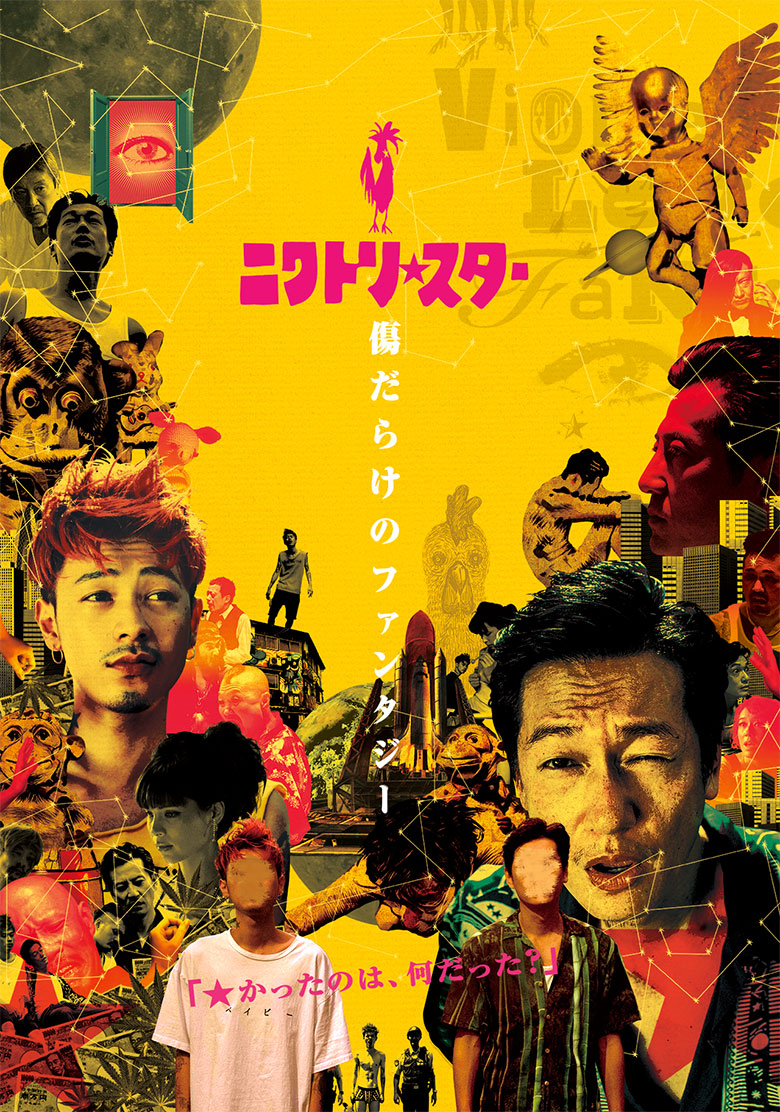
Smokin' on the Moon posterSlacker drama has become a mainstay of the Japanese indie scene as aimless young men drift freely in a society which promises them little and threatens to take much. Even so they’ve rarely been quite so genially lost as the pair at the centre of Kanata Wolf’s Smokin’ on the Moon (ニワトリ★スター, Niwatori★Star) whose relatively serene life of stoner bliss is radically derailed after a dramatic encounter with a psychotic yakuza drug dealer. Dreaming of escape, a better life somewhere else, the pair find themselves taking very different paths as they reflect on their familial pasts, broken dreams, and future promises.

34-year-old Sota (Arata Iura) and his younger unofficial roommate and official best friend Rakuto (Ryo Narita) live a “simple” life of casual work which pays for rent and getting stoned if not much else. They are broadly “happy” with their aimless drop out lives and determined not to get involved with the shadier sides of their underworld existence by avoiding the pull of hard drugs and gangster hang outs. All that ends up going by the wayside when their dealer, Jay (Peron Yasu), is offed by sadistic yakuza Hatta (Kanji Tsuda) who makes a point of dropping in on the boys to ask them if they know where Jay might be in order to make sure they don’t. Being directly confronted with gangster violence sparks Sota into a series of epiphanies as he suddenly realises that the stoner life is not a good fit for a man of 34, while Rakuto, who has few other options, considers throwing his lot in with Hatta if only to remain on the sidelines of organised crime.

Sota, son of an Osakan okonomiyaki restaurant owner (Eiji Okuda), left home in flight of family legacy, bored with boring small-town life and resentful of his “destiny” as the heir to a family business. Eight years in Tokyo, however, have been largely wasted, squandered away on constant evasion with nothing more to show for his time than a few crazy stories and a deeply held friendship. Sota does at least have a safety net, he can always go home to a family that will welcome him with open arms. Rakuto is not so lucky. Harbouring deep seated resentment towards his mother who was unable to protect him from a violent step-father, Rakuto fled Okinawa to escape the memory of a traumatic childhood which is perhaps why he finds himself becoming a surrogate father to a little boy whose mother, as it turns out an old friend of his, desperately tries to kick a crack habit given to her by an unforgiving city even as it crushed her dreams of musical success.

Discovering an old report card on which he’d written that his greatest ambition was to work hard for his family, Rakuto decides he needs to buck up and become a responsible husband and father who can provide a stable home for a woman and a child. There are, however, few opportunities for middle-school dropouts and even those there are Rakuto has already disqualified himself from thanks to his stoner looks which include fiery red hair and several prominent tattoos (prohibited in almost every conceivable “decent” job in Japan). Thus he feels his only option is to become a kind of errand boy for Hatta, naively believing he will allow him to remain in the shallower end of the gangster pool just dealing weed and making deliveries rather than pushing hard drugs or getting involved in violence. While Sota finds peace in the country, Rakuto begins to build the family life he’d always dreamed of while trying to cope with the constant anxieties of being an underling to a bunch of unhinged crooks.

Wolf shifts registers throughout – starting off in stoner comedy where our heroes inhabit a bohemian world of gay bars and randy landladies, shifting into crime thriller as the nasty gangsters rear their heads, and then finally ending up in masculine melodrama as Sota recounts the sad story of his friend who, despite his good heart, finds himself a victim of fate rather than of himself or even of his society. Mixing strange animation and surrealist diversions with an affecting tale of friendship, Smokin’ on the Moon is another sad story of those unable to find their place in the world taking refuge in each other only to find a melancholy compromise even as fate threatens to rob them of the little joys they’ve found.


Smokin’ on the Moon screens at New York Asian Film Festival 2018 on 10th July at 9.15 pm plus Q&A with director Kanata Wolf

(Kanata Wolf (かなた狼) previously known as Yuichiro Tanaka (たなか雄一狼). Surname is Wolf as per official website).

Original trailer (no subtitles)