
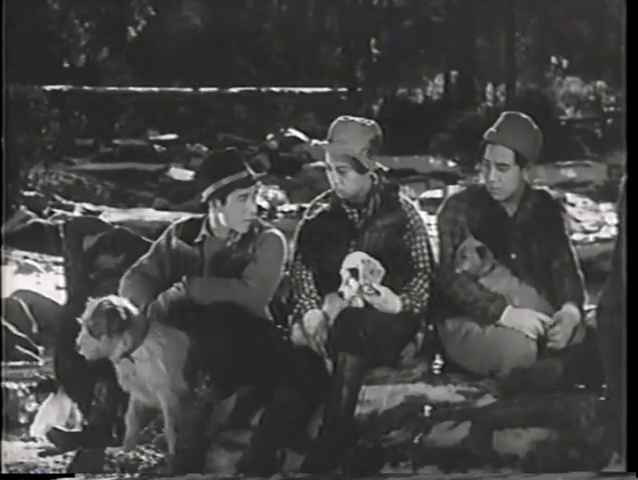
 Remembered mostly for his 1938 melodrama Aizen Katsura starring Kinuyo Tanaka and Ken Uehara, Hiromasa Nomura was a prominent studio director at Shochiku in the pre-war period before decamping to Shintoho in 1948 and then to Daiei in the mid-50s before shifting back to Shintoho and then to TV for the final part of his career. Much of his earlier work is presumed lost, but a late silent effort from 1935 Lumberjack and Lady (與太者と小町娘, Yotamono to Komachi Musume, AKA The Layabout and the Town Belle – part of the “yotamono” (layabout) series) seems to showcase a talent for slapstick comedy while perhaps engaging with the concerns of the time in its three heroes’ quest to defend their mountain against an evil upstart from the opposing peak.
The trouble begins when our three “stooges” get themselves stuck on a logging cart and accidentally end up on the other mountain where a rival logging group run by the fabulously moustachioed Torazou (Isamu Yamaguchi) are not exactly happy to see them. Just when things look grim for our heroes, Torazou himself shows up and saves the day, handing them a letter to take back to their boss, Kaheiji (Sojin Kamiyama). The letter, however, contains ill tidings – Torazou wants the hand of Kaheiji’s pretty daughter Kayo (Yoshiko Tsubouchi) and makes plain that he’s not about to take no for an answer.
The early part of the film revolves around the comical exploits of our three bumpkins who are always accompanied by their three adorable dogs. The guys are all, predictably, in love with Kayo but in a dreamy, innocent sort of way – there is no conflict between them over their shared love of the boss’ daughter, only a sort of pure hearted camaraderie and a desire to make sure the best is done for her which means putting paid to the evil Torazou once and for all.
In a mildly interesting twist, it’s clear that the Kaheiji gang are the poor but honest crowd. Our guys dress in torn and battered clothing, remaining unable to pay off their tabs with the wily old lady who runs the local store even after old Kaheiji has given them some money to go out on the town. Torazou’s boys, however, seem to be doing much better. Torazou himself is portly man in early middle age who is always accompanied by his bizarrely tiny henchman who is always ready to repeat whatever it was his boss just said only with additional menace. It’s clear we don’t want Kayo to fall into his clutches lest her innocence be polluted by his grubby little hands. A mustache twirling villain, Torazou is perhaps as close as you might be able to get in 1935 to a personification of the evils of the age as an exploitative capitalist fat cat who thinks he can do as he pleases because he has the most minions and the most friends in handy places. Not much of strategist, he thinks nothing of trying to force himself on the grieving Kayo as she bends over a grave, somehow convinced that this will be a surefire way to win her love and pave the way to a happy marriage.
The action takes an unexpected direction in the second act after a key player mysteriously falls off a cliff in true silent movie fashion. Realising they need to find a “suitable” husband for Kayo (i.e. someone not like them but of a higher social class), the guys run into “Mr. Yamazaki” (Den Obinata) from Tokyo who, unbeknownst to them, is Kaheiji’s chosen successor and a potential fiancé. Kenji brings some Tokyo class out to the mountains along with a little youthful hotheadedness in which he cannot help but refuse to back down in the face of Torazou’s continuous shenanigans – an act which accidentally puts Kayo in danger while he fixates on proving himself the bigger the man.
A light and fluffy escapade, albeit one which perhaps subtly reinforces some of the ideas many maybe seeking escape from, Lady and Lumberjack is largely built around the slapstick adventures of our three idiot heroes which are enlivened by the fresh mountain air and beautiful location shooting. Drawing inspiration from popular Hollywood silent comedies, Nomura perhaps fails to tie his series of set pieces together in a suitably coherent fashion but fully embraces the film’s sense of silly fun (mostly had at the expense of the decidedly dim, if essentially good, lumberjacks) while ensuring a victory for the honest little guy against the forces of selfishness and corruption.

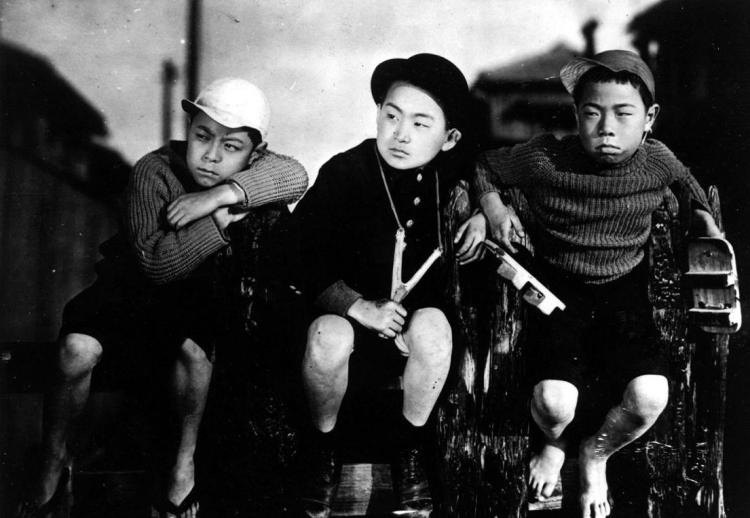 When one thinks of the classic examples of children in Japanese cinema, Hiroshi Shimizu is the name which comes to mind but family chronicler Yasujiro Ozu also made a few notable forays into the genre. I Was Born, But… (大人の見る絵本 生れてはみたけれど, Otona no miru ehon – Umarete wa mita keredo) stars one of the premier child actors of the silent era in Tokkan Kozo (later known as Tomio Aoki) who also worked repeatedly with Shimizu (
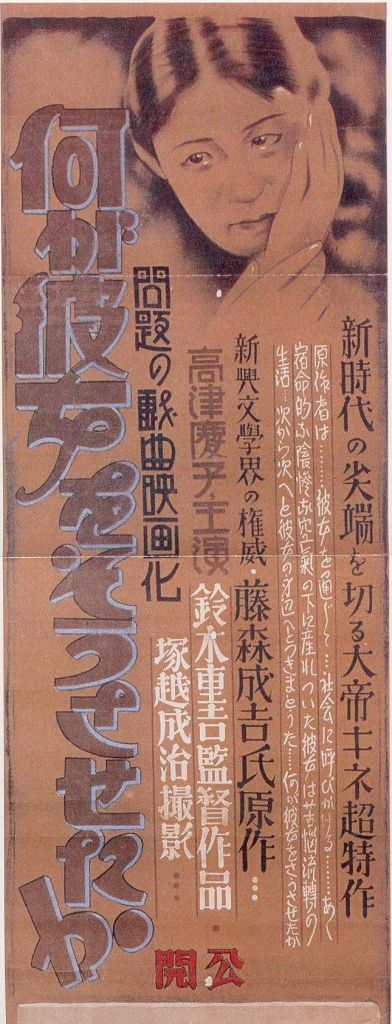 Like many other areas of the world in the first half of the 20th century, Japan also found itself at a dividing line of political thought with militarism on the rise from the late 1920s. Despite the onward march of right-wing ideology, the left was not necessarily silent. Ironically, the then voiceless cinema was able to speak for those who were its greatest consumers as an accidental genre was born detailing the everyday hardships faced by those at the bottom end of the ladder. These “proletarian films” or “tendency films” (keiko eiga) were increasingly suppressed as time went on yet, in contrast to the more politically overt cinema of the independent Proletarian Film League of Japan, continued to be produced by mainstream studios. Long thought lost, Shigeyoshi Suzuki’s What Made Her Do It? (何が彼女をそうさせたか, Nani ga Kanojo wo Sousaseta ka) was a major hit on its original release with some press reports even claiming the film provoked riots when audiences were passionately moved by the heroine’s tragic descent into madness and arson after suffering countless cruelties in an unfeeling world.
 Naruse’s final silent movie coincided with his last film made at Shochiku where his down to earth artistry failed to earn him the kind of acclaim that the big hitters like Ozu found with studio head Shiro Kido. Street Without End (限りなき舗道, Kagirinaki Hodo) was a project no one wanted. Adapted from a popular newspaper serial about the life of a modern tea girl in contemporary Tokyo, it smacked a little of low rent melodrama but after being given the firm promise that after churning out this populist piece he could have free reign on his next project, Naruse accepted the compromise. Unfortunately, the agreement was not honoured and Naruse hightailed it to Photo Chemical Laboratories (later Toho) where he spent the next thirty years.
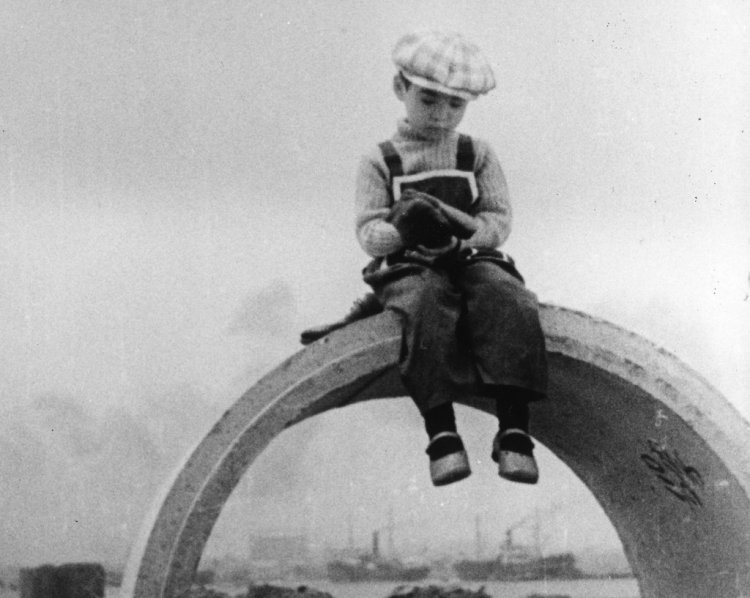 Following on from
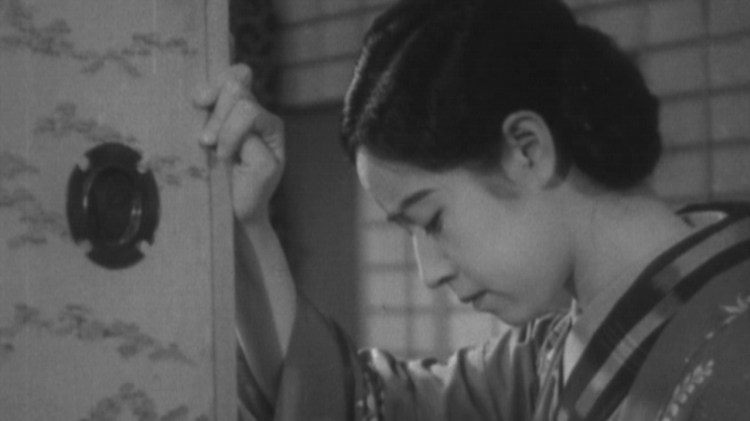
 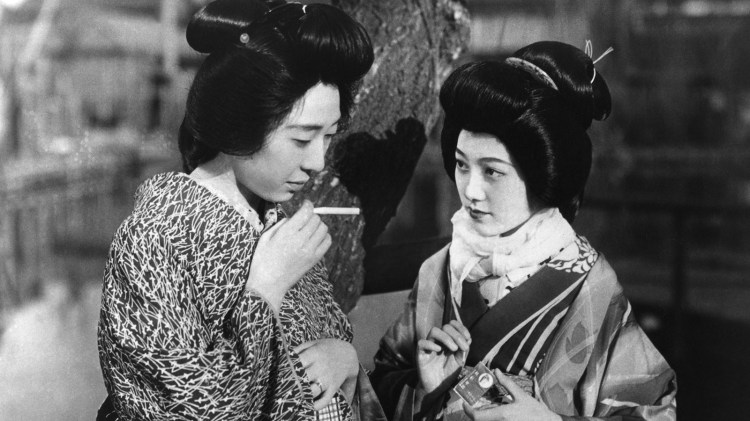 Naruse’s critical breakthrough came in 1933 with the intriguingly titled Apart From You (君と別れて, Kimi to Wakarete) which made it into the top ten list of the prestigious film magazine Kinema Junpo at the end of the year. The themes are undoubtedly familiar and would come dominate much of Naruse’s later output as he sets out to detail the lives of two ordinary geisha and their struggles with their often unpleasant line of work, society at large, and with their own families.
 Naruse apparently directed six other films in-between
 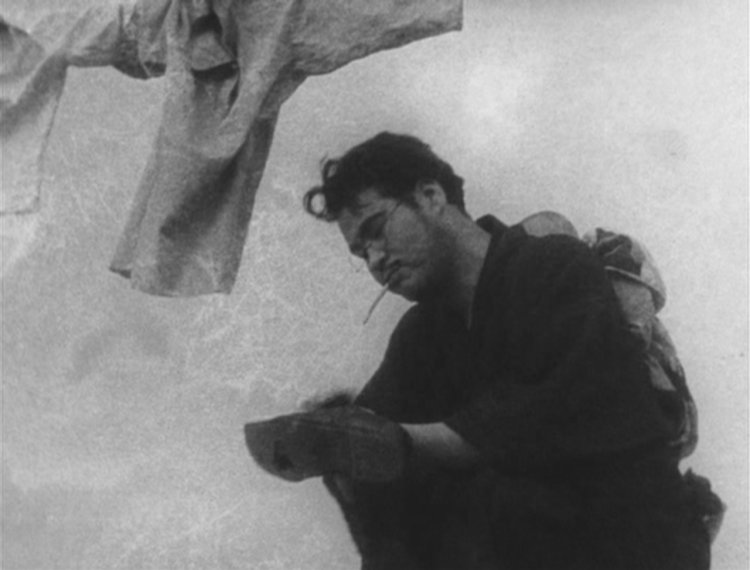 Mikio Naruse is often remembered for his female focussed stories of ordinary women trying to do they best they can in often difficult circumstances, but the earliest extant example of his work (actually his ninth film), Flunky, Work Hard (腰弁頑張れ, Koshiben Ganbare), is the sometimes comic but ultimately poignant tale of a lowly insurance salesman struggling to get ahead in depression era Japan.
 Windows on Worlds