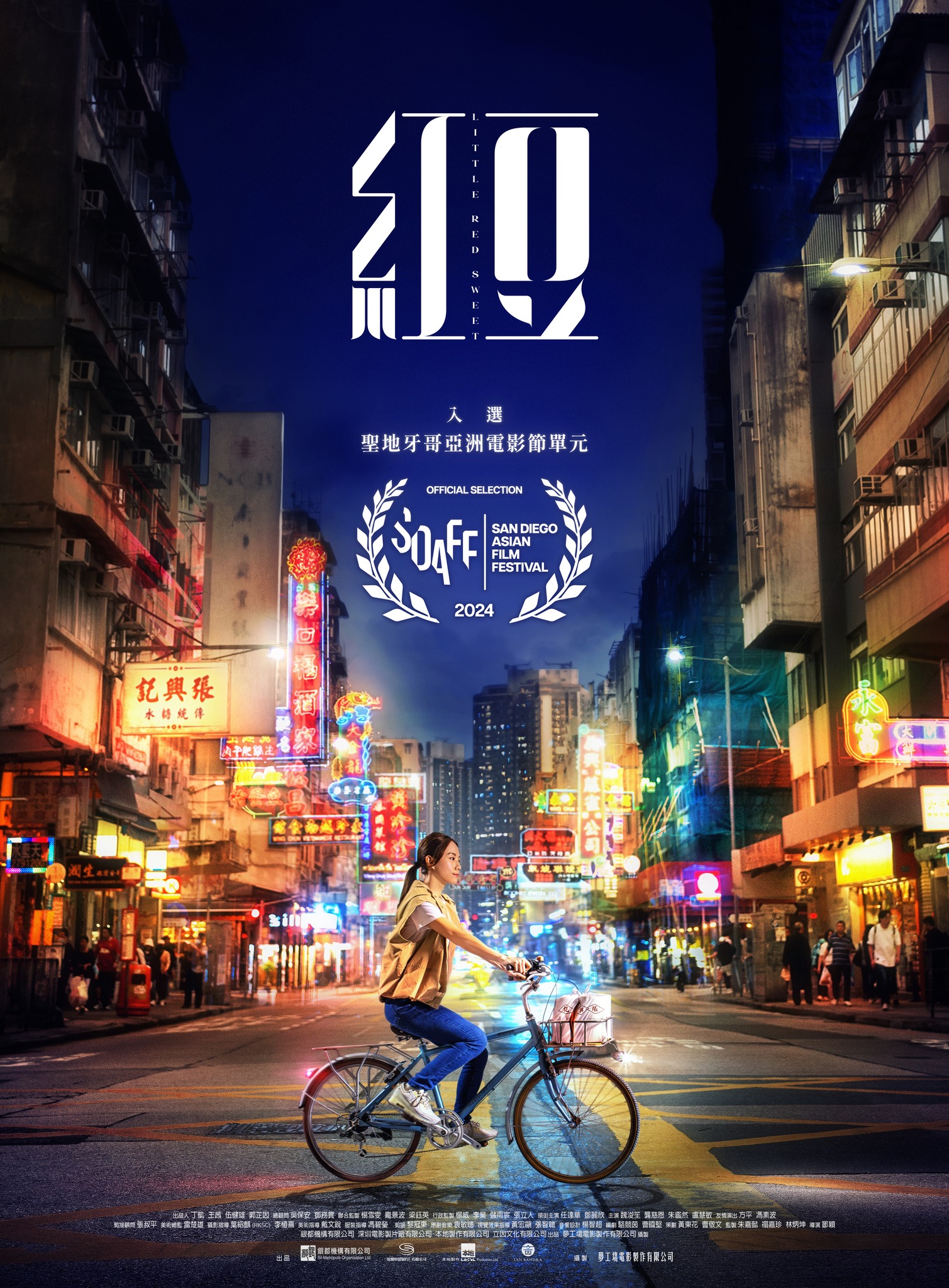
Little Red Sweet (紅豆, Vincent Chow, 2024)

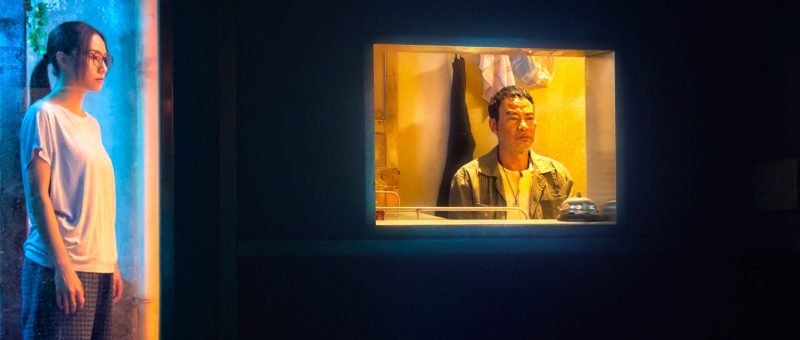
Towards the conclusion of Vincent Chow’s poignant drama Little Red Sweet (紅豆), the heroine says she thinks her family’s sweet soup shop is important because it helps people hang on to memories through food. Like many, May (Stephy Tang) seems to be displaced in a Hong Kong that’s changing all around her while other things stay frustratingly the same from her father’s (Simon Yam) refusal to teach her the family recipe because he wanted to pass the shop onto his son to her brother’s sexist assumptions that the housework is her responsibility while staying home playing games rather than helping in the shop.

Indeed, it’s not until matriarch Lin (Mimi Kung) suffers a stroke that everything she did for the family is thrown into stark relief. It’s clear she did most of the heavy lifting at the shop, especially when it comes to customer interactions which are not May’s father’s forte. He doesn’t speak English and has to fetch Lin when a pair of tourists want to pay. Unable to run the shop alone, he asks his son Boyo (Jeffrey Ngai) to help, but he refuses despite having no other obligations as a cram school student who mainly stays home and plays games. Boyo doesn’t help with the housework either, simply expecting that May will take care of it and him despite his ongoing obnoxiousness. 

Because of his refusal, May finds herself giving up her dream job as an air stewardess to help out in the shop though her father won’t let her near the kitchen and seems as if he’d still ideally like to hand the shop down to his son or perhaps close it for good to free both children from the burden of caring for its legacy. May’s job as an air stewardess may have symbolised her desire for escape but also reflects her rootlessness and sense of displacement. Before her mother was taken ill, she’d suggested using her staff discount to go on a family holiday which would have been their first because her father never wanted to close the shop though it was obviously not to be nor could she repair their familial bonds through her work. Both she and her tentative love interest (Kevin Chu) recall how low the planes seemed to fly when they were children and how distant they seem now reflecting not a broadening of their horizons but the impossibility of escape along with a loss of intimacy and the widening spaces between people.

But as Canadian-Hong Kong travel writer Soar says, it’s the people not the place and it’s the sense of community that May values in the old-fashioned shopping arcade that is inevitably targeted for redevelopment threatening the future of the shop. First trying to resist the march of progress, May eventually starts looking at new spaces but the ones she sees are slick, modern, and devoid of both warmth and character. A journalist who comes to interview May asks her why she wants to carry on a shop selling traditional desserts that might not be so popular among the younger generation but May says that it’s important as they help people hang on to their memories as if she were also talking about an older Hong Kong that is fast disappearing the soul of which lies in the sense of comfort this sweet bean soup provides. Eventually she’s presented with a choice, like many of her generation wondering whether to take her memories somewhere else or stay and try to salvage something from rapidly receding past. 

Her father’s eventual capitulation in agreeing to teach her how to make the family’s iconic sweet red bean soup is akin to a baton being passed, but also a sign of progress in accepting her as his heir rather than insisting on the feckless Boyo whom he also takes to task for his reluctance to look after himself and assumption that it’s his sister’s job to cook and clean for him. Though perhaps bittersweet, there is indeed something poignant in May’s determination to remake a home in a shrinking Hong Kong where community matters and kindnesses are repaid with interest years after they’d seemingly been forgotten. As Soar had said, it’s the people not the place or in another sense perhaps it amounts to the same thing and the taste of home you only find in the warming sweetness of red bean soup.


Little Red Sweet screens Nov. 8/11 as part of this year’s San Diego Asian Film Festival.

Original trailer (no subtitles)

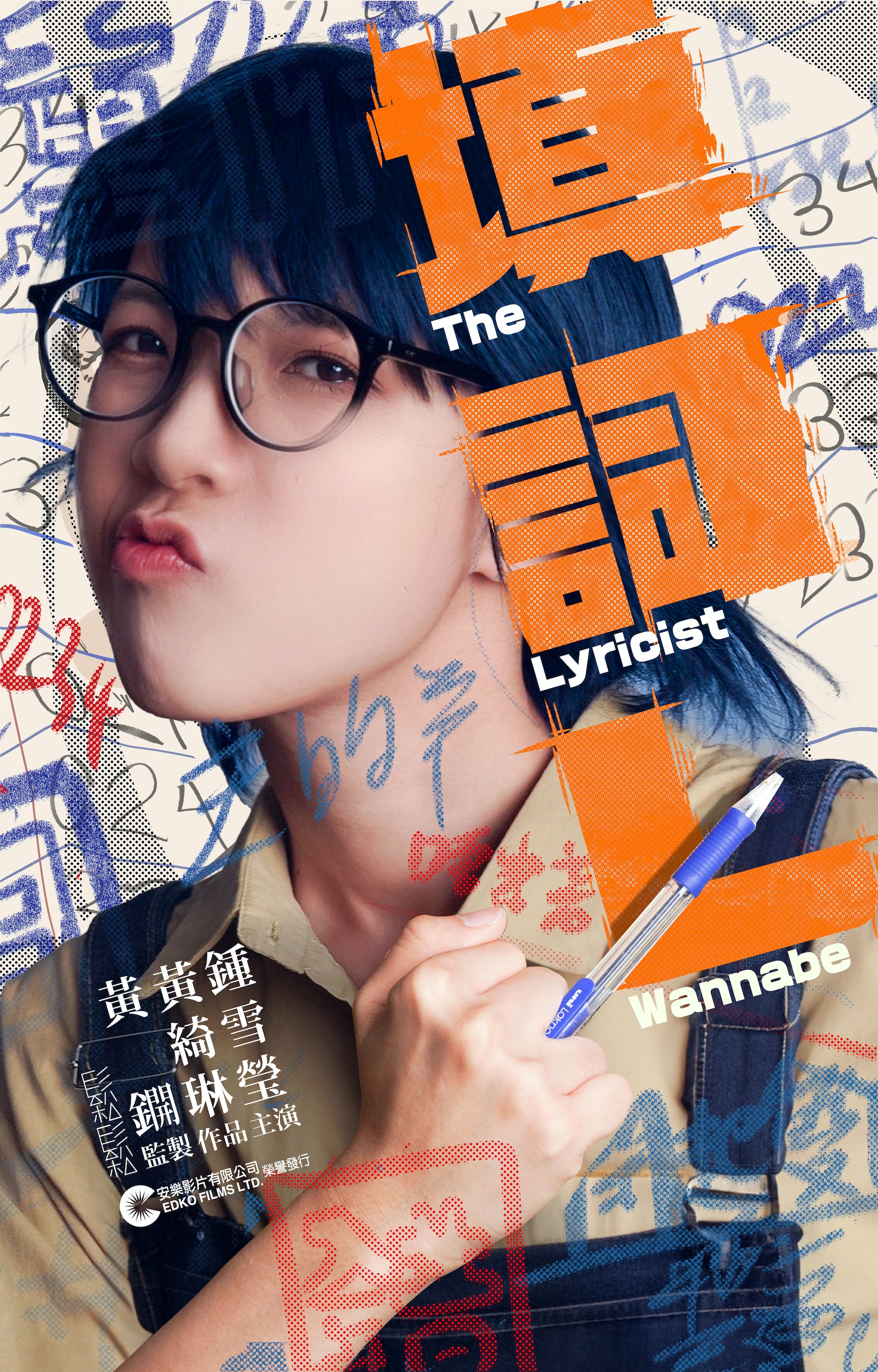
The Lyricist Wannabe (填詞L, Norris Wong, 2023)

Sometimes a dream might have come true only we never really noticed. In Norris Wong’s autobiographically inspired drama The Wannabe Lyricist (填詞L), a young woman battles her way towards becoming a Cantopop songwriter yet perhaps she already is one by virtue of her constant act of lyric writing. What she craves is the validation of having a song published, yet experiences setbacks at every step of the way that encourage her to doubt her talent or the right to continue chasing her dreams.

At a particularly low point after being taken on by a music producer to work with a spoilt influencer who’s getting studio time as some kind of favour, Sze (Chung Suet Ying) is told that her lyrics are no good and that after struggling so hard for six years perhaps she ought to take the hint and accept she isn’t suited to this line of work. It’s an act of intense cruelty, though one in part motivated by a well-meaning faux pas. In her excitement, she told the influencer she’d write lyrics for her album for free just to be published, but the palpable sense of desperation seems to have put the influencer off unable to have confidence in the work that Sze herself has devalued.

She encounters something similar during a partnership with an aspiring pop star who says he likes her lyrics but then drops the bombshell that he plans to sing in Mandarin because it’s a bigger audience. Ironically, on a trip to Taipei to sell his album she’s told that his accent is no good for the local market and while they like the song she worked on she later realises that they hired another lyricist for “real” release without even telling her. What’s more, tones don’t matter while singing in Mandarin whereas lyric writing in Cantonese is a painstaking process of trying to ensure that the tone of the word fits the melody. Aside from its political implications, not only does the pop star’s arbitrary decision to just sing it Mandarin ruin the lyrical flow she spent so long perfecting but entirely disrespects her work.

After deciding to take a break from trying to make it in music, Sze gets a job working at a ridesharing app startup where she’s roped in to create a jingle but once again her hopes are dashed when the business strays into a legal grey area and several of the drivers are arrested. While the app’s creator silently cries in his office, his female colleague ponders going somewhere else, “anywhere that doesn’t punish dreamers” which seems like a nod not only towards an oppressive capitalism that values only marketability but equally the increasingly oppressive atmosphere of the nation’s political realities. In a way this is what Sze ends up doing too, putting geographical distance between herself and the failure of her dreams by returning to the land which as the farmer says never lies to you, you reap what sow.

Yet for all her drive and perseverance there are others who view Sze’s obsession with her dreams as selfish and self-involved complaining that she rarely considers the feelings of others and neither notices nor cares if she may have hurt or inconvenienced them. She’s told that her lyrics are hollow because she lacks life experience but also is incapable of empathising and cannot see anything outside of her quest to become a lyricist. She watches other people move on, her brother getting married, friends enjoying career success etc while she’s still stuck looking for her big break only for something to go wrong just as everything was about to go right.

Wong signals the playful qualities of her fantasies though use of onscreen illustrations and even a karaoke-style video along with the nostalgic quality of the early 2000s setting of Sze’s schooldays with its MSN messenger and ICQ. Sze may be “dragged along by the melody” in more ways than one as she tries to make peace with her dreams and her future and find some way of living in harmony with the rhythms of the world around her but eventually comes to realise that she was a lyricist all along no matter what anyone else might have tried to convince her she was.


The Lyricist Wannabe screened as part of this year’s Osaka Asian Film Festival and opens in UK cinemas 15th March courtesy of Cine Asia.

Original trailer (Traditional Chinese / English subtitles)

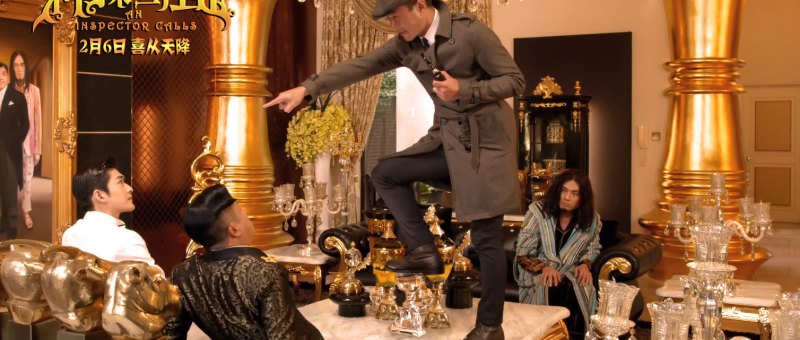
An Inspector Calls (浮華宴, Raymond Wong & Herman Yau, 2015)

Inspector Calls poster 1J.B. Priestley’s An Inspector Calls found itself out of favour until a phenomenally successful stage production brought it back into the national consciousness in the early ‘90s, but even if some decry its inherent melodrama as a relic of another era the play’s comments on the entrenched classism of British society sadly still ring true. An Inspector Calls is many things, but one thing it defiantly is not is funny – a series of concentric tales of betrayals and oppressions, Priestley’s drama lays bare the callousness with which the privileged bolster their position through the story of one faceless factory girl standing in for an entire social class whose lives are often at the mercy of those “above” them.

In adapting Priestley’s play as a Chinese New Year movie (a strange concept in itself), Herman Yau and Raymond Wong relocate to contemporary Hong Kong, re-conceiving it as a broad comedy of the kind one might expect for the festive period. The setup is however still the same. The Kau family will be receiving a visitation – this time from Inspector Karl (Louis Koo Tin-lok) who has some difficult news for each of them. Three hours previously, a young woman committed suicide in her apartment by drinking bleach, taking the child she was carrying with her. Inspector Karl views this as a double murder and, based on the diary they found at the crime scene, has brought the reckoning over to the Kaus’.

The Kaus, at the present time, are preparing an engagement party for daughter Sherry (Karena Ng) who will be marrying the handsome younger brother of a factory owner, Johnnie (Hans Zhang Han). What no one can know is that the family business is going under, the Kaus are broke, mum and dad don’t get on, and all of this finery is merely rented affectation. The only member of the family who still seems to have something like a social conscience – Tim (Gordon Lam Ka-tung), the 27-year-old younger son, is viewed by all as a feckless and naive hippy, hiding out in his childhood bedroom, still all fluffy cushions and toy soldiers.

As the Inspector explains, he holds Mr Kau (Eric Tsang Chi-wai) responsible because the woman once worked in his factory and he fired her for participating in a strike for better pay and conditions. Sherry got her fired too when she worked in an upscale fashion store. Johnnie knew her during an unfortunate period as a bar hostess, and Tim as a masseuse. Mrs Kau (Teresa Mo Shun-kwan), who heads up a woman’s charity and publicly espouses tolerance while privately judgmental, once turned her down for familial support seeing as the father of her child was still living. She advises holding him to account and if he won’t pay, forcing his family to take responsibility on his behalf. The irony being that the father is likely her own son and that if this poor woman had rocked up at the Kaus’ with a sad story and an infant in her arms, she would have been met with nothing more than contempt save perhaps some hush money to send her on her way.

The Kaus are merely a series of examples of the various ways the wealthy mistreat the poor, wielding their sense of entitlement like a weapon. Yau and Wong adopt an oddly Brechtian approach in their expressionist production design with the faceless masses identified only through titles – the word “labour” on the workers’ caps, “manager” in the fashion store, “secretary” at the foundation. None of these people are really worthy of names because they will always be “less” while the Kaus are “more” in more ways than one. Actions, however, have consequences. The family console themselves that this is all far too coincidental, that they couldn’t all have known the “same” woman in different guises, but that in many ways is the point – she isn’t one woman but all women, used, abused, and discarded not only by heartless men but by jealous and judgemental members of her own sex too. Better than her than me, they might say, but that’s no way to run a healthy society as the sensitive, slightly damaged Tim seems to see.

Like the Birlings, the Kaus attempt to brush the Inspector’s warning off, thinking it’s all been some elaborate prank that can they laugh about and then forget, but there will be a reckoning even if they attempt to gloss over the various revelations regarding their moral failings. Wong and Yau’s vague gesturing towards the outlandish greed of the hypocritical super wealthy is undercut by the ridiculous New Year slapstick of it all despite the Metropolis-like production design and expressionist trappings, giving in to an excess of its own in an extremely unexpected musical cameo from a martial arts star and the decision to end on a social realist photo of an innocent, pigtailed proletarian woman dressed in red. Nevertheless, strange as it all is the bizarre adaptation of Priestley’s play has its own peculiar charm even if it’s outrageousness rather than moral outrage which takes centre stage.


Currently available to stream online via Netflix in the UK and possibly other territories.

Original trailer (English / Traditional Chinese subtitles)