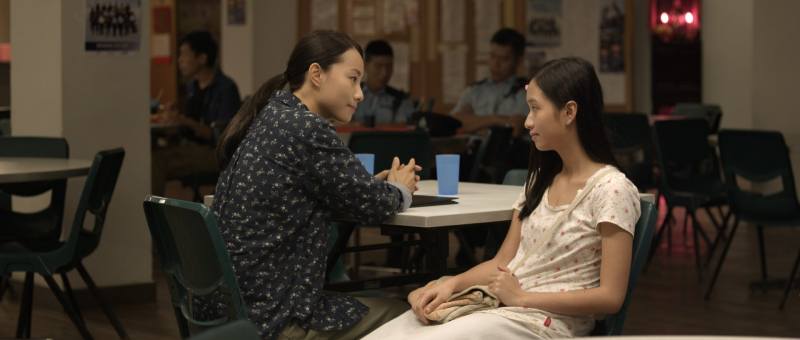
Love Lies (我談的那場戀愛, Ho Miu-ki, 2024)

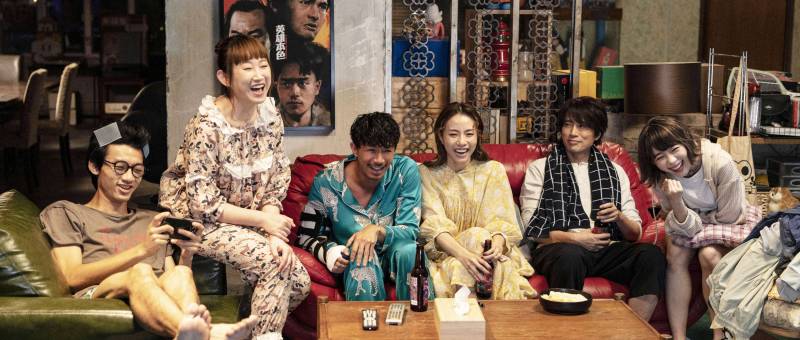
The heroine of Ho Miu-Kei’s cybercrime dramedy Love Lies (我談的那場戀愛) later rejects the idea that she has been deceived for she was only falling in love and love once believed is real which paradoxically hints at the idea of romantic love as fantasy or self-delusion. There is undoubtedly some truth in what she says, if only in the fact that the young man scamming her also begins to fall in love if not exactly with her but with the image of himself as reflected in her eyes. 

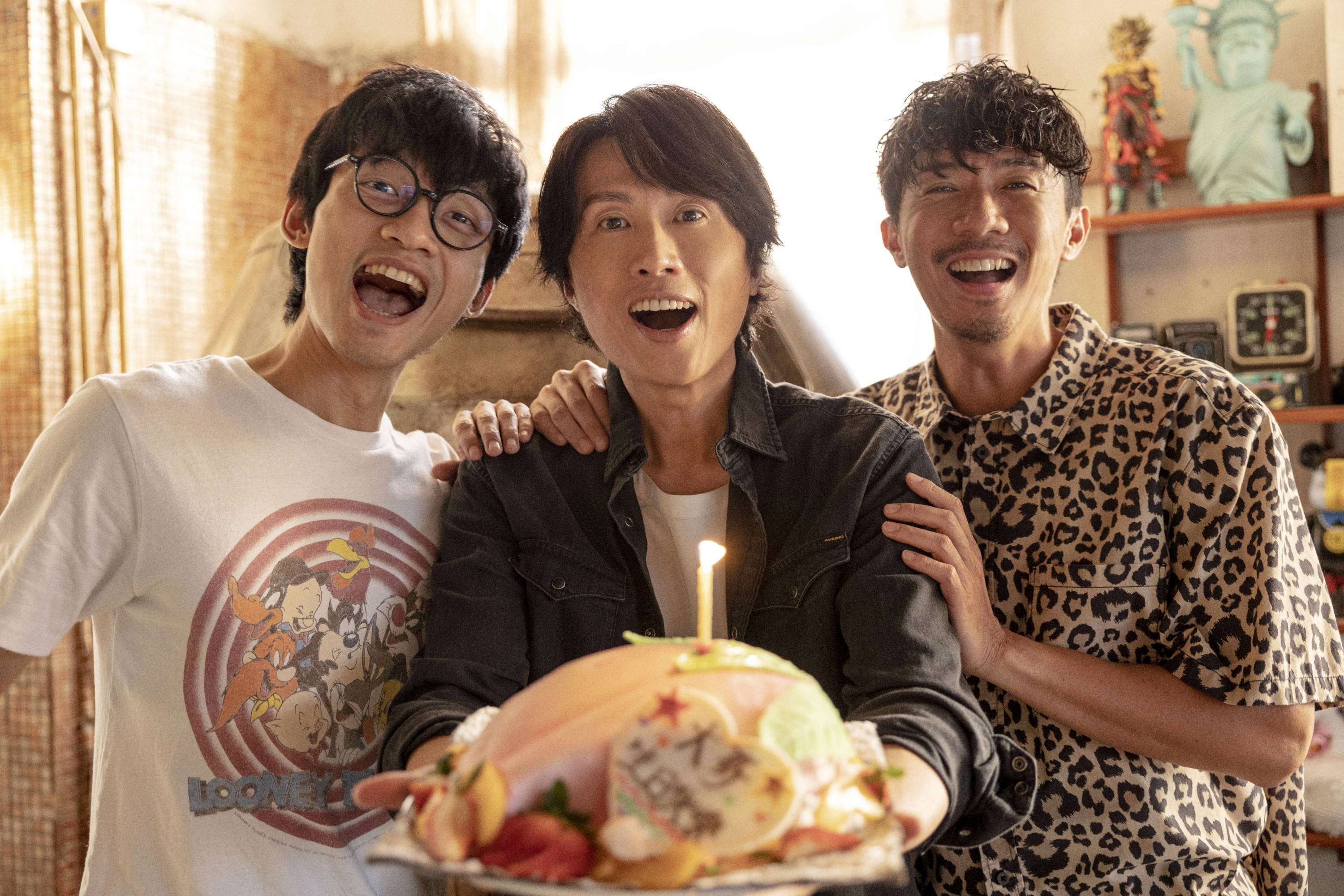
From what we can see of Joe (Cheung Tin-fu), he doesn’t quite fit our image of romance scammer. He isn’t cruel or heartless and has more or less fallen into this kind of work, learning to see it as a kind of game which conveniently allows him to ignore the real human he’s exploiting in order to win. Awkwardly still living with his ex-girlfriend’s family, he’s bonded with her father and seems to be seeking something like familial love and acceptance along with the feeling that he’s wanted and valued by another person. Of course, being a romance scammer gives him what he needs as his targets are drawn into his trap and eventually become dependent on him though it’s obviously not “Joe” they’re dependent on but whoever he claimed to be online who is perhaps all the things he’s like be rather than who he is. 

In any case, he finds himself conflicted while trying to scam Veronica (Sandra Ng), a fantastically rich gynaecologist still struggling to deal with the death of her husband four years previously from whom she was about to get a divorce. Veronica is also not being entirely honest online, posing as a 25-year-old nurse named Linda and using a random photo from the internet while planning to have some idle fun chatting to a stranger in this case a heartbroken French widower named Alain. Like Joe, Veronica is also a little unhappy in herself, explaining that she’s a difficult person who blows off steam by rearranging the goods in convenience stores and has few friends. Being “Linda” also affords her another perspective on herself and a means of reassessing her thoughts about her husband and marriage. 

But this vulnerability is also what makes her vulnerable to the scammers as mastermind Joan (Stephy Tang), who used to be a TV screenwriter, points out in instructing Joe that he’ll really have cracked Veronica when she feels comfortable enough to tell him about her husband. Ho presents the scammers as an unusually well equipped yet old school bunch who have an actual art department to construct props to help Joe sell his fantasy though he’s pretty slow to cotton onto the idea of stalking Veronica’s social media profiles for information he later uses to create a bond with her. 

Though quirky and somewhat wholesome, the film does hint at the dangers of online interaction and the information we choose to share with strangers, perhaps unwisely. Intellectually, Veronica is aware of the potential of scamming but also sees herself as “better” than that, as if an educated, successful woman such as herself should be too smart to fall for something so obviously untrue and is later unwilling to accept that she’s sent large amounts of money to a conman despite the advice of her bank which of course only keeps her in the scam so she can prove to herself that she’s not being conned. 

But the conclusion she finally comes to is that if she fell in love with someone who didn’t really exist, then that doesn’t mean the love itself wasn’t real. In any case, it allowed her to re-engage with lost love and recover herself and her memories of romance while finally beginning to deal with her husband’s death and the end of her marriage which arrived more abruptly than expected. In much the same way, Joe begins to realise that he ended up scamming himself, half in love with the image he created as reflected back to him while more aware of his own needs and desires along with the emotional consequences of the scamming game. To that extent, maybe love itself is a long con or beautiful fantasy but there might also be truth in a lie and a genuine connection between lonely souls beyond all the wilful deception and misrepresentation.


Love Lies screened as part of this year’s New York Asian Film Festival.

Original trailer (English subtitles)

The Lyricist Wannabe (填詞L, Norris Wong, 2023)

Sometimes a dream might have come true only we never really noticed. In Norris Wong’s autobiographically inspired drama The Wannabe Lyricist (填詞L), a young woman battles her way towards becoming a Cantopop songwriter yet perhaps she already is one by virtue of her constant act of lyric writing. What she craves is the validation of having a song published, yet experiences setbacks at every step of the way that encourage her to doubt her talent or the right to continue chasing her dreams.

At a particularly low point after being taken on by a music producer to work with a spoilt influencer who’s getting studio time as some kind of favour, Sze (Chung Suet Ying) is told that her lyrics are no good and that after struggling so hard for six years perhaps she ought to take the hint and accept she isn’t suited to this line of work. It’s an act of intense cruelty, though one in part motivated by a well-meaning faux pas. In her excitement, she told the influencer she’d write lyrics for her album for free just to be published, but the palpable sense of desperation seems to have put the influencer off unable to have confidence in the work that Sze herself has devalued.

She encounters something similar during a partnership with an aspiring pop star who says he likes her lyrics but then drops the bombshell that he plans to sing in Mandarin because it’s a bigger audience. Ironically, on a trip to Taipei to sell his album she’s told that his accent is no good for the local market and while they like the song she worked on she later realises that they hired another lyricist for “real” release without even telling her. What’s more, tones don’t matter while singing in Mandarin whereas lyric writing in Cantonese is a painstaking process of trying to ensure that the tone of the word fits the melody. Aside from its political implications, not only does the pop star’s arbitrary decision to just sing it Mandarin ruin the lyrical flow she spent so long perfecting but entirely disrespects her work.

After deciding to take a break from trying to make it in music, Sze gets a job working at a ridesharing app startup where she’s roped in to create a jingle but once again her hopes are dashed when the business strays into a legal grey area and several of the drivers are arrested. While the app’s creator silently cries in his office, his female colleague ponders going somewhere else, “anywhere that doesn’t punish dreamers” which seems like a nod not only towards an oppressive capitalism that values only marketability but equally the increasingly oppressive atmosphere of the nation’s political realities. In a way this is what Sze ends up doing too, putting geographical distance between herself and the failure of her dreams by returning to the land which as the farmer says never lies to you, you reap what sow.

Yet for all her drive and perseverance there are others who view Sze’s obsession with her dreams as selfish and self-involved complaining that she rarely considers the feelings of others and neither notices nor cares if she may have hurt or inconvenienced them. She’s told that her lyrics are hollow because she lacks life experience but also is incapable of empathising and cannot see anything outside of her quest to become a lyricist. She watches other people move on, her brother getting married, friends enjoying career success etc while she’s still stuck looking for her big break only for something to go wrong just as everything was about to go right.

Wong signals the playful qualities of her fantasies though use of onscreen illustrations and even a karaoke-style video along with the nostalgic quality of the early 2000s setting of Sze’s schooldays with its MSN messenger and ICQ. Sze may be “dragged along by the melody” in more ways than one as she tries to make peace with her dreams and her future and find some way of living in harmony with the rhythms of the world around her but eventually comes to realise that she was a lyricist all along no matter what anyone else might have tried to convince her she was.


The Lyricist Wannabe screened as part of this year’s Osaka Asian Film Festival and opens in UK cinemas 15th March courtesy of Cine Asia.

Original trailer (Traditional Chinese / English subtitles)

Table for Six 2 (飯戲攻心2, Sunny Chan Wing-Sun, 2024)

“It’s okay to be screwed, we’ll unscrew you later,” youngest brother Lung (Peter Chan Charm Man) comforts his dejected brother in an accidental advocation of what means to be a family in Sunny Chan’s followup to the phenomenally successful comedy  Table for Six. Like the previous film and in true Lunar New Year fashion, Table For Six 2 (飯戲攻心2) explores the concept of family in a wider sense along with contemporary attitudes to marriage and traditional gender roles.

Even so, it has to be said this table is now uneven as oldest brother Steve has literally run away from his romantic dilemmas taking off for Africa leaving new girlfriend Miaow (Lin Min-Chen) behind claiming she’s too far out of his league and it’s not fair of him to waste her youth. Ironically enough, Bernard (Louis Cheung) has now started a wedding business helping people pull off extravagant public proposals such as the sort of fake one he prepares for Monica (Stephy Tang Lai-yan) as a publicity stunt featuring him dancing in a 90s-style music video. As part of the campaign, they’ve set up Lung and Miaow as a fake couple hoping to build a following for their romance online much to unexpected chagrin of Josephine (Ivana Wong) who has begun to embrace her dreams by becoming a well-known quirky chef who makes food disguised as other food. Though they had agreed to separate so the could both follow three dreams at the end of the previous film, Josephine suddenly proposes leading Bernard to put on an extravagant wedding as promotion for his business. 

In a way, Bernard’s company symbolises the performative qualities of marriage as couples put themselves through a stressful and expensive ritual more out of obligation than real desire. When Lung is prevented from reaching the ceremony on time, Bernard ends up impersonating him in a full body costume making plain that the spectacle is more for show than sentiment and it could really be anyone up there simply fulfilling a role. In fact, no one even checks the certificates were properly signed. Then again, just as in Josephine’s cooking sometimes the “fake” and can actually contain the “real” just in a different way than expected. She may say that once a relationship has cooled the spark can’t be regained, but that doesn’t necessarily mean a new, different, spark couldn’t be found. 

Perhaps that’s what happened for Bernard and Monica who’ve now overcome the awkwardness of Monica having been in a longterm relationship with oldest brother Steve. Ironically enough, they’d more or less decided not to get married only to be blindsided by their reactions to the “fake” proposal but as it turns out more because of the emotional baggage from their parents’ failed relationships that have left them too afraid to get married. Monica is still traumatised by her father’s extra marital affair which resulted in a half-brother she’s never met but has since become a Cantopop star, while Bernard still has bad memories of being treated as a “red-headed” child and like Steve is preoccupied with a desire to keep the family together while worried that he isn’t really up to it. 

The lesson Bernard learns is that family is a burden that’s carried together so he didn’t need to save it on his own and that it’s alright to mess things up because his family will be there to take care of him. Miaow meanwhile is left in the same place as Steve had been in the first film, wondering how long she should wait for love or if Steve is ever coming back, trying to decide whether to accept a promising job offer in Japan or stay in Hong Kong. Part of her reluctance to move on is that she’s become wedded to the family and fears losing her place within it but as Monica says her status wasn’t dependent on blood or relationships and that she’s already been accepted into the family just for being herself. 

Then again, families can also be annoying as Bernard remembers after inviting his gangsterish uncles to one of the weddings only for them to muscle in as a major sponsor for another own insisting on designs the dress themselves complete with a par of shark fin wings to promote their business none of which meshes well with Monica’s passion for conservation. In any case, as Monica reflects family means you can embarrass yourselves together so maybe wearing a stupid dress for a few minutes isn’t such a big deal. Heartfelt and zany, Chan’s farcical drama shifts past the performative aspects of marriage and family to what lies beneath which, like Josephine’s cooking, may not always be what it first appears.


Table for Six 2 is in UK cinemas from 9th February courtesy of CineAsia.

UK trailer (English subtitles)

Table for Six (飯戲攻心, Sunny Chan, 2022)

“Wherever family is, that’s where home is” the dejected hero of Sunny Chan’s ensemble comedy Table For Six (飯戲攻心) is eventually told after struggling to keep his small family together by refusing to sell the apartment their parents left them in an old barbecue pork kitchen. Like his previous film Men on the Dragon, Chan’s tightly woven farce is a kind of delayed coming-of-age tale in which the hero realises that his familial bonds aren’t necessarily tied to a place and won’t disappear even if he has to leave it, but also the gentle celebration of food and family that has come to define the Chinese New Year movie (even if this one was delayed to the Mid-Autumn Festival for obvious reasons). 

Steve (Dayo Wong Chi-Wah) is the oldest of three brothers and a de facto father figure in the absence of their parents who have each passed away. Under the justification of obeying their late mother’s dying wish, Steve insists each of the brothers come home for dinner every night and now rarely leaves the apartment as if fiercely guarding an interior world he’s afraid he’ll one day lose. Working as a photographer from home, he ends up meeting popular Taiwanese influencer Miaow (Malaysian actress Lin Min Chen) who turns out to be one of his biggest fans and a now grown up woman who once sent him fanmail as a teenager. Miaow makes obvious romantic overtures but Steve tells her he’s not interested because he still hasn’t got over his ex Monica (Stephy Tang Lai-Yan) who broke up with him three years previously. This is also a problem because unbeknownst to him middle brother Bernard (Louis Cheung Kai-Chung) has been secretly dating Monica for the last six months. 

Much of the tension in the apartment stems from trying to integrate the competing desires of the brothers with their relationships as a family. Bernard and youngest brother Lung (Peter Chan Charm-Man) both want to sell the apartment for different reasons while only Steve insists on hanging on to it determined for them all to continue living together as impractical as that may be given that they are all approaching middle age. Lung quit his regular job some time ago to become a professional esports player which has further strained his relationship with longterm girlfriend Josephine (Ivana Wong Yuen-Chi) who is fed up with waiting for him to formalise their union while finding her own hopes and desires stifled by his obsession with esports success. To keep the peace Steve suggests an unusual solution in which he’ll employ Josephine as a cook which is certainly awkward on several levels given the resulting power dynamics but on the other hand not all that different from the status quo in practical terms as much as it annoys Lung who is secretly insecure in his lack of financial standing which is why he’s been putting off marriage. 

Essentially what Steve learns is that keeping the family together isn’t as literal a thing as he’d assumed it to be. If he wants to preserve it he might have to let it go and learn to move on from the past rather than stubbornly trapping himself in the inertia of his parents’ old apartment. Miaow turns out not be quite as vacuous as her online persona suggests, a neat subversion of Teorema as an unexpected guest who immediately sees and understands the unfulfilled needs of each of the family members and helps to guide them towards moments of realisation. Steve struggles to come to terms with the end of his relationship with Monica which turns out to have been caused by a minor misunderstanding while on the other hand processing complex feelings towards his brother trying to be magnanimous in the best interests of the future but on the other hand wondering if he and Monica might still have a future after all. 

Of course that does rather leave out Monica’s feelings though she too seems conflicted even if having made a choice to move on in deciding to date Bernard in the first place. Her pet peeve is that she hates it when people “disrespect” old things and can’t bear to see otherwise obsolete objects thrown away all of which suggests she might have made a mistake in moving on all while filling the apartment with relics of a disappearing Hong Kong such as old street signs and a pair of golden phoenix dragons which seem gloriously out of place in the otherwise industrial environment of the former barbecue pork kitchen. There might then be something of an additional message in Steve’s final realisation that home is where the family is in an era when so many have felt displaced and been forced to leave the place they love because it has changed beyond all recognition while he makes the decision to break out of his self-imposed inertia by moving on from the past to explore new possibilities outside of the apartment. Anarchic yet warmhearted and always forgiving of its sometimes flawed, often confused protagonists Chan’s cheerful family dramedy discovers that home is not so much a place as the people who live in it and that family is still family even if it’s far apart.


Table for Six is in UK cinemas now courtesy of Haven Productions.

Original trailer (Traditional Chinese / English subtitles)

Shadows (殘影空間, Glenn Chan, 2020)

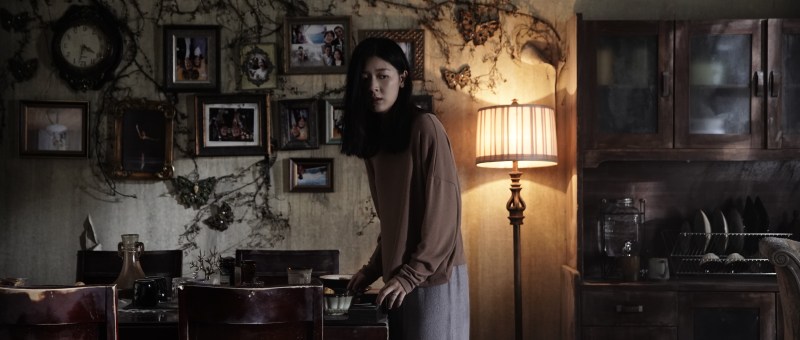
Are humans innately good or innately evil, and when we do good do we do it altruistically or to make ourselves feel better? These are all questions which occur to an idealistic yet conflicted forensic psychiatrist in Glenn Chan’s twisty psycho-noir, Shadows (殘影空間). Burdened both by a medical condition which apparently conveys a kind of superpower and by her own unresolved trauma, Ching (Stephy Tang Lai-Yan) wants to believe that people are at heart good but is herself caught in a complex web of manipulations in which even her well-meaning interventions may have unintended consequences. 

Ching’s big case is that of a 34-year-old social worker, Chu, who suddenly bludgeoned his entire family, three generations of women, to death with one of his many trophies which had a small heart on its top before calling the police and jumping over his balcony. As he only lived on the second floor, Chu survived but appears remarkably nonchalant about his crime. Police officer Ho (Philip Keung Ho-man) brings in Ching to figure out if Chu was really in a state of mental distress when he committed the murders, or if his certainly survivable suicide attempt is part of a smokescreen to help him evade justice. Possibly caused by a brain tumour, Ching’s special power is the ability to insert herself into her patients’ traumatic memories which is where she hears Chu recall a mantra that all humans are selfish and only think of themselves. This statement is meant not as censure but affirmation, Ching recalling a similar sentiment uttered by a rival psychologist, Yan (Tse Kwan-Ho), whom Chu had also been seeing, to the effect that mental imbalance lies in an inability to embrace one’s shadow self including “negative” impulses such egotism. 

In truth, the investigation into Chu’s case soon recedes into the background more or less forgotten as Ching embarks on an ideological battle with Yan who, we are told, has recently returned from many years living in the individualistic West and is peddling a kind of hyper individualist will to power which she regards as abetting his patients, a surprising number of whom go on to commit violent crime. Yan argues that humans are born evil and that the individual has the right to be selfish, abandoning conventional morality to pursue their own desires including those which necessarily harm others. Ching believes she’s doing the opposite, yet her attempt to help a victim of domestic violence by convincing her that she has the right and power to escape her abusive familial environment eventually places her in the same position as Yan. 

Given her own traumatic history, she may have to consider there’s something in Yan’s assertion that her intentions are also “selfish” in that she helps others in order to help herself feel better. When her investigation leads her, somewhat improbably, towards a serial killer with a Silence of the Lambs-esque taste for “beautiful” corpse tableaux she exposes him doing something much the same, claiming that he’s “saving” elderly people from the pain and suffering of old age but in reality trying to make himself feel better for failing to prevent the suffering of someone he loved while selfishly avoiding the pain of losing them. 

Determined to prove Yan is a serial killer by proxy manipulating his patients by encouraging them to embrace their darkest desires, Ching fails to see the degree to which she is also being manipulated, possibly for much longer than she might have realised. Yan’s patients refuse their responsibility towards others, rejecting the consequences of their actions in insisting that everyone makes their own choices. His hyper individualist philosophy might be seen as a stand-in for the increasingly selfish impulses of a previously collectivist society, a shift away from conventional morality towards the primacy of the self, yet it also darkly suggests that altruism is also cynical and born either of guilt or the selfish desire for reciprocity. In the end the verdict is in a sense left to a legitimate authority, Ho asked to decide if he thinks Yan is a crazed libertarian mad scientist, or if Ching is merely a traumatised and deluded woman pursuing some kind of personal vendetta. Featuring fantastic production design and stand out performances from Stephy Tang and Philip Keung, Shadows has no easy answers for the nature of the human soul but nevertheless casts its various protagonists on a noirish journey through the traumatic past guided only by duplicitous voices and ambivalent authority. 


Shadows screens at the BFI Southbank on 25th July as part of this year’s Chinese Visual Festival.

Original trailer (English subtitles)
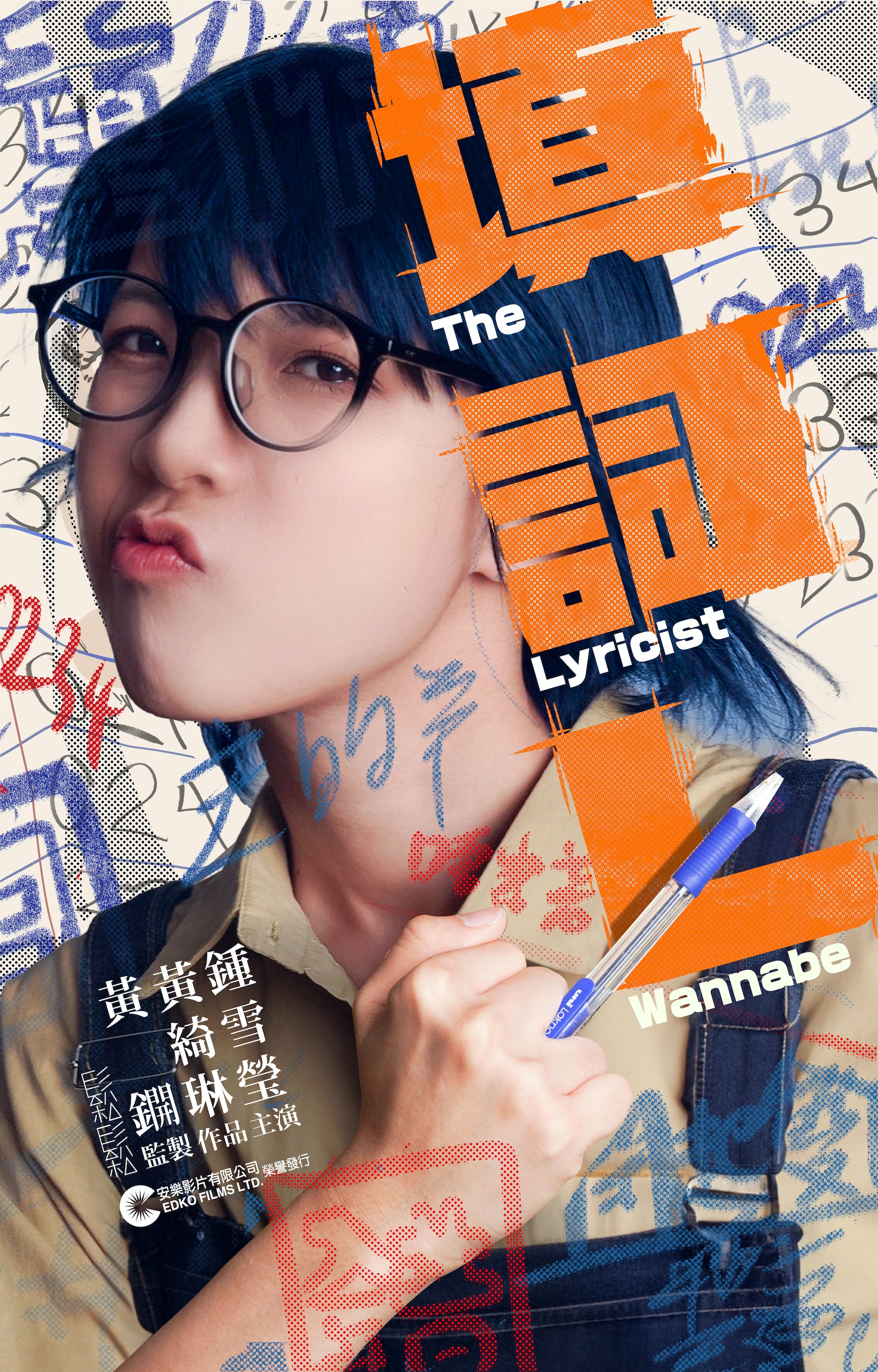
The Empty Hands (空手道, Chapman To, 2017)

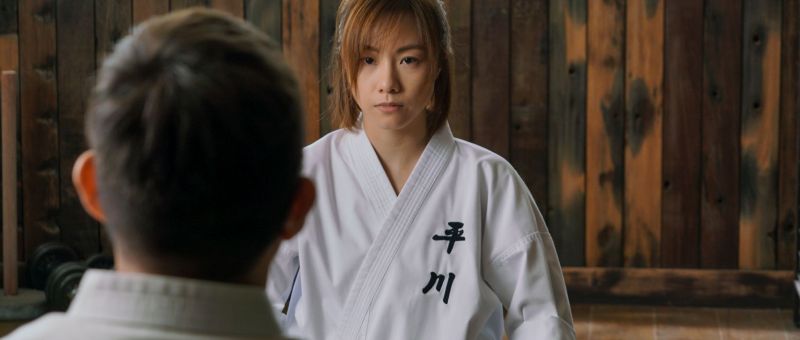
“You have to remember. You’ll always meet someone stronger than you. They might beat you down, but no matter what you need to have the courage to face it.” the defeated heroine of Chapman To’s second feature The Empty Hands (空手道) is reminded by her rediscovered mentor pushing her towards a literal reclaiming of her space in accepting her father’s legacy. The title, a literal translation of the characters which form the word “karate”, is perhaps also an allusion to the heroine’s sense of powerlessness and displacement even as she learns to rediscover a source of strength in that which she had previously dismissed as a worthless burden. 

30-something Mari Hirakawa (Stephy Tang Lai-Yan) is the daughter of a Japanese émigré, Akira (Yasuaki Kurata), who came to Hong Kong in 1972 on a work transfer and later married a local woman. Teaching karate as a hobby in his spare time, he eventually discovered that in the Hong Kong of the late 70s and 80s, martial arts was a valuable commodity and so he sunk all his savings into buying a sizeable flat in Causeway Bay, converting the living area into a Dojo with the family relegated to neighbouring rooms. The business did well but the family floundered and when Mari’s mother asked Akira to mortgage the dojo to help out her brother who ran into financial trouble during the 89 crisis his refusal and the uncle’s subsequent suicide led her to leave the family. A lonely child, Mari complains that her overly strict father forced her to practice karate against her will, something which she gave up as a brown belt after an unexpected tournament defeat swearing off the practice ever since.

When Akira dies suddenly, however, Mari is forced into a reconsideration of her life choices on discovering that he has left only 49% of the apartment/dojo to her with the controlling share entrusted to a former pupil, Chan Keung (Chapman To Man-Chat). Prior to this discovery, she had been cynically planning to subdivide the apartment into seven units, renting out six and living in the seventh solely on her proceeds from exploiting Hong Kong’s notoriously difficult housing market. Mari is, it has to be said, often difficult to like, defiantly aloof and with a healthy contempt for other people even throwing back a racial slur, albeit with a pinch of irony, at a little boy who’s been frequenting the dojo expressly in order to fight back against the discrimination he faces in everyday life as a member of the Indian community. This might be something you’d expect Mari to show a little more empathy for but she seems ambivalent in her sense of identity immediately introducing herself as Japanese on giving her name to man who works at the radio station where she gets a job as a security guard and with whom she drifts into a doomed affair. 

Mari’s affair with a married man is another thing of which she believes her father disapproved, but it’s also a reflection of her low self-esteem and awkward relationship with paternal authority in that she continues to seek but is afraid to ask for approval from emotionally distant men. She claims to have only one friend, Peggy (Dada Chan Ching), whom she somewhat cruelly dismisses as “all boobs and no brain”, explaining to her that what she likes about Ka Chun (Ryan Lau Chun-Kong) is his “loyalty” ironically admiring his refusal to leave his childhood sweetheart wife but also confident that he will one day choose her. Beaten down by life, Mari has perhaps backed away from the fight passively retreating while refusing to deal with her conflicted sense of identity and desire. She resents the implication that she petulantly jacked in karate after a single defeat destroyed her sense of confidence, but as we discover it is indeed her fear of failure which has been holding her back. Chan Keung’s bet that he will sign over his share of the apartment if she can remain standing, even if she loses, after three rounds in an upcoming competition is then a subtle way of getting her stand up again and rediscover a sense of confidence to fight for herself in the arena of life. 

Ironically enough, Chan Keung had been kicked out of the dojo for doing just that, told off for using karate to prove himself when its true purpose should be in the defence of others in need of help. He rediscovers the true spirit of karate after rescuing a little girl from a predatory triad, but Akira’s mission is also one of redemption for Chan Keung as he patiently mentors the originally reluctant Mari back towards an acceptance both of her father and of her relationship with karate along with the confidence that counters defeat. A meditative mood piece from the hitherto comedian To anchored by a stand out performance from Tang (who apparently spent six months training for the role) pushing back against glossy rom-com typecasting, The Empty Hands is less martial arts movie than gentle life lesson as its beaten-down heroine learns to fight her way out of existential malaise towards a more forgiving future. 


The Empty Hands streams in the UK 9th to 15th February as part of Focus Hong Kong

Original trailer (English subtitles)
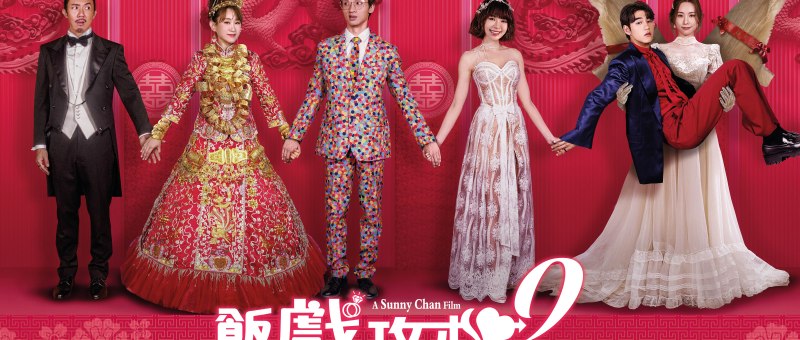
My Prince Edward (金都, Norris Wong Yee Lam, 2019)

(C)My Prince Edward Film Production Limited

“Why do you all think that marriage means happily ever after?” A conflicted young woman asks the man attempting to railroad her into a life of conventional respectability. “It doesn’t mean that” he explains, “But there’s no happiness if you don’t get married”. In 21st century Hong Kong can it still really be that a woman’s success or failure is measured by her age at marriage? The debut film from Norris Wong Yee Lam, My Prince Edward finds its heroine asking if there isn’t more to life than marrying a man you don’t love because it’s what everyone seems to expect. 

31-year-old Fong (Stephy Tang Lai-yan) has been in a committed relationship with wedding photographer Edward (Chu Pak Hong) for the last seven years, but she’s been keeping a secret from him. 10 years previously, she and her friend Yee (Eman Lam Yee-man) underwent sham marriages to Mainlanders in return for cash so they could rent a flat with a third friend, Mabel. Fong believed that the agency would deal with her “husband” on their own, arranging his Hong Kong residency permit and thereafter a divorce but although Yee’s “marriage” went off without a hitch, Fong’s hit a snag in that the agent was arrested so her husband never got his ID card and she never got her divorce. The reason she’s worried now is that she overheard Edward tell his assistant to photoshop his client’s marriage certificate to redact any mention that he’s been married before to avoid potential embarrassment at the ceremony.

The fact is, Edward is a strangely conservative, patriarchal sort of man and she knows he might not be very understanding even if she sits him down and explains that she’s technically still married to someone else. Everything might have carried on as normal if Edward had not taken it upon himself to make an ostentatious public proposal that Fong could hardly have refused even if she’d wanted to. The public proposal is perhaps another manifestation of Edward’s manipulative tendencies, but is also mostly undertaken to please his conservative and equally possessive mother (Nina Paw Hee-ching) with whom he still shares a joint bank account at the age of 31. Too afraid to face the potential consequences of the pair finding out, Fong attempts to track down her “husband”, Yang Shuwei (Jin Kaijie), to convince him to co-sign the divorce papers so they can come through before her mother-in-law’s preferred wedding date in a few months’ time. 

The grand irony is that Fong only did the sham marriage because she felt trapped by her conservative parents who objected to a teenage romance. She moved out to find freedom, but now feels trapped within the claustrophobic district of Prince Edward and most particularly the Golden Plaza shopping centre which houses her apartment and the bridal shop where she works which is next-door to Edward’s photography studio. She wanted to move into a swanky new flat, but Edward’s mother is dead set on buying the place where they currently live so Edward won’t have to move, an arrangement which suits him fine. Edward, meanwhile, is prone to jealous rages and Fong can hardly leave the apartment without getting 30 messages asking where she is and when she’ll be back. 

It turns out that “freedom” was what Shuwei was looking for too. He wanted a Hong Kong ID card as a stepping stone to going to America, hoping to make worldwide travel easier than with a PRC passport. Ironically, he can’t understand why Fong puts up with Edward’s prehistoric attitude and encourages her to reconsider marrying a man who’s already borderline abusive. Fong doesn’t quite want to admit it to herself but she feels the same, only she doesn’t have the courage to resist. She’s been successfully keeping Edward at arm’s length all these years, but now that the subject of marriage has been raised she’ll have to make a firm a decision. 

Working in the bridal shop she sees enough stressed out, unhappy couples going through the motions to realise that it’s not all sunshine and flowers, while it sounds like her family life was not exactly a bed of roses growing up. What she can’t seem to do, however, is to give herself permission not to marry. Unexpectedly getting his wings clipped, Shuwei asks her what it is she wanted to do and where she wanted to go, questions that no one else has really asked and Fong doesn’t know the answers to. If she stays with Edward, she might never find out. Like the flipped over turtle she tried to rescue from a pet shop, Fong runs the risk of swapping one tank for another, ending up trapped inside the Golden Plaza for the rest of her life being bossed around by her mother-in-law and walking on egg shells around the fragile Edward which seems like a heavy price to pay simply to be accounted respectable. “You don’t know what freedom is” Shuwei scolds her, confused that she chooses to stay when she has the choice to be anywhere she wants. The real Prince Edward gave up his throne for love, choosing one kind of freedom at least or perhaps just swapping one tank for another. Fong doesn’t know where she wants to go, but is beginning to realise that she has a choice and choosing herself is no bad thing. 


My Prince Edward screens on March 8/12 as part of this year’s Osaka Asian Film Festival.

Original trailer (English / Traditional Chinese subtitles)

Somewhere Beyond the Mist (藍天白雲, Cheung King-wai, 2017)

Somewhere Beyond the Mist posterCheung King-wai, making his narrative feature debut, opens with a quote from Dostoevsky’s The Brothers Karamazov to the effect that people, even bad people, are often far more innocent and pure-hearted than most realise, including we ourselves. The quote, overlaid above the vision of the city at night glowing red like dying furnace, introduces us to the story we are about to hear – one which is dark, too dark perhaps to imagine, but then again all too real. Caught in the twilight half light, Hong Kong is fiery cauldron of hell, yet when the sun rises and the mist rolls in, it’s hard to see what the night made so terrible.

As if to underline the confusion, we begin with a lost old man who is desperately searching either for a way in or a way out. His housekeeper eventually comes to find him and bring him home and we discover he is the father of one of our heroines, Angela (Stephy Tang Lai-yan) – a police detective expecting her first child. Angela’s father, Dr. Ho, is suffering from advanced dementia which is beginning to take its toll on Angela’s home life even if she leaves most of the responsibility to her compassionate husband, Tony.

Meanwhile, the bodies of a middle-aged couple have been discovered at a reservoir. The police set about looking for the couple’s missing daughter, Connie (Rachel Leung Yung-ting), only to find her holed up in the mountains with her best friend Eric (Zeno Koo Ting-hin). Connie reacts with eerie calm when informed of the deaths of her parents, merely repeating that she was already aware before agreeing to accompany the police to the station where she, matter of factly, confesses to having been the one who murdered them.

Cheung’s intention is not to create a murder mystery, Connie freely confesses her crime and isn’t particularly interested in explanations or justifications (though as it turns out, she would have plenty). He is much more interested in the examining the society which made such an “unthinkable” crime possible, exposing the dark heart of an increasingly confused city which finds itself pulled in two directions by various political anxieties.

Back with the original image of the city as a pit of hell, each of our protagonists becomes a link in a circular chain of violence, turning their own feelings of oppression, marginalisation, and despair back on their fellow suffers. Connie, as we find out, comes from an extremely dysfunctional home in which her truck driver father lists small time pimping among his “hobbies”, openly masturbates while watching hardcore Japanese pornography in the family living room only enjoying it more for the thought of taunting his teenage daughter, rapes the family’s disabled mother, and seemingly ignores his grown up son. Catching Connie’s friend Eric hiding in a cupboard in her room, he assumes the pair are up to no good and drags the boy out to viciously beat him with his belt just to remind him who it is that is boss around here, pausing only to remind Connie that “a virgin pussy” is worth more money and if she’s that desperate he can find her a client to satisfy both their needs.

Strangely enough, Eric does not completely object to the beating. He sees it as a sign of validation. Like Connie, Eric is also a lonely, marginalised figure but in his case because he is gay and desperately wants not to be. Being mistaken for Connie’s boyfriend is, in his eyes, a kind of proof of his “manhood” and so it’s a beating he is almost grateful to receive unlike those from his schoolmates who taunt him with broom handles and scream homophobic slurs which only add to his feelings of extreme worthlessness. Eric wanted to be friends with Connie to escape both suspicion and loneliness, but she, in a cutting moment of despair, also uses his insecurity over his sexuality and feelings of inadequacy as a “man” against him to get him to help with her plan to free herself of parental tyranny. Connie hates bullies, but she hates people who don’t stand up to them more. Thus she becomes the gentle defender of another marginalised figure – Jessica, an Indian girl who is targeted because she wears trousers under her school skirt, constantly assailed with slurs about “stinky” curry and various other stereotypical insults that leave her in tears.

Eric points out that his beating at the hands of Connie’s father didn’t bother him because it was “understandable” – a father finds a boy hiding in his daughter’s room and chases him out. The logic is sound, it’s a story you’ve heard before – not like the senseless acts of violence which surround him every day and cannot be explained. Connie’s crime too seems “understandable” given all she’s suffered, a precaution taken to save her from a still more terrible fate she feared might soon come her way. This is the uncomfortable realisation with which Angela is faced during her investigation, forcing her to confront her own difficult relationship with her apparently tyrannical father who made her mother’s life a misery. Angela has to accept that she could easily have been Connie, or Connie her, though she ultimately made the (still taboo) decision to place her father into a home rather than continue to look after him herself. Tube fed and alone, Angela’s father is utterly powerless but however much she wishes she could abandon him she continues to visit even if her resentment is plain. Then again, if a parent breaks the contract first in failing to care for their child in infancy, should the child still be expected to care for them when they are old? Perhaps they owe each other nothing other than civility and an attempt at forgiveness.

Asked why she ran to the mountains, Connie replies that she went to live “the life I deserve”. Dreaming of a world “beyond the mist”, free from the city’s confusion and the constant stream of violence passing from one lonely soul to another, Connie transgressed in order to free herself but has only found greater imprisonment and ongoing mental torment. Beautifully photographed, Cheung’s narrative debut is a bleak and gloomy affair but somehow maintains its belief in a better place Somewhere Beyond the Mist even if it continues to elude us.


Screened as part of the Chinese Visual Festival 2018.

Original trailer (English subtitles)