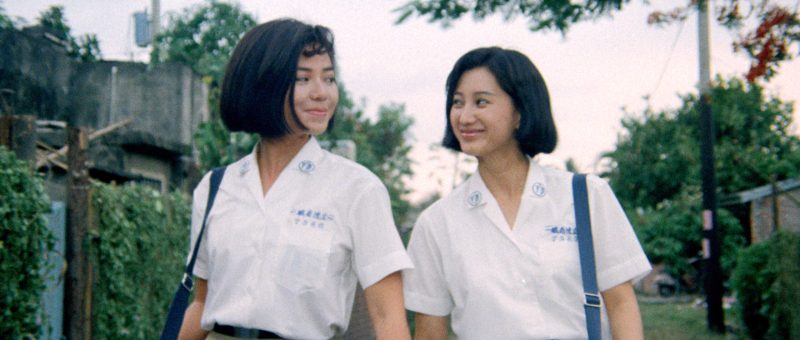
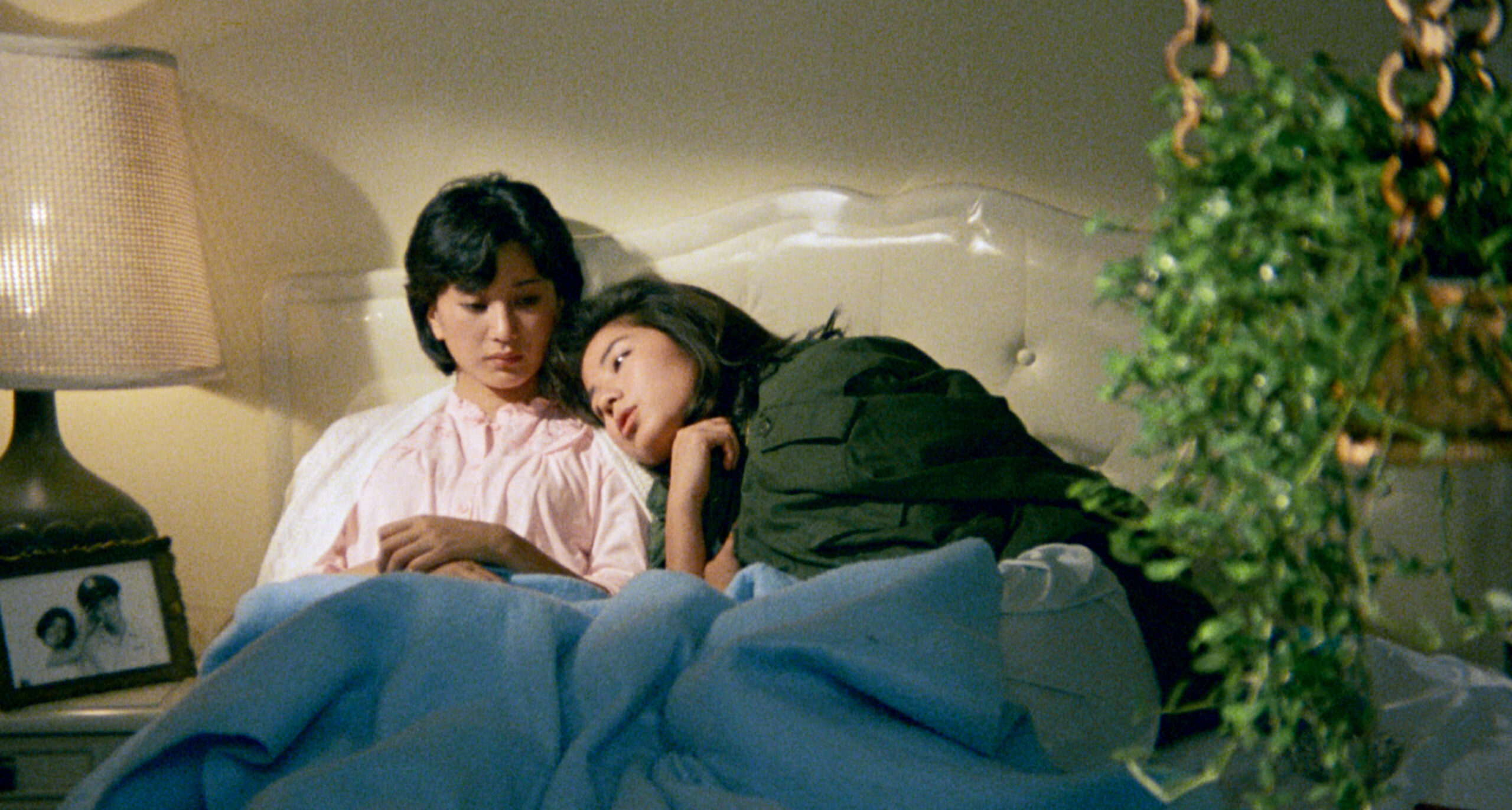
The Outsiders (孽子, Yu Kan-Ping, 1986)

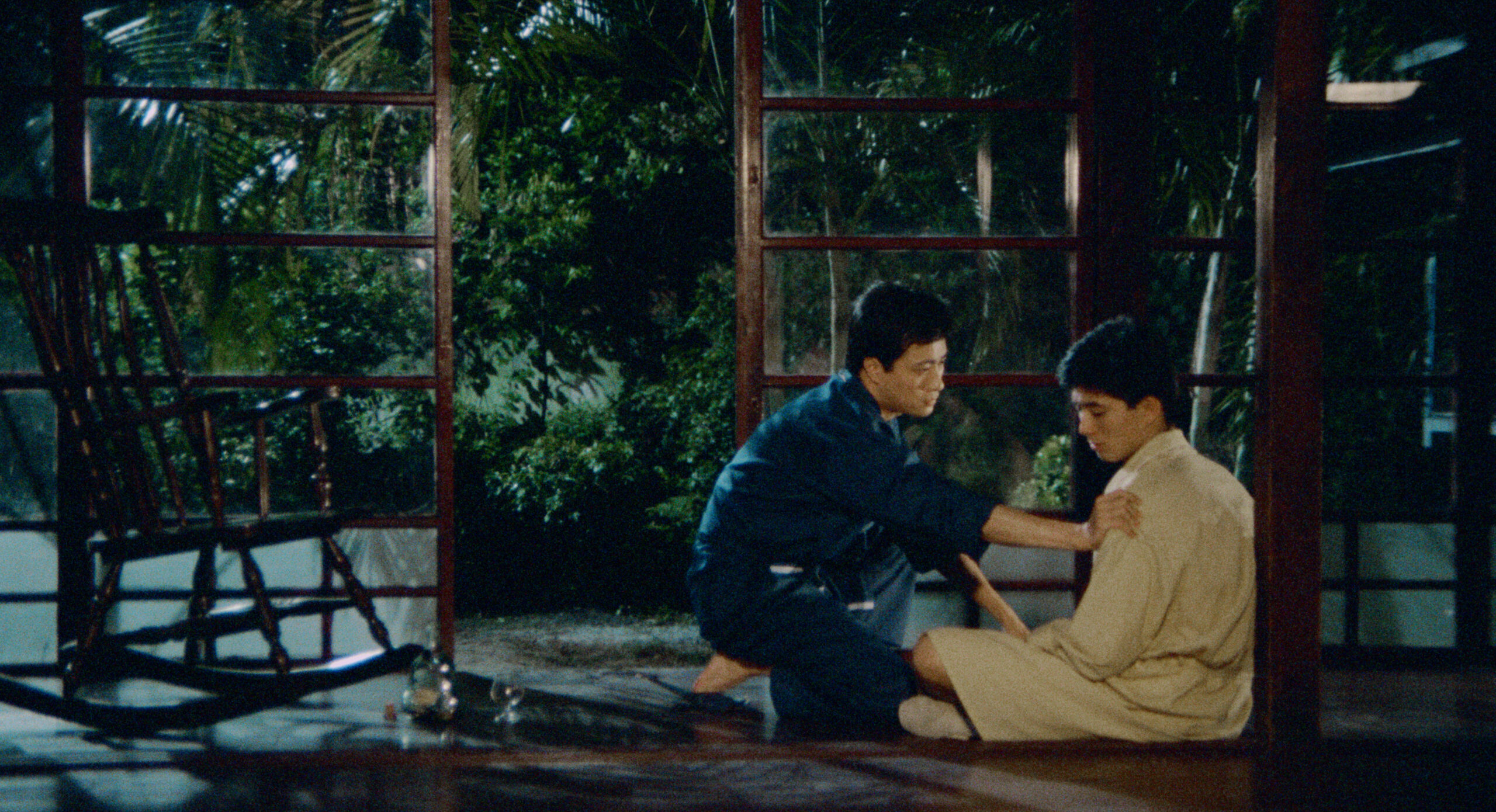
Released at the tail end of martial law, Yu Kan-Ping’s adaptation of Pai Hsien-Yung’s seminal novel Crystal Boys seems to anticipate a coming liberation, but also perhaps that even then not all will be free. The film’s Chinese title, Unfilial Sons (孽子, nièzǐ), hints at the way it, in a certain sense, circles back to a kind of conservatism in which the hero must reconcile with his abusive father for cultural rather than personal or psychological reasons. But at the same time, perhaps this reconciliation will be necessary at the time the present regime falls and speaks more of a need for peace as the authoritarian father must learn to accept that he has a gay son and will end his life alone if hex chooses not to do so.

Li Qing’s (Shao Hsin) father is, in many ways, a symbol of the authoritarian regime in that he is a former KMT soldier who came to Taiwan with Chang Kai-Shek after the Chinese civil war. Filled with notions of toxic masculinity, he kicks Qing out when he is expelled from high school after being caught having sex with a male lab assistant. Screaming at him in the street, he calls him a “degenerate” and tells him never to come home. Yet it seems obvious that Qing’s father has no real power and all his abuses stem from just this fact. His son’s homosexuality calls his own manhood into question, while his violence towards his wife also stems from his insecurity that she will leave him for a better man. She eventually does leave him for a trumpet player, abandoning her two sons the youngest of which dies as a direct result of his father’s neglect. 

Though Qing was a wounded, lonely little boy who felt himself rejected by both parents due to his mother’s obvious preference for his brother, he adopts a maternal position that comparable to that shown to him by “Mama Yang” who takes in “homeless birds” or young gay men who’ve been rejected by their birth families and have nowhere else to go. Qing was kicked out not only of his home but the school too, leaving him educationally disadvantaged. He can only earning a living as a sex worker in the Peace Memorial Park which has become a cruising spot for gay men. Pushed out of the mainstream society and left with nowhere to go, they have repurposed this public space as their own but are not safe even in here given the frequency of police raids. Auntie Mann, the former actress who lives with Yang, asks him where these young men are supposed to go if they can no longer go to the park with the consequence that they decide to formalise their situation by selling Yang’s photo studio and the building Mann owns to open a gay nightclub called The Blue Angel.

The club speaks of a need to carve out one’s own space in a hostile society, but also the commodification of gay life that accompanies greater acceptance. The park was free and money could also be earned there, but here the guests will need to pay because this is, after all, a business in addition to being a community hub. It also seems that for whatever reason, policemen are also drinking here, so it is not completely liberated and its existence depends on not offending the authorities. Nevertheless, it otherwise extends the family forged by Yang and Mann to a wider community of queer people by offering them a safer space in which they can be their authentic selves if only for a short time.

This seems to be true for Mann’s former director who seems to make a point of going everywhere with two very young and attractive women hanging on his arms, but abandons them to flirt with men at the club. Closted movie Hua Kuo-Pao similarly seems to have taken a liking to Qing, but must presumably keep his sexuality secret in order to go on working. Dangers are spoken of regarding the potential violence of obsessive love in a repressed community as Yang cautions Qing about entering an affair with Dragon, a man he meets in the park, who killed his lover Phoenix in a crime of passion and has been a wandering soul ever since having convinced himself never to love again because it would only end in death.

Yu frames murder as a moment of gothic madness as fog rises behind the bridge in the park, which was already a space of darkness and depression symbolising the degree to which these men are already isolated within their society. Another of the young men Yang takes in ties to take his own life after his lover kicks him out. Though the others tell him his boyfriend was not worth dying for, the problem seems to be more that being thrown out again convinced him he had nowhere else to go. If it were not for Yang and Auntie Mann, he would be totally alone. There does seem to be, however, a degree of tension in the relationship between Yang and Auntie Mann in which there exists a deep platonic love that cannot be resolved sexually. Just as he saves the boys, Yang also once saved Mann from an addiction to drugs, though he could not save her film career or hope for feminine fulfilment through marriage. The Blue Angel club finally only possible because of Mann’s acceptance that she will never be an actress again nor marry for love. Yang has been a kind of beard for her, helping her save face and avoid the stigma of being an unattached woman by making it look like there was a man in her life, just as she perhaps provided security for him in ways other than allowing him to rent his shop from her cheaply and have a place to live.

So tying into the film’s title, these new support networks play into a heteronormative vision of the family in which Yang becomes a father figure to Qing and teaches him how to live a more fulfilling, safer life as a gay man in contrast to his birth father’s authoritarian attempts at dominance. Another of the boys eventually leaves with a lover to look for their father in Japan, but seemingly struggles to find him reflecting the way in which each of them search for a more positive parental input having been failed or abandoned by their birth families. What they discover is a sense of brotherhood and solidarity that gives them a place to call home within the community. Nevertheless, the film ends with the symbolic gesture of Qing following Yang’s advice and attempting to reconcile with his father though an “unfilial son”, while his father too seems to have pulled himself together and is readier to accept Qing for who he is. This sense of homecoming for the homeless bird may then play into a code of familial obligation which could itself by oppressive, but also signals a new beginning and the opening up of a more liberated era.


The Outsiders screened as part of this year’s Queer East.
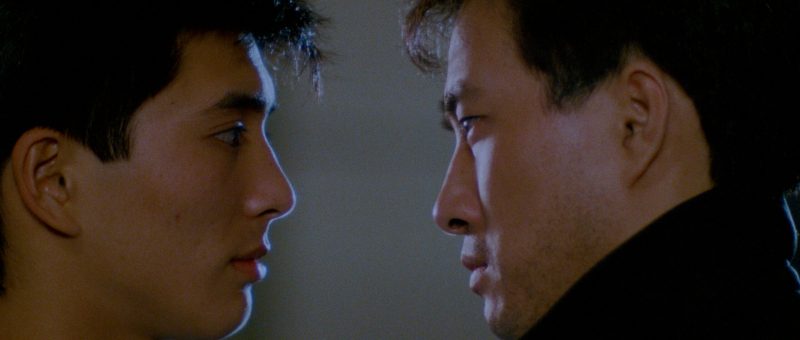
Ah Fei (油麻菜籽, Wan Jen, 1983)

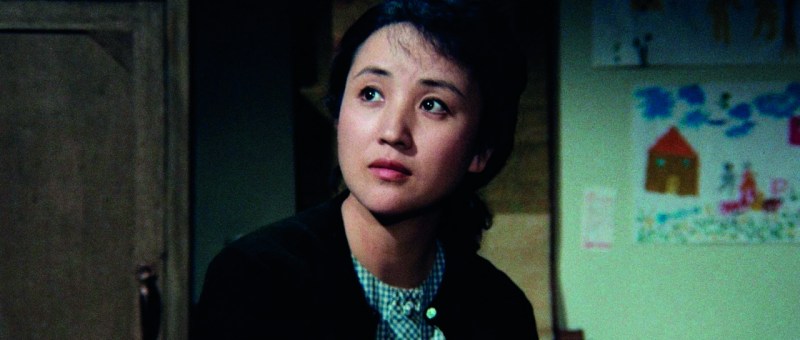
A few minutes into Wan Jen’s familial melodrama Ah Fei (油麻菜籽, yóu má càizǐ), a mother takes her children by the hand and walks to the end of a long jetty. We get the sense that she means jump and take her children with her, that she’s at the end of her tether and sees no other way out for herself, but still she thinks better of it and goes back anyway. Indeed, there isn’t really any way out for Hsin-chin, but there might be for her daughter, Ah Fei, if only Hsin-chin (Chen Chiu-yen) can bring herself to set her free.

Hsin-chin’s own mother died while she was a child and her otherwise sympathetic father later arranged her marriage to a man he thought was “honest” but turned out to be anything but. Shih-chen (Ko I-chen) is violent and irresponsible. He barely works and spends all the money Hsin-chin makes seamstressing on drink, gambling, and other women. Hsin-chin appeals to her father, but he ends up sending her back and siding with Shih-chen. He gives his son-in-law a not altogether stern talking to while encouraging him that there should at least be “civility” between husband and wife. 

We can see that this patriarchal sociality trumps all. Shih-chen originally takes no interest in Ah Fei but only in his son, Ah Shong whom he takes out with him drinking and introduces to his mistress. She buys him a toy sword which both buys the boy’s affection and creates further discord in the marital home as Shih-chen conspiratorially warns him not to tell his mother how he got it. On arriving home, Shin-chen had called for Ah Shong and he had come running in without even taking his shoes off, treading mud all over the floors Ah Fei had just been washing. 

Years later, Hsin-chin asks Shih-chen if he really thinks his son is as useless as he is. Shih-chen doesn’t answer, but it’s obvious that the answer is yes. These patriarchal patterns are quite obviously learned, passed down from fathers to sons in the ingrained codes of manliness. When his mother had tried to punish him when he was caught stealing bananas from a local farmer, Ah Shong turned round and said he’d tell his father her to beat her again if she didn’t stop. There is something sad and ironic in this circulation of violence as she beats her son to discipline him in much the same way her husband inflicts his violence on her and the teachers at Ah Fei’s school whack the pupils’ hands with a ruler when their grades dip below those of the previous paper. Ah Fei is studious and respectful, while Ah Shong is lazy and entitled. When his mother suffers a nasty miscarriage and calls for his help, Ah Shong doesn’t even wake up leaving Ah Fei to run alone through the night to the neighbour’s house so she can get the doctor. 

While the lived in the country, Hsin-chin had cherished her daughter and remarked that there was no point raising sons while Ah Fei is the only one contributing to the family by helping her with the housework. But on their return to Taipei after Shih-chen is caught sleeping with another man’s wife and forced to pay a humiliating fine in compensation, the situation is reversed. Shih-chen appears to mellow. He now stays home painting rather than going out to philander, but is still a figure of male failure who cannot find a job to support his family and leaves the heavy lifting to an increasingly embittered Hsin-chen. Hsin-chen meanwhile concentrates all her efforts on Ah Shong and resents Ah Fei. Though the family pay 200 dollars for Ah Shong’s private school, they begrudge the 30 for Ah Fei’s extra tuition so she can get into high school. Ah Fei doesn’t even want her to finish primary education. A neighbour has heard about an opening at a local factory and Hsin-chin wants her to start right away. It’s only Shih-chen who supports her education and switches his allegiance to Ah Fei rather than Ah Song who has disappointed him. He has come realise that Ah Shong is just like him after all, and seems to have a new degree of awareness about the family’s dynamics. He doesn’t want this life for Ah Fei, while Hsin-chin actively tries to trap her within the domestic space just as she was trapped.

In a repeated motif, Hsin-chin picks up a pair of scissors but can use them only in passive aggressive bouts of counter-productive revenge such as shredding Shih-chen’s suits, chopping the heads off roses to express her frustration, and cutting Ah Fee’s hair so she can’t go back to school after finding out that she had a boyfriend. Even once Ah Fei is a grown woman with a good job in advertising that is actively supporting the family, she struggles to separate herself from her mother who continues to frustrate her love and discourage her from marrying. Some of this is her own bitterness, and some honest advice that Ah Fei’s choice of husband is the most important decision she’ll ever make. Marry a good man and she’ll have a good life. Marry badly and she’ll end up like Hsin-chin knowing nothing but suffering. 

Of course, the crucial element is that Ah Fei has a choice that Hsin-chin never did. But at the same time she struggles to take it or to reject the internalised misogyny that ruled her mother’s life along with the patriarchal social codes that left her unable to leave a bad husband. She is well educated and financially independent so cannot be trapped in the same way her mother was even if her “escape” is ironically bound up with the patriarchal institution of marriage. Only on seeing her in a wedding dress does Hsin-chin finally accept her, reverting to the kind mother she had been in the countryside rather than the embittered old woman she had become in Taipei who is too afraid of her impending loneliness and the spectre of poverty to set her daughter free. Ah Fei’s liberation may speak of that of her generation, travelling from the countryside to a Taipei slum and finally a well-appointed flat in the centre of a rapidly developing city in the twilight of an authoritarian regime, but equally of the interconnected cycles of toxic masculinity, patriarchal entitlement, male failure, and internalised misogyny all seemingly dissolved in a single moment of forgiveness and acceptance.


Ah Fei screened as part of the BFI’s Myriad Voices: Reframing Taiwan New Cinema.

Trailer (Traditional Chinese / English subtitles)

Peony Birds (牡丹鳥, Huang Yu-Shan, 1990)

Two women struggle with inter-generational conflict and the changing Taiwanese society in Huang Yu-Shan’s melancholy familial drama, Peony Birds (牡丹鳥, Mǔdan Niǎo). Perhaps the love birds of the title, mother and daughter find themselves at odds partly through a series of misunderstandings but also in the strange reversals of their social outlook, the older woman eventually becoming a successful industrialist rejecting the patriarchal social codes of her upbringing while the younger remains prudish and resentful, unfairly blaming her mother for her father’s early death. 

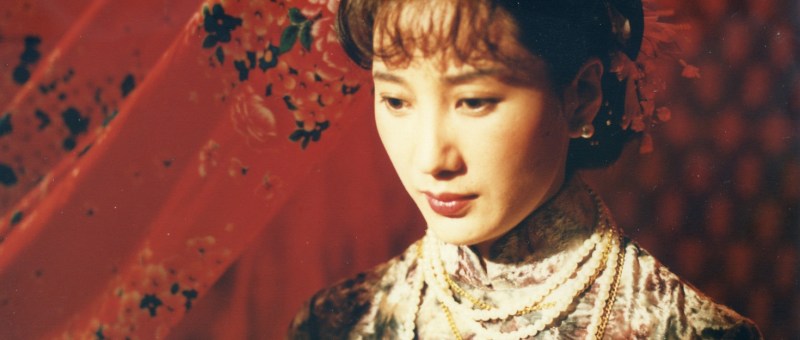
The film opens with two children accidentally releasing a pair of caged birds before the camera lights on the melancholy figure of Ah-chuan (Su Ming-ming), absentmindedly embroidering beneath a large picture which appears to be of herself. The portrait, a source of contention with her husband Cheng, will follow her throughout her life a symbol of herself as a young woman with choices falling in hopeless love with a Japanese-speaking doctor, Kuo, who never gave her a second glance and later married someone else. Seemingly on the rebound, Ah-chuan consented to an arranged marriage to the wealthy son of a rice merchant who thinks himself a member of the local aristocracy, forever throwing around his money and reminding people of his good name, but the marriage is unhappy Cheng frustrated that his wife loves someone else and Ah-chuan unable to let go of her idealised image of Kuo. Soon enough, Cheng drowns, falling into the river stumbling around in a drunken stupor. As they pull his body out of the water, doting daughter Shu-chin remembers her father bitterly exclaiming that her mother loved someone else and, noticing the comforting arm of childhood friend Chin-shui on her shoulder, assumes it must be him.  

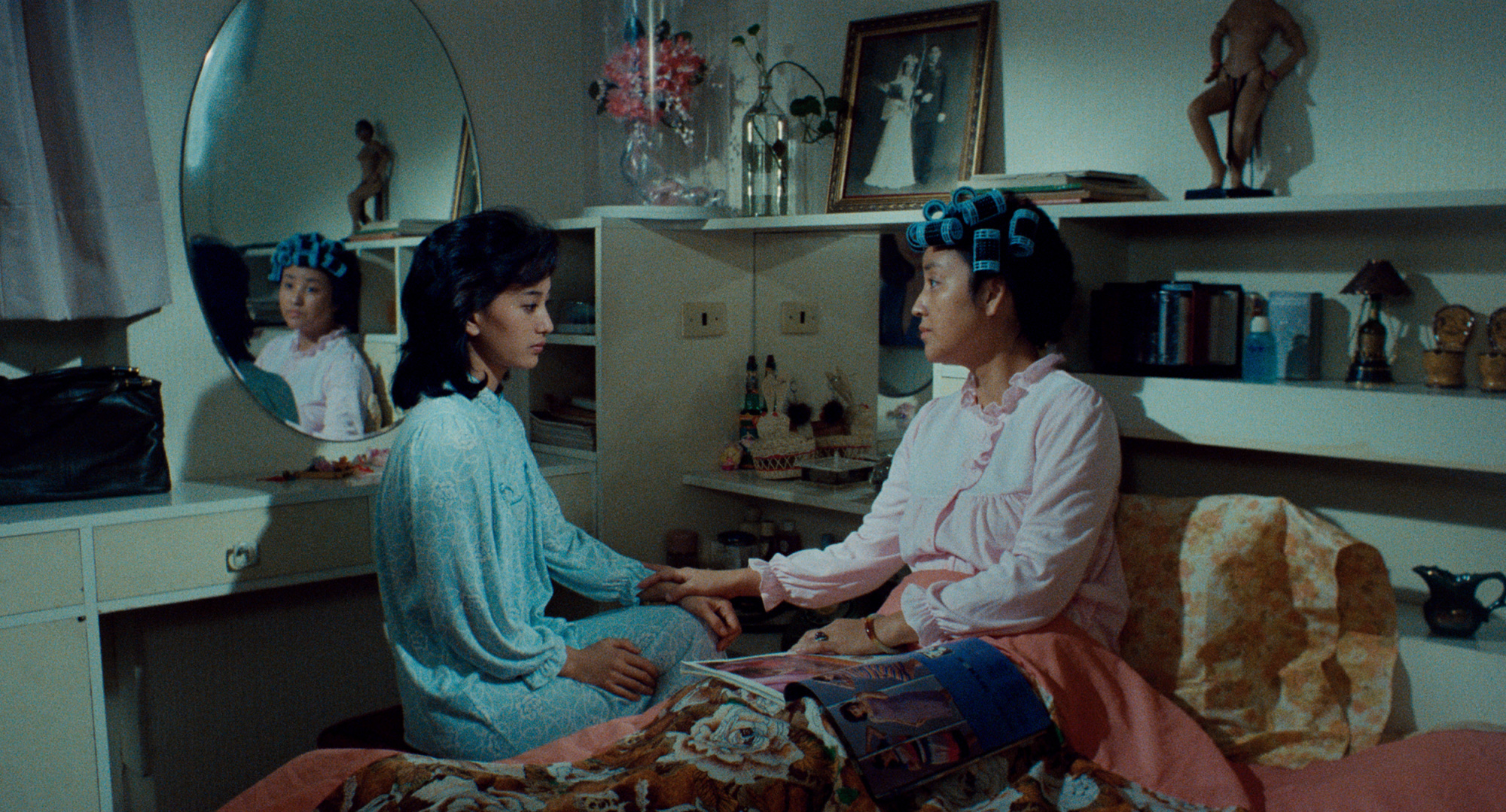
It’s this fundamental misunderstanding that continues to colour the frustrated relationship between the two women, the grown-up Shu-chin (Vivian Chen Te-Yung) childishly complaining that Ah-chuan failed in her wifely responsibilities and has never been a mother to her, blaming her for Cheng’s death while criticising her commitment to her career almost as a betrayal of womanhood. By this point, Shu-chin is in her 20s and has a job as a record producer, later attempting to push her mother towards retirement claiming her salary is enough to support both her and her artistic brother but eventually leaving home entirely after beginning an affair with an unsuitable man defiantly ignoring Ah-chuan’s attempts to convince her she is making a huge mistake. 

Meanwhile, Chin-shui resurfaces in their lives having become a wealthy real estate magnate, a career we saw him start back in the village by taking advantage of the post-war land reforms to buy up the redistributed estates of formerly noble families, some of it Cheng’s. In some ways, former sharecropper Chin-shui is a villainous Lopakhin intent on paving over the beautiful Taiwanese countryside with towering high rise buildings, a symbol of the nation’s transformation from agrarian economy to financial powerhouse and of the hollowness it implies. Yet Ah-chuan’s business is floundering partly she claims because of protectionist US trade laws leaving her at the mercy of men like Chin-shui who, though not the man in her heart, has long carried a torch for her despite knowing of her impossible, unrequited love for Dr. Kuo. Shu-chin finds herself in a similar position in her affair with free-spirited colleague Li Kang whose previous girlfriend attempted to take her own life, discovering the mutability of his affections after he becomes famous with one of his solo compositions, while also drawn to a more suitable match in the more traditional Yi-cheng who eventually pledges his love to her, offering to make her a home explaining that having a home is what gives the young confidence to wander. 

Yet “home” is what Shu-chin continually rejects, yearning for her childhood in a more rural, quasi-feudal Taiwan while misunderstanding the tragedy of her parents’ toxic romance, only latterly reawakening to her mother’s love for her and discovering a new sense of security in a changing Taiwan as Ah-chuan frees them both in literally setting fire to the frustrated hopes of the past, reminding her “It’s always been our home”. A touching story of two women finally coming to understand each other while learning how to live in a changing society, Huang Yu-Shan’s maternal drama eventually bridges a generational divide as mother and daughter finally flee the coop but choose to fly together. 


Peony Birds streams in the UK 25th to 31st October as part of this year’s Taiwan Film Festival Edinburgh.

Clip (English subtitles)